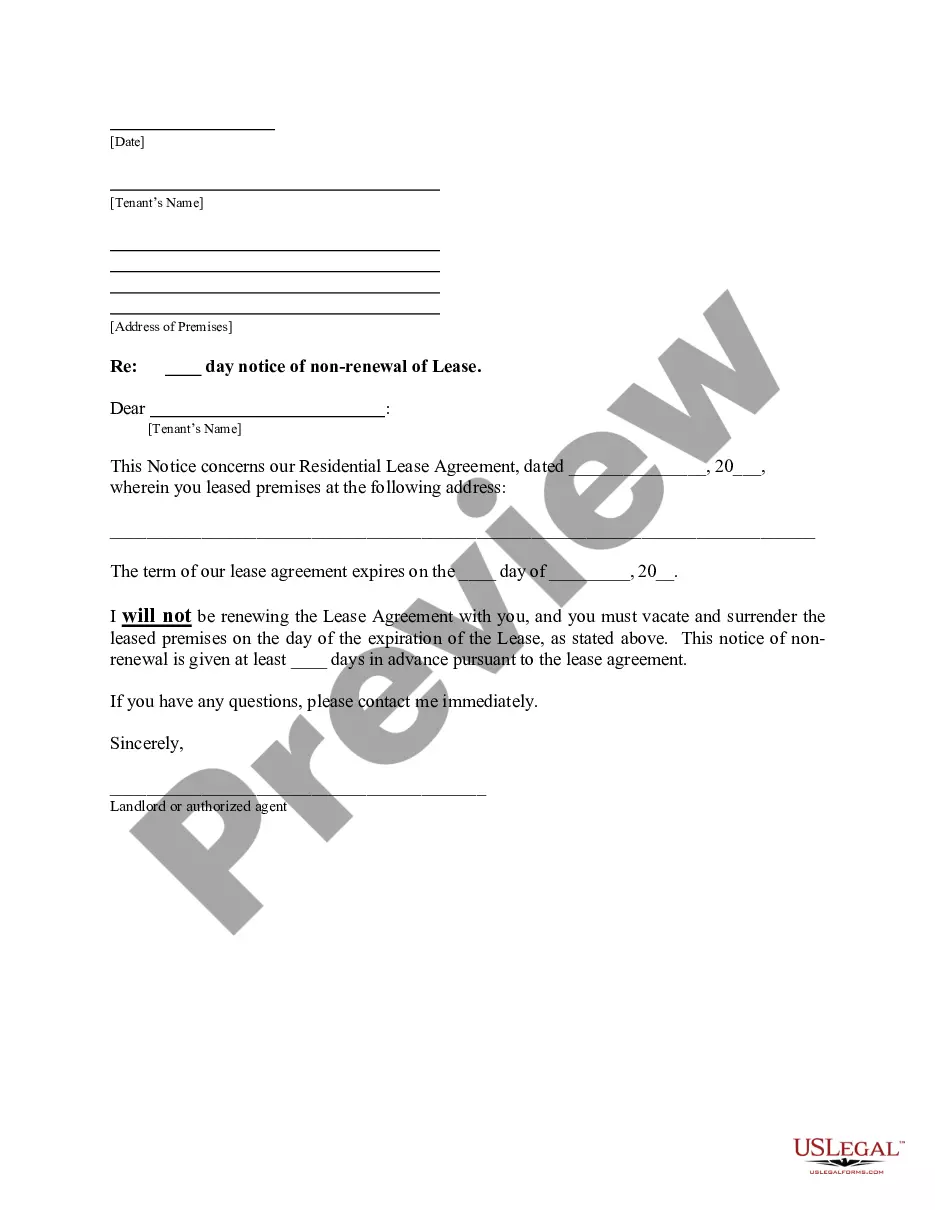
Employment Agreement - General
What is this form?
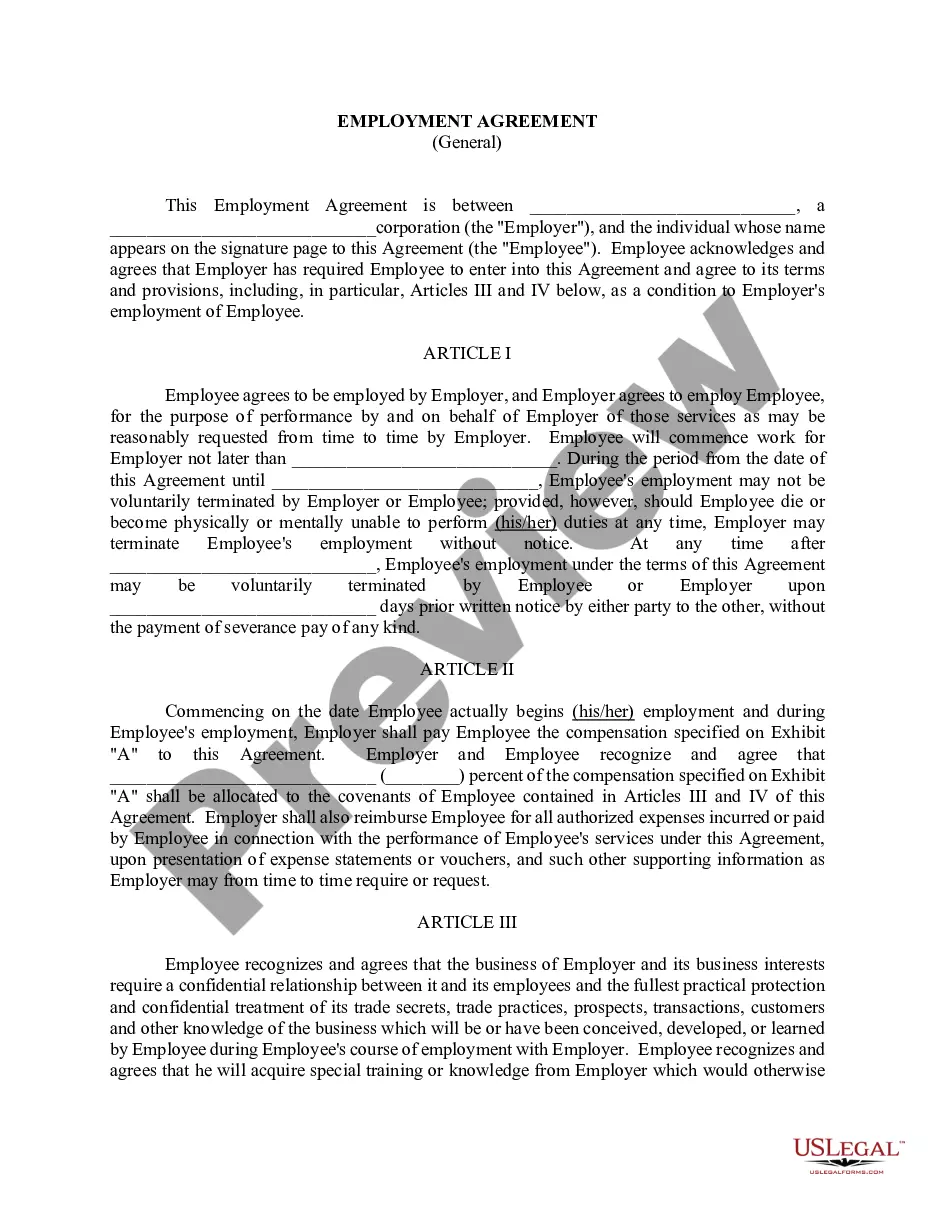
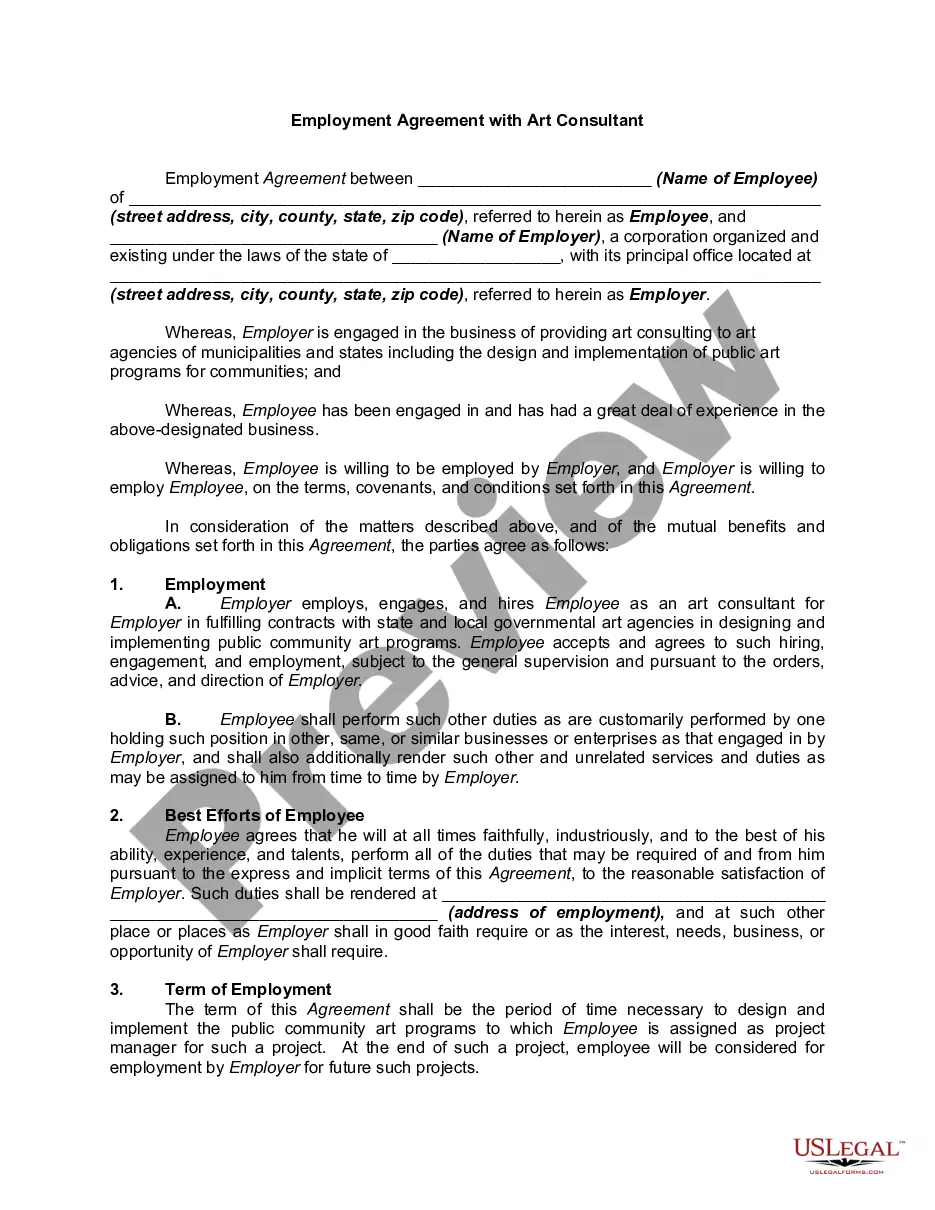
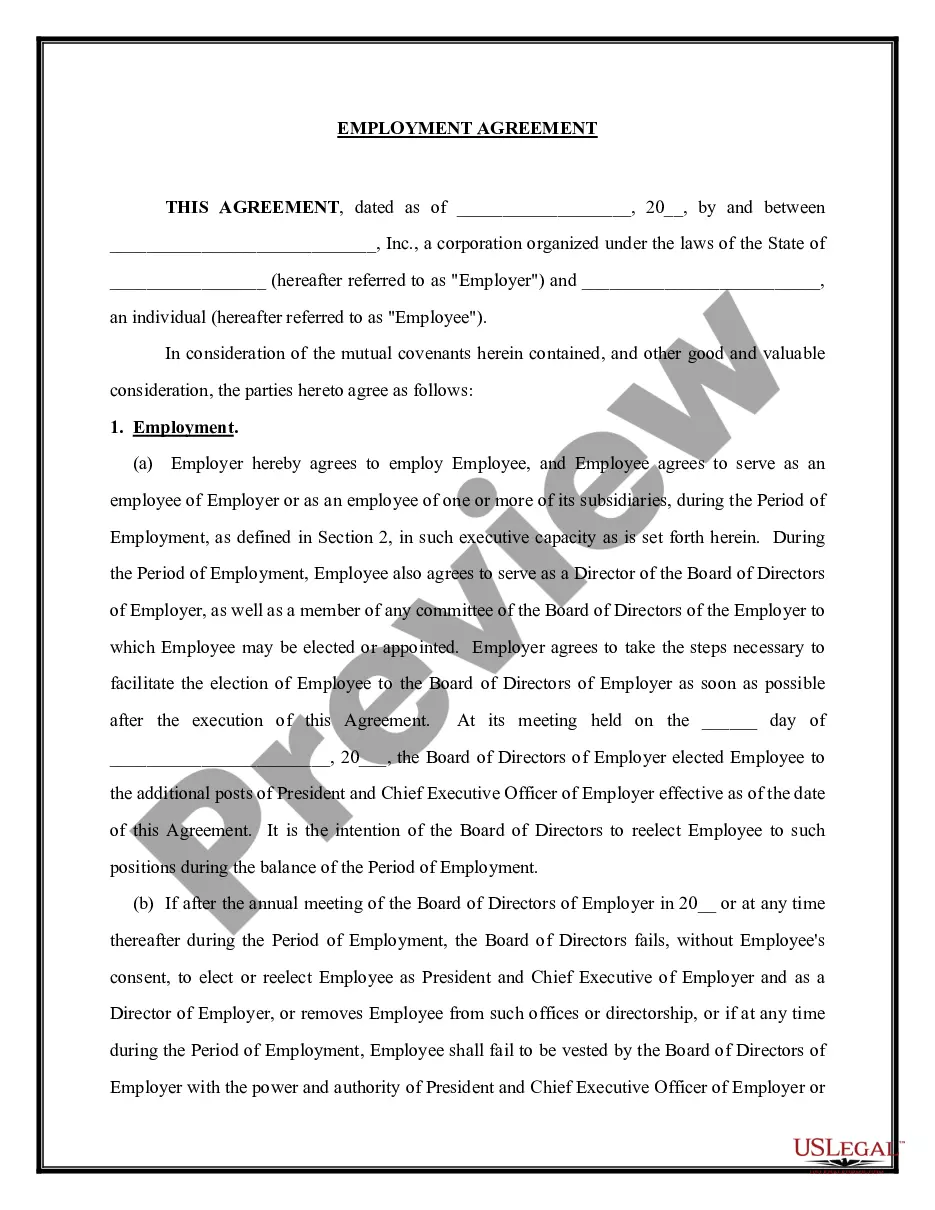
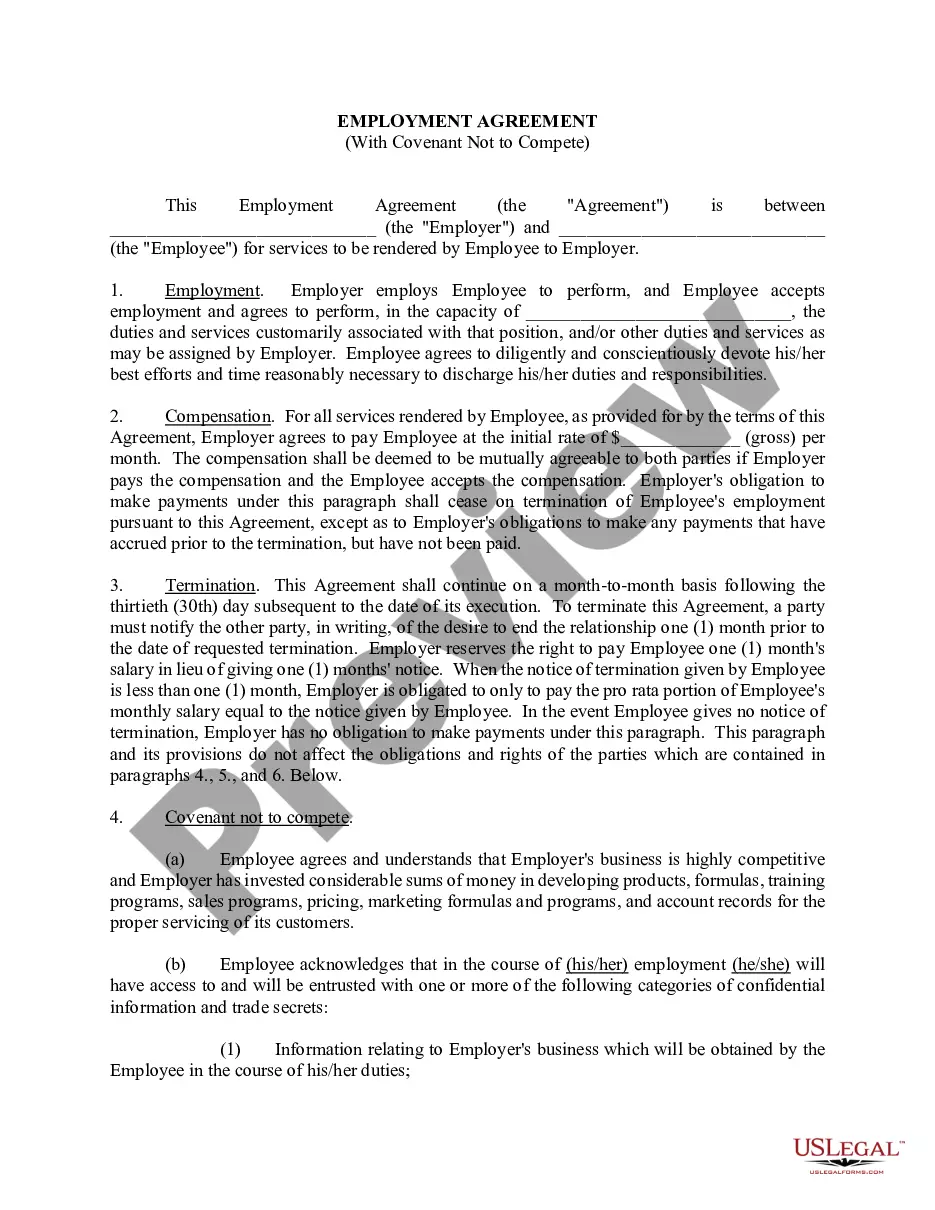
The Employment Agreement - General is a legal document that formalizes the relationship between an employee and an employer. This agreement outlines the responsibilities of the employee, the compensation details, and the terms related to confidentiality, non-competition, and breach of contract. It sets clear expectations for both parties, ensuring compliance with the agreed-upon terms throughout the employment duration. This form is essential for establishing a professional framework that differentiates it from other employment-related documents.
Form components explained
- Identification of the parties involved (Employer and Employee).
- Details regarding the commencement of employment and duration of the agreement.
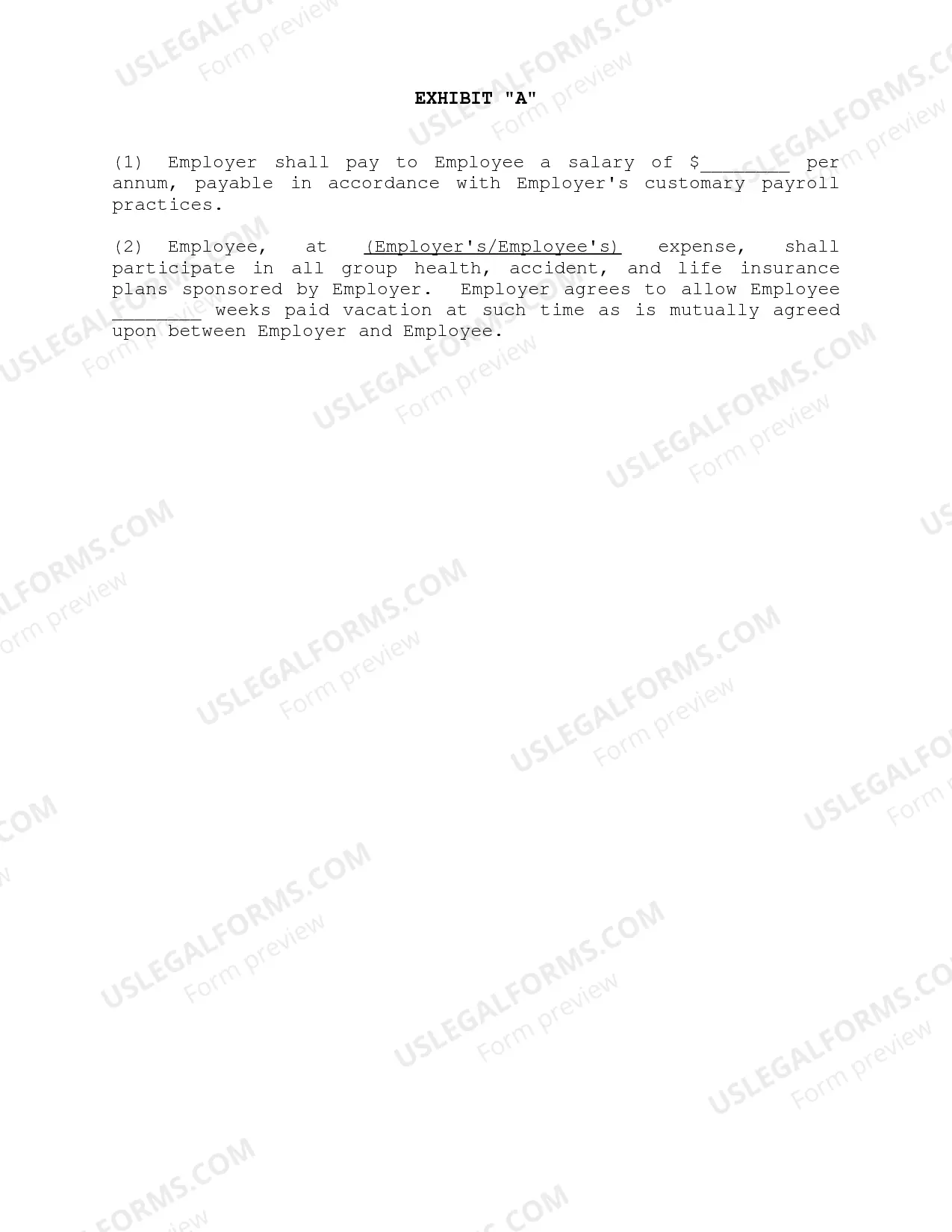
- Compensation terms and reimbursement for expenses.
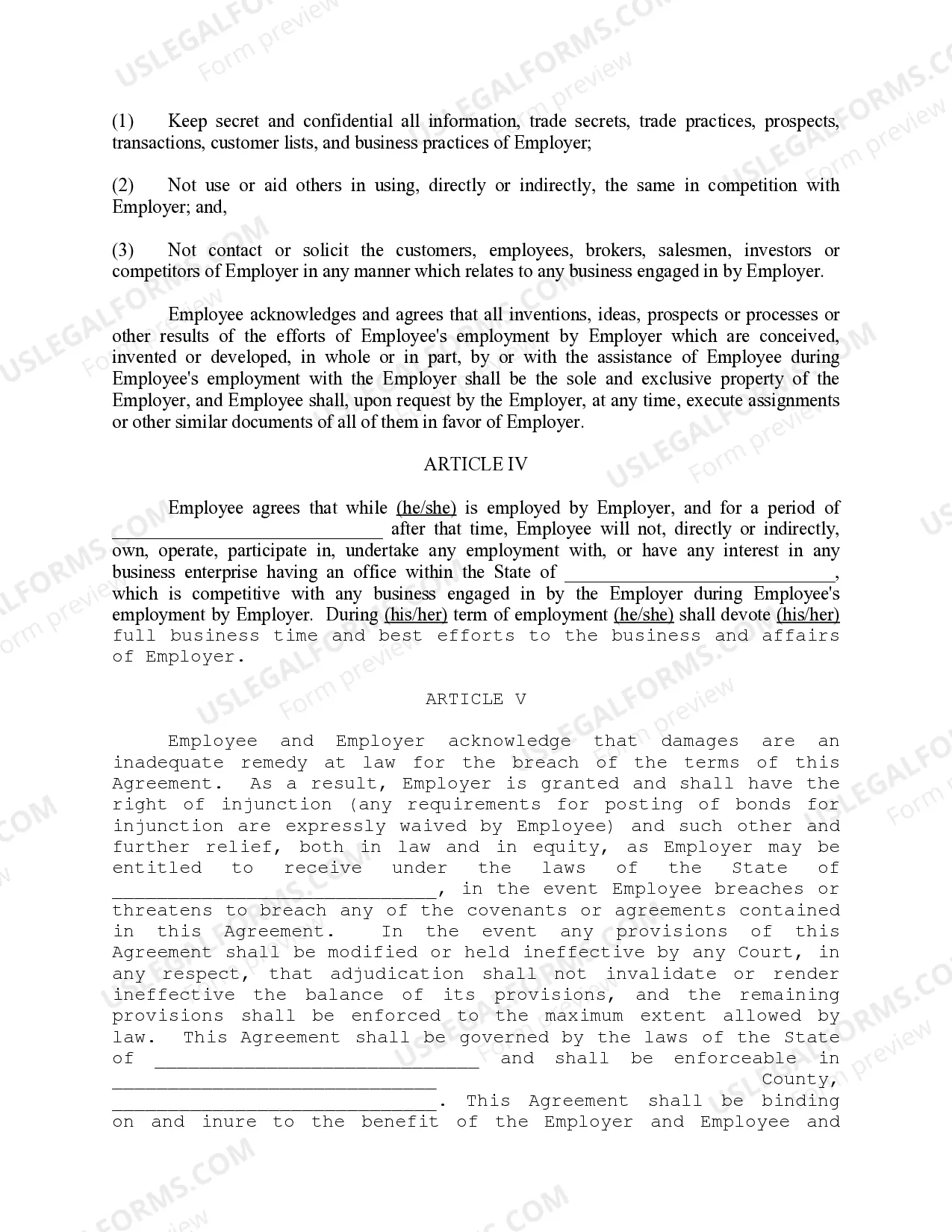
- Confidentiality clauses protecting the employer's business interests.
- Non-competition provisions limiting the employee's activities after leaving the employer.
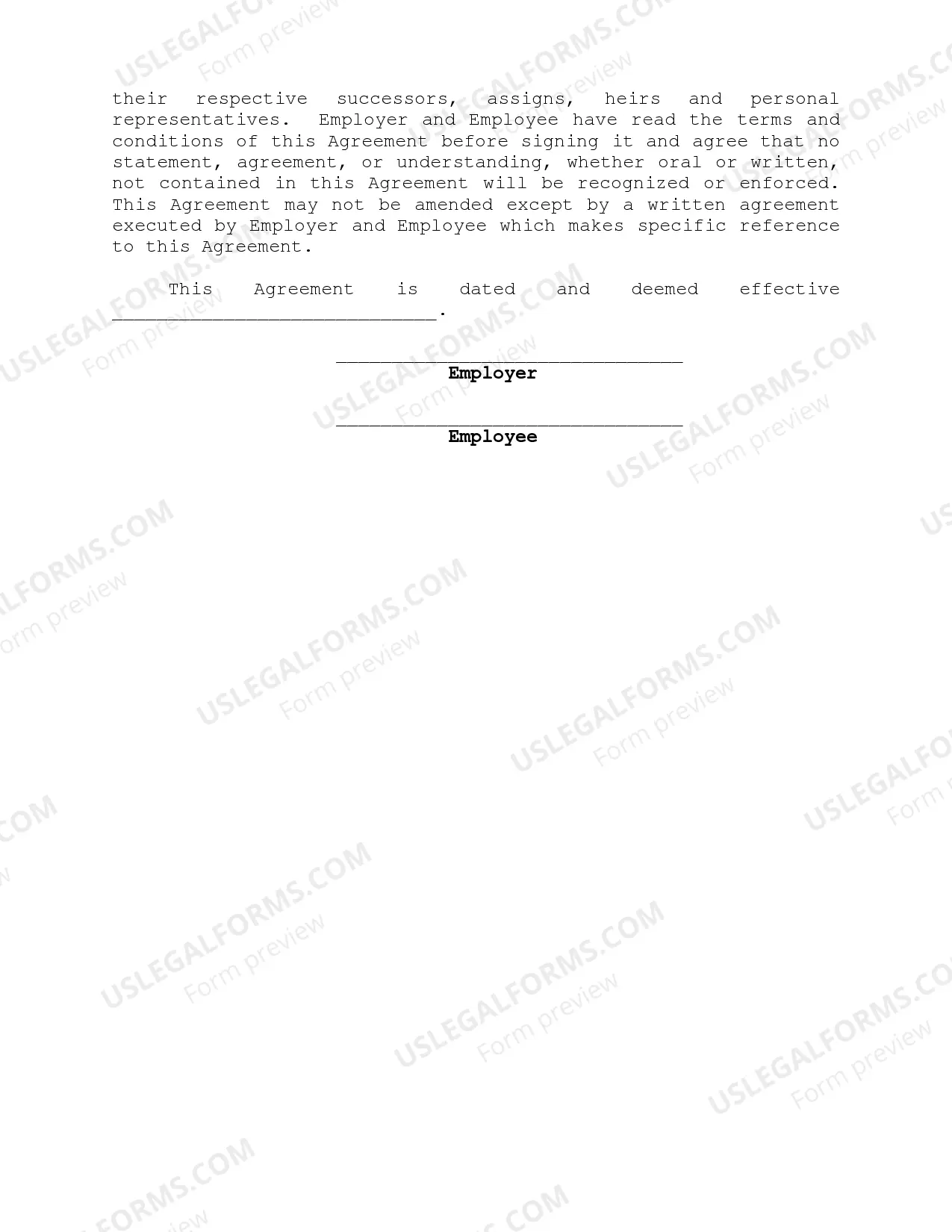
- Legal jurisdiction and enforceability of the agreement.
When to use this form
This Employment Agreement should be used when hiring an employee to clearly define the employment relationship. It is particularly useful in situations where the employer needs to protect confidential information and trade secrets, or when establishing specific terms regarding competition post-employment. Use this form to create a binding agreement that outlines expectations and responsibilities from the outset of the employment relationship.
Who this form is for
- Employers seeking to establish clear terms of employment with their employees.
- Businesses that handle sensitive information and want to enforce confidentiality provisions.
- Employers wishing to protect their interests through non-competition clauses.
- Individuals entering employment relationships and wanting to understand their rights and obligations.
Completing this form step by step
- Identify the parties by completing the names and designations of both the Employer and Employee.
- Specify the start date of employment and conditions under which employment can end.
- Fill in details regarding compensation and any specified reimbursement processes.
- Complete confidentiality and non-competition sections by filling in duration periods and relevant geographical limitations.
- Have both parties review the document, sign, and date it to make it legally binding.
Does this document require notarization?
This form does not typically require notarization unless specified by local law. Ensure that you verify any state-specific requirements before finalizing the document.
Get your form ready online
Our built-in tools help you complete, sign, share, and store your documents in one place.
Make edits, fill in missing information, and update formatting in US Legal Forms—just like you would in MS Word.
Download a copy, print it, send it by email, or mail it via USPS—whatever works best for your next step.
Sign and collect signatures with our SignNow integration. Send to multiple recipients, set reminders, and more. Go Premium to unlock E-Sign.
If this form requires notarization, complete it online through a secure video call—no need to meet a notary in person or wait for an appointment.
We protect your documents and personal data by following strict security and privacy standards.

Make edits, fill in missing information, and update formatting in US Legal Forms—just like you would in MS Word.

Download a copy, print it, send it by email, or mail it via USPS—whatever works best for your next step.

Sign and collect signatures with our SignNow integration. Send to multiple recipients, set reminders, and more. Go Premium to unlock E-Sign.

If this form requires notarization, complete it online through a secure video call—no need to meet a notary in person or wait for an appointment.

We protect your documents and personal data by following strict security and privacy standards.
Common mistakes
- Failing to specify a clear start date for employment.
- Inadequately defining the scope of confidentiality or non-competition clauses.
- Neglecting to review and update the agreement to reflect changes in employment conditions.
- Not signing and dating the agreement appropriately, which can lead to disputes on validity.
Advantages of online completion
- Convenience: Download the form instantly and fill it out at your convenience.
- Editability: Customize the form to suit specific employment terms and conditions.
- Reliability: Utilize a template that has been legally drafted by licensed attorneys.
Legal use & context
- This Employment Agreement serves as a legal contract between the employer and employee, outlining the terms of employment.
- In the event of disputes, this agreement can be referenced to clarify the rights and obligations of both parties.
- It is important to ensure compliance with state employment laws to maintain enforceability.
Summary of main points
- This form formalizes the employment relationship while protecting both parties' interests.
- Complete the form accurately to ensure comprehensive coverage of all essential employment terms.
- Consider state-specific regulations that may impact the agreement's terms.
Looking for another form?
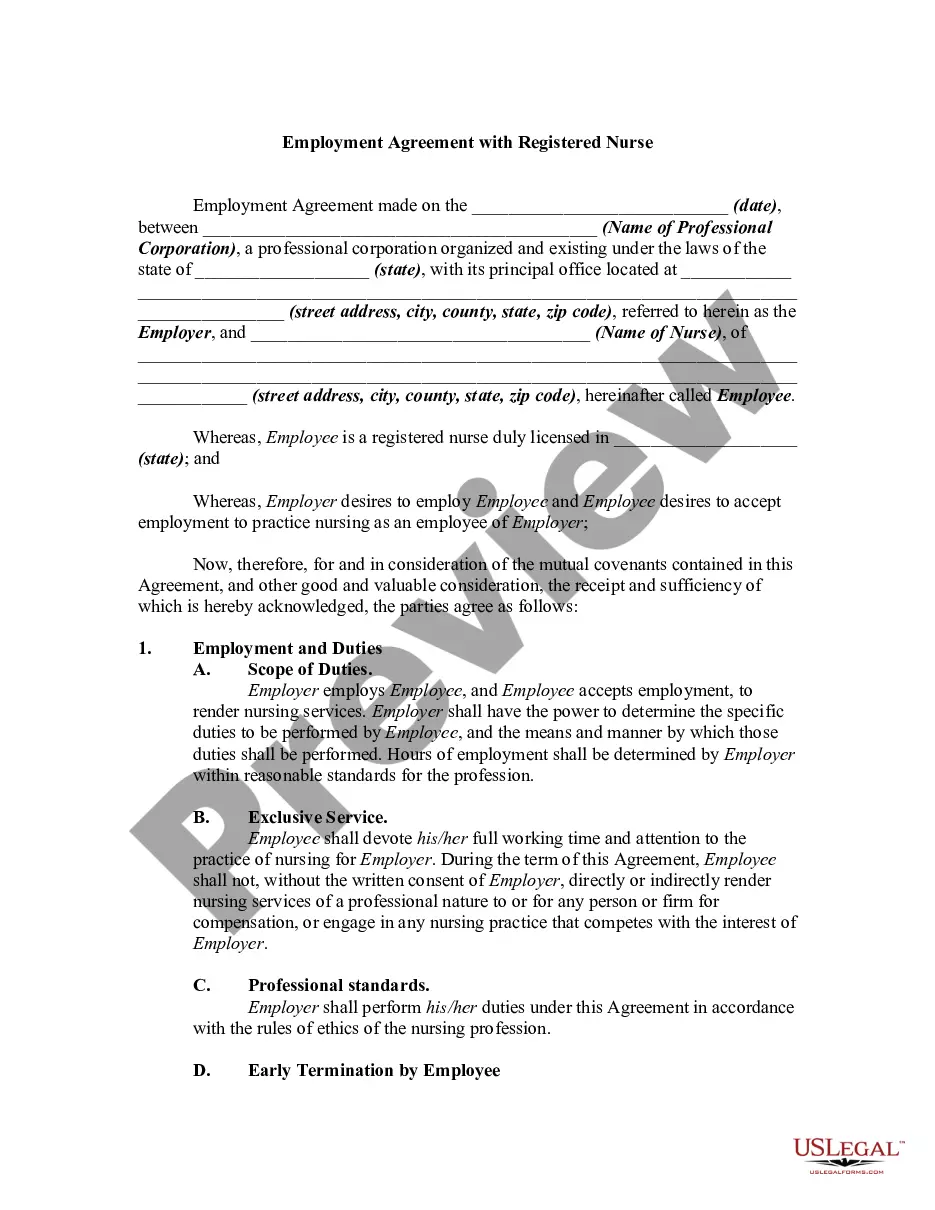
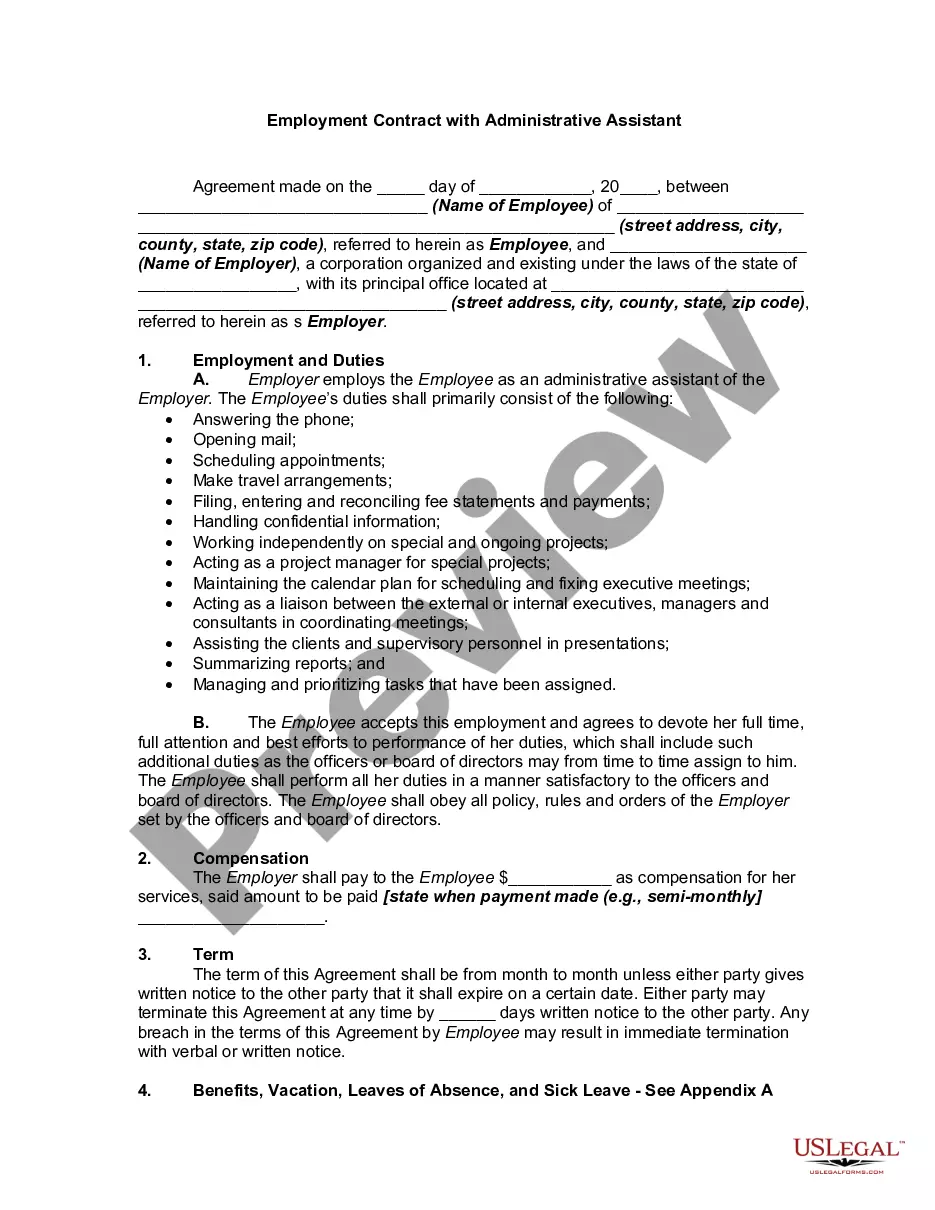
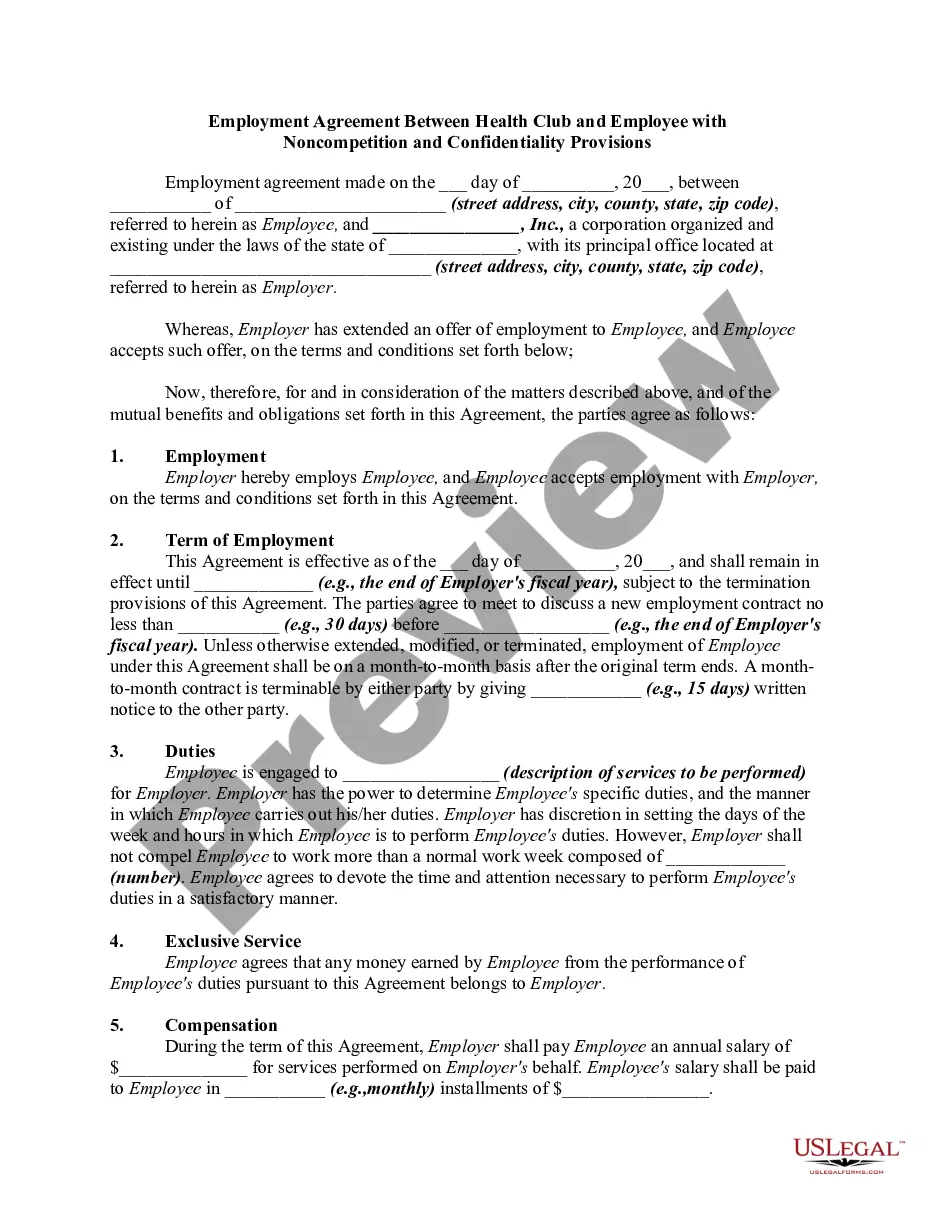
Form popularity
FAQ
All business contracts must contain the essential elements of an agreement. The essential elements include consideration, offer and acceptance, a legal purpose, capable parties and mutual assent. Consideration means something of value must be exchanged.
Contact information for both parties. Location/state whose laws apply to the agreement. Terms and conditions of the business relationship. Terms of payment. Start date of the agreement. End date of the agreement.
Title the employment contract. Give your employment contract a title so the person who reviews or signs the document understands what it is. Identify the parties. List the term and conditions. Outline the job responsibilities. Include compensation details. Use specific contract terms. Consult with an employment lawyer.
When you write a contract letter, you should include the following: the position title, company name, starting date, employee's status as full-time or part-time, their status as exempt or non-exempt (relating to overtime pay), salary amount, timing of payment, a summary of company benefits, details about paid time off,
Company Name. Nature of Work: Your duty hours will be 40 hours a week. Salary & Benefits: You will be drawing a salary of $8000 per month. Rules & Regulations: The company expects you to stick to all the rules and regulations effective at the time of your employment.
Job information. Compensation and benefits. Time off, sick days, and vacation policy. Employee classification. The schedule and employment period. Confidentiality agreement. A technology privacy policy. Termination terms and conditions.
If you didn't use a job description, take an hour to sit down and write out the duties you want your employee to perform. Be as specific as possible. The job description also should have included the target wage. You should consider whether or not you are paying a fair rate.
Job information. Compensation and benefits. Time off, sick days, and vacation policy. Employee classification. The schedule and employment period. Confidentiality agreement. A technology privacy policy. Termination terms and conditions.