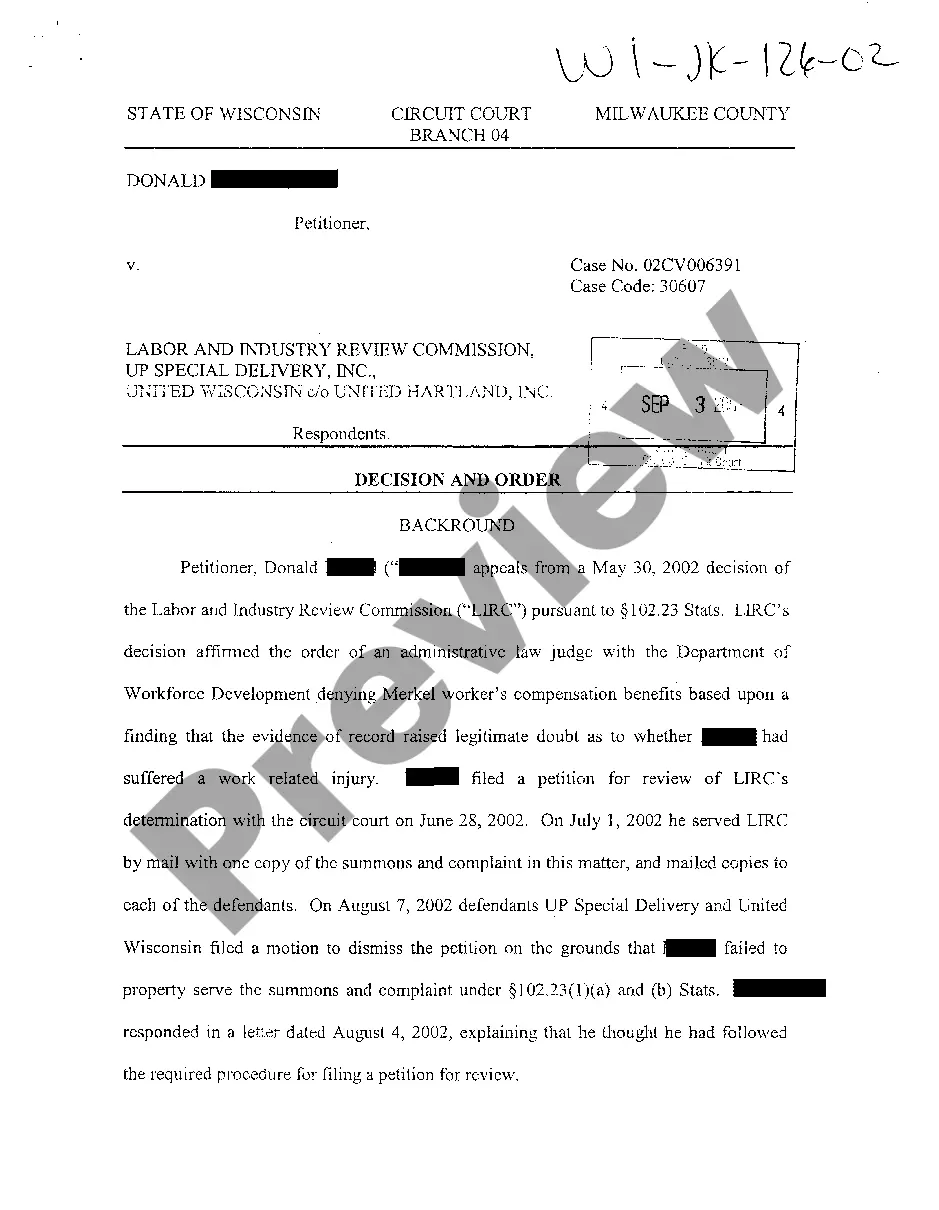
Consent by Tenant to Right of Way Agreement
Understanding this form
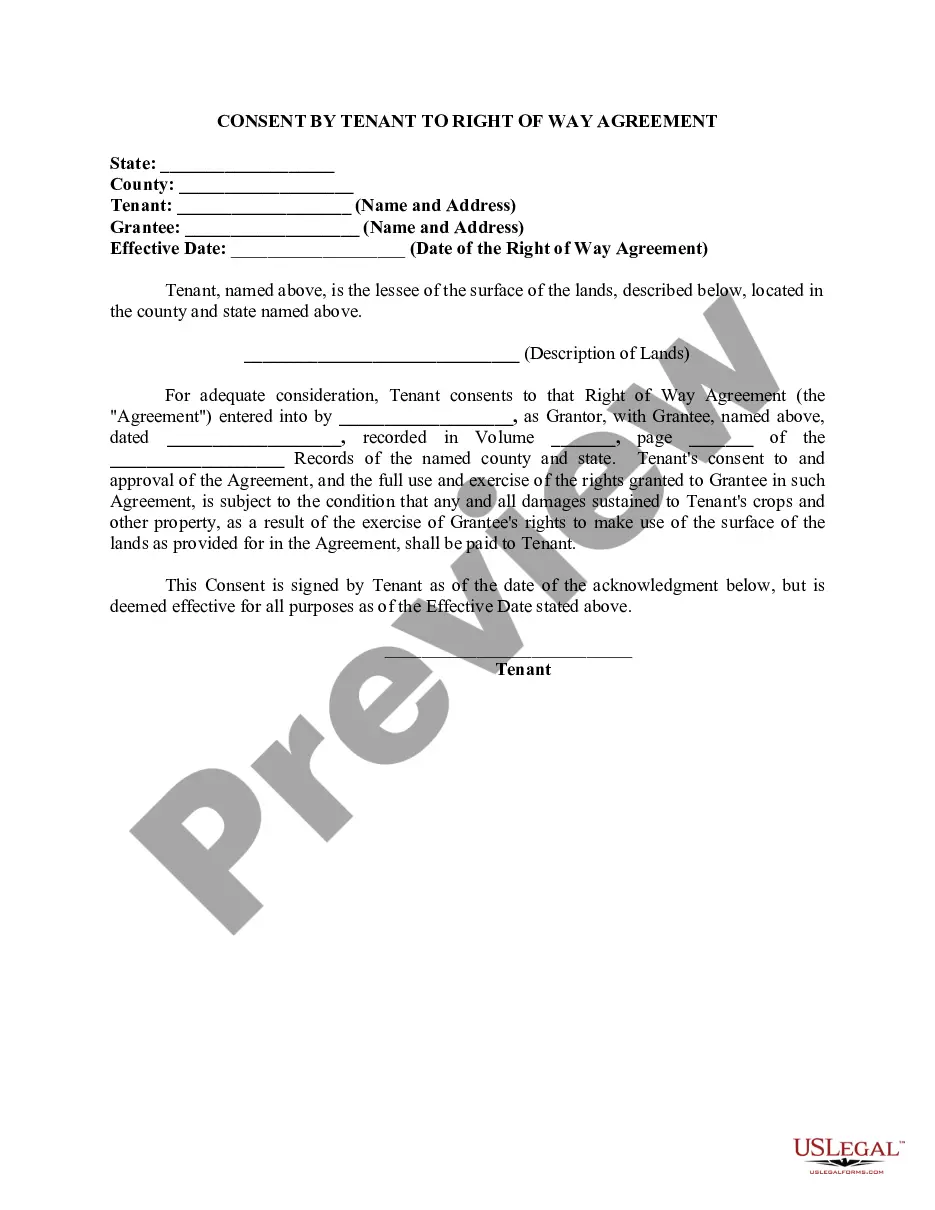
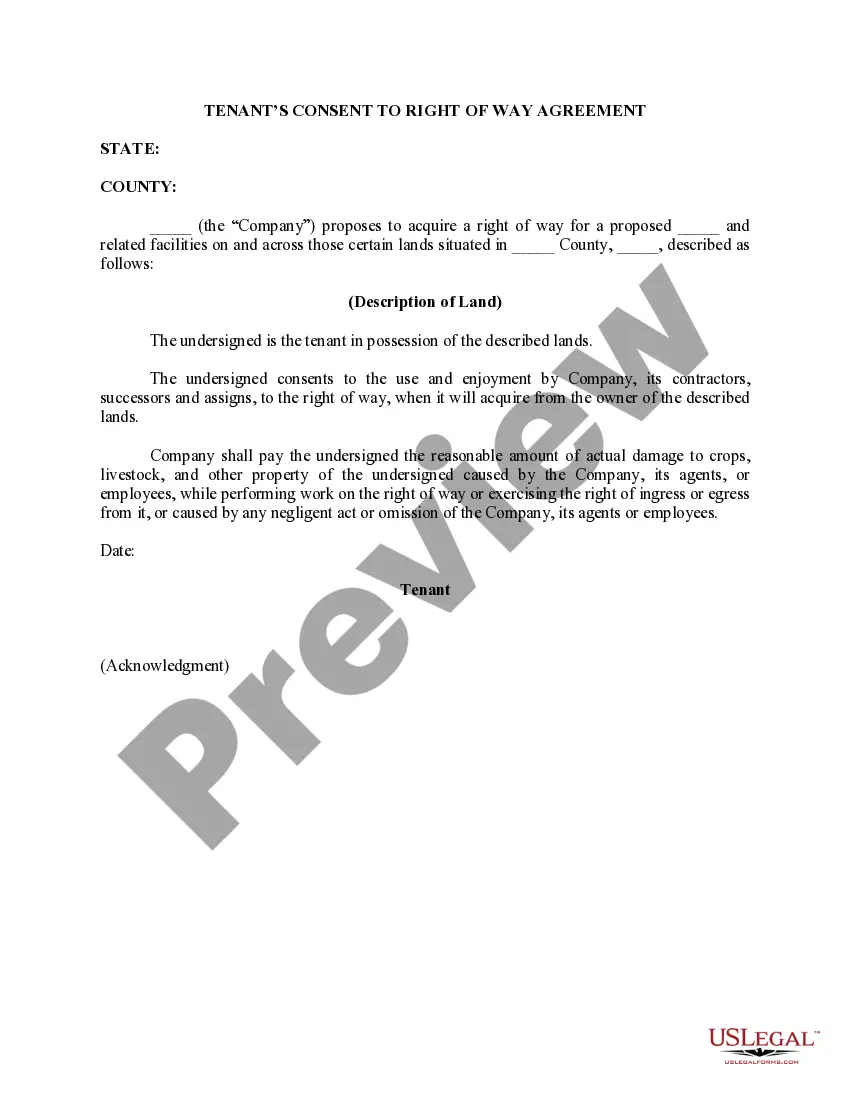
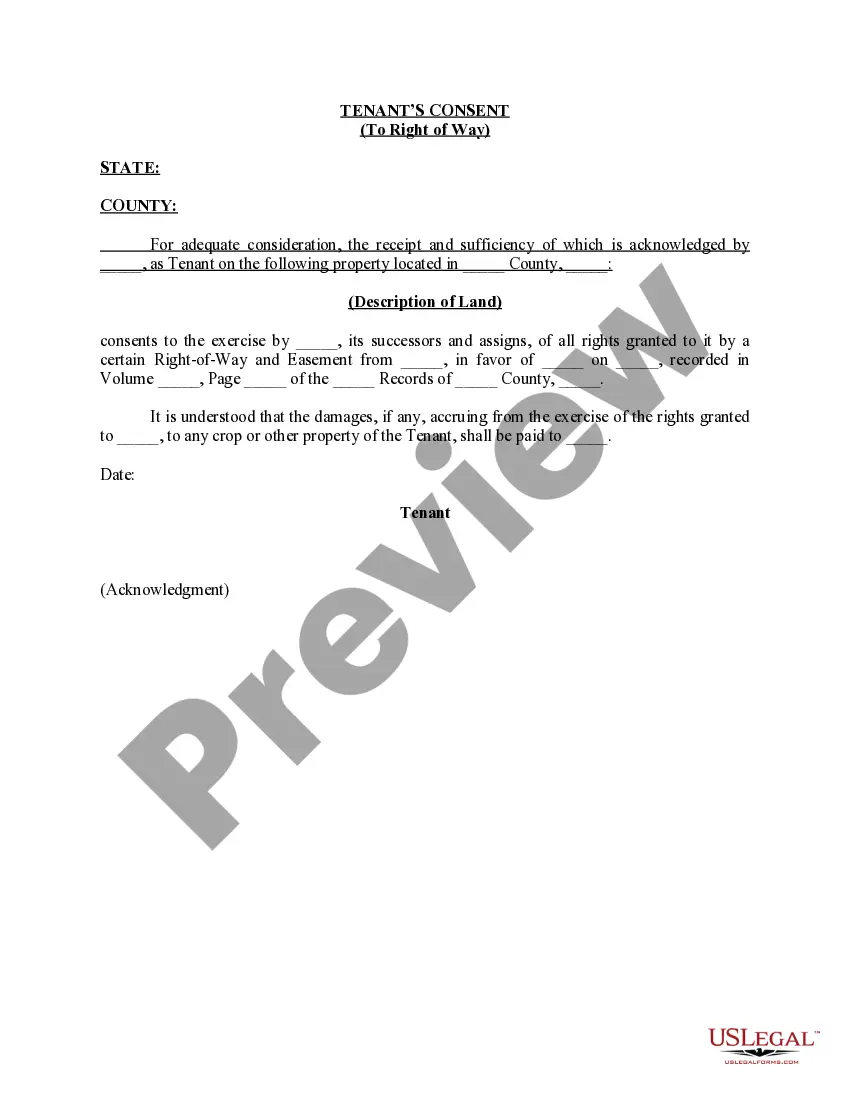
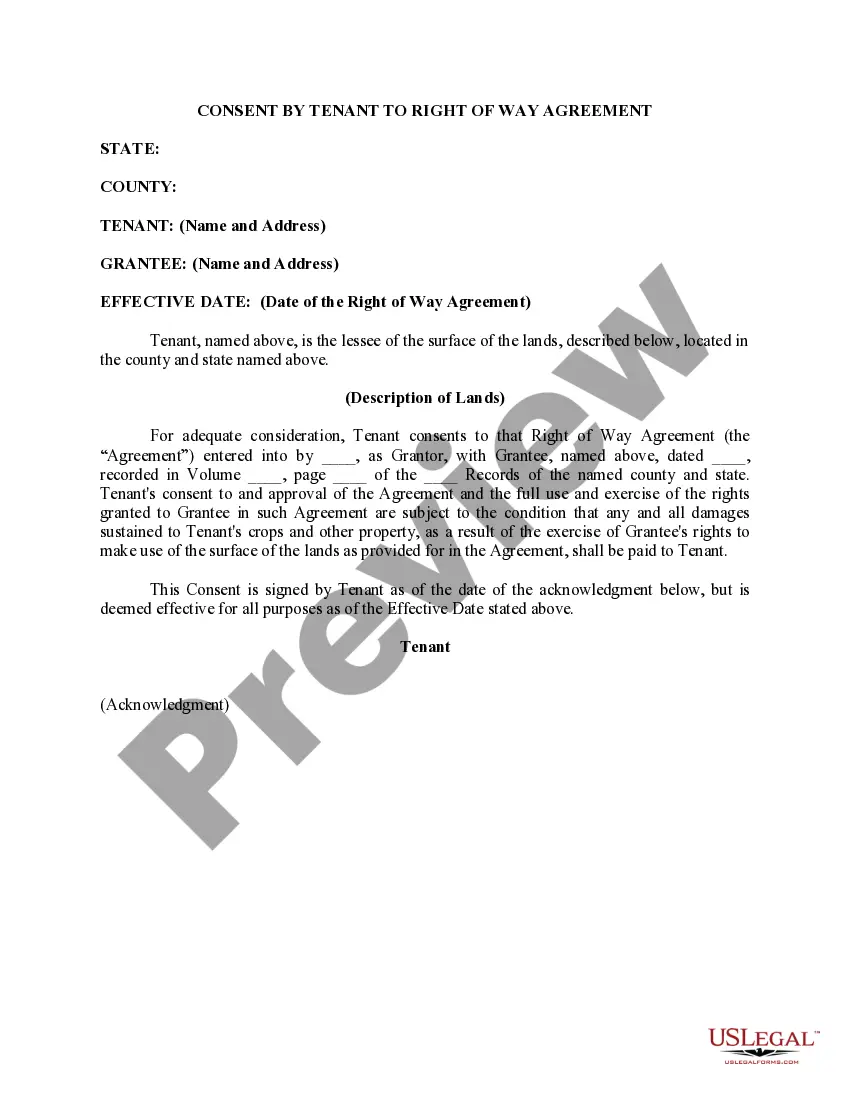
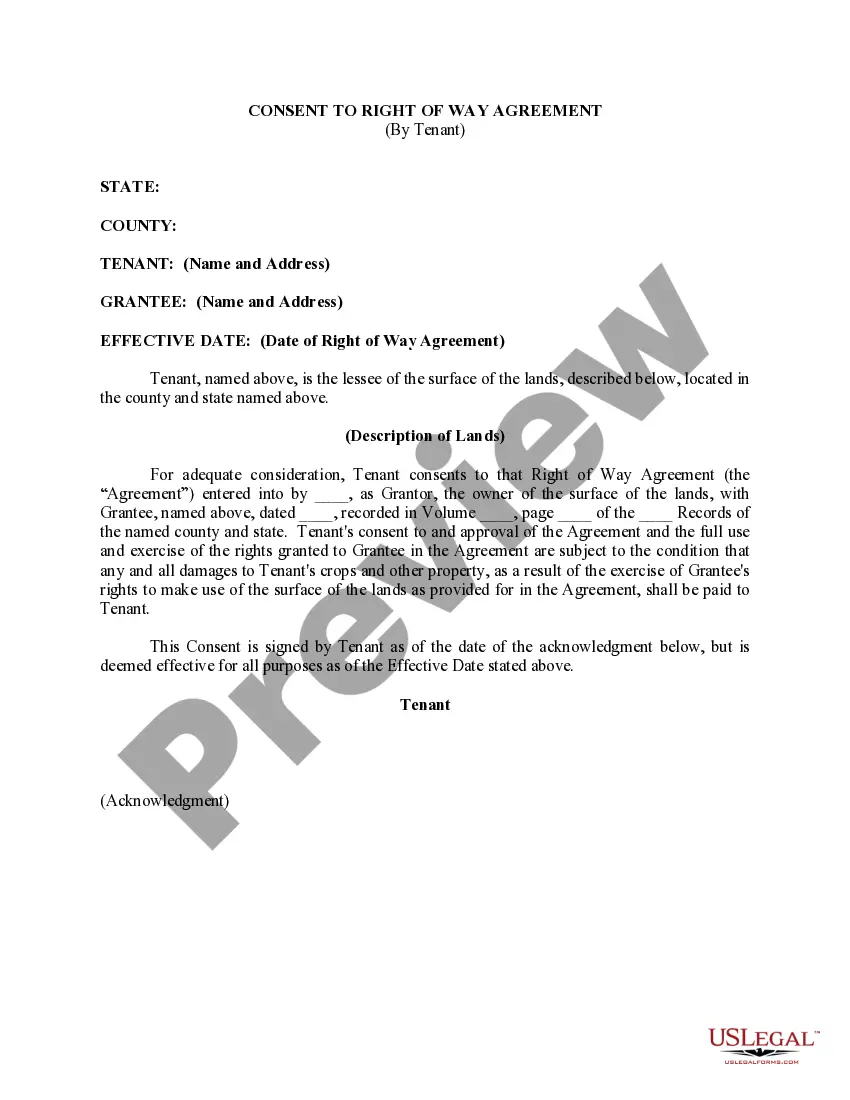
The Consent by Tenant to Right of Way Agreement form allows a tenant to consent to a right of way granted by the landowner. This document ensures that the tenant will be compensated for any damage to their property, including crops, caused by the actions associated with the right of way. This form is essential to establish a clear agreement between the tenant and the grantee, distinguishing it from other property-related agreements.
Form components explained
- State and County: Identification of where the agreement is valid.
- Tenant Information: Name and address of the tenant, who is the surface lessee.
- Grantee Information: Name and address of the person or entity benefiting from the right of way.
- Description of Lands: Specific details about the property involved in the agreement.
- Effective Date: Indicates when the right of way agreement takes effect.
- Conditions of Consent: Assurance that the tenant will be paid for damages to their property.
When to use this document
This form is typically used when a tenant needs to provide consent for a right of way that allows another party to use a portion of their leased land. It is particularly relevant in agricultural settings, where landowners or utility companies may need access for maintenance or installation of infrastructure that could affect the tenant's crops or property. This agreement ensures legal protection and compensation for the tenant.
Who can use this document
- Tenants leasing agricultural or commercial land.
- Landowners granting a right of way to third parties.
- Grantees who need access to the land for infrastructure or utilities.
- Legal professionals assisting clients in property agreements.
How to prepare this document
- Identify the parties: Fill in the names and addresses of the tenant and the grantee.
- Specify the property: Provide a detailed description of the lands involved in the right of way.
- Enter effective date: Indicate the date when the right of way agreement takes effect.
- Condition of consent: Confirm the condition regarding payment for any damages to the tenant's property.
- Sign the form: The tenant must sign the consent section to finalize the agreement.
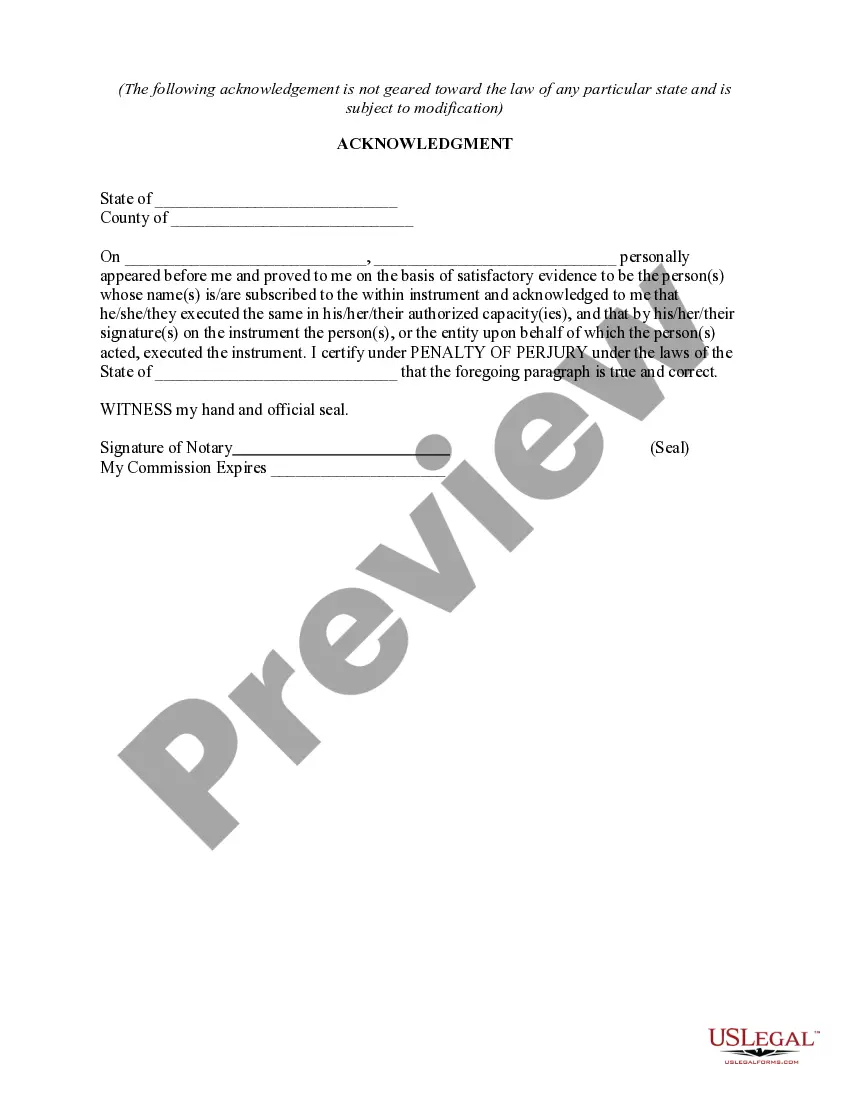
- Complete acknowledgment: A notary should witness the signing if required.
Does this document require notarization?
Yes, this form must be notarized to be legally valid. This step ensures that the signatures on the agreement are authentic and that the parties fully understand the implications of their consent. US Legal Forms offers integrated online notarization, allowing you to complete this process securely through a video call without the need for in-person travel.
Get your form ready online
Our built-in tools help you complete, sign, share, and store your documents in one place.
Make edits, fill in missing information, and update formatting in US Legal Forms—just like you would in MS Word.
Download a copy, print it, send it by email, or mail it via USPS—whatever works best for your next step.
Sign and collect signatures with our SignNow integration. Send to multiple recipients, set reminders, and more. Go Premium to unlock E-Sign.
If this form requires notarization, complete it online through a secure video call—no need to meet a notary in person or wait for an appointment.
We protect your documents and personal data by following strict security and privacy standards.

Make edits, fill in missing information, and update formatting in US Legal Forms—just like you would in MS Word.

Download a copy, print it, send it by email, or mail it via USPS—whatever works best for your next step.

Sign and collect signatures with our SignNow integration. Send to multiple recipients, set reminders, and more. Go Premium to unlock E-Sign.

If this form requires notarization, complete it online through a secure video call—no need to meet a notary in person or wait for an appointment.

We protect your documents and personal data by following strict security and privacy standards.
Common mistakes
- Not providing a detailed description of the lands, which can cause confusion about the consent area.
- Failing to sign the document by the tenant, making it invalid.
- Omitting the effective date, leading to ambiguity about when the agreement begins.
- Not including compensation terms, which may jeopardize tenant rights.
Why use this form online
- Convenient online access to legal forms, allowing for quick completion and download.
- Editable templates ensure customization to fit the specific needs of the tenant and landowner.
- Reliability of forms drafted by licensed attorneys, providing assurance of compliance with legal standards.
Legal use & context
- The form serves as a legal document outlining tenant consent to a right of way agreement.
- It protects the tenantâs rights and ensures compensation for damages as specified.
- Clear agreement reduces the potential for disputes between tenants and landowners.
Summary of main points
- The form allows tenants to consent legally to a right of way and ensures their rights are protected through compensation for damages.
- It is crucial for both tenants and landowners to understand the implications and responsibilities outlined in the agreement.
- Notarization is required to validate the consent, protecting all parties involved in the agreement.
Looking for another form?
Form popularity
FAQ
A right of way is an easement that allows someone to travel through your property to get to another location.If property ownership is transferred through sale or other legal methods, a new easement agreement must be made. Appurtenant easements are attached to the property, not the individual.
An easement is a limited right to use another person's land for a stated purpose. Examples of easements include the use of private roads and paths, or the use of a landowner's property to lay railroad tracks or electrical wires.
A Right of Way Easement is a form of Easement annexed to land which grants a right to travel over a part of the landowner's property. This right of way is usually granted to neighbouring landowners. The legal rights of the attached landowners to use and maintain the right of way may not always be clear.
Generally once an easement or right of way has arisen it will continue indefinitely unless it is extinguished or released.
An easement is a nonpossessory right to use and/or enter onto the real property of another without possessing it. It is "best typified in the right of way which one landowner, A, may enjoy over the land of another, B".
What are Easements and Rights-of-Way? Easements are nonpossessory interests in real property. More simply, an easement is the right to use another's property for a specific purpose. Rights-of-way are easements that specifically grant the holder the right to travel over another's property.
"National roads shall have a right of way of not less than twenty (20) meters, provided, that such minimum width may be reduced at the discretion of the Minister of Public Highways to fifteen (15) meters in highly urbanized areas and that a right of way of at least sixty (60) meters shall be reserved for roads
Give the document a simple title: Grant of Easement is sufficient. Identify the parties. You need to explain who the parties are to the agreement. The person granting the easement to his property is the Grantor and the person gaining access to the property is the Grantee.
Public rights of way can come into existence through creation (either by legal order or by an agreement made with the landowner) or dedication by the landowner (either expressly or by presumption or by deemed dedication following 20 years' public use).