Ordinance Adopting the Budget
About this form
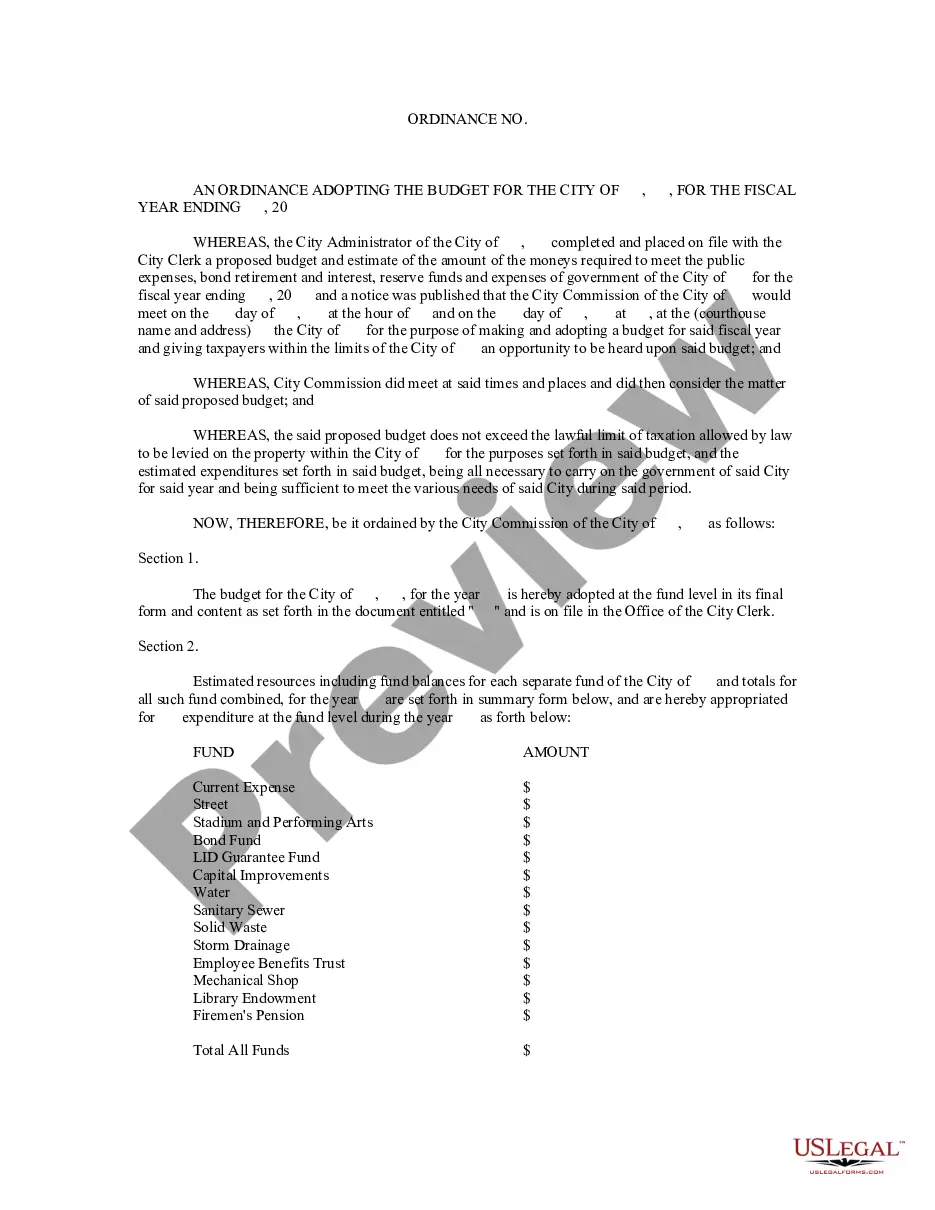
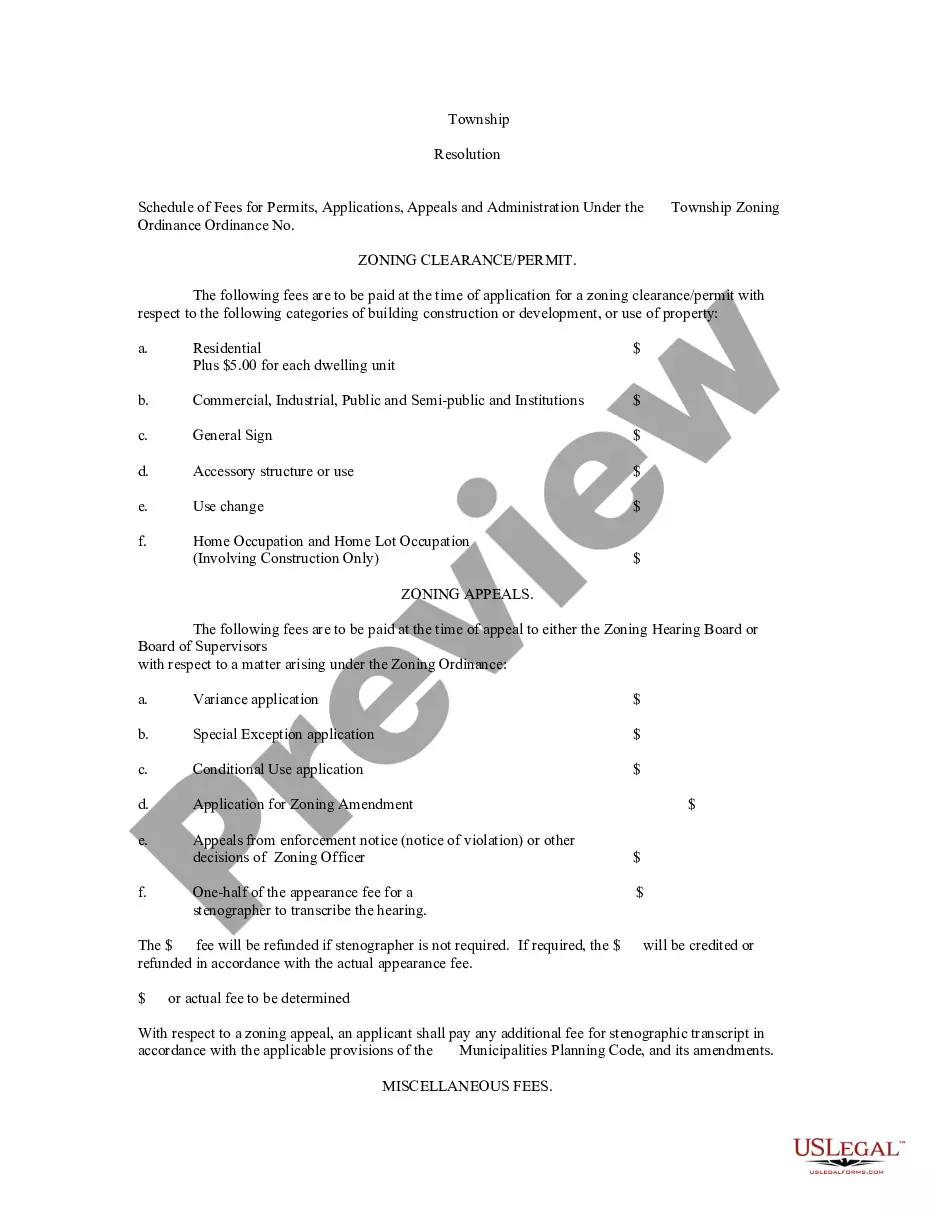
The Ordinance Adopting the Budget is a legal document used by municipalities to formally adopt a budget for a specific fiscal year. This form sets forth the necessary financial allocations for city operations, including public expenditures, bond retirements, and various fund appropriations. Unlike other budget forms, this ordinance serves as an official declaration by the City Commission, providing legal authority for the budget's implementation.
Main sections of this form
- Introduction of the ordinance, detailing the city and fiscal year.
- Provision outlining the budget's preparation and publication for public consideration.
- Sections detailing the breakdown of estimated resources and appropriations per fund.
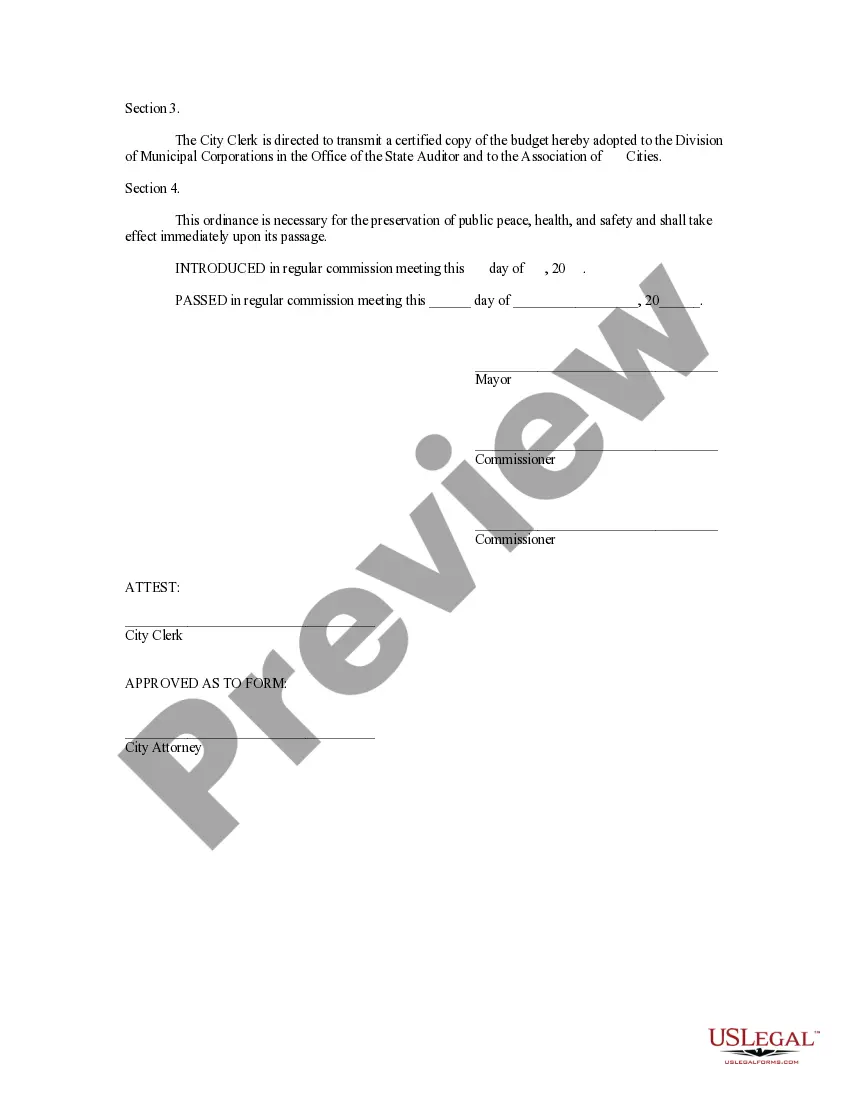
- Instructions for the City Clerk to transmit a certified copy of the budget.
- Effective date provision stating that the ordinance takes effect immediately upon passage.
When to use this document
This ordinance should be used when a city needs to formally adopt its budget for the upcoming fiscal year. It is essential during the budgeting process when city officials must provide public notice and hold meetings to discuss financial plans. Using this form ensures the city complies with legal requirements for budget adoption.
Who this form is for
- City Commission or city council members responsible for budget approval.
- City Administrators or financial officers preparing the budget.
- City Clerks tasked with filing and certifying the budget document.
- Municipalities seeking to comply with state laws regarding budget adoption.
How to complete this form
- Enter the name of the city and state where the budget is being adopted.
- Specify the fiscal year for which the budget applies.
- Detail the estimated expenditures for each fund, ensuring amounts are accurately calculated.
- Fill in dates and signatures for the mayor, commissioners, and the city clerk.
- Ensure that a public notice has been published before the ordinance is introduced and passed.
Does this form need to be notarized?
Notarization is not commonly needed for this form. However, certain documents or local rules may make it necessary. Our notarization service, powered by Notarize, allows you to finalize it securely online anytime, day or night.
Get your form ready online
Our built-in tools help you complete, sign, share, and store your documents in one place.
Make edits, fill in missing information, and update formatting in US Legal Forms—just like you would in MS Word.
Download a copy, print it, send it by email, or mail it via USPS—whatever works best for your next step.
Sign and collect signatures with our SignNow integration. Send to multiple recipients, set reminders, and more. Go Premium to unlock E-Sign.
If this form requires notarization, complete it online through a secure video call—no need to meet a notary in person or wait for an appointment.
We protect your documents and personal data by following strict security and privacy standards.

Make edits, fill in missing information, and update formatting in US Legal Forms—just like you would in MS Word.

Download a copy, print it, send it by email, or mail it via USPS—whatever works best for your next step.

Sign and collect signatures with our SignNow integration. Send to multiple recipients, set reminders, and more. Go Premium to unlock E-Sign.

If this form requires notarization, complete it online through a secure video call—no need to meet a notary in person or wait for an appointment.

We protect your documents and personal data by following strict security and privacy standards.
Mistakes to watch out for
- Failing to publish the public notice prior to budget meetings.
- Neglecting to include accurate fund amount details.
- Omitting required signatures or dates when finalizing the document.
- Not keeping a certified copy for public records or state agencies.
Why use this form online
- Convenience of completing the form from any location at your own pace.
- Easy to edit and customize according to specific municipal financial needs.
- Access to templates drafted by qualified legal professionals, ensuring compliance.
- Fast and secure downloading, eliminating the need for in-person visits to legal offices.
Legal use & context
- This ordinance is necessary for a municipality to legally allocate its budget and fund necessary government functions.
- Failure to adopt a budget can lead to legal consequences and hinder city operations.
- Compliance with local and state laws concerning budget processes is crucial for enforceability.
Main things to remember
- The Ordinance Adopting the Budget is critical for formalizing municipal financial planning.
- Understanding the various components and legal requirements is vital for successful completion.
- Utilizing this form helps municipalities remain compliant with state regulations regarding budget adoption.
Looking for another form?








Form popularity
FAQ
The budget adoption process is typically a formal process whereby an organization votes on accepting a budget. The process usually varies by organization, though a few steps may be similar. In some cases, there may be a preparation, review, and adoption phase.
Bank statements. Investment accounts. Recent utility bills. W-2s and paystubs. 1099s. Credit card bills. Receipts from the last three months. Mortgage or auto loan statements.
Budget message means a formal oral presentation by the executive to the council that explains the budget in terms of goals to be accomplished and how the budget relates to the Comprehensive Plan.
Four Main Types of Budgets/Budgeting Methods. There are four common types of budgets that companies use: (1) incremental, (2) activity-based, (3) value proposition, and (4) zero-based. These four budgeting methods each have their own advantages and disadvantages, which will be discussed in more detail in this guide.
When a budget is approved via formal processing in a business.
Step 1: Note your net income. The first step in creating a budget is to identify the amount of money you have coming in. Step 2: Track your spending. Step 3: Set your goals. Step 4: Make a plan. Step 5: Adjust your habits if necessary. Step 6: Keep checking in.
Budget execution is the process of monitoring, adjusting, and reporting on the current year's budget.
The operating budget contains the expenditure and revenue generated from the daily business functions of the company. The operating budget concentrates on the operating expenditures, including cost of produce sold in the market or popularly known as cost of sold goods (COGS) and the revenue or income.
Depending on these estimates, budgets are classified into three categories-balanced budget, surplus budget and deficit budget.