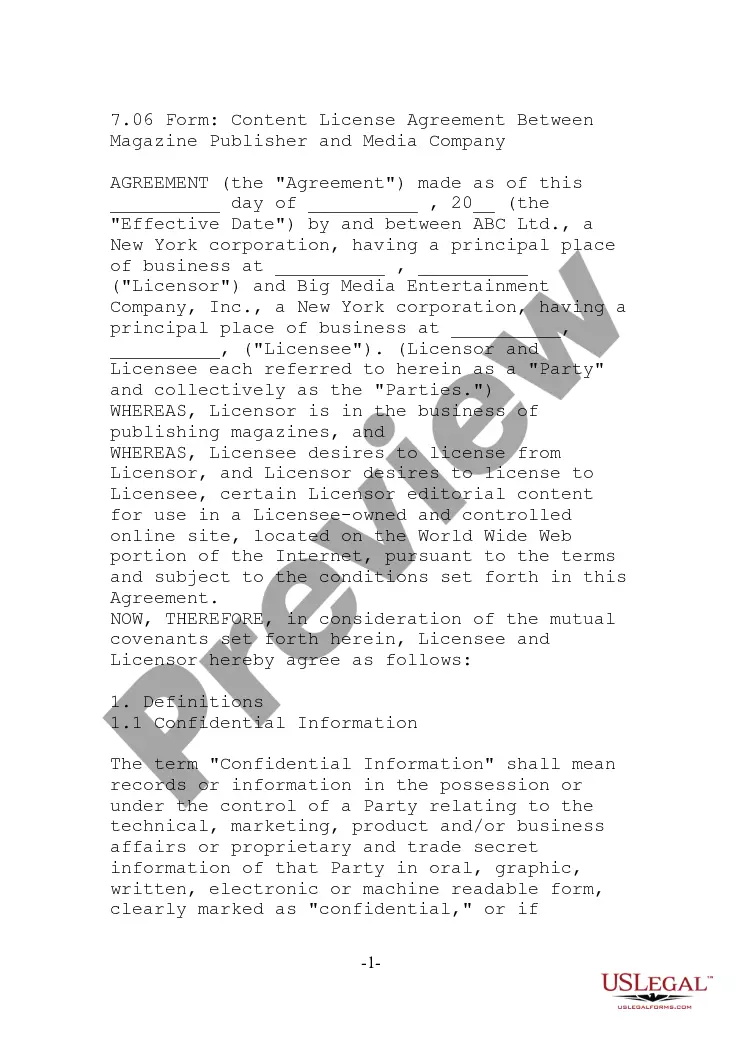
Content License Between a Magazine Publisher and a Web Site Publisher
What is this form?
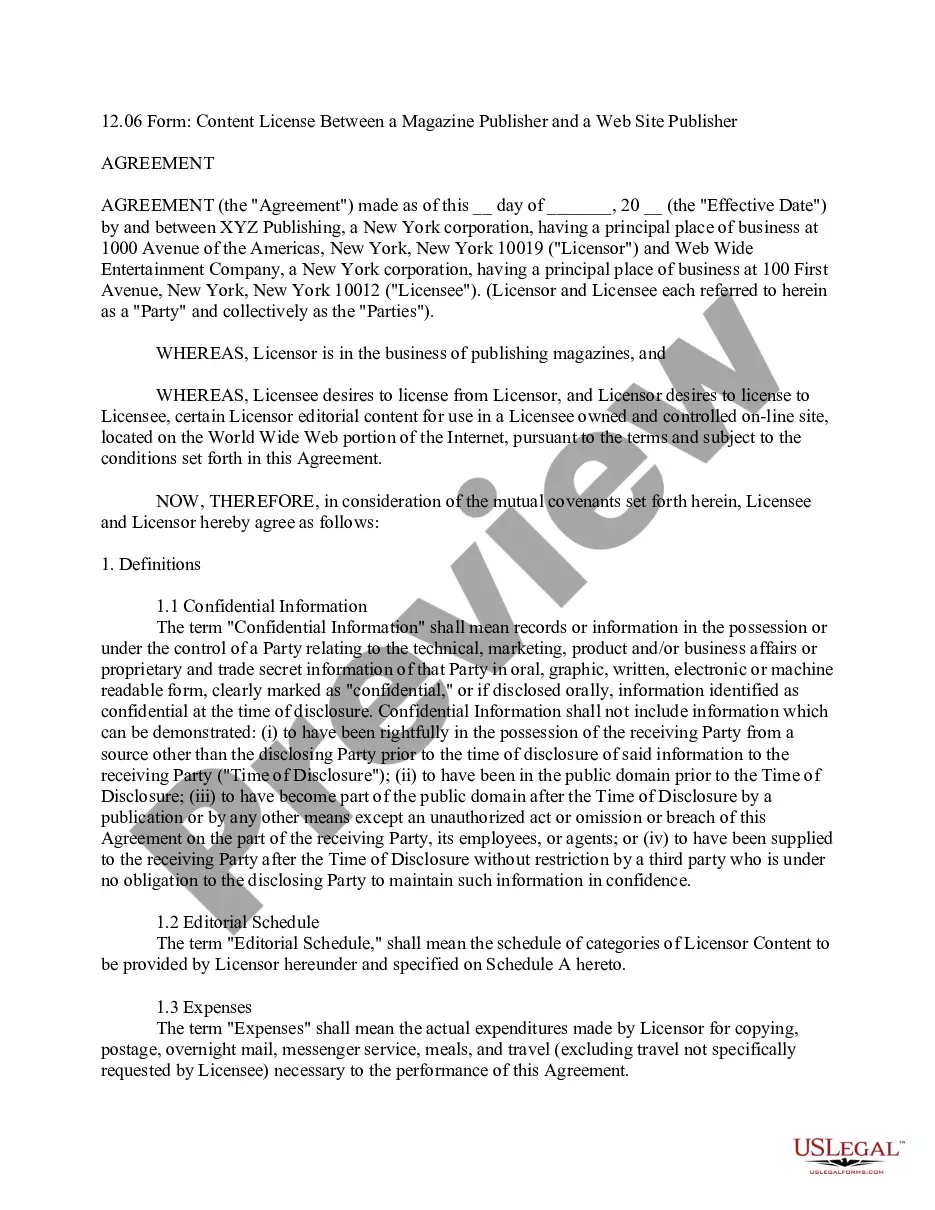
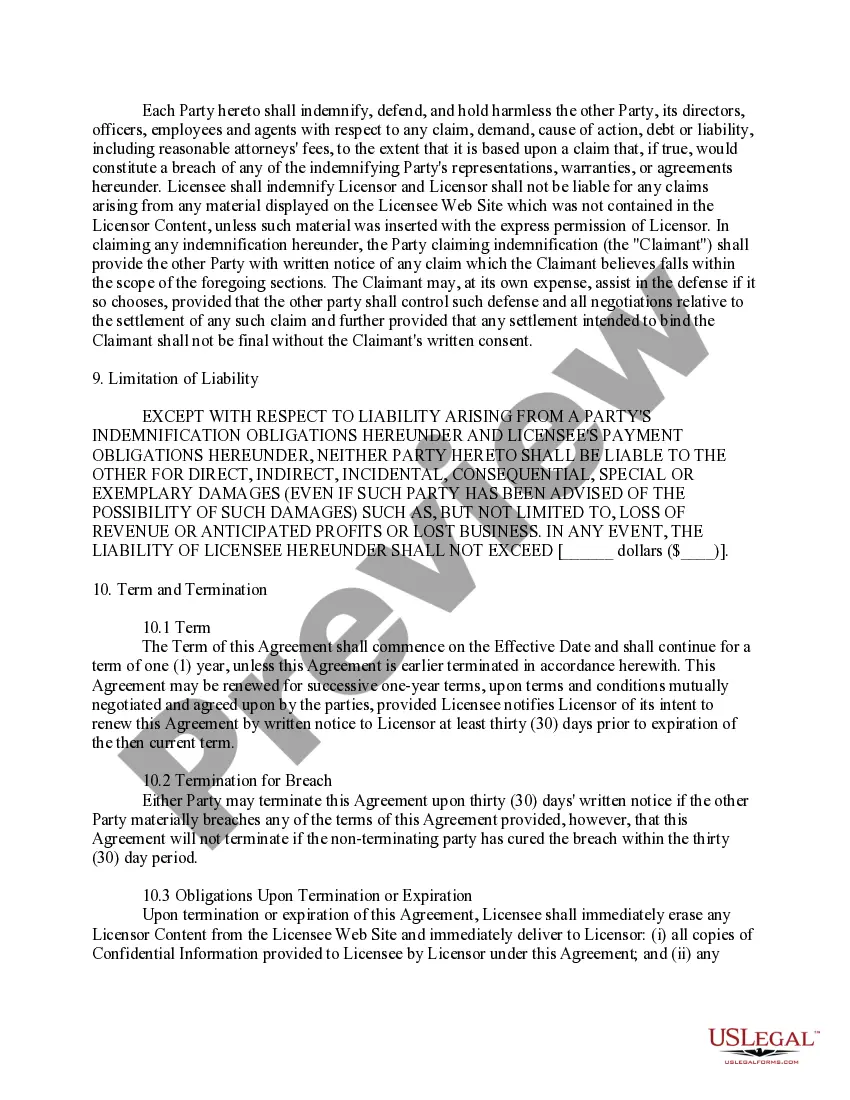
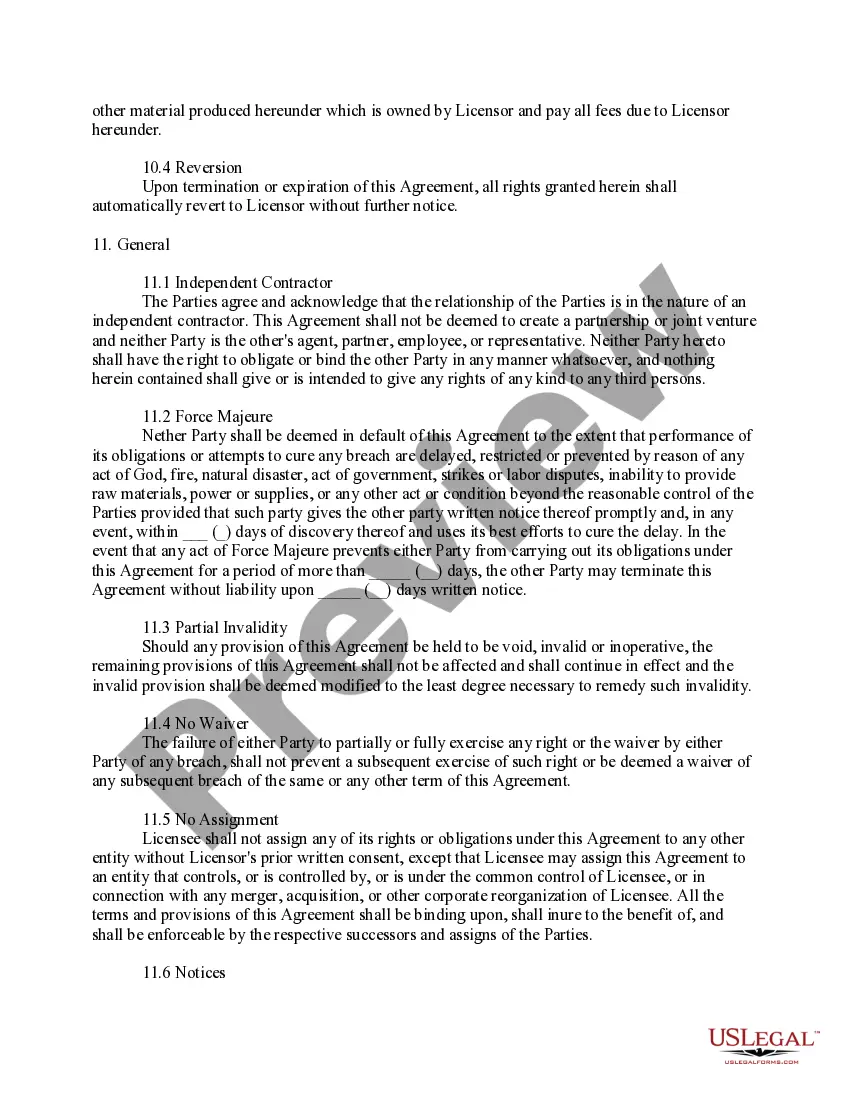
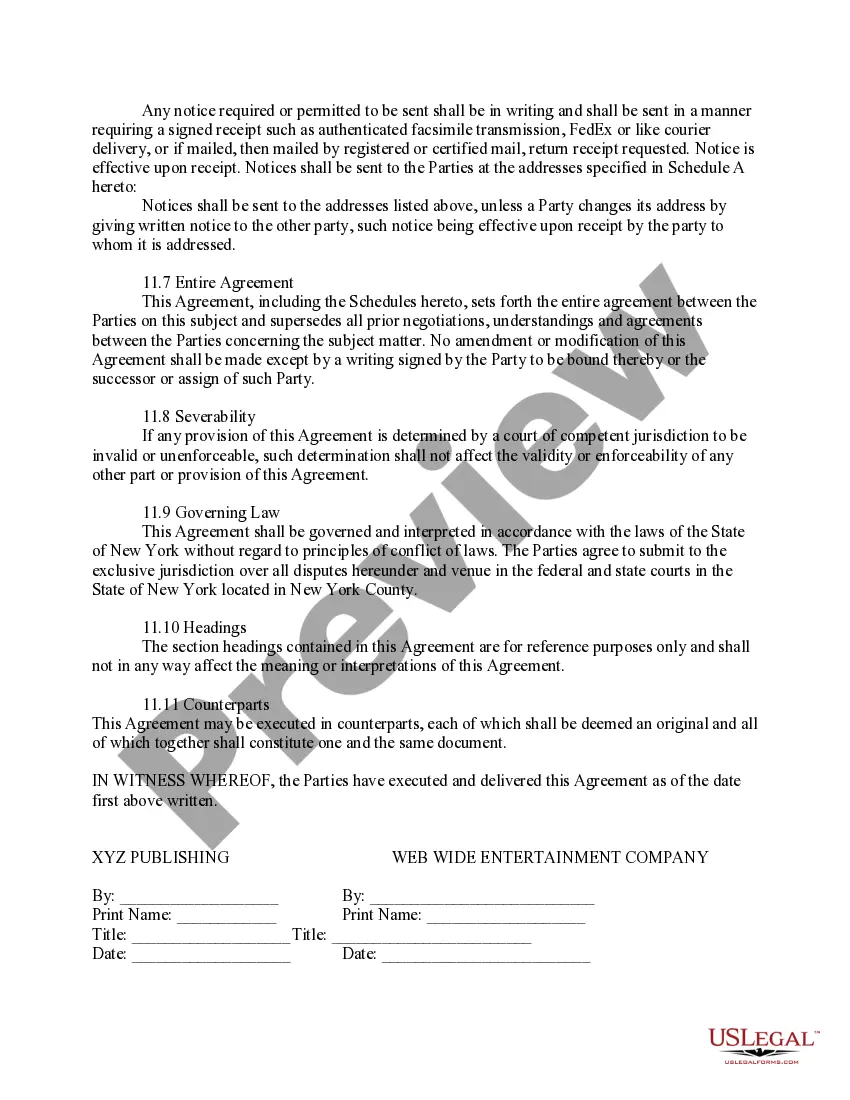
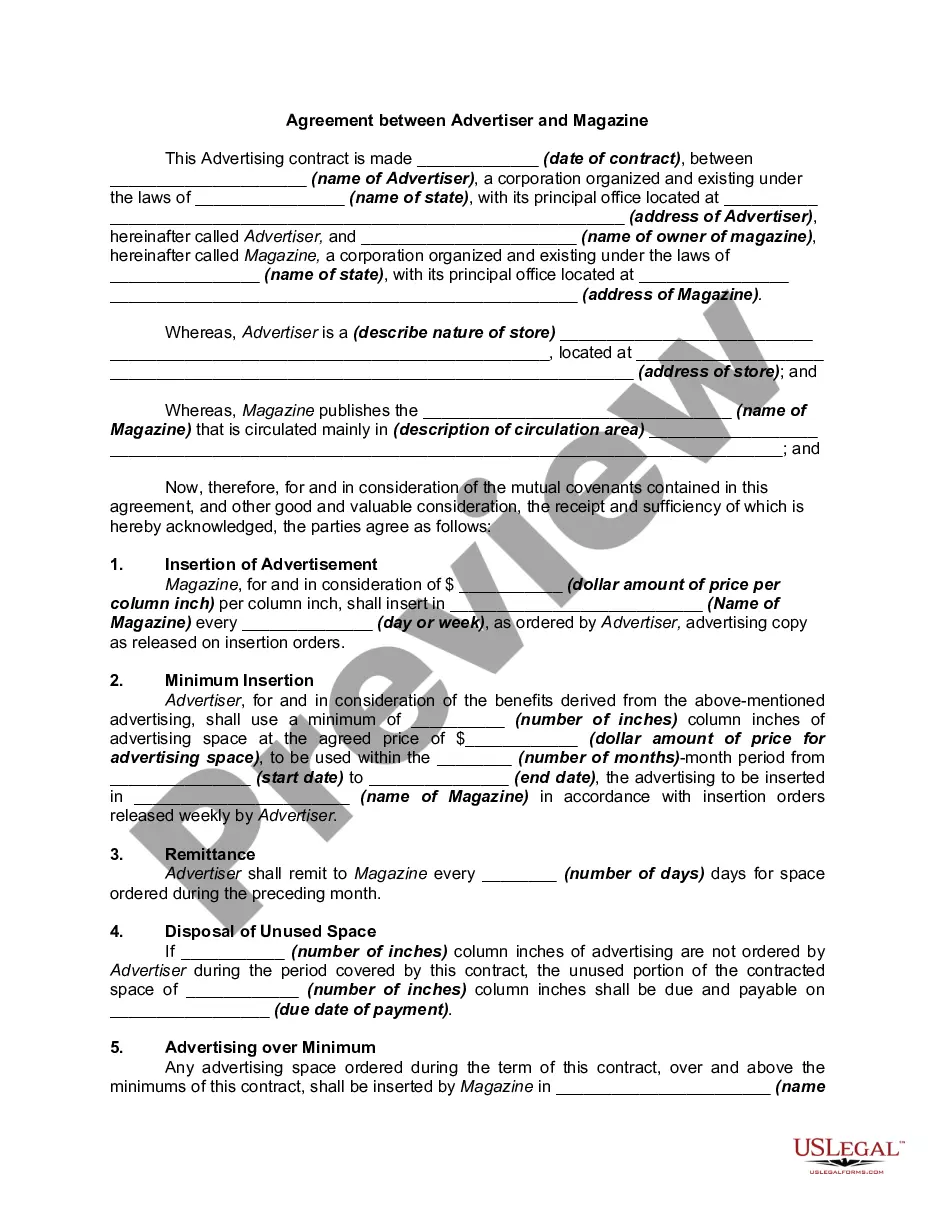
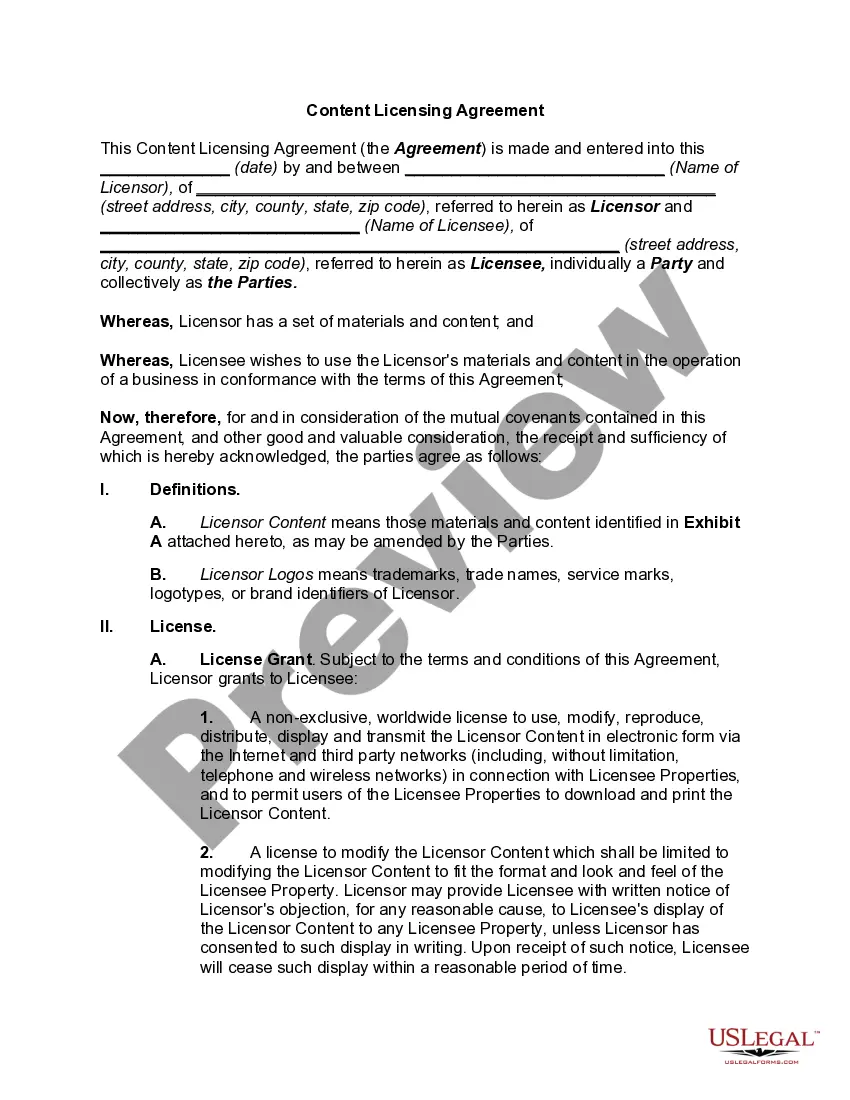
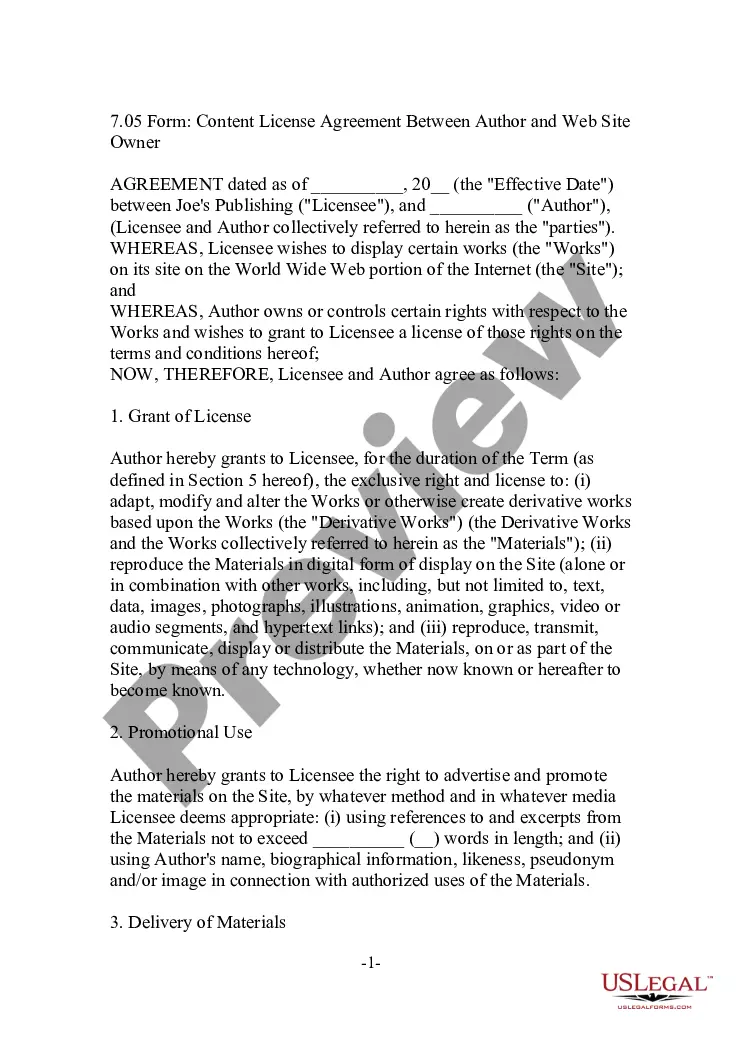
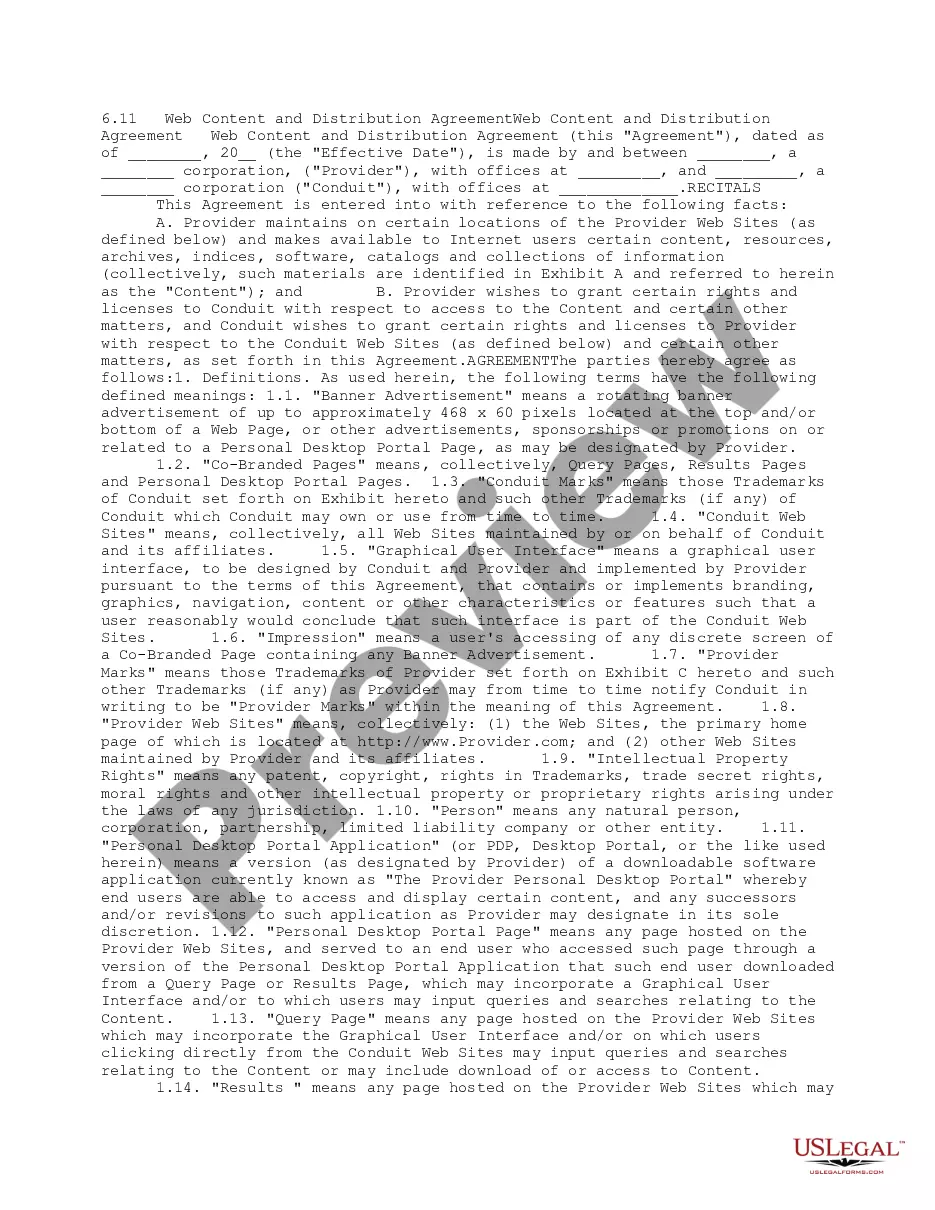
The Content License Between a Magazine Publisher and a Web Site Publisher is a legal agreement that grants a website publisher the rights to use editorial content from a magazine publisher. This form is specifically designed for scenarios where digital rights and content reuse are paramount, distinguishing it from general licensing agreements by focusing on online content usage and publication terms.
Key parts of this document
- Definitions: Specifies important terms such as "Licensor," "Licensee," and "Confidential Information".
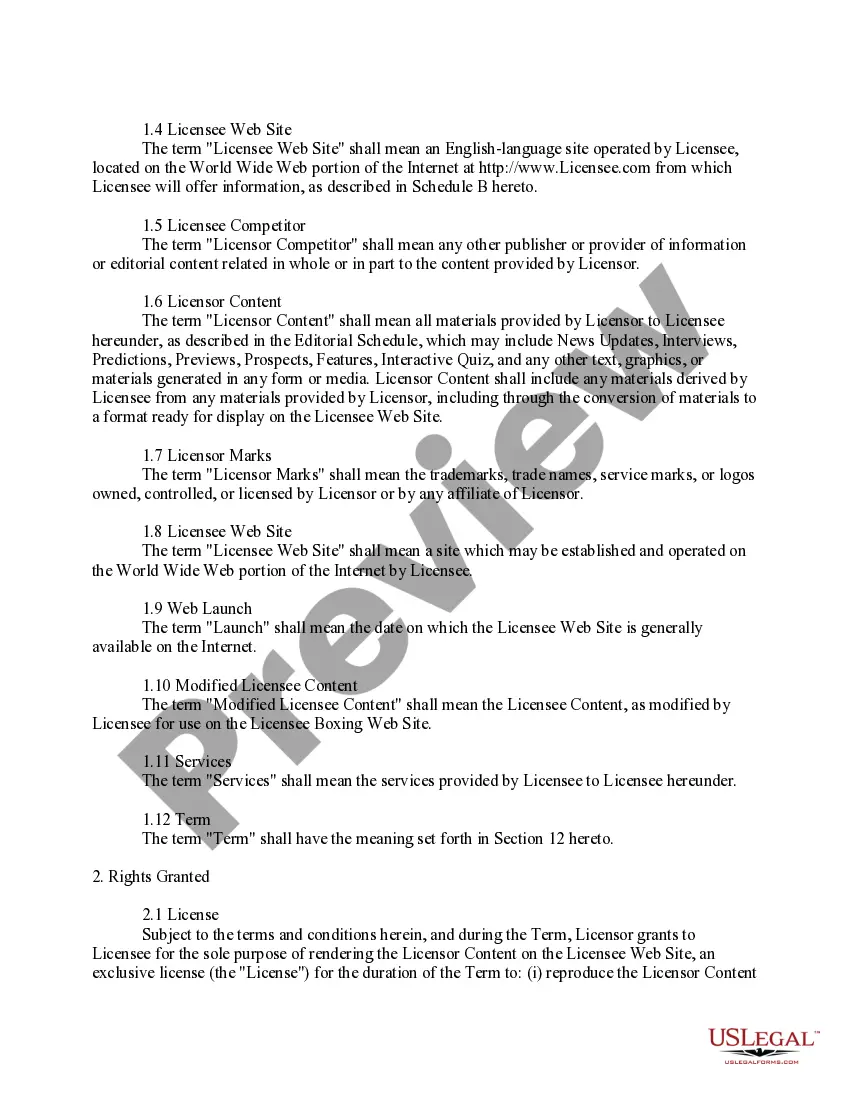
- Rights Granted: Details the exclusive license granted to the Licensee for using Licensor content.
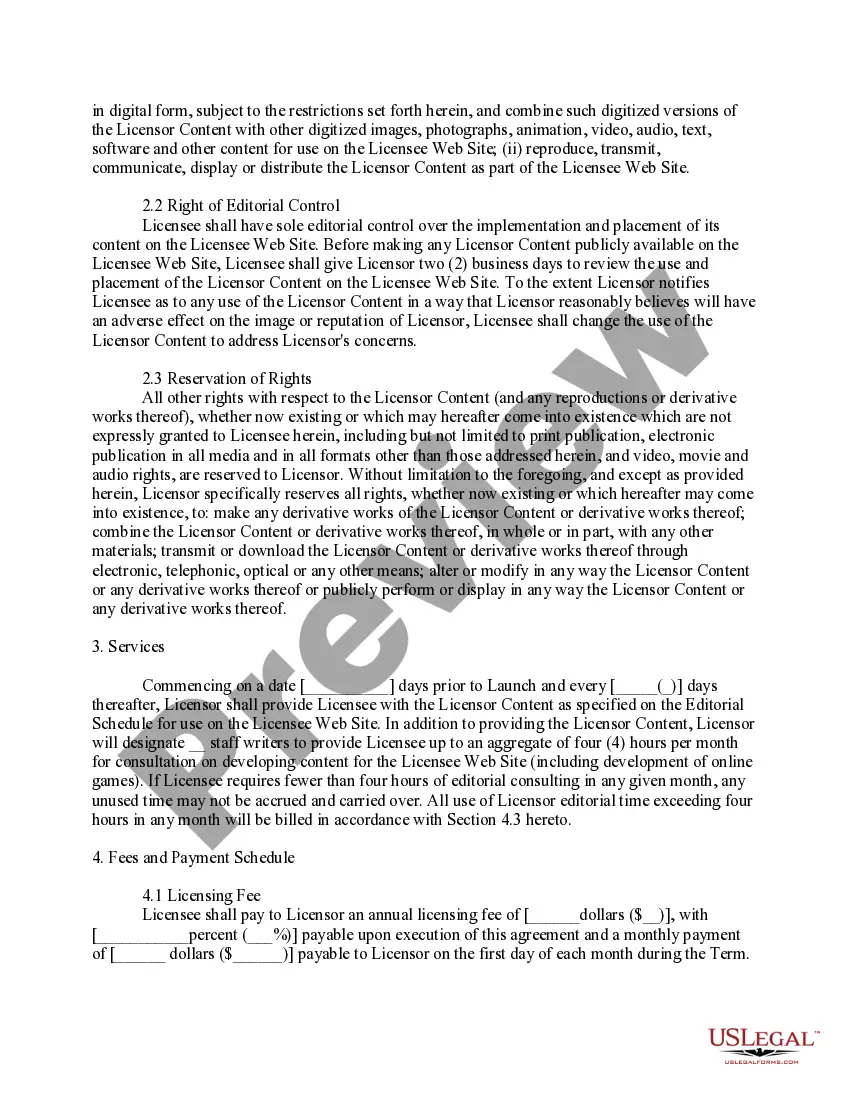
- Fees and Payment Schedule: Outlines the licensing fee structure and payment obligations.
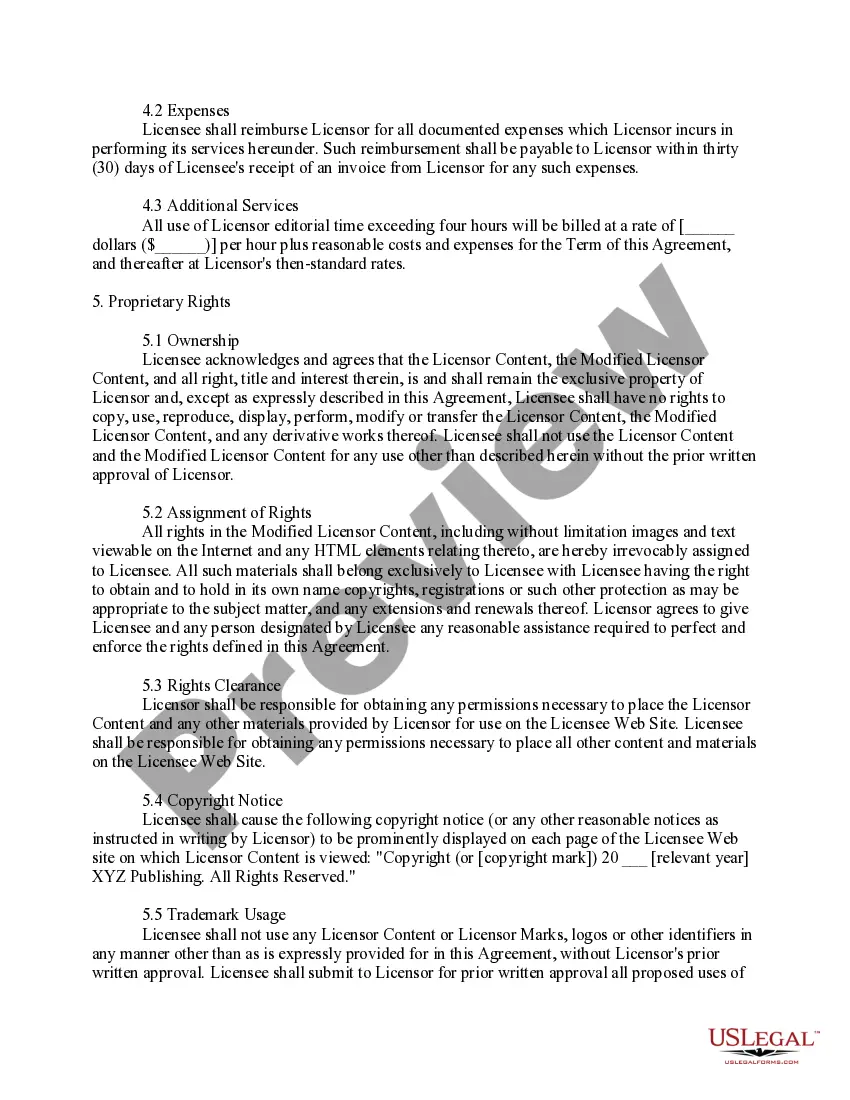
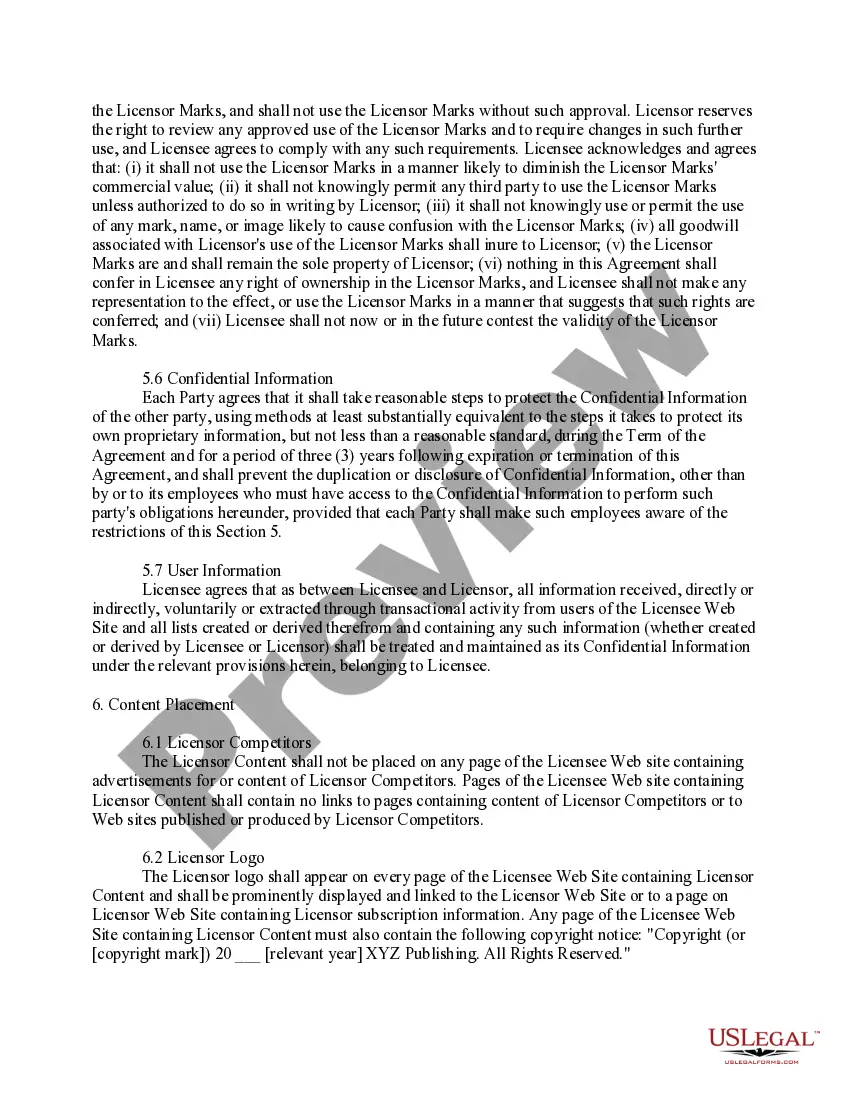
- Proprietary Rights: Clarifies ownership and rights related to the Licensor content.
- Termination: Explains conditions under which the agreement can be terminated by either party.
Common use cases
This form is used when a web publisher wants to license content from a magazine publisher for display on their website. Scenarios may include partnerships for content sharing, collaborative promotions, or enhancing a digital platform with credible editorial material. If you are planning to use magazine articles, images, or other content online, this form is essential to establish clear rights and obligations.
Who can use this document
- Web site publishers seeking to feature magazine content on their platforms.
- Magazine publishers who wish to monetize their content through licensing agreements.
- Content creators entering partnerships with established publishers for digital content distribution.
How to complete this form
- Identify the parties: Enter the names and addresses of both the Licensor and Licensee.
- Specify the licensing terms: Detail the nature of the content being licensed and any restrictions.
- Outline payment details: Fill in the annual licensing fee and payment schedule as agreed upon.
- Include the duration of the agreement: State the effective date and term length of the agreement.
- Sign and date the agreement: Ensure both parties sign the document to validate the terms.
Does this form need to be notarized?
Notarization is generally not required for this form. However, certain states or situations might demand it. You can complete notarization online through US Legal Forms, powered by Notarize, using a verified video call available anytime.
Get your form ready online
Our built-in tools help you complete, sign, share, and store your documents in one place.
Make edits, fill in missing information, and update formatting in US Legal Forms—just like you would in MS Word.
Download a copy, print it, send it by email, or mail it via USPS—whatever works best for your next step.
Sign and collect signatures with our SignNow integration. Send to multiple recipients, set reminders, and more. Go Premium to unlock E-Sign.
If this form requires notarization, complete it online through a secure video call—no need to meet a notary in person or wait for an appointment.
We protect your documents and personal data by following strict security and privacy standards.

Make edits, fill in missing information, and update formatting in US Legal Forms—just like you would in MS Word.

Download a copy, print it, send it by email, or mail it via USPS—whatever works best for your next step.

Sign and collect signatures with our SignNow integration. Send to multiple recipients, set reminders, and more. Go Premium to unlock E-Sign.

If this form requires notarization, complete it online through a secure video call—no need to meet a notary in person or wait for an appointment.

We protect your documents and personal data by following strict security and privacy standards.
Typical mistakes to avoid
- Failing to specify the exact content being licensed, leading to potential disputes.
- Not including a clear payment schedule, which can result in misunderstanding regarding fees.
- Overlooking the necessity of reviewing licensing content placement, which can affect reputations.
Advantages of online completion
- Easy access to professionally drafted content, ensuring legal compliance.
- Convenient storage and retrieval of digital documents after completion.
- Editable in Word format, allowing for customization based on specific agreements.
Legal use & context
- This form establishes a legally binding agreement for content licensing between magazine and website publishers.
- The licensor retains ownership of the content and specifies usage rights, protecting intellectual property.
- Improperly executed agreements may lead to legal disputes regarding content ownership and usage rights.
Main things to remember
- The Content License form formalizes the rights and responsibilities of magazine and web site publishers.
- Both parties must understand their obligations concerning content usage and payment terms.
- This contract is essential for protecting against copyright violations and ensures proper attribution of published works.
Looking for another form?
Form popularity
FAQ
It is not uncommon for a book to be published in different countries by different publishers. Once the book has passed over into the public domain, then any publisher can choose to publish the book and make it available to readers.
Copyright and publishing (or reproduction) rights are two different things. Copyright is a legal term. Publishing rights are what writers sell, assign, license or otherwise hand over when they allow others to publish their work.
Most likely for each individual work within the magazine there would be one copyright holder, either the magazine or the creator.If the photographer/author was employed the magazine then their contributions would be considered work for hire, which mean the magazine would own the copyright on those works.
As nouns the difference between publication and publisher is that publication is the act of publishing printed or other matter while publisher is one who publishes, especially books.
Many writers are concerned that submitting their book to publishers or agents runs a risk a risk that their work might be stolen (gasp!).Firstly, reputable publishers and agents are not in the business of 'stealing' work.
Should I copyright my book before I submit it to editors and agents? There is no need to copyright your book (with the U.S. Copyright Office) before submitting it.The publisher merely handles the paperwork on behalf of the author, and the copyright is the author's property.
What is publication? Publication has a technical meaning in copyright law. According to the statute, Publication is the distribution of copies or phonorecords of a work to the public by sale or other transfer of ownership, or by rental, lease, or lending.
Author assigns copyright to the publisher Assignment of copyright is generally permanent unless the agreement indicates otherwise. If the author assigns copyright to the publisher; the publisher can also, at their discretion, enter into agreements with other parties to use the work.
Usually, the author of the creative work is the owner of the copyright. But in the publishing industry, the owner of the copyright may be the publishing company due to an agreement between the author and the publisher.Sometimes, even though a book is published by a major publisher, the author still owns the copyright.