Broker Agreement - Self-Employed Independent Contractor
Understanding this form
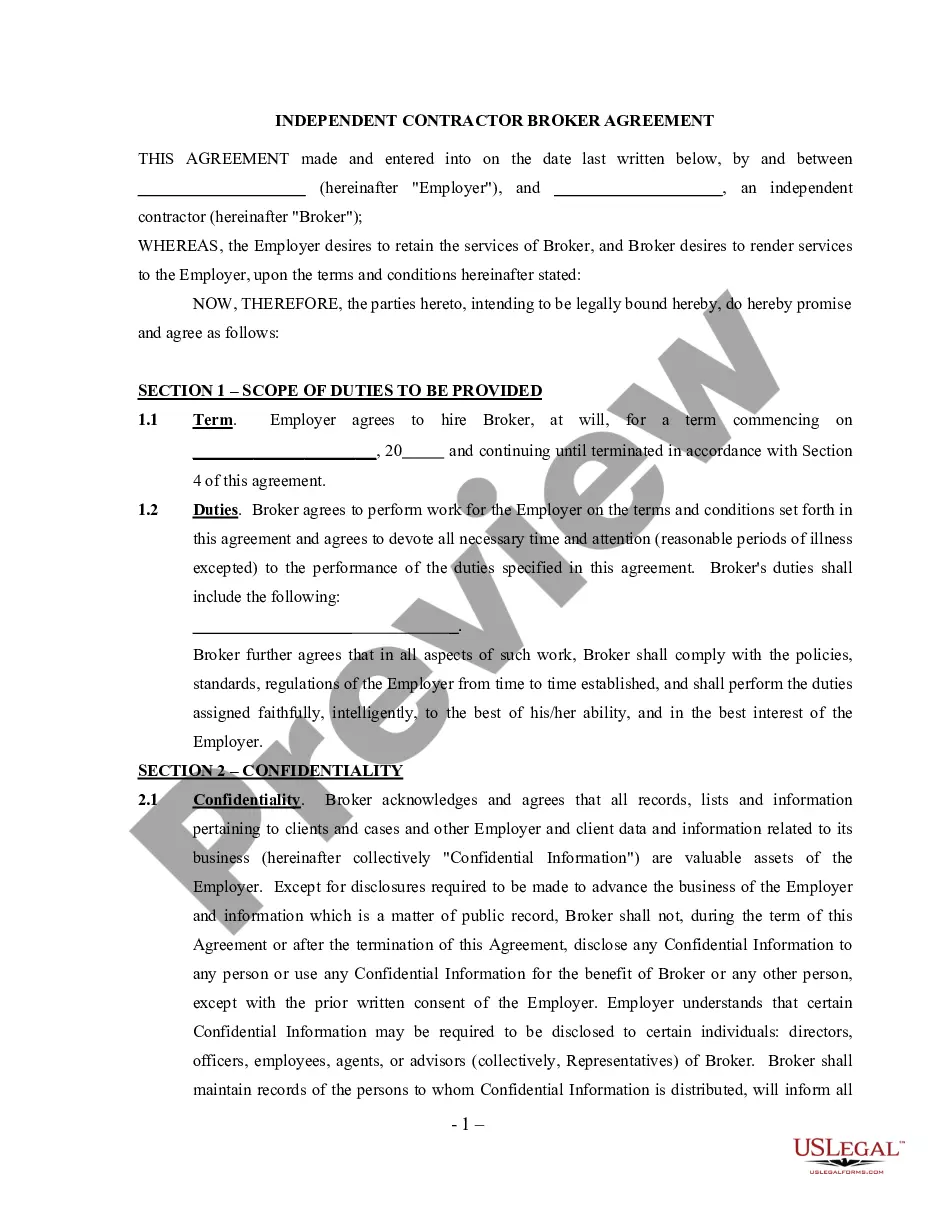
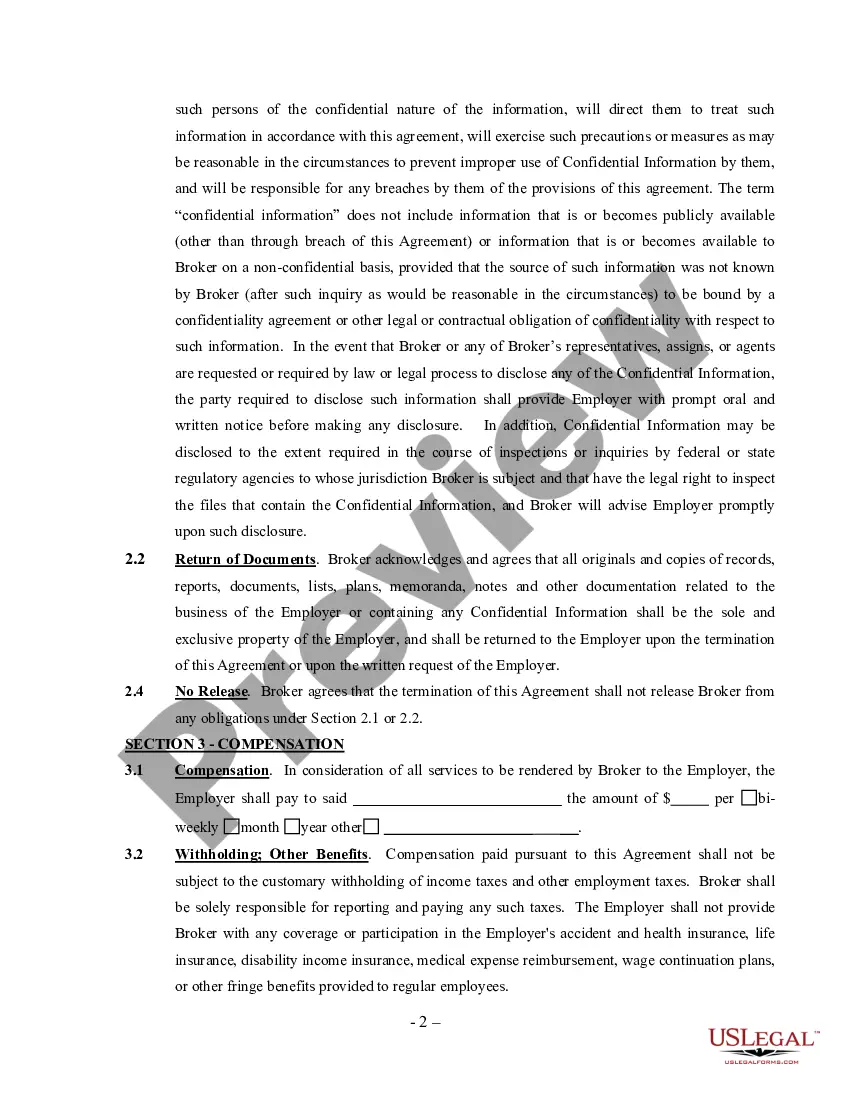
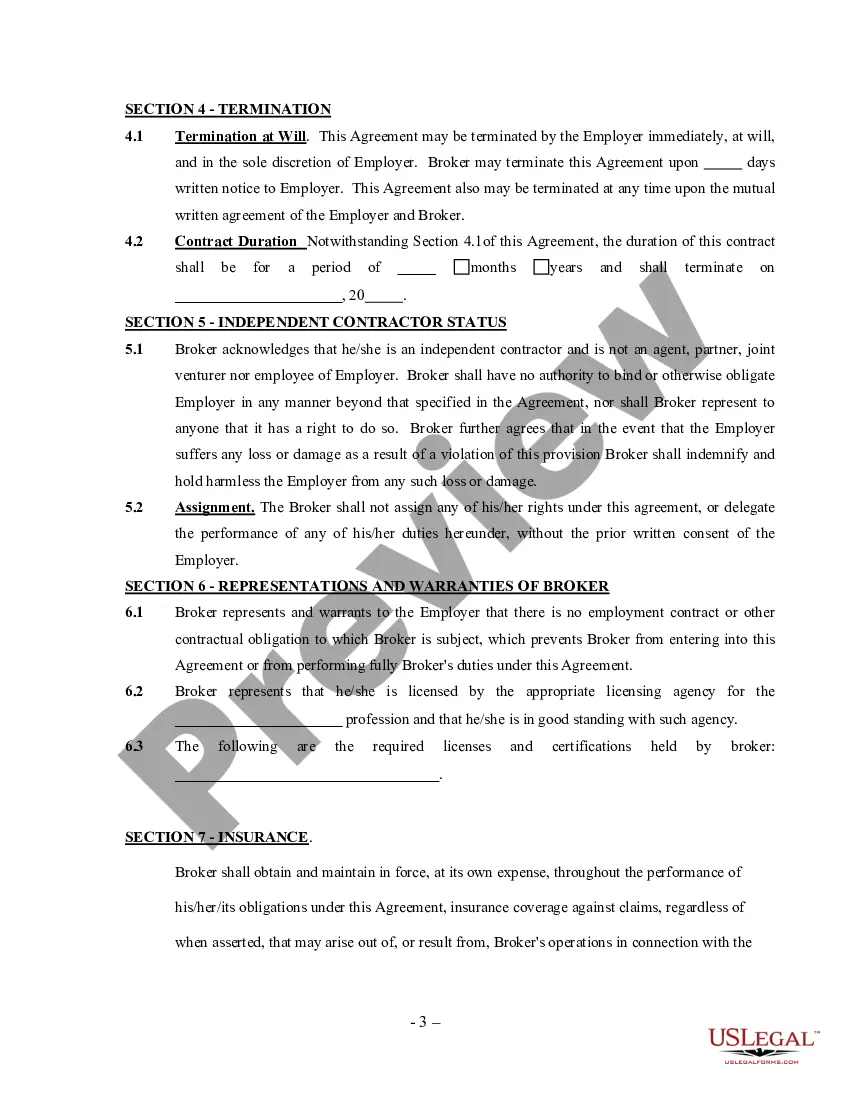
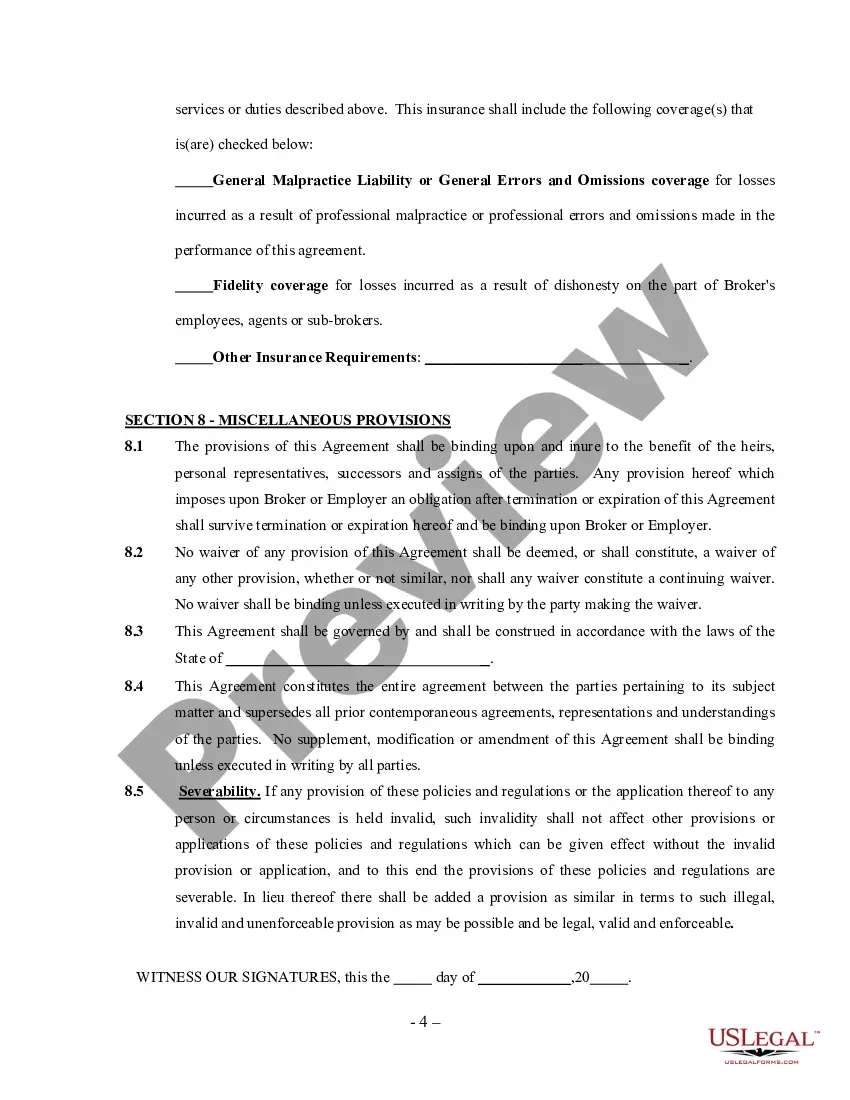
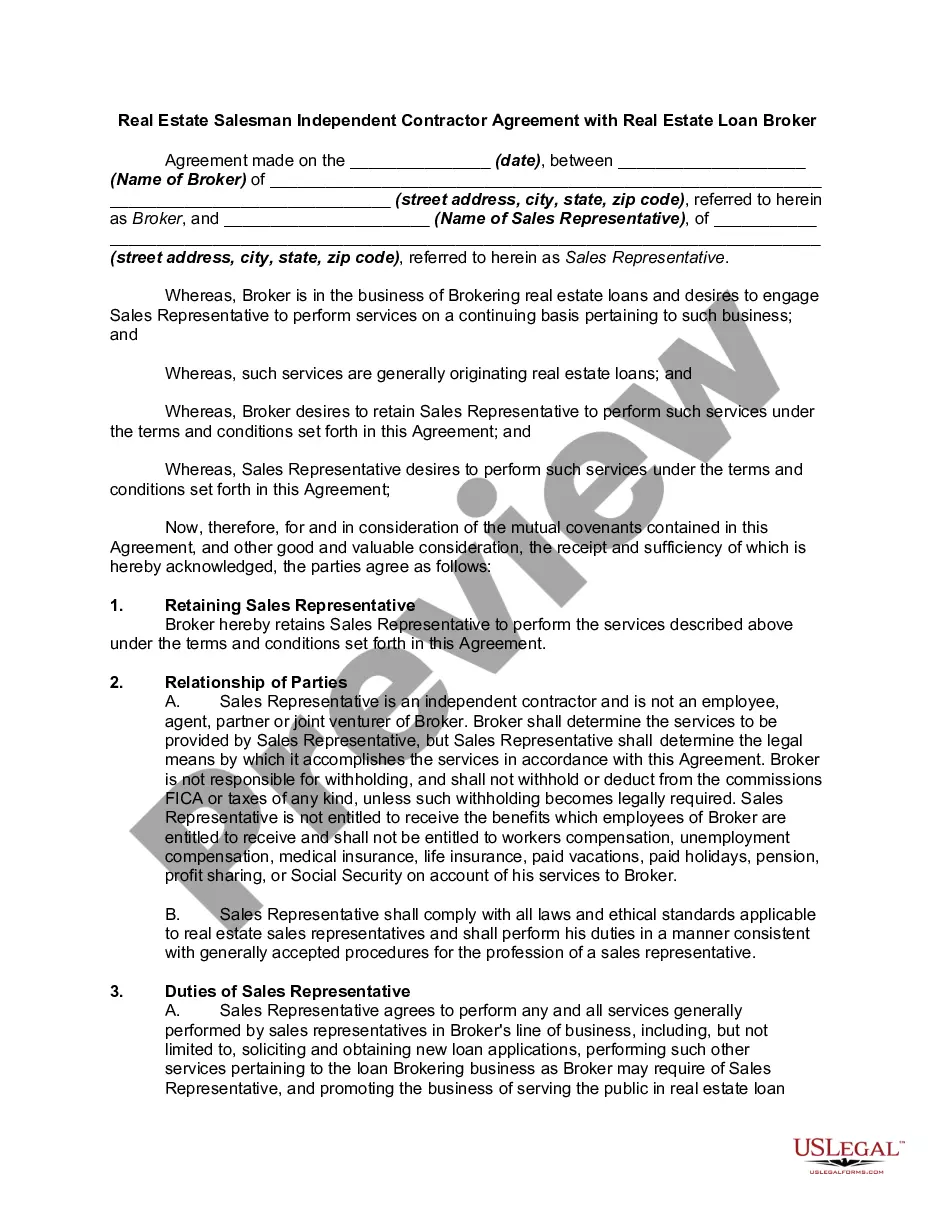
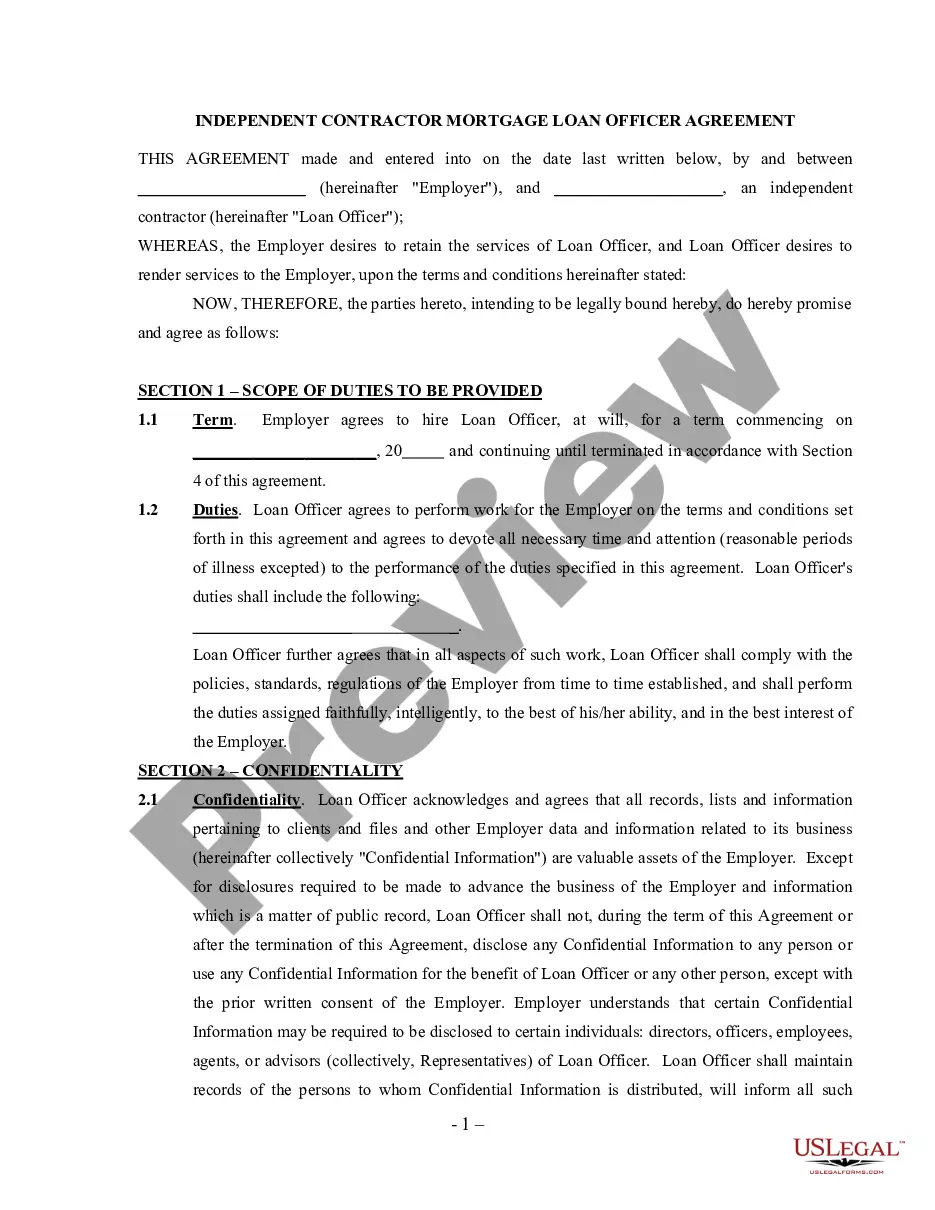
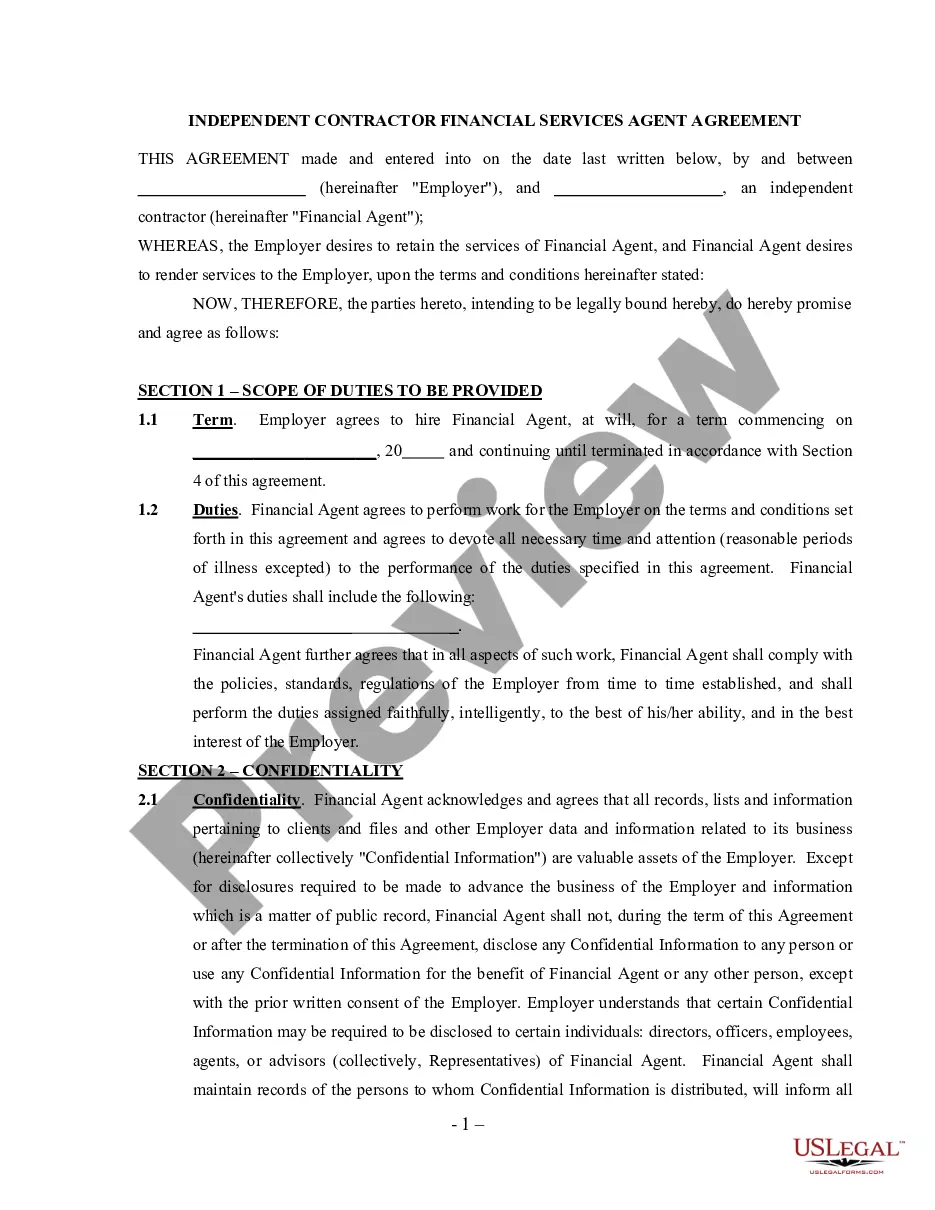
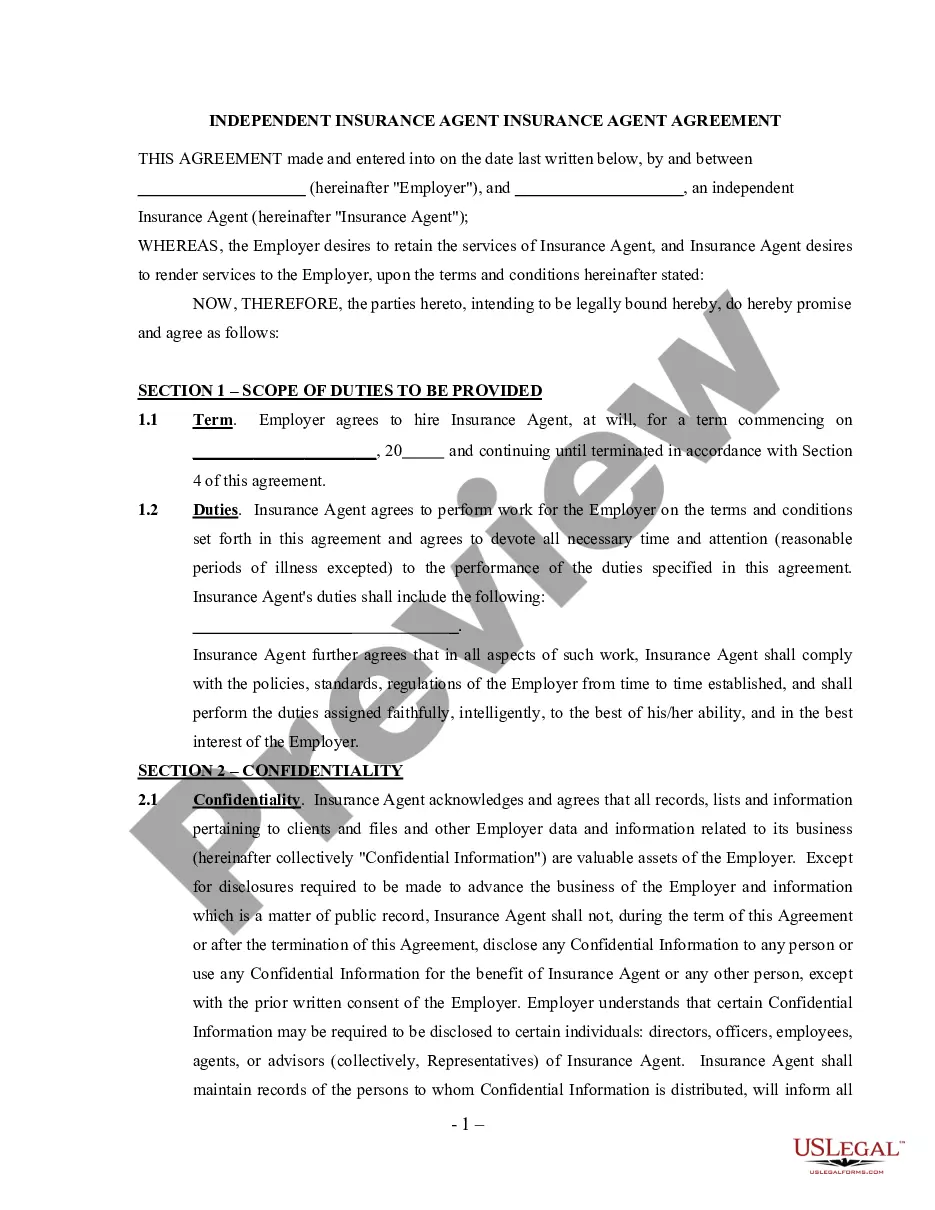
The Broker Agreement - Self-Employed Independent Contractor is a legal document that outlines the relationship between an employer and a broker who operates as an independent contractor. This agreement formalizes the broker's obligations and duties while ensuring compliance with the employer's policies and confidentiality requirements. This form differs from other employment contracts by allowing the broker to maintain their independent status while providing specific brokering services as dictated by the employer.
Key components of this form
- Identification of parties: Includes the names and roles of the employer and broker.
- Duties: Specifies the responsibilities and scope of work expected from the broker.
- Confidentiality: Outlines the broker's obligation to protect sensitive information.
- Compensation: Details the payment arrangement for services rendered.
- Termination clauses: Describes the conditions under which the agreement can be terminated.
- Governing law: States the jurisdiction that applies to the agreement.

When this form is needed
This agreement is used when an employer wants to engage a broker as a self-employed independent contractor. It is particularly useful in real estate, finance, or any industry where brokering services are required. This form allows the employer to detail their expectations and protect their business interests while enabling the broker to function independently.
Who can use this document
- Employers seeking to hire a broker for specific services without creating an employee-employer relationship.
- Self-employed brokers looking to formalize their agreement with an employer to provide brokering services.
- Business owners who require clear terms for confidentiality and duties related to their operational practices.
- Professionals in industries like real estate, finance, or insurance who are arranging independent contractor agreements.
Completing this form step by step
- Identify the parties involved, including names and roles of the employer and broker.
- Outline the specific duties and responsibilities of the broker in the provided section.
- Detail the compensation arrangement to specify how the broker will be paid.
- Include any necessary confidentiality clauses to protect sensitive information.
- Ensure all parties sign and date the agreement to make it legally binding.
Notarization requirements for this form
In most cases, this form does not require notarization. However, some jurisdictions or signing circumstances might. US Legal Forms offers online notarization powered by Notarize, accessible 24/7 for a quick, remote process.
Get your form ready online
Our built-in tools help you complete, sign, share, and store your documents in one place.
Make edits, fill in missing information, and update formatting in US Legal Forms—just like you would in MS Word.
Download a copy, print it, send it by email, or mail it via USPS—whatever works best for your next step.
Sign and collect signatures with our SignNow integration. Send to multiple recipients, set reminders, and more. Go Premium to unlock E-Sign.
If this form requires notarization, complete it online through a secure video call—no need to meet a notary in person or wait for an appointment.
We protect your documents and personal data by following strict security and privacy standards.

Make edits, fill in missing information, and update formatting in US Legal Forms—just like you would in MS Word.

Download a copy, print it, send it by email, or mail it via USPS—whatever works best for your next step.

Sign and collect signatures with our SignNow integration. Send to multiple recipients, set reminders, and more. Go Premium to unlock E-Sign.

If this form requires notarization, complete it online through a secure video call—no need to meet a notary in person or wait for an appointment.

We protect your documents and personal data by following strict security and privacy standards.
Common mistakes to avoid
- Failing to clearly define the broker's duties, which can lead to misunderstandings.
- Not including confidentiality clauses essential for protecting sensitive information.
- Omitting signatures or dates, which may render the agreement unenforceable.
- Neglecting to specify payment terms or compensation, leading to disputes later.
Benefits of completing this form online
- Convenience: Easily access and download the Broker Agreement whenever needed.
- Editability: Customize the form to suit specific business needs without hassle.
- Reliability: Legal forms provided are drafted by licensed attorneys to ensure compliance.
Legal use & context
- This Broker Agreement serves to clarify the relationship and responsibilities between the independent contractor and the employer.
- The provisions outlined in the form help protect both parties' interests in the business relationship.
- Enforceability may vary depending on compliance with state-specific laws regarding independent contractors.
Key takeaways
- This form establishes a formalized working relationship between an employer and a broker.
- Clear definitions of duties, compensation, and confidentiality are crucial to avoid disputes.
- Reviewing state-specific requirements is important for ensuring legal compliance.
Looking for another form?
Form popularity
FAQ
It is a legal contract between an employer and a broker who operates as an independent contractor. The agreement sets the broker’s duties, confidentiality obligations, and compensation while preserving the broker’s independent status. It identifies the parties, outlines duties, protects sensitive information, specifies payment terms, and includes termination provisions and governing law. It is used when a broker provides services without creating an employee relationship.
The form includes identification of the parties, the broker's duties, confidentiality obligations, compensation terms, termination clauses, and the governing law. These elements establish who is involved, the scope of work, information protection requirements, how payments are made, when the contract ends, and which law governs disputes.
This Broker Agreement - Self-Employed Independent Contractor lists the core components typically found in independent contractor agreements: identification of parties, duties, confidentiality, compensation, termination, and governing law. These provisions define who is bound, what services are expected, how sensitive information is protected, how payment works, when the agreement ends, and the governing jurisdiction.
Employers seeking to hire a broker for specific services without creating an employee relationship; self-employed brokers looking to formalize their agreement with an employer; business owners who require clear terms for confidentiality and duties related to operational practices; and professionals in industries like real estate, finance, or insurance using independent contractor agreements.
This agreement is used when an employer wants to engage a broker as a self-employed independent contractor. It is particularly useful in real estate, finance, or any industry where brokering services are required. The form lets the employer detail expectations and protect business interests while enabling the broker to function independently under clear terms.
The form preserves the broker's independent status while enabling the employer to define duties, confidentiality, compensation, termination, and governing law. Unlike standard employee contracts, it formalizes brokering services without creating an employee-employer relationship, aligning with multi-state independent contractor arrangements.