Window Contractor Agreement - Self-Employed
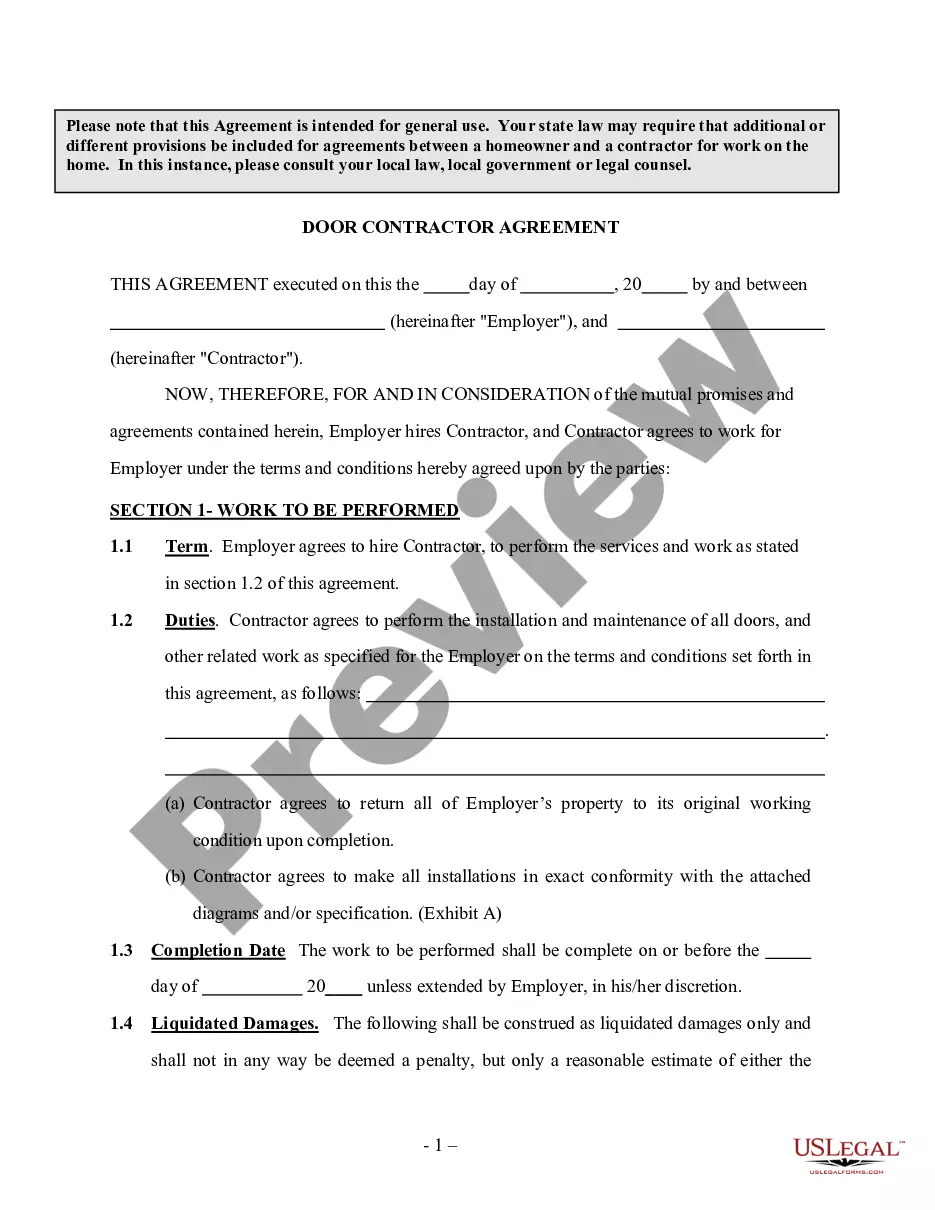
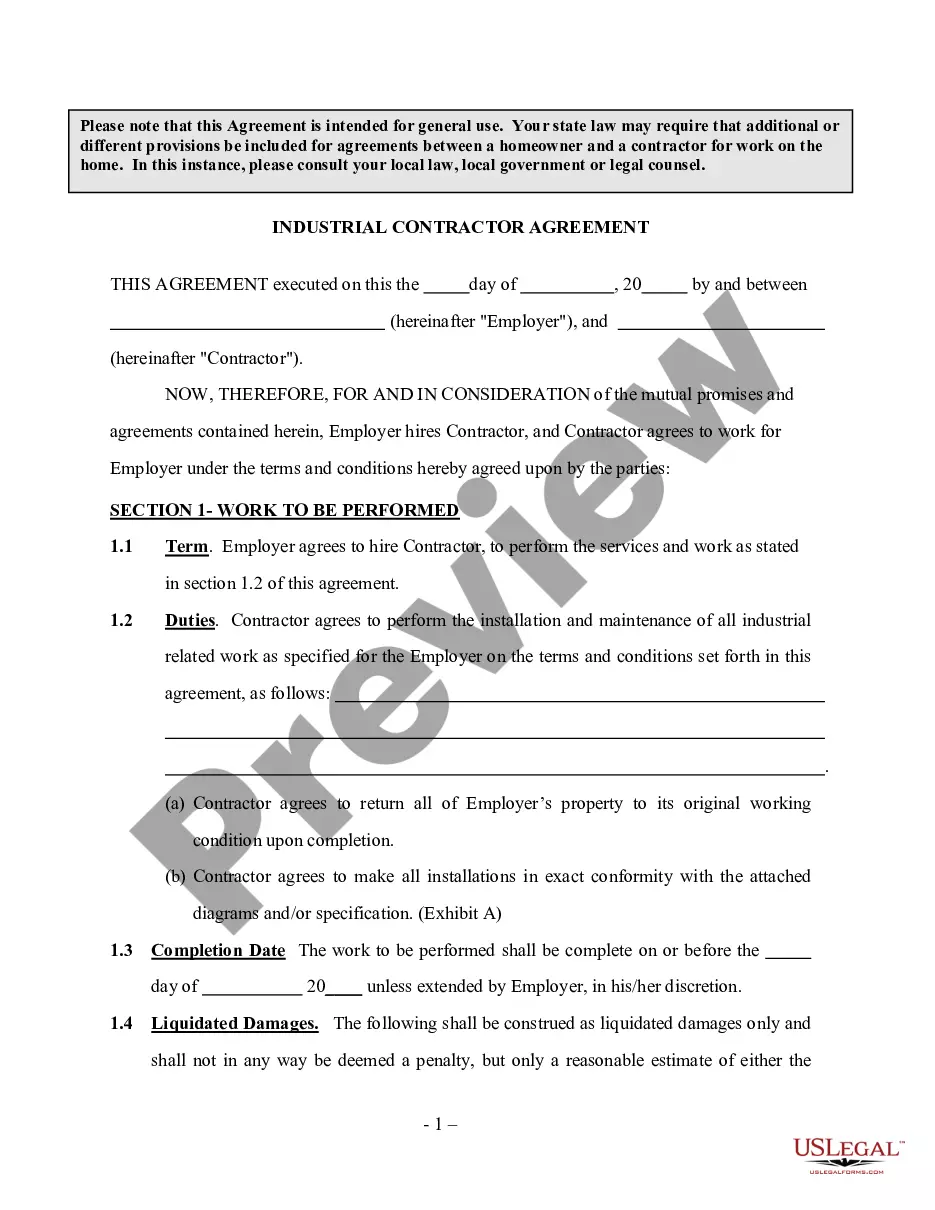
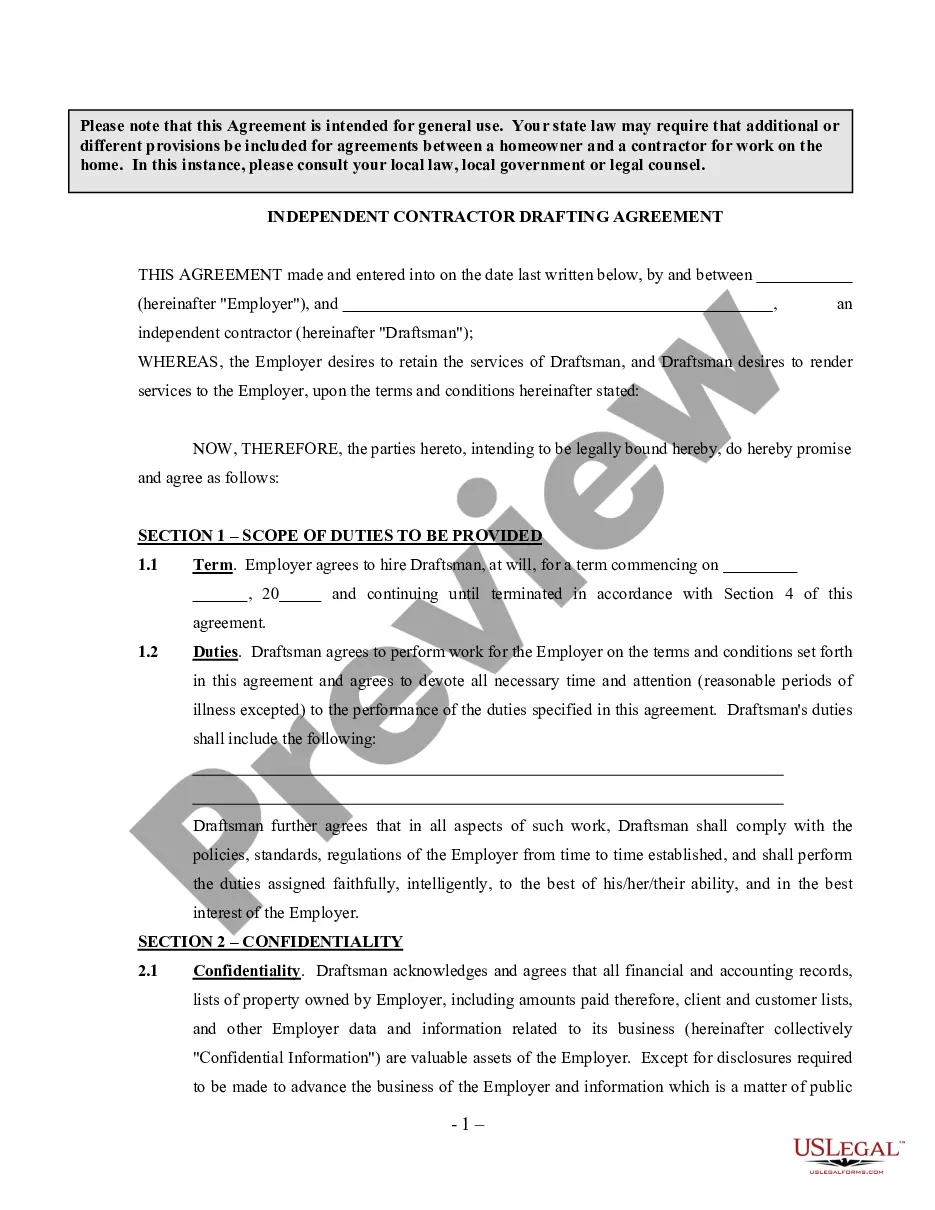
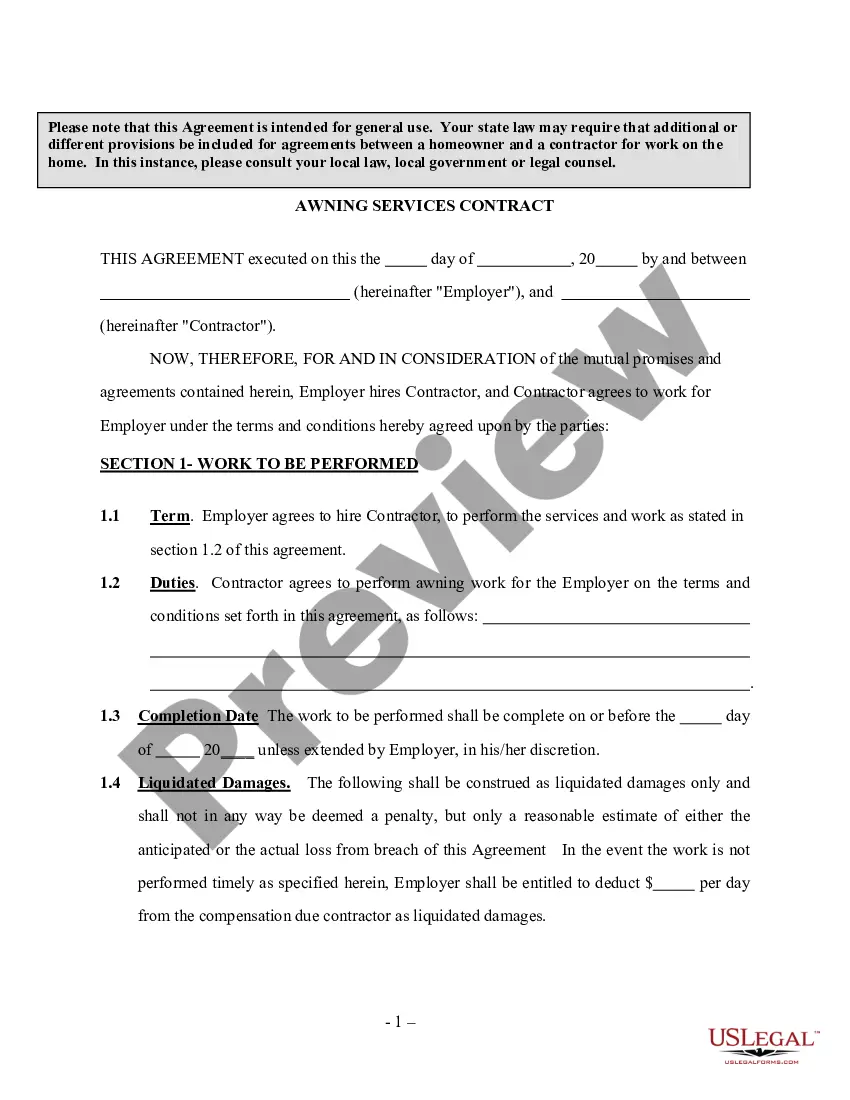
What this document covers
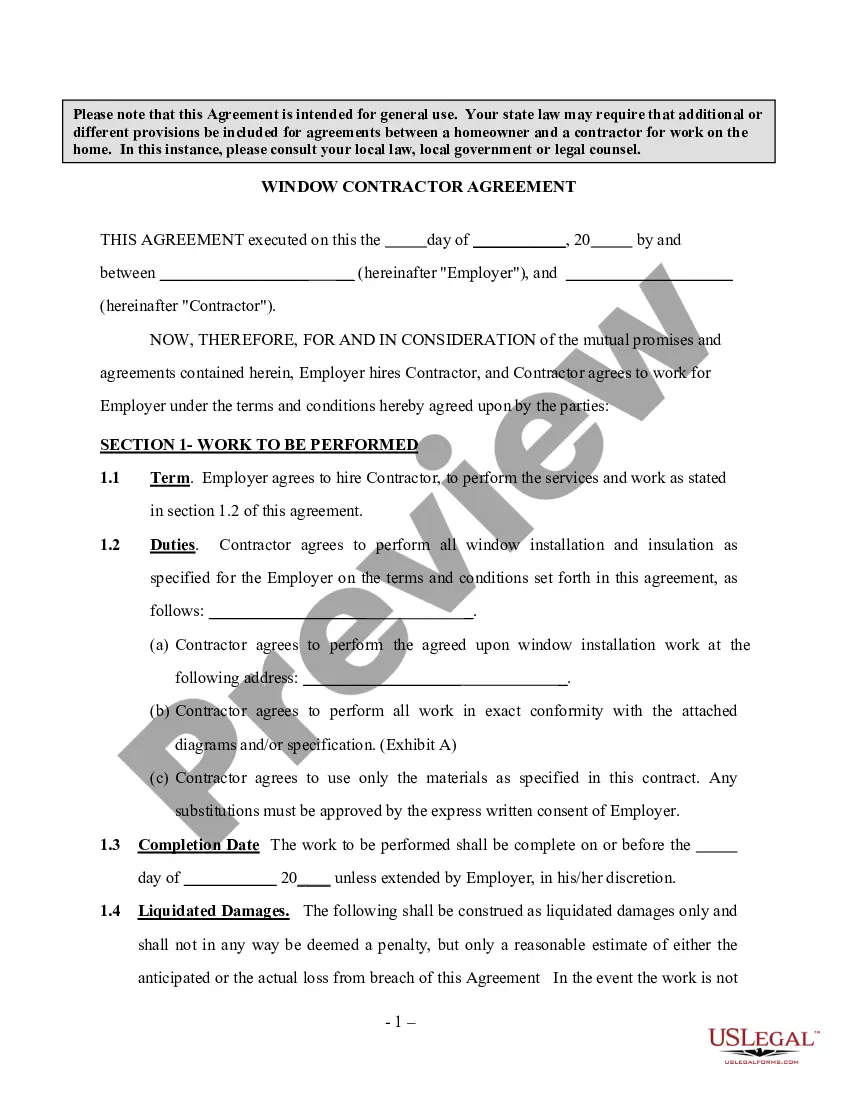
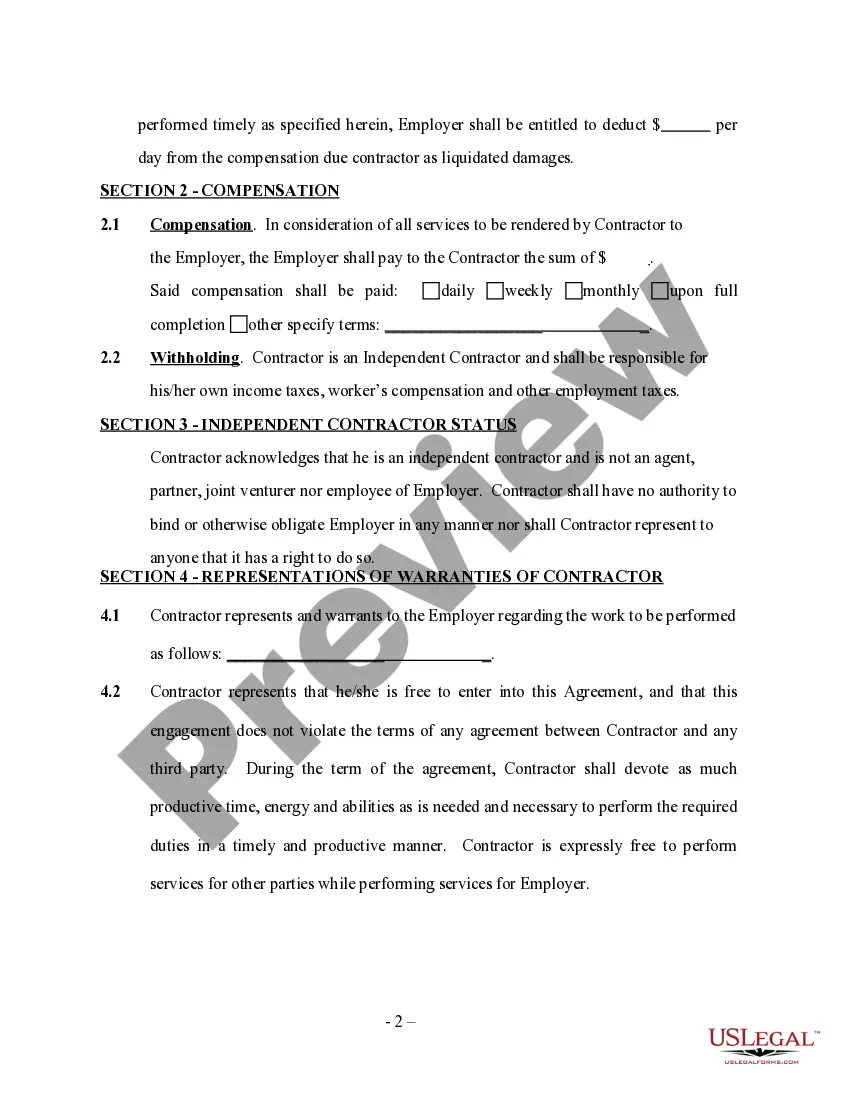
The Window Contractor Agreement - Self-Employed is a legally binding document that formalizes the relationship between a homeowner and an independent contractor for window installation and insulation services. This contract outlines the specific responsibilities of the contractor and ensures that both parties clearly understand their roles and obligations. It differs from other contractor agreements by focusing specifically on window-related services and independent contractor status.
Key components of this form
- Work to be performed: Details the duties and specifications for window installation and insulation.
- Independent Contractor Status: Clarifies that the contractor is not an employee of the employer and defines their relationship.
- Representations and Warranties: Includes affirmations that the contractor is licensed and able to perform the agreed work.
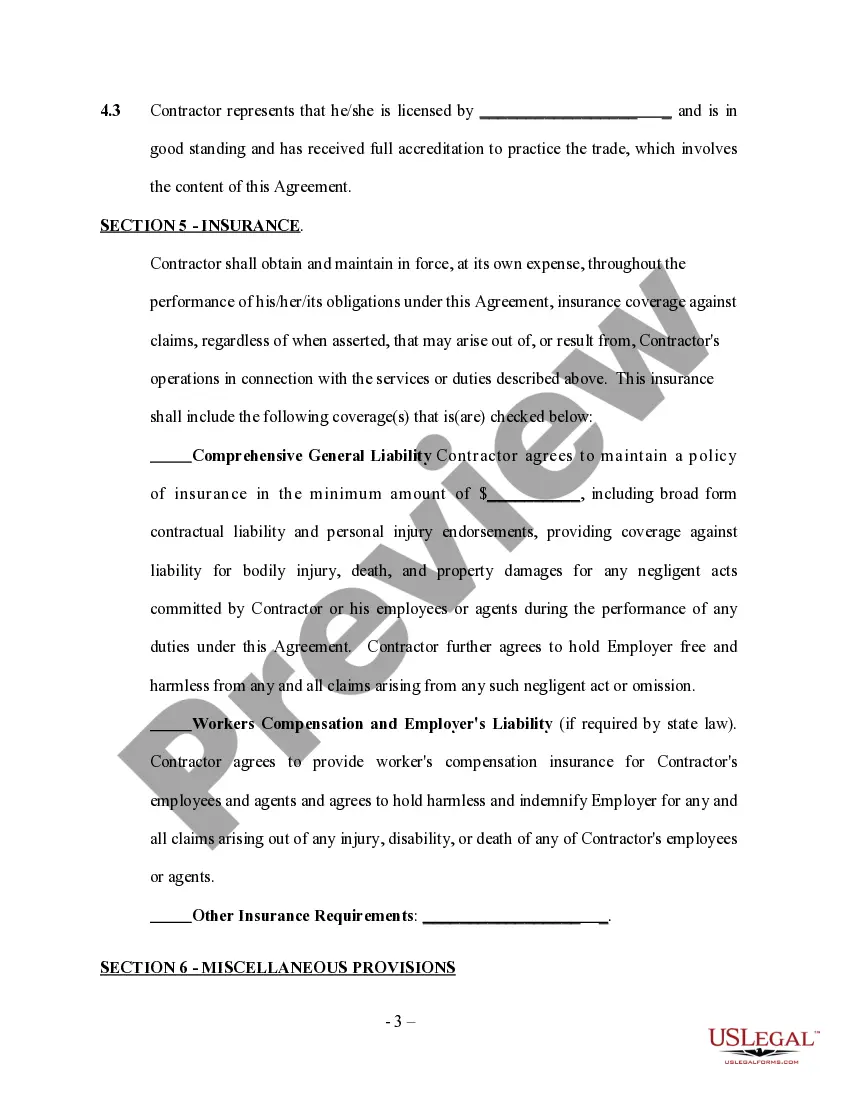
- Insurance Requirements: Outlines the need for the contractor to maintain insurance coverage during the project.
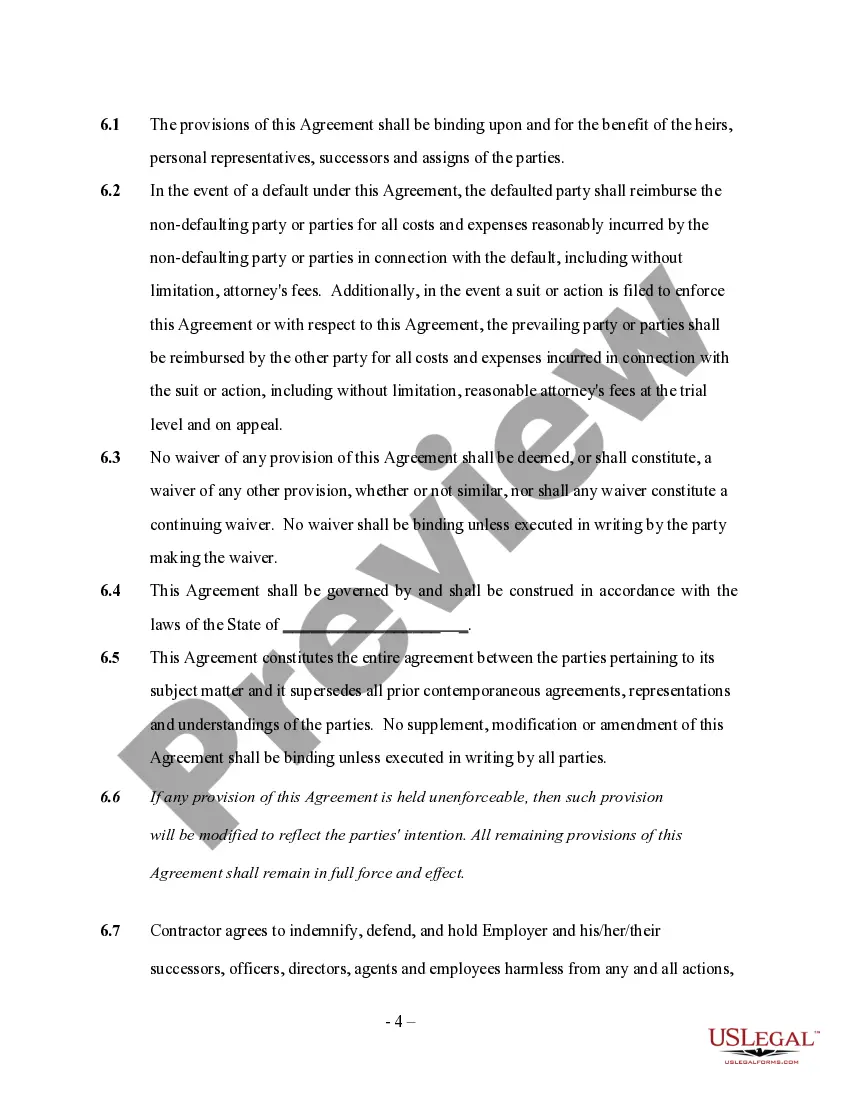
- Default Clauses: Addresses what happens if either party fails to meet their obligations under the agreement.
- Governing Law: Specifies the state laws that will apply to the agreement.
When to use this document
This form is essential when a homeowner wishes to hire an independent contractor for specific window installation or insulation work. It should be used when the contractor is not an employee but provides services on a contractual basis. Scenarios include residential renovation projects, replacement of windows, or addition of insulation to improve energy efficiency.
Who should use this form
This form is designed for:
- Homeowners hiring an independent contractor for window installation.
- Independent contractors specializing in window installation and insulation services.
- Those involved in residential renovation or construction projects.
How to complete this form
Follow these steps to complete the form:
- Identify the parties involved: Enter the names and contact details of the employer and contractor.
- Specify the work: Clearly outline the window installation duties and any relevant specifications.
- Include project details: Enter the address where the work will be performed.
- Affirm licensing: Ensure the contractor represents their licensing status correctly.
- Insert insurance information: Specify the types of insurance that the contractor will obtain.
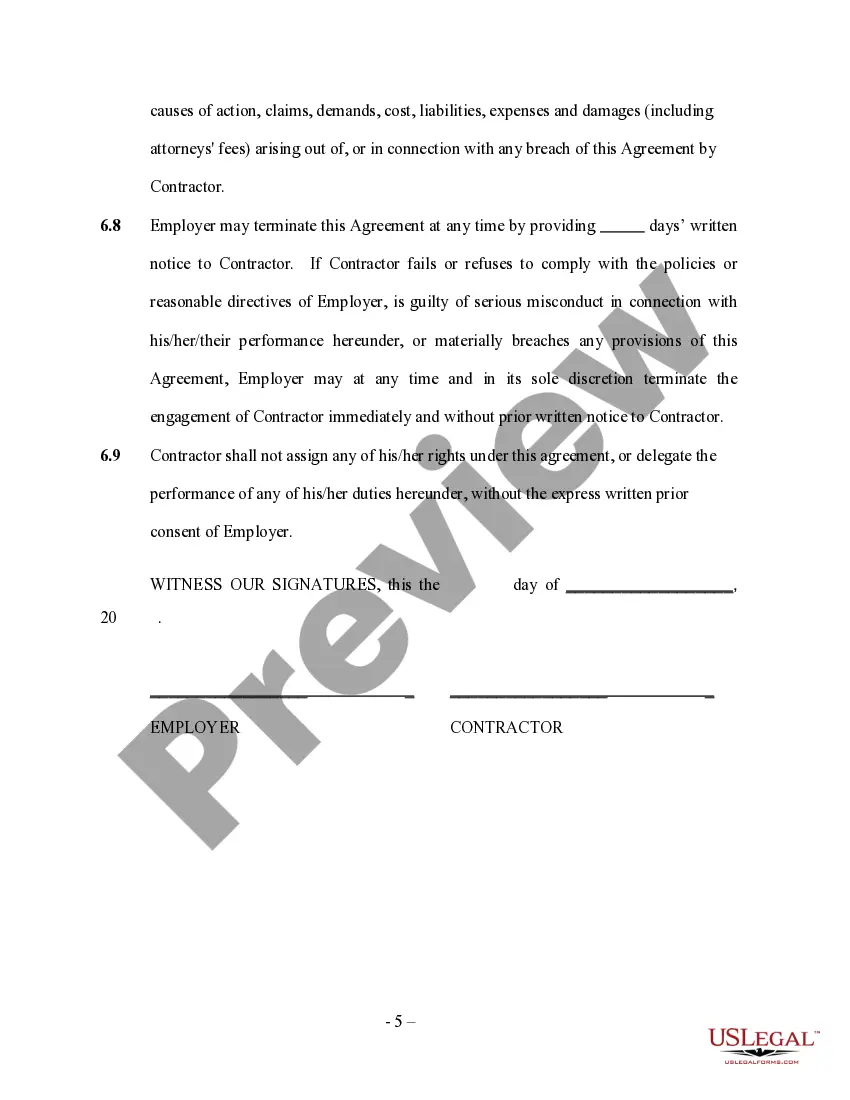
- Sign the Agreement: Both parties must sign and date the document for it to be valid.
Notarization guidance
This form does not typically require notarization unless specified by local law. It is advisable to check local regulations to ensure compliance.
Get your form ready online
Our built-in tools help you complete, sign, share, and store your documents in one place.
Make edits, fill in missing information, and update formatting in US Legal Forms—just like you would in MS Word.
Download a copy, print it, send it by email, or mail it via USPS—whatever works best for your next step.
Sign and collect signatures with our SignNow integration. Send to multiple recipients, set reminders, and more. Go Premium to unlock E-Sign.
If this form requires notarization, complete it online through a secure video call—no need to meet a notary in person or wait for an appointment.
We protect your documents and personal data by following strict security and privacy standards.

Make edits, fill in missing information, and update formatting in US Legal Forms—just like you would in MS Word.

Download a copy, print it, send it by email, or mail it via USPS—whatever works best for your next step.

Sign and collect signatures with our SignNow integration. Send to multiple recipients, set reminders, and more. Go Premium to unlock E-Sign.

If this form requires notarization, complete it online through a secure video call—no need to meet a notary in person or wait for an appointment.

We protect your documents and personal data by following strict security and privacy standards.
Mistakes to watch out for
- Failing to specify all details about the work to be performed, leading to misunderstandings.
- Not verifying the contractorâs licensing and insurance status before signing.
- Overlooking state-specific requirements that might need to be added to the agreement.
- Not signing and dating the contract, which can render it unenforceable.
Why use this form online
- Convenient access to a ready-made template that can be customized.
- Edit the document to suit specific project needs quickly.
- Reliable legal language drafted by licensed attorneys, ensuring the agreement is enforceable.
Looking for another form?








Form popularity
FAQ
People who work for themselves or who own their own company are sometimes alternately referred to as self-employed or independent contractors, though there is a difference between the two. In general, all independent contractors are self-employed, but not all self-employed people are independent contractors.
Those eligible for PUA also will receive an additional $300/week through the end of the extension period unlike CARES Act I, which added $600/week in federal stimulus payments. Finally, the new stimulus bill provides independent contractors with paid sick and paid family leave benefits through March 14, 2021.
Paying yourself as an independent contractor As an independent contractor, you will need to pay self-employment taxes on your wages. You will file a W-9 with the LLC. The LLC will be responsible for IRS Form 1099-MISC during tax season.
An independent contractor is a self-employed person or entity contracted to perform work foror provide services toanother entity as a nonemployee. As a result, independent contractors must pay their own Social Security and Medicare taxes.
Finally, the new stimulus bill provides independent contractors with paid sick and paid family leave benefits through March 14, 2021.Under CARES Act II, unemployed or underemployed independent contractors who have an income mix from self-employment and wages paid by an employer are still eligible for PUA.
Simply put, being an independent contractor is one way to be self-employed. Being self-employed means that you earn money but don't work as an employee for someone else. An independent contractor is someone who provides a service on a contractual basis.
Yes, if you have 1099 income you are considered to be self-employed, and you will need to pay self-employment taxes (Social Security and Medicare taxes) on this income.
Independent contractors are self-employed workers who provide services for an organisation under a contract for services. Independent contractors are not employees and are typically highly skilled, providing their clients with specialist skills or additional capacity on an as needed basis.
Make sure you really qualify as an independent contractor. Choose a business name (and register it, if necessary). Get a tax registration certificate (and a vocational license, if required for your profession). Pay estimated taxes (advance payments of your income and self-employment taxes).