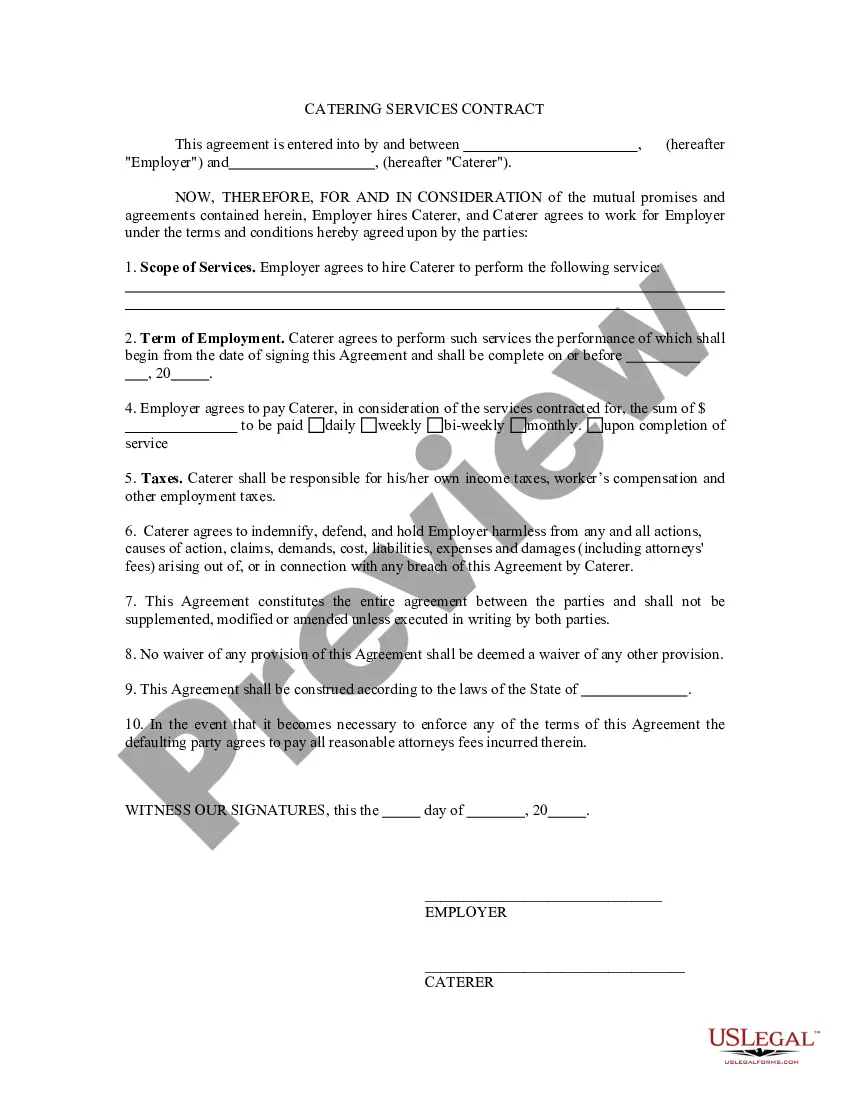
Catering Services Contract - Self-Employed Independent Contractor
What is this form?
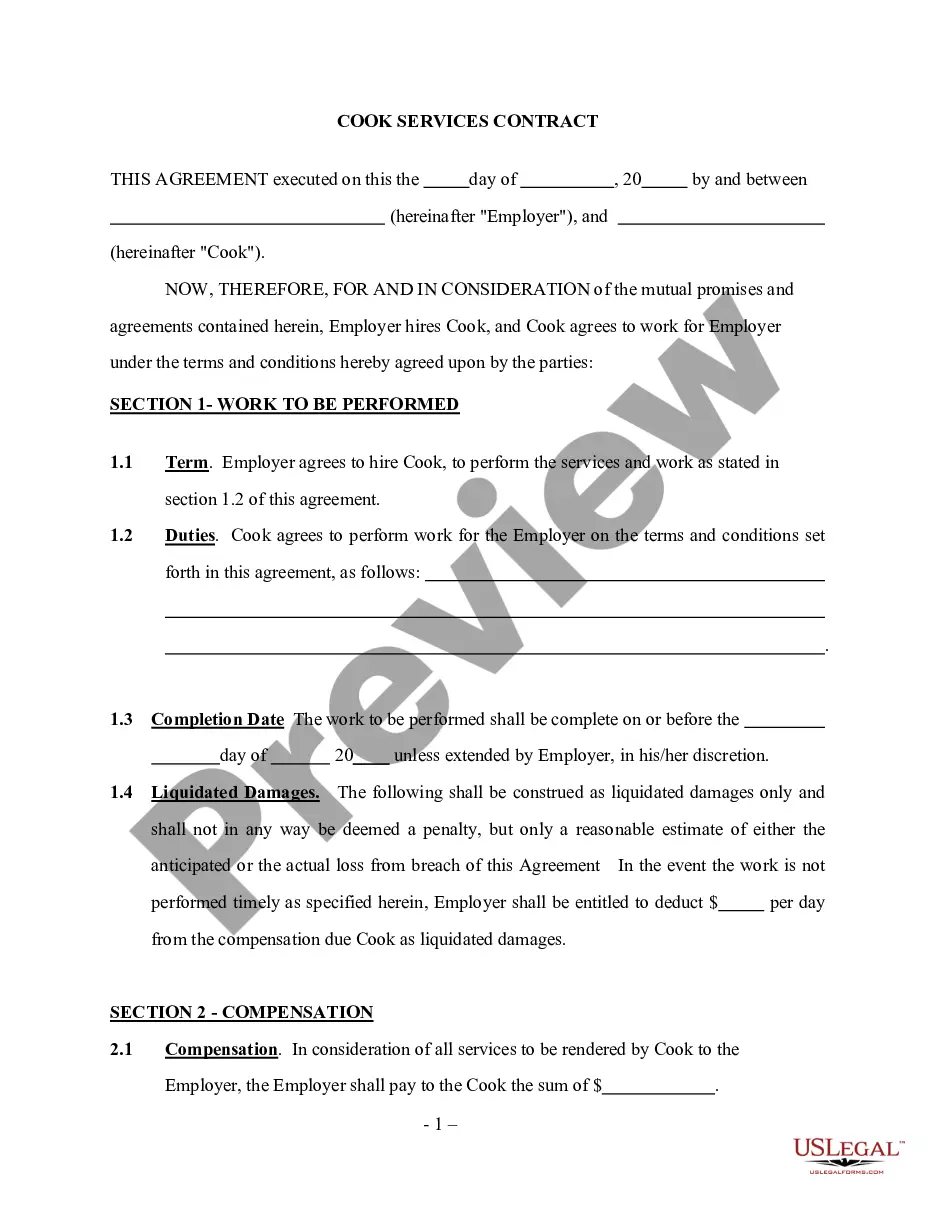
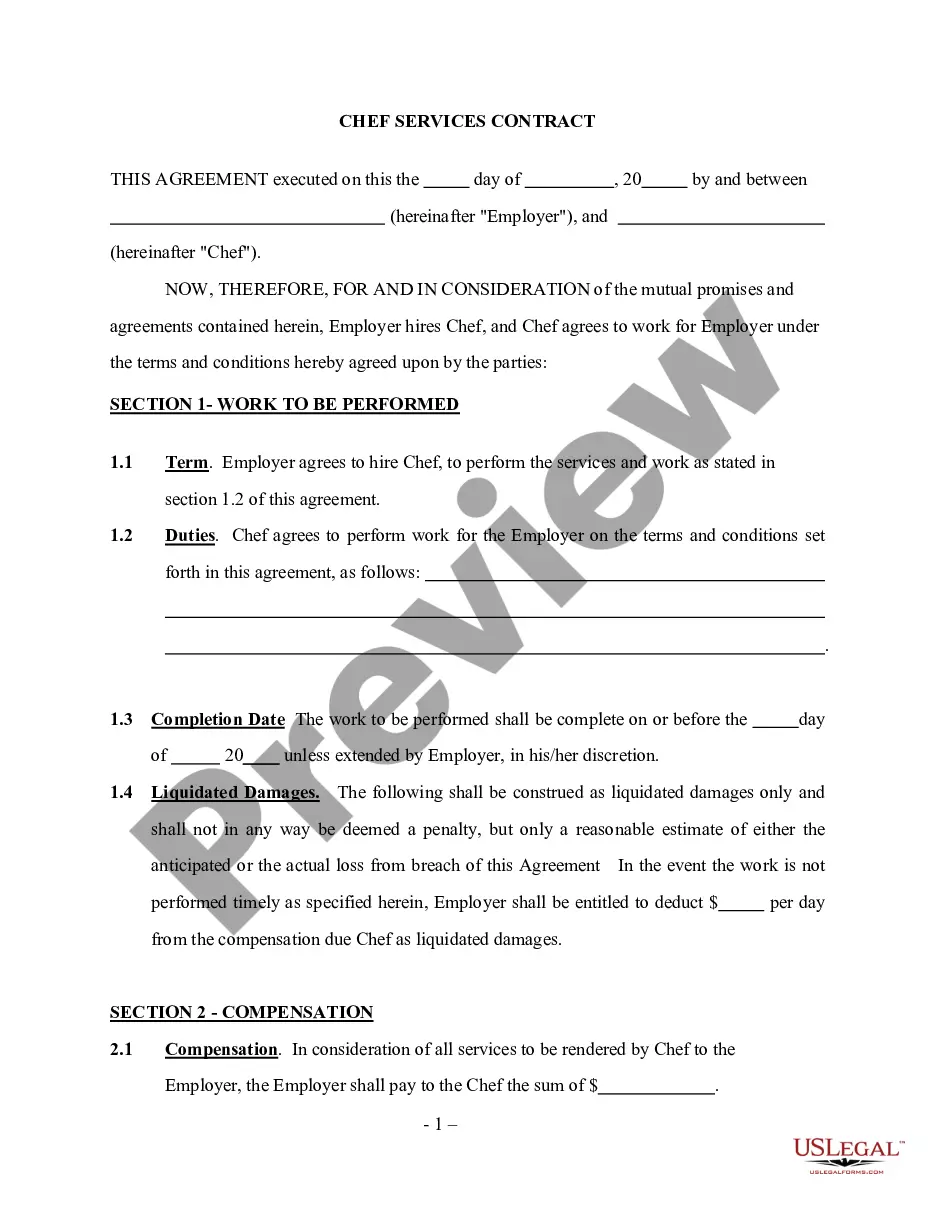
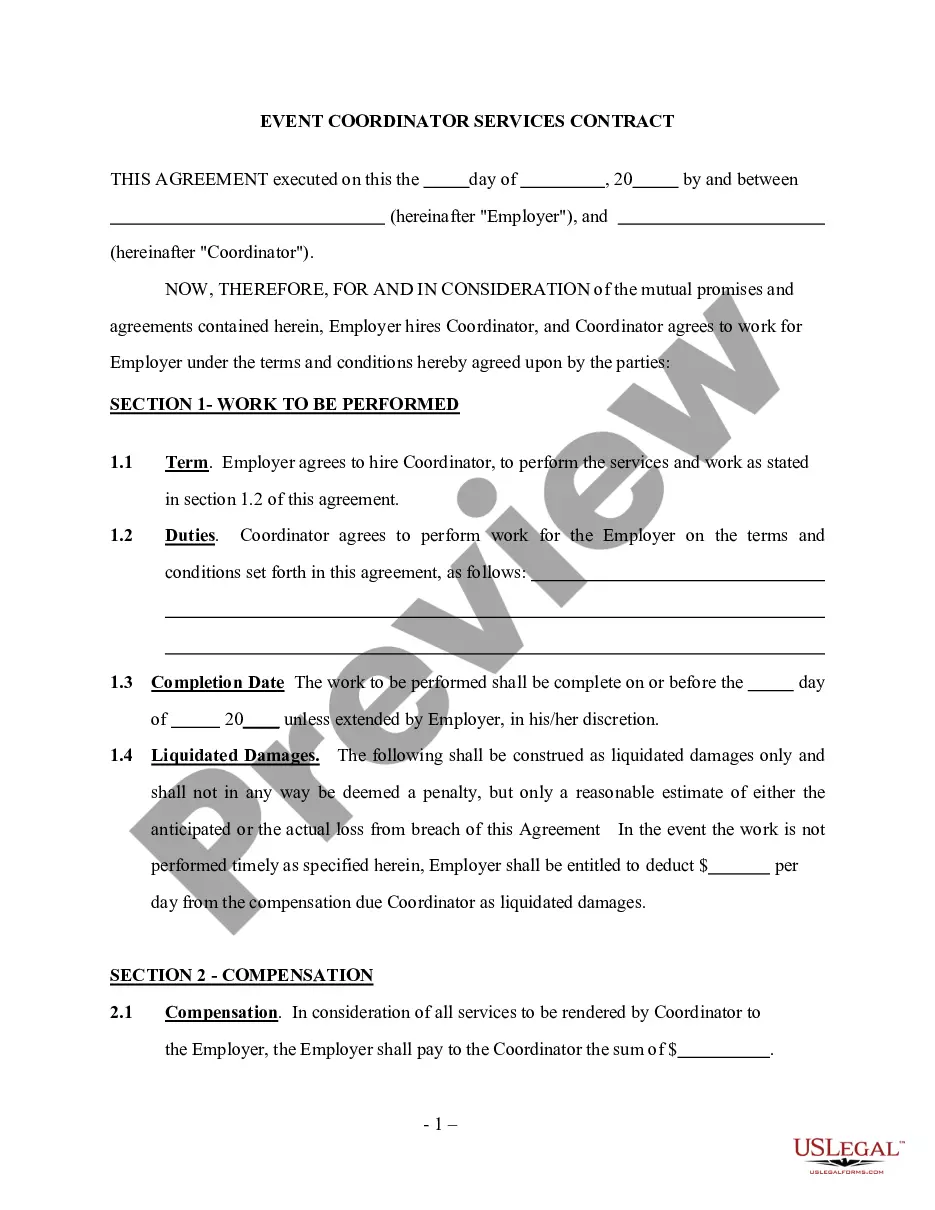
The Catering Services Contract - Self-Employed Independent Contractor is an agreement between an employer and a caterer who operates as an independent contractor. This form is specifically designed for catering services, ensuring clear terms regarding the responsibilities and expectations of both parties. Unlike basic service agreements, this contract includes provisions tailored to the catering industry, addressing issues like indemnification and liability, which are crucial for managing risks in food service events.
Main sections of this form
- Identification of the parties: Clearly states who the employer and caterer are.
- Scope of services: Details what catering services will be provided and any specific requirements.
- Payment terms: Specifies the compensation structure, including deposits, payments, and due dates.
- Indemnification clause: Covers liability and protects the employer from claims arising from the caterer's actions.
- Termination conditions: Outlines how either party can terminate the agreement before completion.
When to use this form
This form is useful in various scenarios, such as when planning a wedding, corporate event, or private party where catering is a necessity. It clearly delineates the catering services expected and helps prevent misunderstandings between the employer and caterer. If you are hiring a caterer for any event and wish to formalize the agreement, this contract is essential.
Intended users of this form
This form is intended for:
- Employers who are looking to hire catering services for events.
- Self-employed caterers who want to formalize agreements with clients.
- Event planners managing the catering for various functions.
How to prepare this document
- Identify the parties by providing the names and contact details of the employer and caterer.
- Specify the scope of services by detailing the catering services to be rendered.
- Enter payment terms, including the total fee and any deposit amounts due.
- Include the indemnification clause ensuring the caterer protects the employer from liabilities.
- Sign and date the agreement to make it legally binding.
Does this document require notarization?
This form does not typically require notarization unless specified by local law. It is advisable to review any specific state regulations to confirm requirements.
Get your form ready online
Our built-in tools help you complete, sign, share, and store your documents in one place.
Make edits, fill in missing information, and update formatting in US Legal Forms—just like you would in MS Word.
Download a copy, print it, send it by email, or mail it via USPS—whatever works best for your next step.
Sign and collect signatures with our SignNow integration. Send to multiple recipients, set reminders, and more. Go Premium to unlock E-Sign.
If this form requires notarization, complete it online through a secure video call—no need to meet a notary in person or wait for an appointment.
We protect your documents and personal data by following strict security and privacy standards.

Make edits, fill in missing information, and update formatting in US Legal Forms—just like you would in MS Word.

Download a copy, print it, send it by email, or mail it via USPS—whatever works best for your next step.

Sign and collect signatures with our SignNow integration. Send to multiple recipients, set reminders, and more. Go Premium to unlock E-Sign.

If this form requires notarization, complete it online through a secure video call—no need to meet a notary in person or wait for an appointment.

We protect your documents and personal data by following strict security and privacy standards.
Avoid these common issues
- Not clearly defining the scope of services, leading to misunderstandings.
- Failing to specify payment terms, which can result in disputes.
- Overlooking the indemnification clause, leaving employers vulnerable.
- Not signing the contract, which may render it unenforceable.
Benefits of completing this form online
- Convenience of downloading and editing the form as needed.
- Access to templates drafted by licensed attorneys for reliability and security.
- Ability to customize the contract to fit your specific catering needs.
Legal use & context
- This contract is legally binding once signed by both parties.
- It helps to create a clear agreement that can protect both the employer and the caterer in case of disputes.
- Understanding local catering laws can enhance the enforceability of this contract.
Main things to remember
- The Catering Services Contract is essential for formalizing catering arrangements.
- Clearly defining the terms protects both parties and minimizes risks.
- Completing this form correctly ensures a smooth catering experience.
Looking for another form?
Form popularity
FAQ
The major difference between those workers and Independent Contractors is that the contractors are actually W-2 employees, but they are employed by a staffing agency or a back-office service provider such as FoxHire instead of by the company they are performing work for.
The full legal name of the catering company and the client. The dates the contract will be valid. A description of the service to be provided. The menu. Payment information (per person and or total) A list of additional services that may be provided. Cancellation fees.
The general rule is that an individual is an independent contractor if the payer has the right to control or direct only the result of the work, not what will be done and how it will be done. Small businesses should consider all evidence of the degree of control and independence in the employer/worker relationship.
Name of contractor and contact information. Name of homeowner and contact information. Describe property in legal terms. List attachments to the contract. The cost. Failure of homeowner to obtain financing. Description of the work and the completion date. Right to stop the project.
An Independent Contractor Agreement should contain all of these basic terms: Description of the services to be provided.Explanation of what the hiring party will provide or not provide, such as equipment, for the independent contractor to use. Ownership of work product if that is relevant to the work being performed.
Form W-9. The IRS requires contractors to fill out a Form W-9, request for Taxpayer Identification Number and Certification, which you should keep on file for at least four years after the hiring. This form is used to request the correct name and Taxpayer Identification Number, or TIN, of the worker or their entity.
For most types of projects you hire an independent contractor (IC) to do, the law does not require you to put anything in writing. You can meet with the IC, agree on the terms of your arrangement, and have an oral contract or agreement that is legally binding. Just because you can doesn't mean you should, however.
A chef is integral to the business of preparing food and would not be considered an independent contractor. A specialist chef, who prepares food for a one-time event for the restaurant, could be considered an independent contractor.
Length of Contract. Each client contractor agreement should outline the length of the working relationship. Project Description. Payment Terms. Nondisclosure Terms. Rights and Responsibilities. Termination Clause. Disclaimers.