USLegal Guide to Defamation; Libel and Slander
About this form
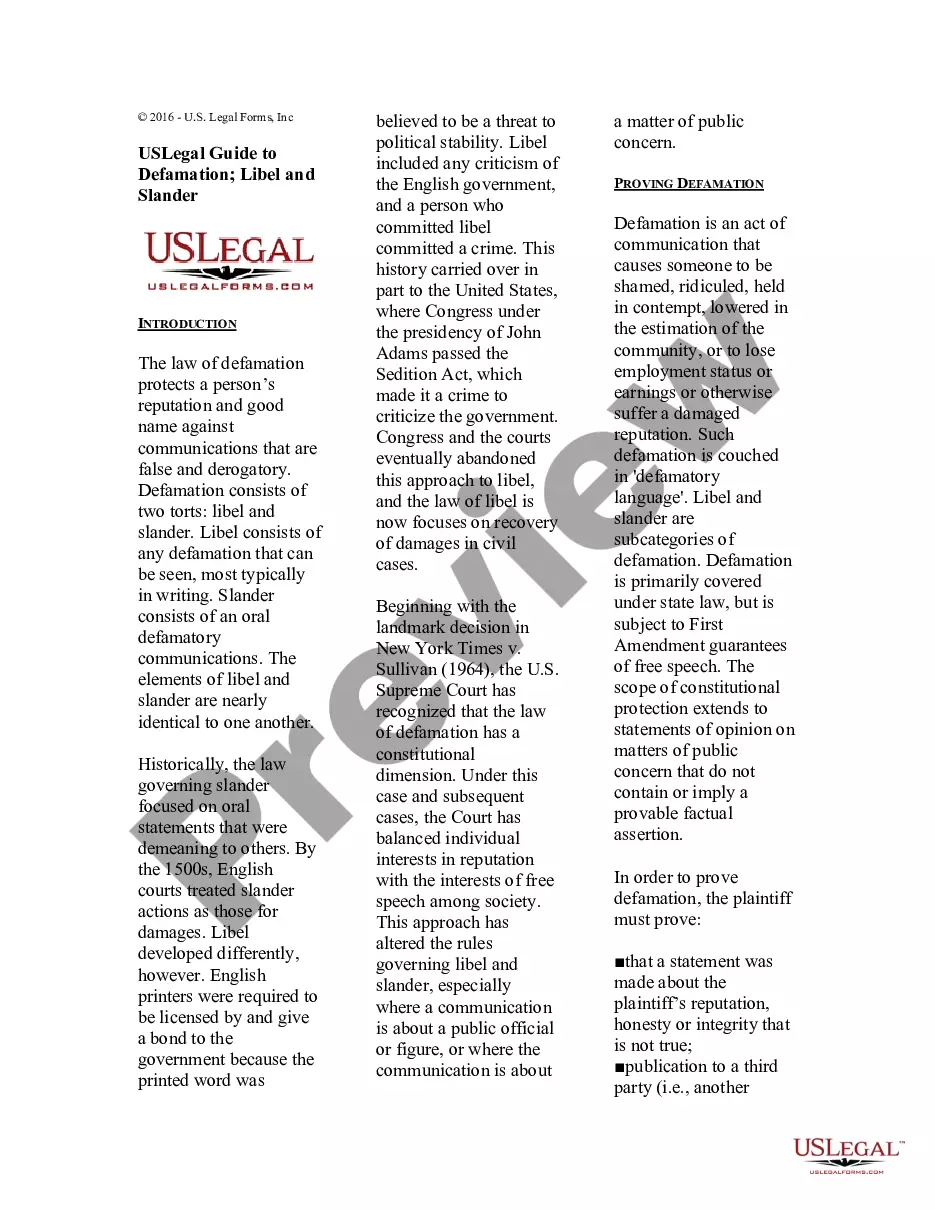
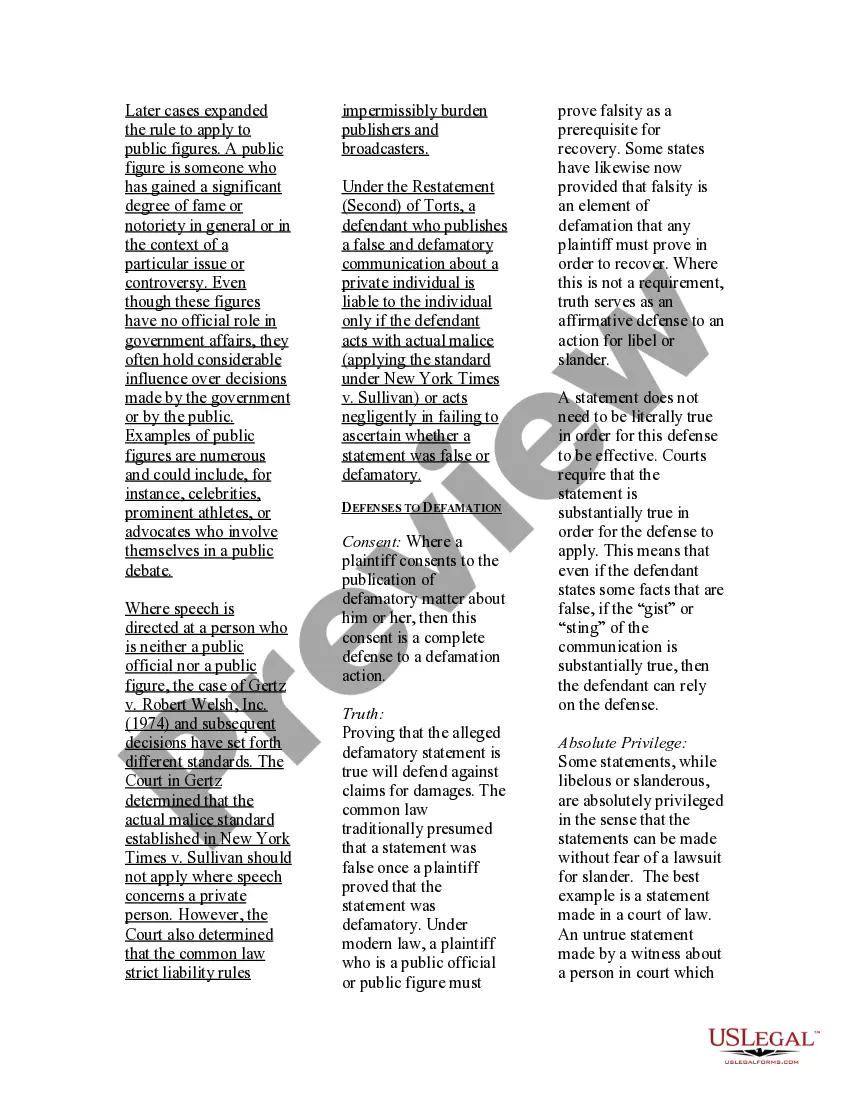
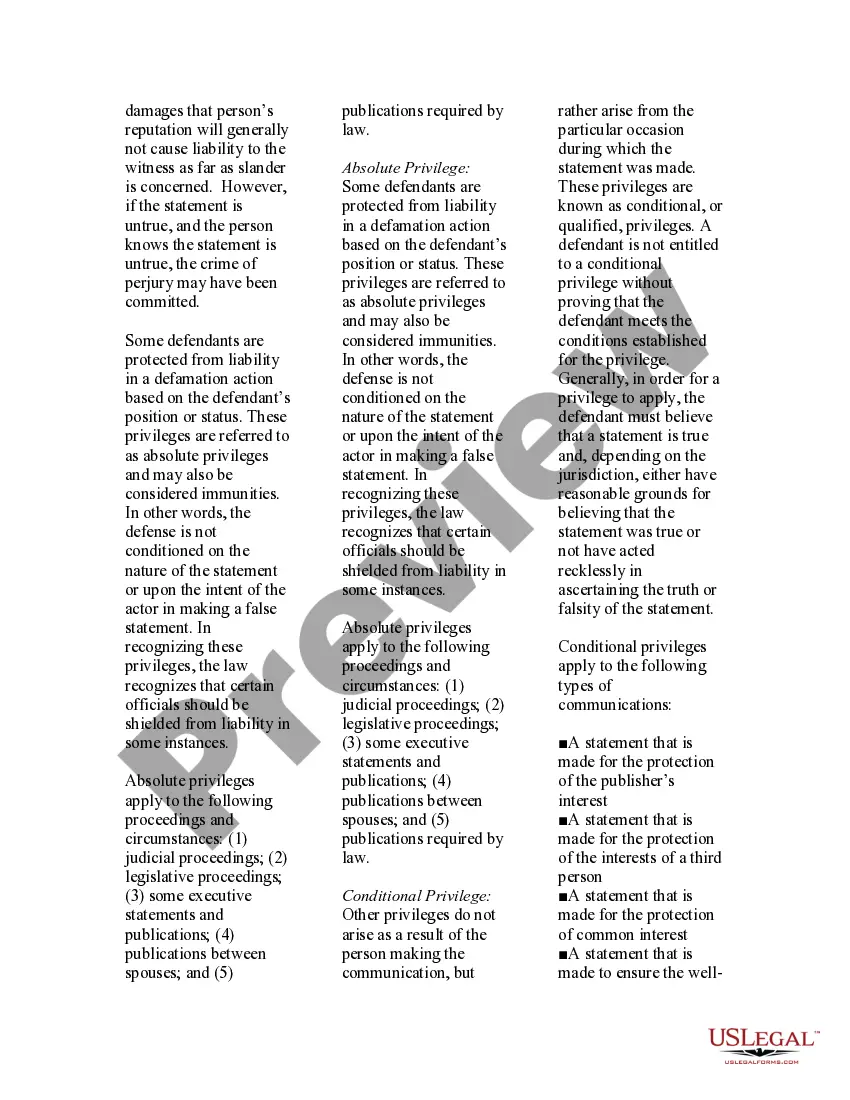
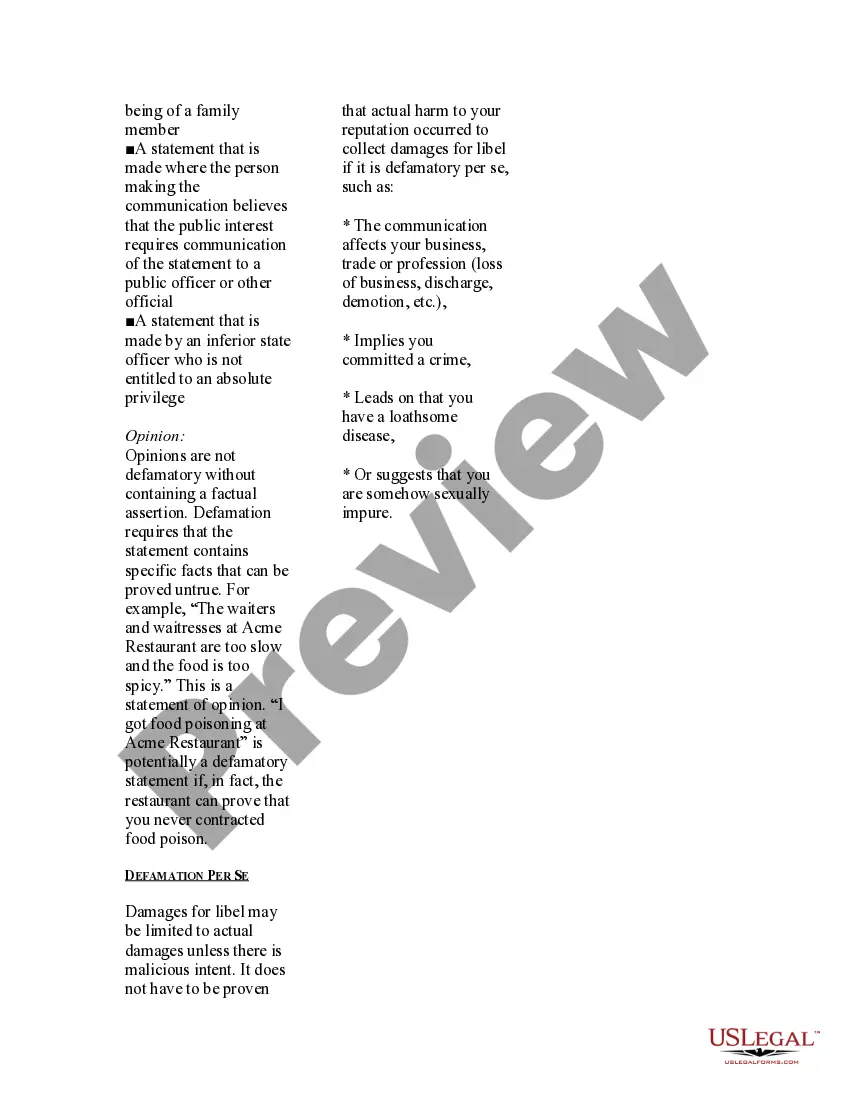
This guide provides a comprehensive overview of defamation law, covering essential aspects of libel and slander. It is designed to clarify what constitutes defamatory language and the legal implications surrounding claims of defamation. Understanding this form is crucial as it distinguishes between written defamation (libel) and spoken defamation (slander), and it illustrates the necessary steps in proving a claim or defense against such allegations.
Key parts of this document
- Definitions of libel and slander.
- Elements needed to prove defamation.
- Discussion on the defenses available against defamation claims.
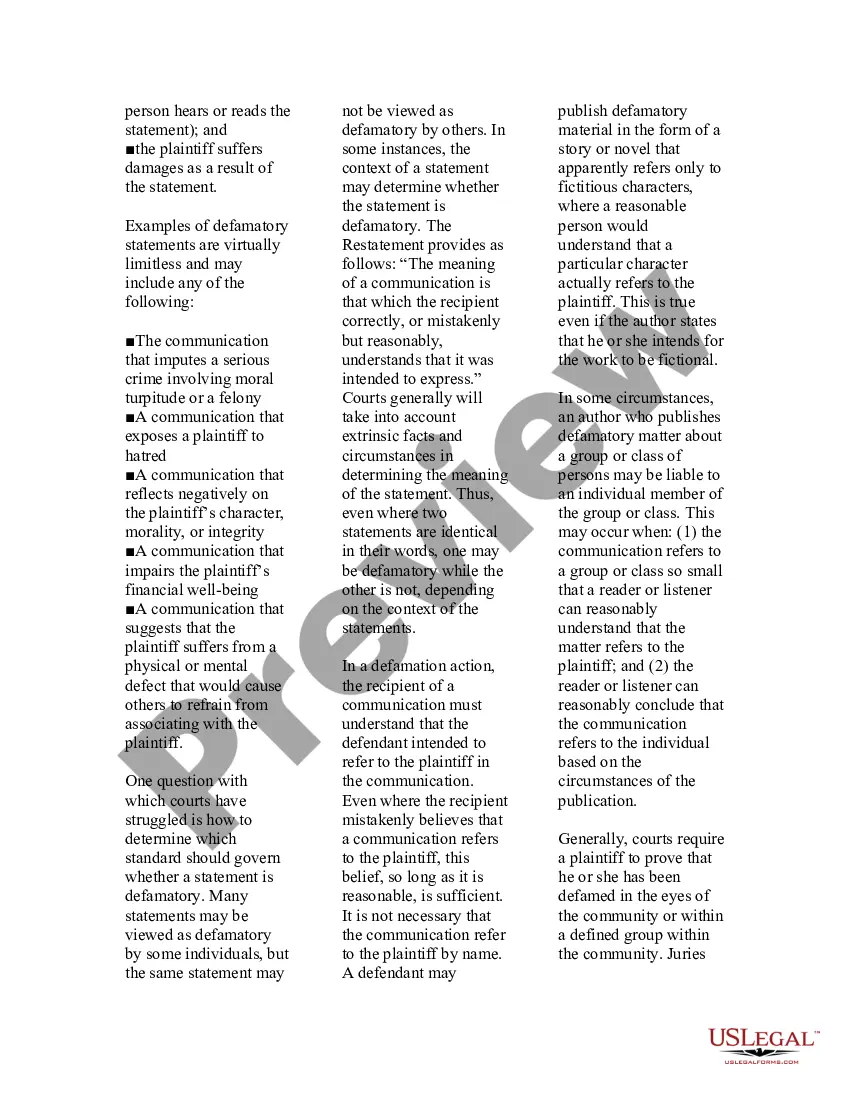
- Contextual factors affecting the interpretation of statements.
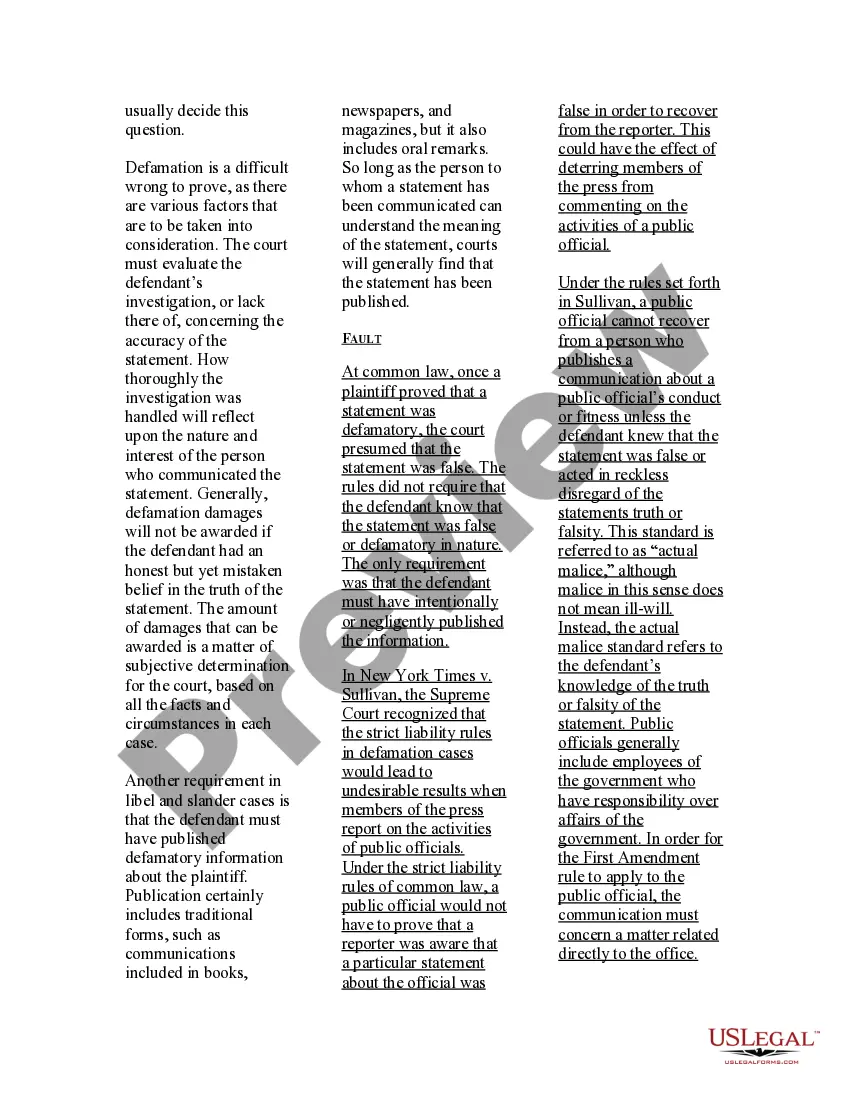
- Standards of fault for public officials and private individuals.

Common use cases
This guide should be used when you suspect that you have been defamed or are facing a defamation claim. It is especially relevant for individuals or entities who need to understand their rights related to reputational harm arising from false statements made about them, whether in personal, professional, or public contexts.
Intended users of this form
- Individuals who believe they have been defamed.
- Public figures or officials facing defamation claims.
- Legal practitioners seeking a clearer understanding of defamation law.
- Journalists and media personnel concerned about liability associated with reporting.
Instructions for completing this form
- Understand the definitions of libel and slander applicable to your situation.
- Identify the key elements needed to prove defamation relevant to your case.
- Consider the defenses that may apply to your situation if facing a claim.
- Gather evidence and context to support the claim or defense you intend to make.
Does this document require notarization?
Notarization is generally not required for this form. However, certain states or situations might demand it. You can complete notarization online through US Legal Forms, powered by Notarize, using a verified video call available anytime.
Get your form ready online
Our built-in tools help you complete, sign, share, and store your documents in one place.
Make edits, fill in missing information, and update formatting in US Legal Forms—just like you would in MS Word.
Download a copy, print it, send it by email, or mail it via USPS—whatever works best for your next step.
Sign and collect signatures with our SignNow integration. Send to multiple recipients, set reminders, and more. Go Premium to unlock E-Sign.
If this form requires notarization, complete it online through a secure video call—no need to meet a notary in person or wait for an appointment.
We protect your documents and personal data by following strict security and privacy standards.

Make edits, fill in missing information, and update formatting in US Legal Forms—just like you would in MS Word.

Download a copy, print it, send it by email, or mail it via USPS—whatever works best for your next step.

Sign and collect signatures with our SignNow integration. Send to multiple recipients, set reminders, and more. Go Premium to unlock E-Sign.

If this form requires notarization, complete it online through a secure video call—no need to meet a notary in person or wait for an appointment.

We protect your documents and personal data by following strict security and privacy standards.
Mistakes to watch out for
- Assuming all negative statements are defamatory without understanding legal definitions.
- Failing to establish that the statement was made to a third party (publication).
- Not considering the context in which statements were made, which can affect their interpretation.
Benefits of using this form online
- Access accurate legal language drafted by licensed attorneys.
- Immediate availability for download, making it convenient to use.
- Editability allows for customization to fit individual circumstances.
- Reliable guidance on complex legal concepts.
Legal use & context
- Defamation laws vary by state, so understanding local regulations is vital.
- This guide highlights the constitutional implications of defamation, particularly involving public figures.
- Plaintiffs must navigate complex legal standards, especially regarding truth and privilege.
Looking for another form?
Form popularity
FAQ
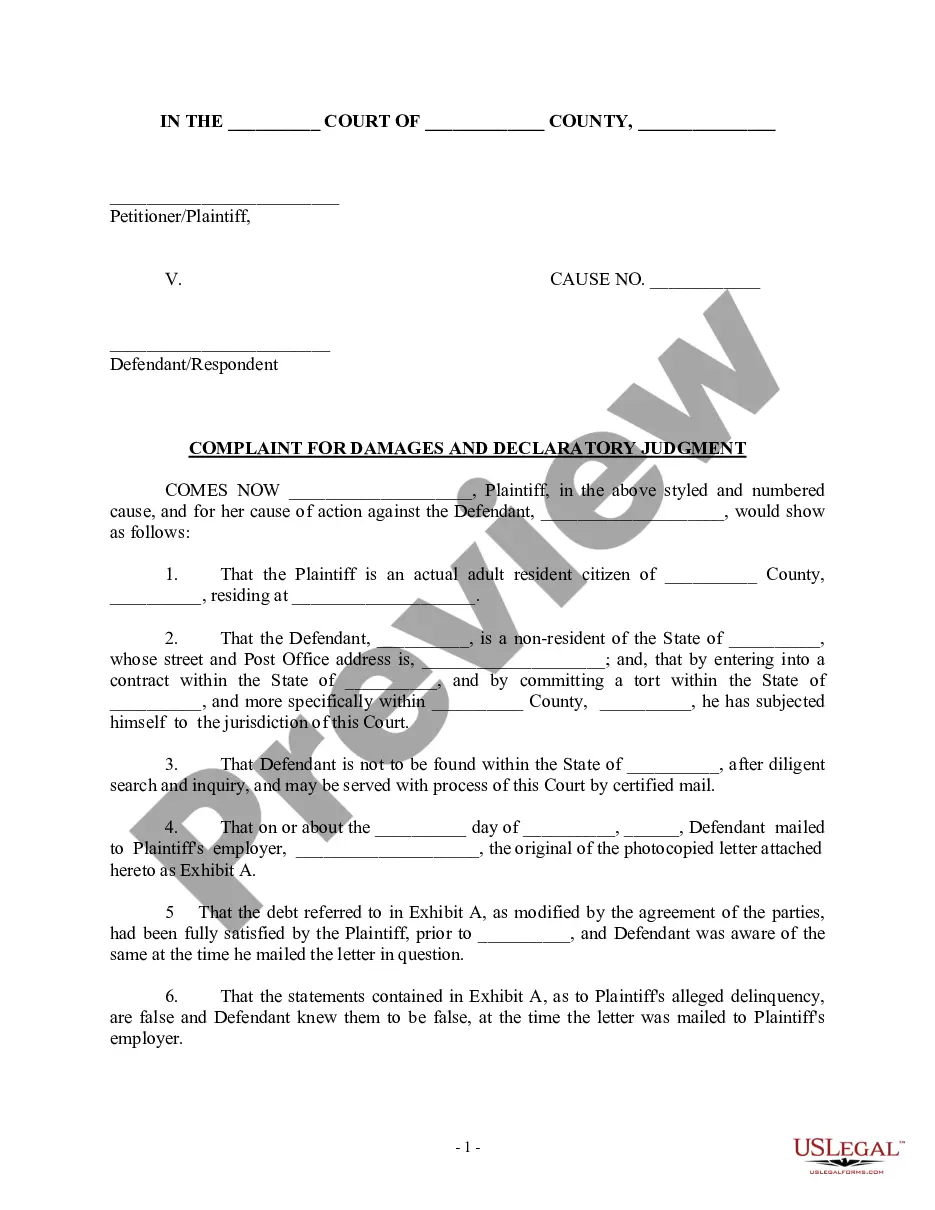
To prove prima facie defamation, a plaintiff must show four things: 1) a false statement purporting to be fact; 2) publication or communication of that statement to a third person; 3) fault amounting to at least negligence; and 4) damages, or some harm caused to the person or entity who is the subject of the statement.
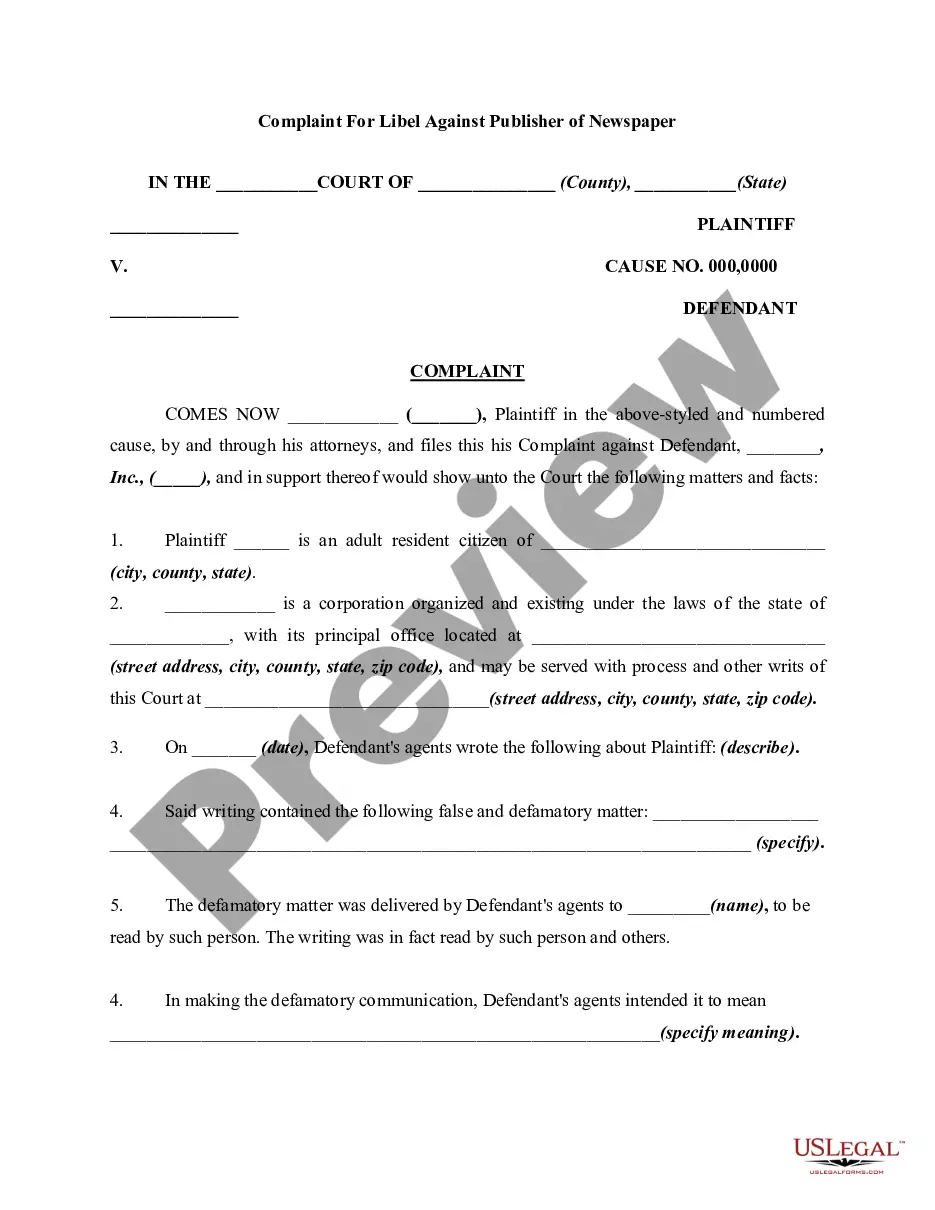
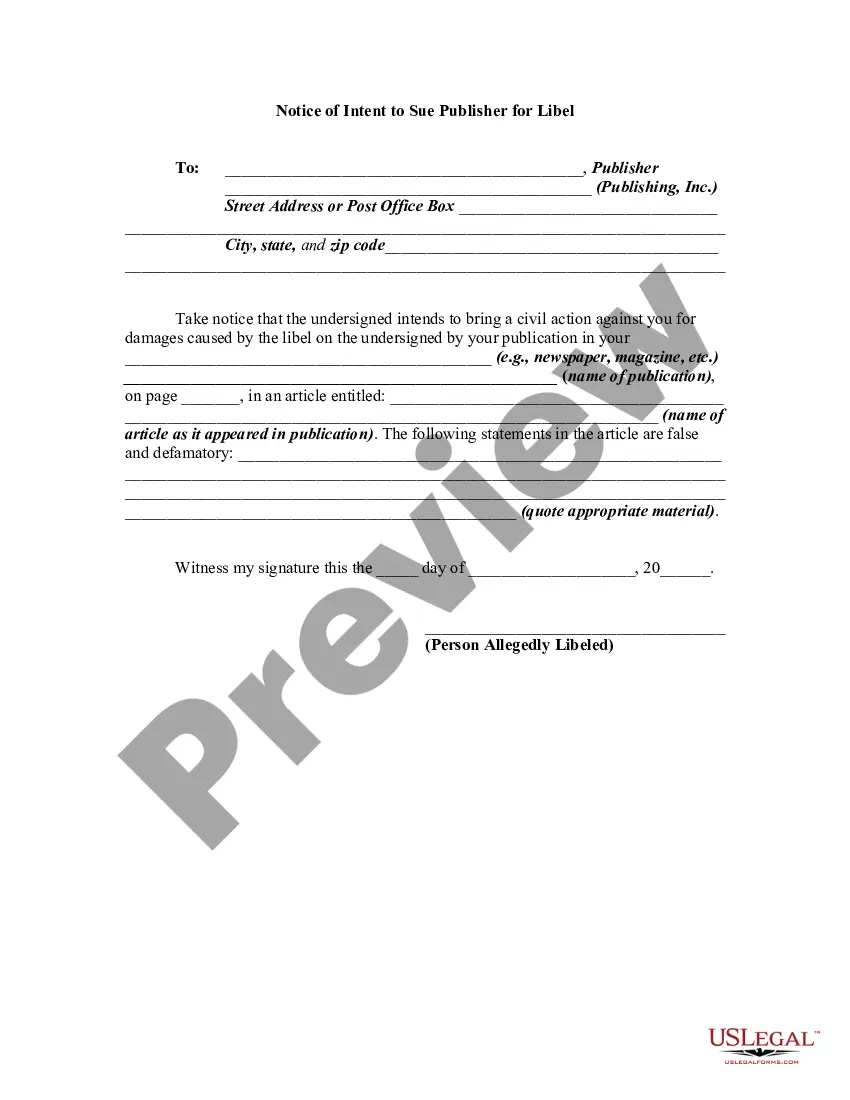
Libel is a method of defamation expressed by print, writing, pictures, signs, effigies, or any communication embodied in physical form that is injurious to a person's reputation, exposes a person to public hatred, contempt or ridicule, or injures a person in his/her business or profession.
In order to have them considered libel and slander, it must be proved that the things said or written had a detrimental effect on your business or personal reputation. If this is occurring to you, you can write a cease-and-desist letter that orders an individual or larger entity to stop these actions.
The burden of proof for a defamation case rests on the plaintiff. This means the person who was the subject of the false statement must prove these four elements for a successful case. As with most civil cases, the plaintiff must demonstrate these elements true by a preponderance of evidence.
Under United States law, libel generally requires five key elements: the plaintiff must prove that the information was published, the plaintiff was directly or indirectly identified, the remarks were defamatory towards the plaintiff's reputation, the published information is false, and that the defendant is at fault.
Step 1 Gather the False Statements. Collect any and all evidence of the false statements made. Step 2 Show the Statement is Inaccurate. Step 3 Write the Cease and Desist Letter. Step 4 Claiming Damages. Step 5 Prepare and File the Lawsuit.
Also known as oral or spoken defamation, slander is the legal term for the act of harming a person's reputation by telling one or more other people something that is untrue and damaging about that person. Slander can be the basis for a lawsuit and is considered a civil wrong (i.e., a tort).
To win a libel suit, public figures must prove actual malice, that whoever published an incorrect statementor a blatant lienot only did it but did so with reckless disregard for the truth.
To collect punitive damages, you also will likely have to prove the defamatory statement was made with actual malice in other words the person making the knew it was false, or showed reckless disregard for the truth. Those things can be very difficult to prove.