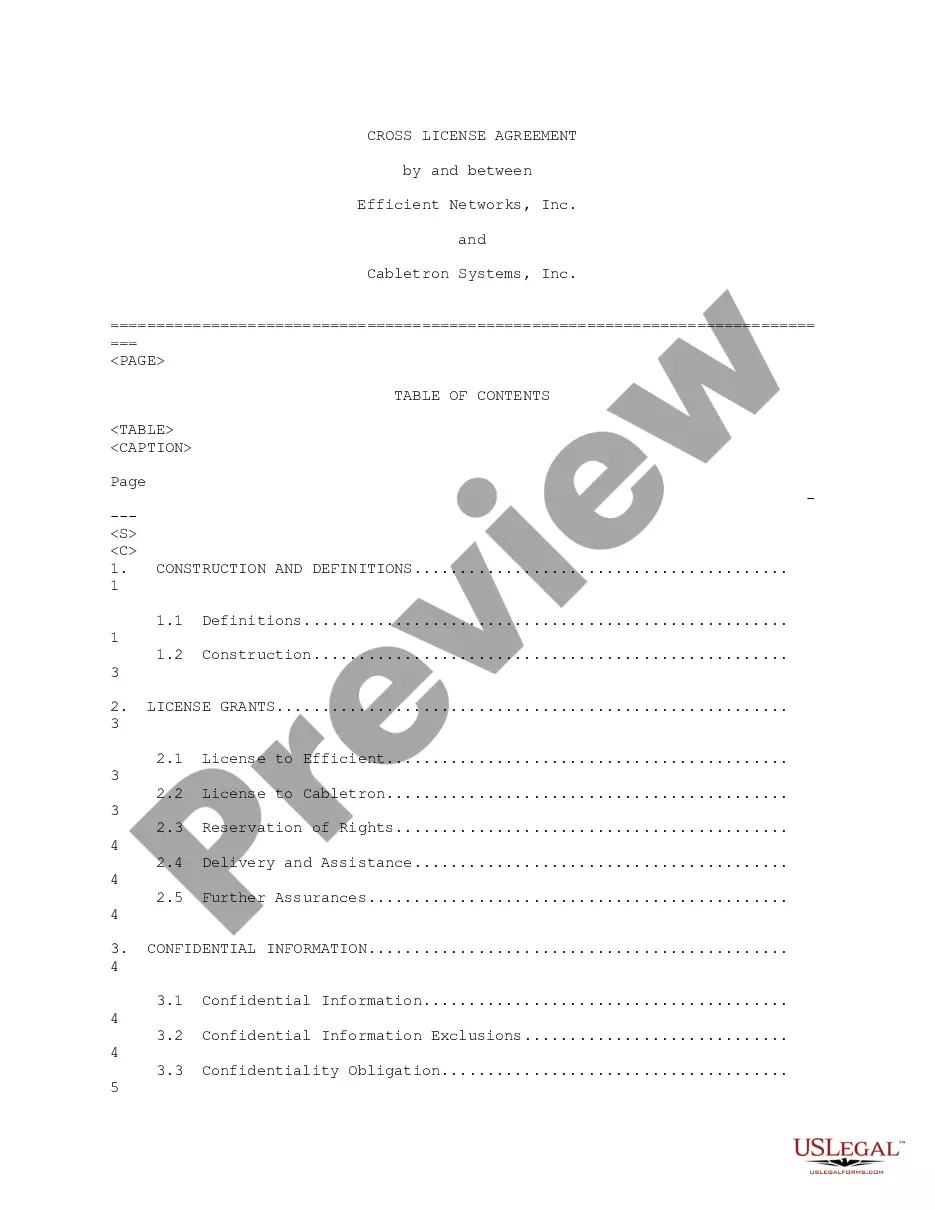
Cross License Agreement regarding obtaining license to certain technology and intellectual property rights
About this form
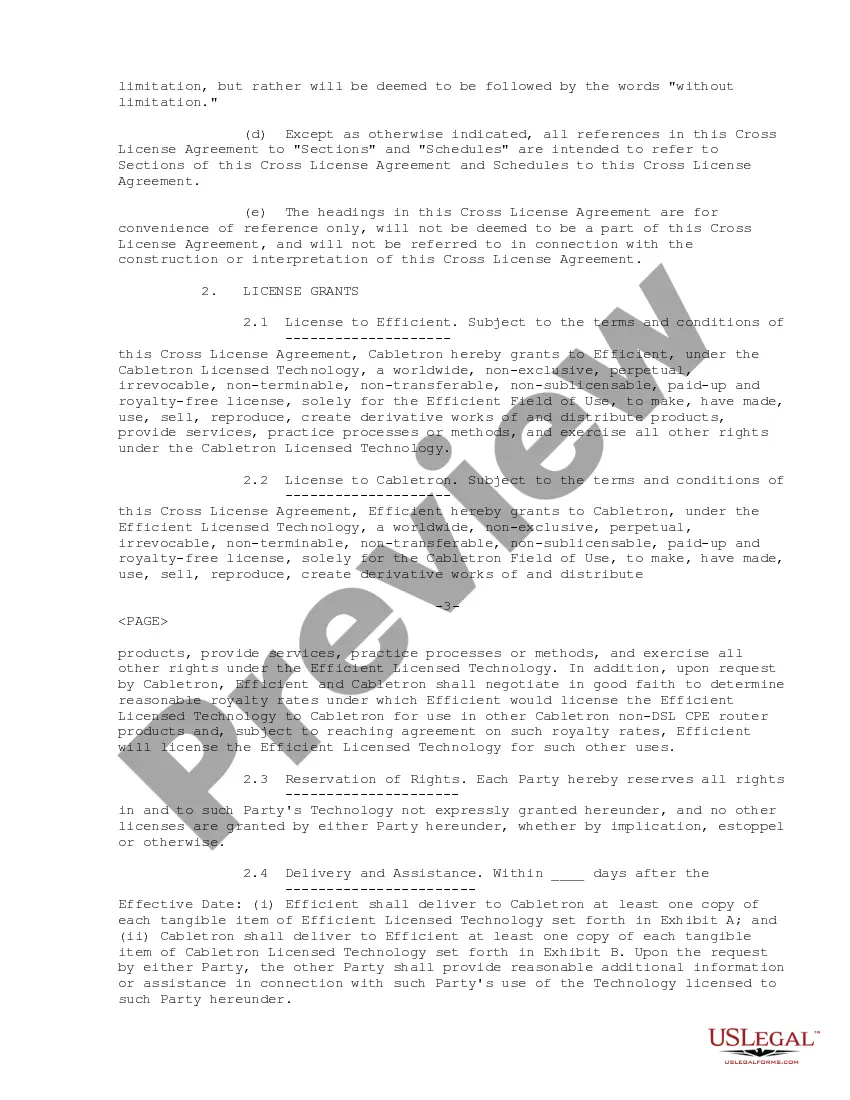
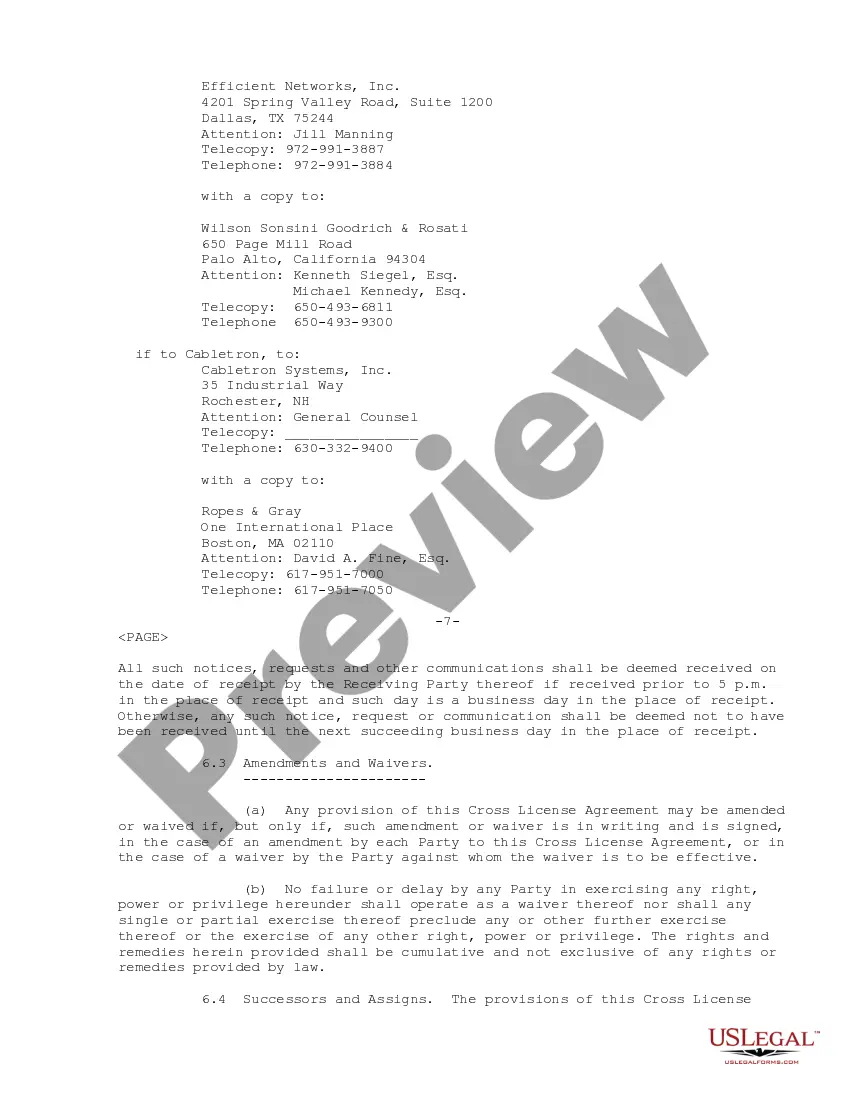
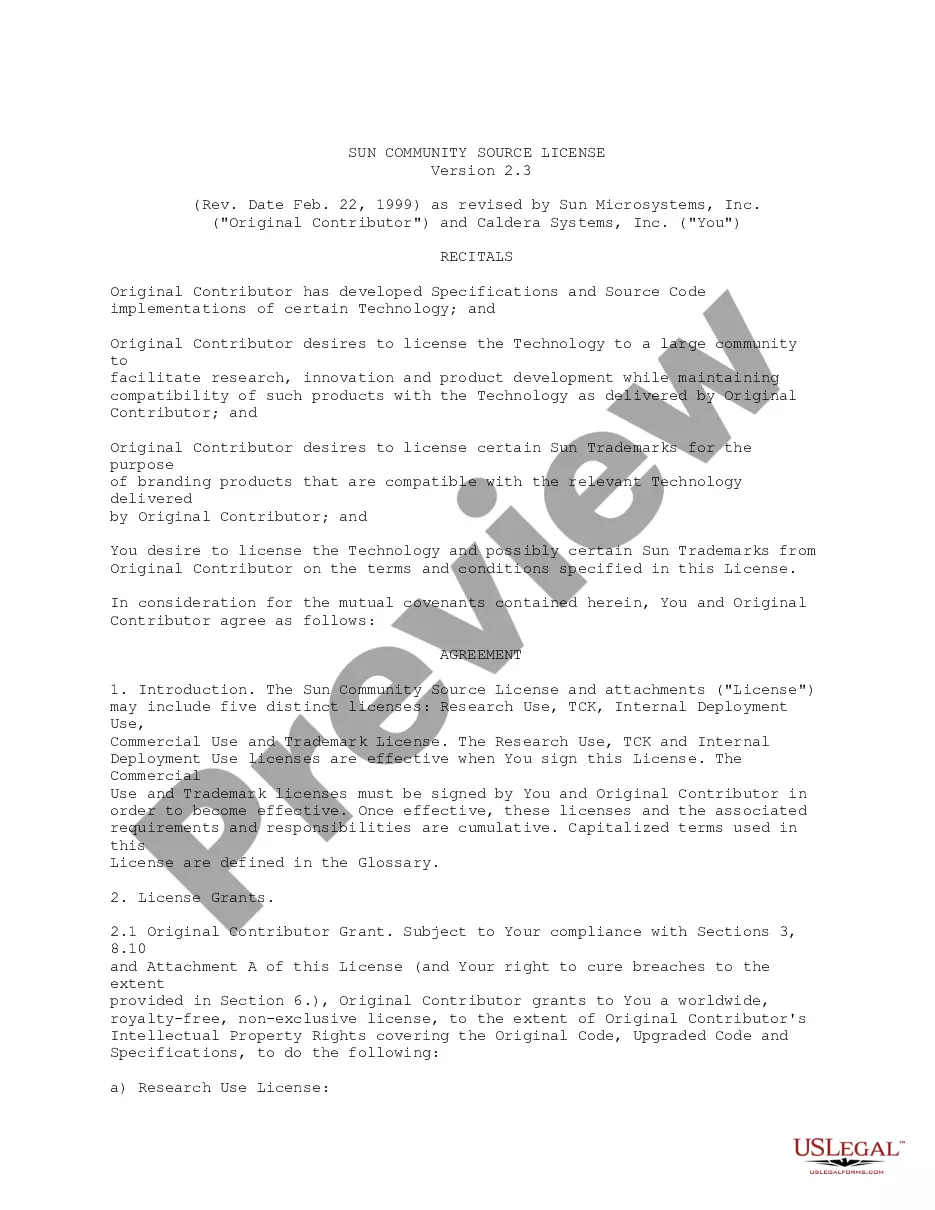
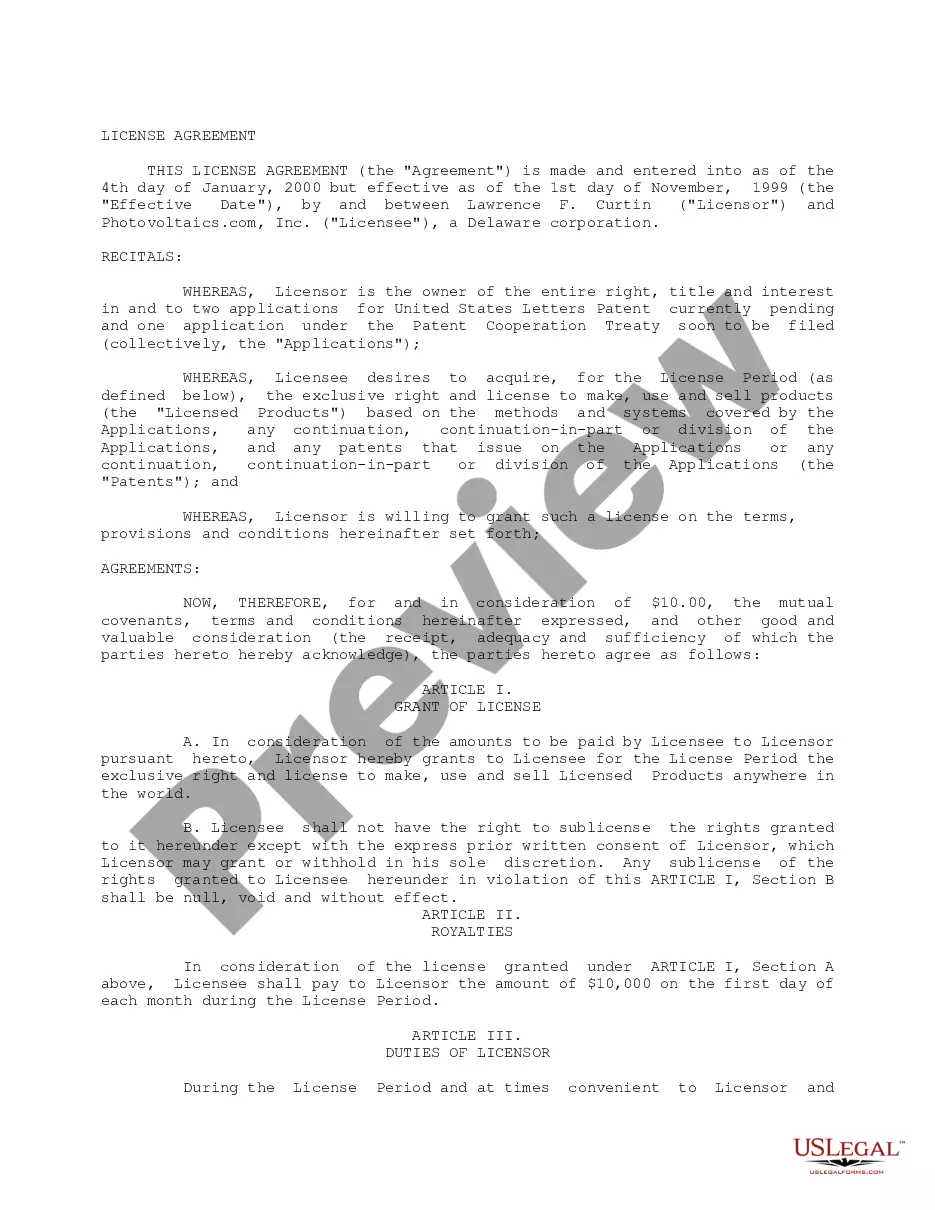
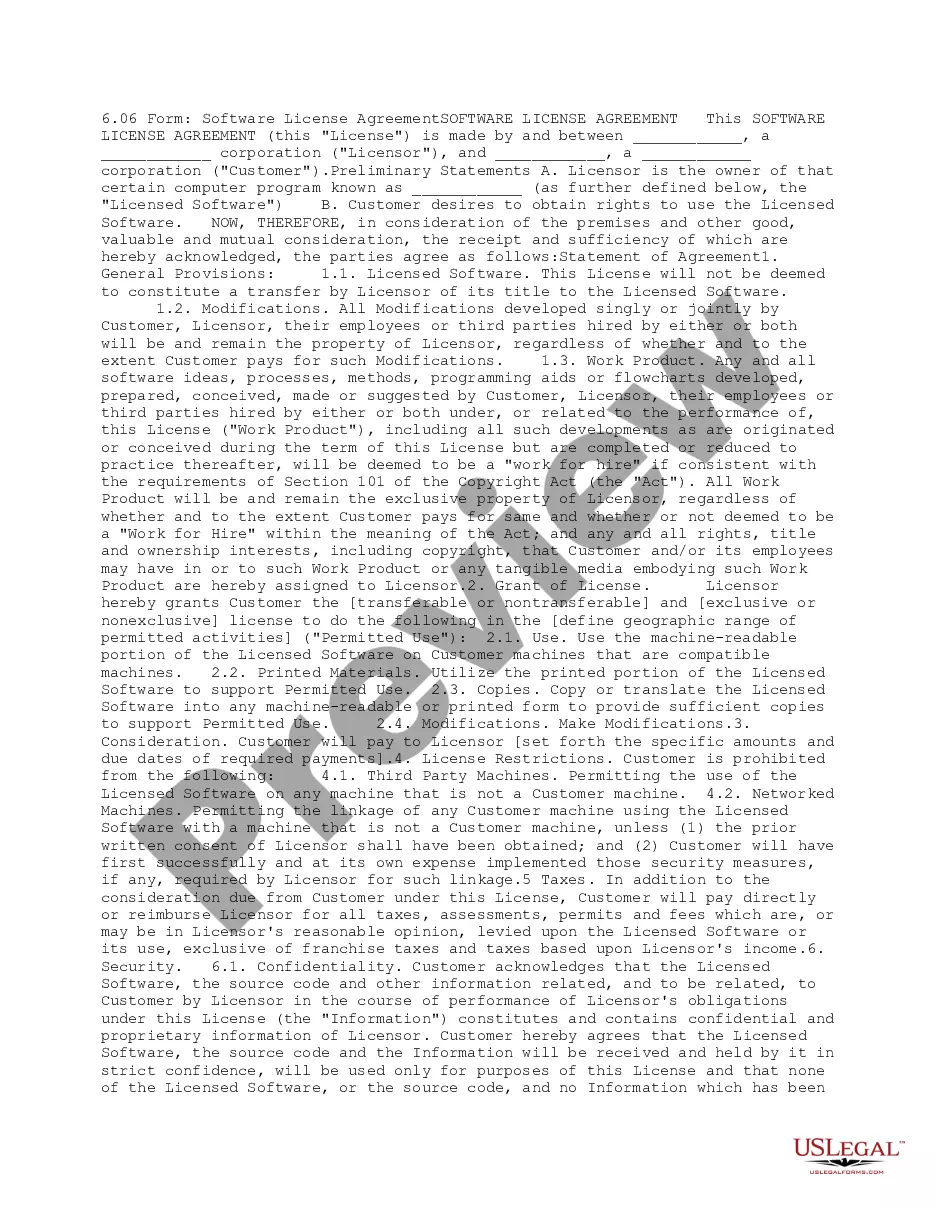
The Cross License Agreement is a legal document that facilitates the mutual licensing of specific technology and intellectual property rights between two parties, in this case, Efficient Networks, Inc. and Cabletron Systems, Inc. This form is distinct from other licensing agreements as it allows both parties to use each other's licensed technology, rather than one party simply granting a license to another. This agreement is particularly relevant in the context of mergers or acquisitions where parties seek to share technology developed for their products or services.
Form components explained
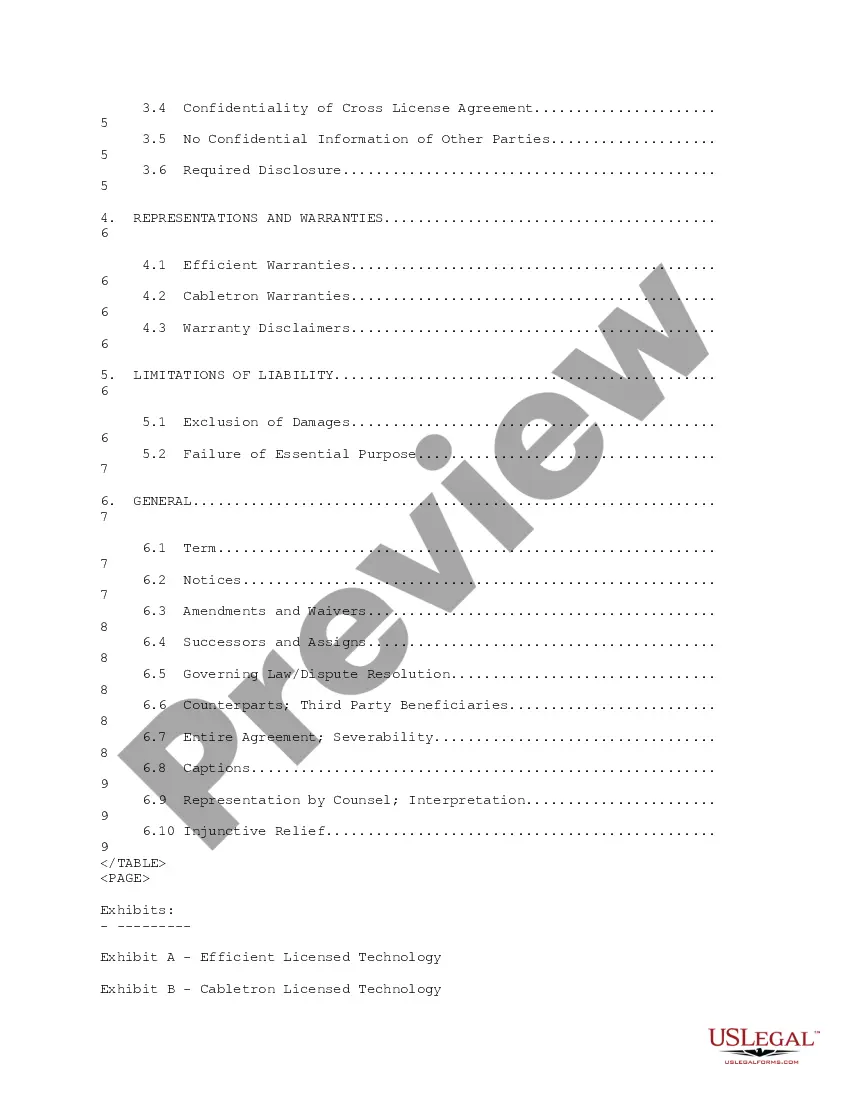
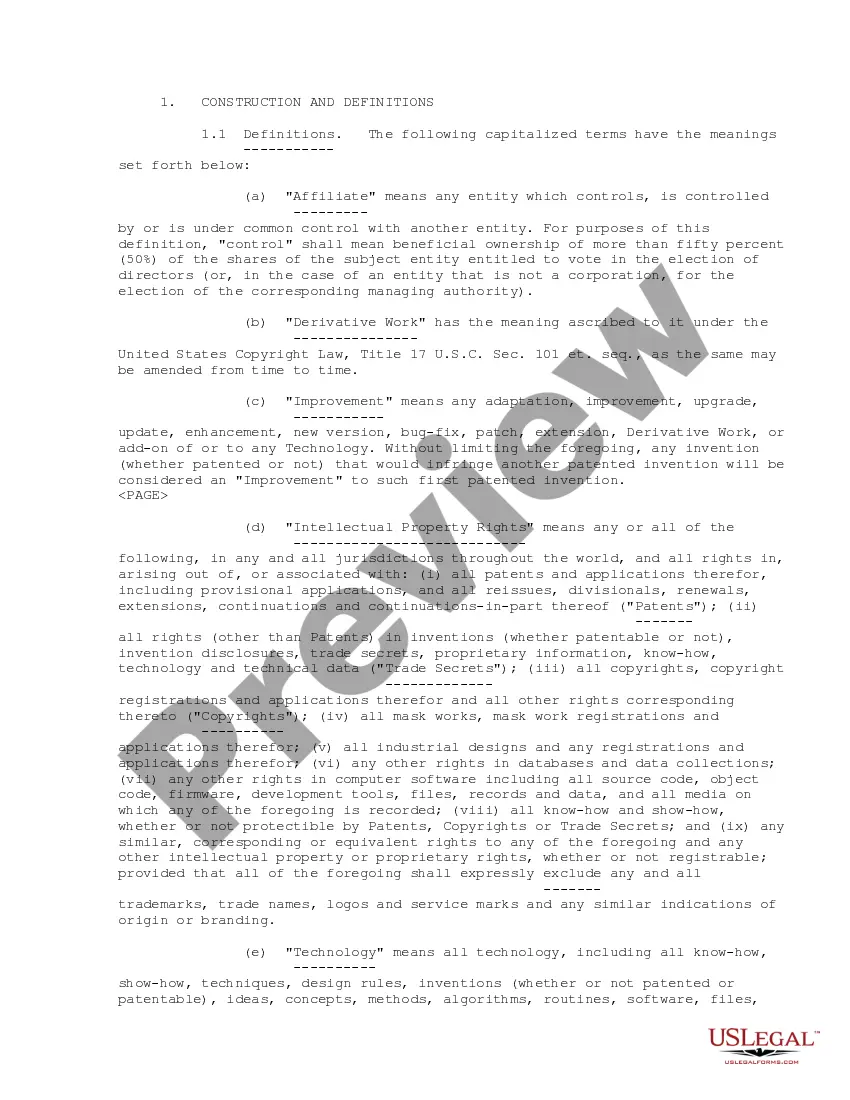
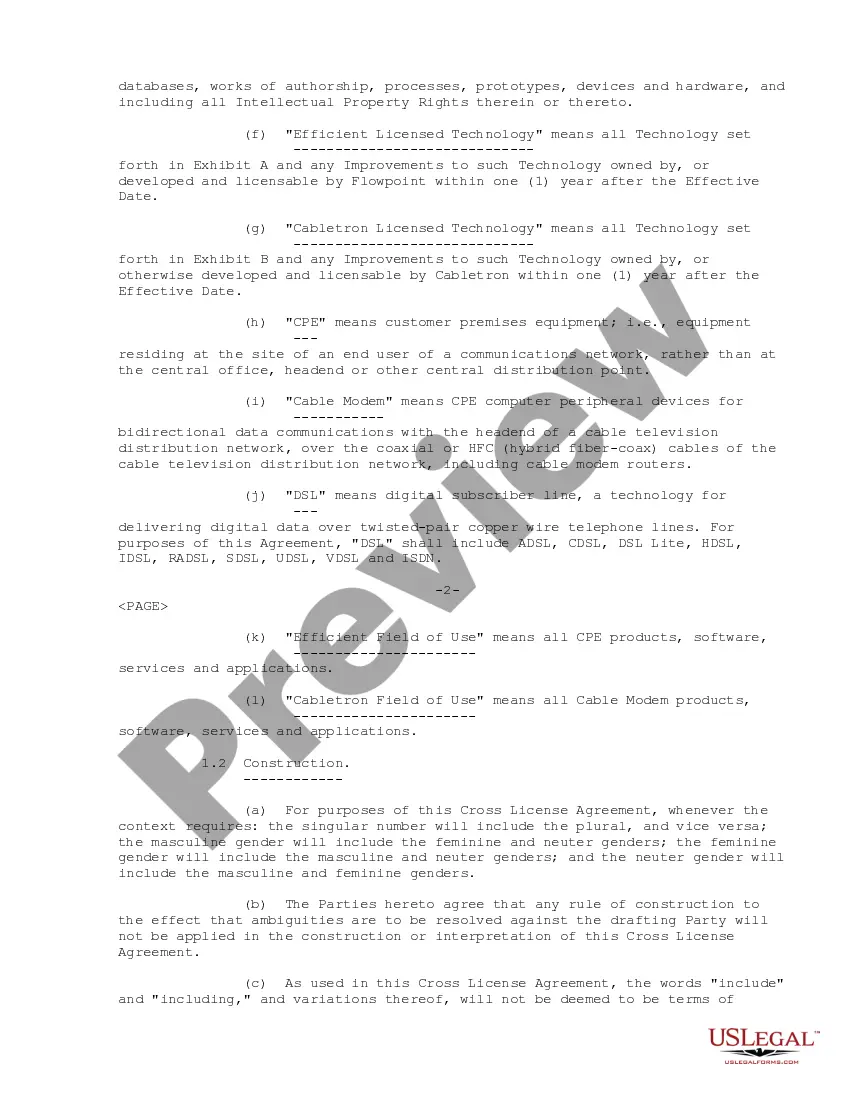
- Definitions: Clarifies key terms used in the agreement.
- License Grants: Details the specific licenses granted by each party to the other.
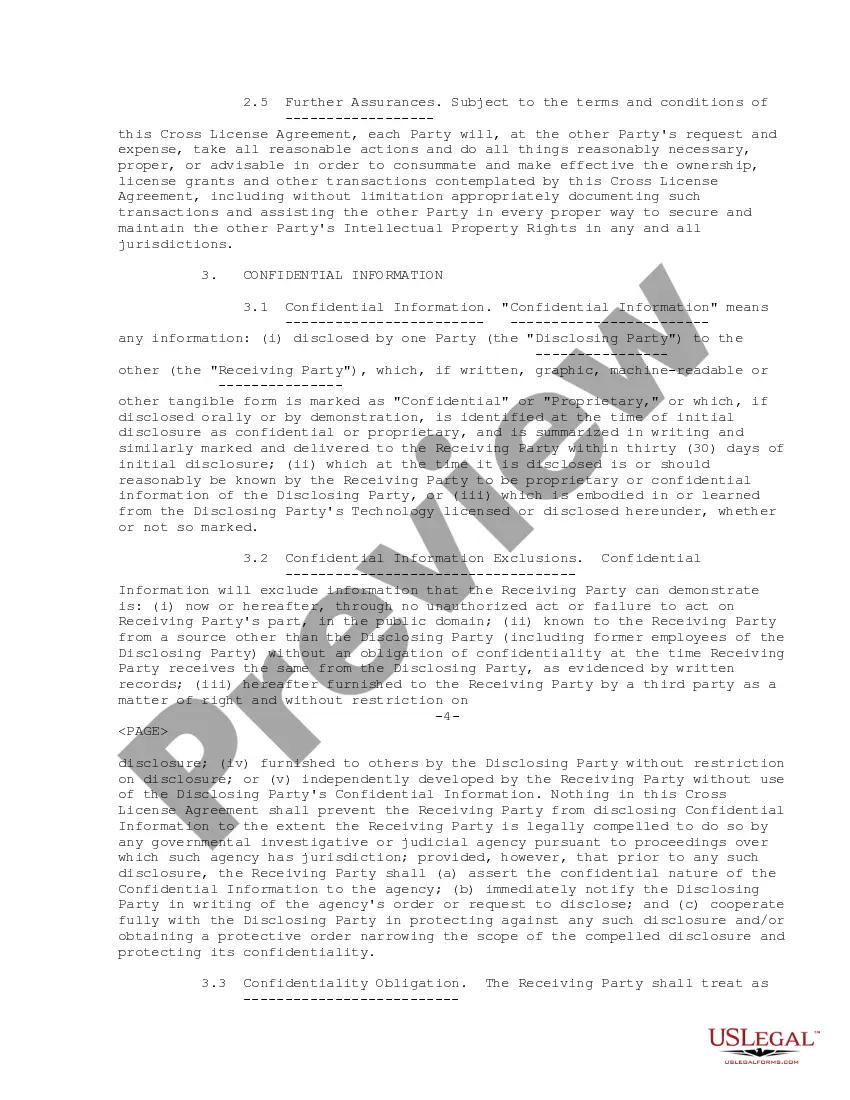
- Confidential Information: Outlines obligations related to confidentiality and proprietary rights.
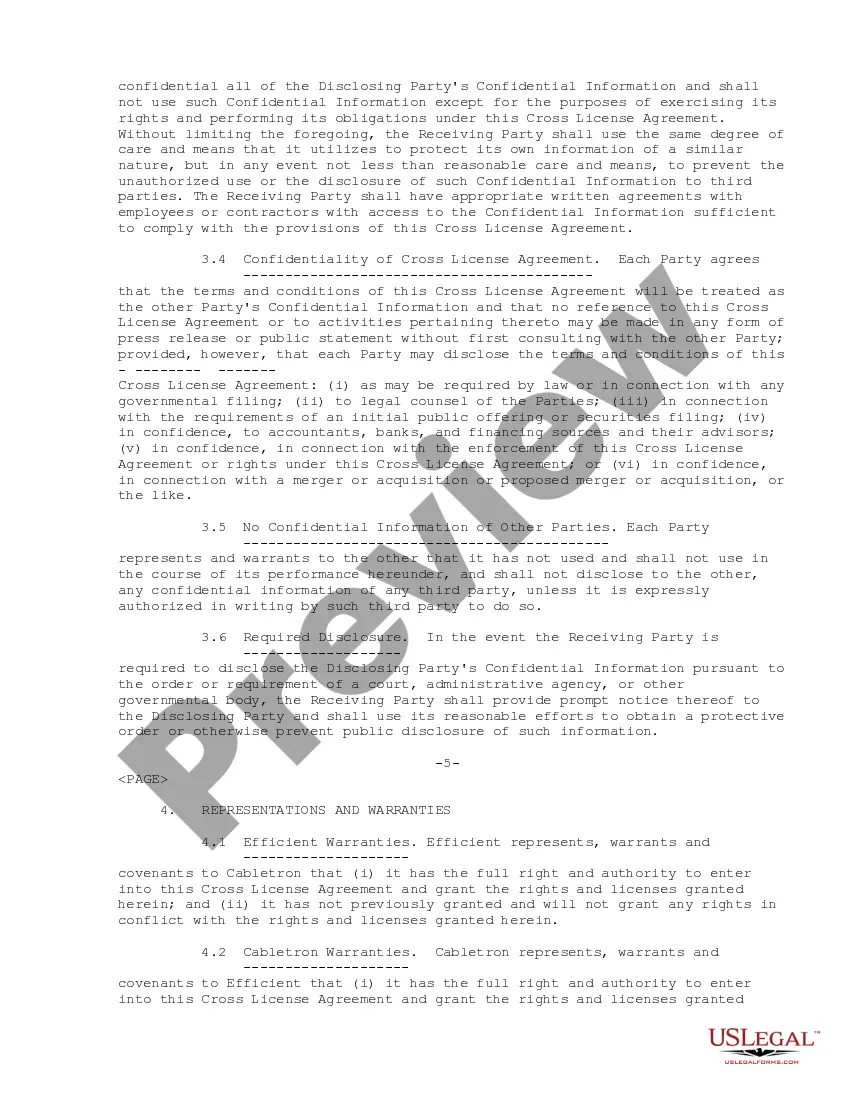
- Representations and Warranties: Sets forth the assurances provided by each party regarding their rights to enter into the agreement.
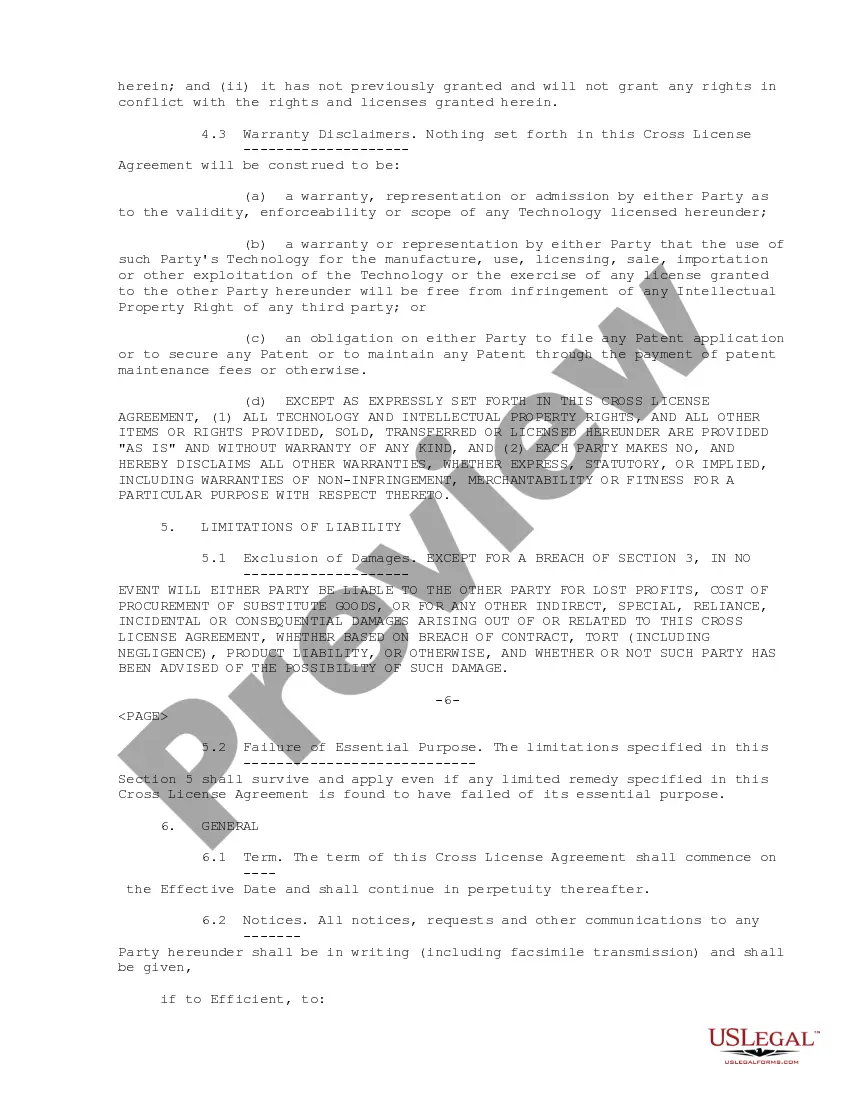
- Limitations of Liability: Explains the extent of liability for each party under the agreement.
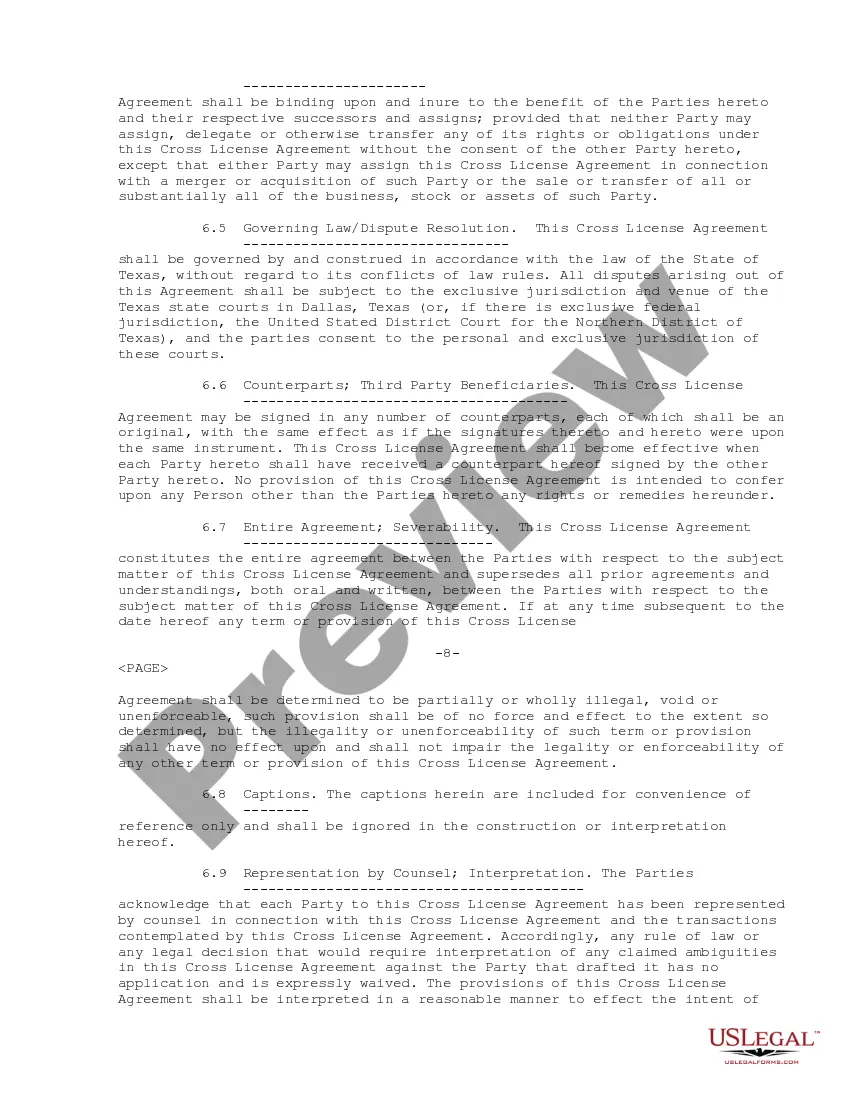
- Governing Law: Specifies which state's laws govern the agreement.

When this form is needed
This Cross License Agreement should be used when two companies, such as Efficient Networks and Cabletron, are engaged in a merger or collaboration that necessitates shared access to each other's technology and intellectual property rights. It's suitable for situations where both companies aim to leverage their respective innovations while ensuring legal protection of their proprietary technologies.
Who needs this form
- Businesses or entities involved in technological collaborations or mergers.
- Companies needing to protect their intellectual property while sharing resources with partners.
- Legal professionals drafting agreements for clients in technology sectors.
How to complete this form
- Identify the parties involved and ensure their official names are correctly stated in the agreement.
- Review definitions to understand the key terms used throughout the document.
- Detail the specific technology and intellectual property rights being licensed in the agreement.
- Outline the confidentiality obligations to protect proprietary information.
- Include signatures, titles, and dates of agreement execution.
Is notarization required?
This form usually doesn’t need to be notarized. However, local laws or specific transactions may require it. Our online notarization service, powered by Notarize, lets you complete it remotely through a secure video session, available 24/7.
Get your form ready online
Our built-in tools help you complete, sign, share, and store your documents in one place.
Make edits, fill in missing information, and update formatting in US Legal Forms—just like you would in MS Word.
Download a copy, print it, send it by email, or mail it via USPS—whatever works best for your next step.
Sign and collect signatures with our SignNow integration. Send to multiple recipients, set reminders, and more. Go Premium to unlock E-Sign.
If this form requires notarization, complete it online through a secure video call—no need to meet a notary in person or wait for an appointment.
We protect your documents and personal data by following strict security and privacy standards.

Make edits, fill in missing information, and update formatting in US Legal Forms—just like you would in MS Word.

Download a copy, print it, send it by email, or mail it via USPS—whatever works best for your next step.

Sign and collect signatures with our SignNow integration. Send to multiple recipients, set reminders, and more. Go Premium to unlock E-Sign.

If this form requires notarization, complete it online through a secure video call—no need to meet a notary in person or wait for an appointment.

We protect your documents and personal data by following strict security and privacy standards.
Common mistakes to avoid
- Failing to clearly define the scope of technology being licensed.
- Omitting important confidentiality clauses which protect proprietary information.
- Not specifying the governing law, leading to potential jurisdictional complications.
Benefits of completing this form online
- Convenient access to a complete and professionally drafted agreement.
- Editability allows customization to fit specific needs and requirements.
- Reliable format ensures legal compliance and thorough understanding of obligations.
Looking for another form?
Form popularity
FAQ
A license agreement is a business contract between two parties. The licensor (the seller of the license) owns the asset being licensed and the licensee (the buyer) pays for the right to use the license. The licensee pays royalties to the owner in exchange for the right to sell the product or use the technology.
The 3 P's of collegiate licensing are protection, promotion, and profit.
Download a template for a licensing agreement. Choose your role as the licensor or licensee. Define the license(s) in the agreement. Decide whether the license is exclusive or not. Settle the matter of fees and payment schedule. Add a renewal date and rules.
Exclusive or non-exclusive. In an exclusive license, the intellectual property holder is licensing the work only to one person, for that particular use/territory. Territory. Use. Attribution. Derivative works. Confidentiality. Time frame. Termination.
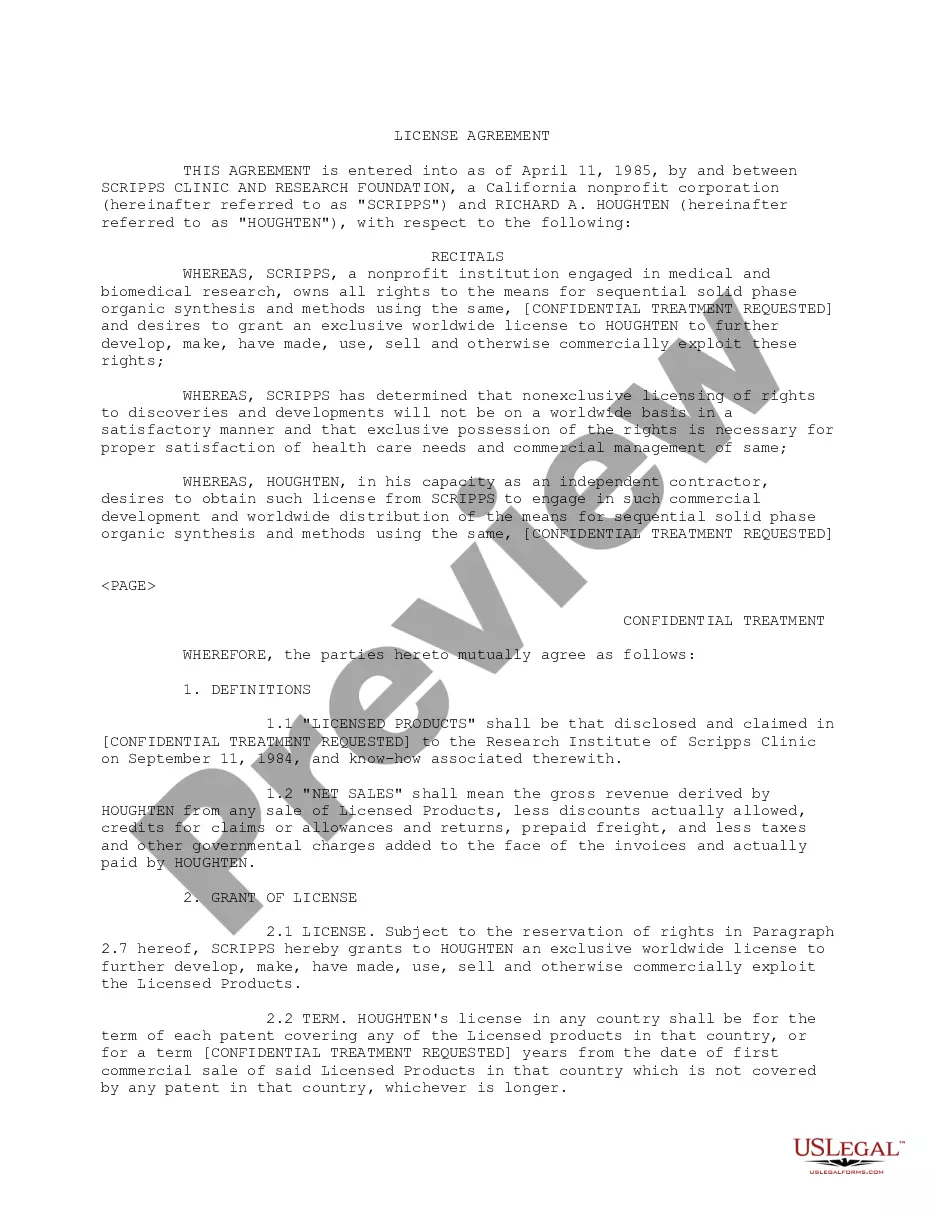
Under an intellectual property licensing agreement (also known as an intellectual property license or an intellectual property license agreement), you retain ownership of your patent, copyright, or trademark, but you give another party permission to use some or all of your intellectual property rights for a specific
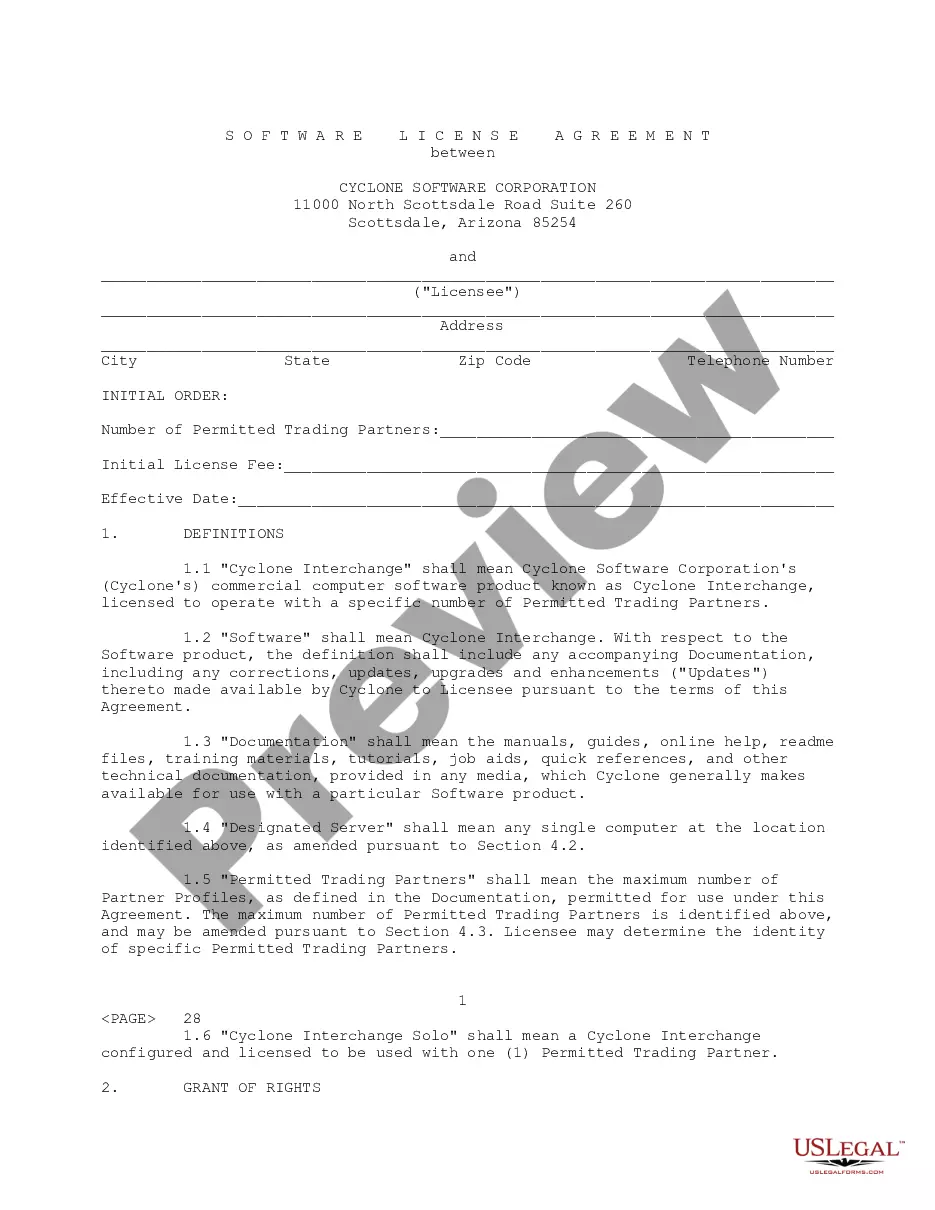
A technology license agreement is an arrangement that involves an owner (licensor) of some technological intellectual property who accepts compensation (consideration) to let someone else (licensee) use, change, or resell the property.
An example of a licensing agreement is a contract between the copyright holders of software and another company, allowing the latter to use the computer software for their daily business operations.
Technology licensing agreements are contracts or arrangements that involve an owner of a technology-based intellectual property, also known as a licensor, who will accept compensation in exchange for allowing an outside party, known as the licensee, resell the property, make alterations to it, or simply use it.
An example of a licensing agreement is a contract between the copyright holders of software and another company, allowing the latter to use the computer software for their daily business operations.