Release and Settlement Agreement
Understanding this form
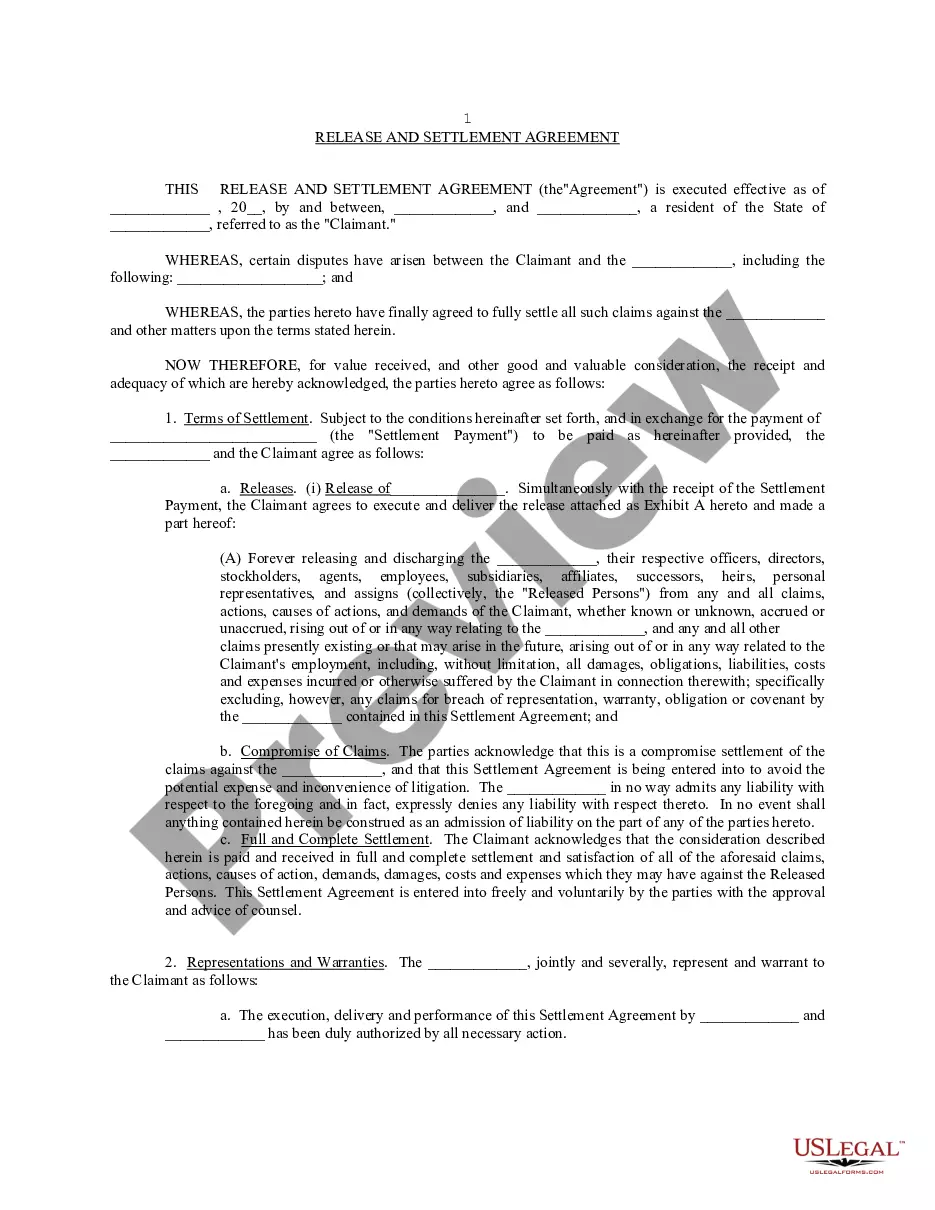
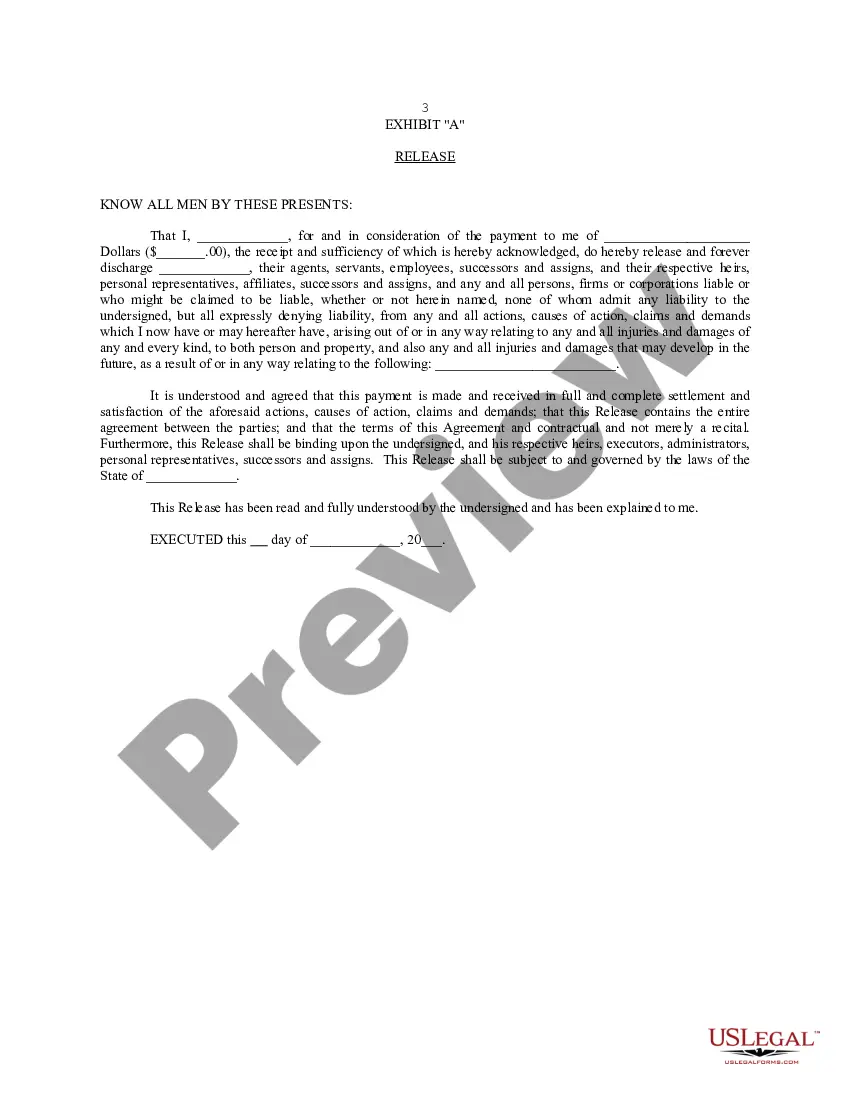
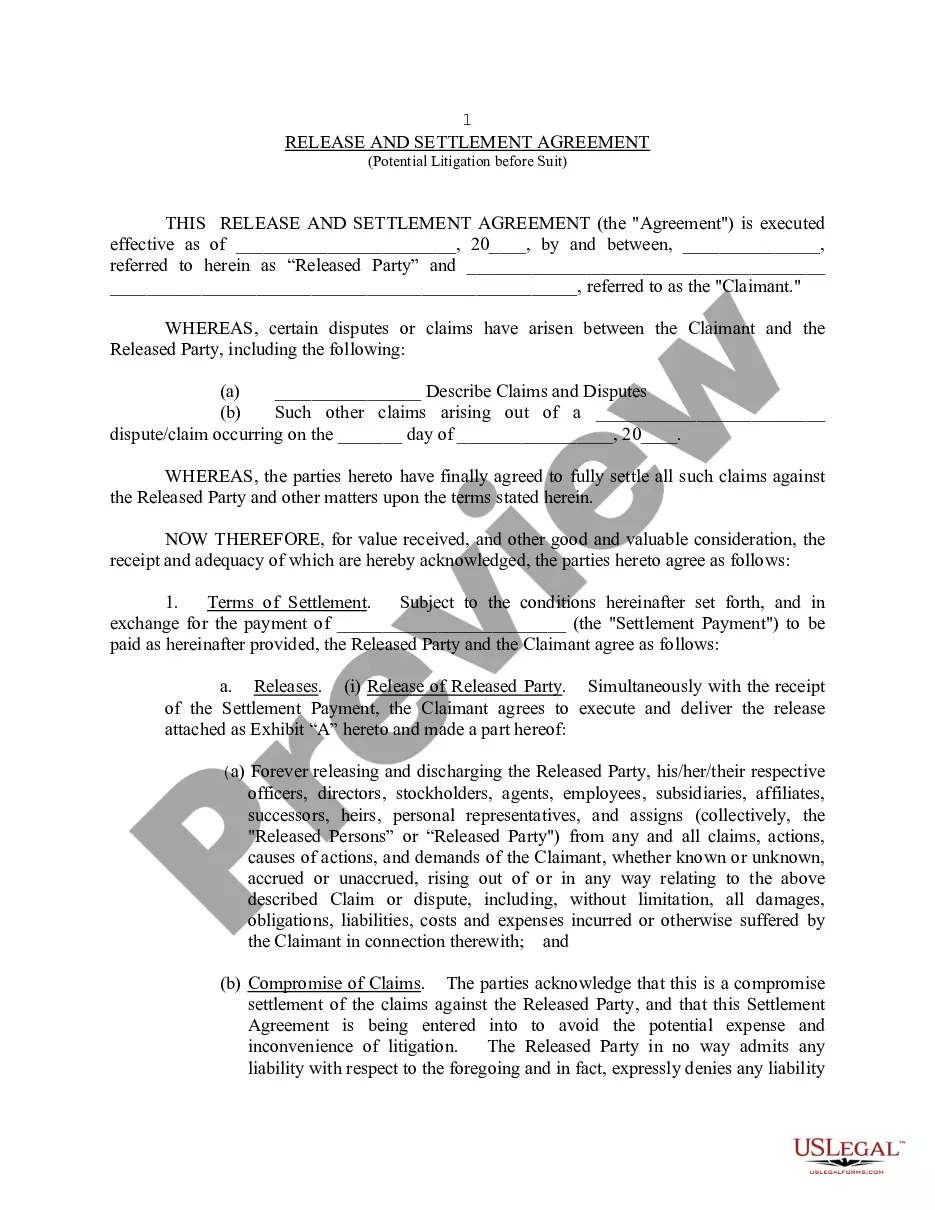
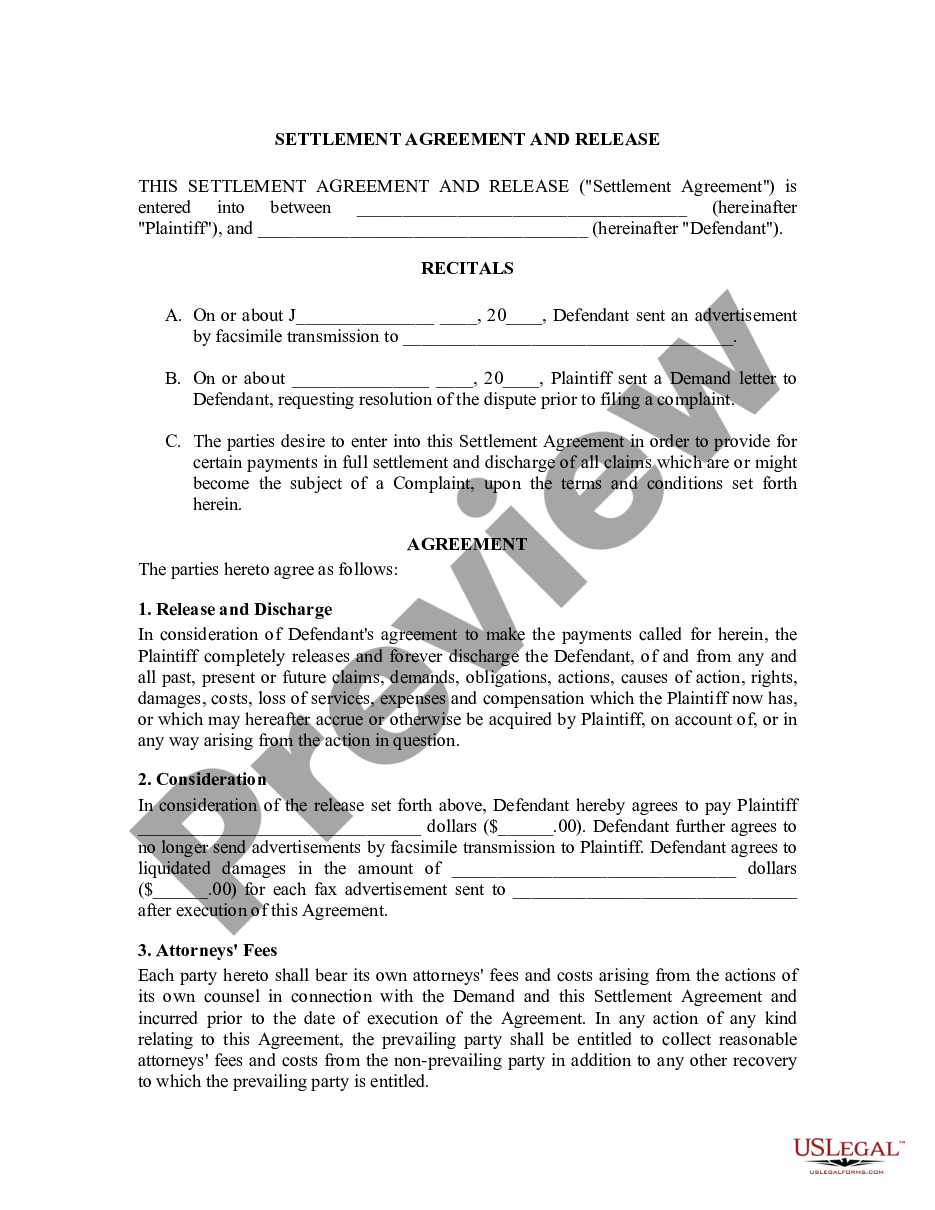
The Release and Settlement Agreement is a legal document used to resolve disputes between parties by formally releasing claims against one another. Its primary purpose is to settle disagreements arising from issues such as a failure to properly manage a life insurance policy. Unlike other legal forms, this agreement not only discharges claims but also outlines the responsibilities each party has for their own legal fees, making it a comprehensive solution for conflict resolution.
What’s included in this form
- Effective date and parties involved.
- Terms of settlement, including the settlement payment amount.
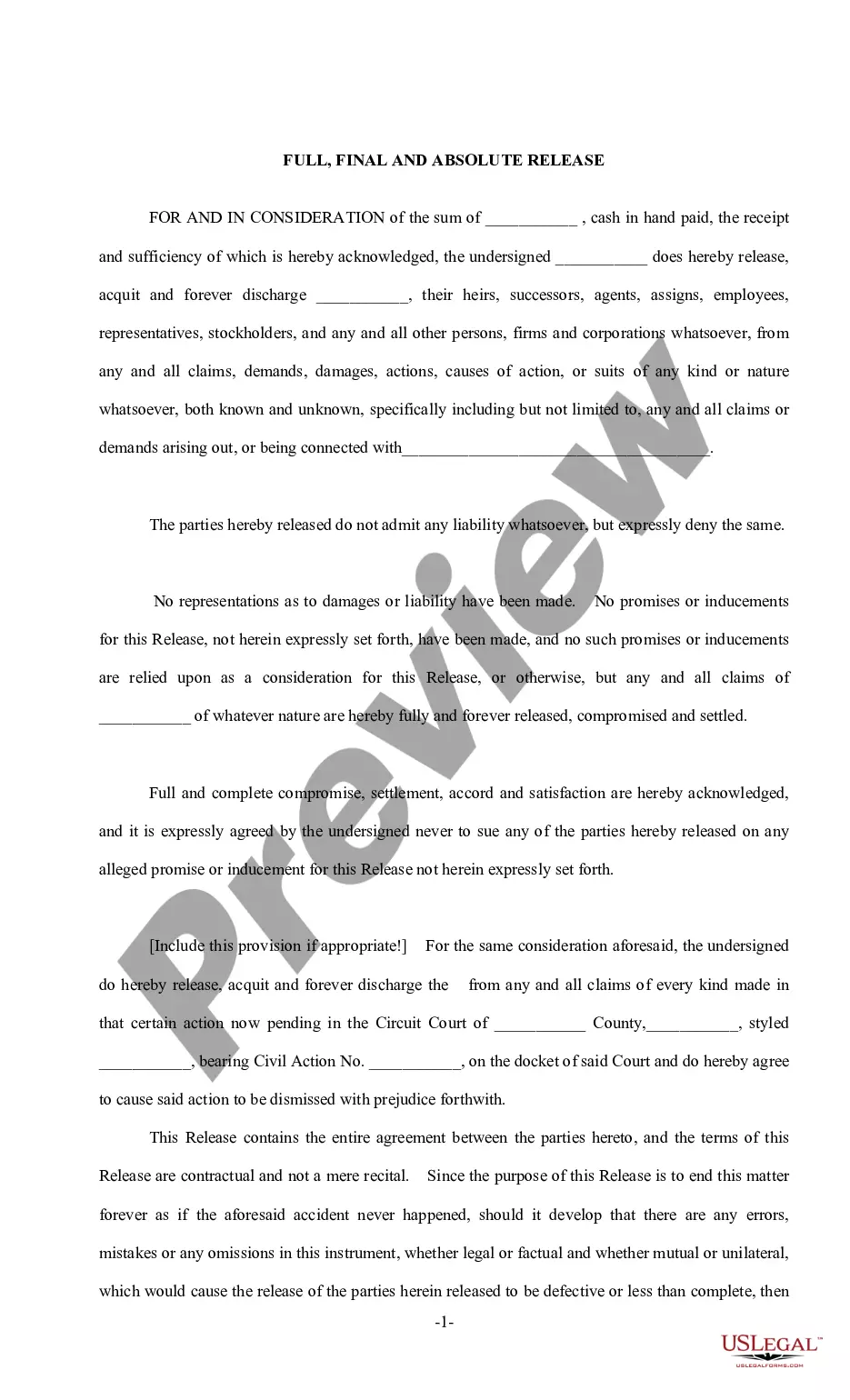
- Release clauses that discharge claims against the releasee.
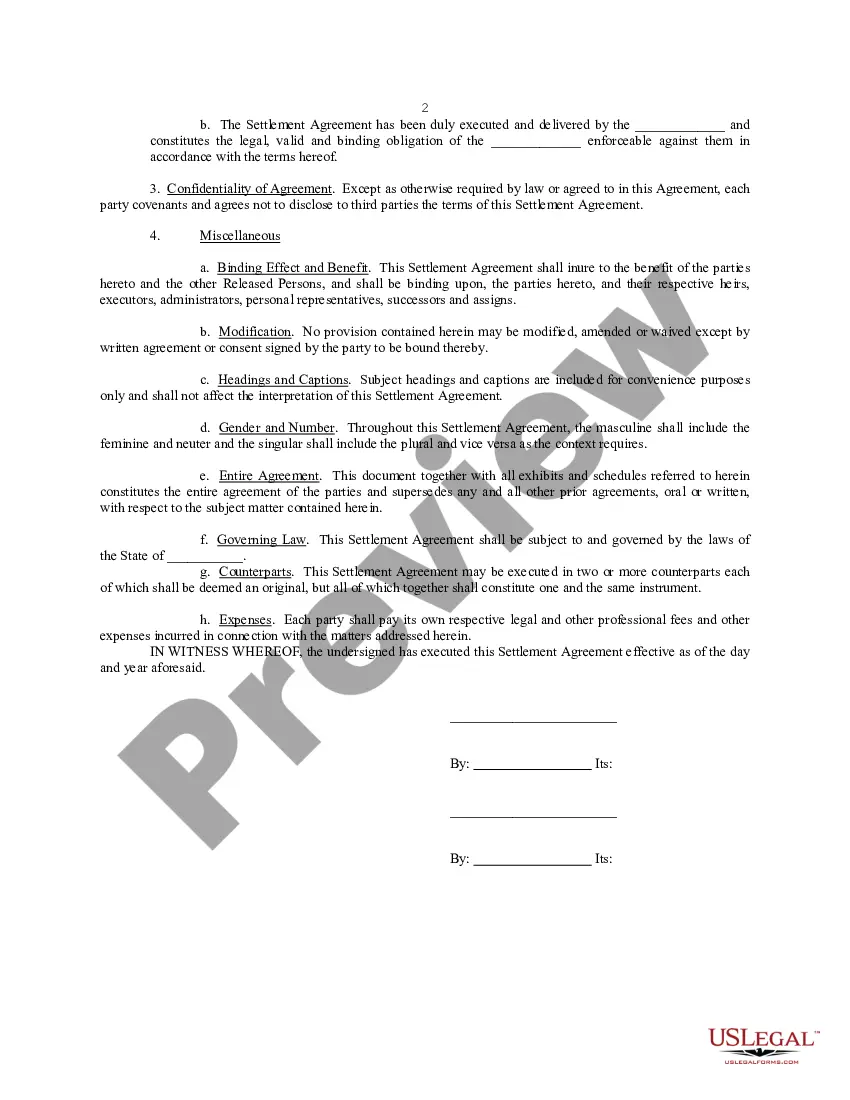
- Confidentiality provisions regarding the terms of the agreement.
- Binding effect and modification rules for the agreement.
When to use this document
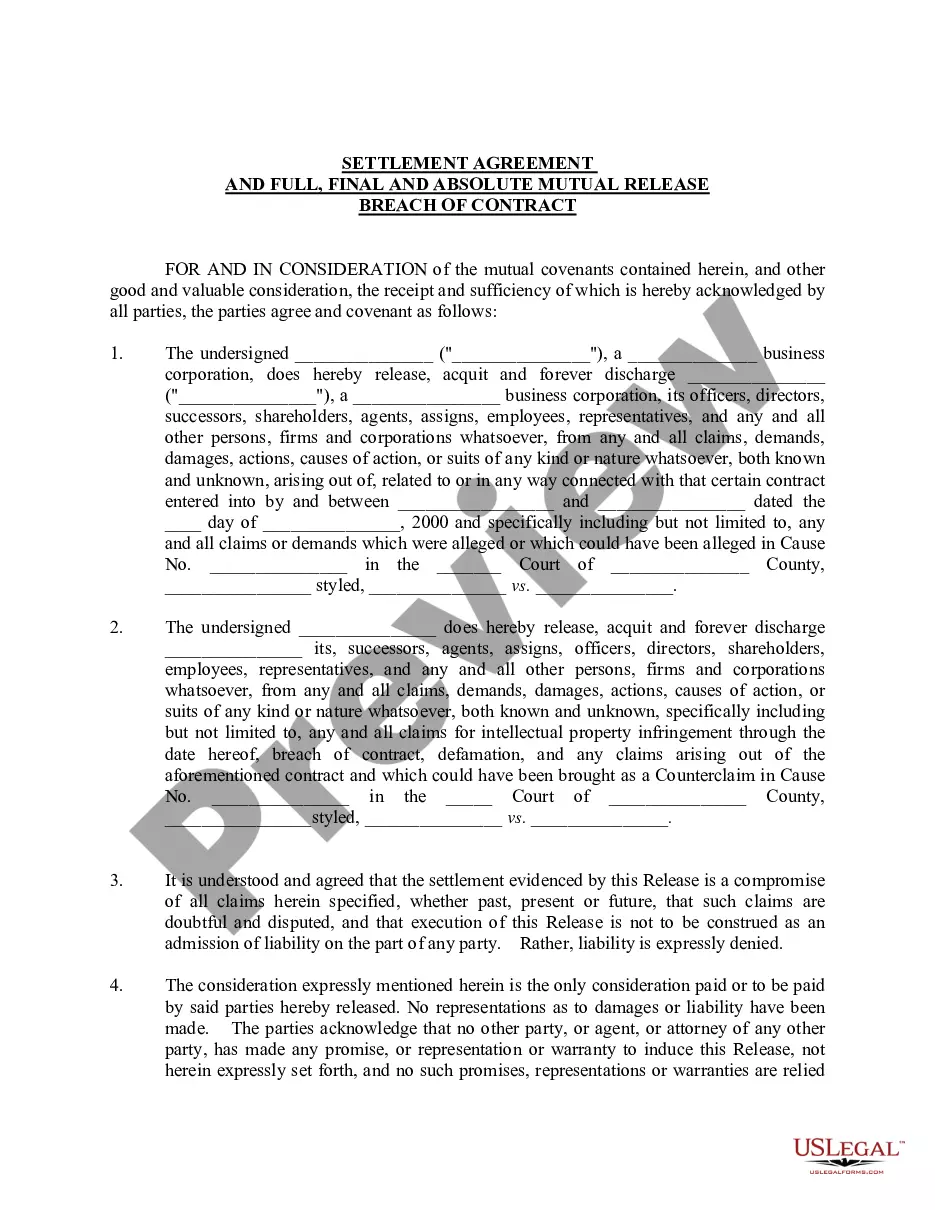
This form is applicable in situations when parties wish to settle a dispute without proceeding to litigation. Common scenarios include disputes related to insurance policies, employment-related claims, or other contractual disagreements. Utilizing this agreement can help avoid the costs and stress associated with court proceedings.
Who this form is for
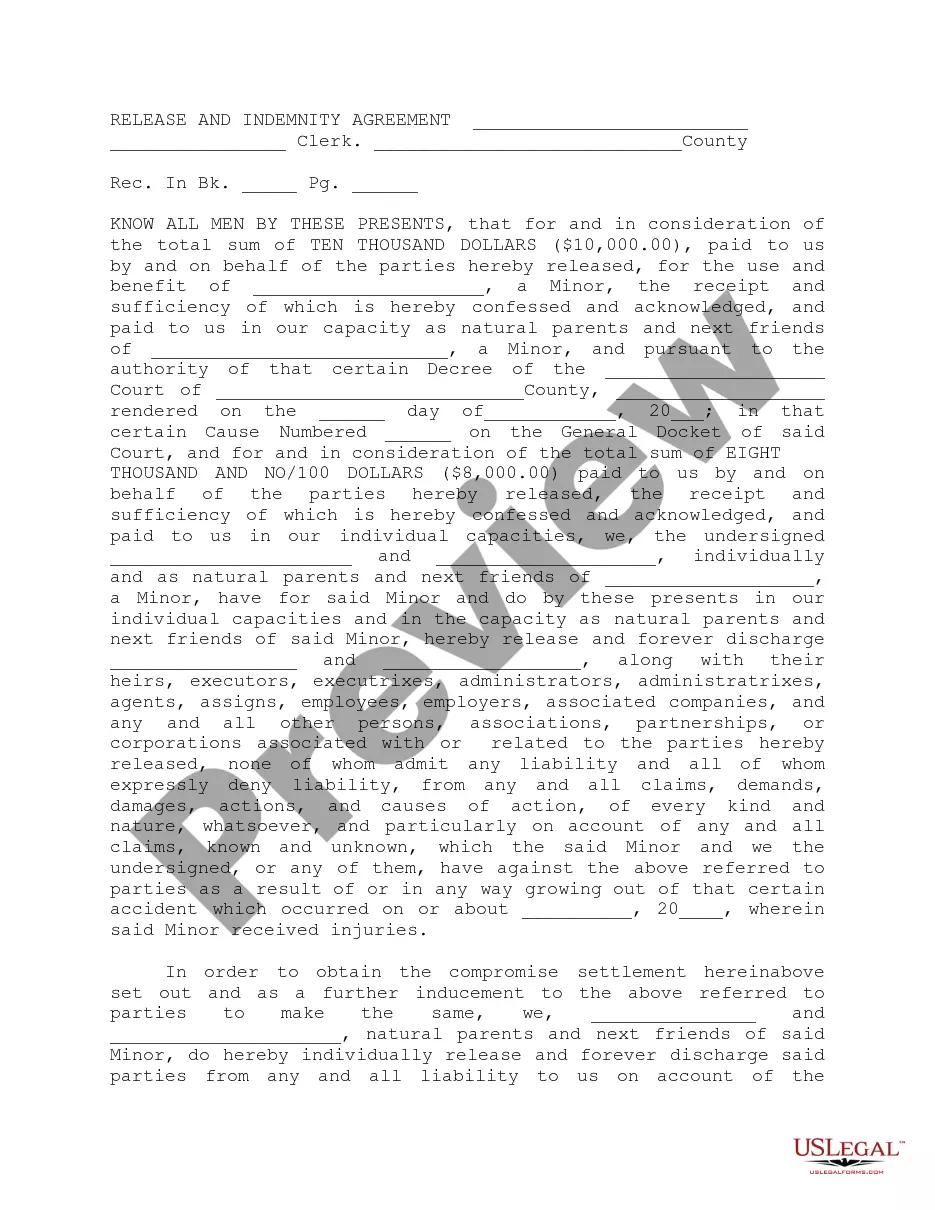
- Individuals or businesses involved in disputes over a life insurance policy.
- Claimants seeking to resolve conflicts amicably and avoid litigation.
- Parties requiring a clear outline of their responsibilities regarding fees and claims.
Completing this form step by step
- Identify the parties involved in the agreement and fill in their names and addresses.
- Enter the effective date at the top of the document.
- Specify the dispute details and outline the claims being settled.
- Fill in the amount of the settlement payment to be made.
- Each party should sign and date the agreement to finalize it.
Is notarization required?
This form does not typically require notarization unless specified by local law. However, it is advisable to consult legal counsel regarding any specific requirements in your state to ensure the agreement's enforceability.
Get your form ready online
Our built-in tools help you complete, sign, share, and store your documents in one place.
Make edits, fill in missing information, and update formatting in US Legal Forms—just like you would in MS Word.
Download a copy, print it, send it by email, or mail it via USPS—whatever works best for your next step.
Sign and collect signatures with our SignNow integration. Send to multiple recipients, set reminders, and more. Go Premium to unlock E-Sign.
If this form requires notarization, complete it online through a secure video call—no need to meet a notary in person or wait for an appointment.
We protect your documents and personal data by following strict security and privacy standards.

Make edits, fill in missing information, and update formatting in US Legal Forms—just like you would in MS Word.

Download a copy, print it, send it by email, or mail it via USPS—whatever works best for your next step.

Sign and collect signatures with our SignNow integration. Send to multiple recipients, set reminders, and more. Go Premium to unlock E-Sign.

If this form requires notarization, complete it online through a secure video call—no need to meet a notary in person or wait for an appointment.

We protect your documents and personal data by following strict security and privacy standards.
Avoid these common issues
- Failing to clearly state the claims being released, which could lead to misunderstandings.
- Omitting signature dates, which can render the agreement less enforceable.
- Not including all relevant parties in the agreement, leading to potential liability issues.
Why complete this form online
- Convenience of accessing and downloading the form from anywhere.
- Easy editing to customize the agreement to fit specific situations.
- Reliability in ensuring that the document is drafted according to legal standards.
Key takeaways
- The Release and Settlement Agreement helps resolve disputes related to life insurance policies.
- Each party agrees to pay their own legal fees within the settlement terms.
- Completing the form accurately is essential for it to be effective and enforceable.
Looking for another form?
Form popularity
FAQ
To be enforceable, a settlement agreement must be signed by both parties to the settlement. Many settlement agreements contain release language as to the plaintiff or mutual release language in which both parties provide a release.
In practice, there is little difference between a Compromise Agreement and a Settlement Agreement. However, under the terms of the new Settlement Agreements, discussions about the offer of such an Agreement can not be used in an ordinary unfair dismissal claim unless there has been improper behaviour by the employer.
A settlement agreement is a type of legal contract that helps to resolve disputes among parties by coming to a mutual agreement on the terms. Primarily used in civil law matters, the settlement agreement acts as a legally binding contract. Both parties agree to the judgment's outcome in advance.
In most cases, the parties enter into an agreement settling their dispute before the court issues a final judgment in the case.