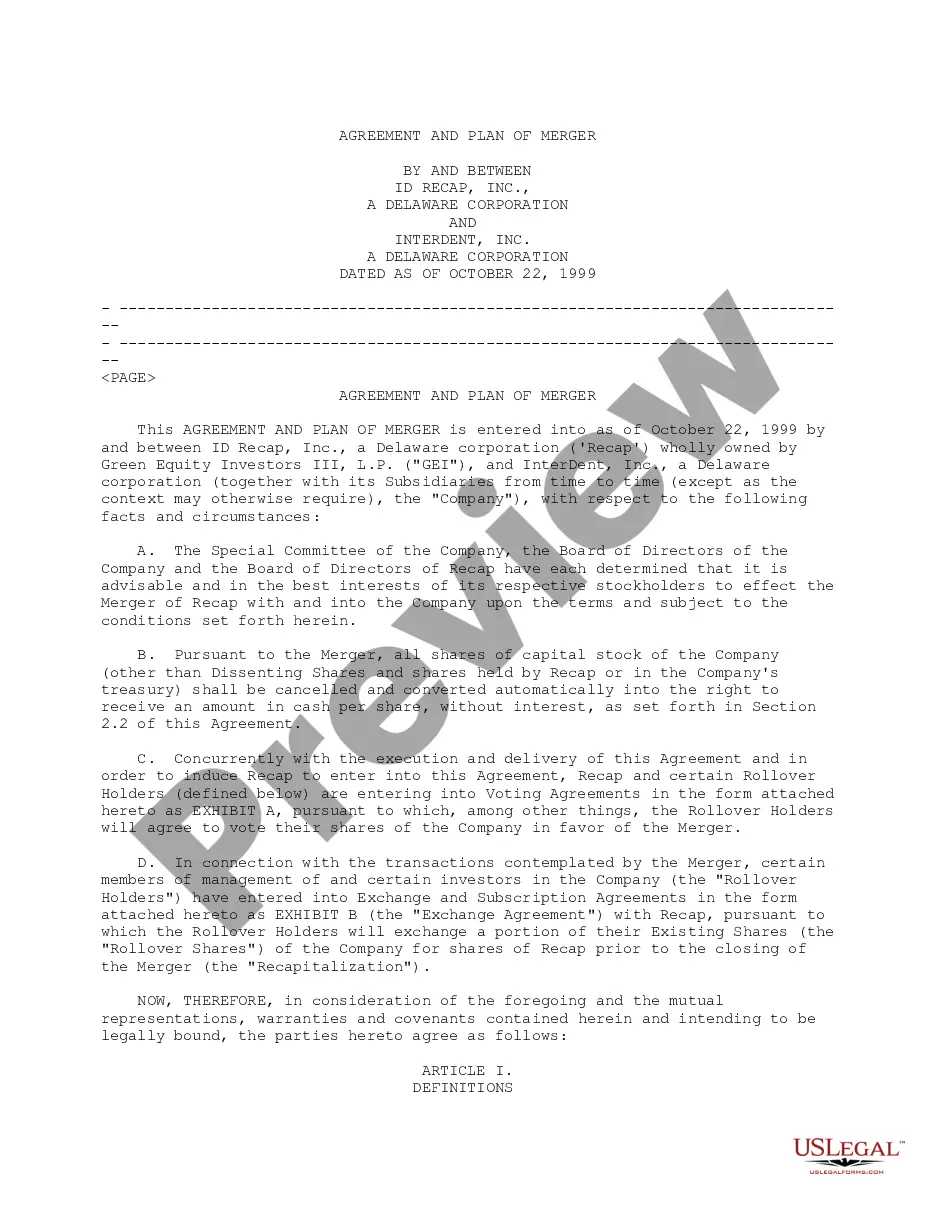
Plan of Merger between WIT Capital Group, Inc., WIS Merger Corporation and Soundview Technology Group, Inc.
What is this form?
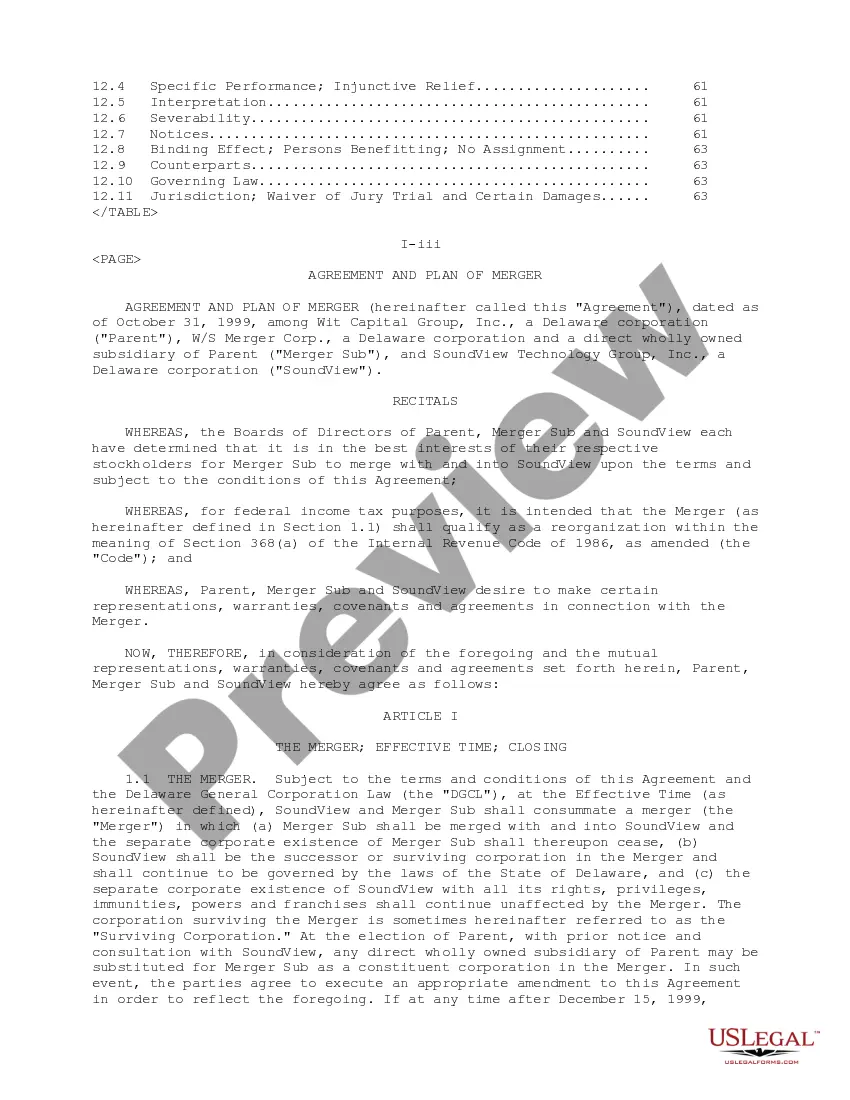
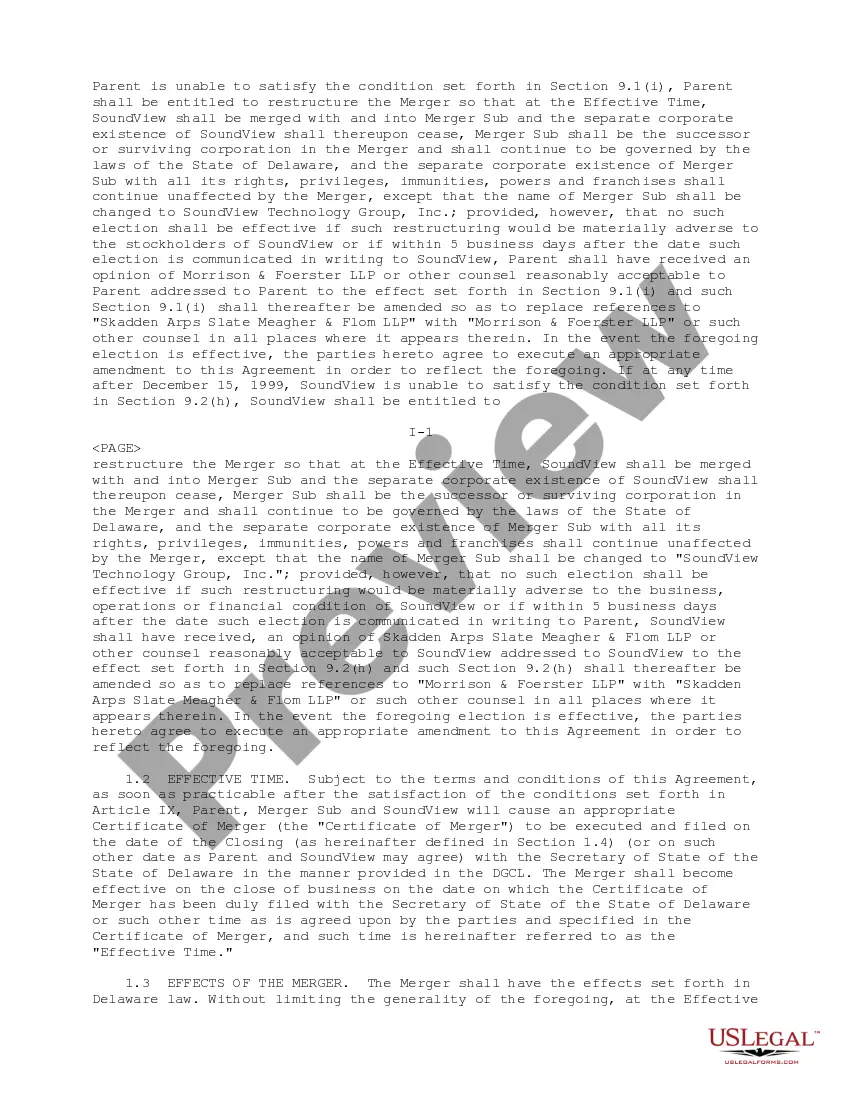
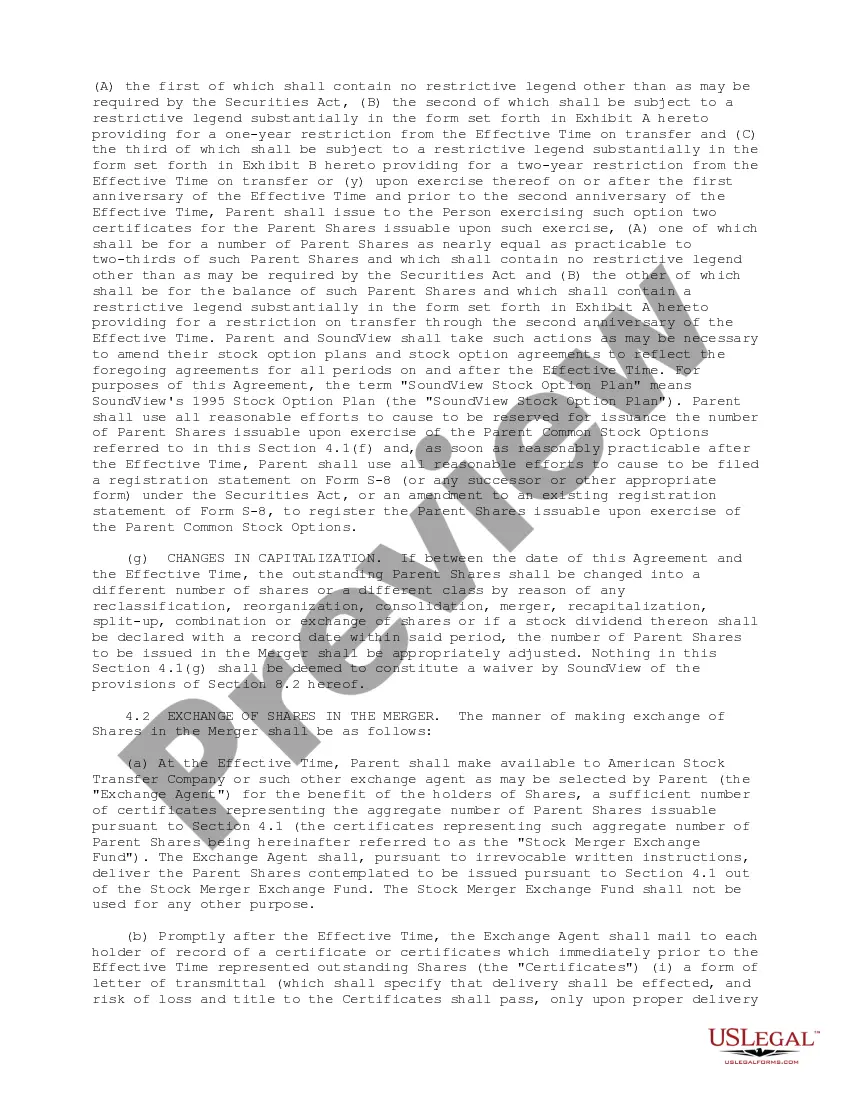
This form is the Agreement and Plan of Merger between WIT Capital Group, Inc., W/S Merger Corporation, and Soundview Technology Group, Inc. It outlines the terms under which these three corporations will consolidate operations. This legal document is essential for ensuring compliance with state laws regarding mergers and is structured to protect both the interests of the companies involved and their shareholders. This merger agreement is critical for any organization seeking to formalize a merger and should be utilized to facilitate the legal aspects of the transaction.
What’s included in this form
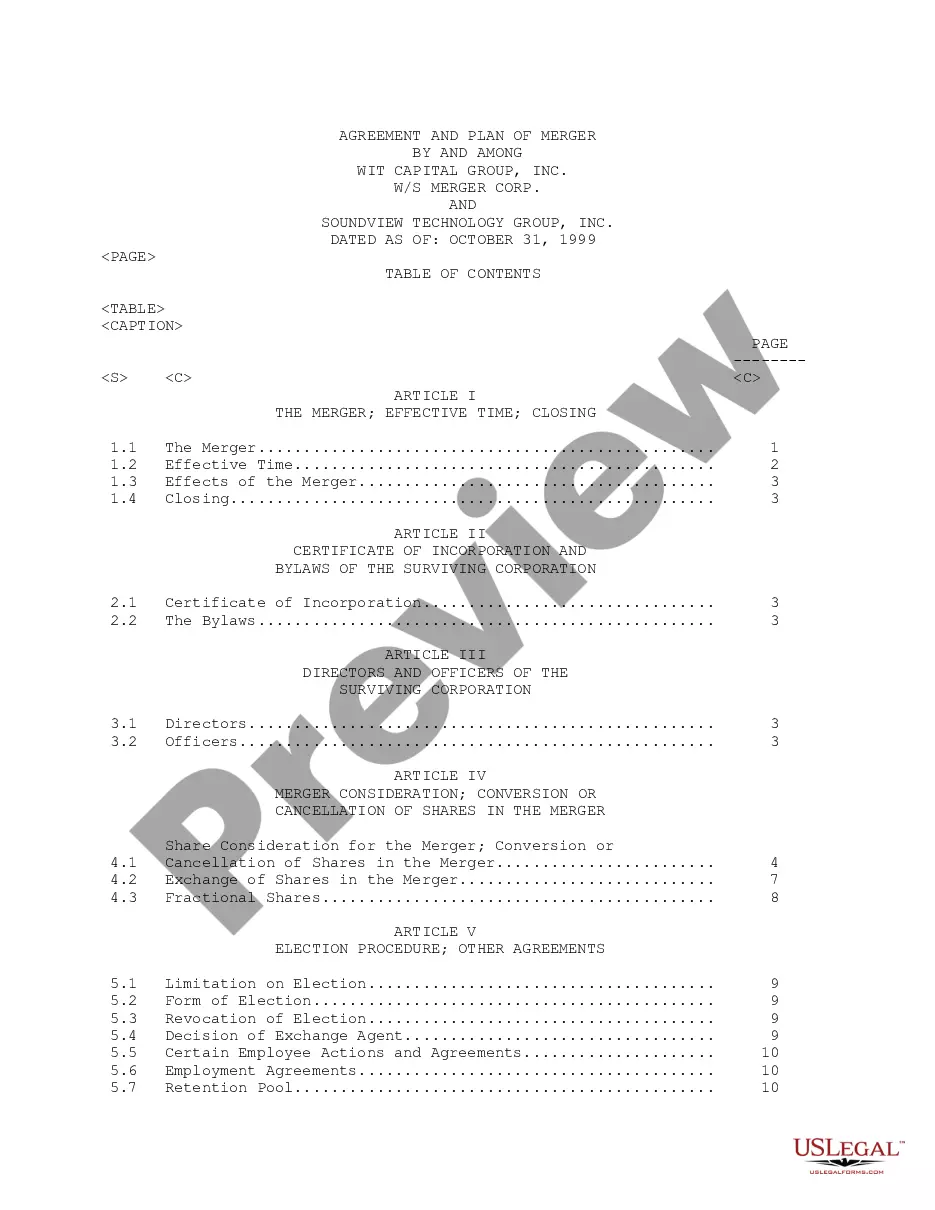
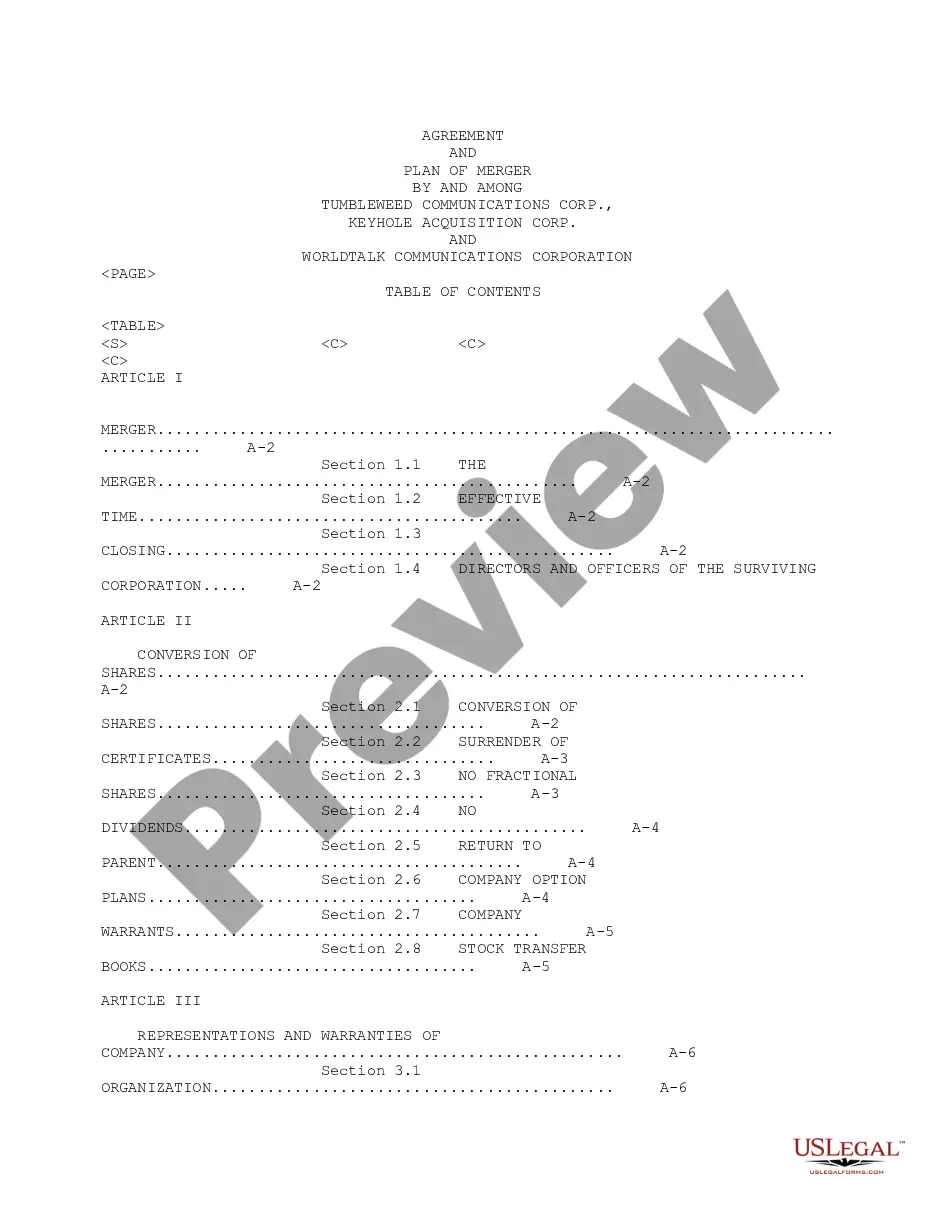
- Article I: Details regarding the merger process, including the effective time and closing procedures.
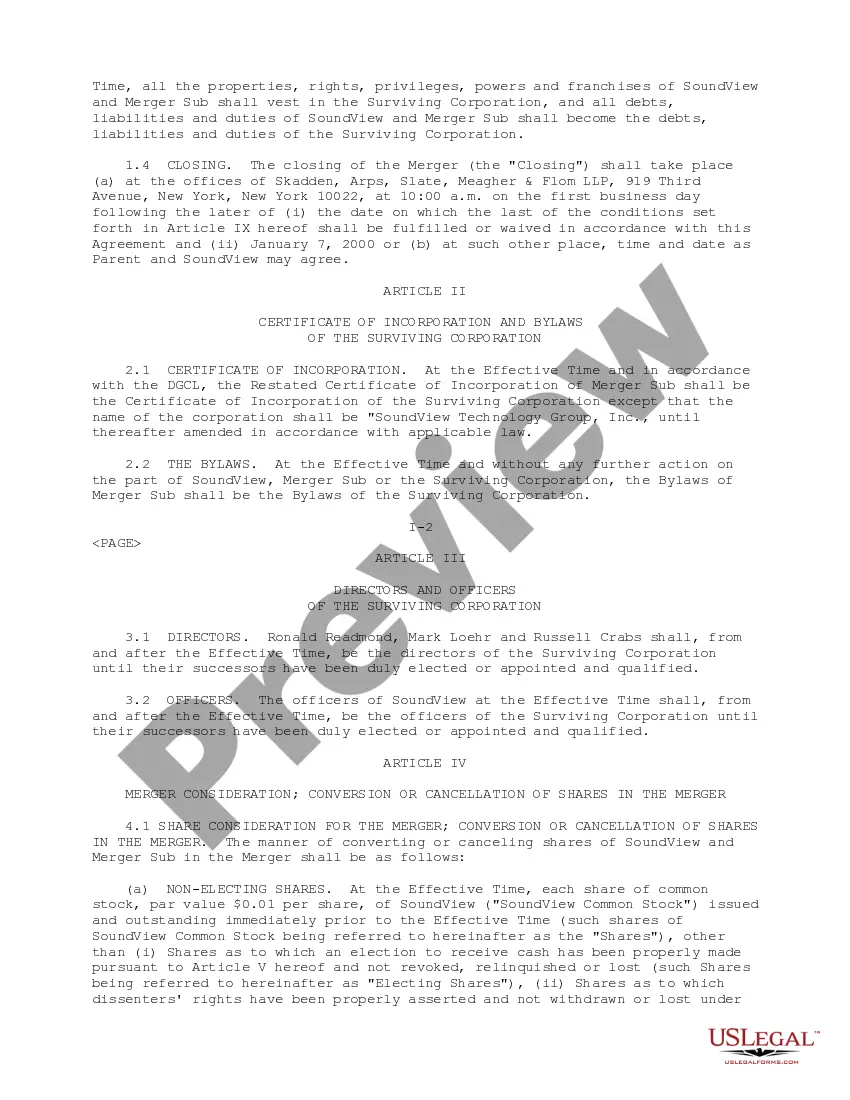
- Article II: Information concerning the certificate of incorporation and bylaws of the surviving corporation.
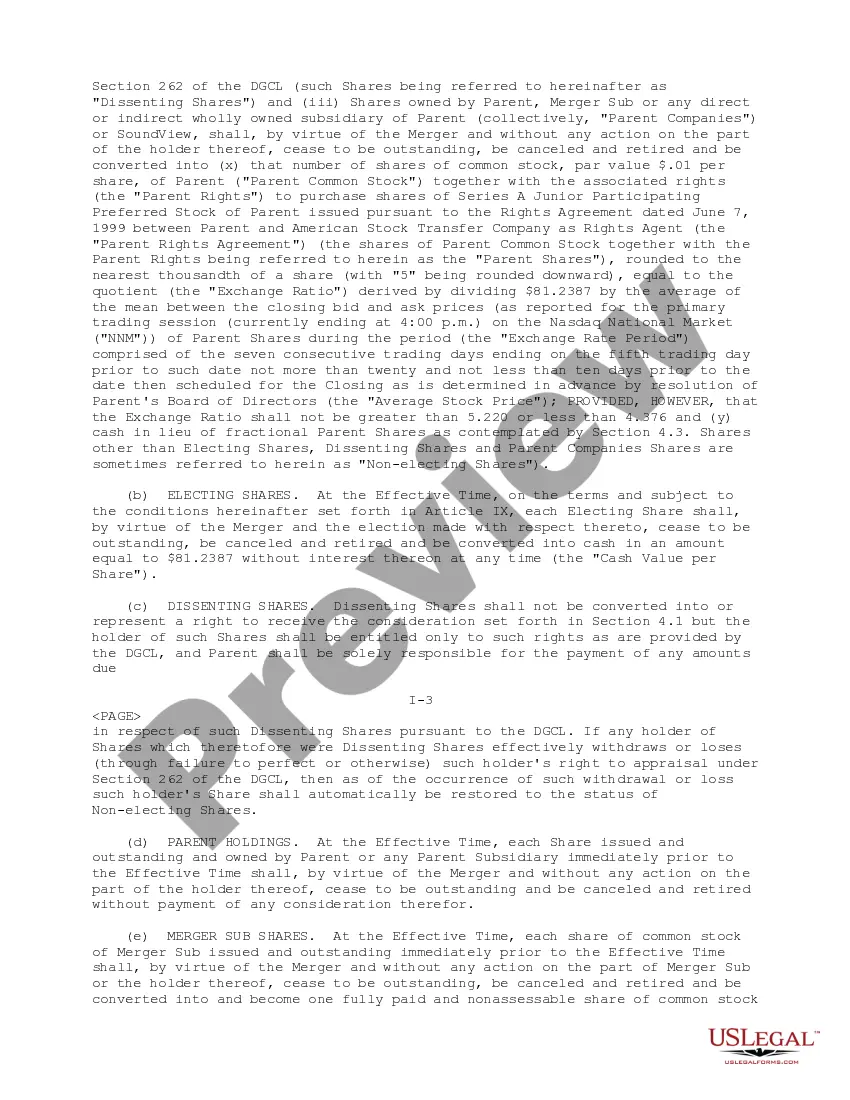
- Article IV: Guidelines on the conversion or cancellation of shares during the merger process.
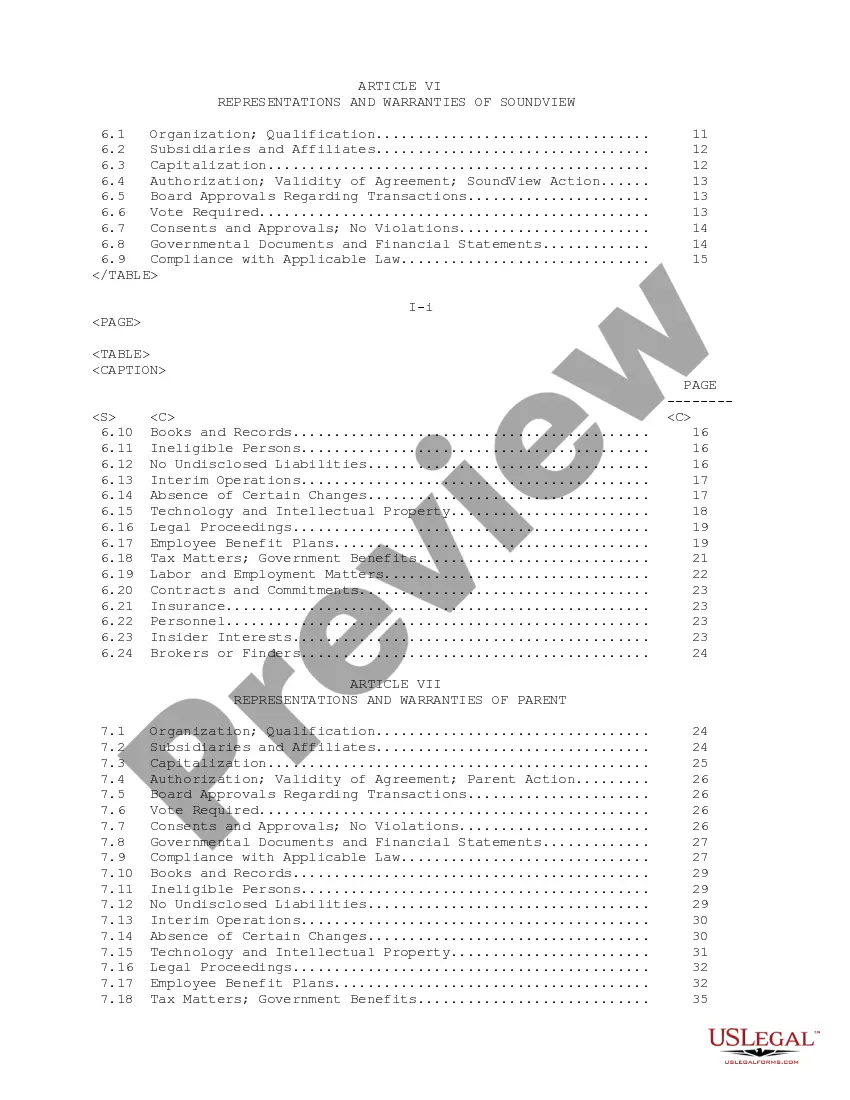
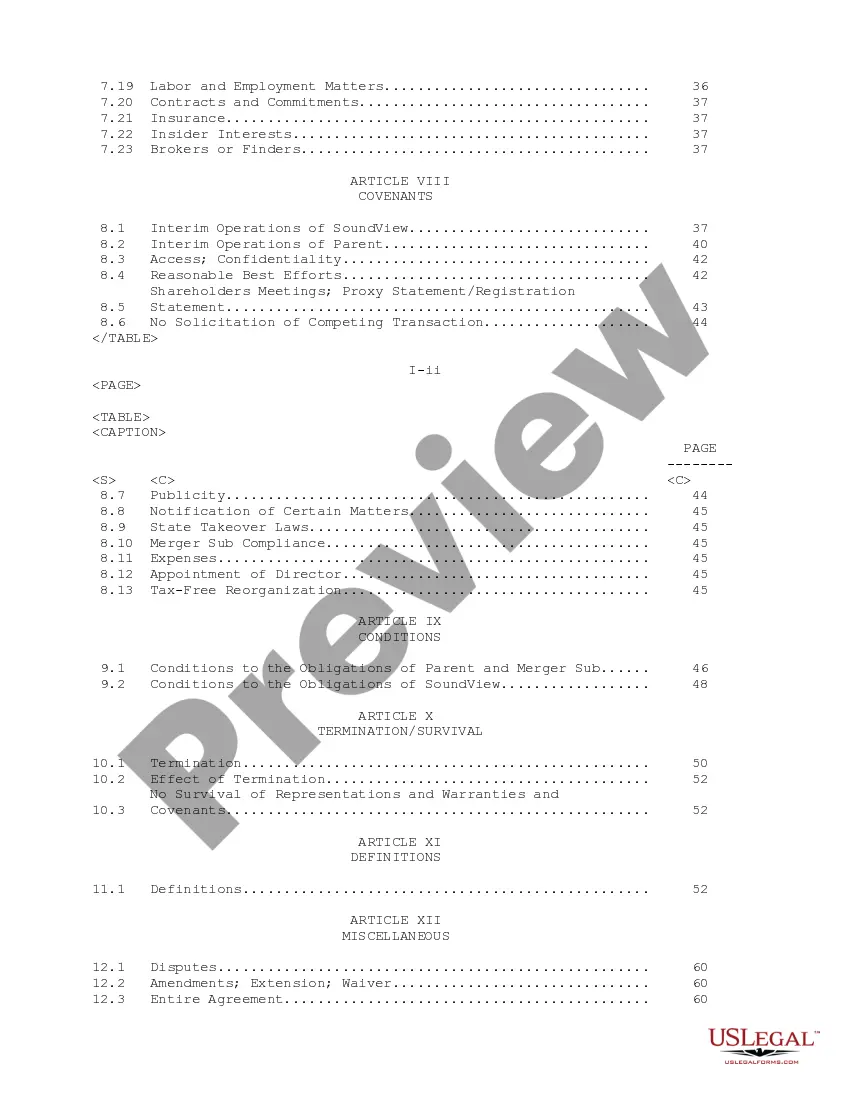
- Article VIII: Covenants that outline the obligations and actions required by each party before the merger is finalized.
- Article IX: Conditions that must be satisfied for the merger to proceed, including necessary approvals and documentation.



When to use this form
This form should be used when two or more corporations wish to initiate a merger. It is especially relevant in scenarios where companies are looking to combine resources, technologies, or market shares to enhance competitiveness or expand operational capabilities. Additionally, it serves as a formal record of the terms and conditions agreed upon by the parties involved in the merger, and can be crucial for adherence to regulatory requirements.
Who should use this form
- Corporate officers and legal teams of companies planning to merge.
- Shareholders seeking to understand the terms of the merger affecting their shares.
- Business consultants advising on mergers and acquisitions.
- Legal professionals engaged in corporate law.
Instructions for completing this form
- Identify the parties involved: List the names and types of the corporations participating in the merger.
- Outline the terms of the merger: Clearly specify the effective time of the merger and the exchange ratio for shares, if applicable.
- Specify the governing law: Indicate that the agreement will be governed by Delaware law.
- Obtain necessary approvals: Document any required approvals from shareholders or boards of directors.
- Complete and sign the document: Ensure authorized representatives of each corporation execute the agreement.
Is notarization required?
In most cases, this form does not require notarization. However, some jurisdictions or signing circumstances might. US Legal Forms offers online notarization powered by Notarize, accessible 24/7 for a quick, remote process.
Get your form ready online
Our built-in tools help you complete, sign, share, and store your documents in one place.
Make edits, fill in missing information, and update formatting in US Legal Forms—just like you would in MS Word.
Download a copy, print it, send it by email, or mail it via USPS—whatever works best for your next step.
Sign and collect signatures with our SignNow integration. Send to multiple recipients, set reminders, and more. Go Premium to unlock E-Sign.
If this form requires notarization, complete it online through a secure video call—no need to meet a notary in person or wait for an appointment.
We protect your documents and personal data by following strict security and privacy standards.

Make edits, fill in missing information, and update formatting in US Legal Forms—just like you would in MS Word.

Download a copy, print it, send it by email, or mail it via USPS—whatever works best for your next step.

Sign and collect signatures with our SignNow integration. Send to multiple recipients, set reminders, and more. Go Premium to unlock E-Sign.

If this form requires notarization, complete it online through a secure video call—no need to meet a notary in person or wait for an appointment.

We protect your documents and personal data by following strict security and privacy standards.
Typical mistakes to avoid
- Neglecting to obtain shareholder approval before finalizing the agreement.
- Failing to include all necessary parties in the merger documentation.
- Incorrectly stating the effective time and conditions of the merger.
- Omitting critical details about the handling of shares and options during the merger.
Why use this form online
- Quick access to a professionally drafted merger agreement.
- Ease of editing the document to meet specific corporate requirements.
- Secure storage and retrieval of important legal documents.
- Integration of up-to-date legal standards and practices within the template.
Looking for another form?







Form popularity
FAQ
Incorporation and Corporation: Overview There is no difference between Inc. or Corp. when it comes to tax structure, legal structure, limited liability, or compliance obligations. However, you cannot use both abbreviations at the same time. Also, you need to be consistent and only use one abbreviation or the other.
Inc. after a company name means that the business in question has incorporated within its home state. Status as a C-corporation or an S-Corporation depends on tax filings with the Internal Revenue Service. As Bizfilings reports, Incorporation produces a separate entity in essence a fictional person created by law.
Corp. is short for corporation and Inc.They are both used in names of incorporated entities. When you register a business, you can use either in the business name. In terms of legal structure, compliance obligations, limited liability or tax structure, there is no difference between the two.
Inc. is the abbreviation for incorporated. An incorporated company, or corporation, is a separate legal entity from the person or people forming it. Directors and officers purchase shares in the business and have responsibility for its operation.
When a company has the letters Inc" after its name, it means the company has been incorporated. There also are other abbreviations that a company can have after its name: Corp. The difference between Inc. and corp. is that Inc.
Both types of entities have the significant legal advantage of helping to protect assets from creditors and providing an extra layer of protection against legal liability. In general, the creation and management of an LLC are much easier and more flexible than that of a corporation.
A: A corporation is the business entity itself. Incorporation is the act of starting a corporate business entity. A corporation (Inc.), a limited partnership (LP), and a non-profit (non-stock) corporation are what are known as incorporated entities.
Inc. is the abbreviation for incorporated. An incorporated company, or corporation, is a separate legal entity from the person or people forming it. Directors and officers purchase shares in the business and have responsibility for its operation.
"Inc." is an abbreviation of "incorporated," and both the abbreviation and the full word mean that a company's business structure is a legal corporation. A corporation or "Inc." is an entirely separate entity from its owners and shareholders.