Plan of Merger between Ichargeit.Com, Inc. and Ichargeit.Com, Inc.
Overview of this form
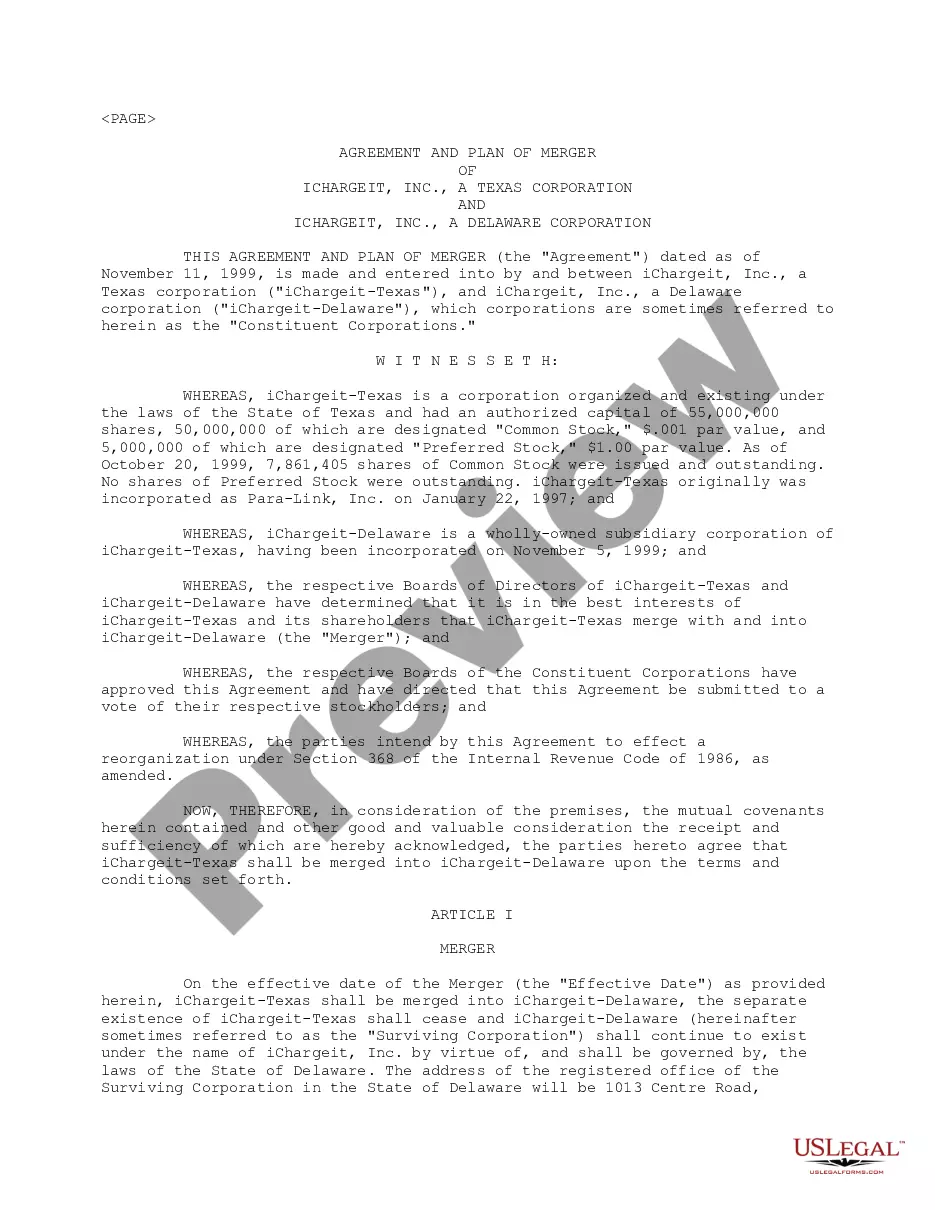
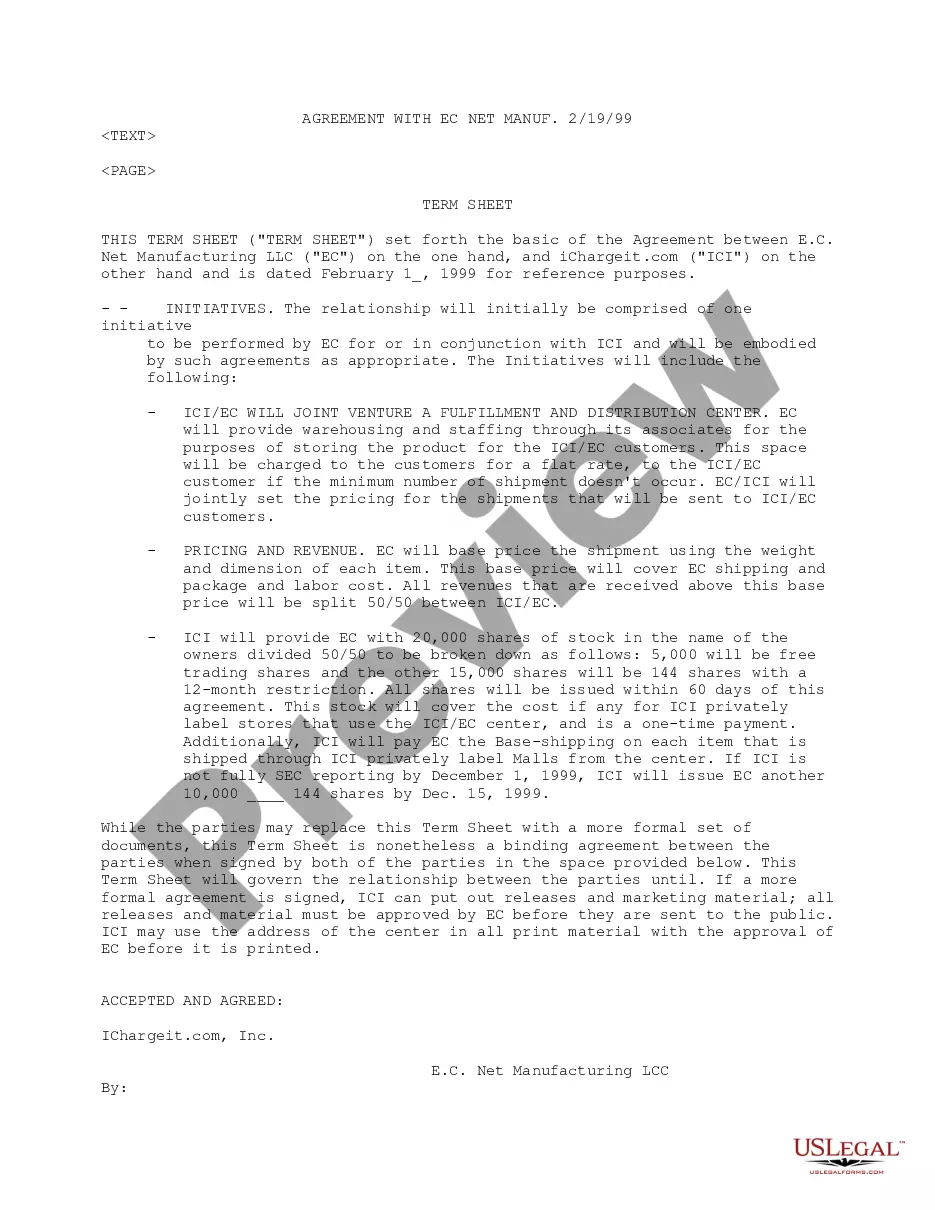
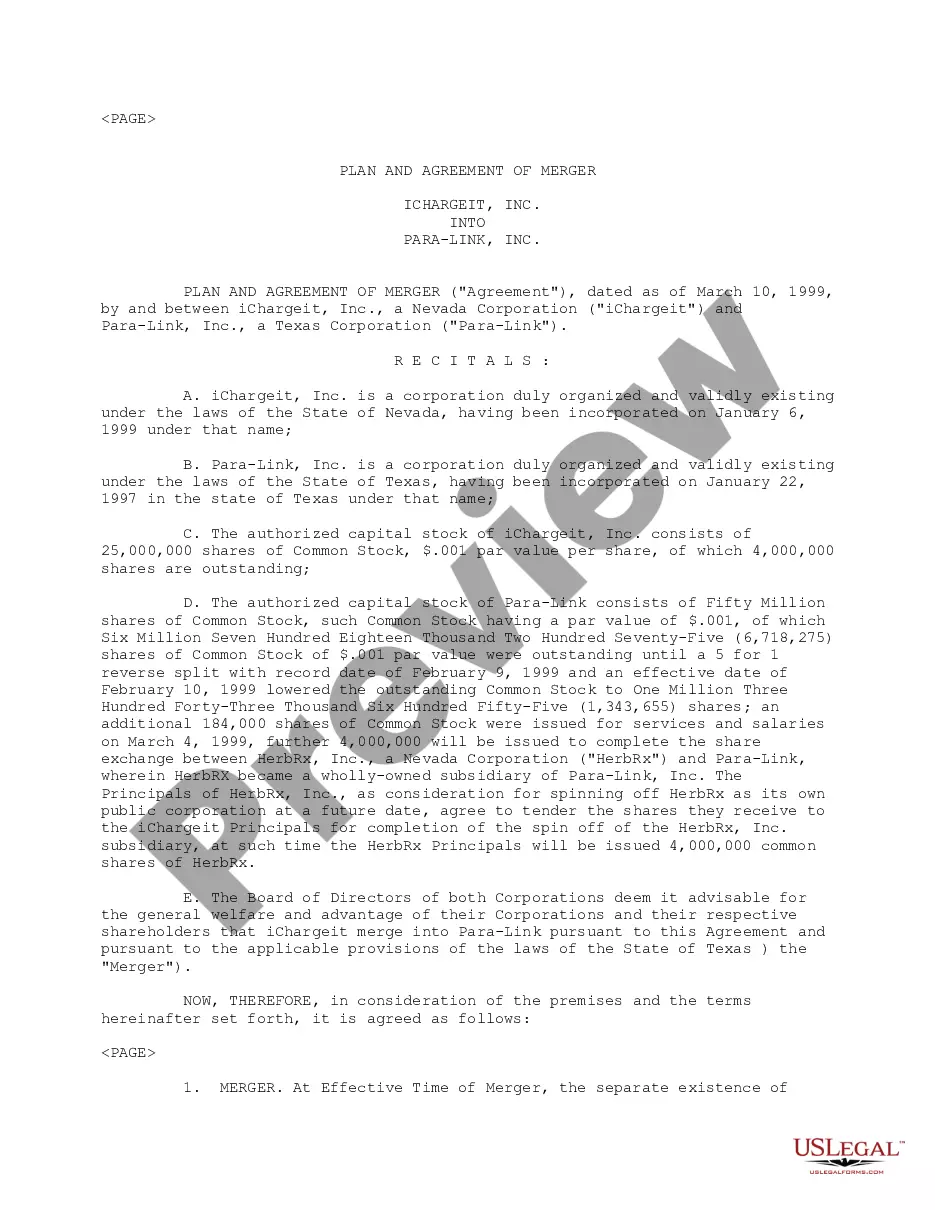
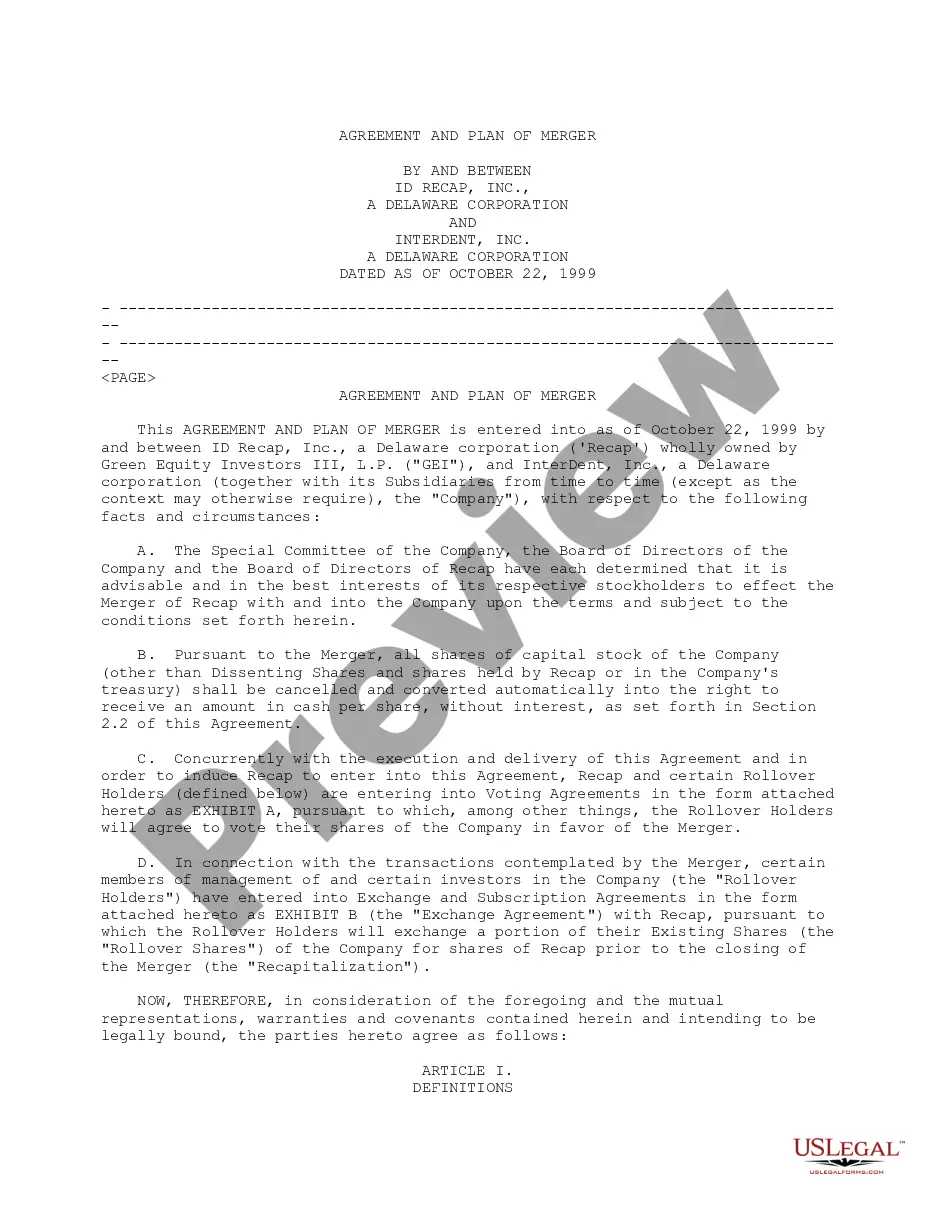
The Plan of Merger is a legal document used to outline the agreement for the merger of two corporations: Ichargeit.Com, Inc., a Texas corporation, and Ichargeit.Com, Inc., a Delaware corporation. This form includes crucial elements that detail how the merger will be executed, ensuring clarity and legal compliance for both entities involved. Unlike other forms, this specific Plan of Merger addresses the complexities of merging corporations in different states and is tailored to meet the legal requirements set forth by both Texas and Delaware statutes.
Key components of this form
- Introduction and definitions of the parties involved in the merger.
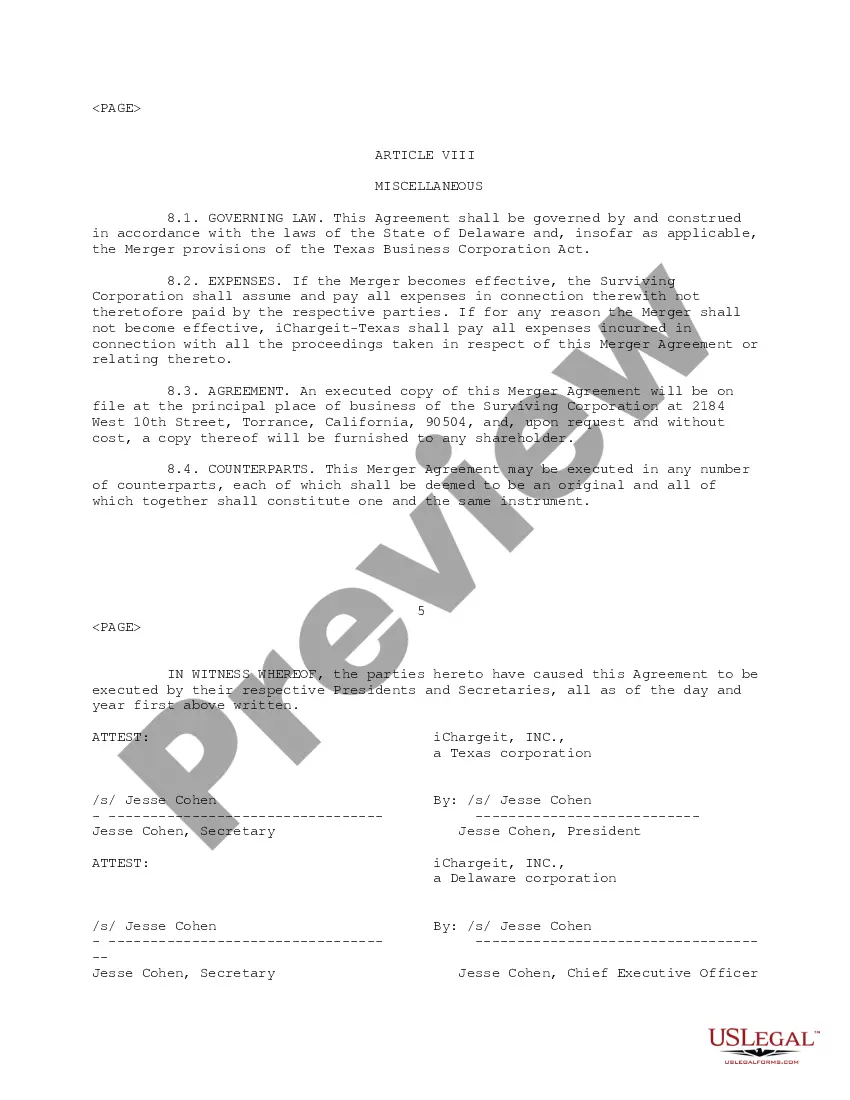
- Article on the mechanics of the merger, including the effective date and procedure of merging.
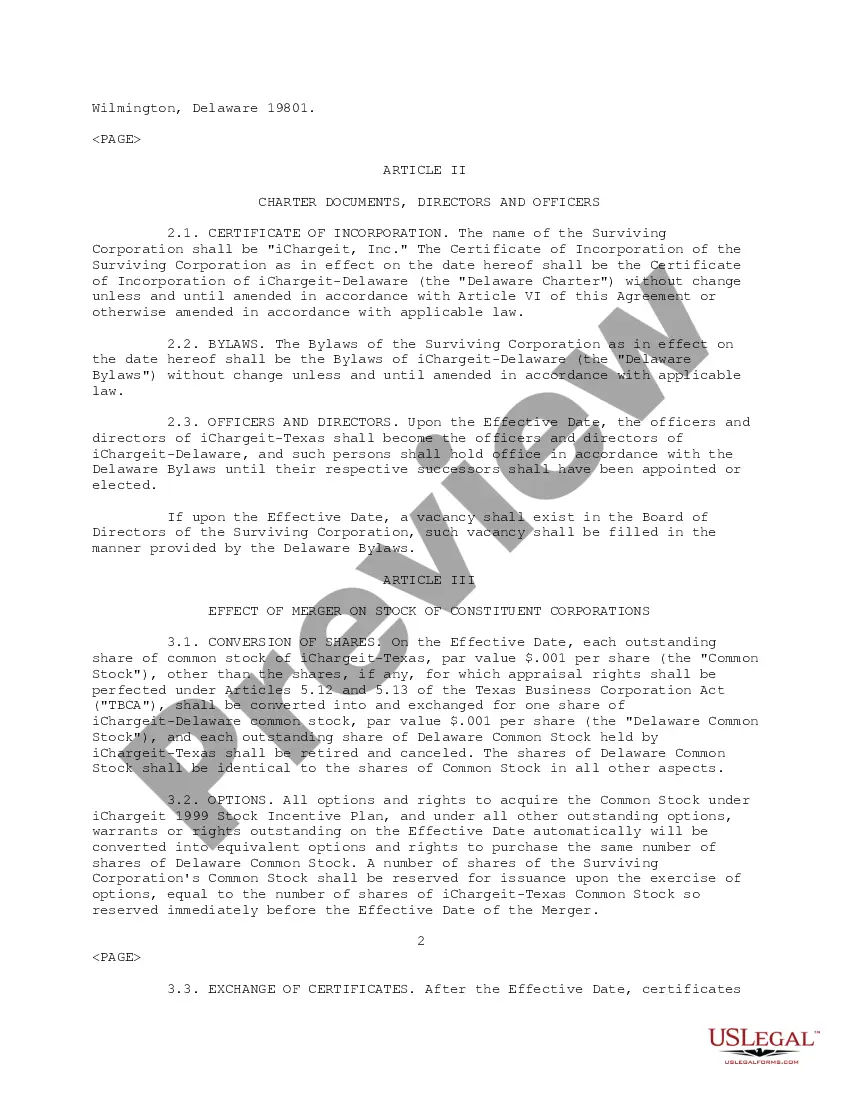
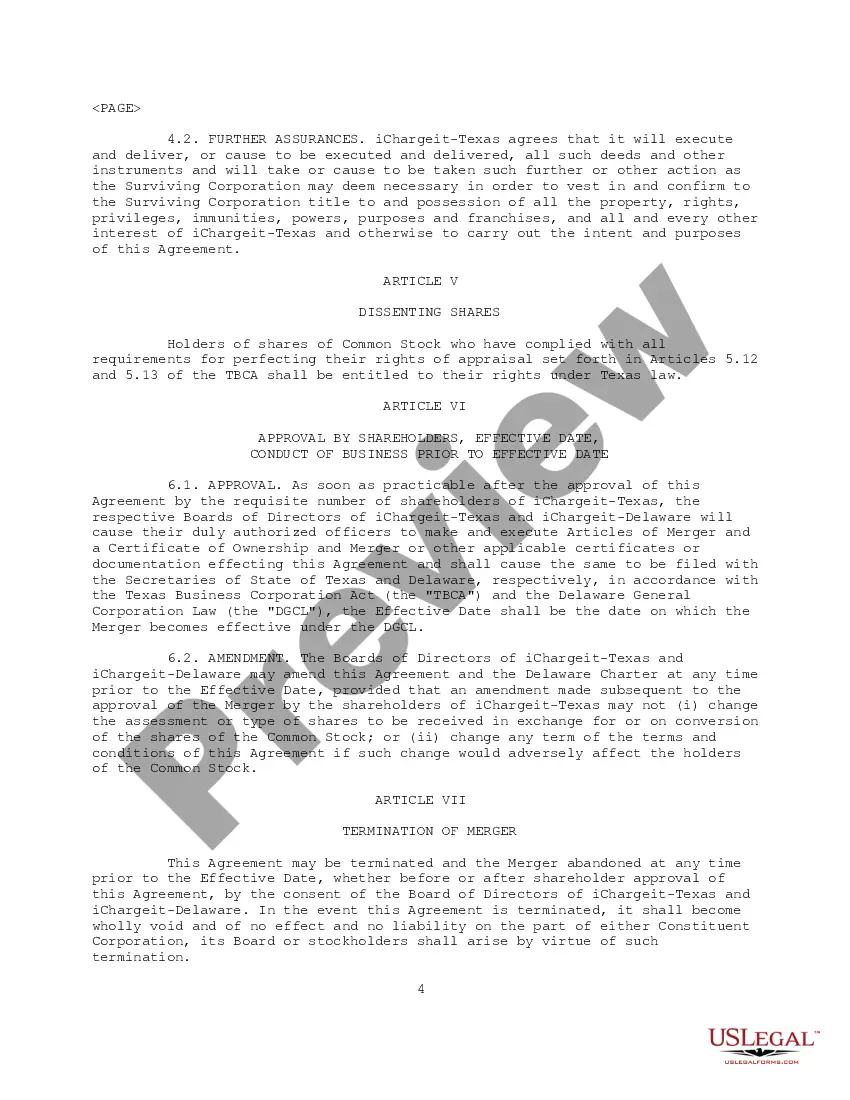
- Details on share conversion, including the exchange of common stock between the two corporations.
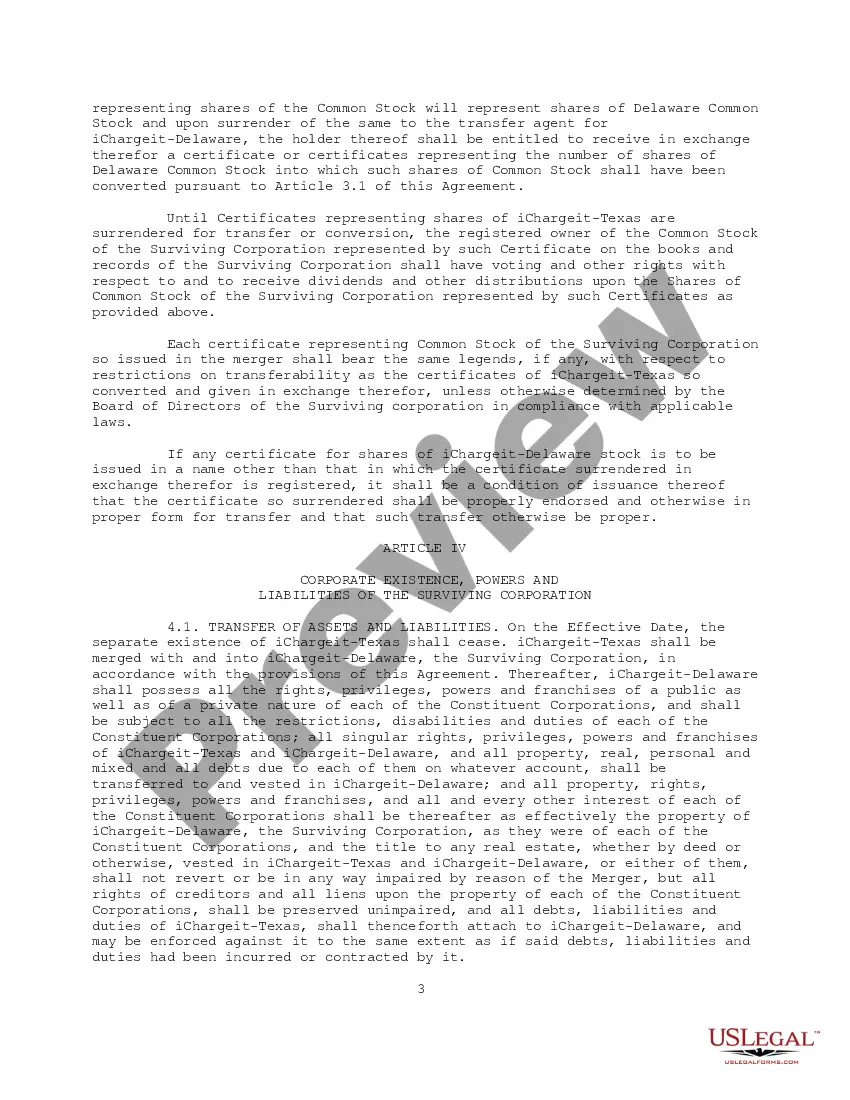
- Provisions for corporate existence, detailing the powers and responsibilities of the surviving corporation.
- Clauses about dissenting shares and the rights of shareholders.
- Instructions for approval of the merger by shareholders and the consequences of termination.
When this form is needed
This form is necessary when two corporations decide to merge and wish to formalize the agreement legally. It is applicable in situations such as when a Texas corporation seeks to consolidate operations with a Delaware subsidiary, thereby creating a unified corporate entity. The form ensures that both parties have a clear understanding of the merger's guidelines and legal implications.
Intended users of this form
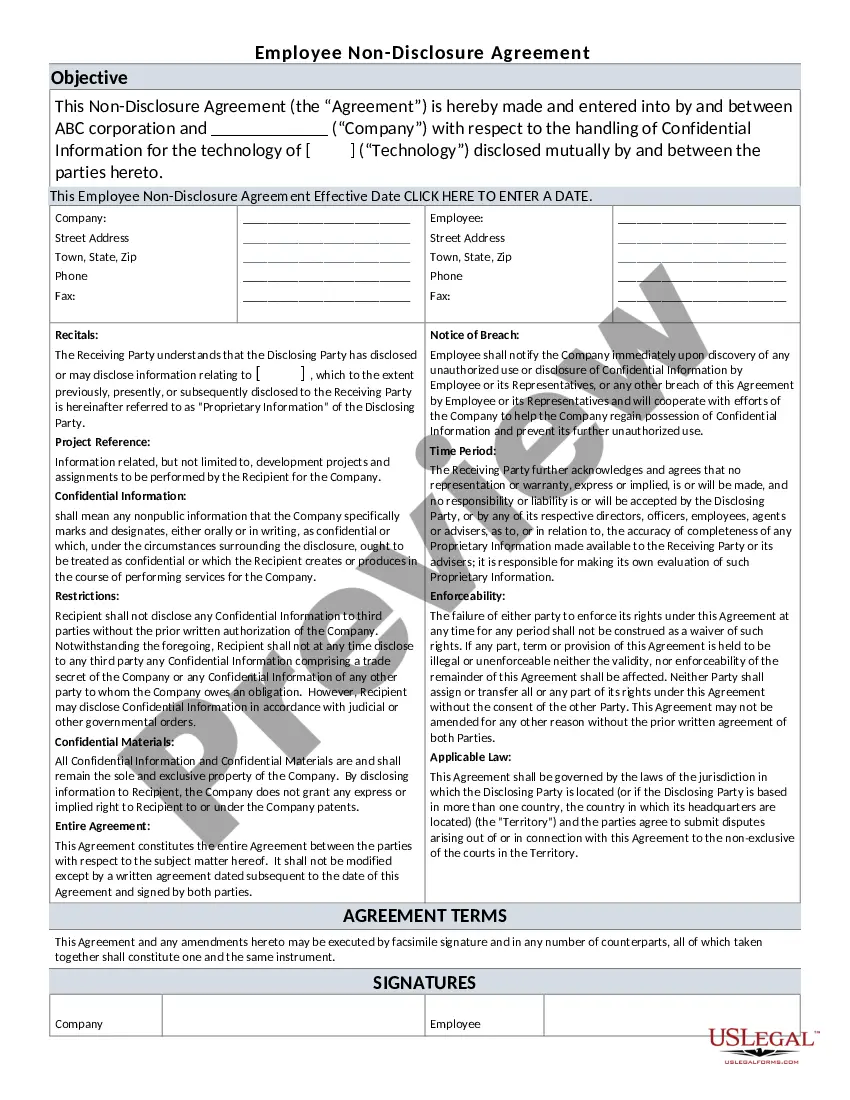
- Corporations planning to merge and operate under a single legal entity.
- Shareholders of the involved corporations who need clarity on rights and obligations during the merger process.
- Corporate attorneys or legal advisors assisting with the merger documentation.
- Board members of the corporations who must approve the merger agreement.
How to complete this form
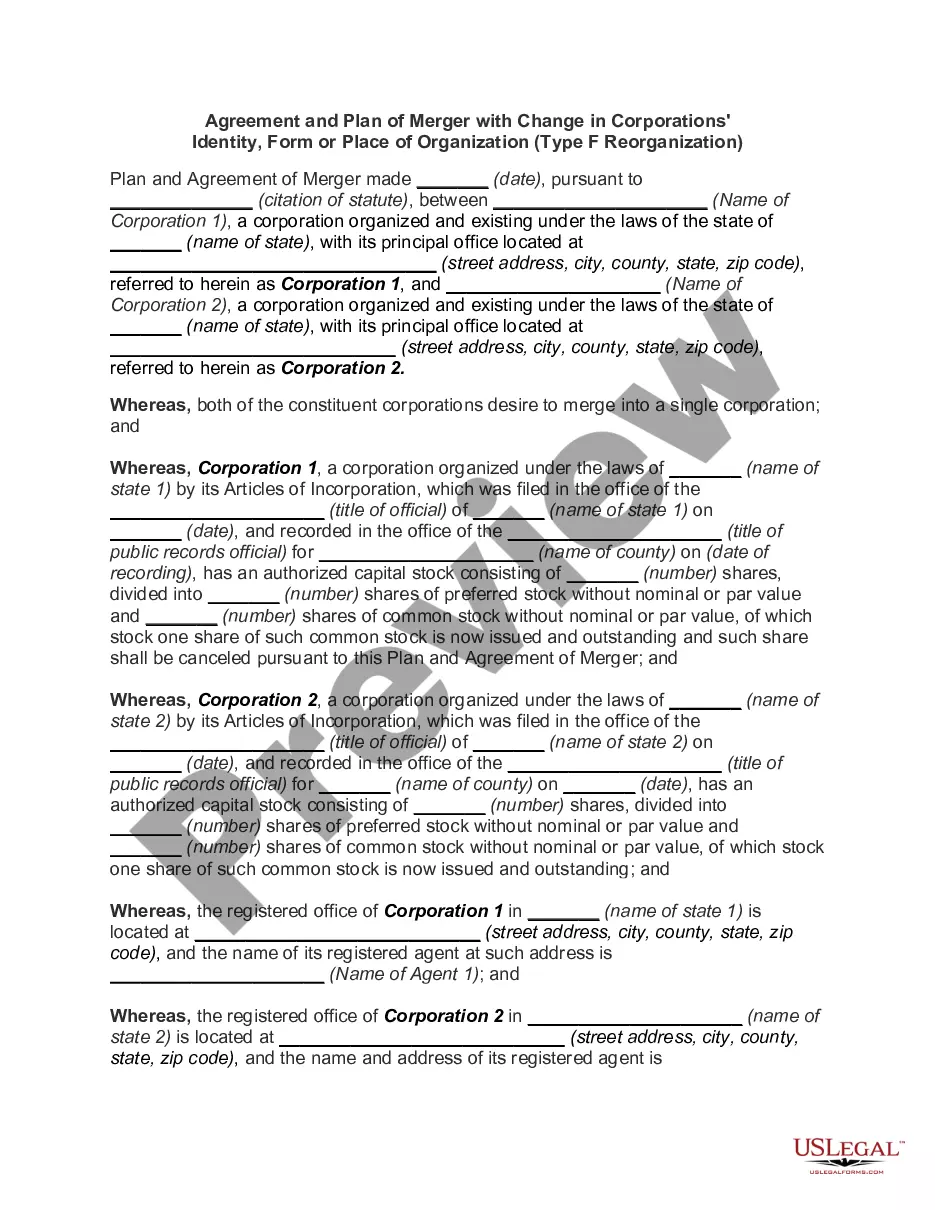
- Identify the full names of the corporations involved in the merger and their respective states of incorporation.
- Detail the effective date of the merger as well as the agreed upon terms for share conversions.
- Ensure all necessary signatures from the Presidents and Secretaries of the corporations are obtained.
- File the completed Plan of Merger with the appropriate state authorities in Texas and Delaware.
- Communicate with shareholders about the merger agreement and secure their approval as required.
Does this document require notarization?
This form does not typically require notarization unless specified by local law. Always check local statutes to ensure compliance with any additional notarial requirements in your jurisdiction.
Get your form ready online
Our built-in tools help you complete, sign, share, and store your documents in one place.
Make edits, fill in missing information, and update formatting in US Legal Forms—just like you would in MS Word.
Download a copy, print it, send it by email, or mail it via USPS—whatever works best for your next step.
Sign and collect signatures with our SignNow integration. Send to multiple recipients, set reminders, and more. Go Premium to unlock E-Sign.
If this form requires notarization, complete it online through a secure video call—no need to meet a notary in person or wait for an appointment.
We protect your documents and personal data by following strict security and privacy standards.

Make edits, fill in missing information, and update formatting in US Legal Forms—just like you would in MS Word.

Download a copy, print it, send it by email, or mail it via USPS—whatever works best for your next step.

Sign and collect signatures with our SignNow integration. Send to multiple recipients, set reminders, and more. Go Premium to unlock E-Sign.

If this form requires notarization, complete it online through a secure video call—no need to meet a notary in person or wait for an appointment.

We protect your documents and personal data by following strict security and privacy standards.
Typical mistakes to avoid
- Failing to obtain shareholder approval prior to executing the merger agreement.
- Not clearly detailing the effective date of the merger.
- Overlooking specific state filing requirements for both jurisdictions.
- Neglecting the documentation needed to address dissenting shareholder rights.
Why use this form online
- Convenience of completing the form at any time without the need for physical paperwork.
- Editability allows users to customize sections as necessary for their specific merger circumstances.
- Access to attorney-drafted templates ensures legal compliance and minimizes risks associated with incomplete documentation.
Legal use & context
- This form is legally binding once properly executed and filed with the appropriate state authorities.
- Enforceability depends on compliance with both Texas and Delaware corporate laws.
- It is vital to ensure that all board and shareholder approvals are documented and included in the merger filings.
Looking for another form?
Form popularity
FAQ
401(k) plans are subject to anti-cutback rules that prohibit employers from reducing or eliminating benefits already accrued (earned) by participants by amendment. Common protected benefits include in-service distribution options (excluding hardships) and vested contributions.
A plan may choose to continue as if nothing has changed. The acquired company will continue to run their own plan. Employees of the acquired company continue to utilize their existing 401(k) plan and don't partake in the acquirer's plan.
Employers can end a pension plan through a process called "plan termination." There are two ways an employer can terminate its pension plan. The employer can end the plan in a standard termination but only after showing PBGC that the plan has enough money to pay all benefits owed to participants.
If all you want to do is close your 401k account, that's easy. Simply go to your human resources department and make a request to stop paycheck contributions. There is no penalty for doing so. When the paperwork is completed, you no longer will have a 401k contribution deducted from your weekly paycheck.
Your employer can remove money from your 401(k) after you leave the company, but only under certain circumstances. If your balance is less than $1,000, your employer can cut you a check.For balances of $5,000 or more, your employer must leave your money in a 401(k) unless you provide other instructions.
Your employer can remove money from your 401(k) after you leave the company, but only under certain circumstances. If your balance is less than $1,000, your employer can cut you a check.For balances of $5,000 or more, your employer must leave your money in a 401(k) unless you provide other instructions.
When a company establishes a pension plan, the plan itself is a legal entity.When one company acquires another, the plan's obligation to pay you the full amount of your vested benefits remains the same, whether the plan stays as part of the old company or becomes part of the new company.
Pension Options When You Leave a Job Typically, when you leave a job with a defined benefit pension, you have a few options. You can choose to take the money as a lump sum now, or take the promise of regular payments in the future, also known as an annuity.Today's small annuity will look even smaller in the future.
A Chapter 11 (reorganization) usually means that the company continues in business under the court's protection while attempting to reorganize its financial affairs. A Chapter 11 bankruptcy may or may not affect your pension or health plan.Therefore, it is likely your pension and health plans will be terminated.