Natural Gas Inventory Forward Sale Contract
About this form
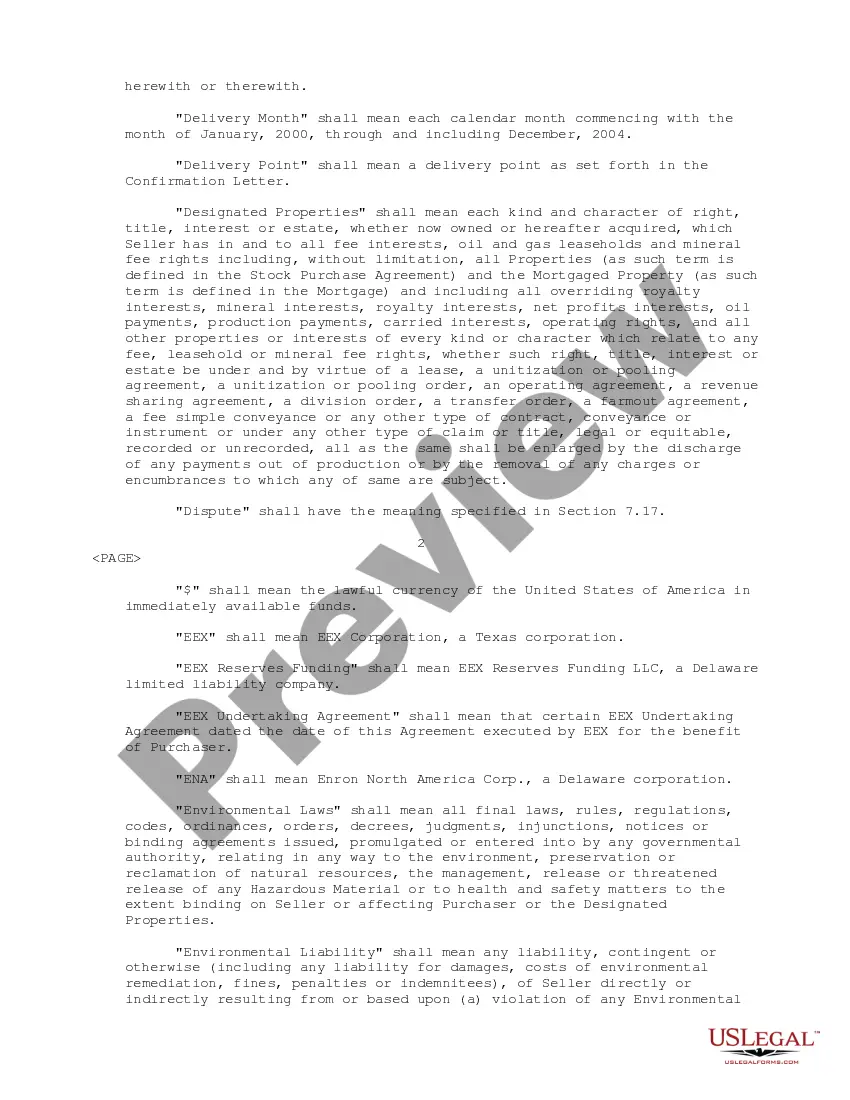
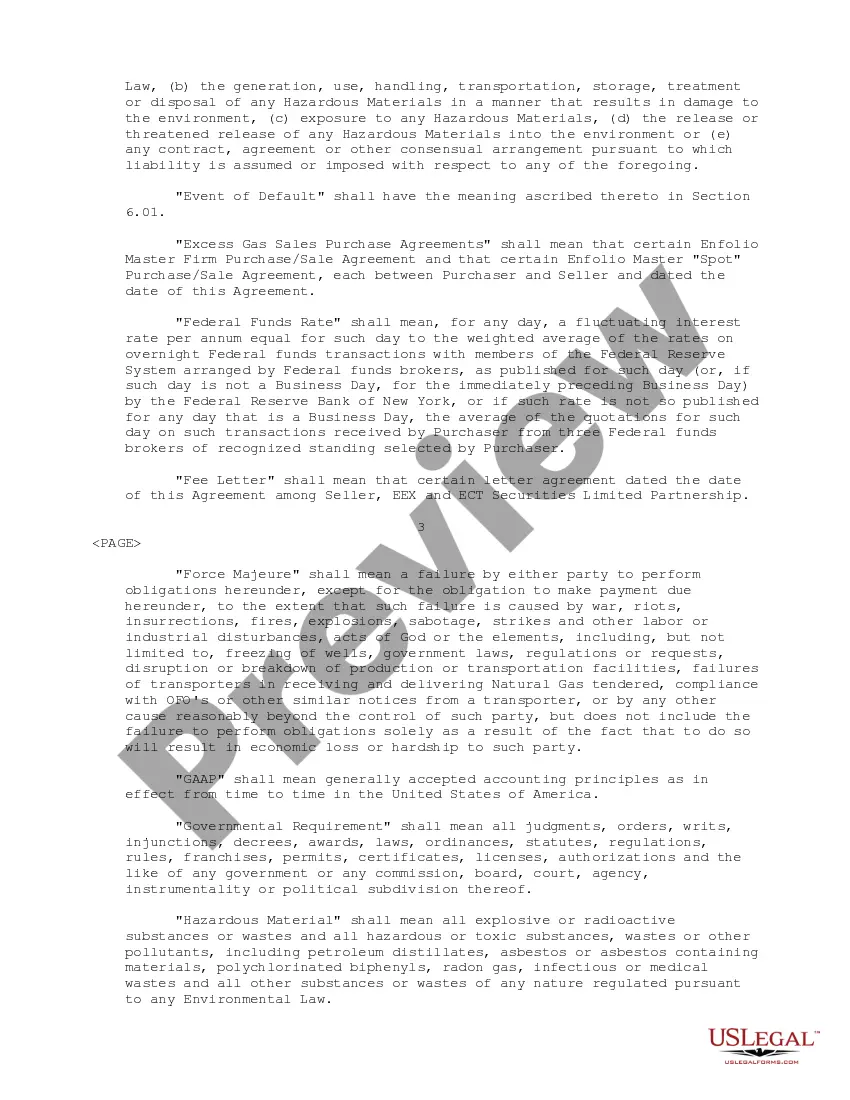
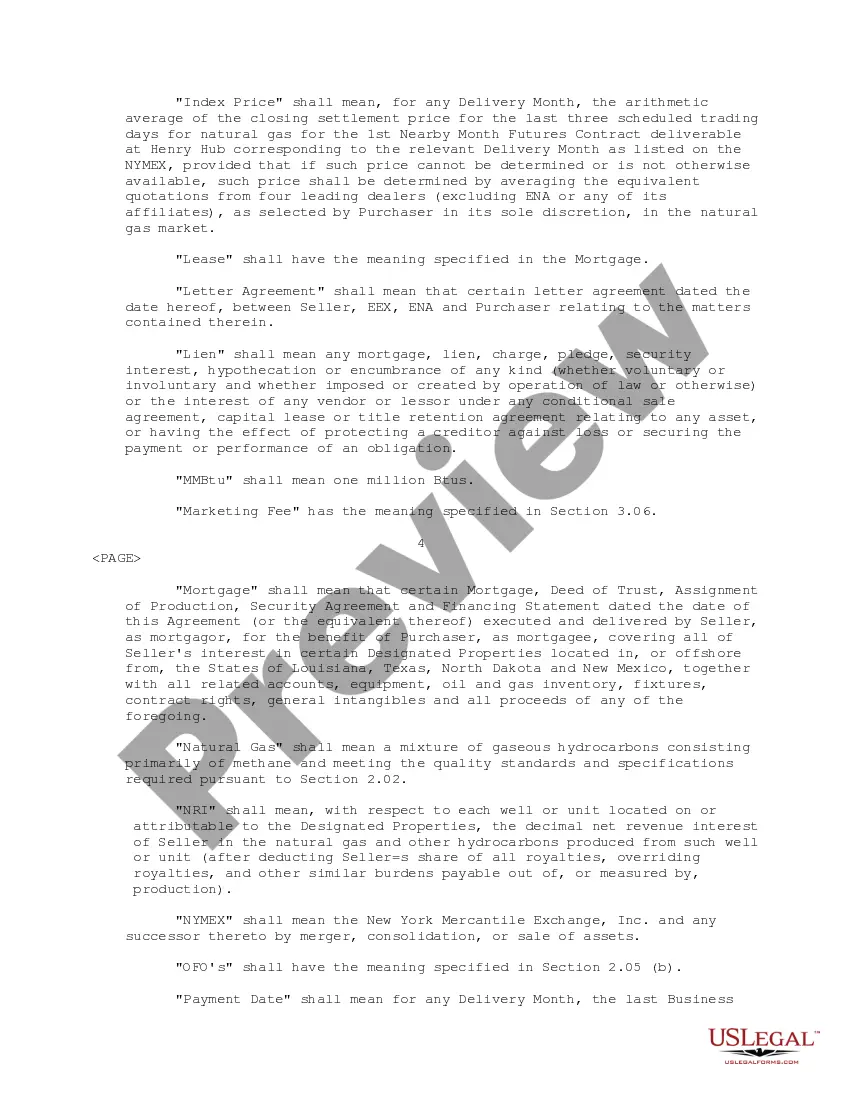
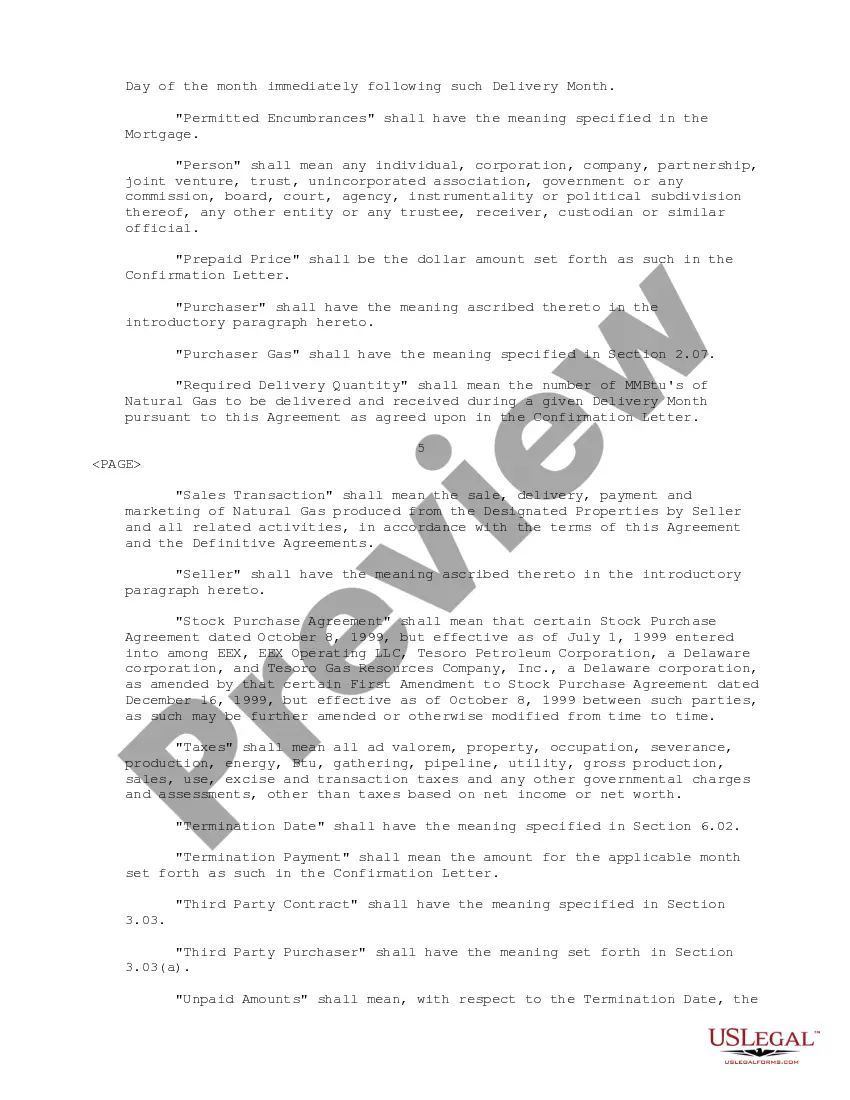
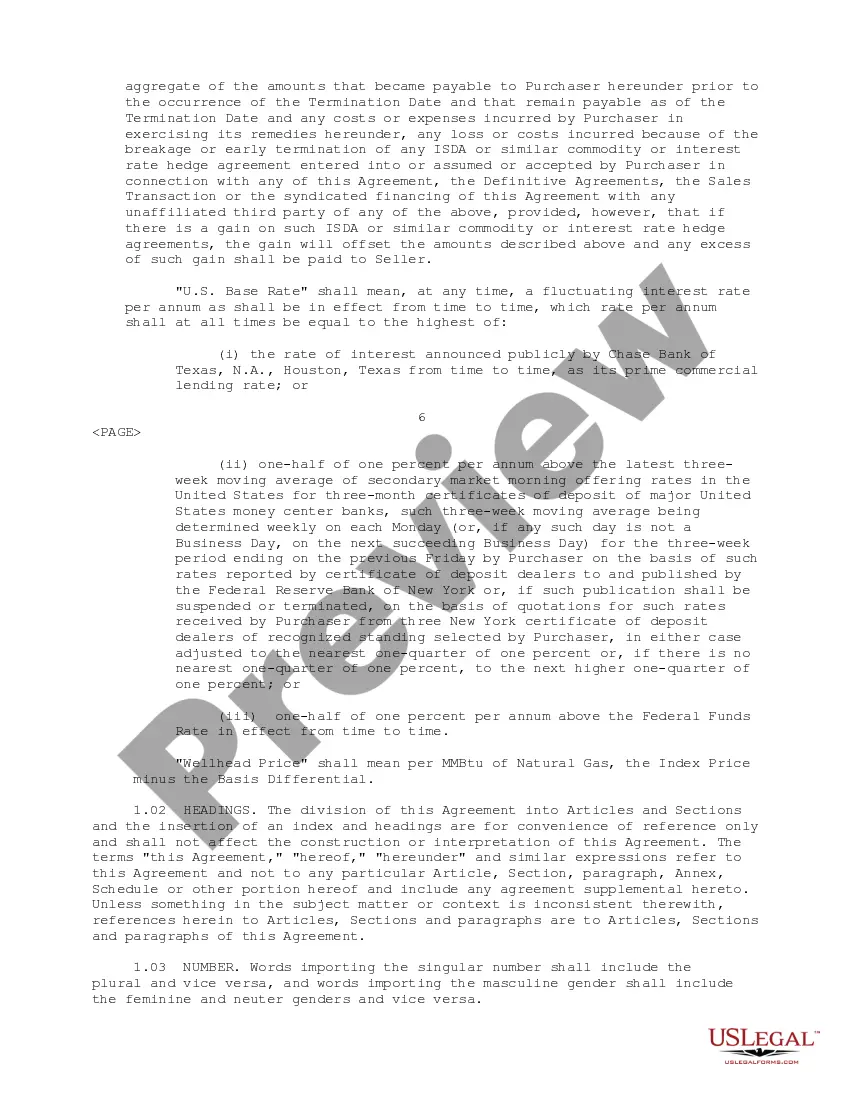
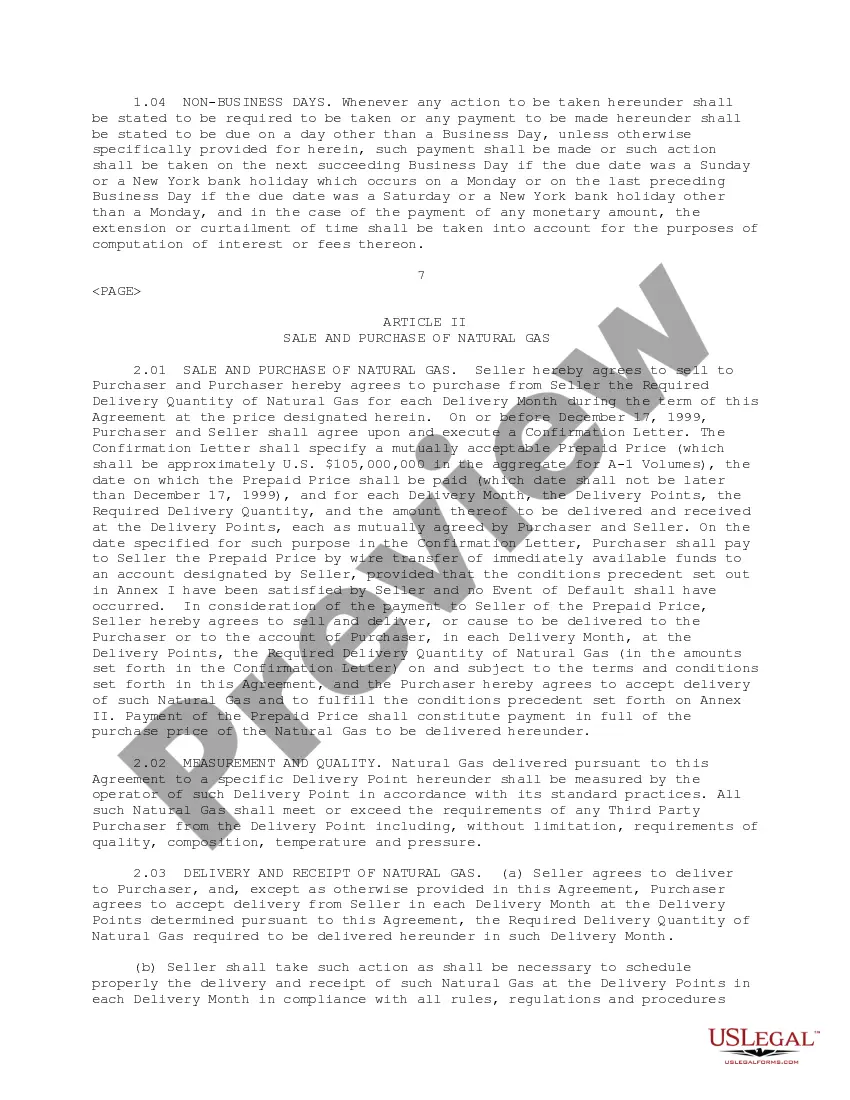
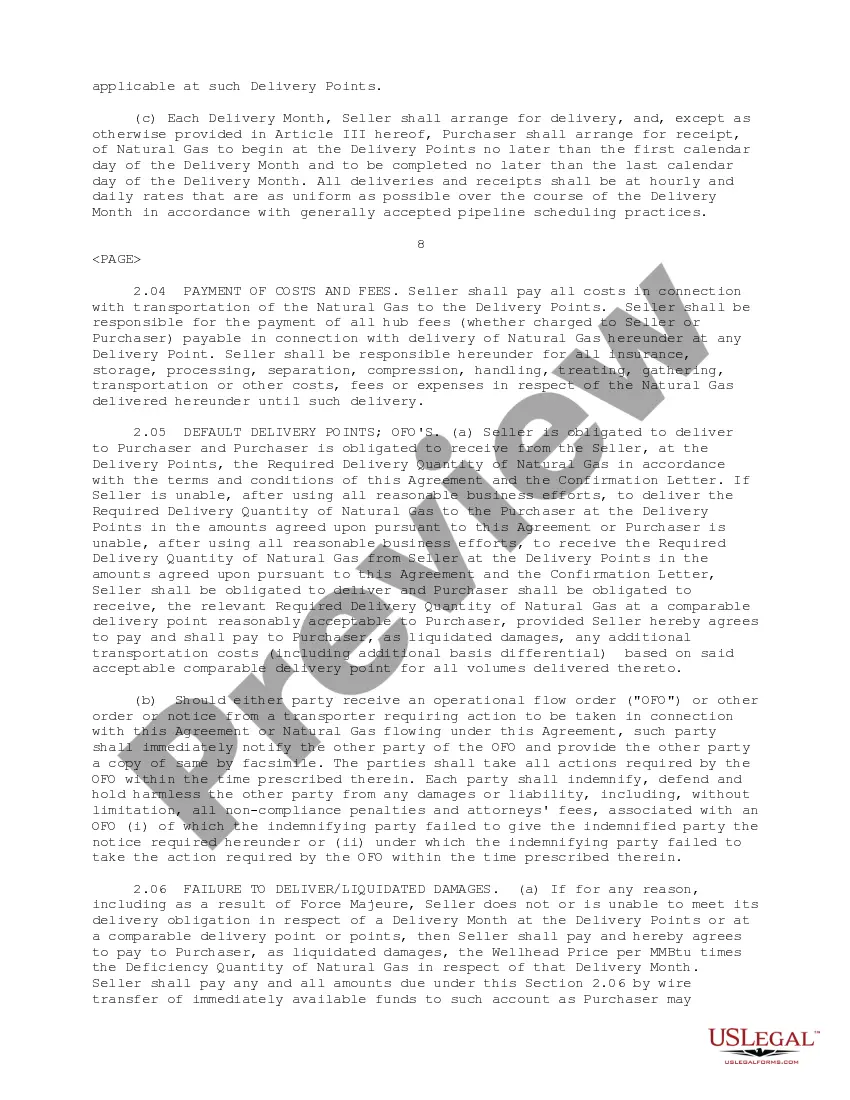
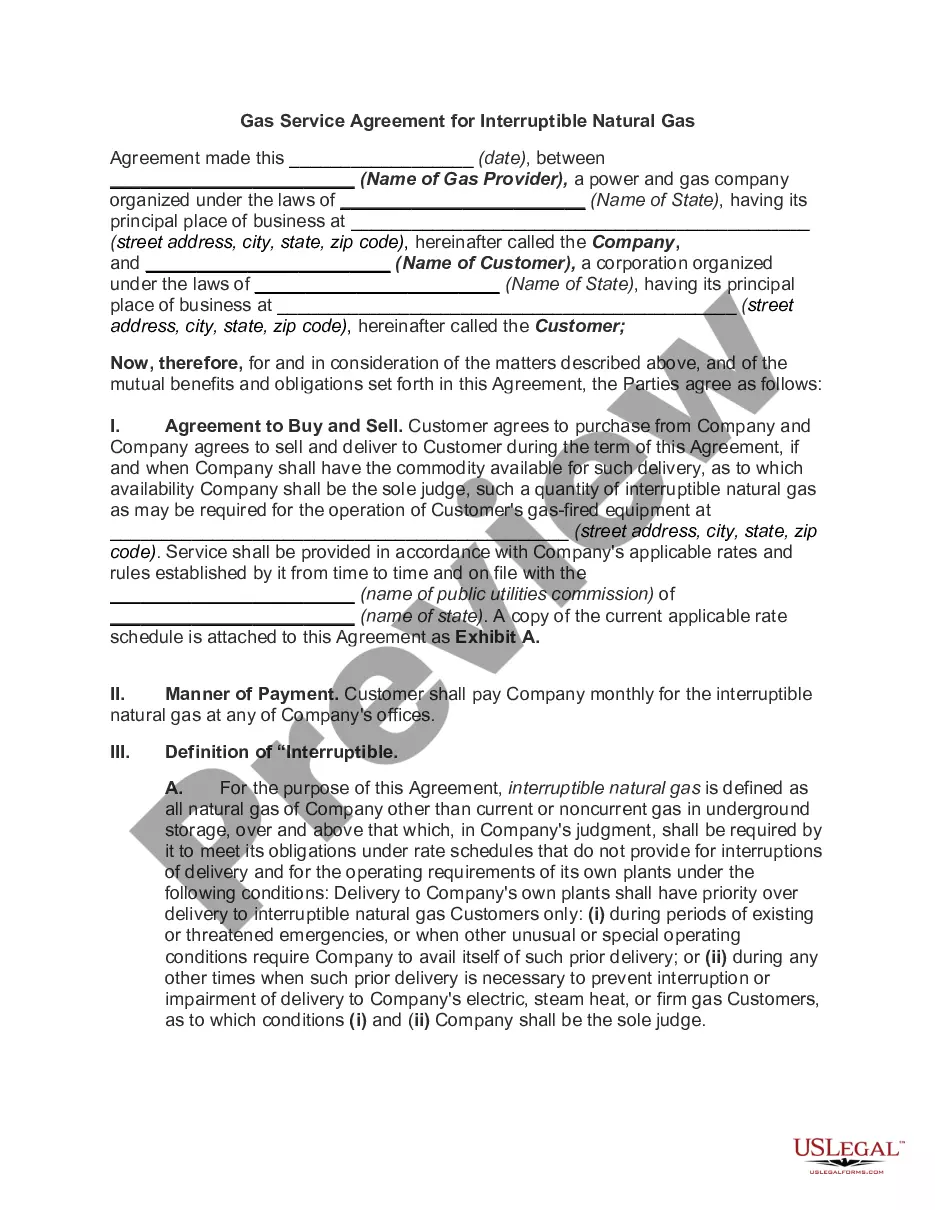
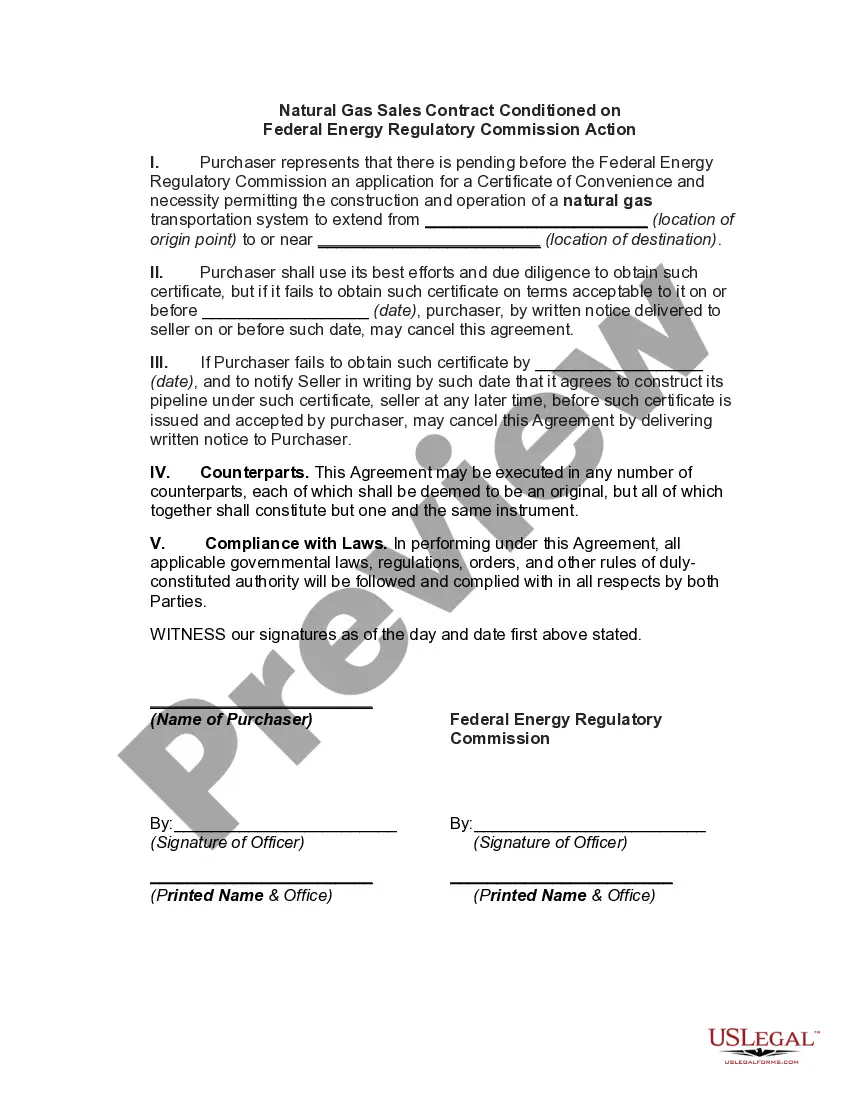
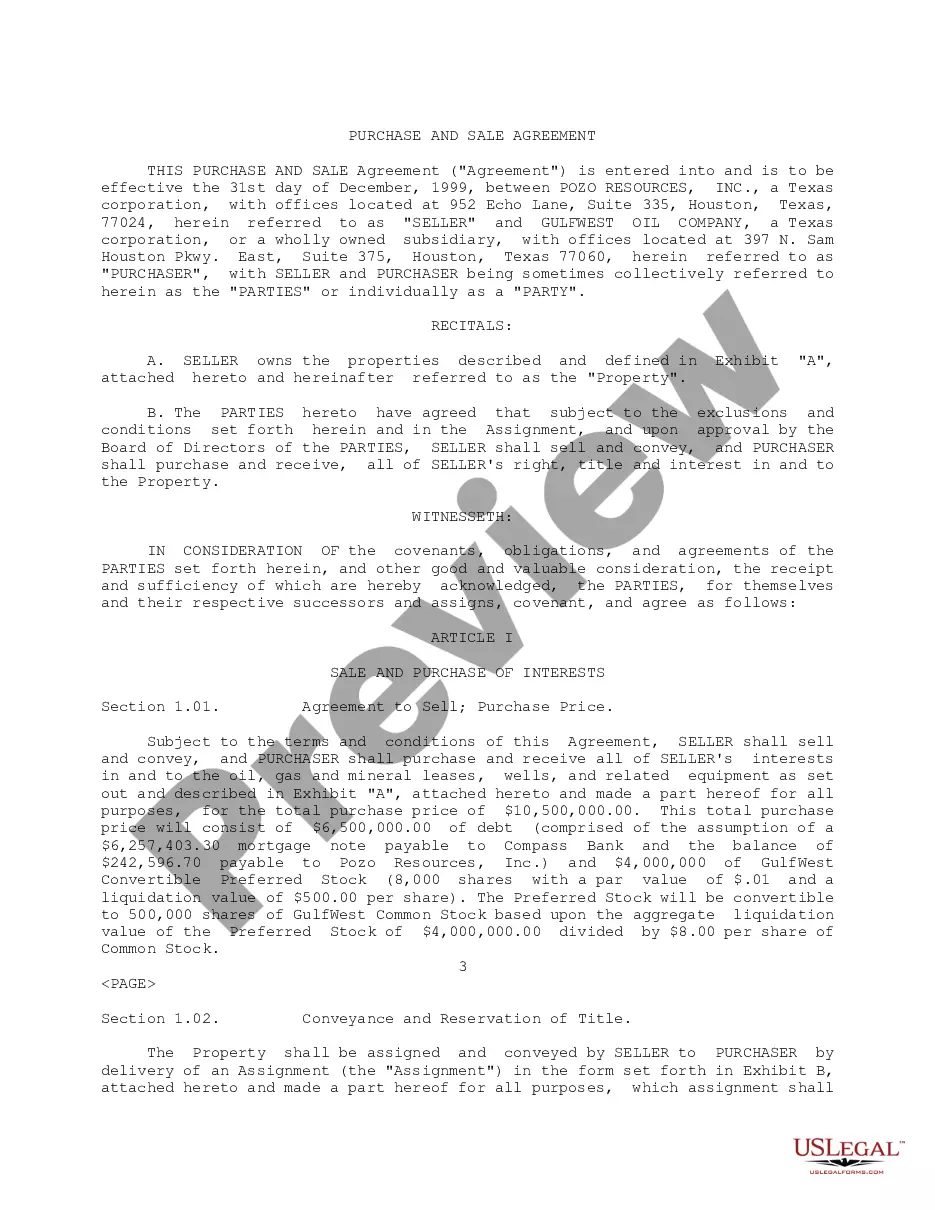
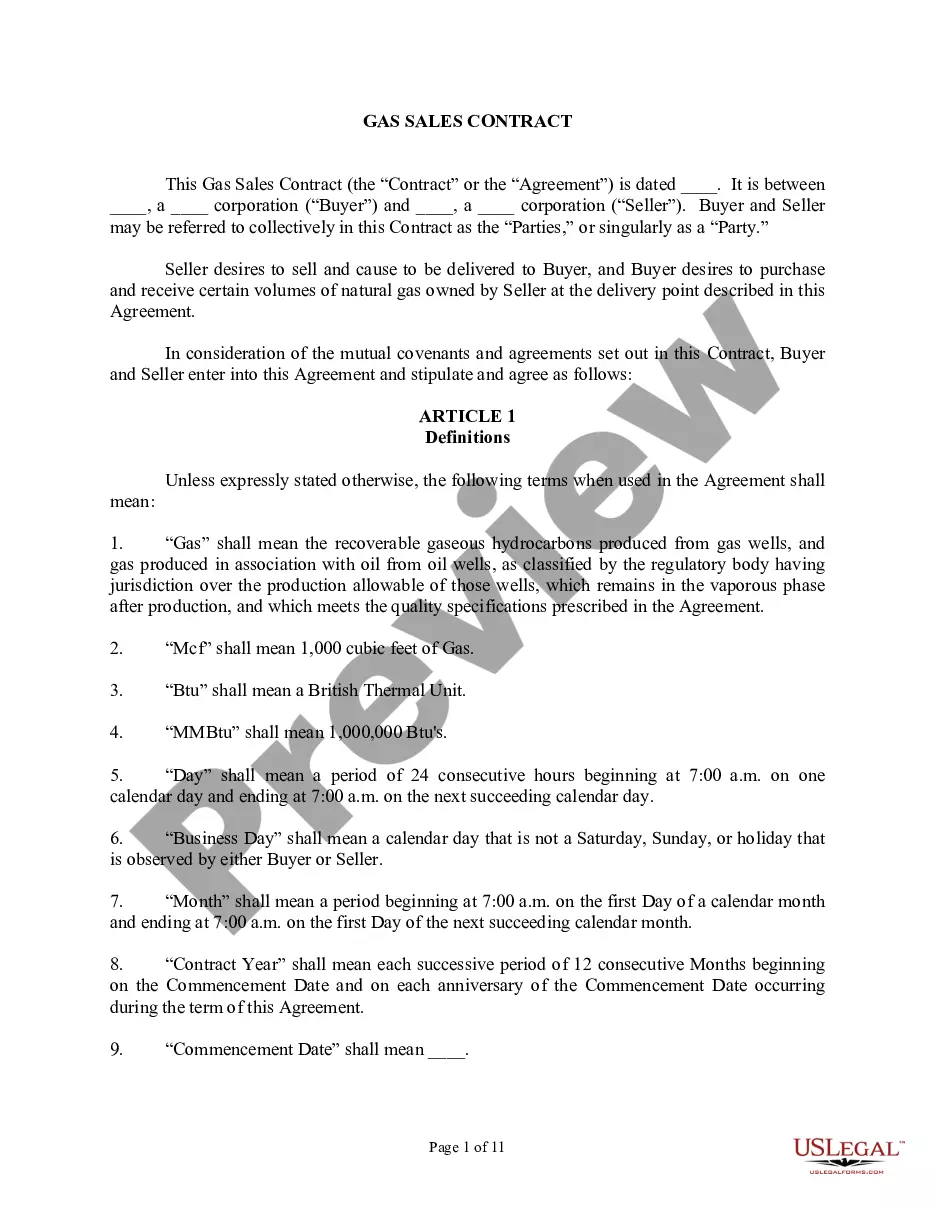
The Natural Gas Inventory Forward Sale Contract is a legal agreement between parties involved in the sale and purchase of natural gas. It outlines the terms and conditions for the forward sale of natural gas, establishing rights and responsibilities related to pricing, delivery, and other critical factors. This form serves as a formal document that ensures both parties understand their obligations under the contract, reducing risks associated with the volatile natural gas market. Unlike simple purchase agreements, this contract is specifically designed for long-term and bulk transactions, making it essential for entities engaged in substantial energy trades.
Form components explained
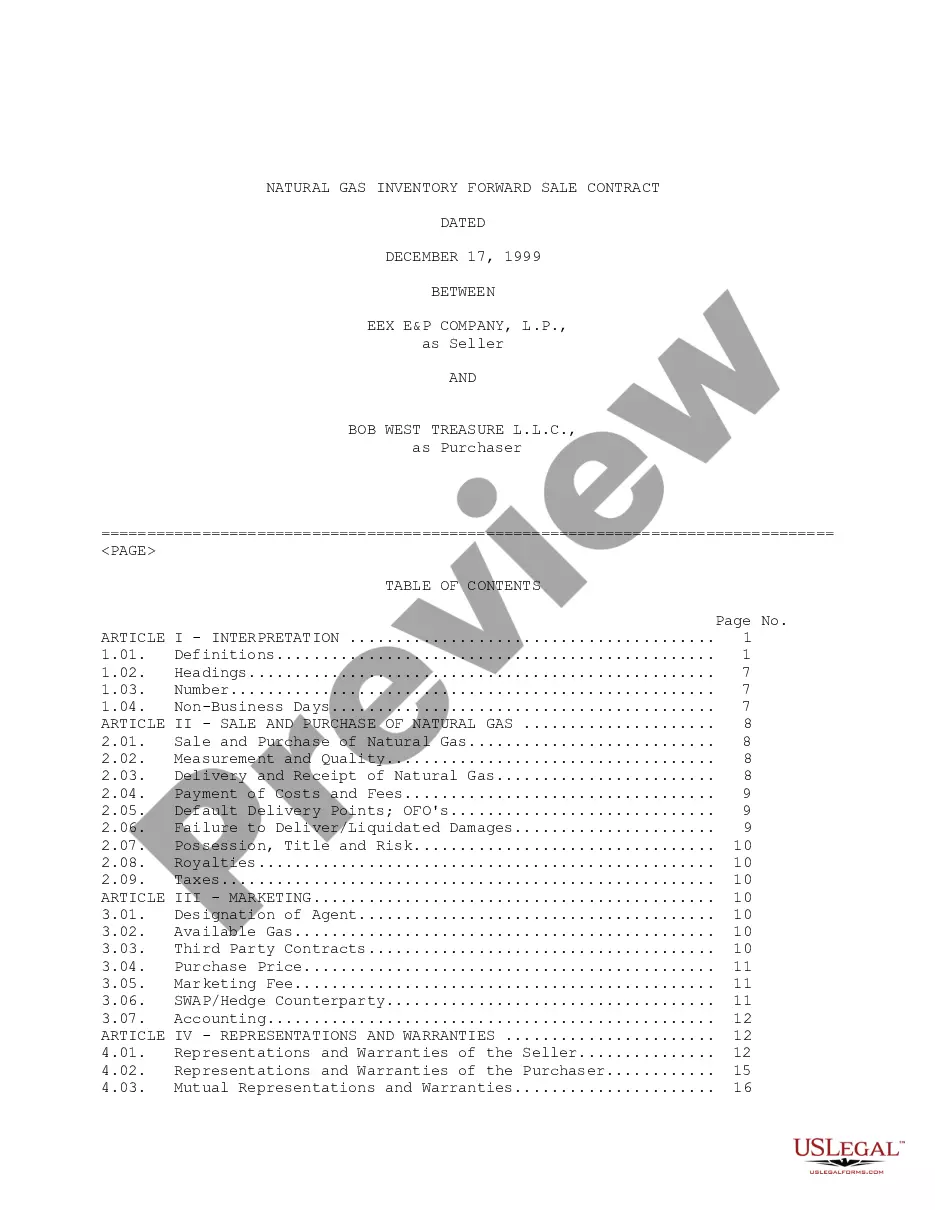
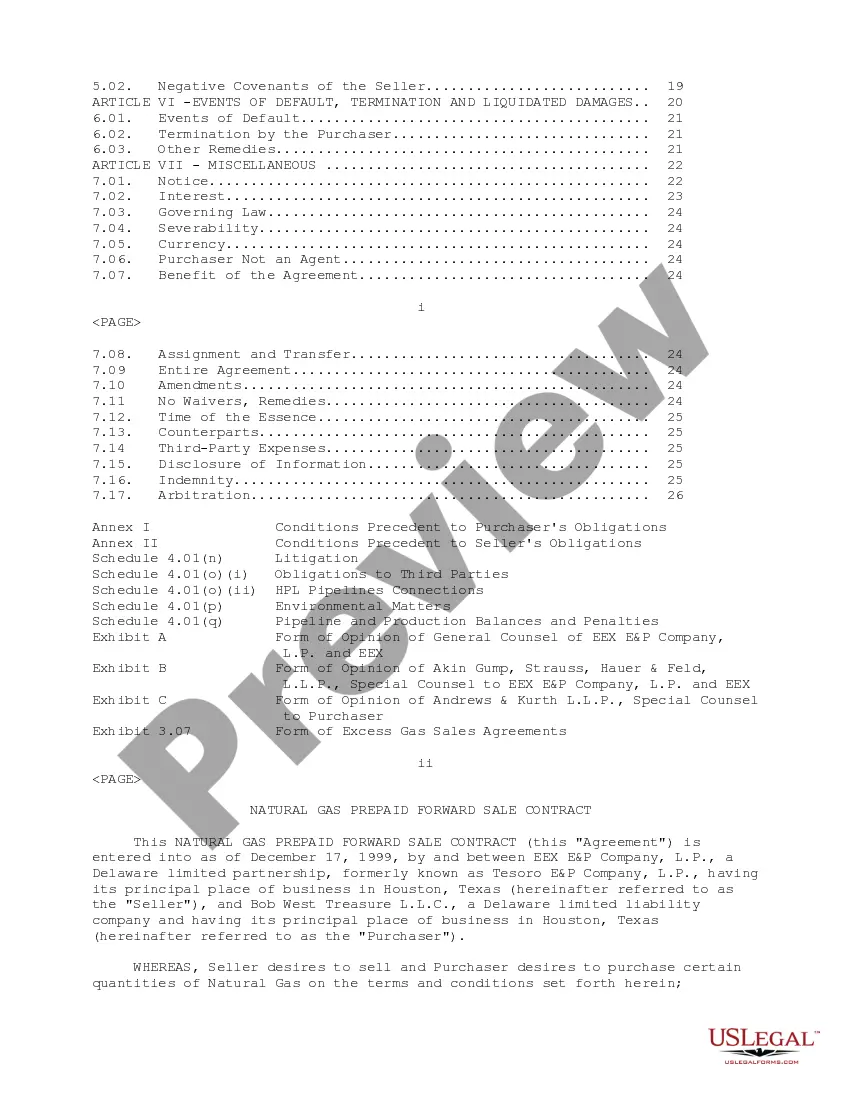
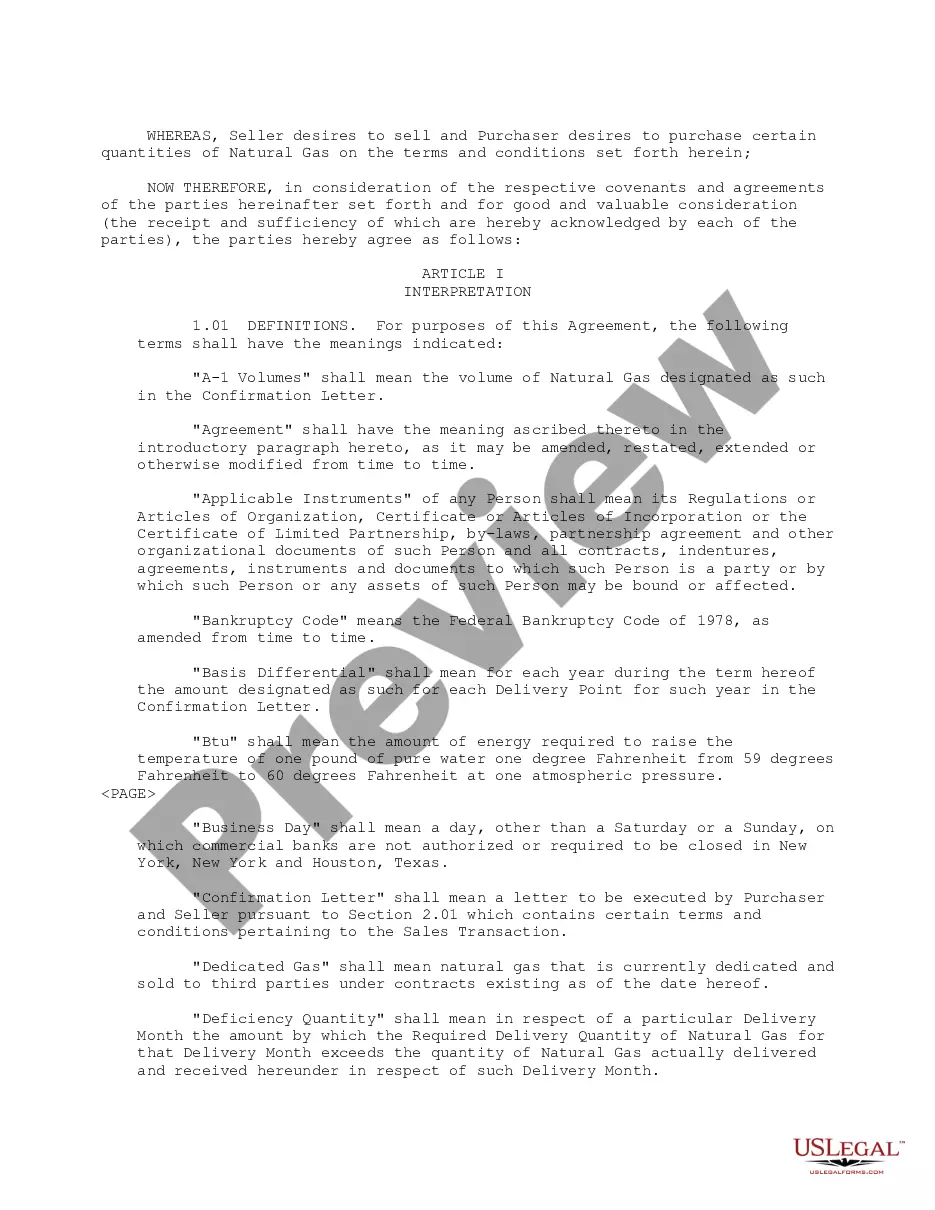
- Definition and interpretation of terms used within the contract.
- Details regarding the sale and purchase of natural gas, including measurement and quality standards.
- Conditions for delivery and receipt of gas, including payment obligations and penalties for failure to deliver.
- Representations and warranties provided by both the seller and the purchaser.
- Affirmative and negative covenants to ensure compliance with the contract obligations.
- Procedures for addressing events of default and contract termination.

When this form is needed
Use this contract when entering into a large-scale transaction for the sale and purchase of natural gas. It is particularly relevant for parties engaged in energy trading, such as energy producers and distributors, who require a clear legal framework for forward sales. This form is also appropriate if you are looking to secure pricing and supply over a specified time while minimizing risks associated with market fluctuations.
Who this form is for
- Energy producers looking to sell natural gas to purchasers securely.
- Purchasers seeking to commit to the bulk purchase of natural gas from producers.
- Energy traders involved in negotiating contracts for natural gas transactions.
- Legal representatives of companies in the energy sector requiring formal agreements for gas sales.
How to complete this form
- Identify and enter the details of both parties involved in the contract.
- Specify the quantity of natural gas to be sold and the designated delivery points.
- Agree on the payment terms, including the price and payment date.
- Define quality standards and measurement protocols for the natural gas.
- Obtain necessary signatures to formalize the contract.
Does this form need to be notarized?
This form does not typically require notarization unless specified by local law. It is advisable to consult legal guidance to confirm compliance with specific jurisdictional rules concerning notarization.
Get your form ready online
Our built-in tools help you complete, sign, share, and store your documents in one place.
Make edits, fill in missing information, and update formatting in US Legal Forms—just like you would in MS Word.
Download a copy, print it, send it by email, or mail it via USPS—whatever works best for your next step.
Sign and collect signatures with our SignNow integration. Send to multiple recipients, set reminders, and more. Go Premium to unlock E-Sign.
If this form requires notarization, complete it online through a secure video call—no need to meet a notary in person or wait for an appointment.
We protect your documents and personal data by following strict security and privacy standards.

Make edits, fill in missing information, and update formatting in US Legal Forms—just like you would in MS Word.

Download a copy, print it, send it by email, or mail it via USPS—whatever works best for your next step.

Sign and collect signatures with our SignNow integration. Send to multiple recipients, set reminders, and more. Go Premium to unlock E-Sign.

If this form requires notarization, complete it online through a secure video call—no need to meet a notary in person or wait for an appointment.

We protect your documents and personal data by following strict security and privacy standards.
Mistakes to watch out for
- Failing to clearly define delivery points and deadlines, leading to disputes over performance.
- Neglecting to include necessary contingencies and force majeure clauses that protect against unforeseen events.
- Overlooking the importance of ensuring all parties' representations and warranties are accurate and comprehensive.
Why use this form online
- Convenient access allows for quicker agreement drafting and execution.
- Editability enables parties to tailor terms specific to their transaction needs.
- Reliability through templates drafted by licensed attorneys ensures legal compliance.
Legal use & context
- This contract is legally binding and enforceable, provided it is completed accurately and conforms with applicable state laws.
- Both parties must comply with the terms to avoid penalties, ensuring both sides fulfill obligations to avoid disputes and legal challenges.
Key takeaways
- The Natural Gas Inventory Forward Sale Contract establishes clear terms for the sale and purchase of natural gas.
- Parties should ensure all terms are fully understood and properly documented to prevent future issues.
- Using this form online enhances accessibility and ensures adherence to legal standards.
Looking for another form?



Form popularity
FAQ
The contract indicates the obligation to buy or sell at the time specified, in the amount specified, as detailed in the forward contract. You can't trade forward contracts.
A forward contract is a private and customizable agreement that settles at the end of the agreement and is traded over-the-counter. A futures contract has standardized terms and is traded on an exchange, where prices are settled on a daily basis until the end of the contract.
Day 1. Transaction MTM - $50.00 ((50.50 50.00) 100 ) Prior Period MTM - $0.00. Day 2. Transaction MTM - ($100.00) ((51.50 52.00) 200 ) Day 3. Transaction MTM - ($200.00) ((54.00 53.00) -200 ) Day 4. Transaction MTM - ($50.00) ((53.50 54.00) 100 )
The value of a forward contract at initial negotiation is zero. The contract has no value until the contract is terminated or one party chooses to settle. Since it is not traded on any exchange, it has no value to either party when it is initiated.
F = The contract's forward price. S0 = The underlying asset's current spot price. e = The mathematical irrational constant approximated by 2.7183. r = The risk-free rate that applies to the life of the forward contract. T = The delivery date in years.
A forward contract is a customized contract between two parties to buy or sell an asset at a specified price on a future date. A forward contract can be used for hedging or speculation, although its non-standardized nature makes it particularly apt for hedging.
First, you close out your asset and liability accounts. On the liability side, debit Asset Obligations by the spot value on the contract date. On the asset side, credit Contracts Receivable by the forward rate, and debit or credit the Contra-Assets account by the difference between the spot rate and the forward rate.
Total Contract Value = (Monthly Recurring Revenue Contract Term Length) + Contract Fees. For Customer A, the TCV is calculated like so: ( $50 MRR 12 months ) + $0 fees = $600. The TCV for Customer B is calculated the same way: