North Carolina Contract for Deed Package

What is this form package?
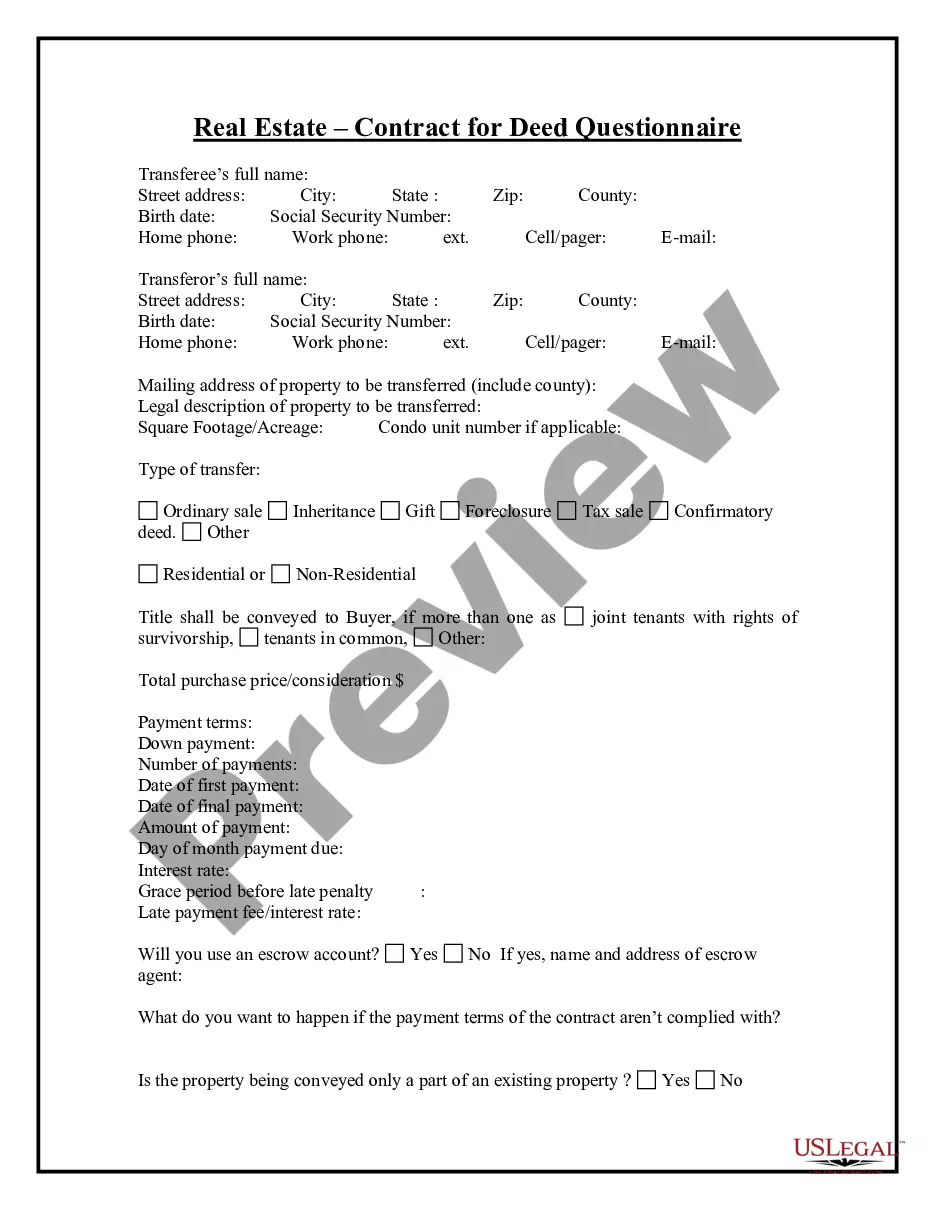
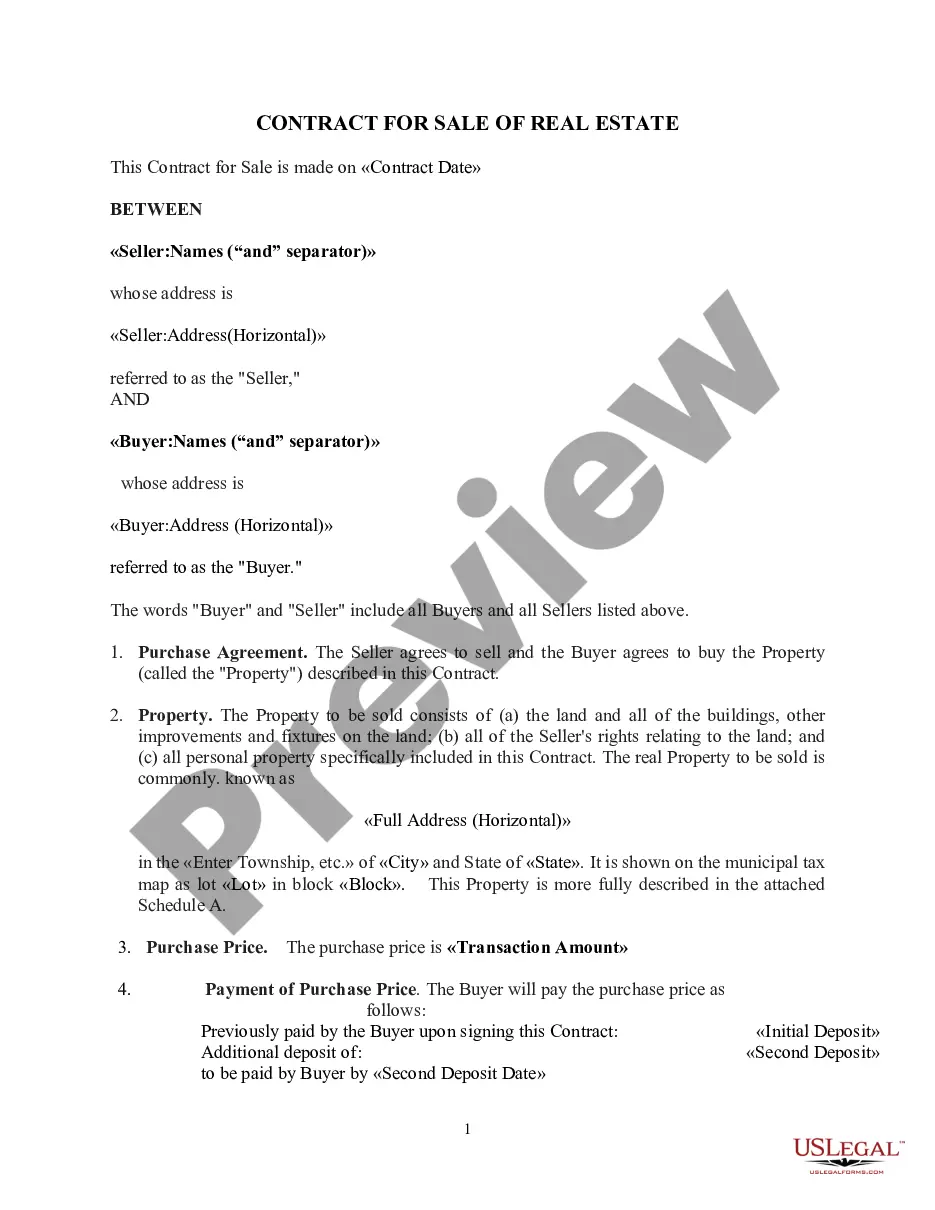
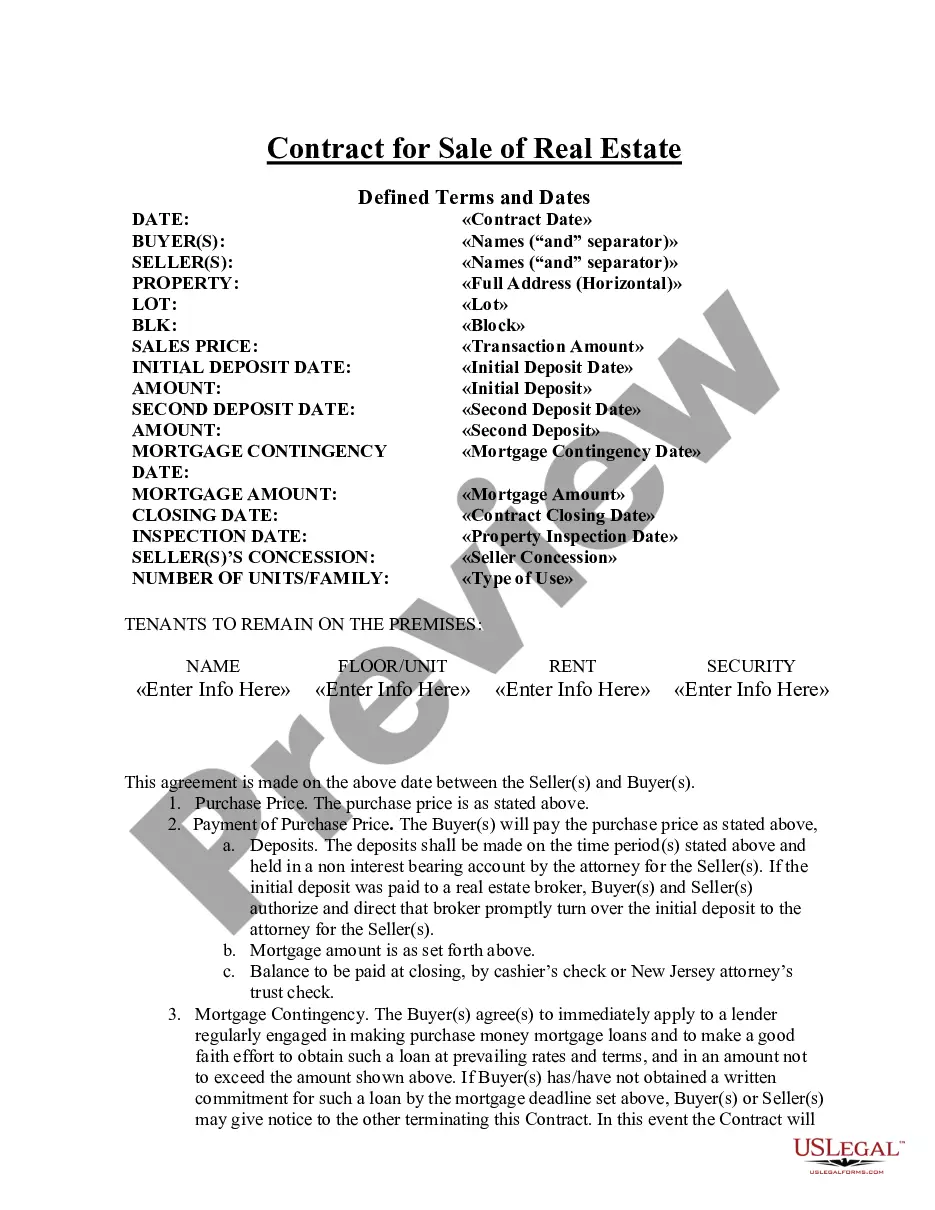
The North Carolina Contract for Deed Package includes essential legal documents specifically designed for owner financing in real estate transactions. Unlike standard sales contracts, this package provides a structured approach to outline the terms of owner financing through a Contract for Deed. It includes state-specific forms that ensure your arrangements comply with North Carolina laws, saving you time and ensuring clarity in your agreements.
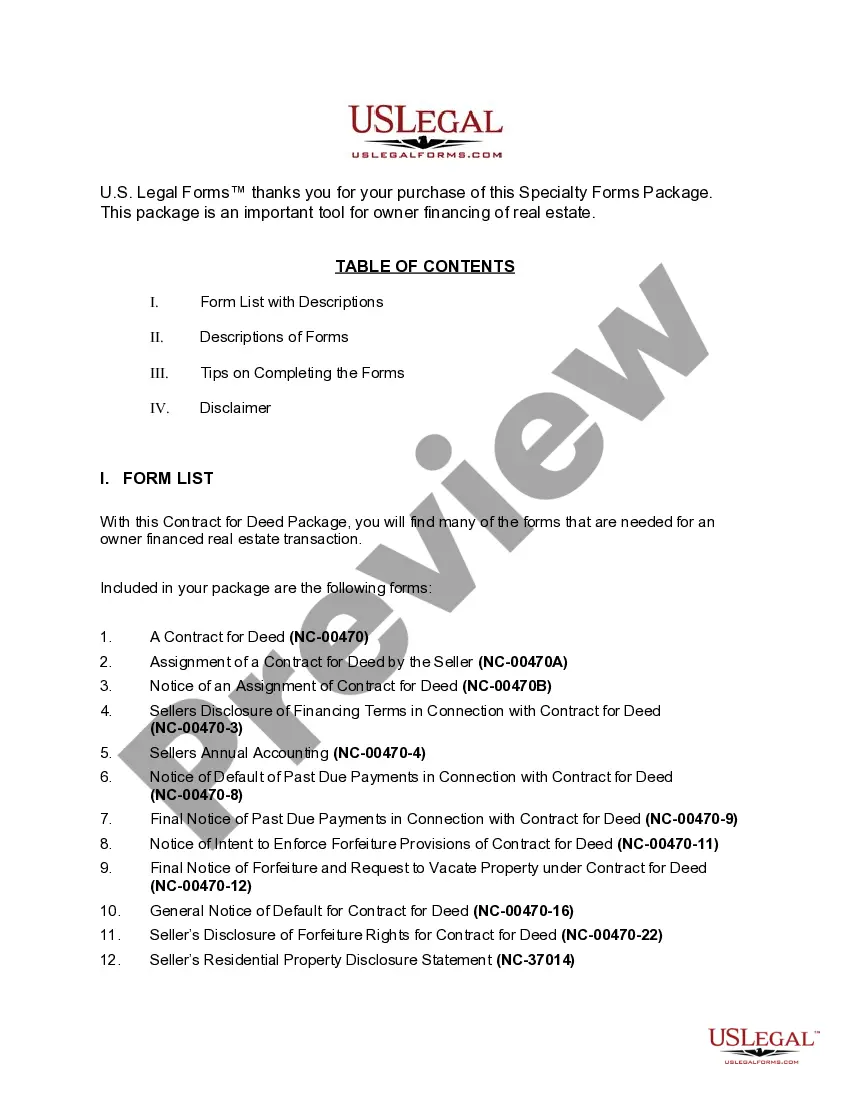
Forms you’ll find in this package
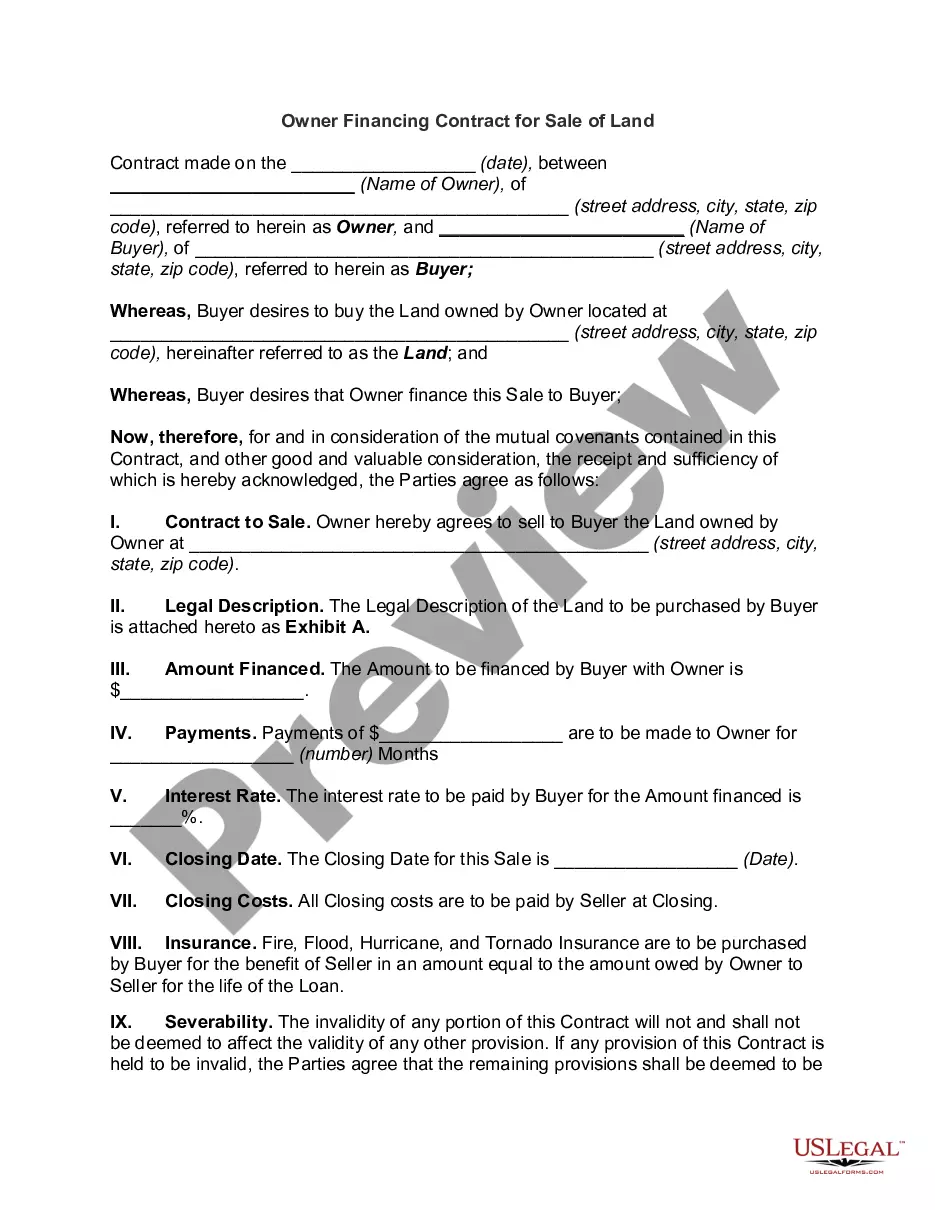
- Agreement or Contract for Deed for Sale and Purchase of Real Estate a/k/a Land or Executory Contract
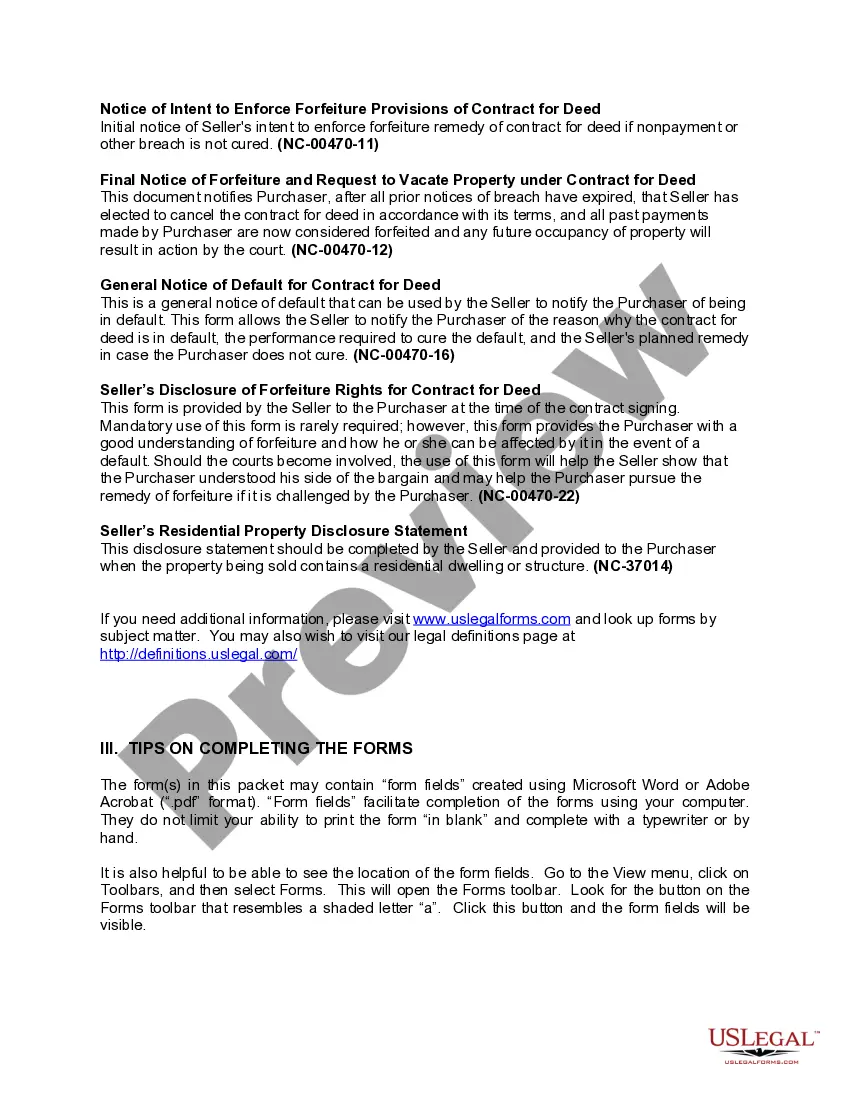
- Notice of Intent to Enforce Forfeiture Provisions of Contact for Deed
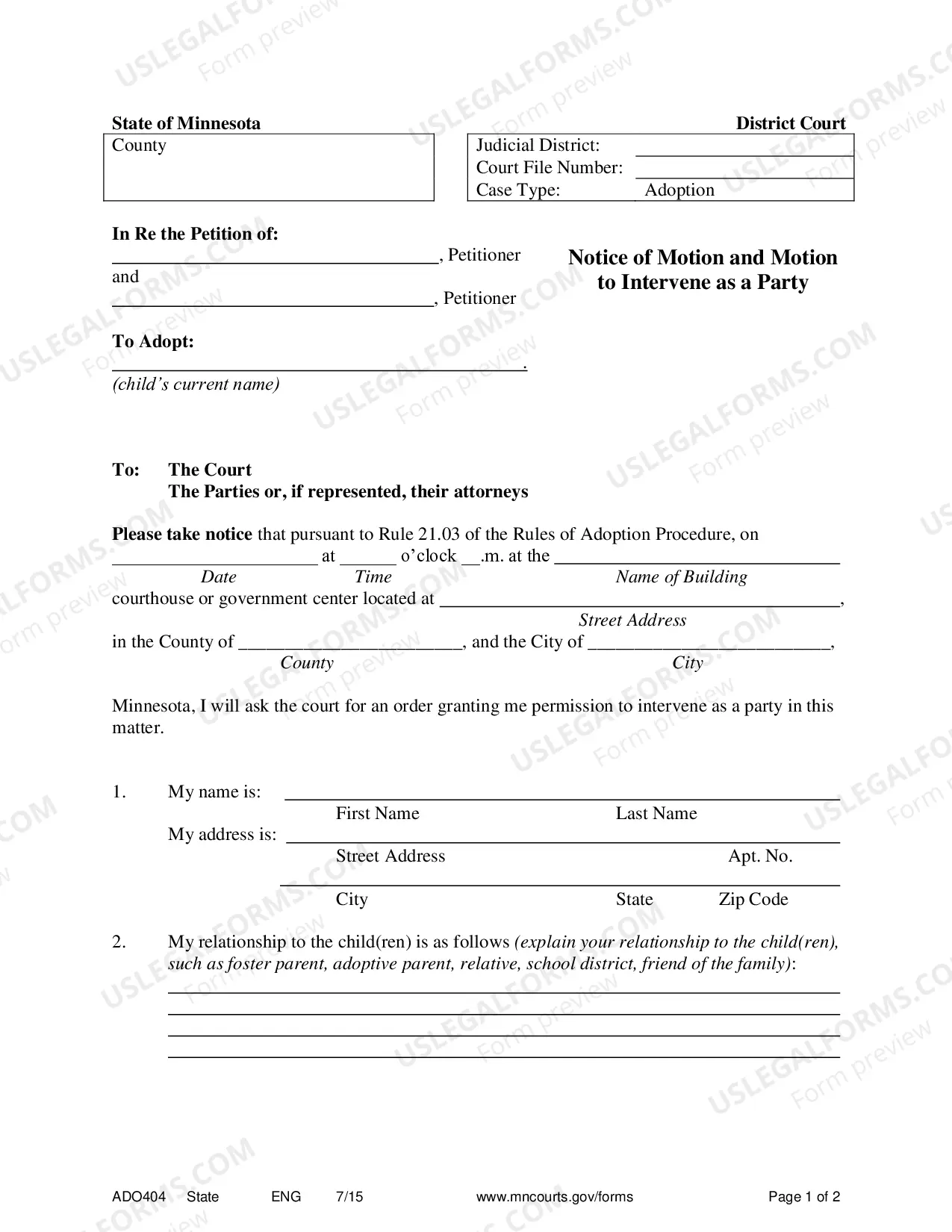
- Final Notice of Forfeiture and Request to Vacate Property under Contract for Deed
- General Notice of Default for Contract for Deed
- Seller's Disclosure of Forfeiture Rights for Contract for Deed
- Seller's Disclosure of Financing Terms for Residential Property in connection with Contract or Agreement for Deed a/k/a Land Contract
- Contract for Deed Seller's Annual Accounting Statement
- Notice of Default for Past Due Payments in connection with Contract for Deed
- Final Notice of Default for Past Due Payments in connection with Contract for Deed
- Assignment of Contract for Deed by Seller
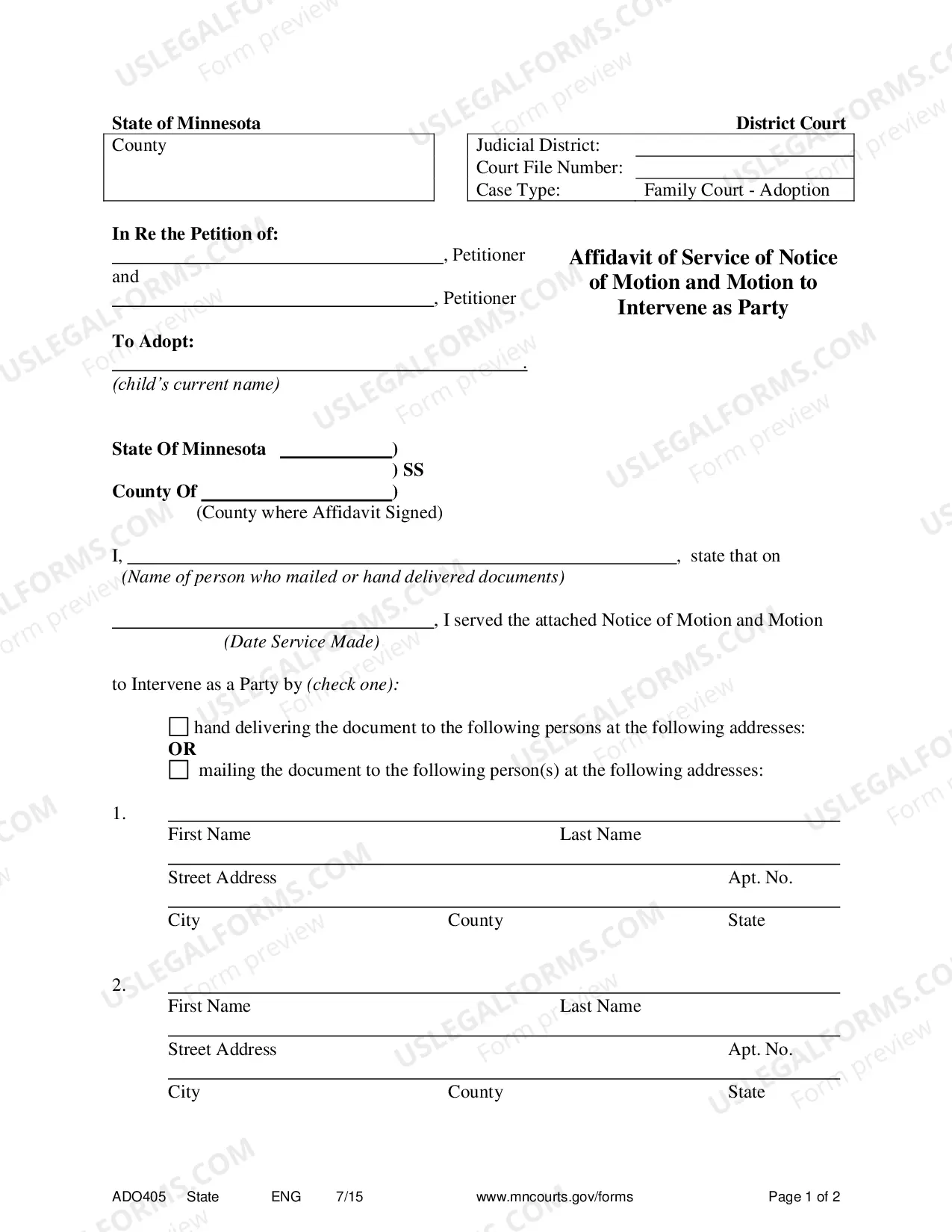
- Notice of Assignment of Contract for Deed
Situations where these forms applies
This form package is ideal for use in situations such as:
- Purchasing property through owner financing, where traditional mortgages may not be available.
- Transferring ownership of a property while retaining the financing terms.
- Providing legal notice to buyers about payment issues or defaults in the financing agreement.
- Documenting the terms and conditions associated with property transactions that utilize a Contract for Deed.
Who this form package is for
- Property owners seeking to sell their property using owner financing.
- Buyers interested in purchasing real estate under a Contract for Deed.
- Real estate agents or brokers facilitating owner-financed property sales.
- Investors looking to understand their rights and obligations under a Contract for Deed in North Carolina.
How to complete these forms
- Review all included forms to understand their purpose and how they relate to your transaction.
- Identify the parties involved, including the seller and buyer, and ensure their details are accurately entered.
- Enter the purchase price, payment terms, and any additional conditions related to the financing agreement.
- Sign and date the Contract for Deed and any assignment or notice documents where indicated.
- Provide copies of all signed documents to all parties involved to ensure transparency and compliance.
Do documents in this package require notarization?
Some forms in this package need notarization to be legally binding. Our online notarization service, powered by Notarize, lets you verify and sign documents remotely through an encrypted video session, available 24/7.
Get your form ready online
Our built-in tools help you complete, sign, share, and store your documents in one place.
Make edits, fill in missing information, and update formatting in US Legal Forms—just like you would in MS Word.
Download a copy, print it, send it by email, or mail it via USPS—whatever works best for your next step.
Sign and collect signatures with our SignNow integration. Send to multiple recipients, set reminders, and more. Go Premium to unlock E-Sign.
If this form requires notarization, complete it online through a secure video call—no need to meet a notary in person or wait for an appointment.
We protect your documents and personal data by following strict security and privacy standards.

Make edits, fill in missing information, and update formatting in US Legal Forms—just like you would in MS Word.

Download a copy, print it, send it by email, or mail it via USPS—whatever works best for your next step.

Sign and collect signatures with our SignNow integration. Send to multiple recipients, set reminders, and more. Go Premium to unlock E-Sign.

If this form requires notarization, complete it online through a secure video call—no need to meet a notary in person or wait for an appointment.

We protect your documents and personal data by following strict security and privacy standards.
Mistakes to watch out for
- Failing to include complete and accurate information about all parties involved.
- Not providing the necessary financing terms or key deadlines.
- Neglecting to deliver copies of the signed documents to all relevant parties.
- Overlooking the need for specific notices in case of defaults or payment issues.
Advantages of online completion
- Easy accessibility: Download and complete the forms from the comfort of your home.
- Editability: Fill out forms digitally or print them to complete by hand.
- Cost-effective: Purchasing as a package saves you up to 70 percent compared to buying forms separately.
- Reliability: All documents are drafted by licensed attorneys, ensuring they meet legal standards.
Looking for another form?

Form popularity
FAQ
It is possible to be named on the title deed of a home without being on the mortgage. However, doing so assumes risks of ownership because the title is not free and clear of liens and possible other encumbrances.If a mortgage exists, it's best to work with the lender to make sure everyone on the title is protected.
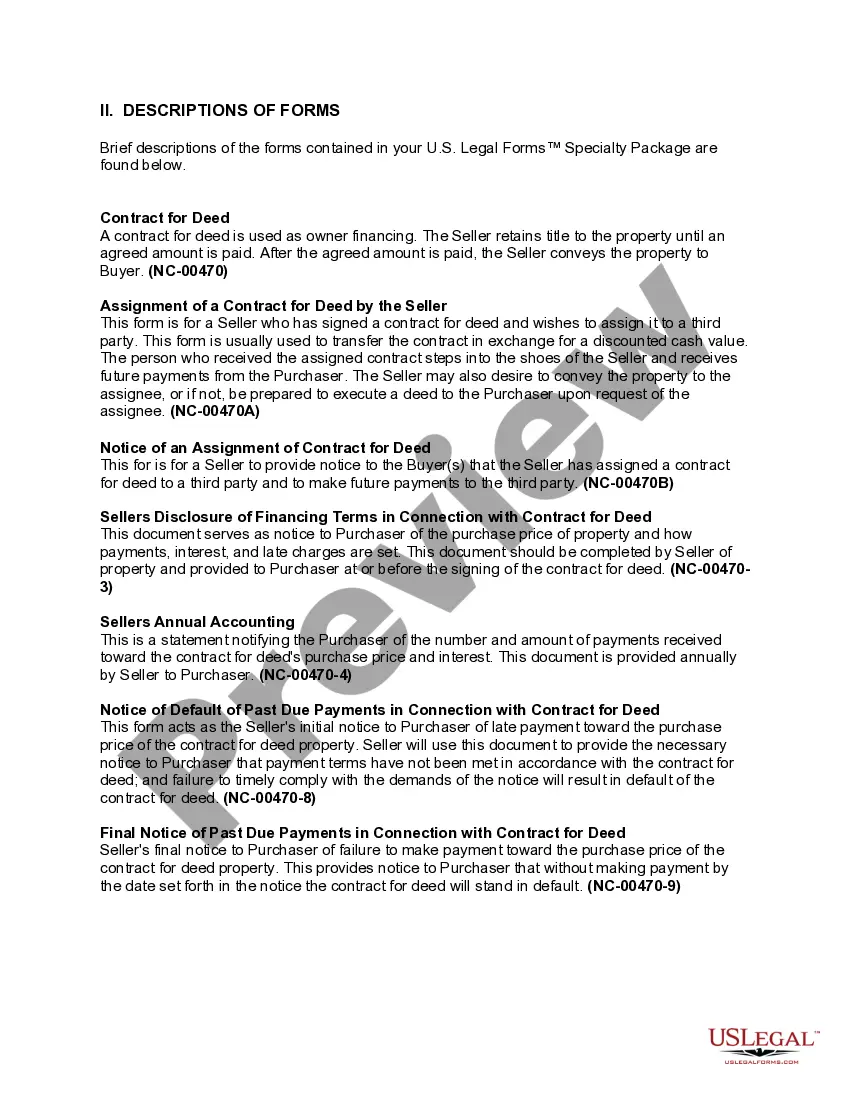
A contract for deed is a legal agreement for the sale of property in which a buyer takes possession and makes payments directly to the seller, but the seller holds the title until the full payment is made.
The buyer must record the contract for deed with the county recorder where the land is located within four months after the contract is signed. Contracts for deed must provide the legal name of the buyer and the buyer's address.
Generally, contract for deed sellers use IRS Form 6252 to report installment sales in the year in which they take place. You also use Form 6252 during each year you receive income from your contract for deed.
Yes you can. This is called a transfer of equity but you will need the permission of your lender. If you are not married or in a civil partnership you may wish to consider creating a deed of trust and a living together agreement which we can explain to you.
The IRS does allow you to deduct the interest portion of the payments you make under a contract for deed from your income taxes if you itemize deductions. You can also deduct any real estate taxes you pay, just as with a mortgage.
On a land contract, the buyer is responsible for property taxes, insurance and mortgage interest, although these will usually be paid through the seller. However, the buyer does get to deduct them from his or her taxes; the seller cannot.
Purchase price. Down payment. Interest rate. Number of monthly installments. Responsibilities of the buyer and seller. Legal remedies for the seller if the buyer does not make payments.
Adding someone to your house deed requires the filing of a legal form known as a quitclaim deed. When executed and notarized, the quitclaim deed legally overrides the current deed to your home. By filing the quitclaim deed, you can add someone to the title of your home, in effect transferring a share of ownership.