Charge of Discrimination - Equal Employment Opportunity Commission EEOC Complaint
About this form
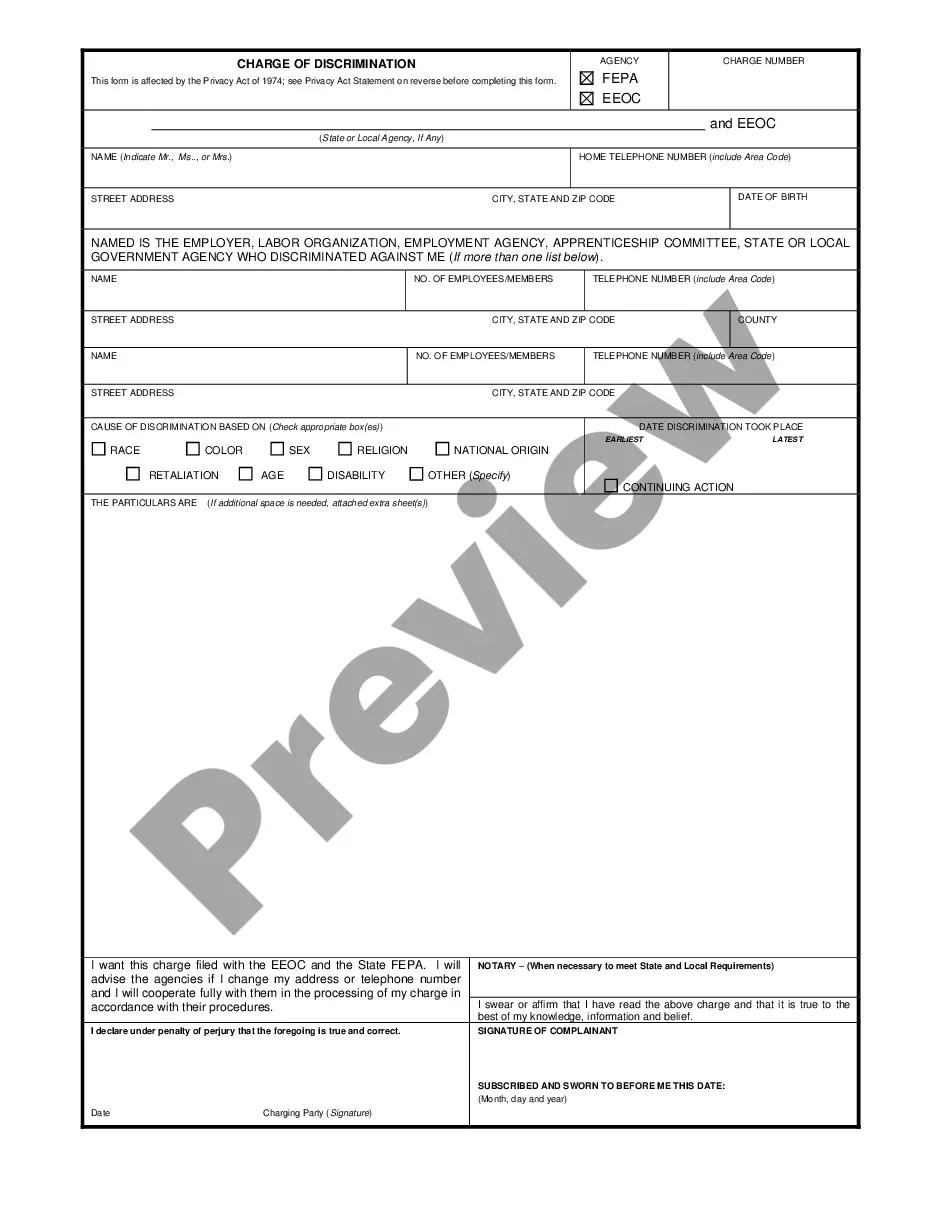
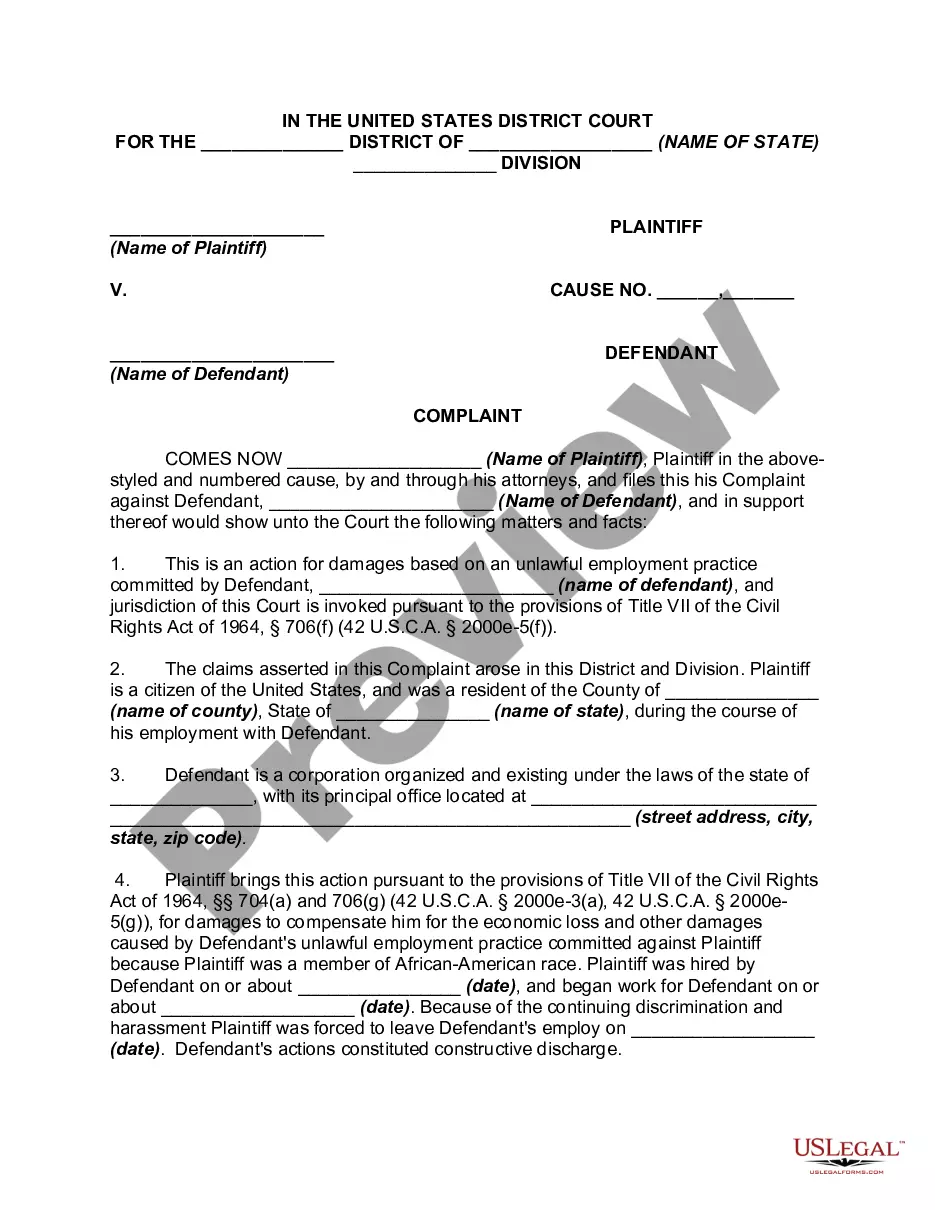
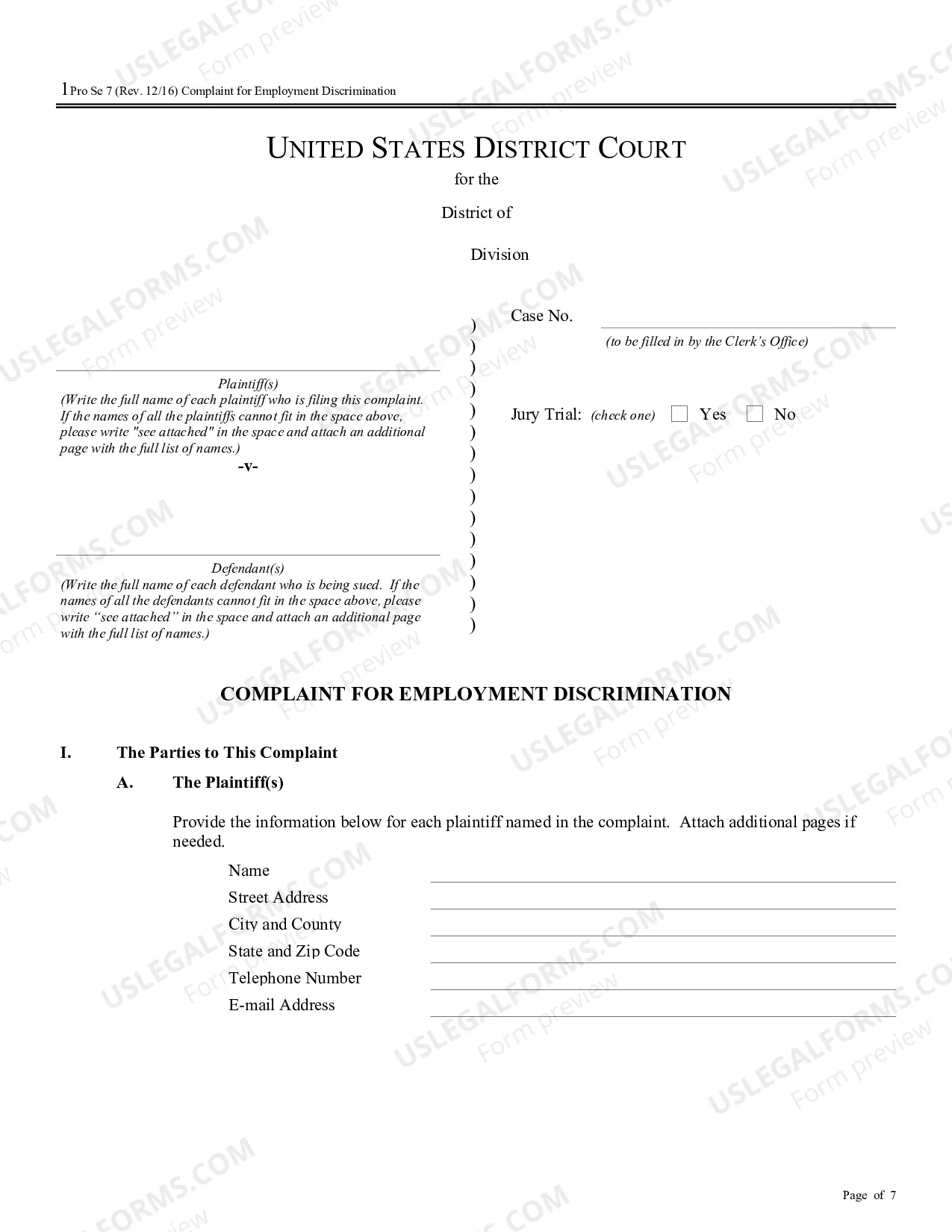
The Charge of Discrimination - Equal Employment Opportunity Commission (EEOC) Complaint is a formal document used to report instances of employment discrimination. This form allows individuals to file complaints regarding discriminatory practices based on race, color, sex, religion, national origin, age, and disability, among others. It is crucial for ensuring that discrimination is investigated by both federal and state agencies, differentiating it from other complaint mechanisms available in the workplace.
Form components explained
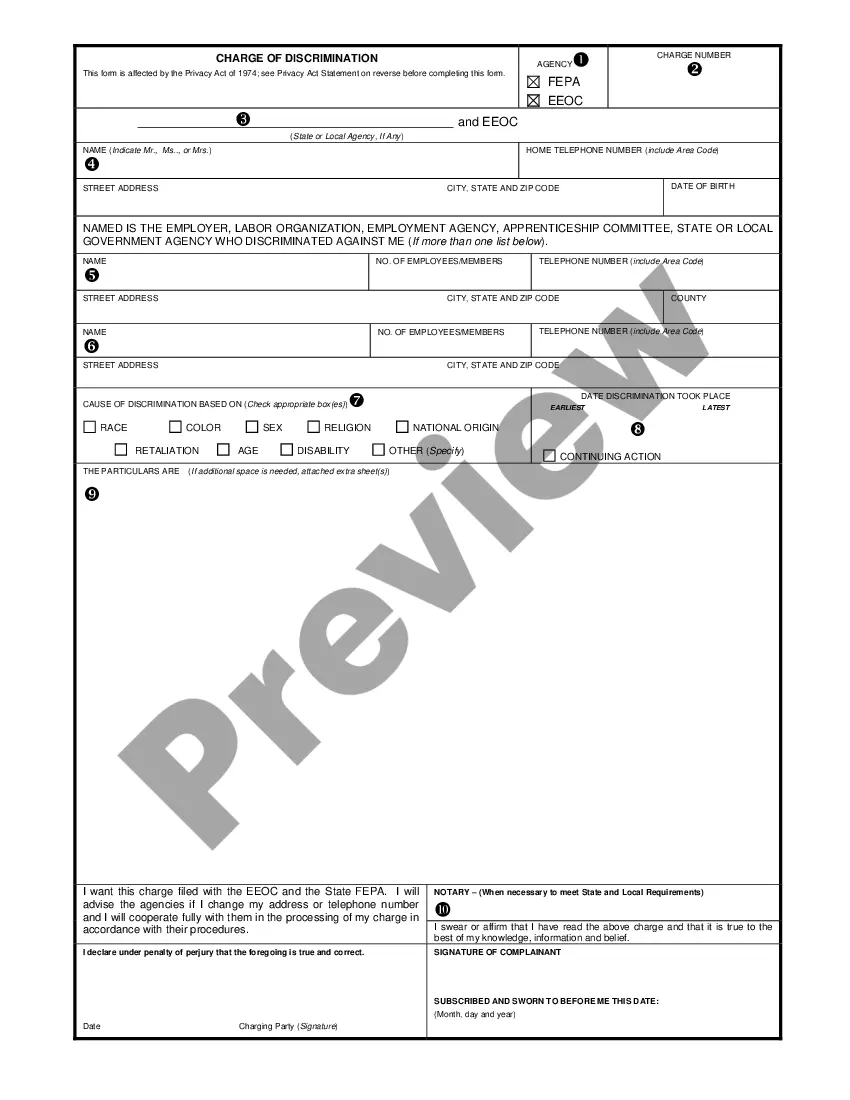
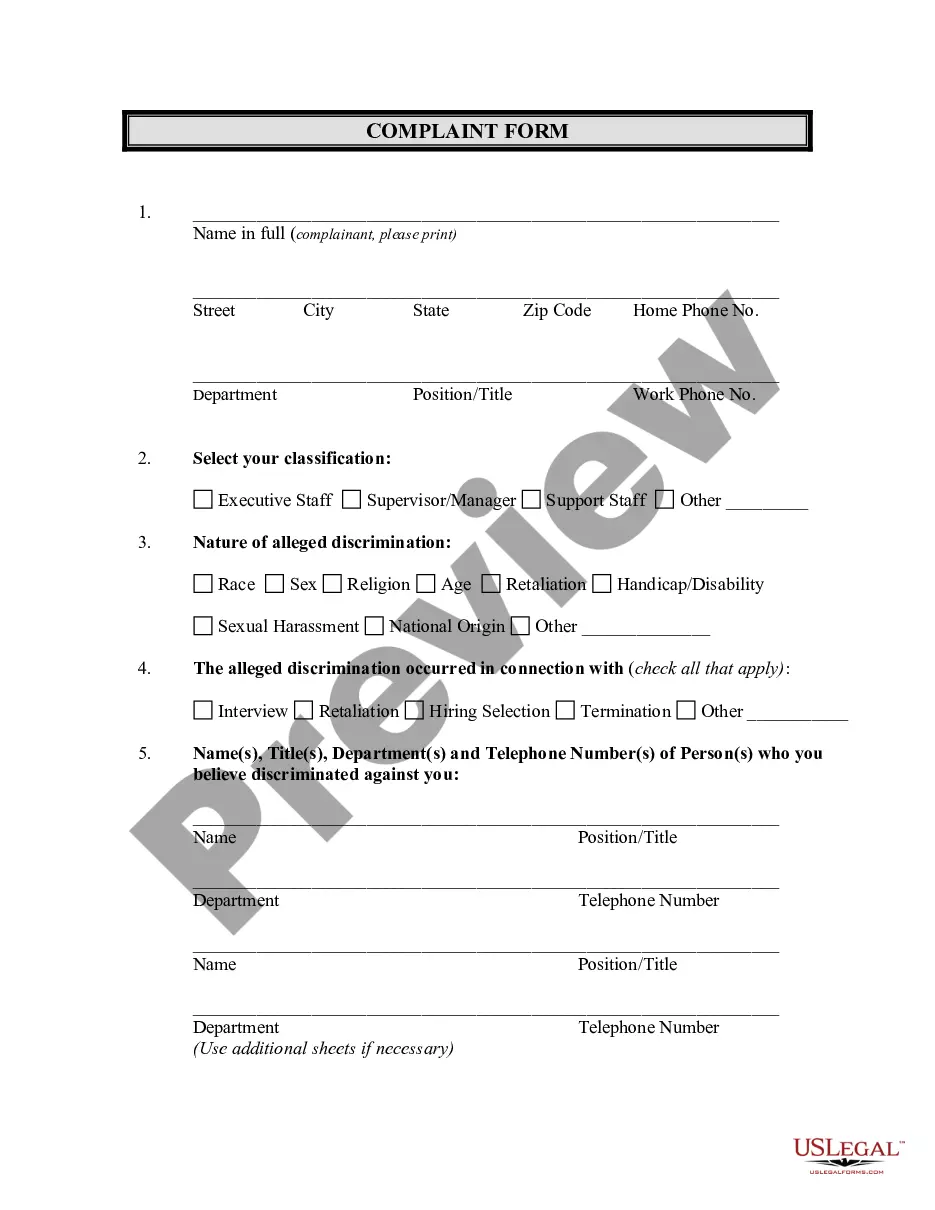
- Agency selection: Indicate whether the charge is to be filed with the EEOC or a state agency.
- Charge number: A field designated for the agency to assign a unique identifier to your complaint.
- Personal information: Sections to provide your name, contact details, and date of birth.
- Accused parties: Names and contact details of the employer or organization accused of discrimination.
- Causes of discrimination: Checkboxes to specify the basis of discrimination suffered.
- Details of the discrimination: A space to describe the discriminatory incidents comprehensively.
- Notary section: A certification area, required by some states, for legal validation of the complaint.
When to use this document
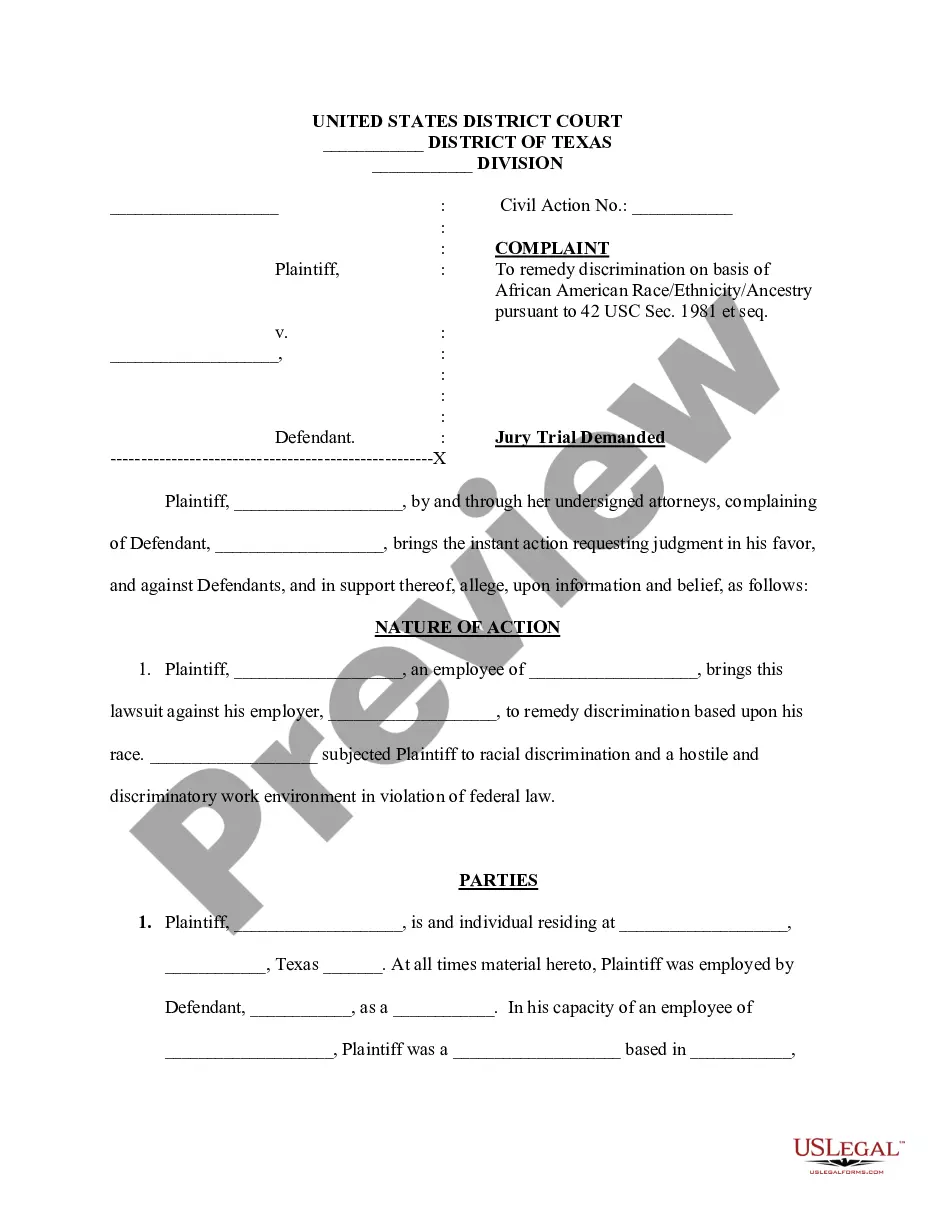
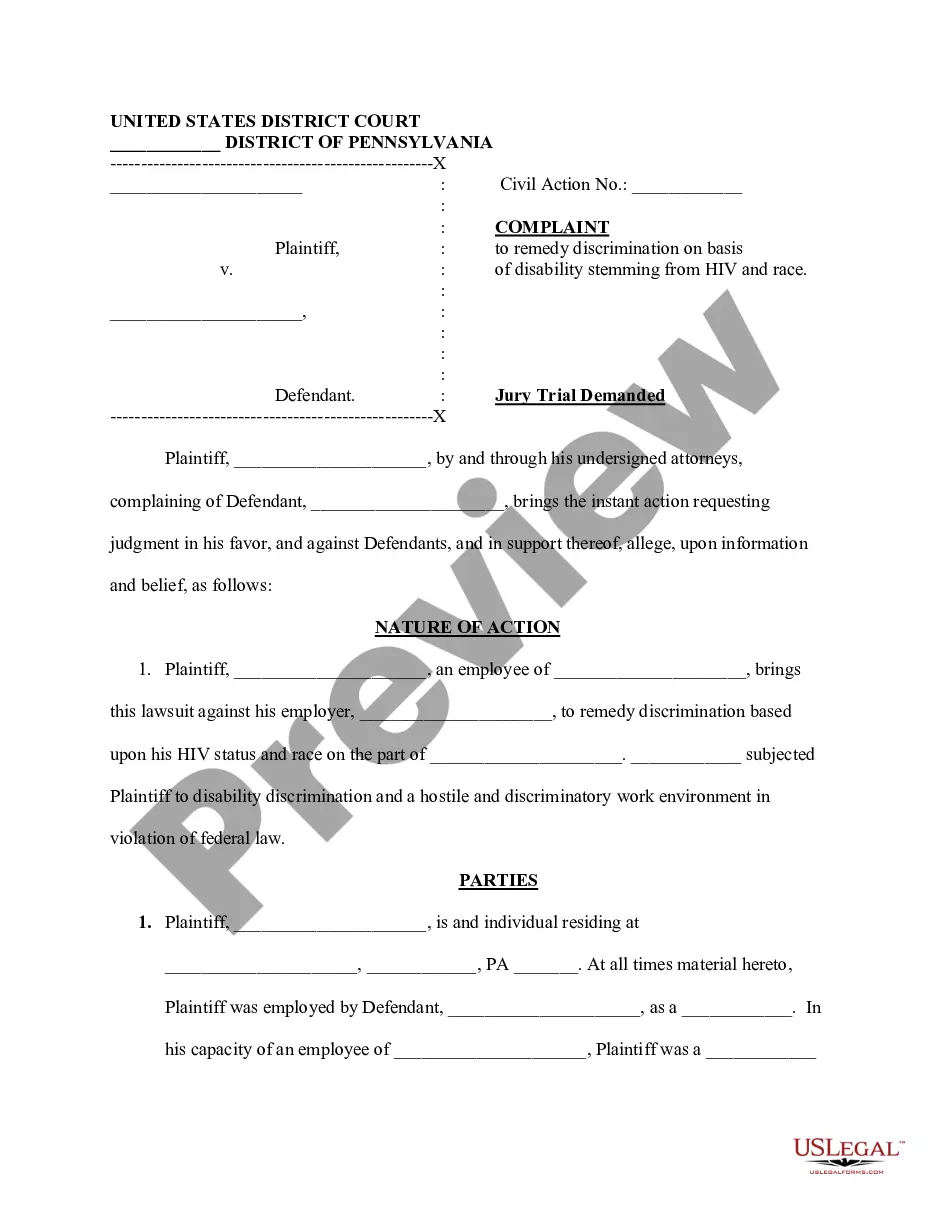
This form should be used when an individual believes they have experienced discrimination in the workplace. Common scenarios for using the Charge of Discrimination include situations where an employee has faced unfair treatment based on their race, sex, age, or disability. Filing this complaint is an essential step in pursuing justice and seeking remedies for discriminatory actions that violate employment laws.
Who needs this form
- Individuals who have experienced discrimination in their workplace.
- Employees of businesses with 15 or more employees, as most discrimination laws apply to these entities.
- Workers who have dealt with various types of discrimination such as sexual harassment or retaliation.
- Anyone who seeks to file a legal complaint through both federal and state agencies.
Completing this form step by step
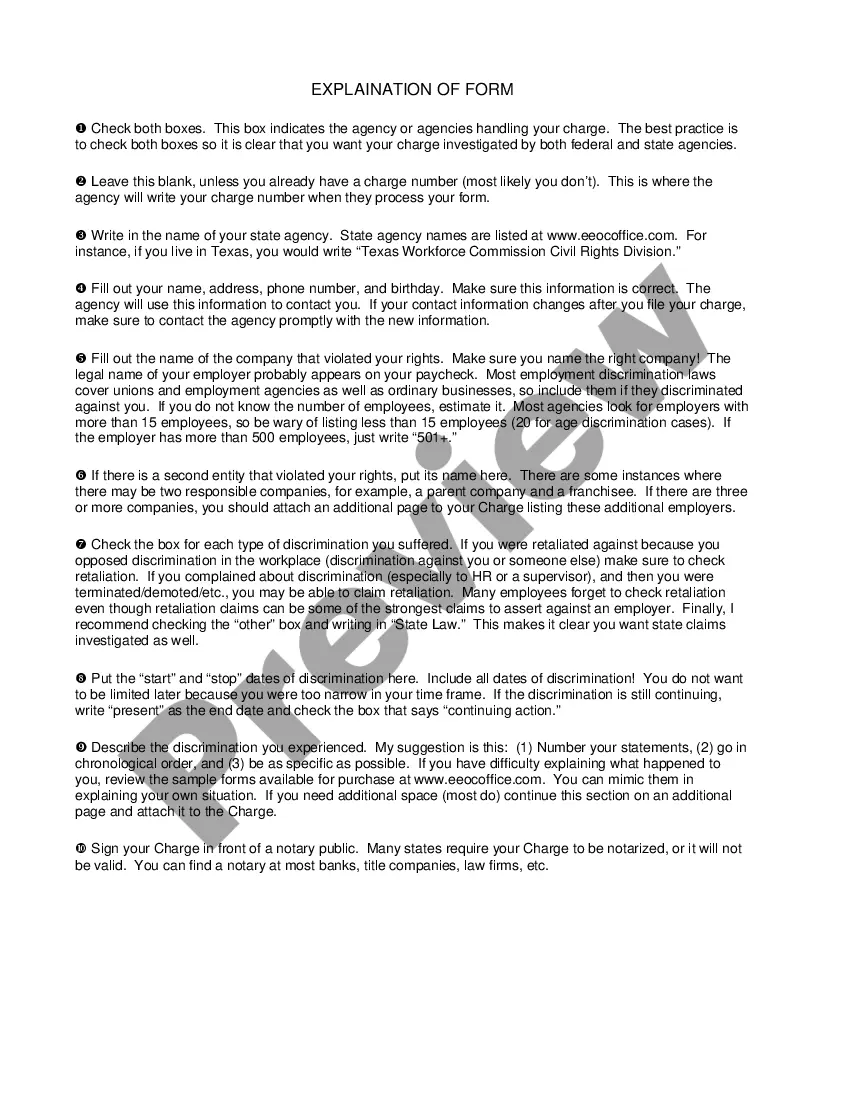
- Identify the appropriate agency: Check the boxes for the federal EEOC and any state agency.
- Enter your personal details: Fill in your name, address, phone number, and date of birth accurately.
- List the employer: Provide the name and address of the employer, labor organization, or agency that discriminated against you.
- Specify the type of discrimination: Check all applicable boxes indicating the basis of discrimination.
- Detail the incidents: Describe the discrimination you faced, including any relevant dates and circumstances.
- Complete the notarization: If required, sign the form in front of a notary public to validate your claim.
Is notarization required?
Yes, this form must be notarized to be legally valid in some states. To comply, you can utilize online notarization services that allow you to complete this process through secure video calls any time, ensuring convenience and legal equivalence without the need for travel.
Get your form ready online
Our built-in tools help you complete, sign, share, and store your documents in one place.
Make edits, fill in missing information, and update formatting in US Legal Forms—just like you would in MS Word.
Download a copy, print it, send it by email, or mail it via USPS—whatever works best for your next step.
Sign and collect signatures with our SignNow integration. Send to multiple recipients, set reminders, and more. Go Premium to unlock E-Sign.
If this form requires notarization, complete it online through a secure video call—no need to meet a notary in person or wait for an appointment.
We protect your documents and personal data by following strict security and privacy standards.

Make edits, fill in missing information, and update formatting in US Legal Forms—just like you would in MS Word.

Download a copy, print it, send it by email, or mail it via USPS—whatever works best for your next step.

Sign and collect signatures with our SignNow integration. Send to multiple recipients, set reminders, and more. Go Premium to unlock E-Sign.

If this form requires notarization, complete it online through a secure video call—no need to meet a notary in person or wait for an appointment.

We protect your documents and personal data by following strict security and privacy standards.
Common mistakes
- Failing to check the appropriate boxes indicating the agency or type of discrimination.
- Leaving out vital personal information, which may delay processing.
- Not including all related incidents in the description, which can limit the investigation.
- Neglecting to notarize the form when required by state law.
Why use this form online
- Convenient access: Download and complete the form at your own pace from anywhere.
- Editability: Easily update your information if necessary before submission.
- Guidance: Comprehensive instructions are typically included to assist in completion.
- Security: Using online platforms can ensure that your information is safely managed.
Looking for another form?

Form popularity
FAQ
Complain informally to your employer. Raise a grievance using your employer's grievance procedures. Make a claim to the Employment Tribunal.
A description of the events you believed to be discriminatory, and when they occurred; Why you believe you were discriminated against, such as because of your race, ethnicity, sex, age, disability, pregnancy, or other reason;
Identify exactly the kind of workplace harassment that took place. Write down the details about the harassment. Introduce yourself and your purpose. Present the facts of the harassment. Explain in great detail how you responded. Proffer a solution to the issue. Avoid using offensive language.
You can file a formal job discrimination complaint with the EEOC whenever you believe you are: Being treated unfairly on the job because of your race, color, religion, sex (including pregnancy, gender identity, and sexual orientation), national origin, disability, age (age 40 or older) or genetic information; or.
Answer. You don't have to hire a lawyer to file a charge of harassment with the Equal Employment Opportunity Commission (EEOC).If you want to file a lawsuit against your employer for harassment, you have to file a charge with the EEOC or a state agency first.
Review the charge notice carefully. Follow the directions on the EEOC charge notice. Consider EEOC mediation to resolve the charge quickly and confidentially, at no cost. Respond to requests for additional information from the EEOC, even if you believe that the charge is frivolous. Protect employees from retaliation.
Hire a Qualified Attorney. EEOC complaints do not necessarily have to result in court cases. Maintain Composure. Mediators handle sensitive issues. Prepare Relevant Documentation. Consider Reaching Out to Coworkers. Be as Professional as Possible.
When a charge is filed against an organization, the EEOC will notify the organization within 10 days.The EEOC has authority to investigate whether there is reasonable cause to believe discrimination occurred. In many cases, the organization may choose to resolve a charge through mediation or settlement.