Notice to Debt Collector - Misrepresenting Someone as an Attorney
What this document covers
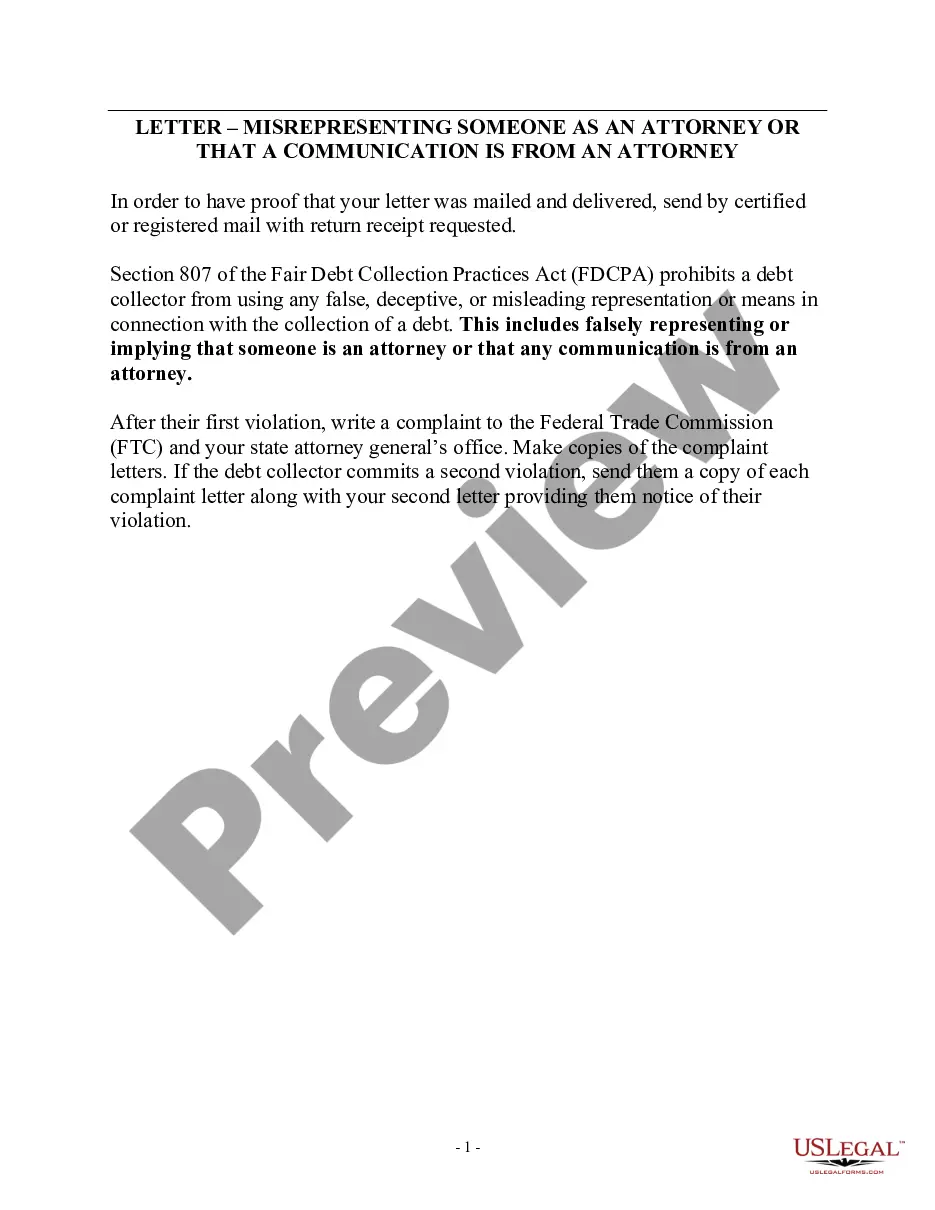
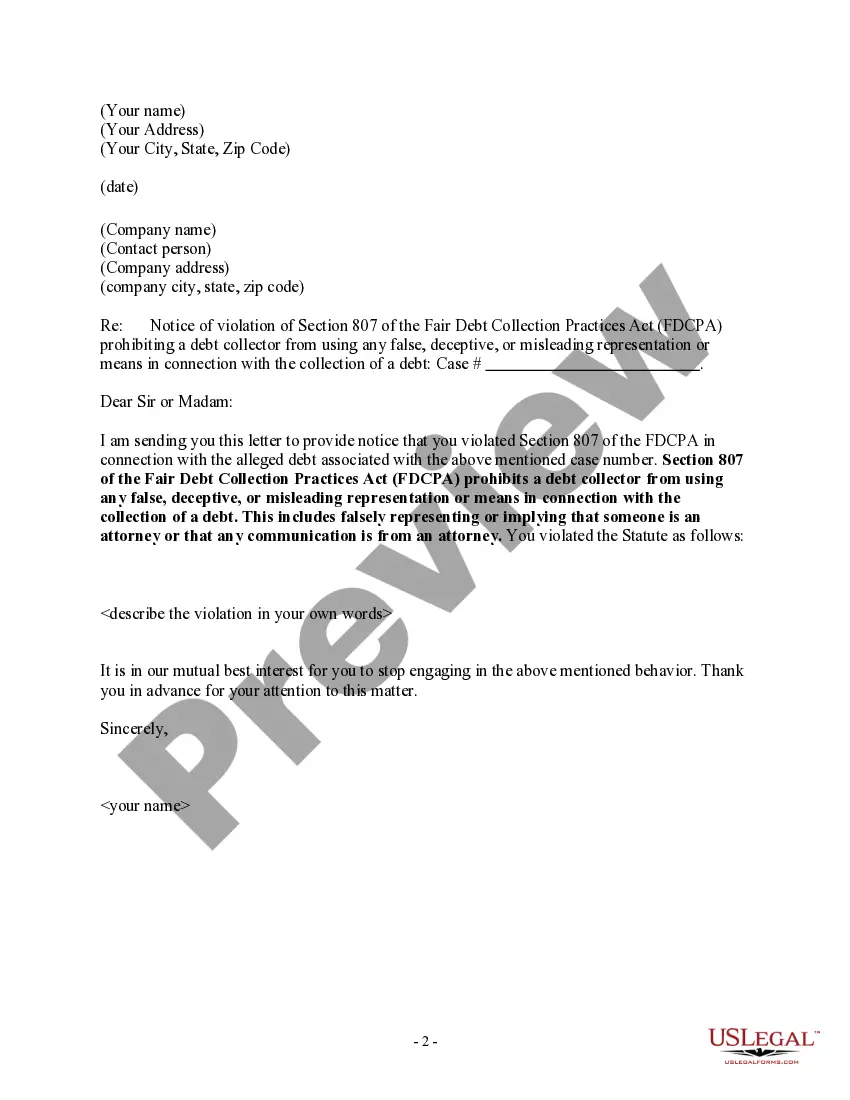
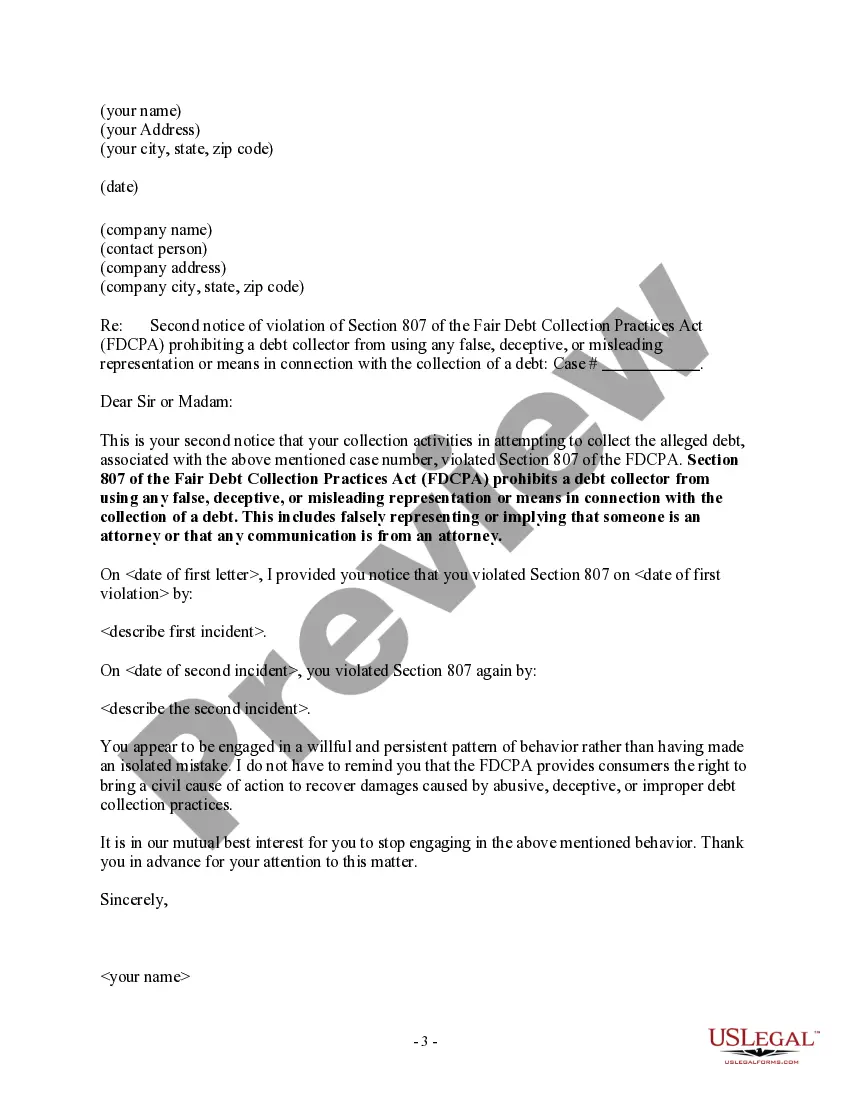
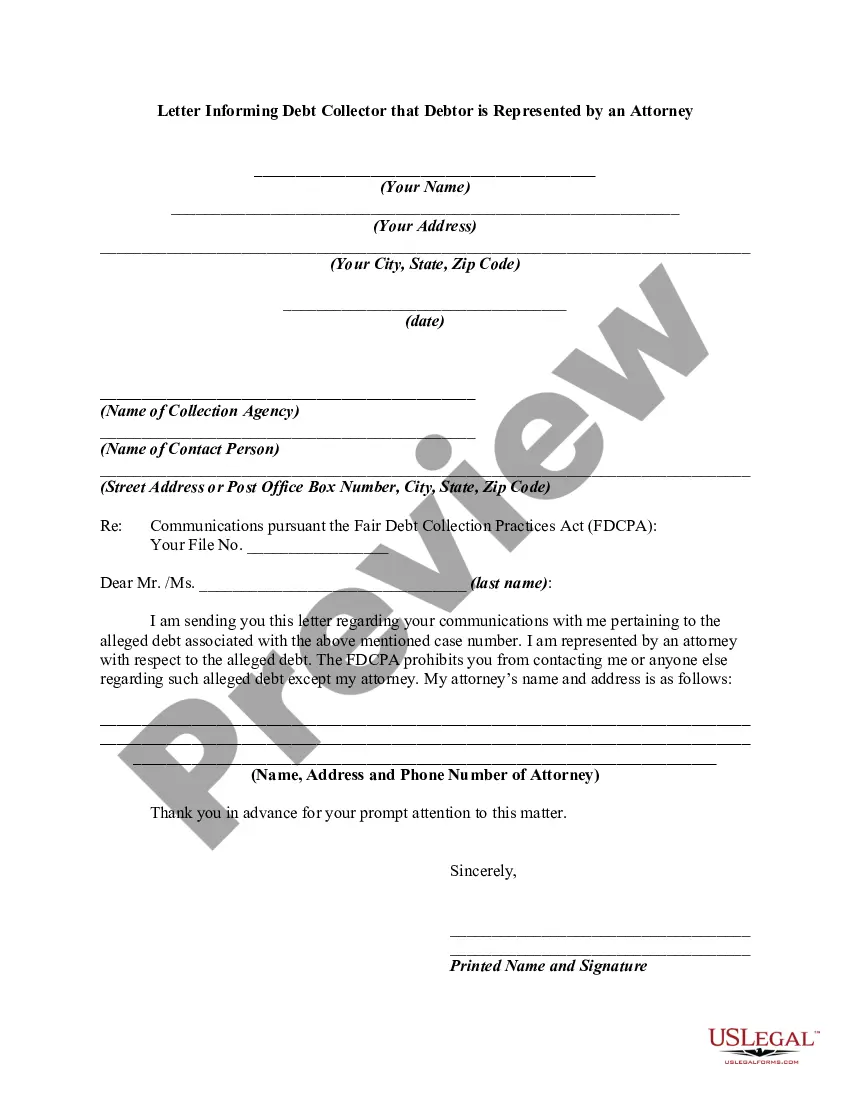
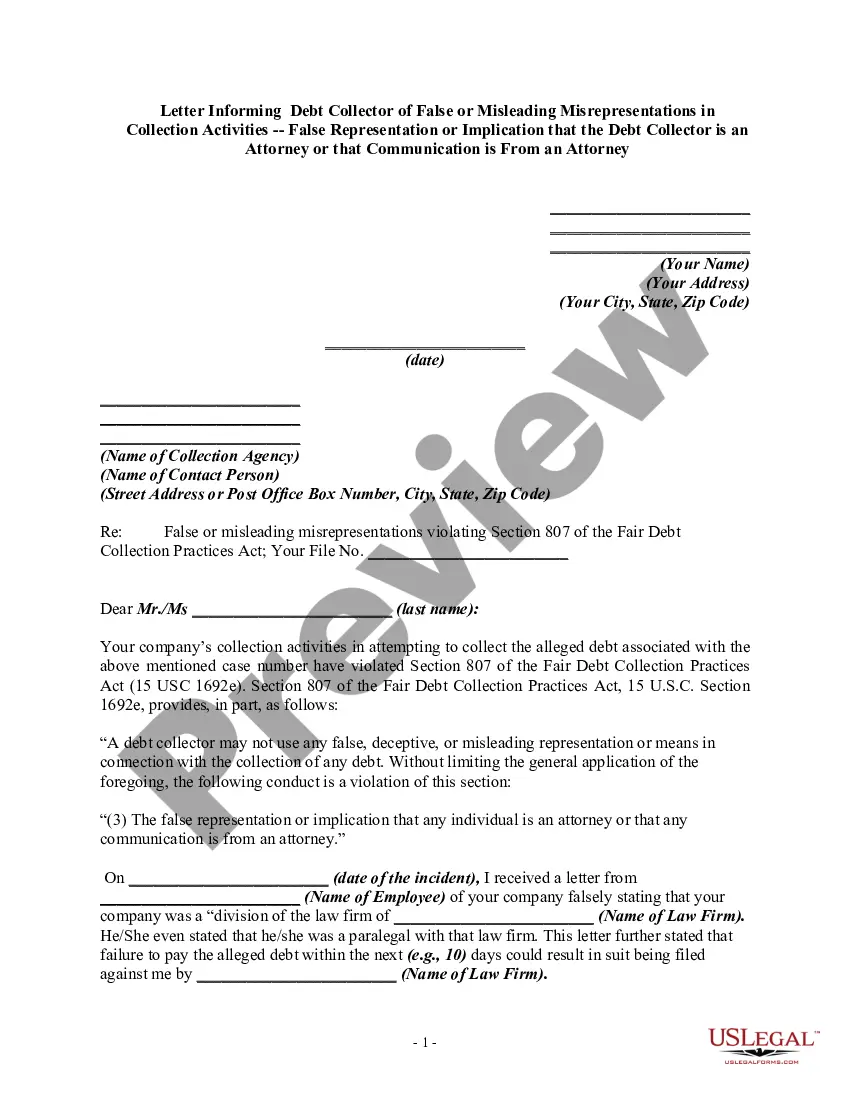
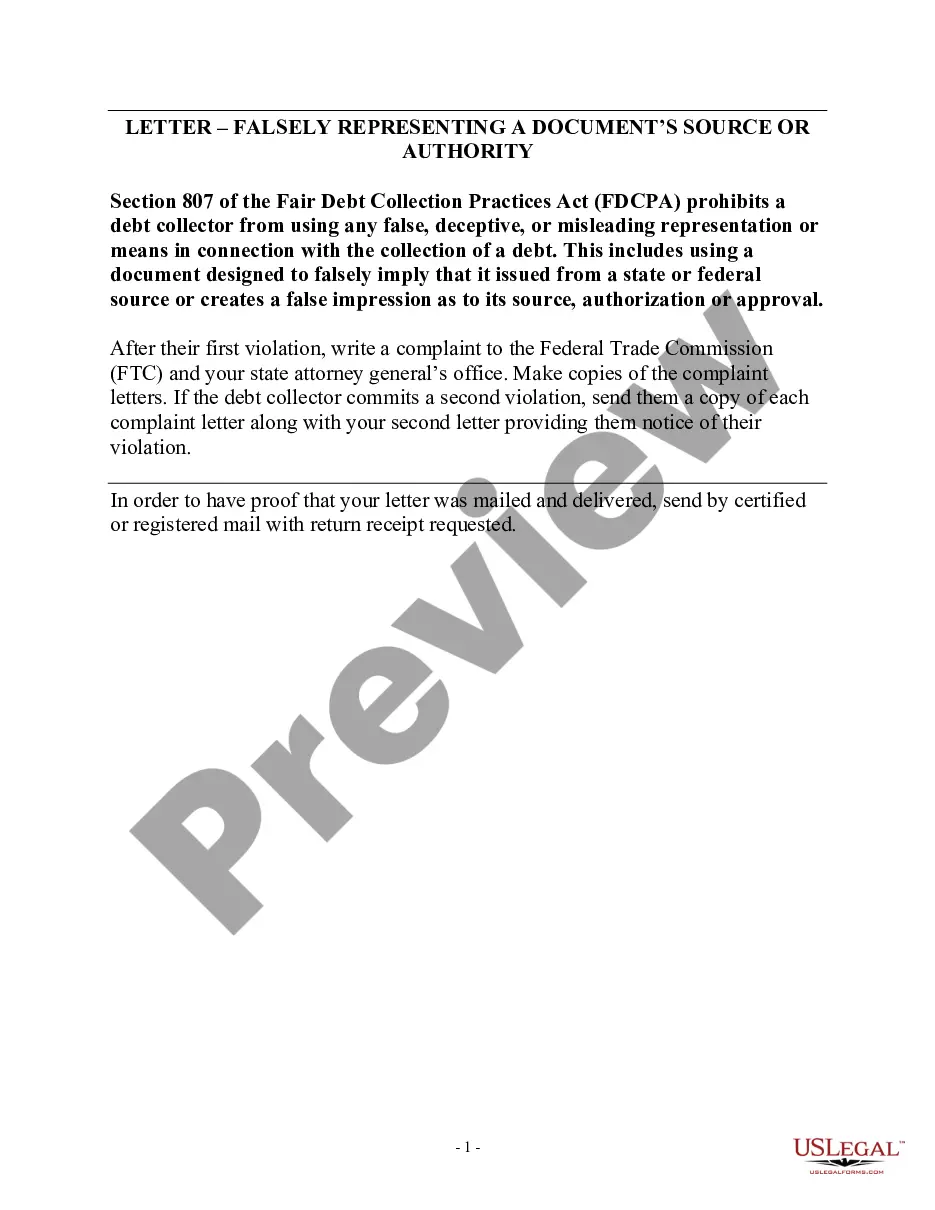
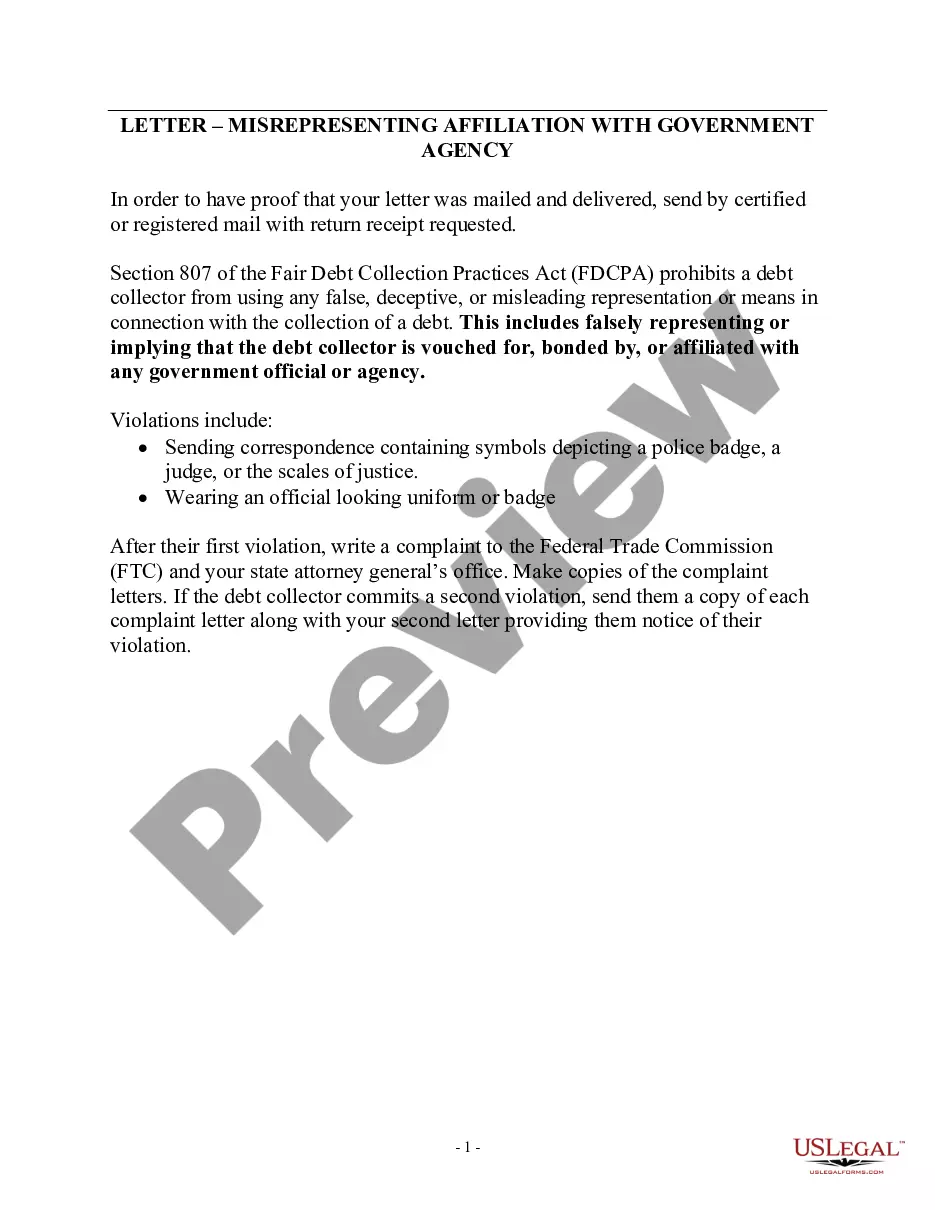
The Notice to Debt Collector - Misrepresenting Someone as an Attorney is a legal document used to formally inform a debt collector that they have violated the Fair Debt Collection Practices Act (FDCPA). This form aids in documenting instances where a debt collector falsely claims to be an attorney or uses misleading communication to collect a debt. By providing this notice, you increase the likelihood that the debt collector will comply with the FDCPA, protecting your rights as a consumer.
Main sections of this form
- Sender's information: Your name, address, and date.
- Recipient's information: Debt collector's name, contact person, and address.
- Notice details: A clear statement of the violation of Section 807 of the FDCPA.
- Description of the violation: A section for you to explain how the debt collector misrepresented their identity or communication.
- Request for compliance: A reminder to cease the misleading actions.
- Enclosures: A list of complaint letters sent to regulatory authorities, if applicable.
When to use this form
Use this form when you receive communication from a debt collector that violates your rights under the FDCPA. If the debt collector falsely presents themselves as an attorney or implies that any communication is from an attorney, it is crucial to notify them formally. This form is particularly useful if you have already experienced such misrepresentation and want to document this violation for potential further action.
Who can use this document
- Consumers who have been contacted by debt collectors using deceptive practices.
- Individuals who want to assert their rights under the FDCPA.
- Anyone who has received misleading claims regarding attorney involvement in their debt collection process.
Instructions for completing this form
- Enter your name and address at the top of the form.
- Provide the date of the letter.
- Fill in the debt collector's name and address, including a contact person if known.
- Clearly describe the nature of the violation you observed from the debt collector.
- Add your statement regarding the potential consequences if they continue their misleading practices.
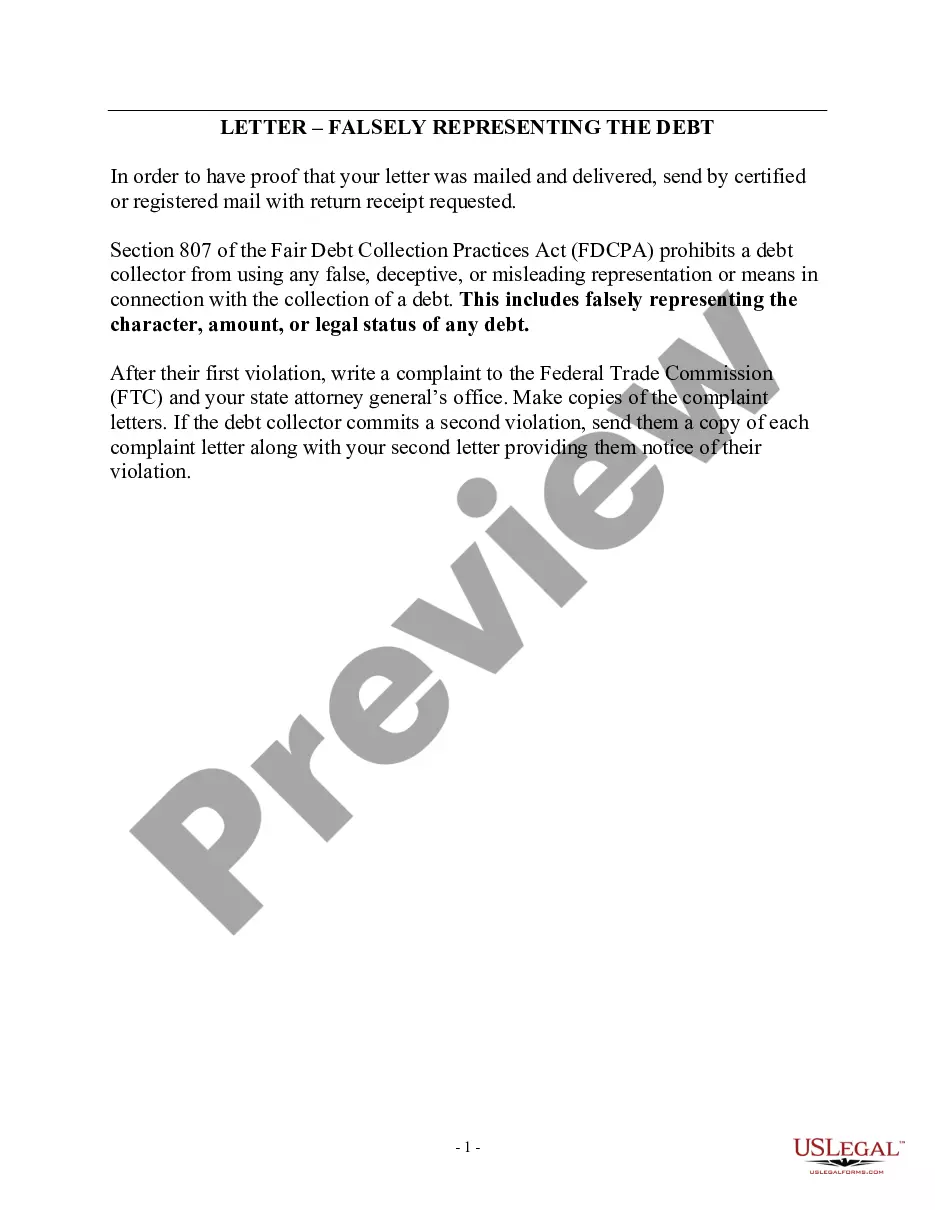
- Mail the notice via certified or registered mail to ensure proof of delivery.
Does this document require notarization?
This form usually doesn’t need to be notarized. However, local laws or specific transactions may require it. Our online notarization service, powered by Notarize, lets you complete it remotely through a secure video session, available 24/7.
Get your form ready online
Our built-in tools help you complete, sign, share, and store your documents in one place.
Make edits, fill in missing information, and update formatting in US Legal Forms—just like you would in MS Word.
Download a copy, print it, send it by email, or mail it via USPS—whatever works best for your next step.
Sign and collect signatures with our SignNow integration. Send to multiple recipients, set reminders, and more. Go Premium to unlock E-Sign.
If this form requires notarization, complete it online through a secure video call—no need to meet a notary in person or wait for an appointment.
We protect your documents and personal data by following strict security and privacy standards.

Make edits, fill in missing information, and update formatting in US Legal Forms—just like you would in MS Word.

Download a copy, print it, send it by email, or mail it via USPS—whatever works best for your next step.

Sign and collect signatures with our SignNow integration. Send to multiple recipients, set reminders, and more. Go Premium to unlock E-Sign.

If this form requires notarization, complete it online through a secure video call—no need to meet a notary in person or wait for an appointment.

We protect your documents and personal data by following strict security and privacy standards.
Common mistakes to avoid
- Failing to send the notice via certified mail, which may lead to a lack of proof.
- Not providing enough detail about the violation, making it harder to prove the infringement.
- Sending the form without making copies for personal records.
Benefits of completing this form online
- Easy access to customizable templates drafted by licensed attorneys.
- Quick downloading process that allows you to complete the form right away.
- Secure storage options for your completed documents and correspondence.
Legal use & context
- This form serves as evidence of your assertion of rights under the FDCPA.
- Using this notice may support your case if legal action is necessary.
- Timely notifications help in holding debt collectors accountable for their practices.
What to keep in mind
- The form serves to formally notify debt collectors of FDCPA violations.
- Compliance with the FDCPA is vital for all debt collectors.
- Properly documenting communications can protect consumers' rights.
Looking for another form?
Form popularity
FAQ
171307 (2019), the United States Supreme Court unanimously ruled that law firms acting on behalf of secured parties to foreclose on security interests in nonjudicial proceedings are not debt collectors and, thus, are exempt from liability under the Fair Debt Collection Practices Act (FDCPA).
Under the Fair Debt collection Practices Act (FDCPA), I have the right to request validation of the debt you say I owe you. I am requesting proof that I am indeed the party you are asking to pay this debt, and there is some contractual obligation that is binding on me to pay this debt.
Section 803(6) of the FDCPA defines a debt collector as any person who uses any instrumentality of interstate commerce or the mails in any business the principal purpose of which is the collection of any debts, or who regularly collects or attempts to collect, directly or indirectly, debts owed or due or asserted to
Under the FDCPA, a debt collector cannot threaten to sue you to force faster payment of a debt. More often than not, when a collection agent or lawyer threatens to sue, it is to frighten you into making larger payments or establishing an impractical and financially infeasible payment schedule.
The Debt Collection Attorney's Office Will Then Probably Sue You In State Court. Once your debt reaches the debt collection law firm, the attorney will usually give you one last chance to settle the debt to avoid a lawsuit. If attempts at settlement fail, the credit card company's attorney files a lawsuit.
Like other businesses and professions, attorneys can take steps to collect accounts receivable. However, the lawyer's unique role as fiduciary and legal advisor subject him to more limitations on their conduct than other professionals.
Courts routinely find that attorneys and law firms qualify as debt collectors under the FDCPA when it is alleged that they regularly perform debt collection activities for clients.
Debt validation is your federal right granted under the Fair Debt Collection Practices Act (FDCPA). To request debt validation, you must send a written request to the debt collector within 30 days of being contacted by the collection agency.