Notice of Violation of Fair Debt Act - Improper Contact at Work
Overview of this form
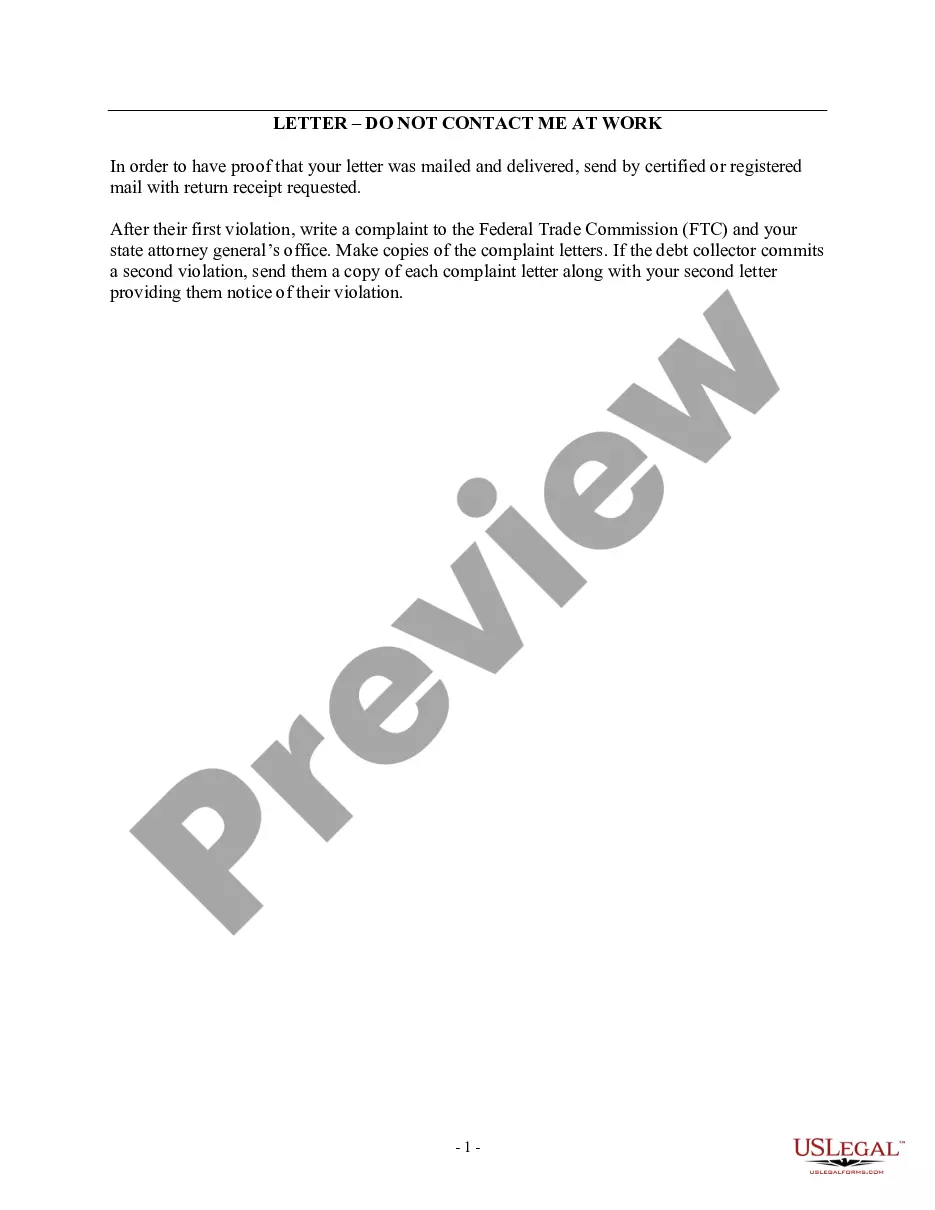
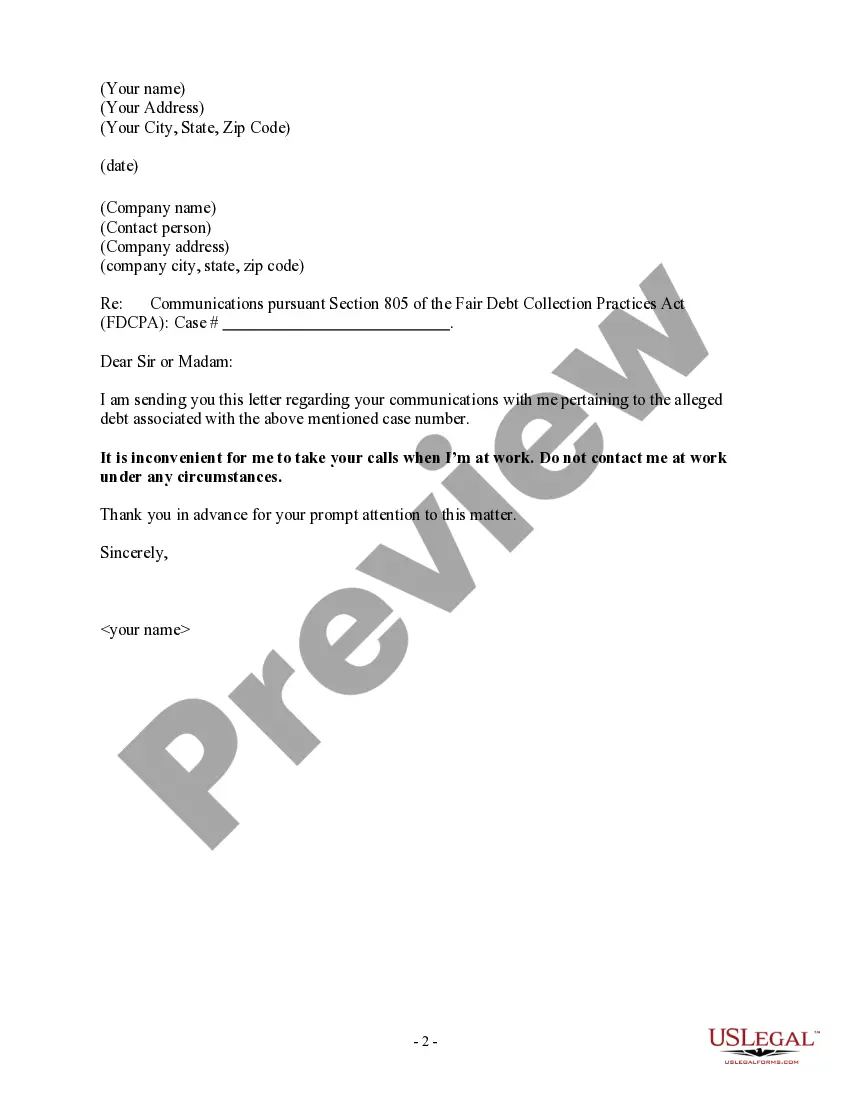
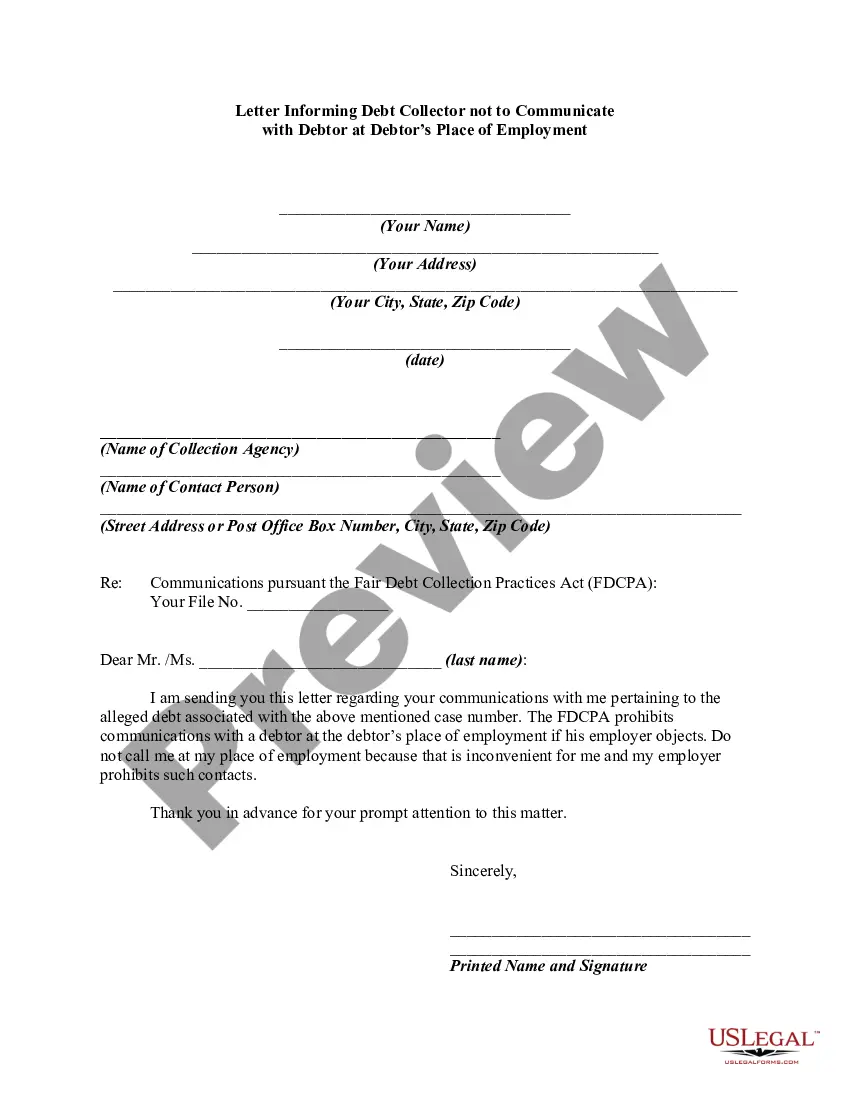
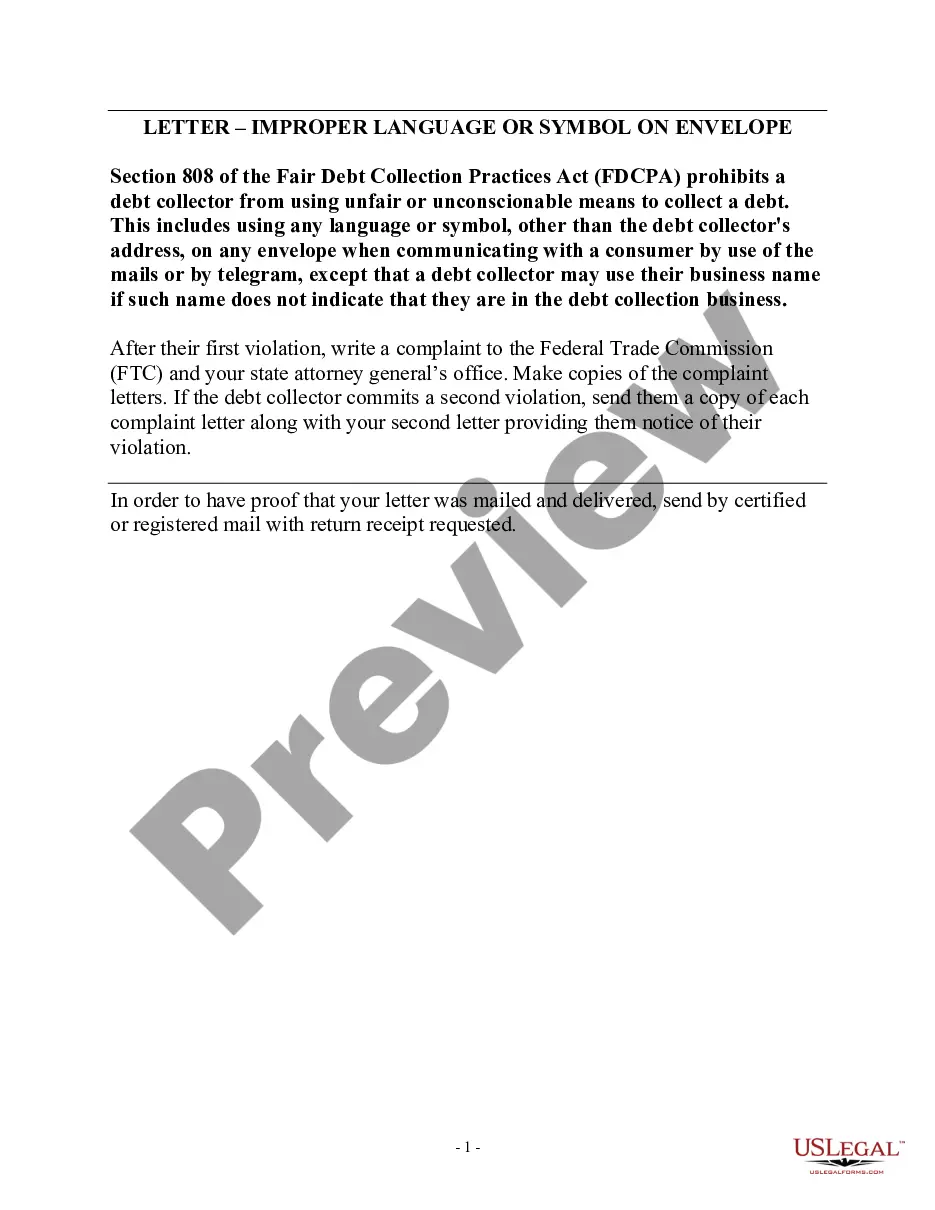
The Notice of Violation of Fair Debt Act - Improper Contact at Work is a legal document designed to help consumers protect themselves from unfair debt collection practices. This form allows debtors to officially notify debt collectors that they should not contact them at their workplace. It serves as evidence of noncompliance with the Fair Debt Collection Practices Act (FDCPA), specifically regarding improper contact at work. Using this form helps ensure your rights are upheld and provides a clear record of communication.
Key components of this form
- Your contact information, including name and address
- The debt collector's contact information, including company and representative
- A reference case number associated with the alleged debt
- A statement requesting no communication at work
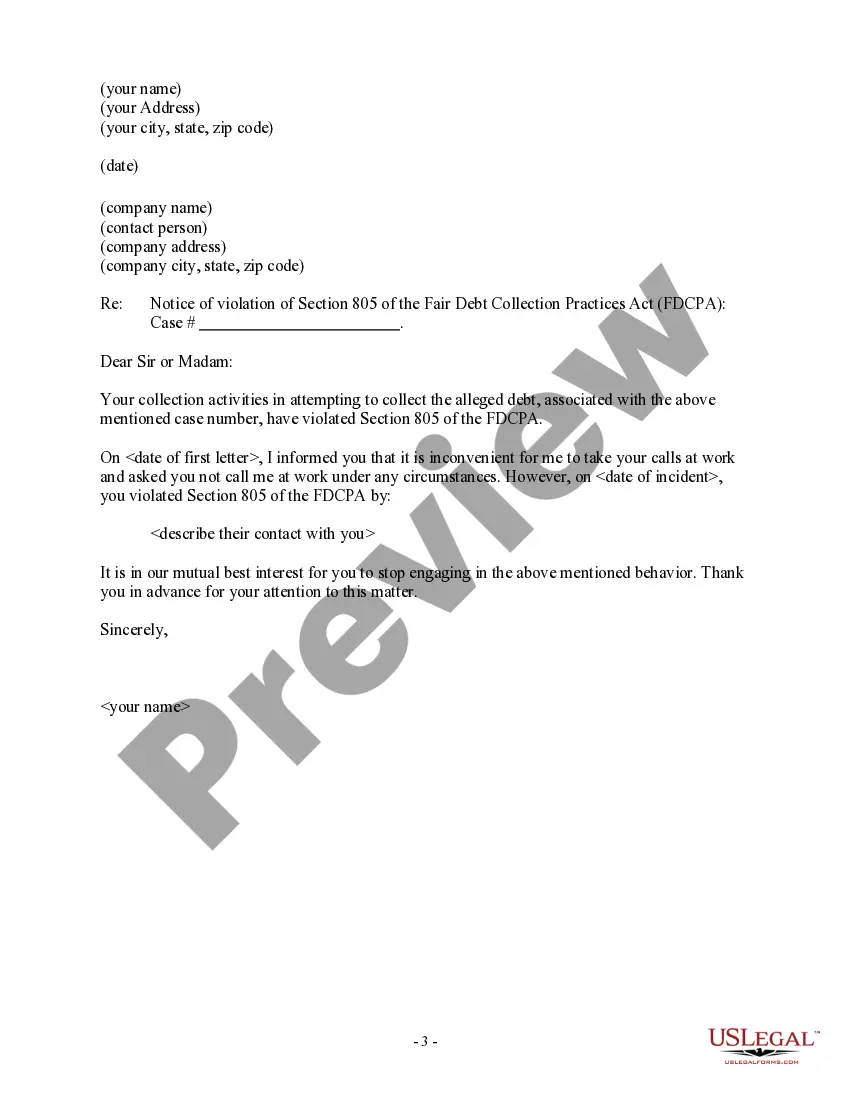
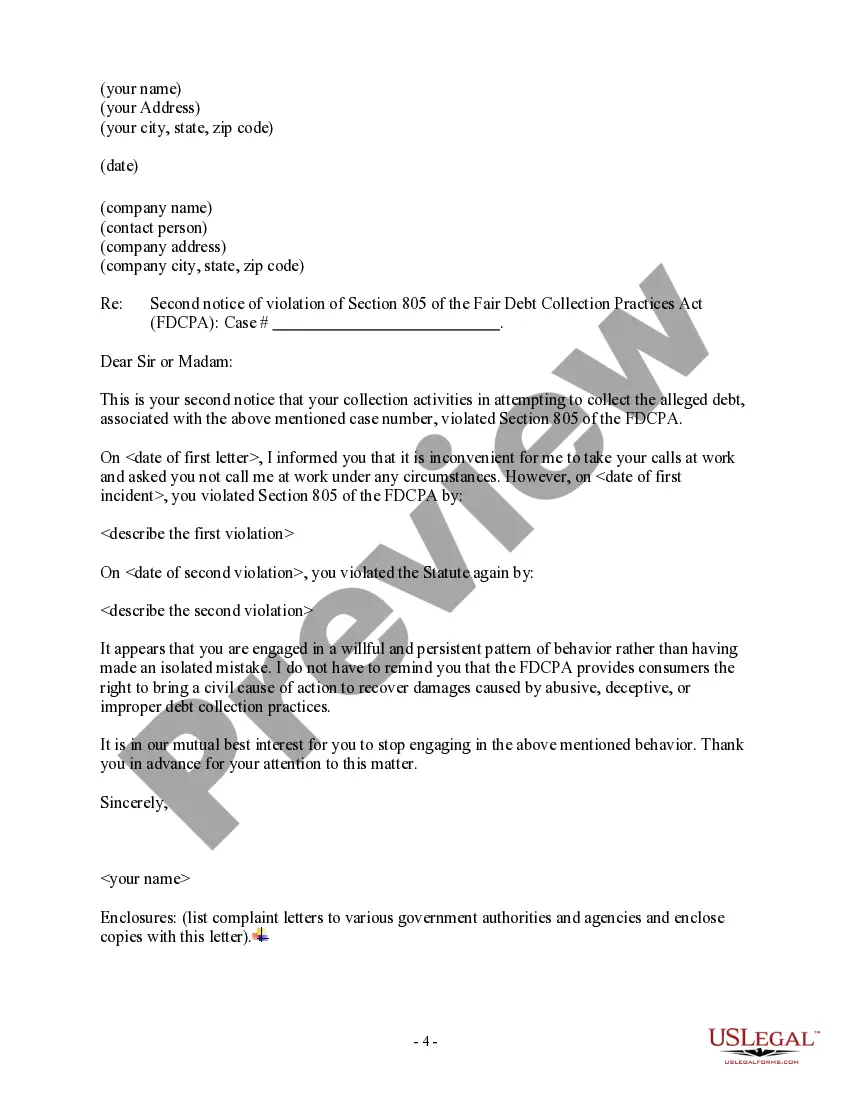
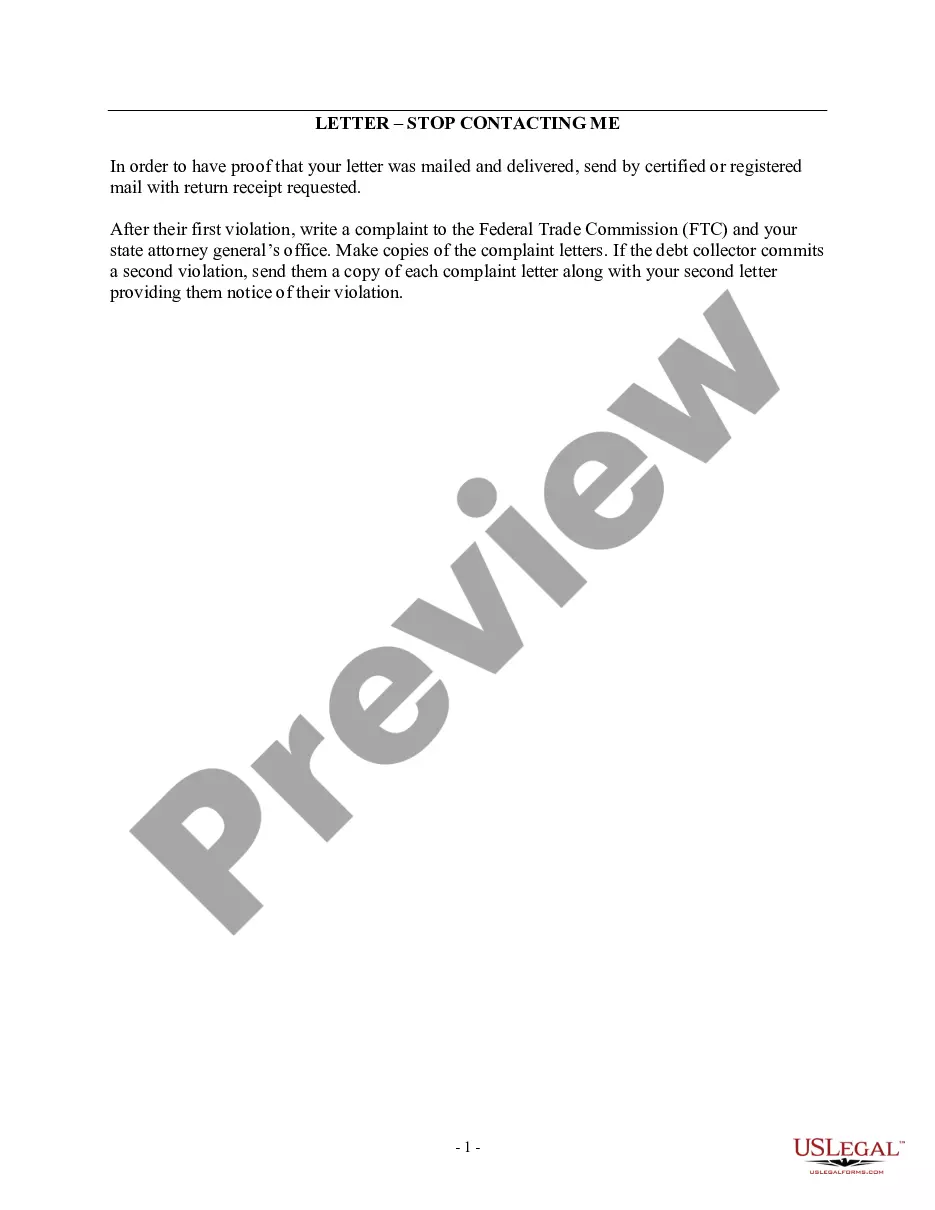
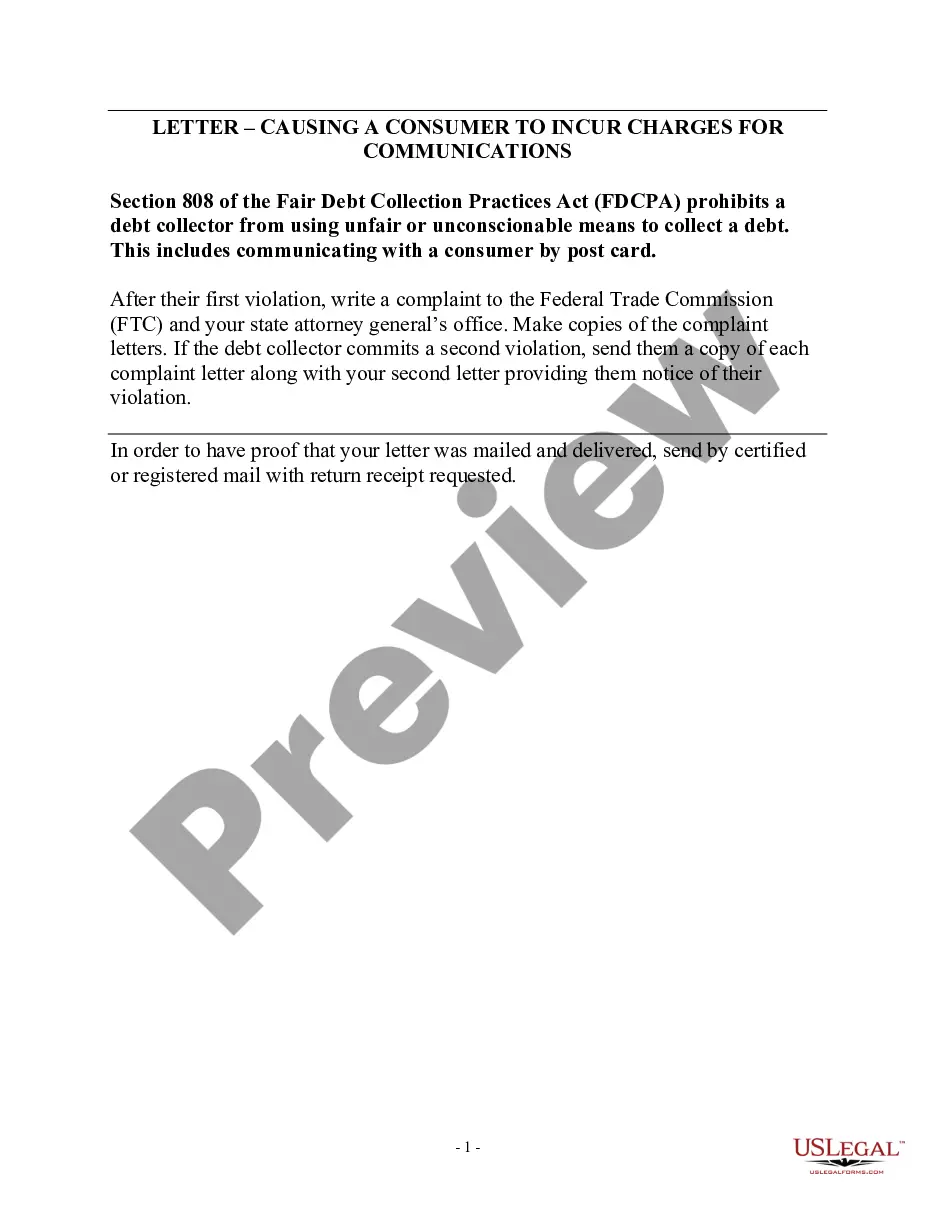
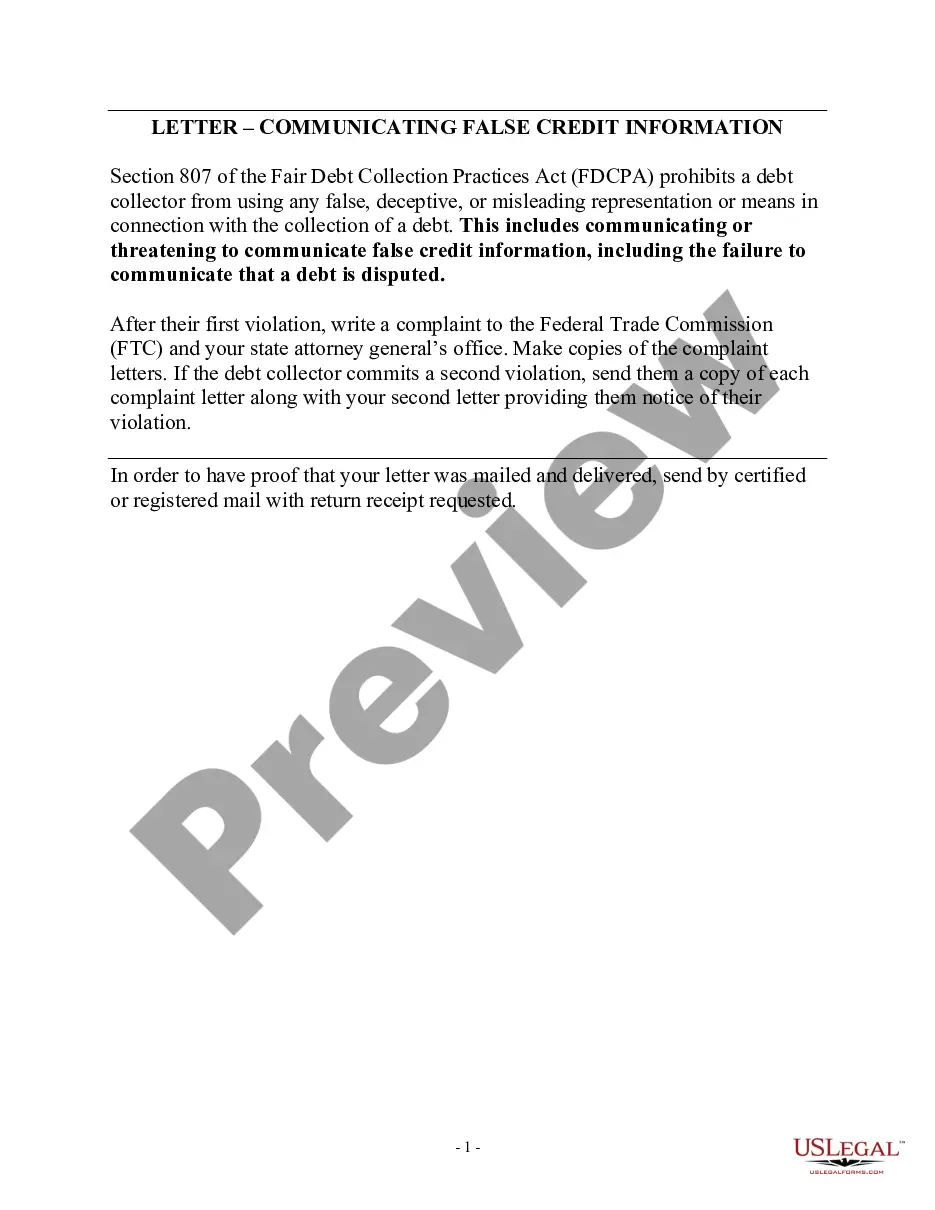
- Documentation of previous violations and complaints lodged
- Space for your signature and date
When to use this document
This form should be used when a debt collector contacts you at your workplace despite your prior request to cease such communication. It is particularly relevant if you have previously informed the collector that receiving calls at work is inconvenient or inappropriate. Using this form helps document the violation and can be an important step if you decide to escalate the matter to regulatory authorities.
Who this form is for
- Individuals who are being contacted by debt collectors at their place of employment
- Debtors who have already requested that collectors refrain from contacting them at work
- Consumers seeking to protect their rights under the FDCPA
- Anyone who wishes to formally document violations of debt collection laws
How to complete this form
- Fill in your name and address at the top of the form.
- Include the debt collector's name and address in the designated area.
- Reference the case number associated with the alleged debt.
- Clearly state your request for them to refrain from contacting you at your workplace.
- Add details of any previous violations of this request and indicate how you have lodged complaints.
- Sign and date the form before sending it via certified mail.
Notarization guidance
In most cases, this form does not require notarization. However, some jurisdictions or signing circumstances might. US Legal Forms offers online notarization powered by Notarize, accessible 24/7 for a quick, remote process.
Get your form ready online
Our built-in tools help you complete, sign, share, and store your documents in one place.
Make edits, fill in missing information, and update formatting in US Legal Forms—just like you would in MS Word.
Download a copy, print it, send it by email, or mail it via USPS—whatever works best for your next step.
Sign and collect signatures with our SignNow integration. Send to multiple recipients, set reminders, and more. Go Premium to unlock E-Sign.
If this form requires notarization, complete it online through a secure video call—no need to meet a notary in person or wait for an appointment.
We protect your documents and personal data by following strict security and privacy standards.

Make edits, fill in missing information, and update formatting in US Legal Forms—just like you would in MS Word.

Download a copy, print it, send it by email, or mail it via USPS—whatever works best for your next step.

Sign and collect signatures with our SignNow integration. Send to multiple recipients, set reminders, and more. Go Premium to unlock E-Sign.

If this form requires notarization, complete it online through a secure video call—no need to meet a notary in person or wait for an appointment.

We protect your documents and personal data by following strict security and privacy standards.
Typical mistakes to avoid
- Failing to include complete contact information for both parties.
- Not requesting a return receipt when sending the form.
- Forgetting to keep copies of all correspondence for your records.
- Providing vague descriptions of violations rather than specific incidents.
Benefits of using this form online
- Convenience of immediate access to a legally compliant template.
- Editability to customize the form according to your specific situation.
- Reliable guidance that aligns with federal debt collection regulations.
Legal use & context
- This form is a vital tool for enforcing your rights under the FDCPA.
- It documents your request not to be contacted at work, which can strengthen future legal claims.
- Using this form can help prevent further violations from occurring by establishing a clear record of communication.
Key takeaways
- The Notice of Violation of Fair Debt Act is essential for protecting consumers from unwanted debt collection practices at work.
- Be sure to keep thorough records of any communications with debt collectors.
- Using this form helps ensure compliance with federal laws governing debt collection.
Looking for another form?



Form popularity
FAQ
An employer commits an HR hiring violation if the interview questions can be deemed to have led to a prejudiced decision. For instance, if an interviewee can prove they were denied a position because of their race, marital status, gender, or religion, this can be considered a hiring violation.
Right to a safe workplace free of dangerous conditions, toxic substances, and other potential safety hazards; Right to be free from retaliation for filing a claim or complaint against an employer (these are sometimes called "whistleblower" rights); and. Right to fair wages for work performed.
Higher salaries and compensation. Surprise! Benefits programs. This is another very common and understandable concern of employees. Pay increase guidelines. Favoritism. Pay equity. The Human Resource Department. Excessive management. Inadequate communication.
Employee rights are put into place by the federal government to protect employees. States also have labor regulations that employers must follow.Common rights violations are discrimination, wage miscalculations, sexual harassment and whistleblowing.
An employer commits an HR hiring violation if the interview questions can be deemed to have led to a prejudiced decision. For instance, if an interviewee can prove they were denied a position because of their race, marital status, gender, or religion, this can be considered a hiring violation.
Workplace Code-of-Conduct Violations These can cover behaviors that lead to sexual harassment or discrimination, damage the company's reputation with its external stakeholders, include physical threats or intimidation, or decrease office morale.
Common Workplace Violations. Employee Theft And Assault Are The Biggest Disciplinary Offenses. Disciplining Janitors For Excessive Absenteeism. Employee Discipline For Intoxication And Horseplay. Disciplining Janitors For Harassment In The Workplace.