Notice of Violation of Fair Debt Act - Letter To The Federal Trade Commission
What this document covers
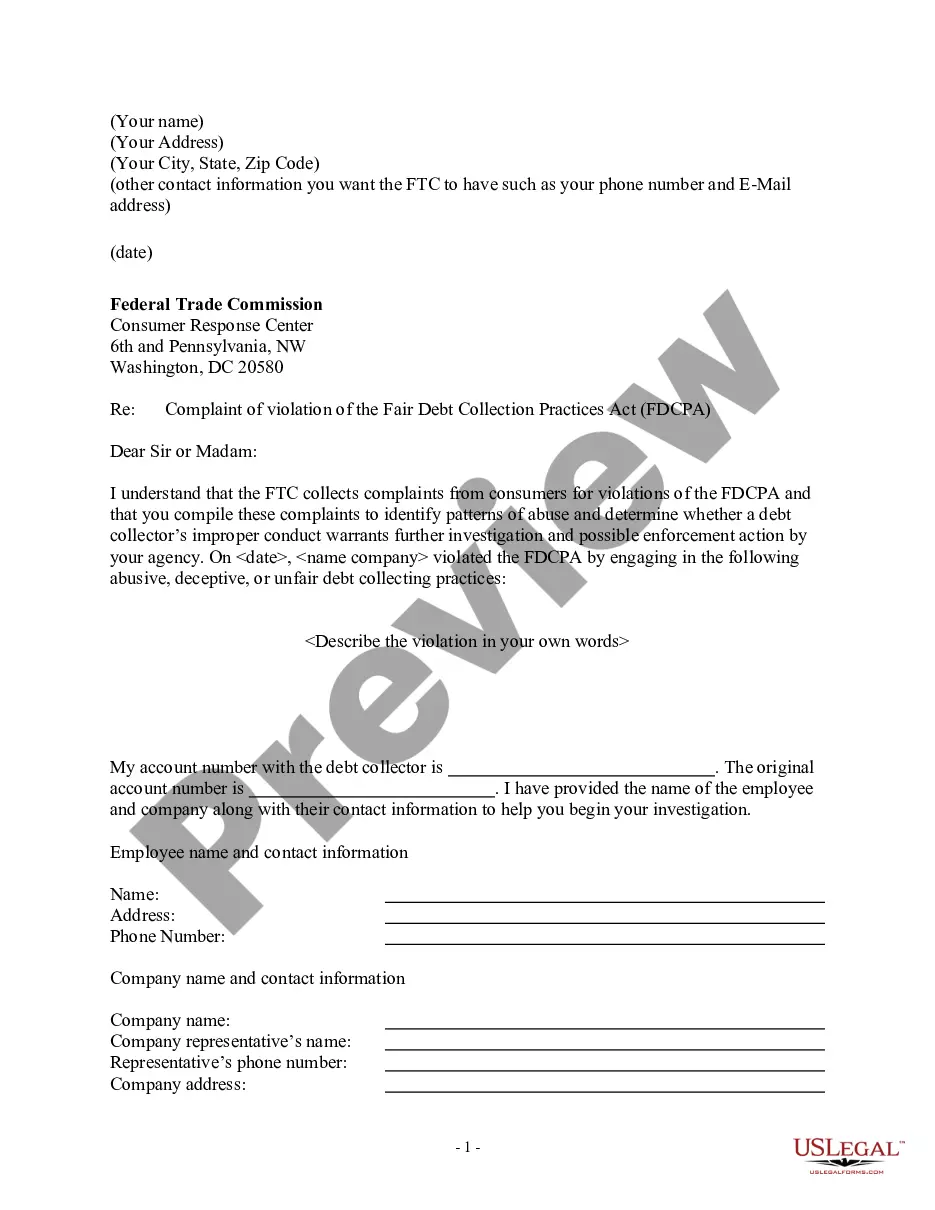
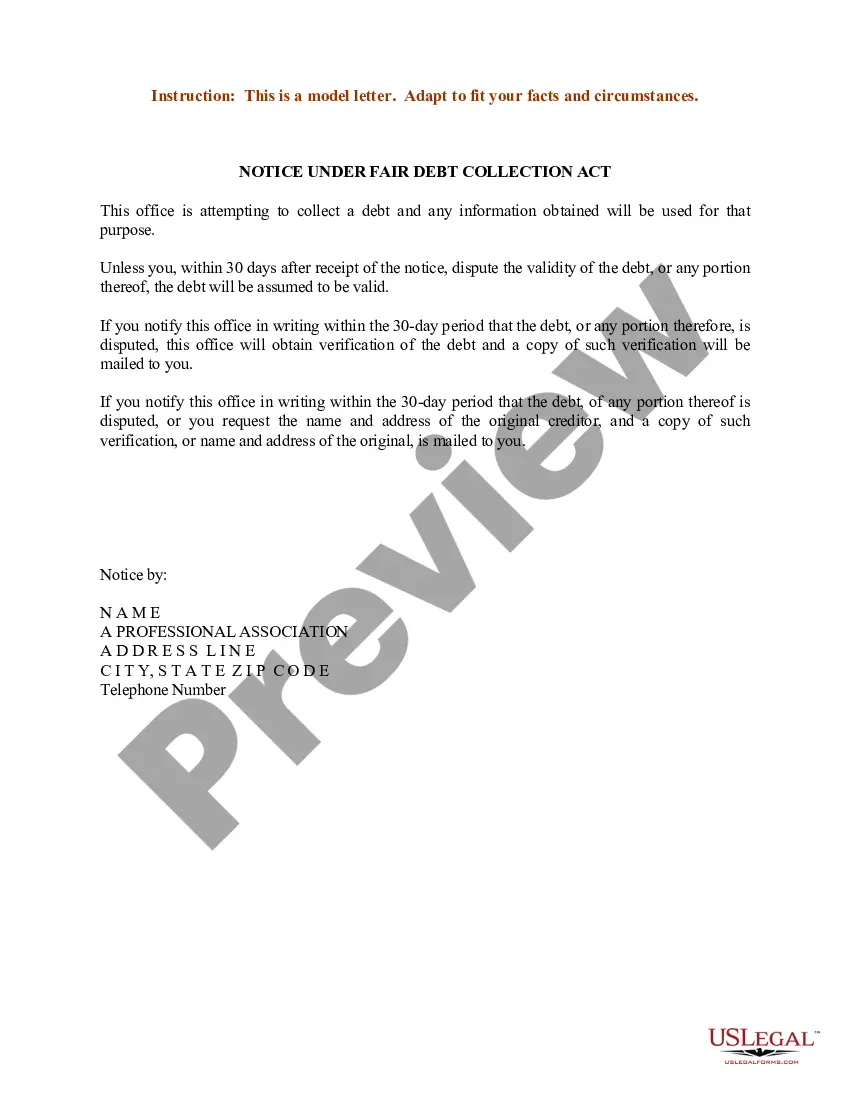
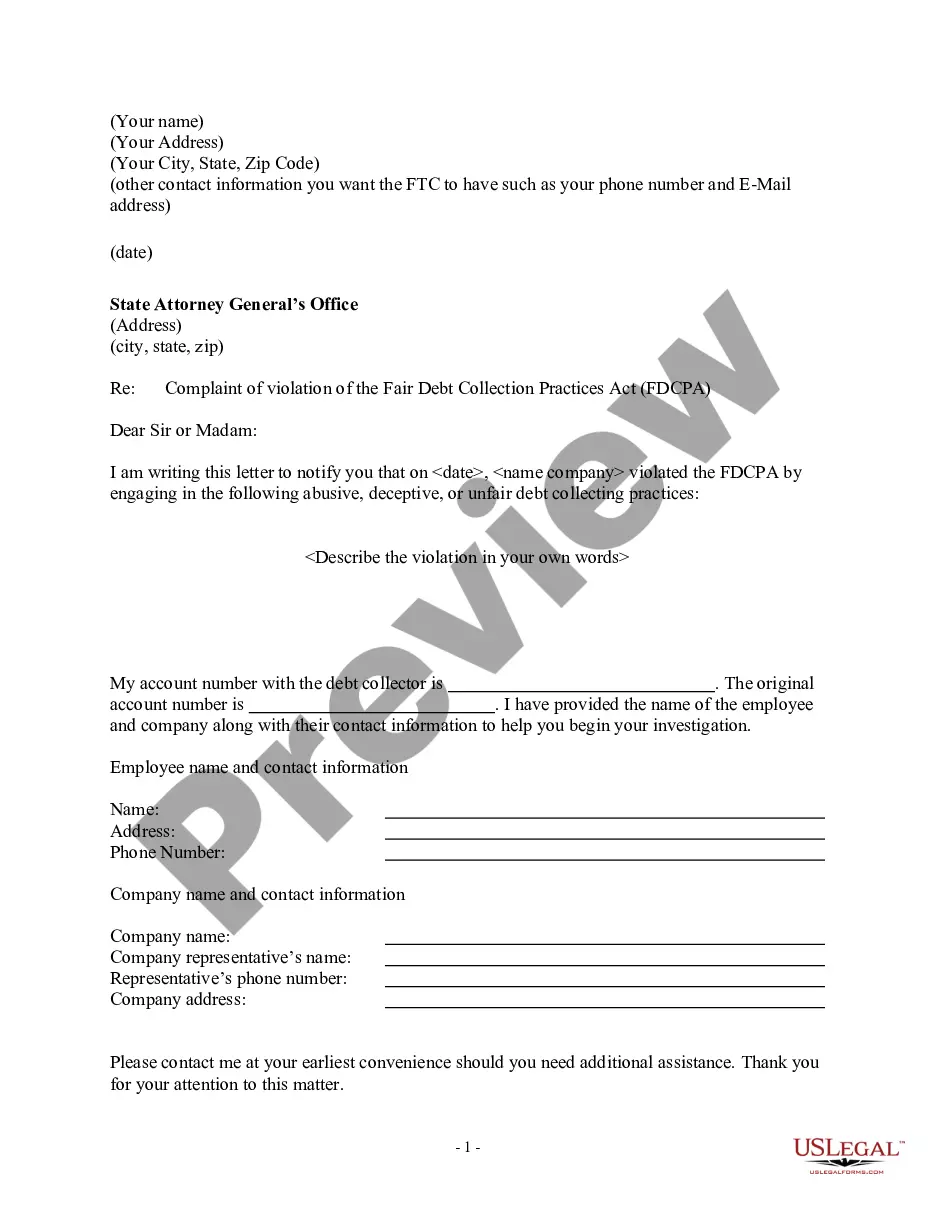
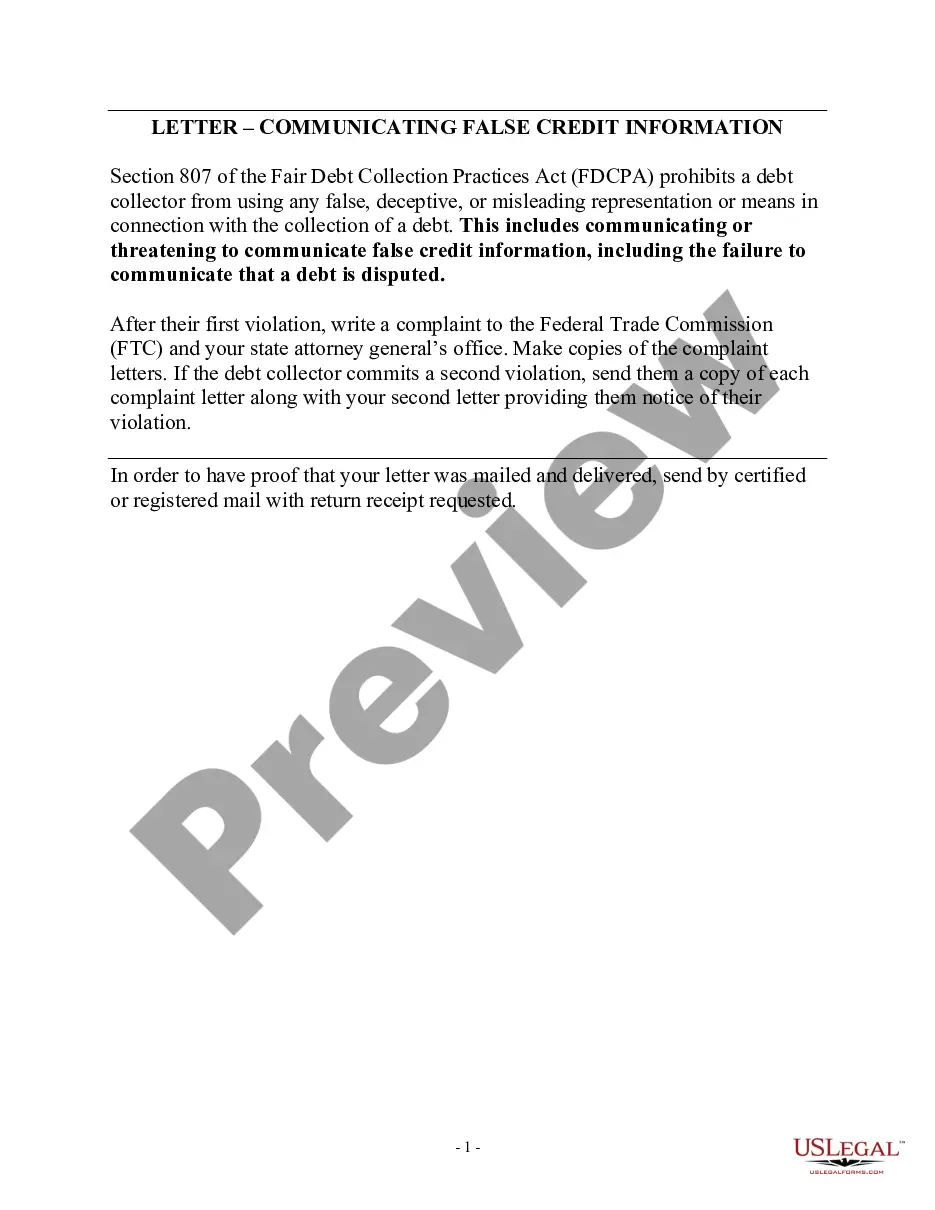
The Notice of Violation of Fair Debt Act - Letter to the Federal Trade Commission is a formal complaint form that debtors can use when they experience unfair collection practices. This document is specifically designed to notify the Federal Trade Commission (FTC) of violations of the Fair Debt Collection Practices Act (FDCPA). It serves to initiate an investigation into abusive, deceptive, or unfair practices used by debt collectors. Unlike other debt collection forms, this one is uniquely tailored to report serious infractions directly to a federal authority.
Main sections of this form
- Your contact information: Include your address, phone number, and email.
- Date of the letter: The date you are sending the complaint.
- FTC contact information: The address of the Federal Trade Commission.
- Description of the violation: Detailed description of the abusive practices encountered.
- Account information: Your account number relating to the debt collector.
- Details of the debt collector: Name and contact information of the employee and company involved.
- Enclosures: Any additional documents you are attaching to support your case.
Common use cases
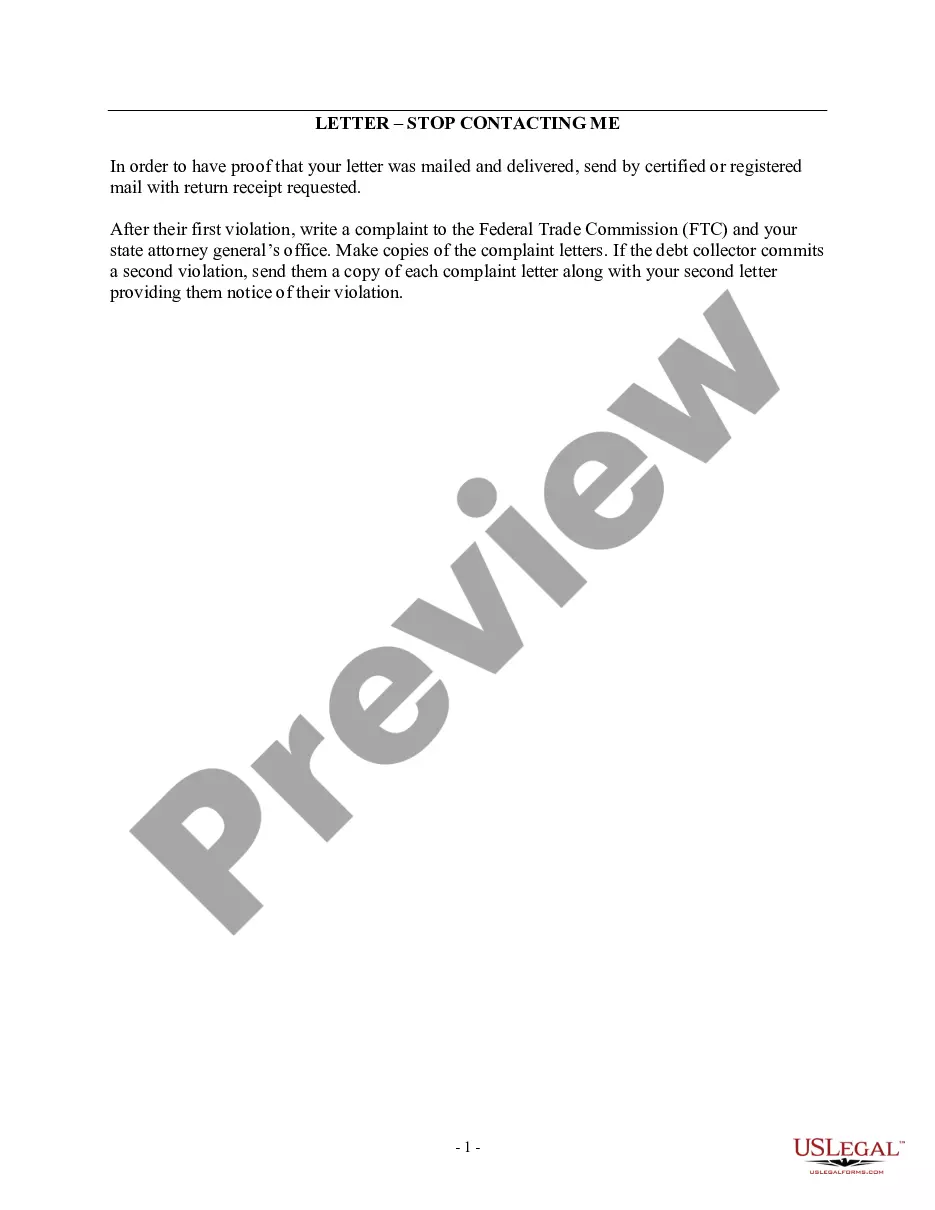
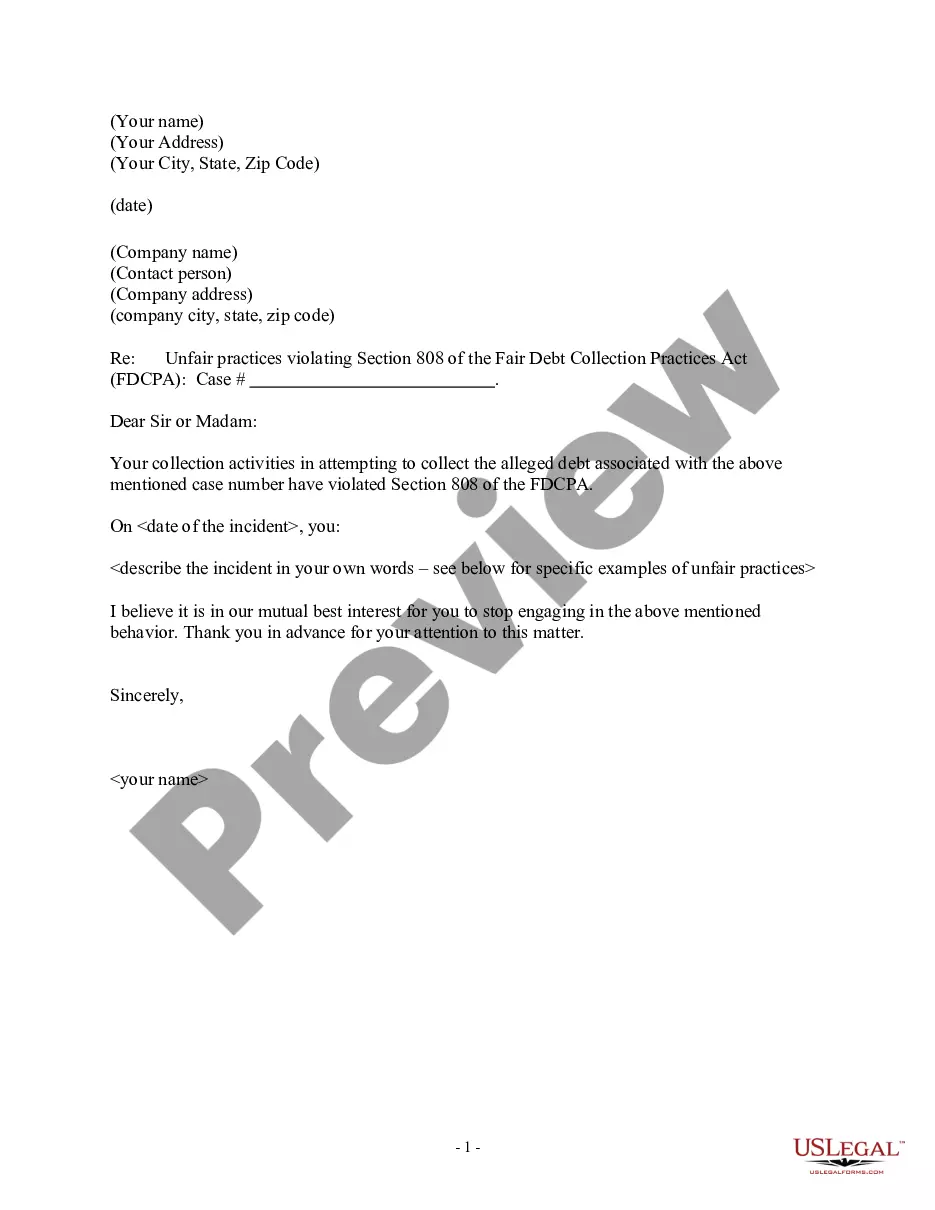
This form should be used when a debtor believes that a debt collector has violated the FDCPA. Situations may include instances of harassment, false representations, or threats. If you have experienced deceptive practices or unfair treatment concerning the collection of debt, submitting this Notice of Violation can help ensure that your complaint is formally registered with the FTC.
Who can use this document
- Consumers who have been contacted by a debt collector and have faced unfair practices.
- Individuals who wish to formally report violations of the Fair Debt Collection Practices Act.
- Debtors needing to document their experiences for potential legal follow-up.
How to complete this form
- Begin by entering your contact information at the top of the letter.
- Include the date you are sending the complaint.
- Address the letter to the Federal Trade Commission using the provided address.
- Clearly describe the specific violation you experienced.
- Provide your account number with the debt collector and any relevant details.
- Sign and date the letter before sending it, and save a copy for your records.
Is notarization required?
Notarization is generally not required for this form. However, certain states or situations might demand it. You can complete notarization online through US Legal Forms, powered by Notarize, using a verified video call available anytime.
Get your form ready online
Our built-in tools help you complete, sign, share, and store your documents in one place.
Make edits, fill in missing information, and update formatting in US Legal Forms—just like you would in MS Word.
Download a copy, print it, send it by email, or mail it via USPS—whatever works best for your next step.
Sign and collect signatures with our SignNow integration. Send to multiple recipients, set reminders, and more. Go Premium to unlock E-Sign.
If this form requires notarization, complete it online through a secure video call—no need to meet a notary in person or wait for an appointment.
We protect your documents and personal data by following strict security and privacy standards.

Make edits, fill in missing information, and update formatting in US Legal Forms—just like you would in MS Word.

Download a copy, print it, send it by email, or mail it via USPS—whatever works best for your next step.

Sign and collect signatures with our SignNow integration. Send to multiple recipients, set reminders, and more. Go Premium to unlock E-Sign.

If this form requires notarization, complete it online through a secure video call—no need to meet a notary in person or wait for an appointment.

We protect your documents and personal data by following strict security and privacy standards.
Avoid these common issues
- Failing to provide detailed descriptions of violations can weaken your complaint.
- Not including your contact information may result in a lack of follow-up from the FTC.
- Neglecting to save a copy of the letter can lead to a lack of documentation for future reference.
Advantages of online completion
- Immediate access to a professionally drafted form ensures legal accuracy.
- Downloadable formats like Word and Rich Text allow for easy customization.
- The ability to complete and file digitally streamlines the complaint process.
Looking for another form?




Form popularity
FAQ
Debt collectors must be truthful The Fair Debt Collection Practices Act states that debt collectors cannot use any false, deceptive or misleading representation to collect the debt. Along with other restrictions, debt collectors cannot misrepresent: The amount of the debt. Whether it's past the statute of limitations.
You're protected from harassing or abusive practices The Fair Debt Collection Practices Act prohibits debt collectors from using any harassing or abusive practices in an attempt to collect the debt.Along with other restrictions, debt collectors cannot: Use profane language. Threaten or use violence.
Fair Debt Collection Practices Act (FDCPA) Validation Letter The Fair Debt Collection Practices Act (FDCPA) is a federal law that protects consumers from abusive collection practices by debt collectors and collection agencies.
When a debt collector calls, it's important to know your rights and what you need to do. The FTC enforces the Fair Debt Collection Practices Act (FDCPA), which makes it illegal for debt collectors to use abusive, unfair, or deceptive practices when they collect debts.
Harassment of the debtor by the creditor More than 40 percent of all reported FDCPA violations involved incessant phone calls in an attempt to harass the debtor.
In the letter, reference the date of the initial contact and the method, for example, "a phone call received from your agency on April 25, 2019." You also need to provide a statement that you're requesting validation of the debt. Do not admit to owing the debt or make any reference to payment.
It is the purpose of this subchapter to eliminate abusive debt collection practices by debt collectors, to insure that those debt collectors who refrain from using abusive debt collection practices are not competitively disadvantaged, and to promote consistent State action to protect consumers against debt collection
Protects against harassment, including excessive phone calls, abusive language and threats of violence, harm or arrest. Allows consumers to seek proof that they owe the money the debt collector wants.
If a debt collector violates the FDCPA, you may sue that collector in state or federal court. You can even sue in small claims court. You must do this within one year from the date on which the violation occurred.The court might also order the debt collector to stop engaging in certain collection activities.