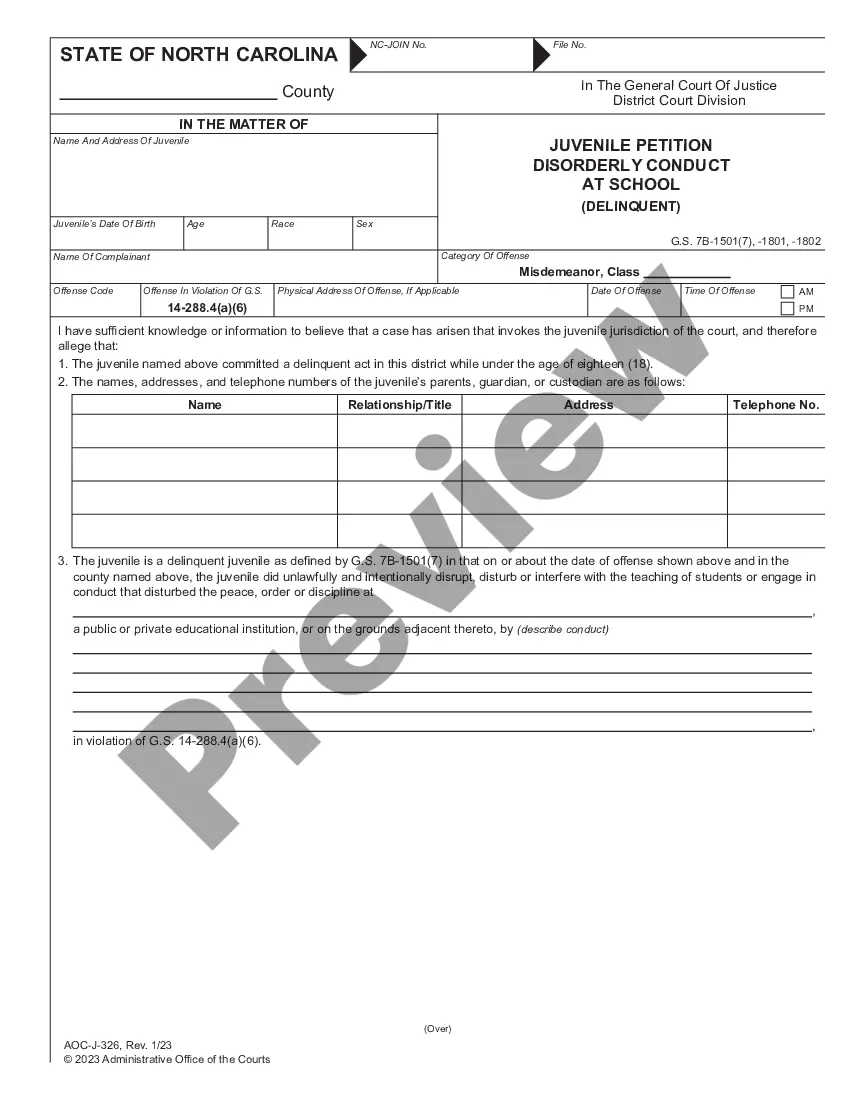
Notice letter to debt collector of Section 806 violation - harassment
Understanding this form
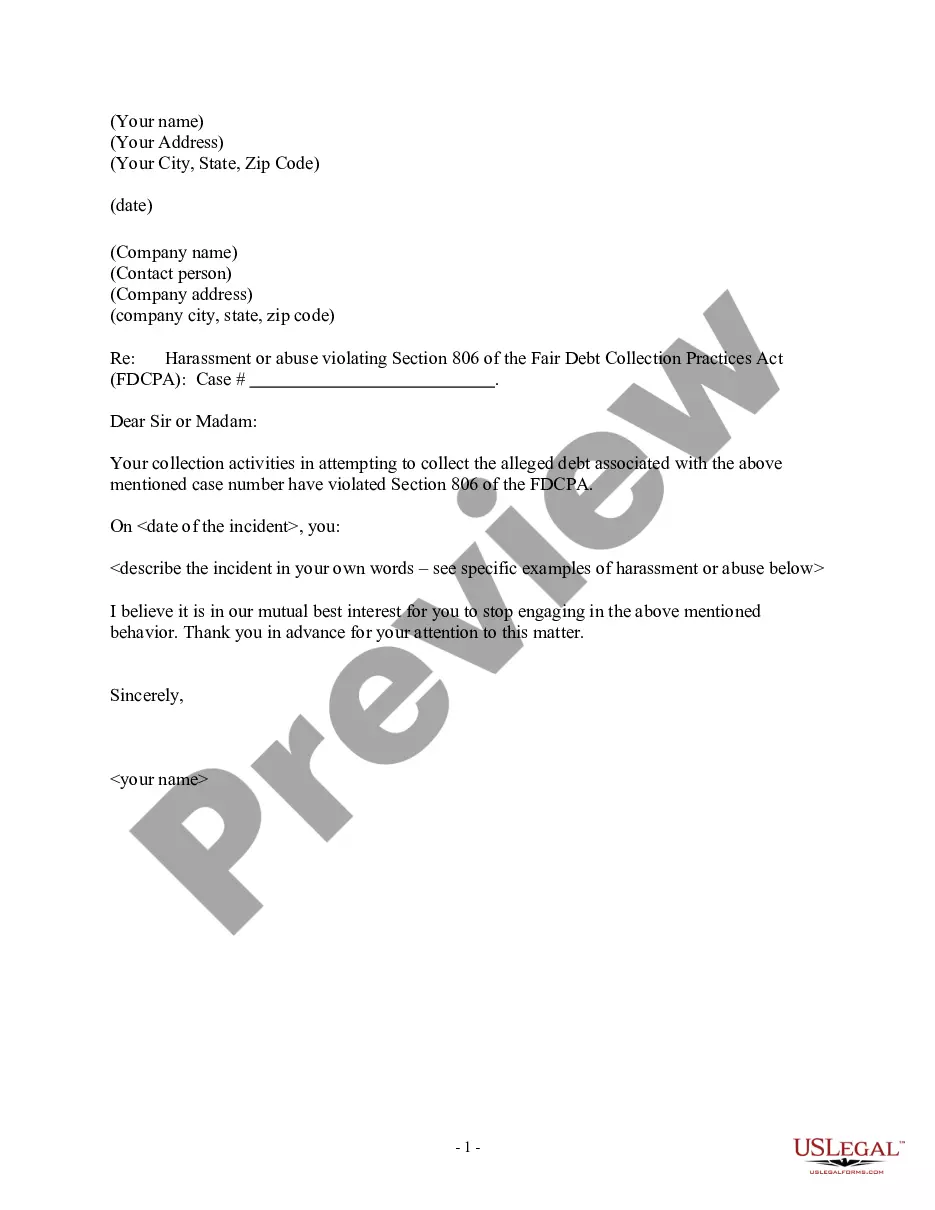
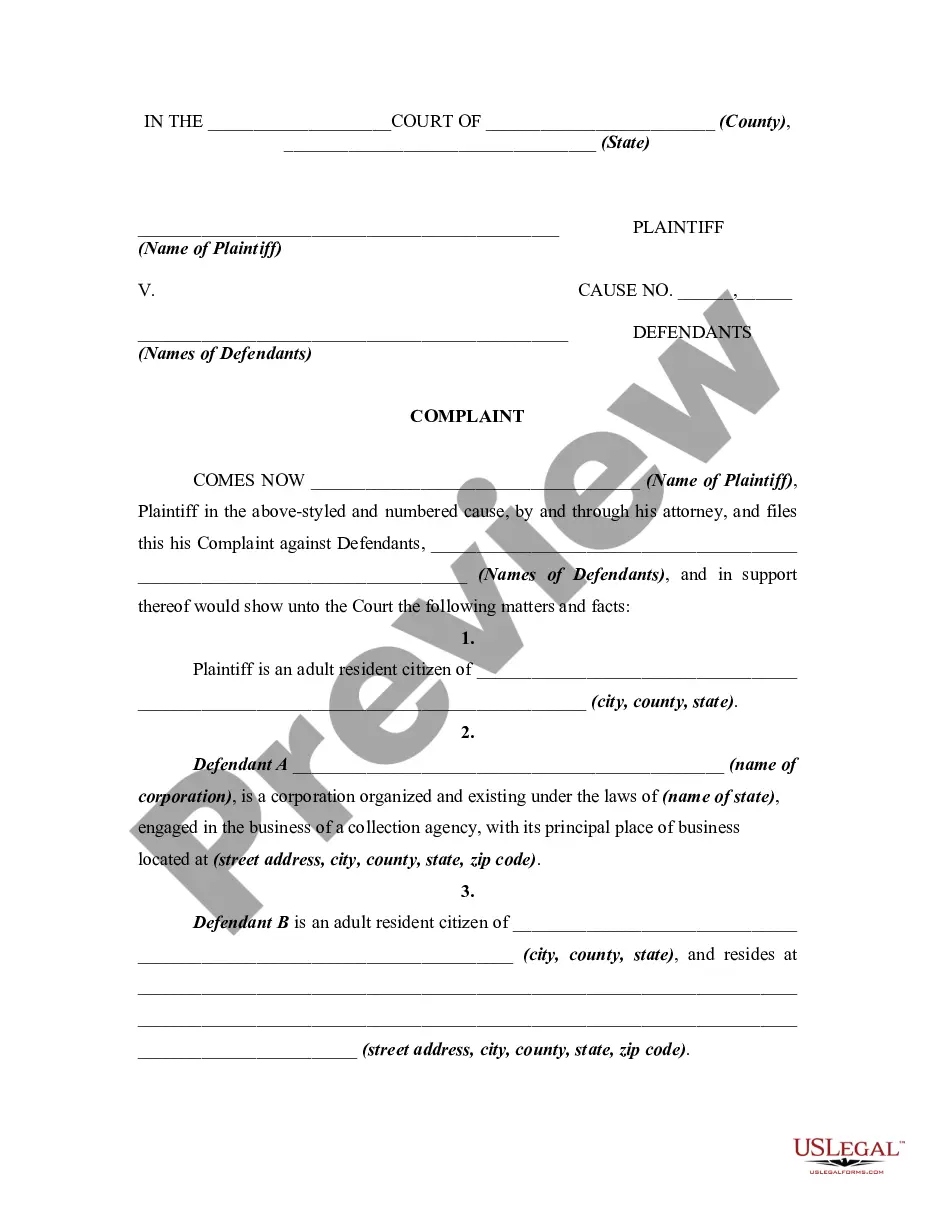
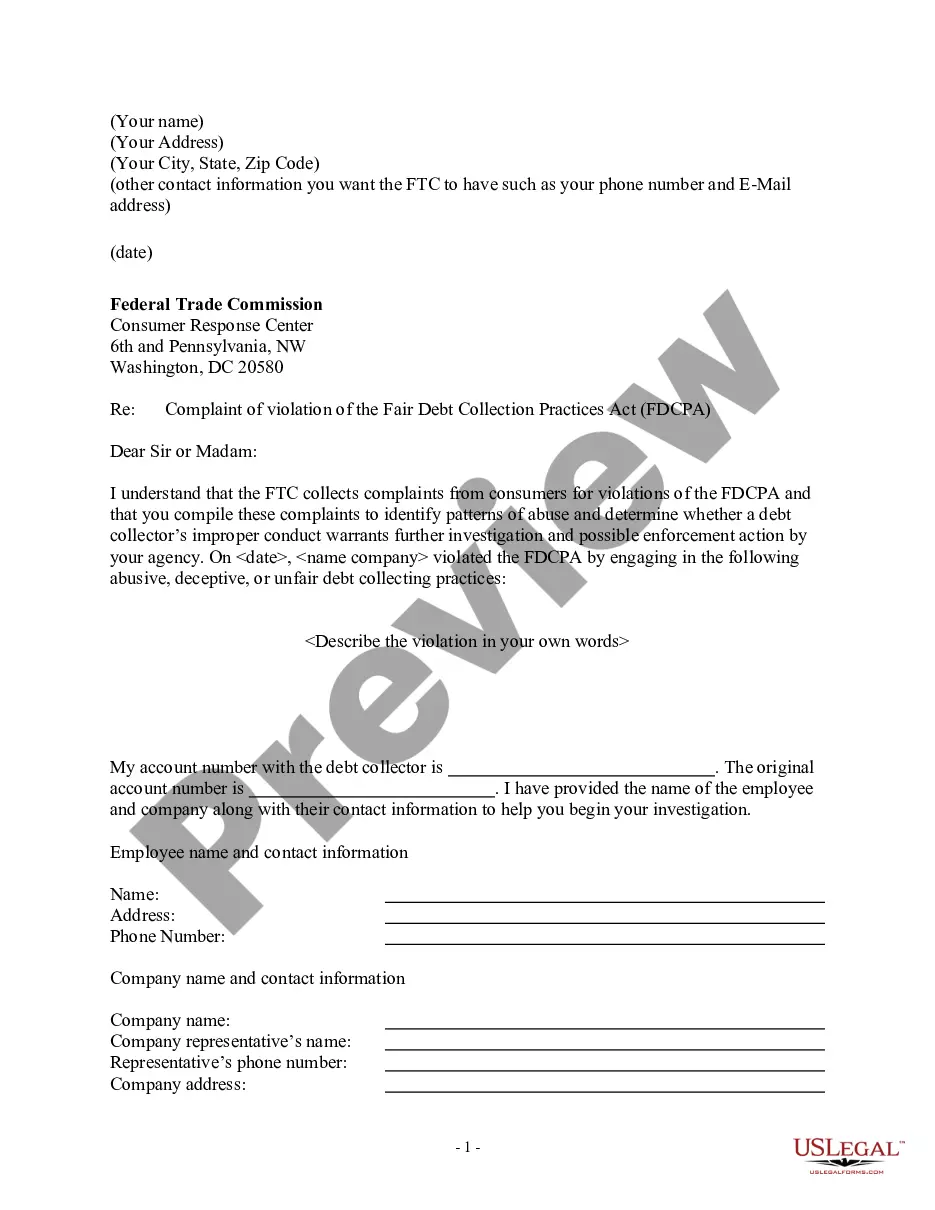
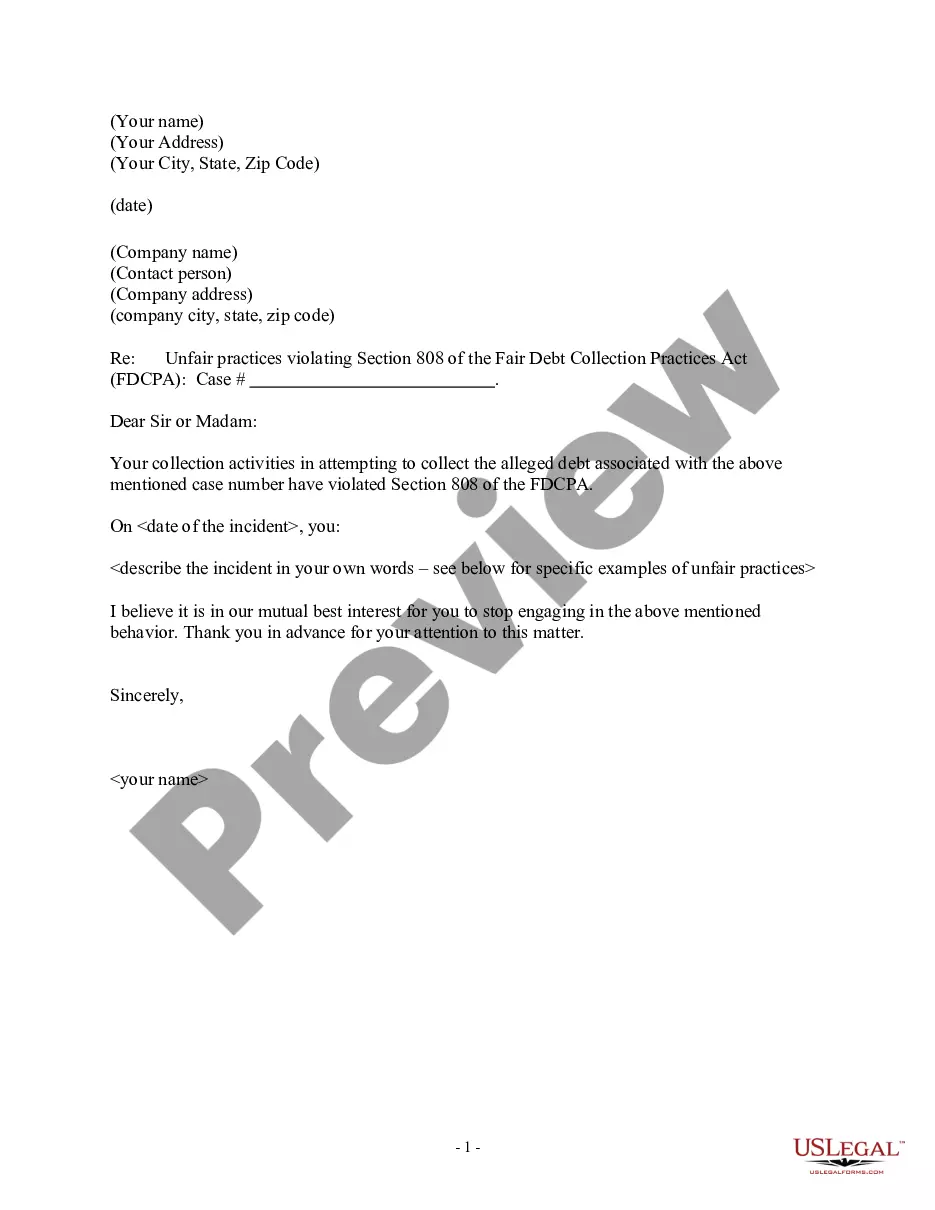
This form is a notice letter to a debt collector, informing them of a violation of Section 806 of the Fair Debt Collection Practices Act (FDCPA). By using this document, you can formally notify the collector of their harassment or abusive behavior, increasing the likelihood they will comply with the law. This form serves a critical purpose in protecting your rights as a consumer and clearly outlines the specific violations committed by the debt collector, which may be necessary for further legal actions if necessary.
Key components of this form
- Your name and address
- Date of the letter
- Debt collector's name and contact information
- Description of the specific violation and behavior
- Your signature and printed name
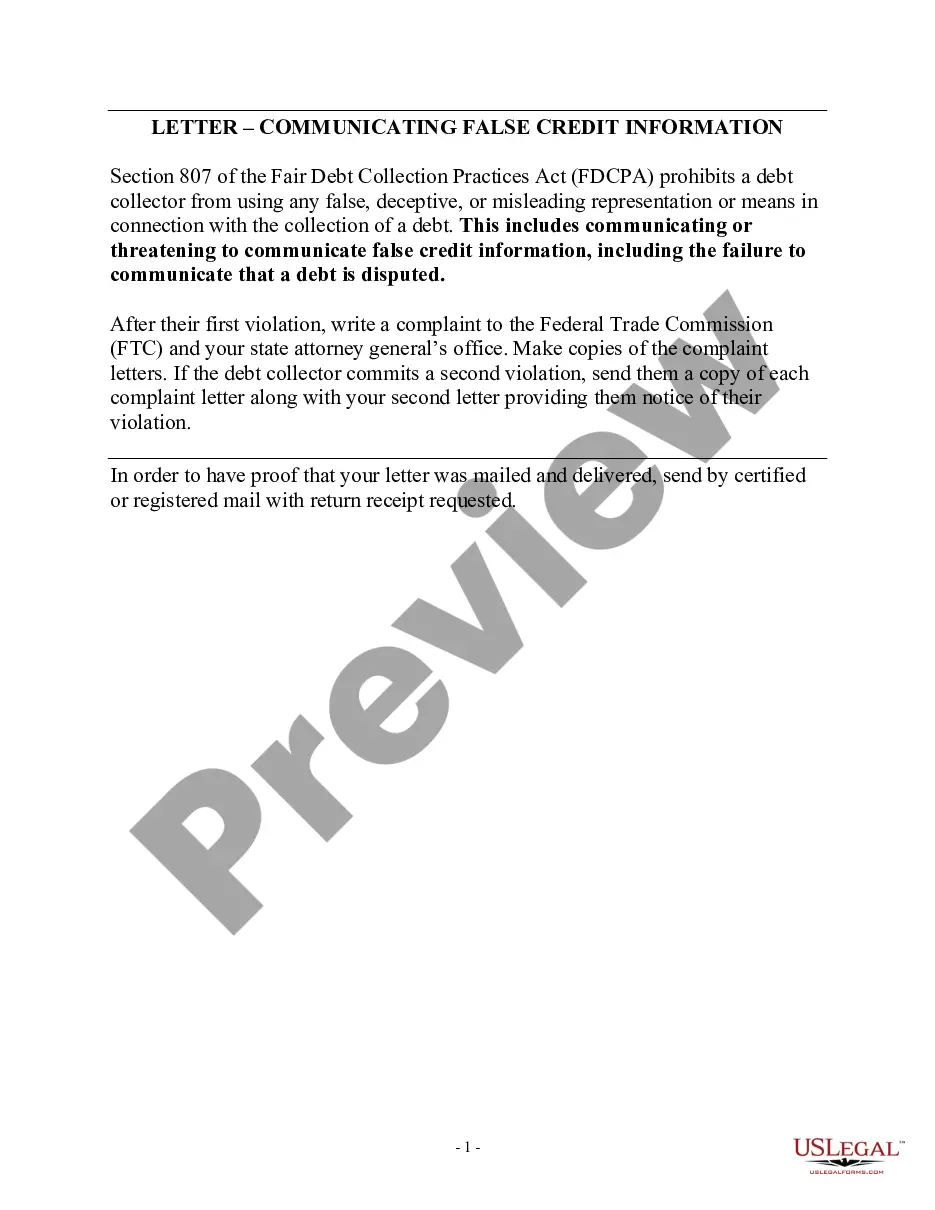
When to use this document
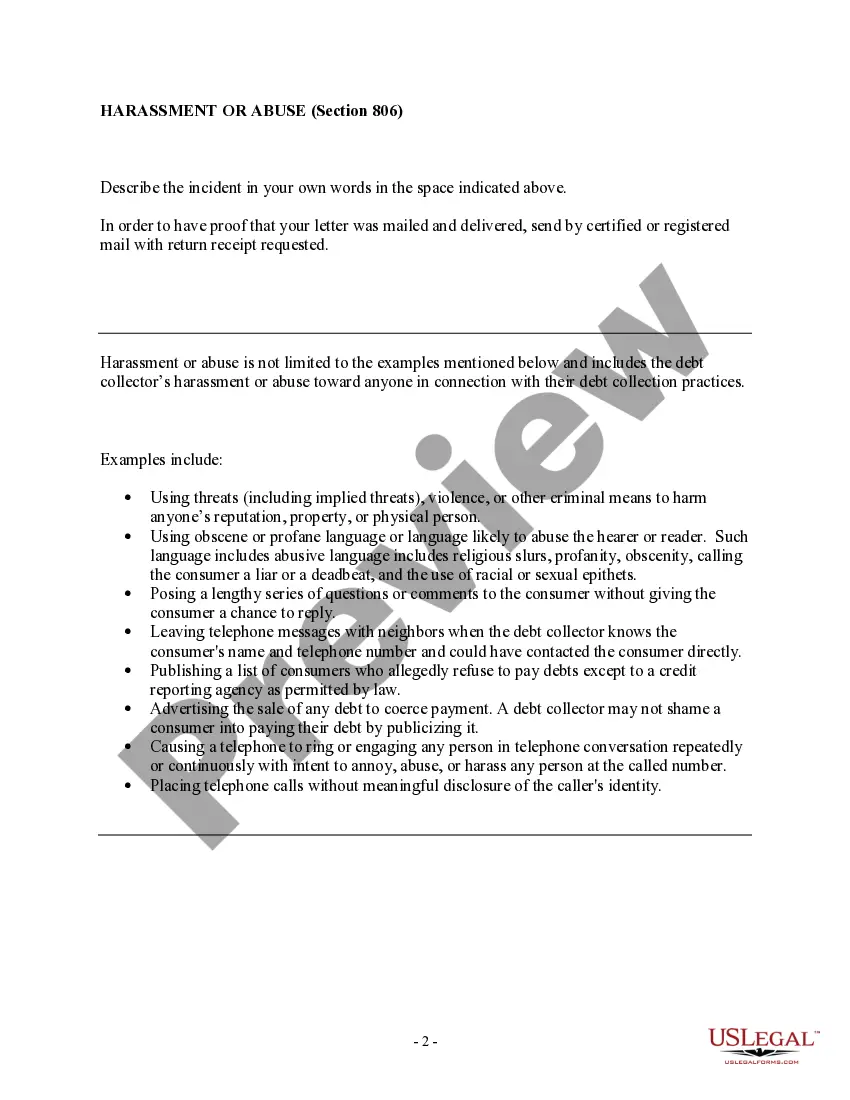
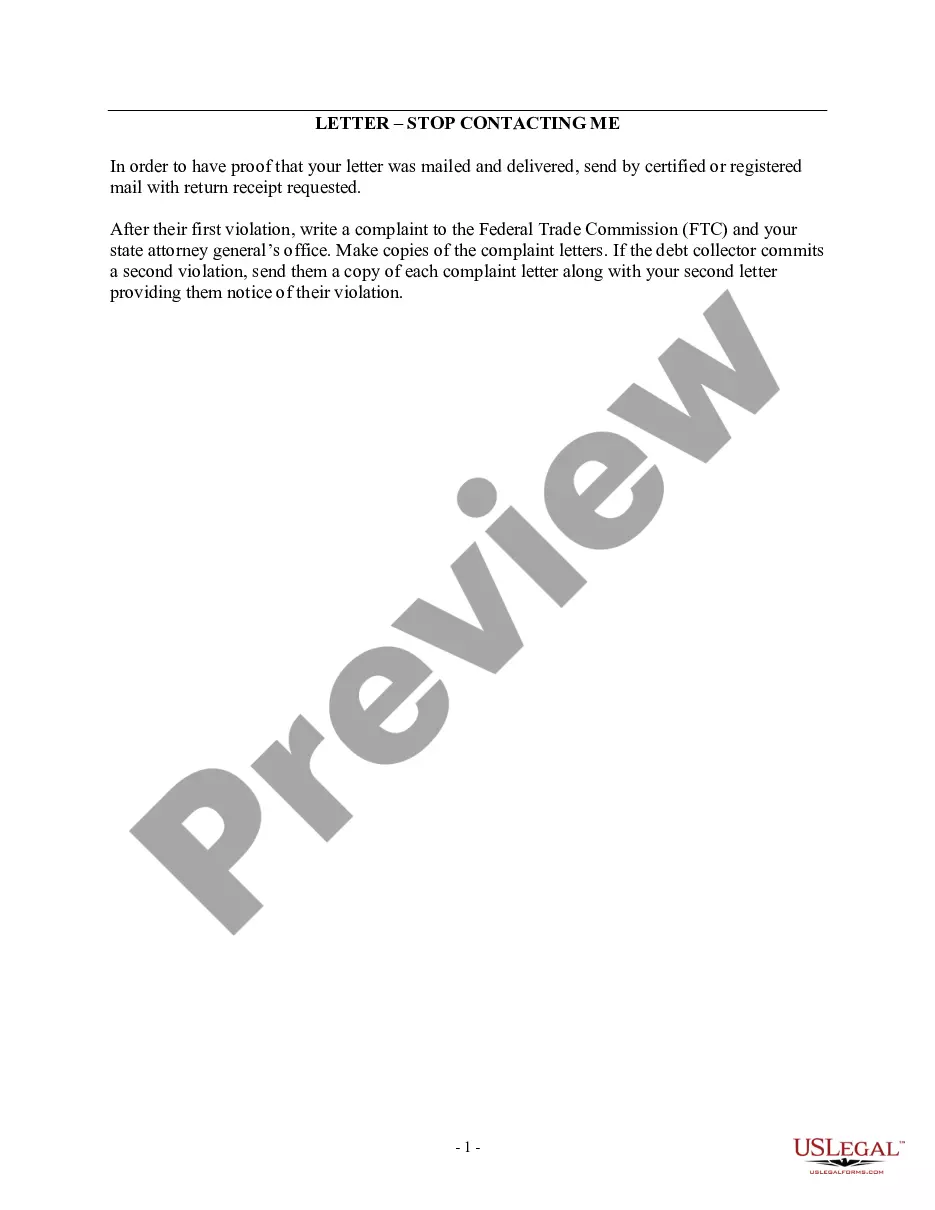
This notice letter should be used when you have experienced harassment or abusive behavior from a debt collector. Examples include threats or violence, obscene language, unyielding questioning without a response opportunity, or repeated calls intended to annoy or distress you. Sending this notice may help establish a record of violations and compel the debt collector to cease their unlawful practices.
Who this form is for
- Consumers who are being harassed by debt collectors
- Individuals who have received threatening or abusive communication from debt collectors
- People seeking to assert their rights under the Fair Debt Collection Practices Act
How to prepare this document
- Enter your name and physical address at the top of the letter.
- Include the date you are sending the letter.
- Provide the name and contact details of the debt collector.
- Clearly describe the specific incident of harassment or abuse, including the date and any identifying details about the employee involved.
- Sign the letter with your printed name below the signature line.
Is notarization required?
Notarization is not commonly needed for this form. However, certain documents or local rules may make it necessary. Our notarization service, powered by Notarize, allows you to finalize it securely online anytime, day or night.
Get your form ready online
Our built-in tools help you complete, sign, share, and store your documents in one place.
Make edits, fill in missing information, and update formatting in US Legal Forms—just like you would in MS Word.
Download a copy, print it, send it by email, or mail it via USPS—whatever works best for your next step.
Sign and collect signatures with our SignNow integration. Send to multiple recipients, set reminders, and more. Go Premium to unlock E-Sign.
If this form requires notarization, complete it online through a secure video call—no need to meet a notary in person or wait for an appointment.
We protect your documents and personal data by following strict security and privacy standards.

Make edits, fill in missing information, and update formatting in US Legal Forms—just like you would in MS Word.

Download a copy, print it, send it by email, or mail it via USPS—whatever works best for your next step.

Sign and collect signatures with our SignNow integration. Send to multiple recipients, set reminders, and more. Go Premium to unlock E-Sign.

If this form requires notarization, complete it online through a secure video call—no need to meet a notary in person or wait for an appointment.

We protect your documents and personal data by following strict security and privacy standards.
Common mistakes
- Not providing sufficient details about the harassment incident.
- Failing to include your contact information or the date.
- Neglecting to sign the letter before sending it.
Benefits of completing this form online
- Convenient access to a legally sound document.
- Edit and customize the form easily to fit your specific circumstances.
- Downloadable for quick sending via mail or email.
Legal use & context
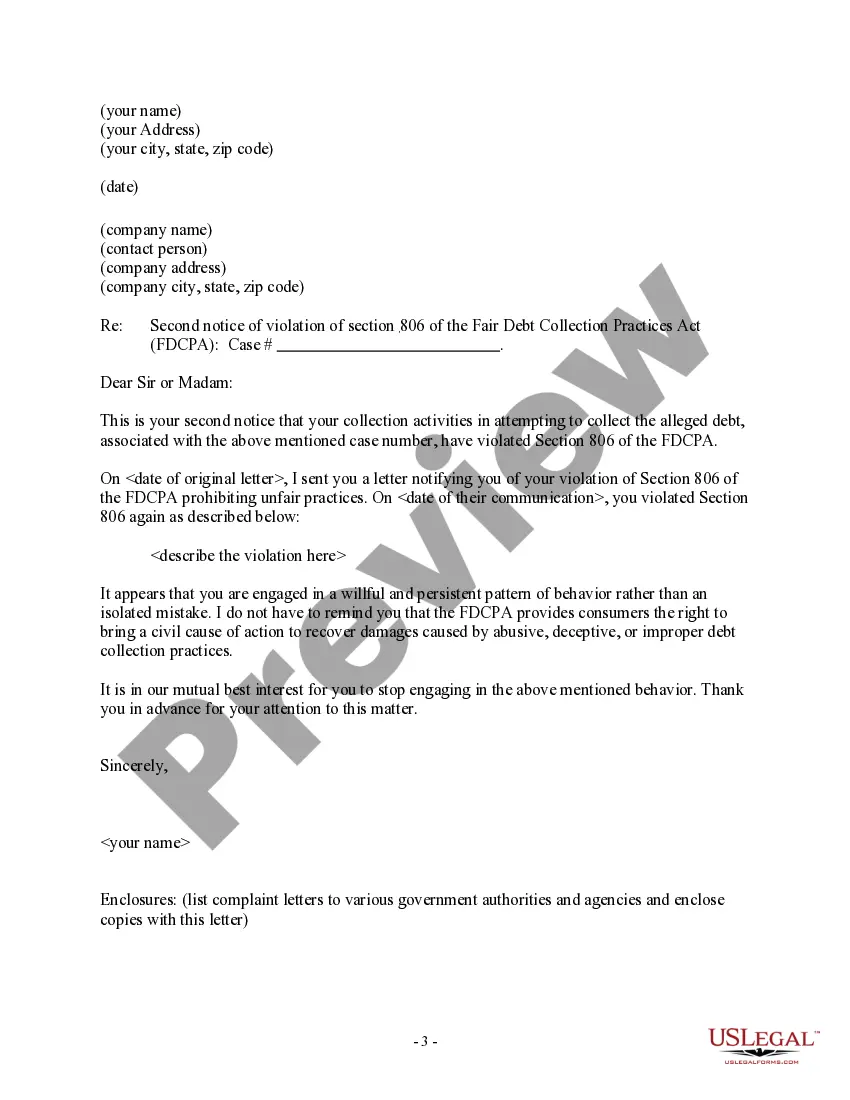
This notice letter is a formal mechanism to assert your rights against unlawful harassment by debt collectors. The FDCPA is designed to protect consumers, and this letter demonstrates your effort to address violations proactively. If the debt collector continues their abusive behavior after receiving your notice, it may further support your case in legal proceedings.
What to keep in mind
- The form serves to notify debt collectors of harassment under the FDCPA.
- It is crucial for documenting violations that may support legal action later.
- Ensure all information is accurate and clear to avoid misunderstandings.
Looking for another form?







Form popularity
FAQ
Harassment of the debtor by the creditor More than 40 percent of all reported FDCPA violations involved incessant phone calls in an attempt to harass the debtor.
Collectors are required by Fair Debt Collection Practices Act to send you a written debt validation notice with information about the debt they're trying to collect. It must be sent within five days of the first contact. The debt validation letter includes: The amount owed.
In the letter, reference the date of the initial contact and the method, for example, "a phone call received from your agency on April 25, 2019." You also need to provide a statement that you're requesting validation of the debt. Do not admit to owing the debt or make any reference to payment.
The debt dispute letter should include your personal identifying information; verification of the amount of debt owed; the name of the creditor for the debt; and a request that the debt not be reported to credit reporting agencies until the matter is resolved or have it removed from the report, if it already has been
A debt validation letter can be an effective tool for dealing with debt collectors.
The Fair Debt Collection Practices Act (FDCPA) says debt collectors can't harass, oppress, or abuse you or anyone else they contact. Some examples of harassment are: Repetitious phone calls that are intended to annoy, abuse, or harass you or any person answering the phone. Obscene or profane language.
Under the Fair Debt collection Practices Act (FDCPA), I have the right to request validation of the debt you say I owe you. I am requesting proof that I am indeed the party you are asking to pay this debt, and there is some contractual obligation that is binding on me to pay this debt.
The definition of debt collection harassment is to intimidate, abuse, coerce, bully or browbeat consumers into paying off debt. This happens most often over the phone, but harassment could come in the form of emails, texts, direct mail or talking to friends or neighbors about your debt.
Write and Mail a Letter State that you're requesting validation of the debt or removal of the debt from your credit report. Then mail the letter and request a return receipt so you have proof that you sent it and that the collection agency received it.