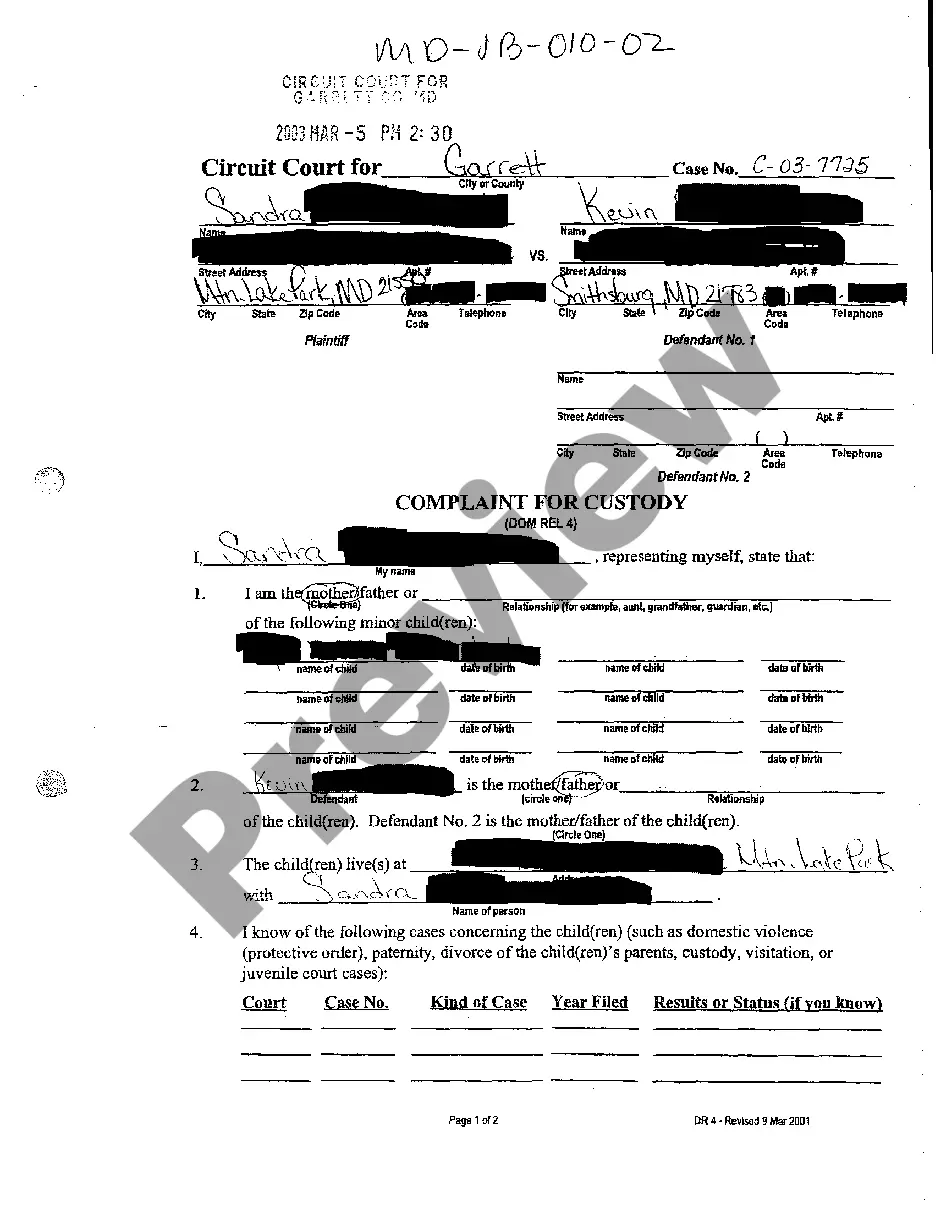
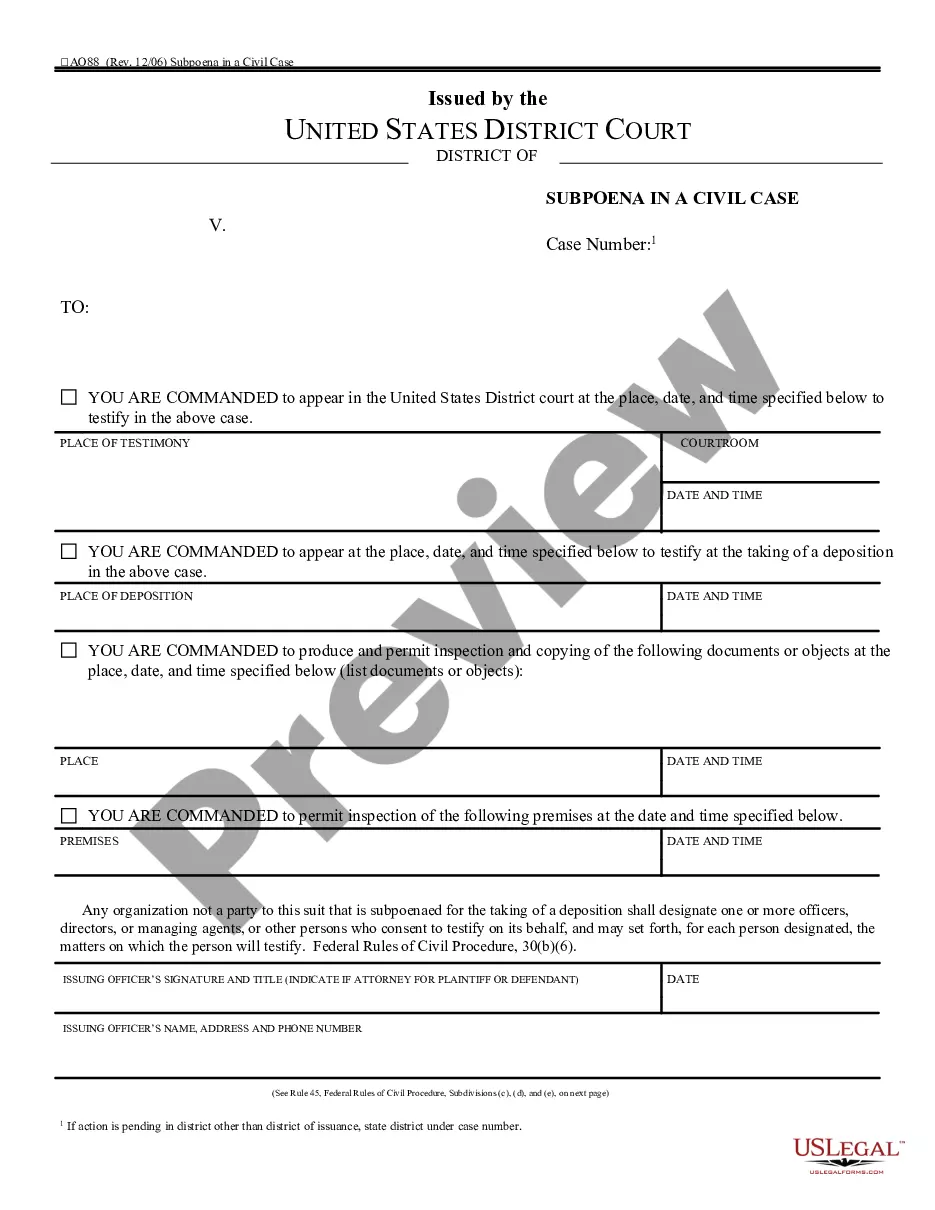
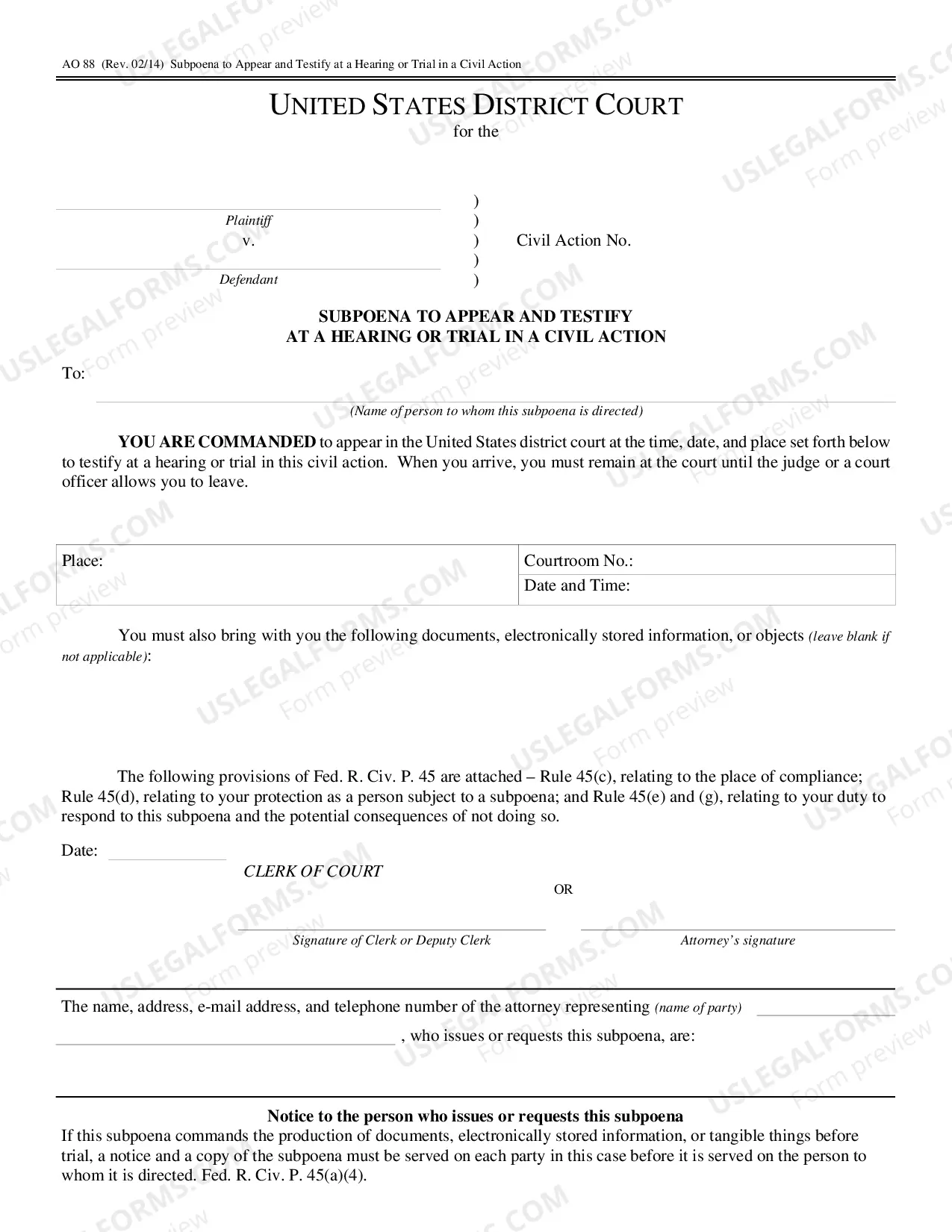
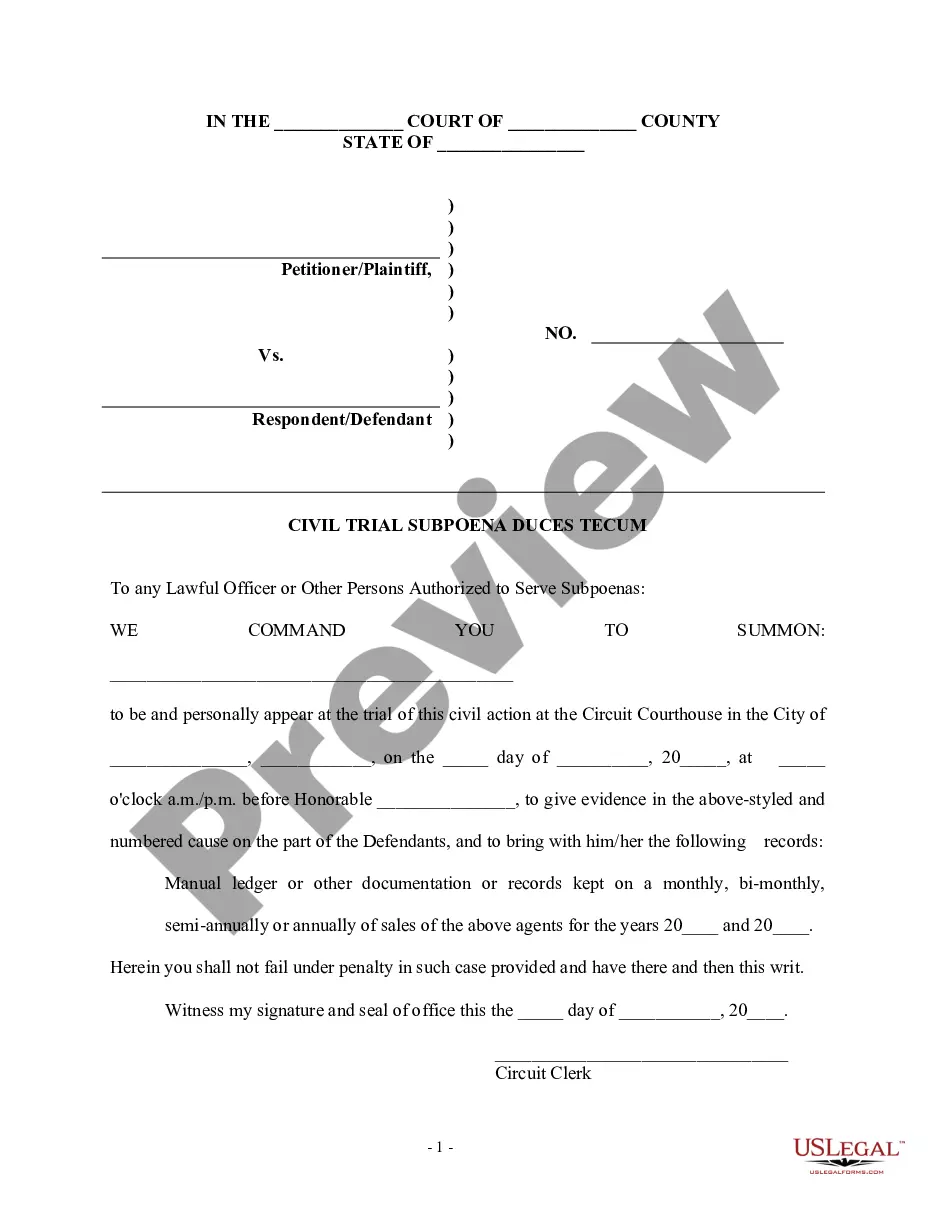
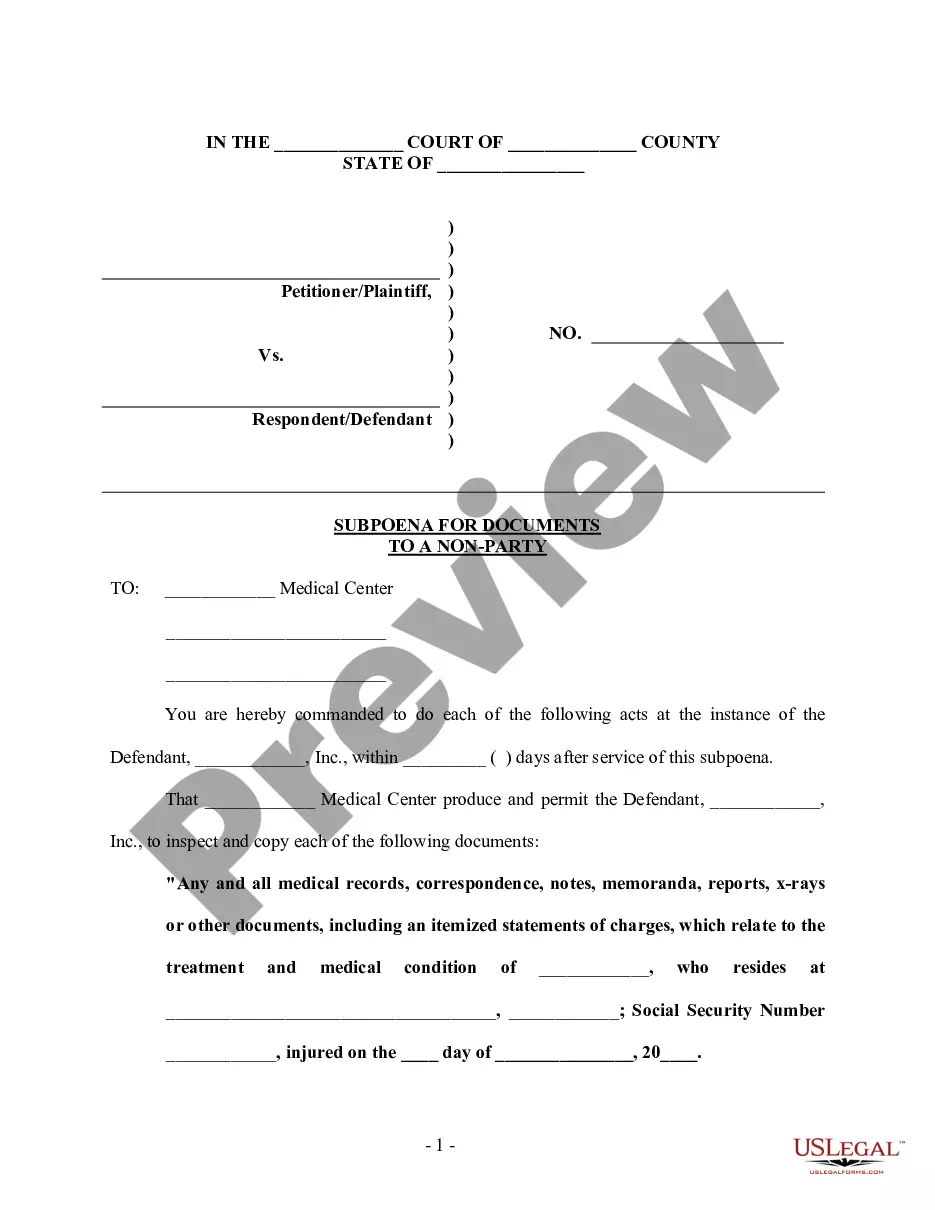
Subpoena: This is an official form from the North Carolina Administration of the Courts (AOC), which complies with all applicable laws and statutes. USLF amends and updates the forms as is required by North Carolina statutes and law.
North Carolina Subpoena
Instant download
This website is not affiliated with any governmental entity
Public form
Description
Free preview
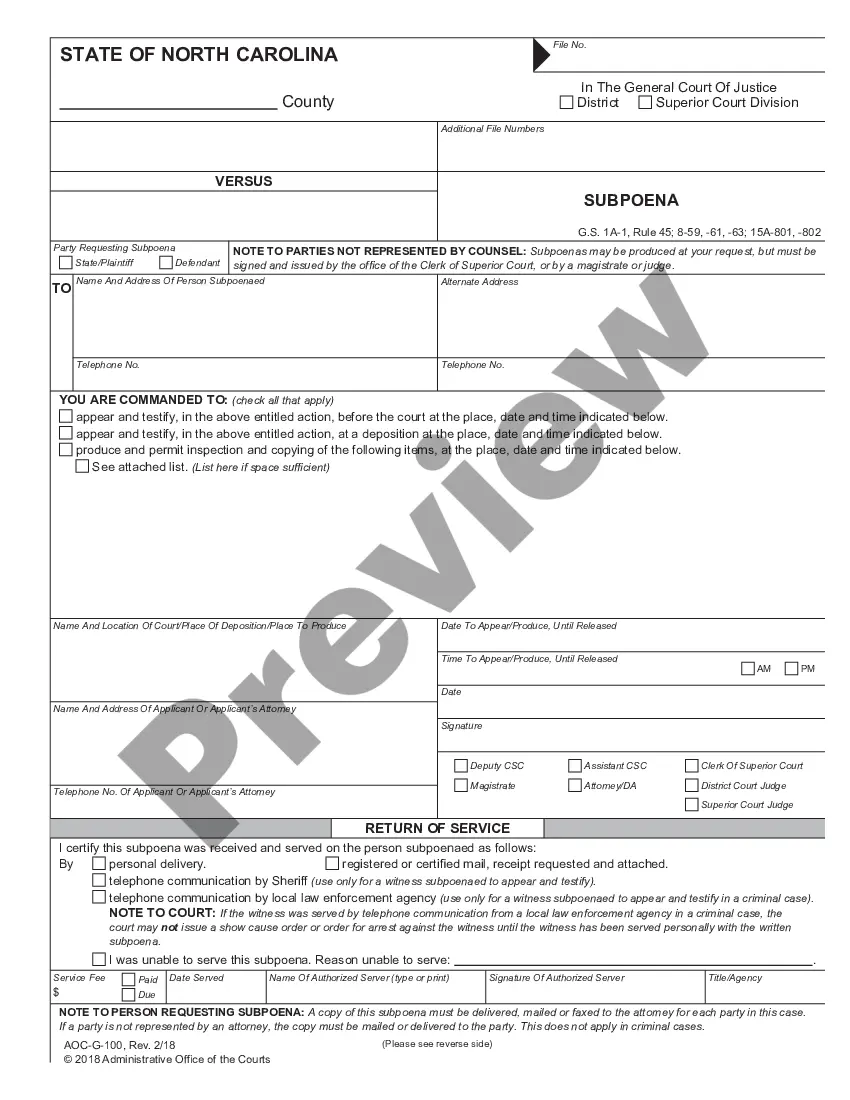
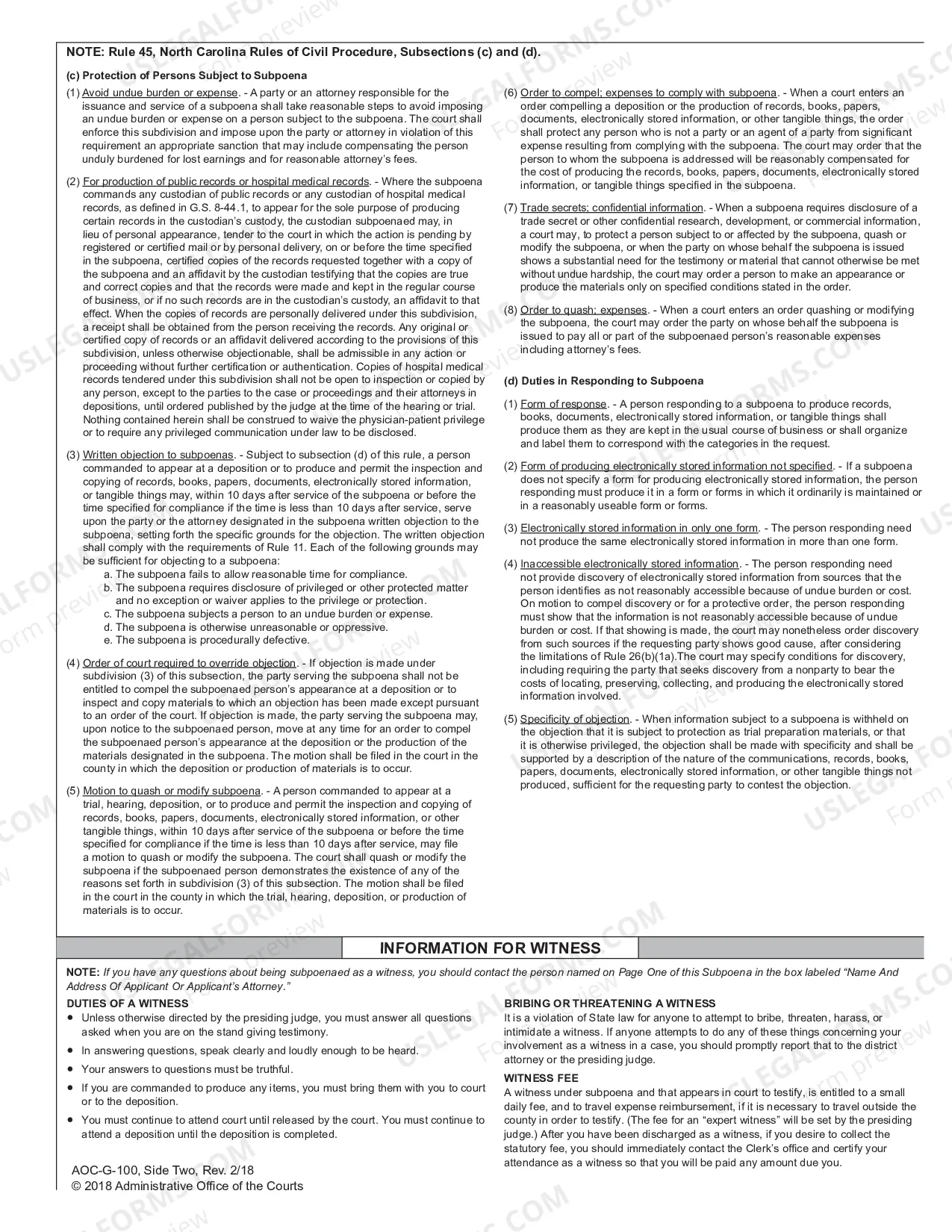
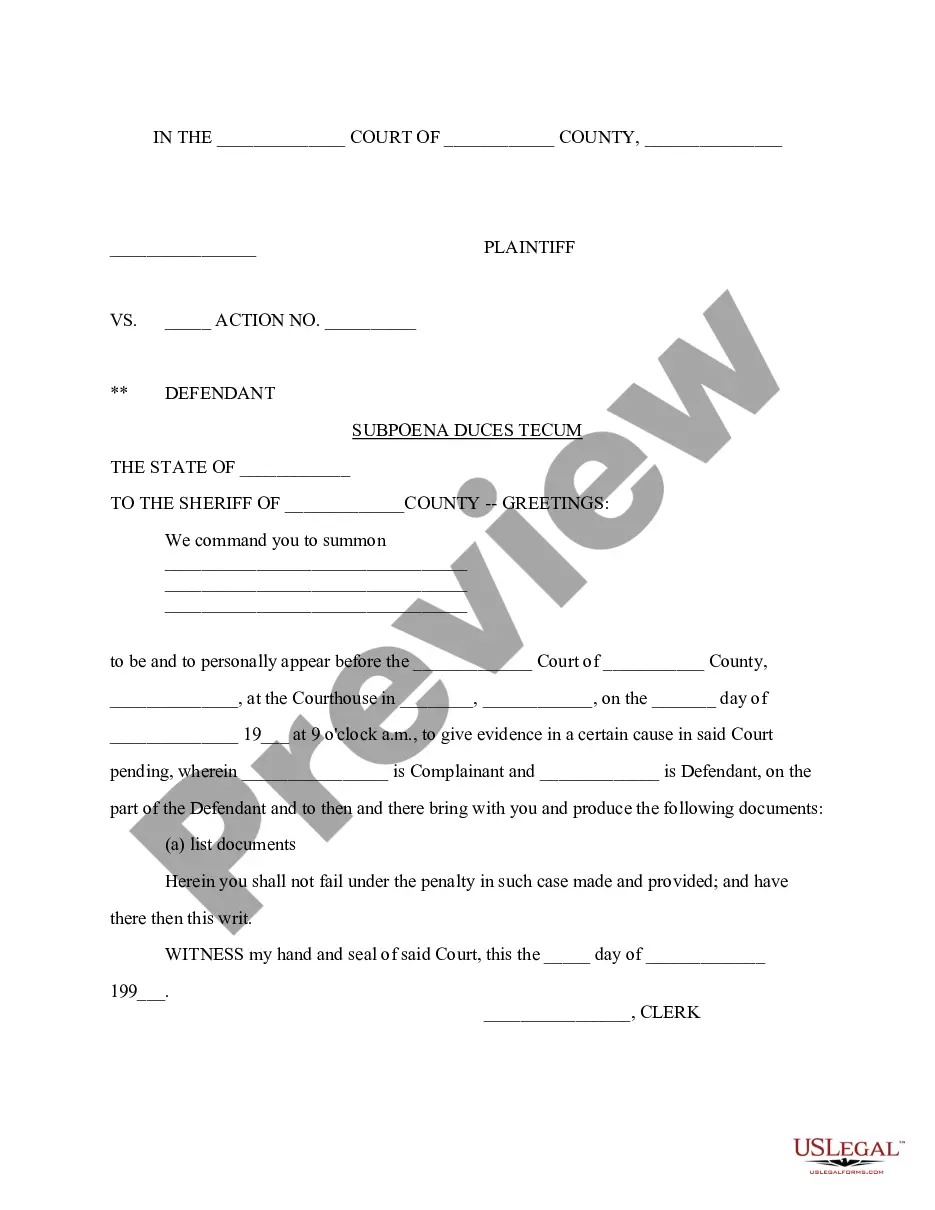
Get your form ready online
Our built-in tools help you complete, sign, share, and store your documents in one place.
Built-in online Word editor
Make edits, fill in missing information, and update formatting in US Legal Forms—just like you would in MS Word.
Export easily
Download a copy, print it, send it by email, or mail it via USPS—whatever works best for your next step.
E-sign your document
Sign and collect signatures with our SignNow integration. Send to multiple recipients, set reminders, and more. Go Premium to unlock E-Sign.
Notarize online 24/7
If this form requires notarization, complete it online through a secure video call—no need to meet a notary in person or wait for an appointment.
Store your document securely
We protect your documents and personal data by following strict security and privacy standards.

Make edits, fill in missing information, and update formatting in US Legal Forms—just like you would in MS Word.

Download a copy, print it, send it by email, or mail it via USPS—whatever works best for your next step.

Sign and collect signatures with our SignNow integration. Send to multiple recipients, set reminders, and more. Go Premium to unlock E-Sign.

If this form requires notarization, complete it online through a secure video call—no need to meet a notary in person or wait for an appointment.

We protect your documents and personal data by following strict security and privacy standards.
Looking for another form?
How to fill out North Carolina Subpoena?
Steer clear of costly attorneys and locate the North Carolina Subpoena you require at an affordable rate on the US Legal Forms website.
Utilize our straightforward categories feature to search for and acquire legal and tax documents. Review their descriptions and preview them before downloading.
Select to download the form in PDF or DOCX format. Click Download and locate your template in the My documents section. Feel free to store the template on your device or print it out. After downloading, you can fill out the North Carolina Subpoena by hand or with editing software. Print it and reuse the template multiple times. Achieve more for less with US Legal Forms!
- Furthermore, US Legal Forms offers clients with detailed guidance on how to download and fill out each form.
- US Legal Forms users simply need to Log In and retrieve the exact document they need from their My documents section.
- Those who have not subscribed yet should follow the instructions listed below.
- Ensure the North Carolina Subpoena is valid for use in your region.
- If possible, review the description and utilize the Preview feature before downloading the templates.
- If you are confident the document fulfills your requirements, click Buy Now.
- If the form is incorrect, use the search bar to find the correct one.
- Next, establish your account and choose a subscription plan.
- Make a payment via credit card or PayPal.
Form popularity
FAQ
To file your subpoena request, you will need to go to the Civil Division of the Wake County Courthouse, which is located on the 11th floor at 316 Fayetteville Street in Raleigh. There is a $30.00 fee for service of process.
If you want to take the risk, save the money you would have spent on a motion to quash (lawyers often charge from $2,000 to more than $3,000) and instead use it to settle the case if: a) you are served a summons and complaint, or b) you are actually targeted in an individual lawsuit against you.
Providing objections suspends your obligation to comply with the subpoena until or unless a court orders compliance, or you reach an agreement with the party that served you with the subpoena. If you do not wish to comply with the subpoena, you may file a motion to quash it before the date set forth on the subpoena.
California allows multiple people to challenge a third-party subpoena. The person or organization served with the subpoena may object to all or part of it, or they may file a motion for a protective order or to quash the subpoena in the court where the lawsuit is pending.
In addition to objecting, you can file a "motion to quash" the subpoena. Once you object, you have responded to the subpoena for the time being. The burden then shifts to the party sending the subpoena to resolve the objections, including use of a court hearing if necessary.
Any employee whose employment records are sought by a subpoena duces tecum may bring a motion to quash. Note that non-party employees may object to a subpoena by serving written objections. 3. Any non-party who has been served with a business records subpoena may bring a motion to quash.
Any judge of the superior court, judge of the district court, magistrate, or attorney, as officer of the court, may also issue and sign a subpoena. (1) Manner. - Any subpoena may be served by the sheriff, by the sheriff's deputy, by a coroner, or by any person who is not a party and is not less than 18 years of age.
Take a blank Subpoena to the clerk to have it issued. Take a blank Civil Subpoena (Form SUBP-001 ) to the clerk. Fill out the Subpoena. Make copies of your issued Subpoena. Serve the Subpoena. Fill out Page 3 of the original Civil Subpoena. Return the Subpoena to the clerk before your hearing (or trial).
The answer is, maybe. The next shortest answer I can give is that, although a witness has no excuse to ignore a subpoena based simply on the fact that the case is pending outside the state where the witness lives, you do not need to automatically comply with the subpoena. Be proactive and analyze the subpoena.