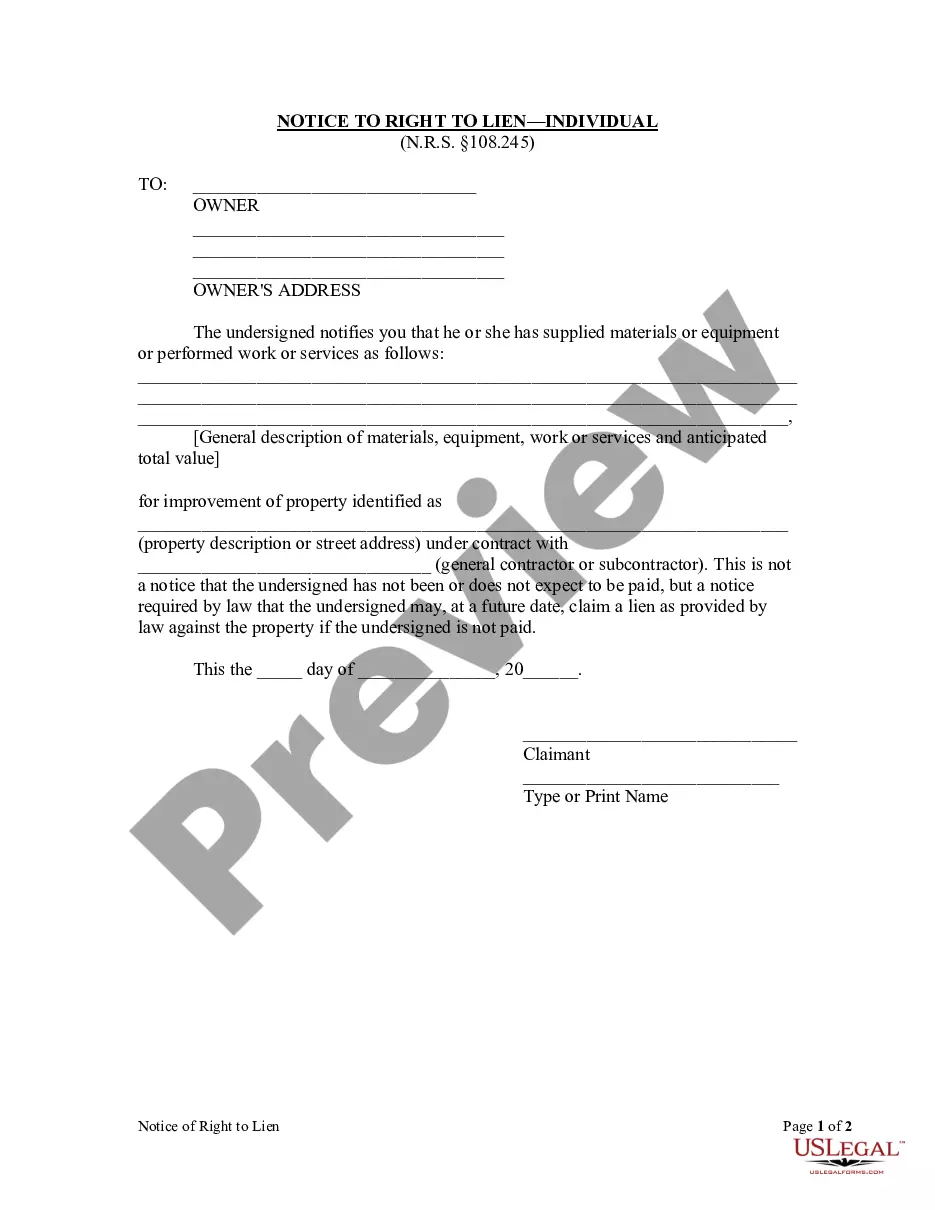
Maryland Marital Domestic Separation and Property Settlement Agreement for persons with No Children, No Joint Property or Debts where Divorce Action Filed
What is this form?
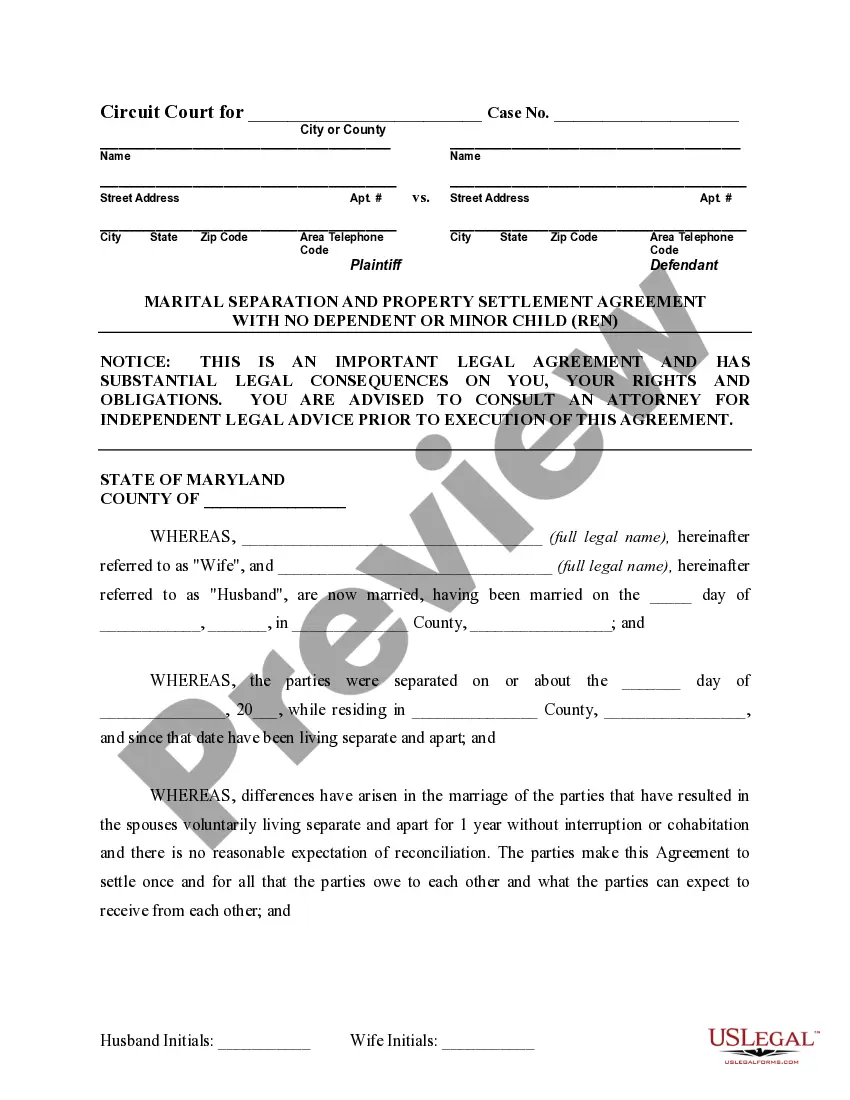
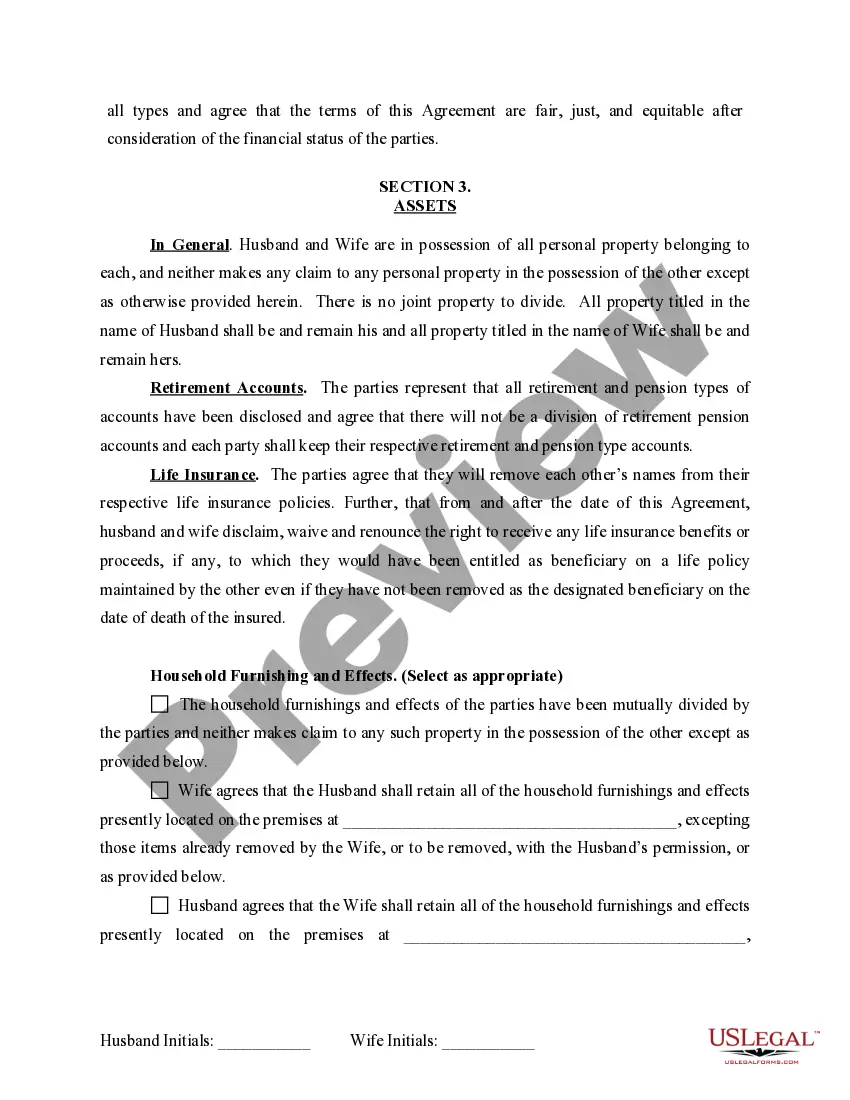
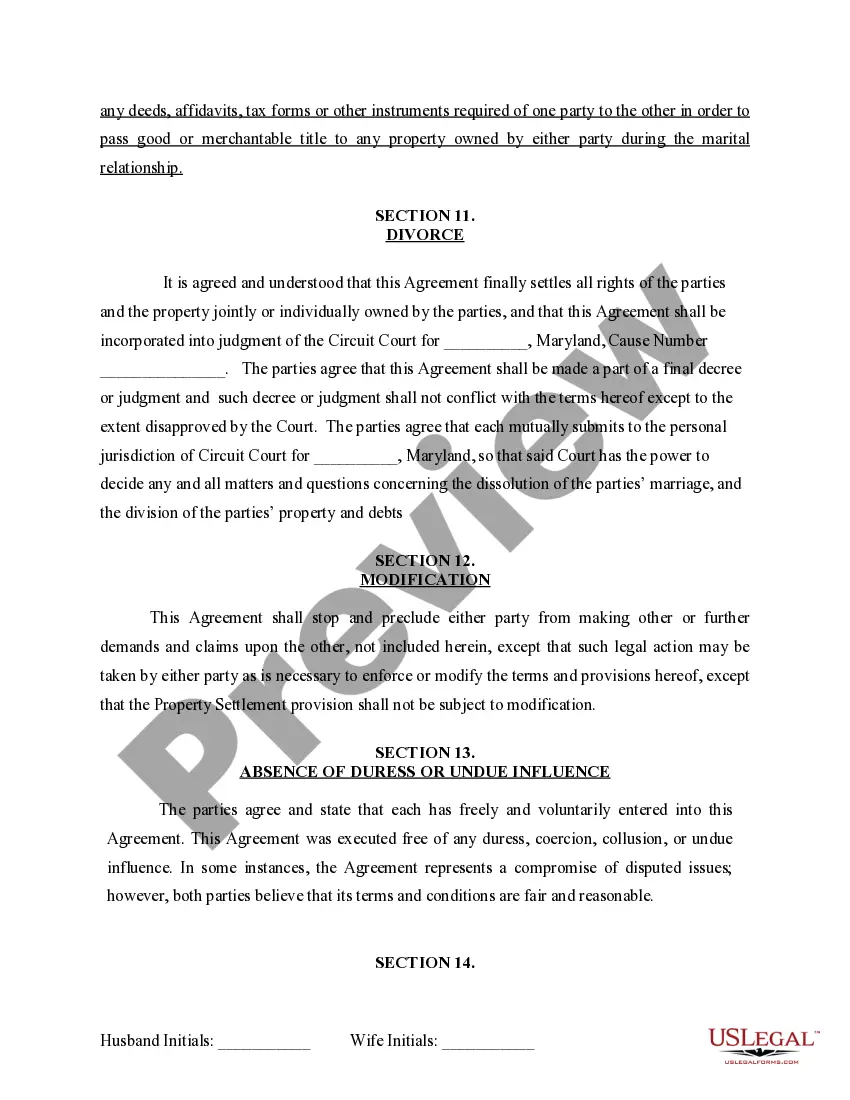
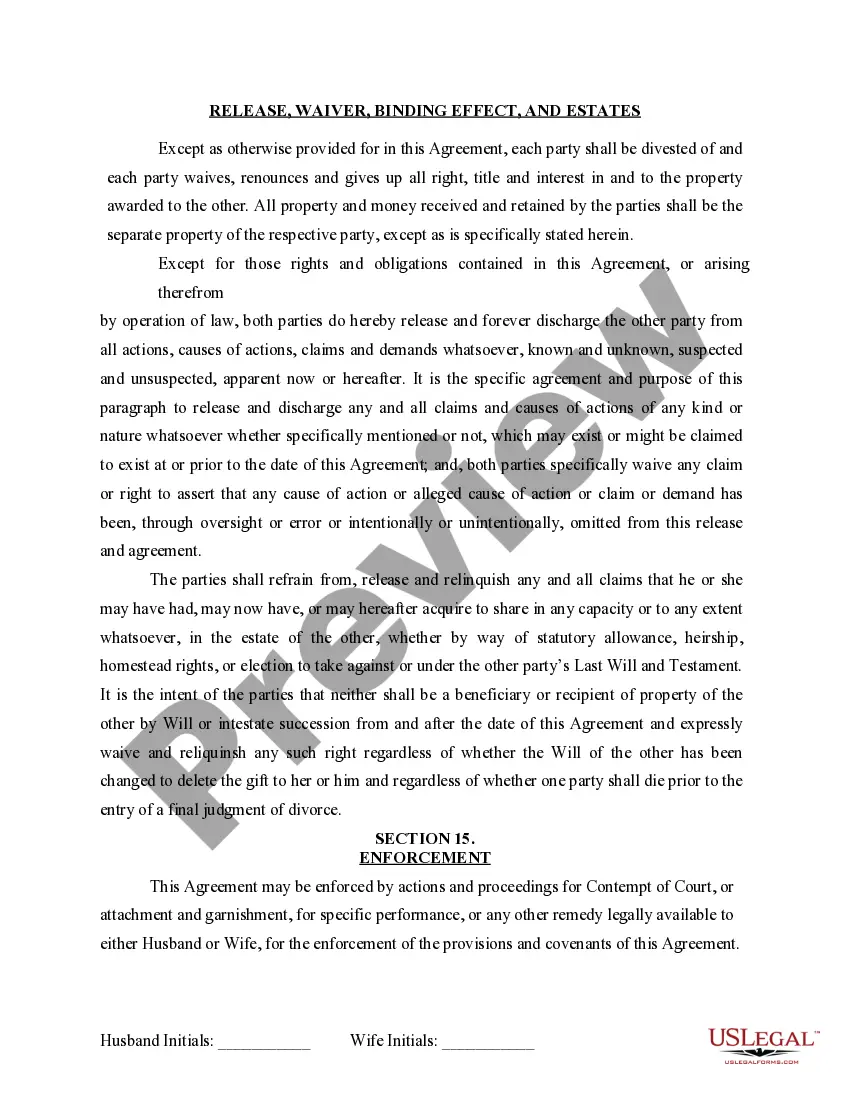
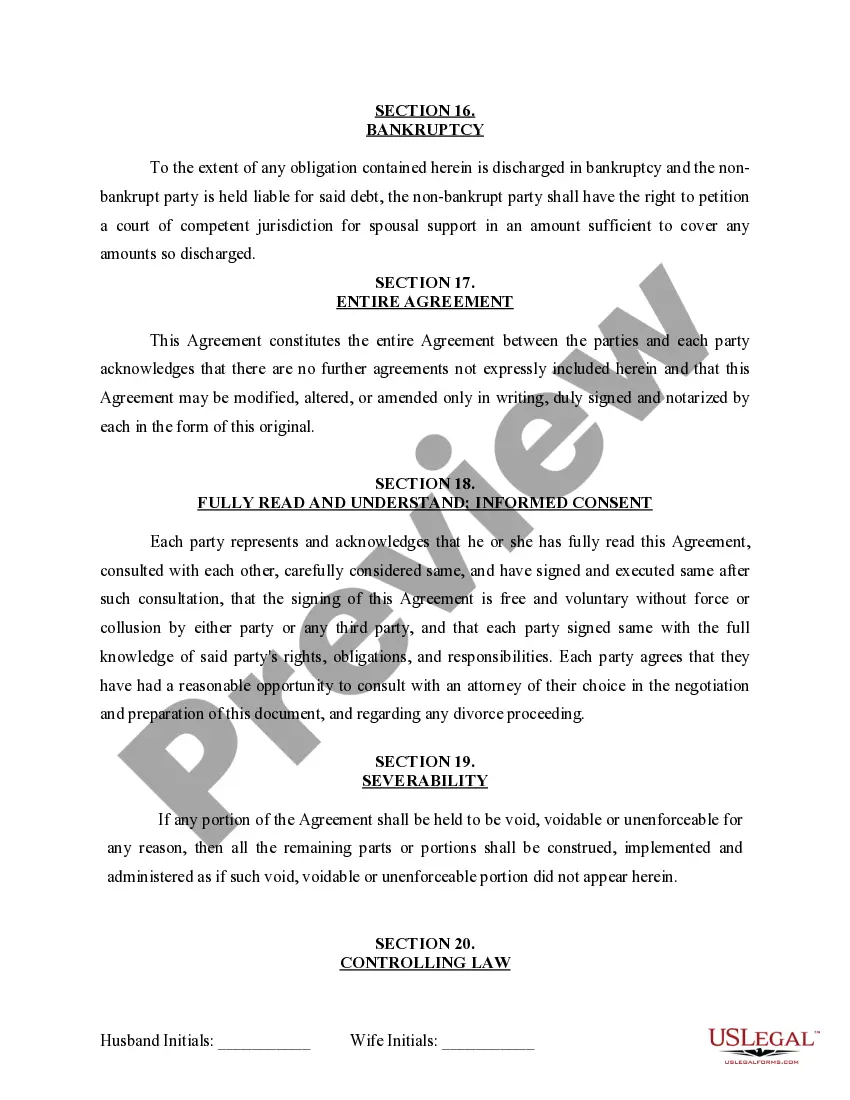
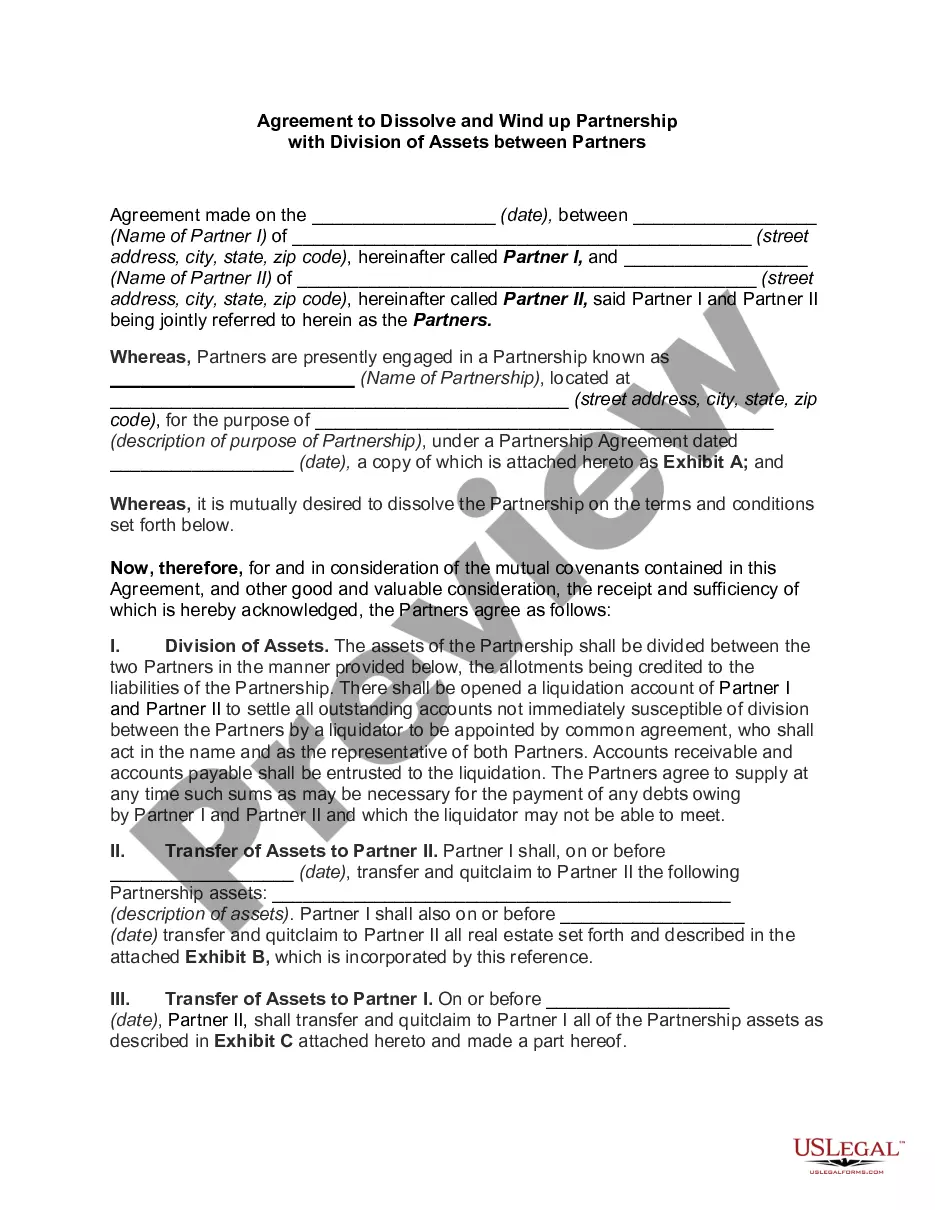
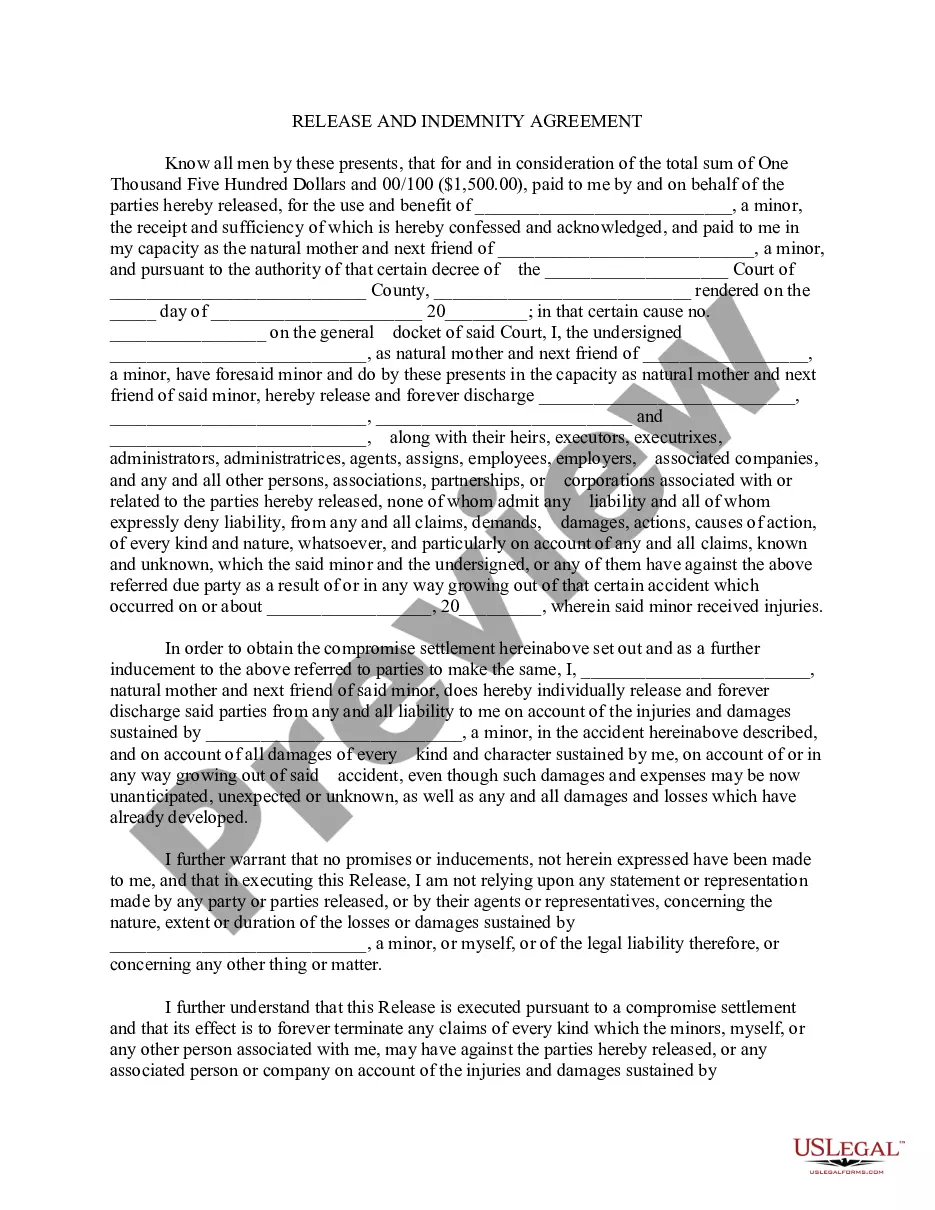
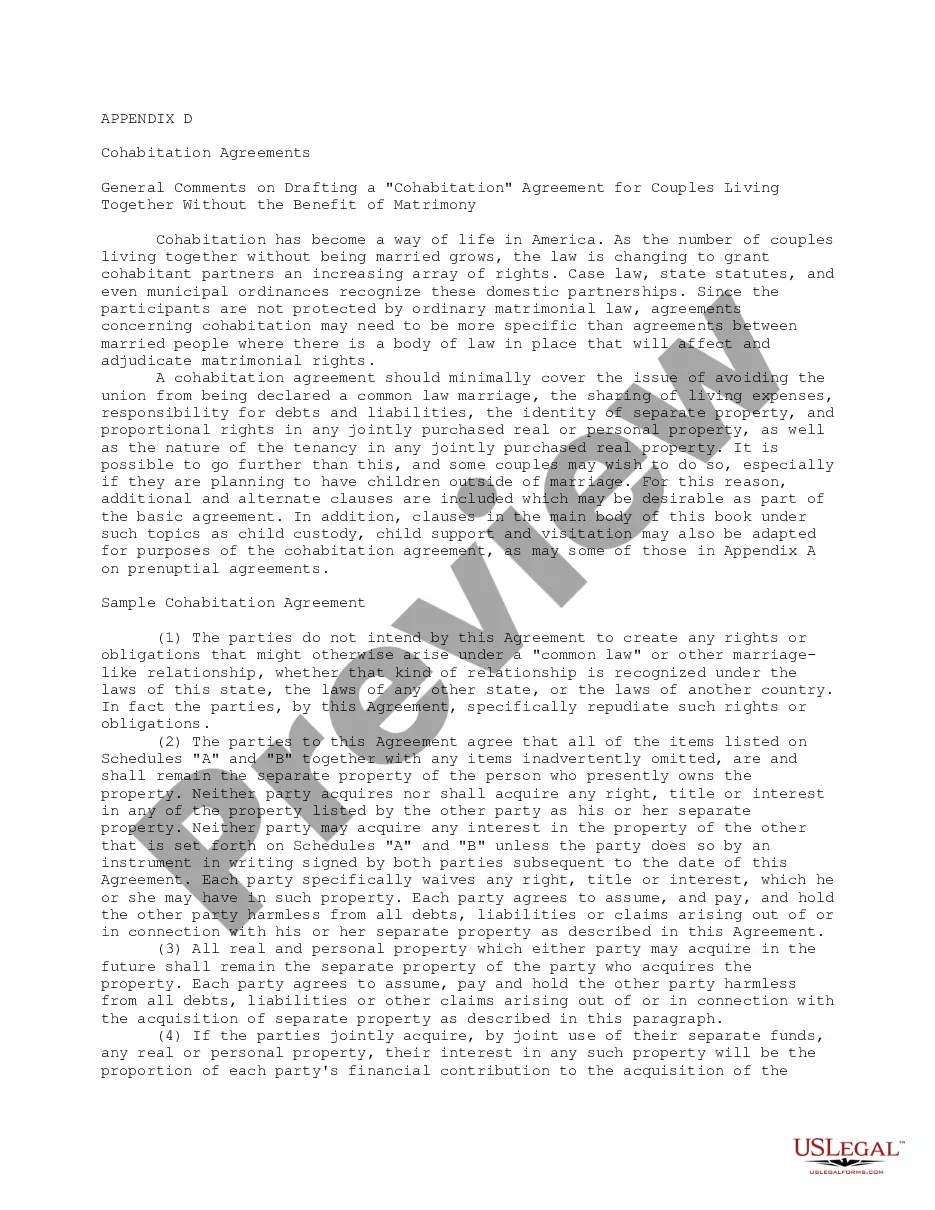
The Marital Domestic Separation and Property Settlement Agreement is a legal document designed for married individuals who are separating without children and without joint property or debts. This form facilitates the division of personal assets and liabilities during divorce proceedings and outlines each party's rights and obligations. Unlike other separation agreements, this form is specifically tailored for couples in Maryland who have filed or will file for divorce, making it a crucial resource for those seeking a straightforward and clear separation process.
Main sections of this form
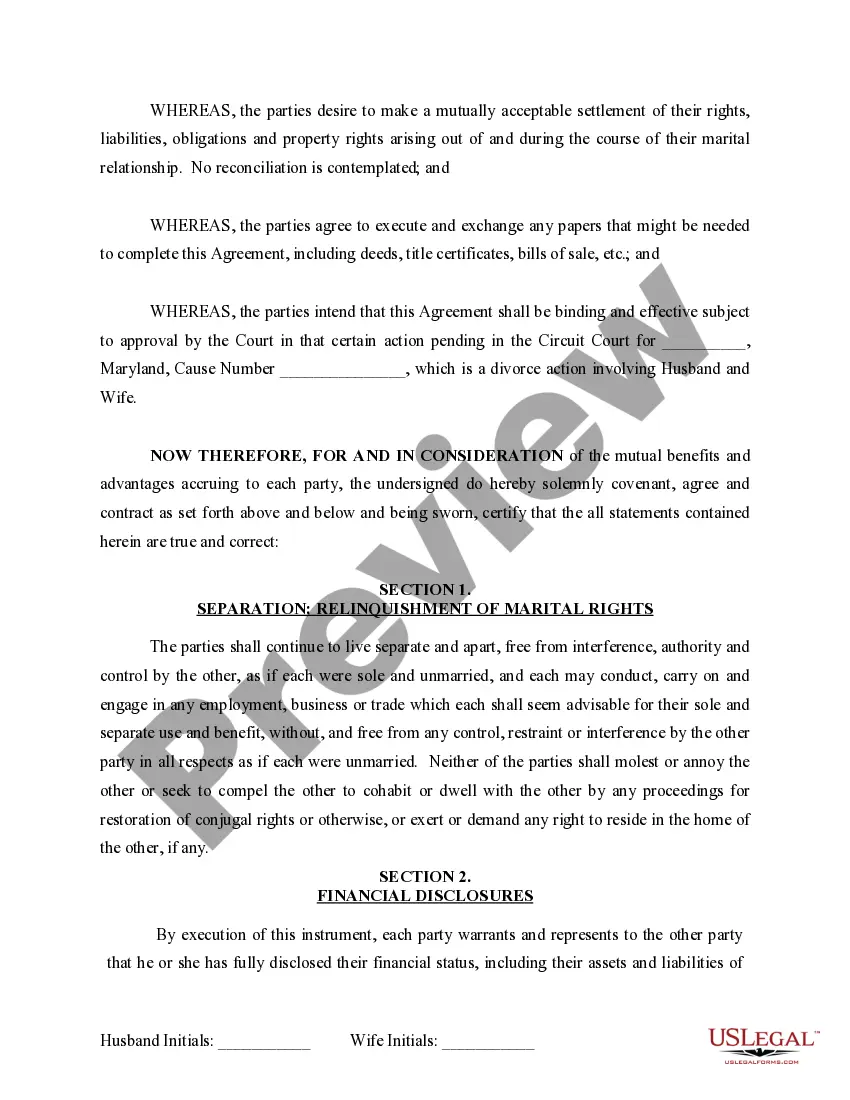
- Details of the separation, including acknowledgment of the absence of children and shared debts or property.
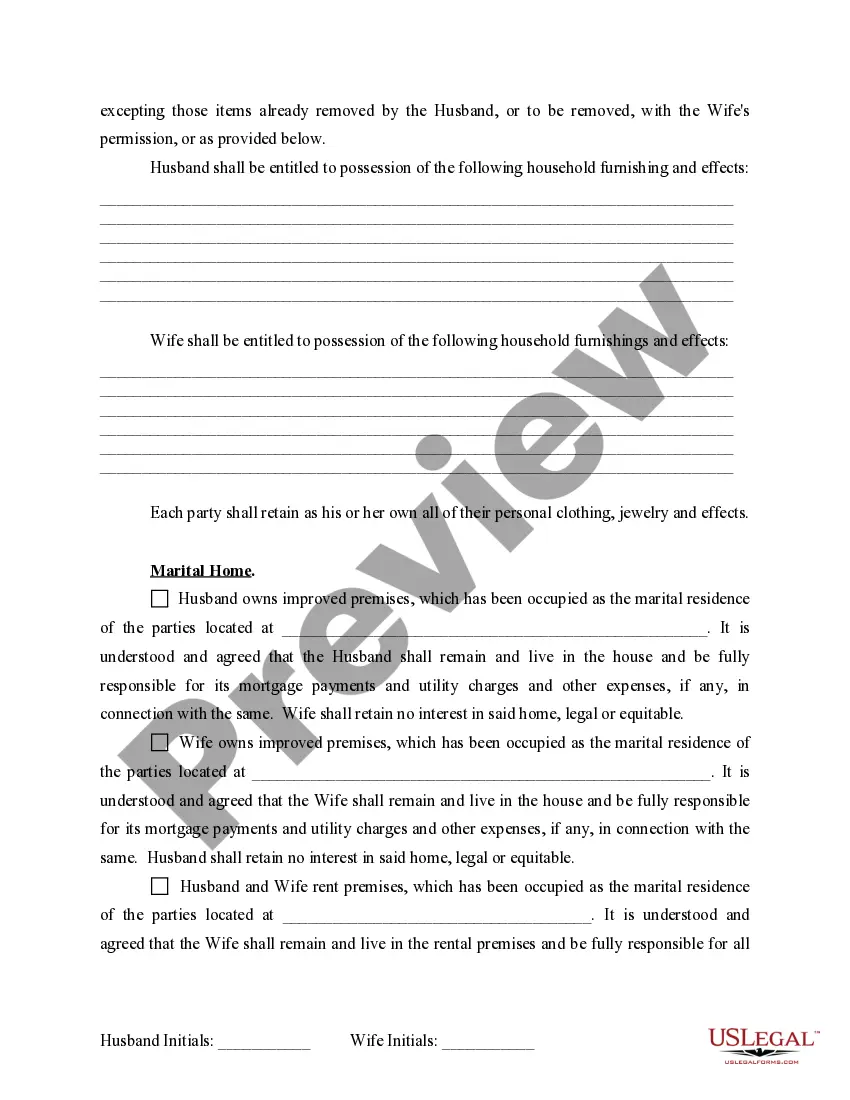
- Provisions for financial disclosures and the division of assets.
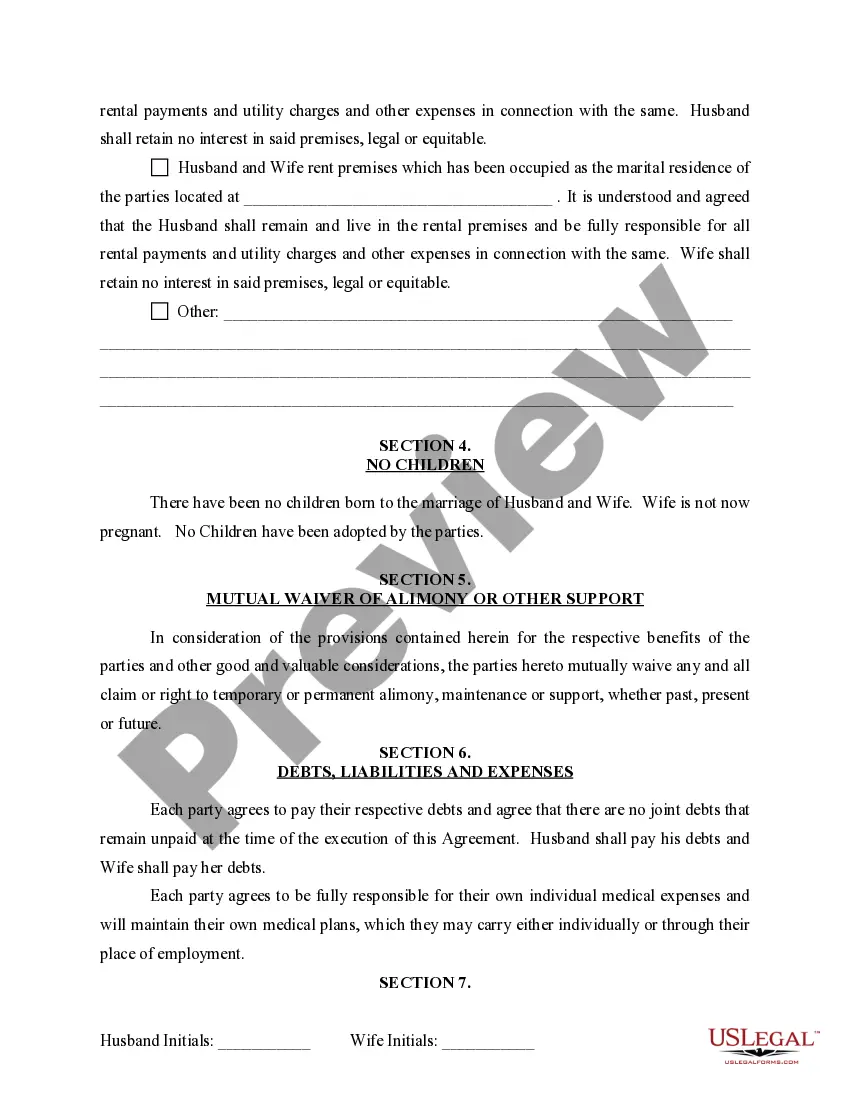
- Mutual waiver of any alimony or support claims.
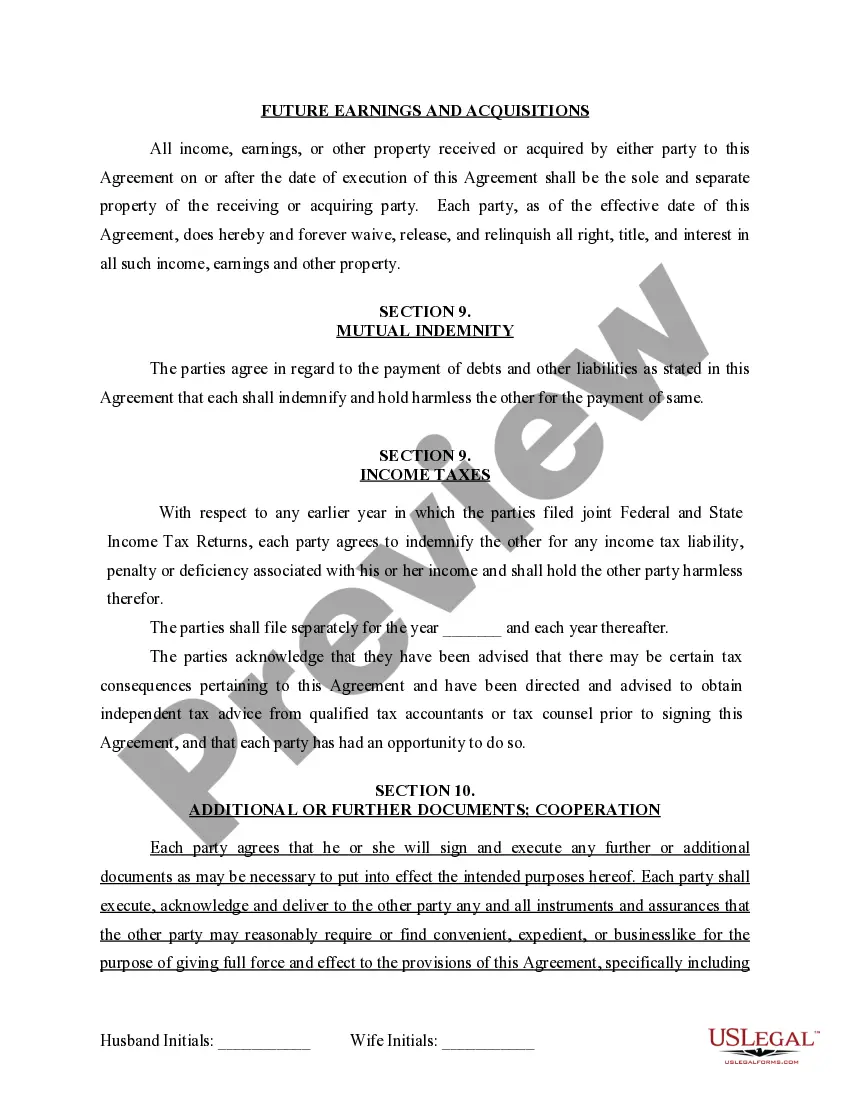
- Specification of payment responsibilities for individual debts.
- Signatures required from both parties with notary acknowledgment.


Situations where this form applies
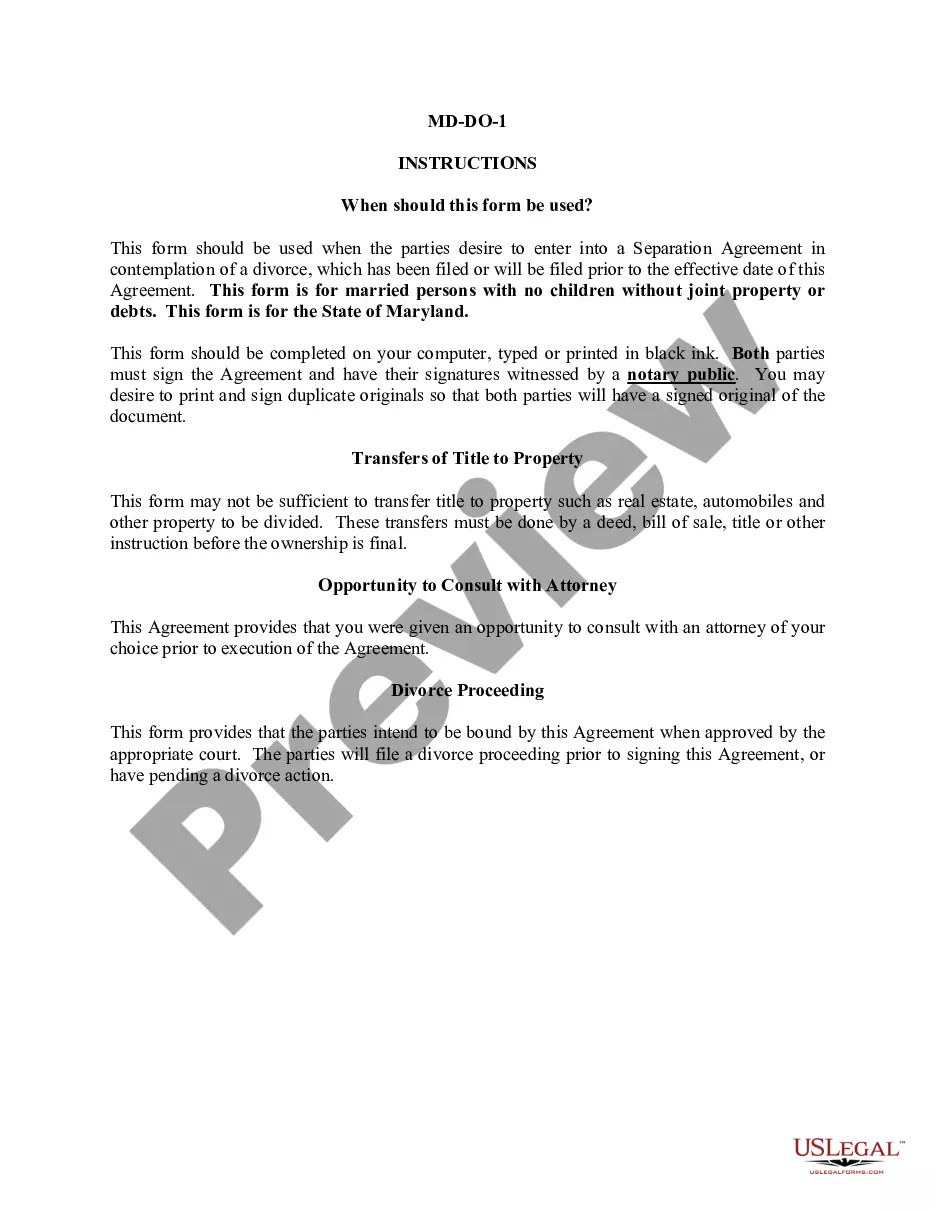
This form should be used when both parties are ready to formalize their separation in anticipation of divorce. It is appropriate for those in Maryland who do not have children and have no shared property or debts, seeking a legal framework to clarify their financial responsibilities and rights before divorce proceedings commence.
Who this form is for
- Married couples in Maryland planning to divorce.
- Couples with no children together.
- Individuals with separate assets and no shared financial obligations.
Steps to complete this form
- Identify the full legal names and contact details of both parties.
- Specify the date of marriage and the date the parties separated.
- Fill in the details of any personal property, clarifying who retains which assets.
- Ensure both parties agree to the financial provisions and sign the document.
- Have the signed document notarized to validate its legality.
Does this form need to be notarized?
Notarization is required for this form to take effect. Our online notarization service, powered by Notarize, lets you verify and sign documents remotely through an encrypted video session, available 24/7.
Get your form ready online
Our built-in tools help you complete, sign, share, and store your documents in one place.
Make edits, fill in missing information, and update formatting in US Legal Forms—just like you would in MS Word.
Download a copy, print it, send it by email, or mail it via USPS—whatever works best for your next step.
Sign and collect signatures with our SignNow integration. Send to multiple recipients, set reminders, and more. Go Premium to unlock E-Sign.
If this form requires notarization, complete it online through a secure video call—no need to meet a notary in person or wait for an appointment.
We protect your documents and personal data by following strict security and privacy standards.

Make edits, fill in missing information, and update formatting in US Legal Forms—just like you would in MS Word.

Download a copy, print it, send it by email, or mail it via USPS—whatever works best for your next step.

Sign and collect signatures with our SignNow integration. Send to multiple recipients, set reminders, and more. Go Premium to unlock E-Sign.

If this form requires notarization, complete it online through a secure video call—no need to meet a notary in person or wait for an appointment.

We protect your documents and personal data by following strict security and privacy standards.
Avoid these common issues
- Failing to notarize the agreement, which may invalidate it in court.
- Not fully disclosing financial information, leading to disputes later.
- Leaving sections incomplete or not providing clear asset descriptions.
Why use this form online
- Convenient access to a legally drafted document tailored for your state.
- Editable format allows you to customize the agreement easily.
- Guaranteed compliance with state laws to ensure validity.
Looking for another form?

Form popularity
FAQ
If the property cannot be divided (such as a house), the court will decide on a value. One person can buy out the other person as long as both parties agree to it. Otherwise, the asset may be sold and the funds divided. In Maryland, the court does not decide what to do about the marital assets to be divided.
Separation agreements in Maryland may be oral or written, but in order to be enforceable, they should be written, signed, and notarized.If you decide not to divorce, your separation agreement can remain in effect as a contract.
Though the term non-marital property often refers to any personal or real property owned prior to, and brought into the marriage, it can also refer to things such as inheritances and gifts made to only one spouse.
Buying a home while legally married but separated from your former spouse is certainly possible, but there's some extra documentation needed and things to be aware of. First, your lender is going to require your legal separation agreement. If you have a property settlement agreement, they'll need that as well.
In a common-law state, you can apply for a mortgage without your spouse. Your lender won't be able to consider your spouse's financial circumstances or credit while determining your eligibility.If you and your partner were to split up, the home would be yours alone; you wouldn't have to split it with your spouse.
Related Content. Property that is unlikely to be shared between the parties on the breakdown of the marriage or civil partnership unless it is required to meet needs. Generally non-matrimonial property is: Acquired by one party before the marriage.
You can buy a house under one name, and most of the time couples do this because one partner's credit is bad. However, there are advantages to joint mortgages. You should carefully consider the pros and cons of buying a house under only one partner's name.
Maryland is not a Community Property state.For divorcing couples in Community Property states, any property that either spouse owned prior to their marriage or property acquired after the separation would not be considered marital. Additionally, all Community Property is split evenly, 50/50, between the spouses.
In California, each spouse or partner owns one-half of the community property. And, each spouse or partner is responsible for one-half of the debt. Community property and community debts are usually divided equally.And, in a divorce or legal separation in California, it will be treated as community property.