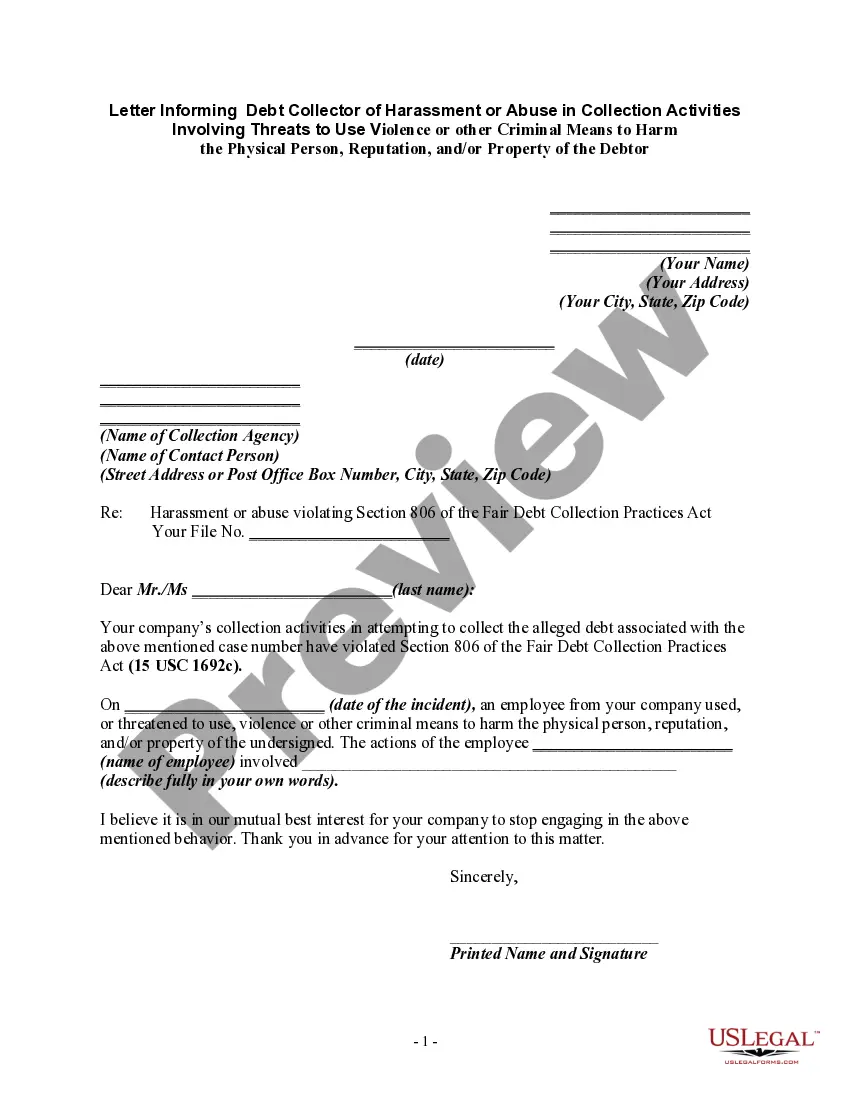
Letter Informing Debt Collector of Harassment or Abuse in Collection Activities Involving Threats to Use Violence or other Criminal Means to Harm the Physical Person, Reputation, and/or Property of the Debtor
What this document covers
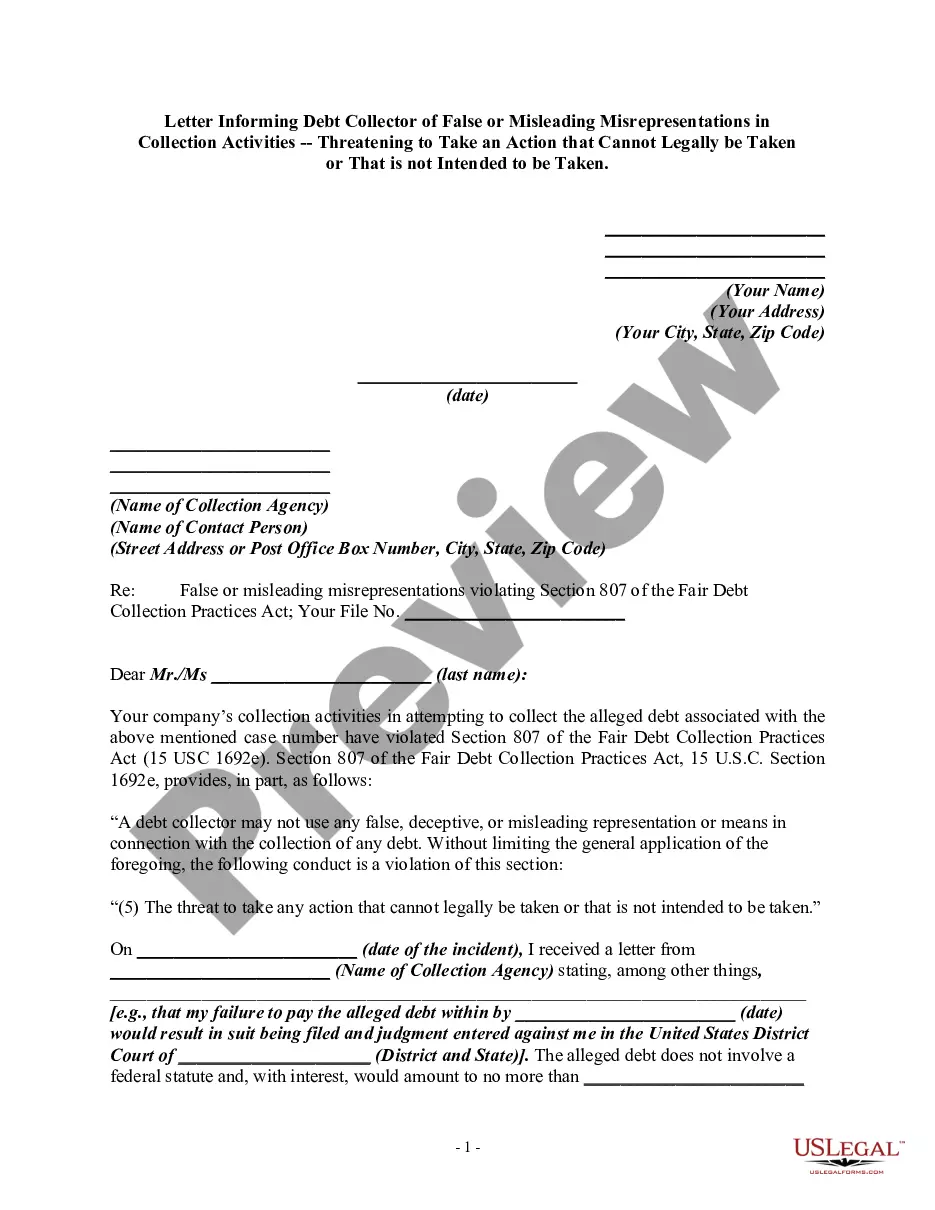
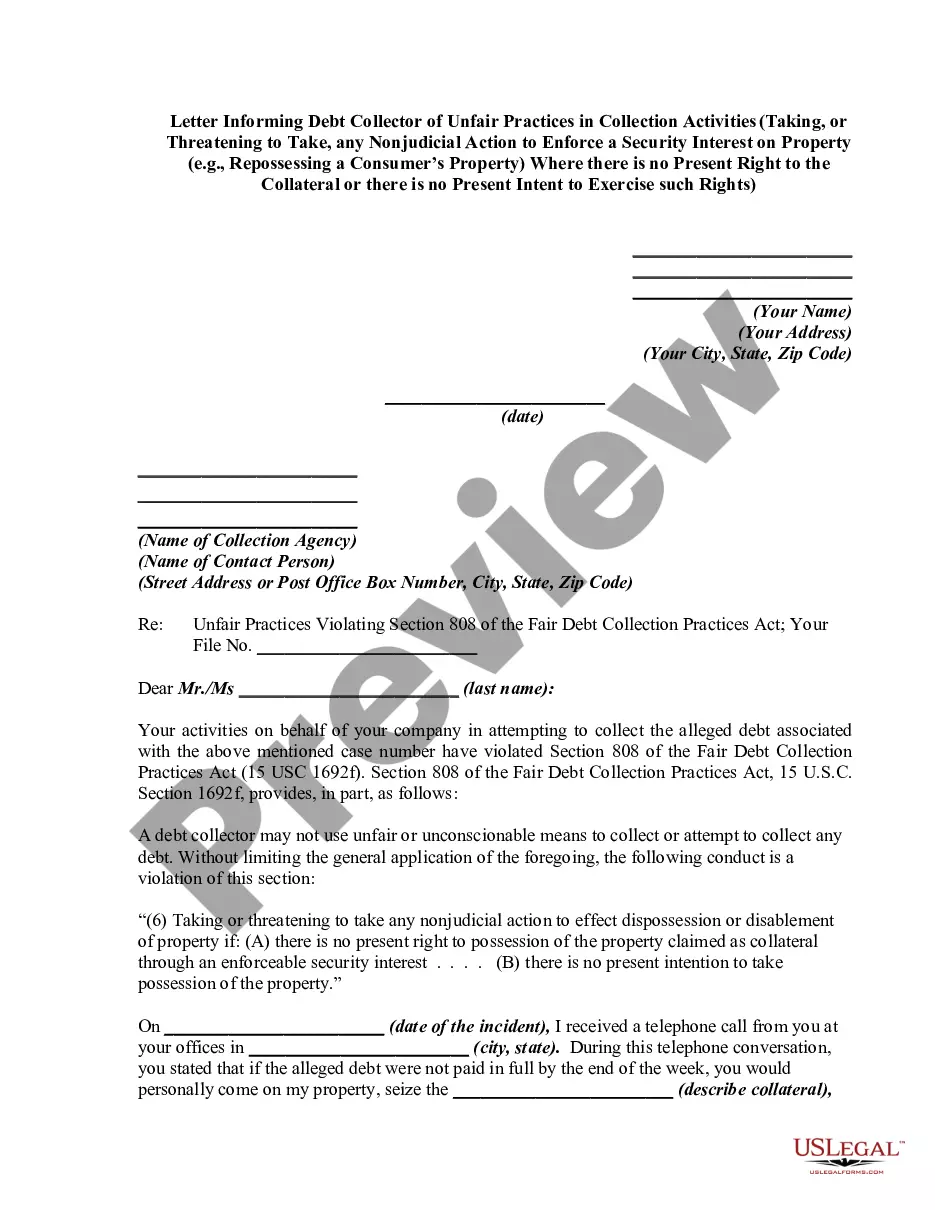
This form is a Letter Informing Debt Collector of Harassment or Abuse in Collection Activities involving threats to use violence or other criminal means to harm the debtor's physical person, reputation, or property. It is designed to inform debt collectors of their illegal actions under the Fair Debt Collection Practices Act and to demand that they cease such activities. This form differs from other debt collection letters by specifically addressing abusive and threatening behaviors, making it a crucial tool for debtors experiencing harassment.
Key parts of this document
- Your personal information (name, address, and date)
- The name and address of the collection agency and the contact person
- A reference to the specific collection case number
- A detailed account of the harassment or abusive behavior encountered
- A clear statement requesting the cessation of such behavior
- Your printed name and signature
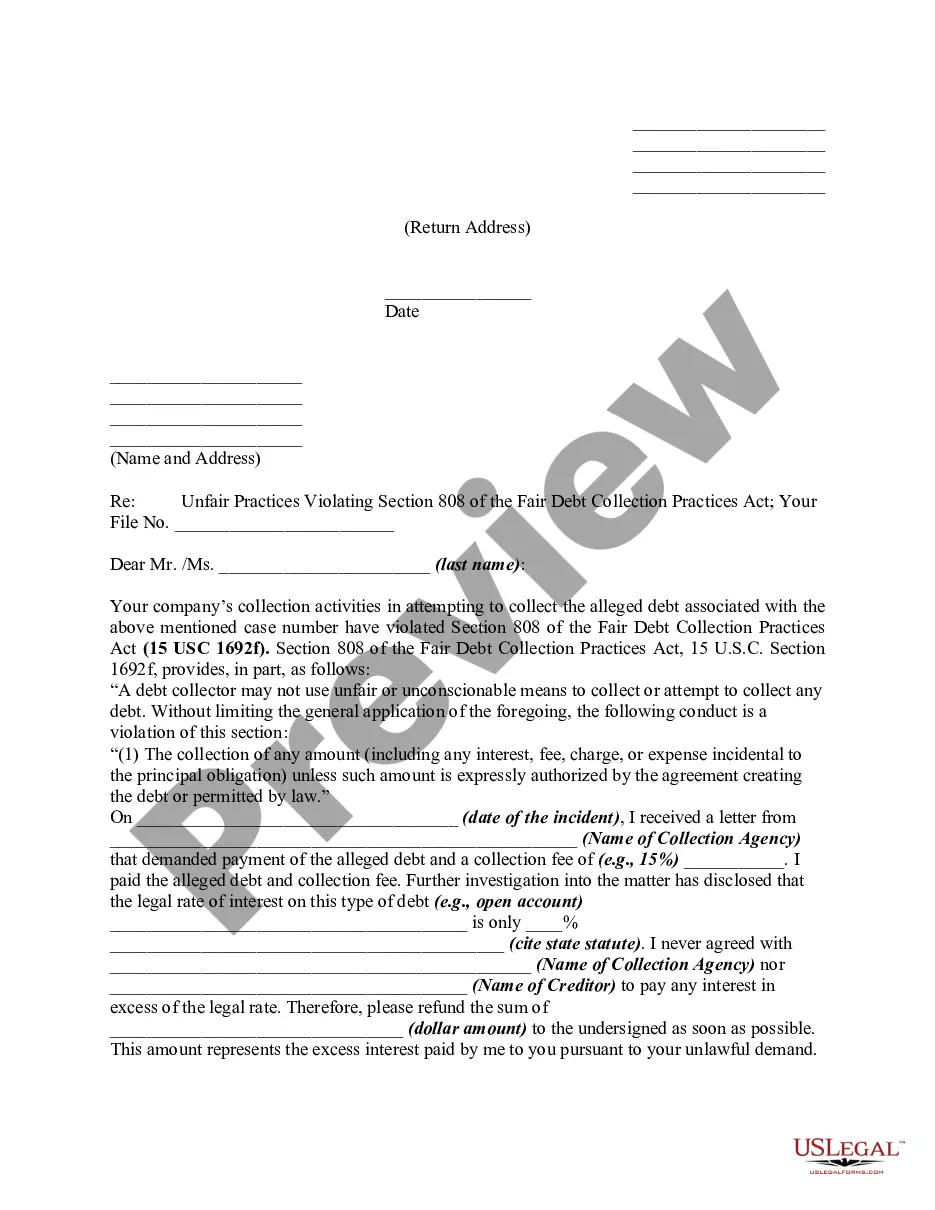
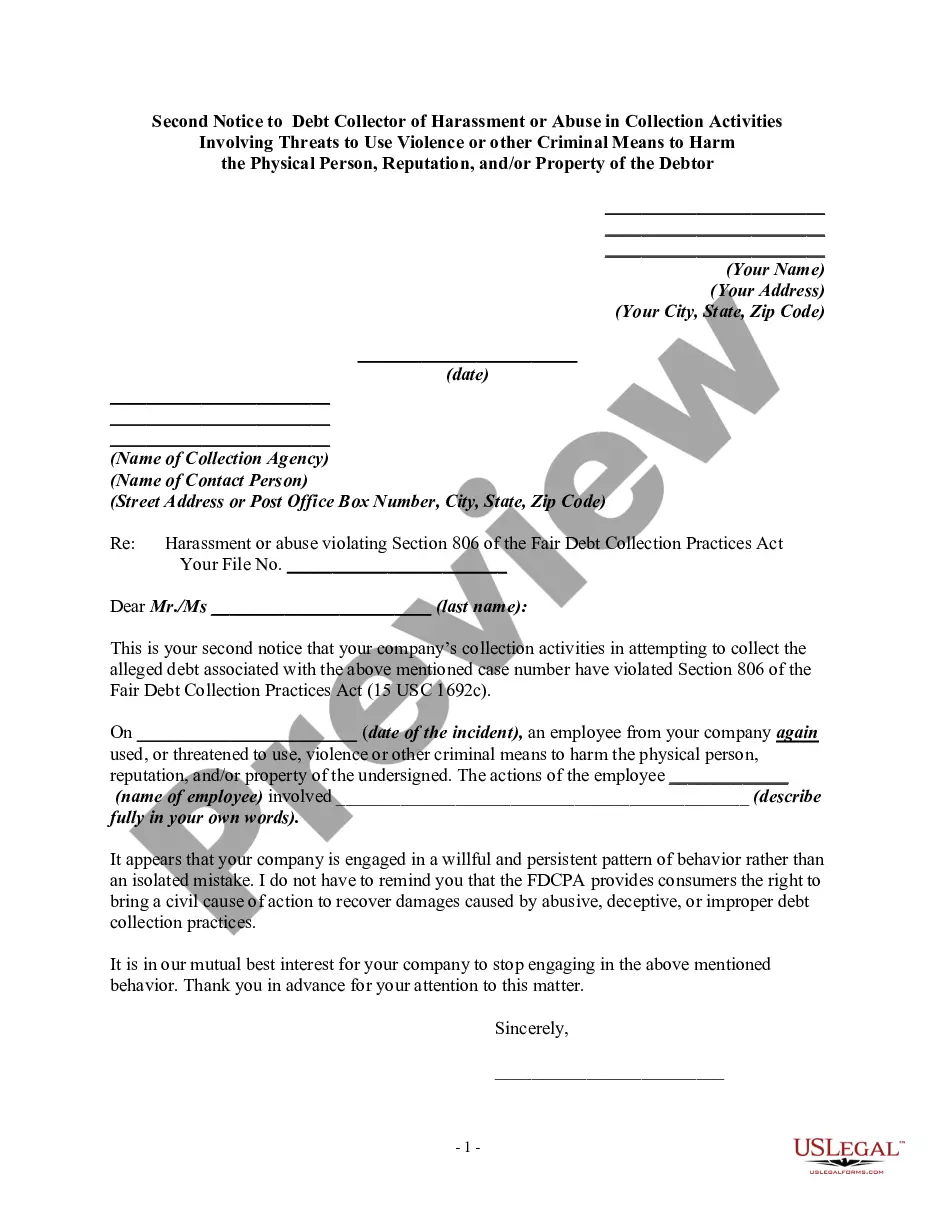
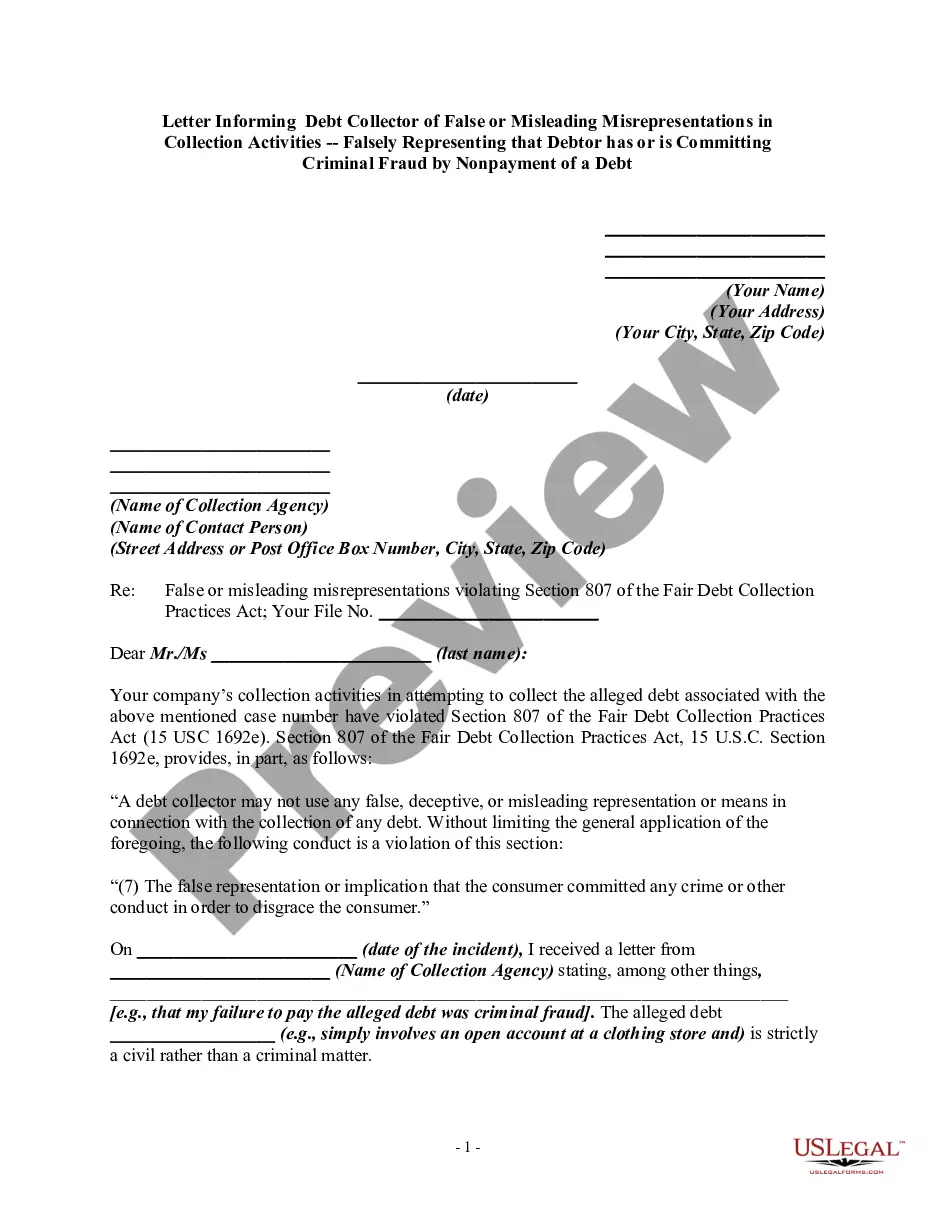
When to use this form
Use this form when you have been subjected to harassment or abusive practices by a debt collector. This includes situations where the collector has made threats of violence or used criminal means to harm you, either physically or to damage your reputation or property. It is essential to document these incidents formally and advise the collection agency to stop their illegal activities.
Who can use this document
- Individuals feeling threatened or harassed by debt collectors
- Debtors who have experienced abusive collection practices
- Anyone seeking to assert their rights under the Fair Debt Collection Practices Act
How to prepare this document
- Enter your full name and address at the beginning of the letter.
- Pertinently fill in the date of writing the letter.
- Write the name and contact information of the collection agency.
- State the date of the incident and the name of the employee involved in the harassment.
- Describe the specific abusive behavior in your own words, ensuring clarity and detail.
- Conclude with your printed name and signature at the end of the letter.
Does this form need to be notarized?
In most cases, this form does not require notarization. However, some jurisdictions or signing circumstances might. US Legal Forms offers online notarization powered by Notarize, accessible 24/7 for a quick, remote process.
Get your form ready online
Our built-in tools help you complete, sign, share, and store your documents in one place.
Make edits, fill in missing information, and update formatting in US Legal Forms—just like you would in MS Word.
Download a copy, print it, send it by email, or mail it via USPS—whatever works best for your next step.
Sign and collect signatures with our SignNow integration. Send to multiple recipients, set reminders, and more. Go Premium to unlock E-Sign.
If this form requires notarization, complete it online through a secure video call—no need to meet a notary in person or wait for an appointment.
We protect your documents and personal data by following strict security and privacy standards.

Make edits, fill in missing information, and update formatting in US Legal Forms—just like you would in MS Word.

Download a copy, print it, send it by email, or mail it via USPS—whatever works best for your next step.

Sign and collect signatures with our SignNow integration. Send to multiple recipients, set reminders, and more. Go Premium to unlock E-Sign.

If this form requires notarization, complete it online through a secure video call—no need to meet a notary in person or wait for an appointment.

We protect your documents and personal data by following strict security and privacy standards.
Common mistakes to avoid
- Failing to provide specific details about the harassment incident.
- Not addressing the letter to the correct contact person.
- Omitting your personal information or the case number.
- Using vague language instead of clearly stating the abusive behavior.
Benefits of using this form online
- Convenient access to professionally drafted legal templates.
- Editable forms that allow for customization based on your situation.
- Instant download for immediate use.
- Guidance provided to ensure compliance with legal standards.
Legal use & context
- The letter ensures that you formally notify the collector of their unlawful actions.
- Submitting this letter can help establish a record in case of further disputes.
- Legal protections under the Fair Debt Collection Practices Act enforce your rights against harassment.
Key takeaways
- This form addresses harassment by debt collectors under federal law.
- Filling out this letter correctly is crucial for protecting your rights.
- Use this letter to formally ask debt collectors to cease abusive practices.
Looking for another form?
Form popularity
FAQ
In the letter, reference the date of the initial contact and the method, for example, "a phone call received from your agency on April 25, 2019." You also need to provide a statement that you're requesting validation of the debt. Do not admit to owing the debt or make any reference to payment.
Debt Collectors Can't Call You Repeatedly to Harass You This means that while the FDCPA doesn't place a specific limit on the number of calls debt collectors can make, it prohibits them from calling you multiple times just to harass you. (15 U.S. Code § 1692d).
Creditor harassment is any type of unsolicited and repeated contact from the creditor or a debt collection agency that disturbs you, frightens you, or makes you feel threatened.
Never Give Them Your Personal Information. A call from a debt collection agency will include a series of questions. Never Admit That The Debt Is Yours. Even if the debt is yours, don't admit that to the debt collector. Never Provide Bank Account Information.
If you believe a debt collector is harassing you, you can submit a complaint with the CFPB online or by calling (855) 411-CFPB (2372). You can also contact your state's attorney general .
Under the Fair Debt collection Practices Act (FDCPA), I have the right to request validation of the debt you say I owe you. I am requesting proof that I am indeed the party you are asking to pay this debt, and there is some contractual obligation that is binding on me to pay this debt.
How Long Can a Debt Collector Pursue an Old Debt? Each state has a law referred to as a statute of limitations that spells out the time period during which a creditor or collector may sue borrowers to collect debts. In most states, they run between four and six years after the last payment was made on the debt.
Your creditor also has to report your complaint to the Financial Conduct Authority (FCA), even if they respond within 3 business days. If you need help with this, you can phone our debt helpline on 0300 330 1313. We can usually help between 9am and 8pm, Monday to Friday.
The definition of debt collection harassment is to intimidate, abuse, coerce, bully or browbeat consumers into paying off debt. This happens most often over the phone, but harassment could come in the form of emails, texts, direct mail or talking to friends or neighbors about your debt.