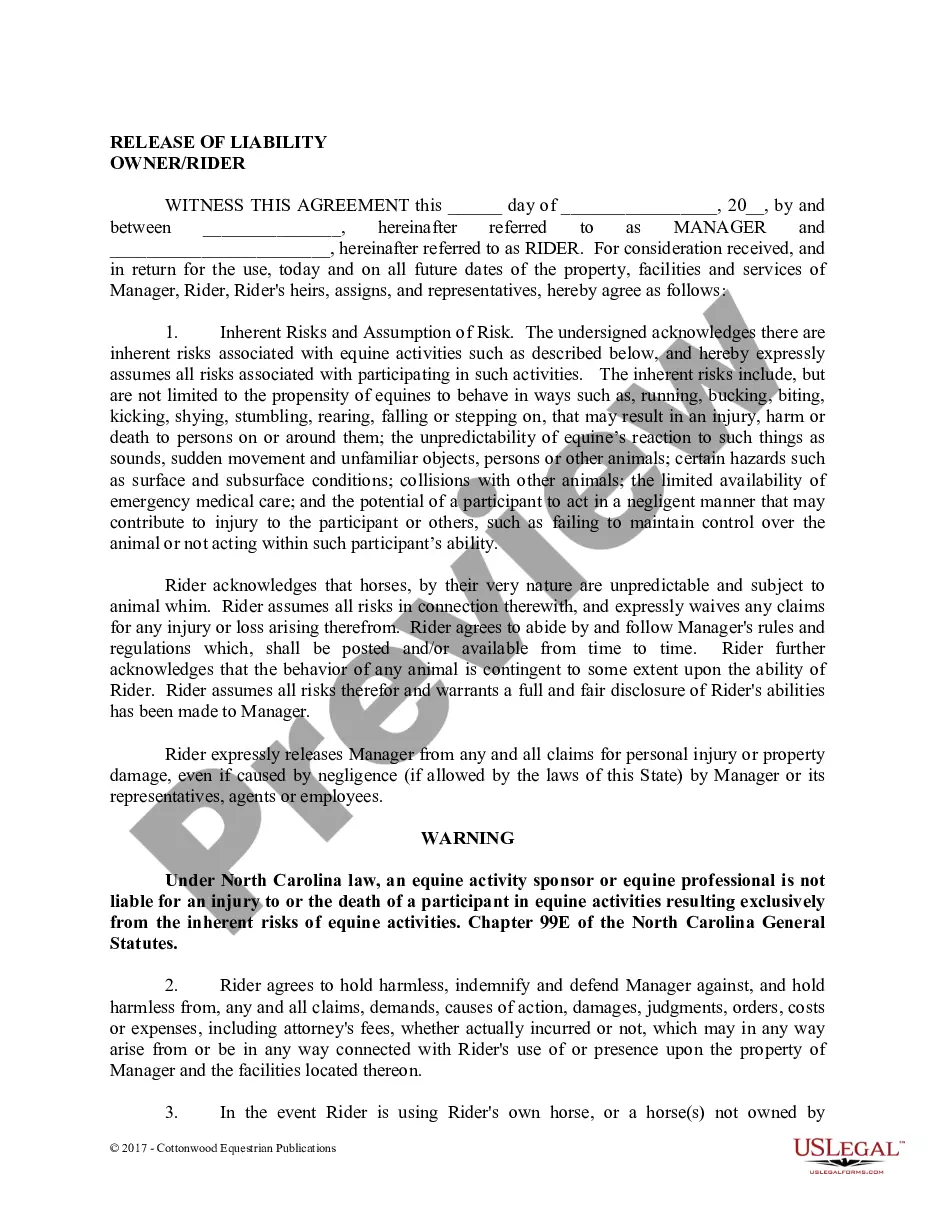
Employee Confidentiality and Noncompetition Agreement
Understanding this form
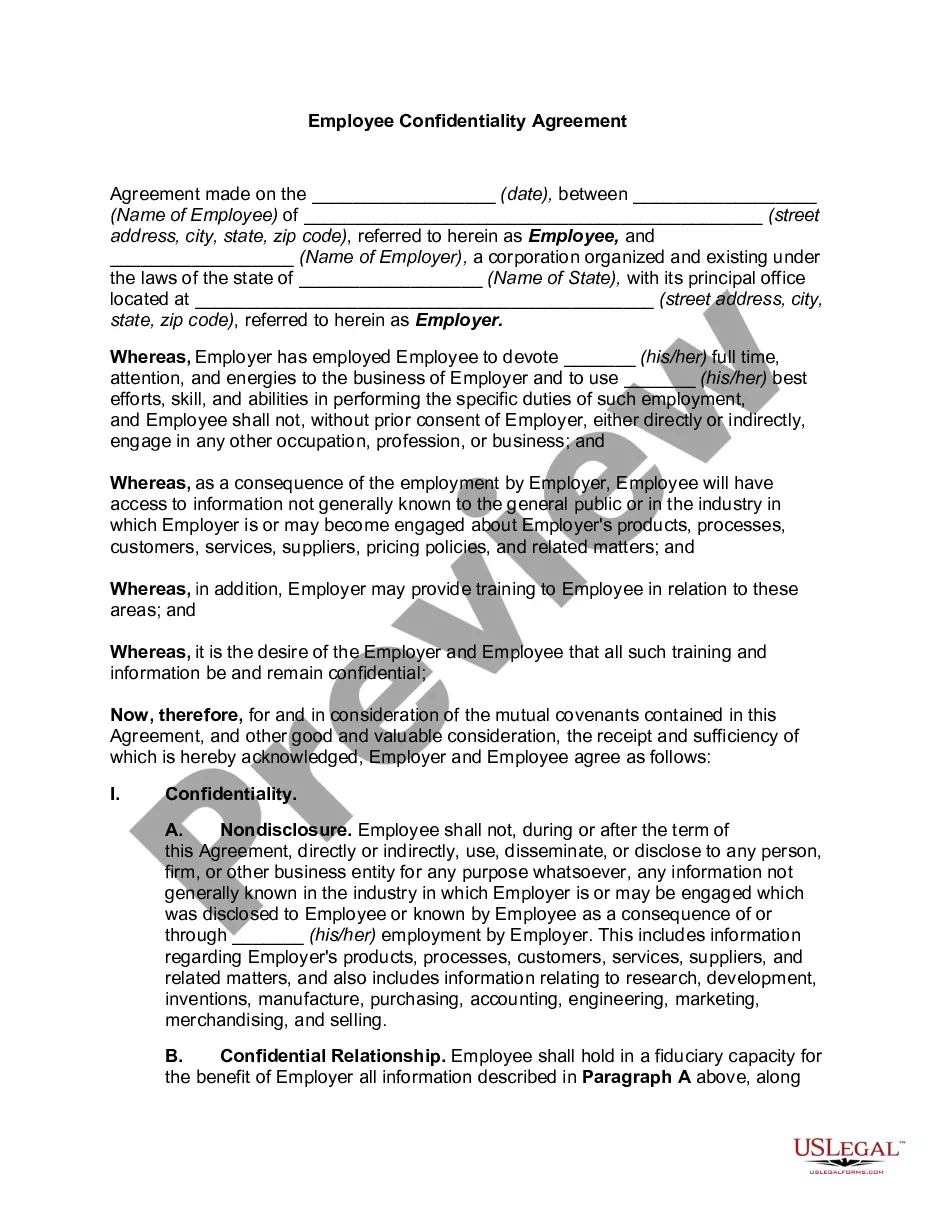
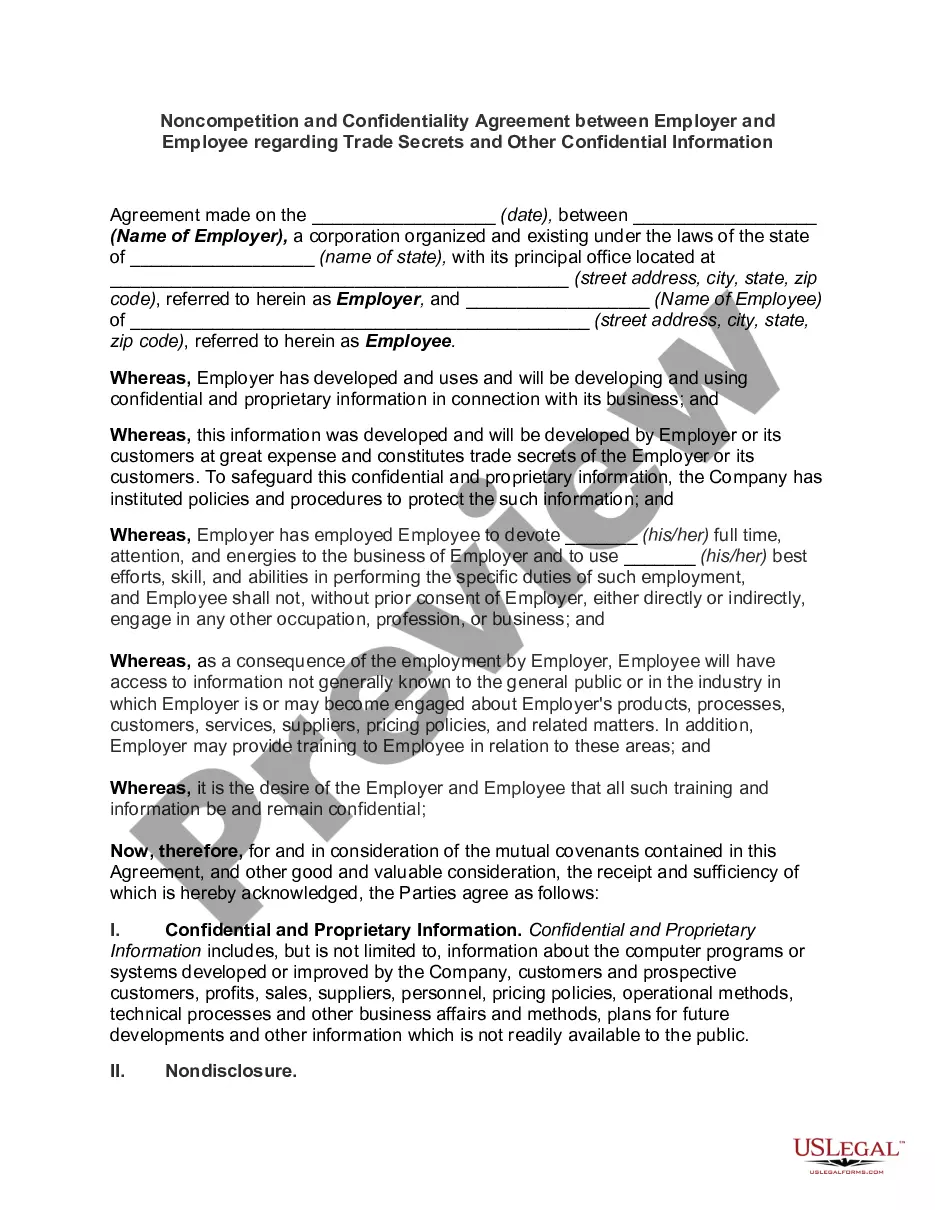
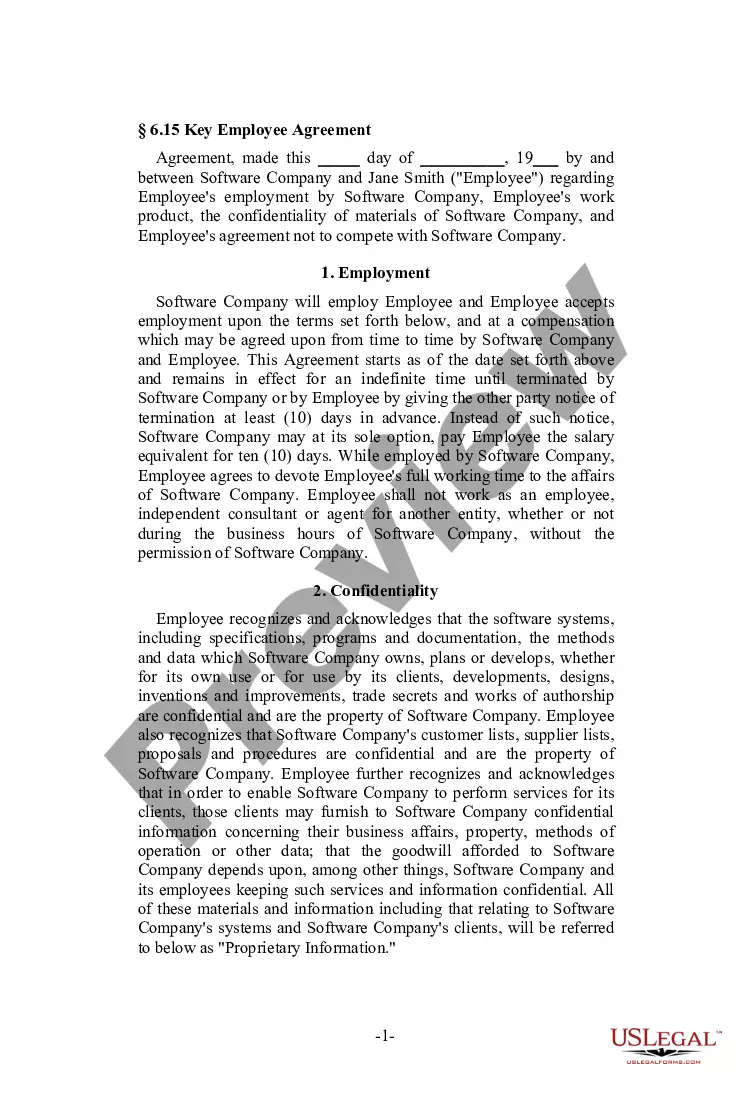
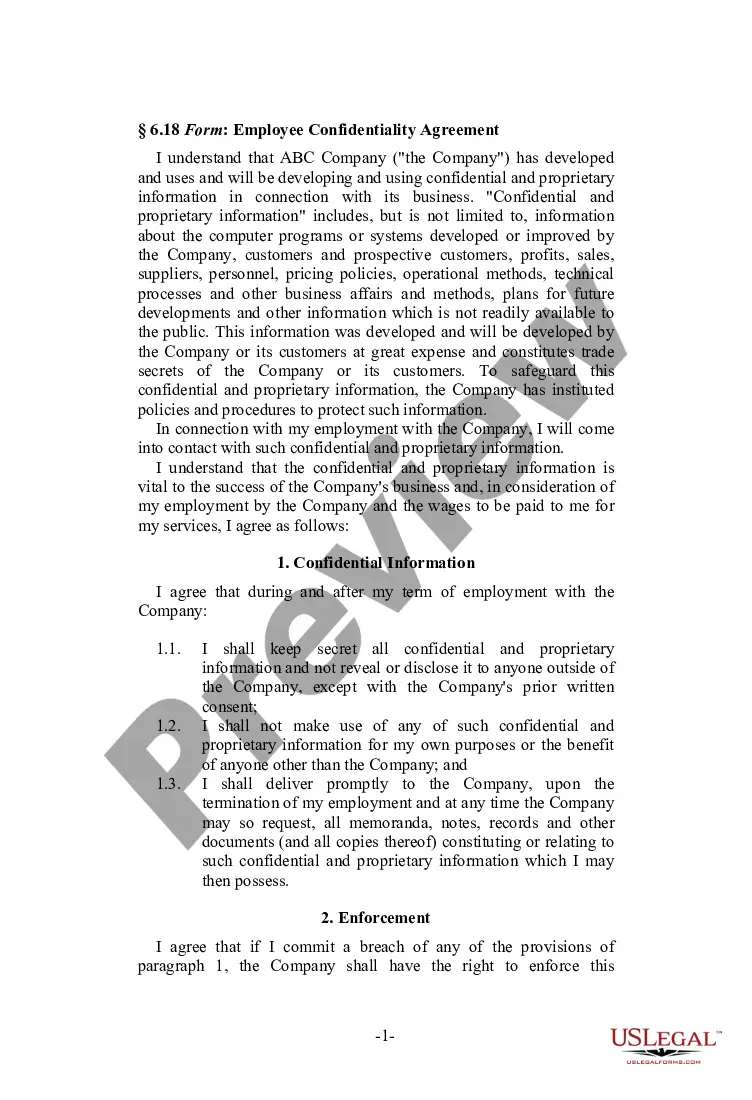
The Employee Confidentiality and Noncompetition Agreement is a legally binding document designed to protect a company's confidential and proprietary information. This form is particularly relevant in the computer, internet, and software industries, where sensitive business data is often at risk. Unlike other employment agreements, this document not only ensures confidentiality but also includes clauses to prevent employees from engaging in competing activities during and after their employment.
Main sections of this form
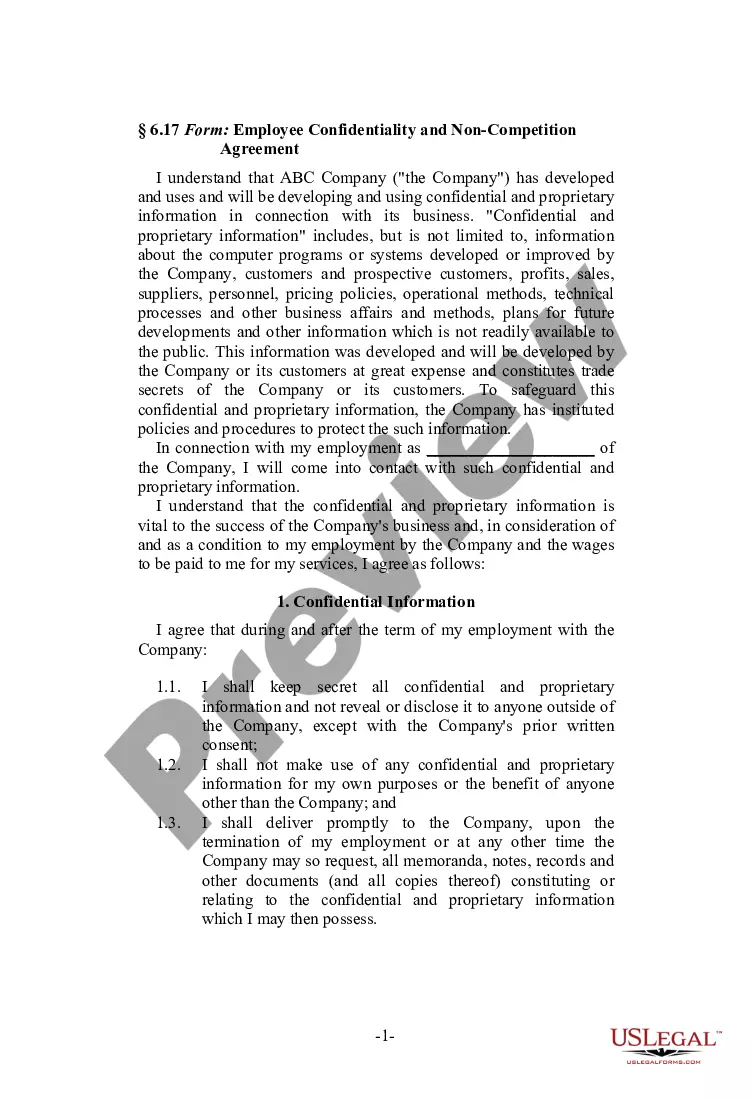
- Confidential Information: Outlines the obligation to keep proprietary data secret during and after employment.
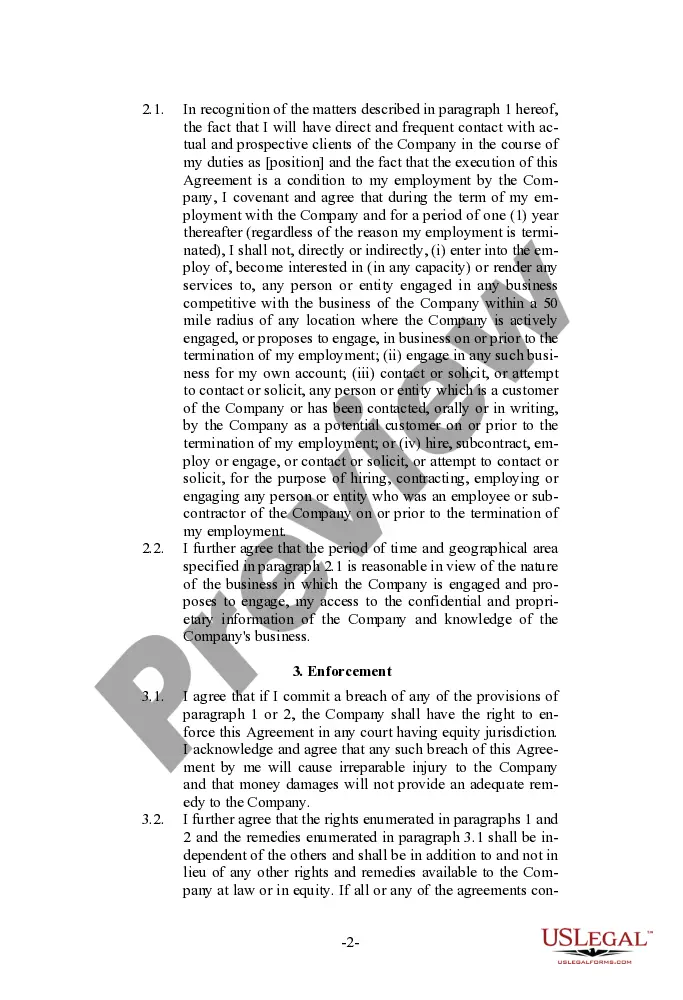
- Covenant Not to Compete: Prohibits the employee from engaging in competitive activities for one year post-employment.
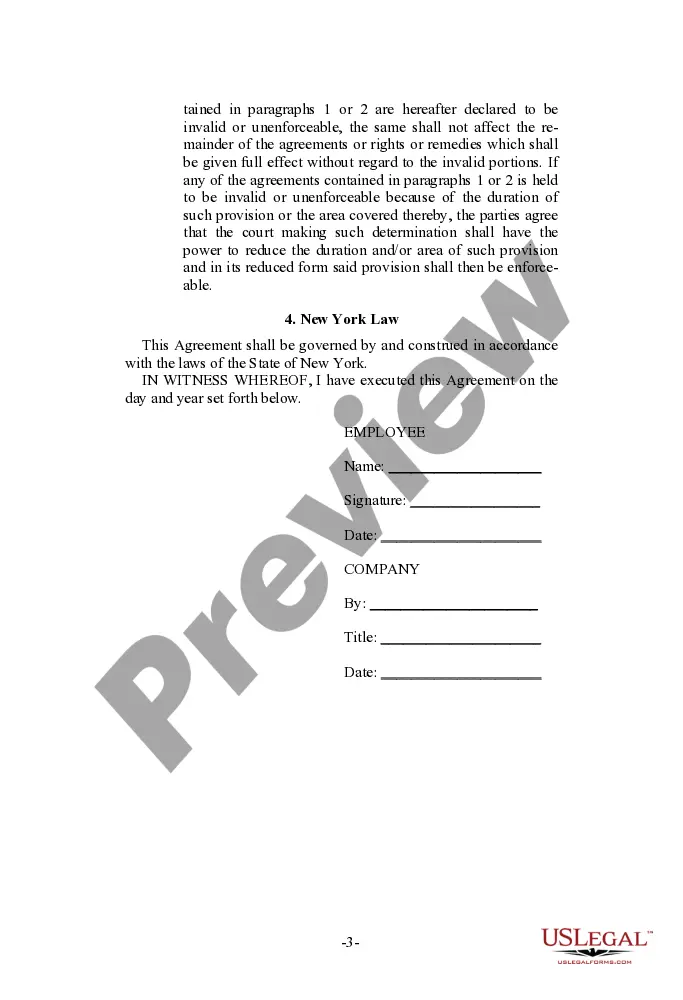
- Enforcement: Describes the company's rights if the agreement is breached, including potential legal actions.
- Governing Law: Specifies that the agreement is governed by the laws of New York State.
- Signature Section: Requires signatures from both the employee and a company representative to validate the agreement.
When to use this form
This agreement should be used when hiring new employees in industries where confidential information is prevalent. It's essential for roles that involve direct access to sensitive client data, proprietary technology, or business strategies. The form protects the companyâs interests by preventing former employees from using insider knowledge for competitive advantage.
Who can use this document
This form is intended for:
- Employers in the computer, internet, and software sectors.
- Organizations looking to secure their confidential information and trade secrets.
- HR professionals responsible for drafting employment contracts.
- Business owners hiring employees who will be privy to sensitive operational knowledge.
Completing this form step by step
- Identify the parties involved: Fill in the company name and address, and the employee's name and title.
- Specify the terms: Complete the sections detailing the nature of confidential information and the noncompetition restrictions.
- Enter effective dates: Include the start date of employment and the termination date of the non-compete clause.
- Review all clauses: Ensure that all sections are understandable and enforceable based on your specific business needs.
- Obtain signatures: Have both the employee and an authorized company representative sign the agreement, and date it accordingly.
Does this form need to be notarized?
This form does not typically require notarization unless specified by local law. It is important to check with legal counsel or state regulations to confirm any notarization requirements specific to your jurisdiction.
Get your form ready online
Our built-in tools help you complete, sign, share, and store your documents in one place.
Make edits, fill in missing information, and update formatting in US Legal Forms—just like you would in MS Word.
Download a copy, print it, send it by email, or mail it via USPS—whatever works best for your next step.
Sign and collect signatures with our SignNow integration. Send to multiple recipients, set reminders, and more. Go Premium to unlock E-Sign.
If this form requires notarization, complete it online through a secure video call—no need to meet a notary in person or wait for an appointment.
We protect your documents and personal data by following strict security and privacy standards.

Make edits, fill in missing information, and update formatting in US Legal Forms—just like you would in MS Word.

Download a copy, print it, send it by email, or mail it via USPS—whatever works best for your next step.

Sign and collect signatures with our SignNow integration. Send to multiple recipients, set reminders, and more. Go Premium to unlock E-Sign.

If this form requires notarization, complete it online through a secure video call—no need to meet a notary in person or wait for an appointment.

We protect your documents and personal data by following strict security and privacy standards.
Mistakes to watch out for
- Failing to clearly define what constitutes confidential information.
- Neglecting to specify the geographical limits of the noncompetition clause.
- Not having both parties sign and date the agreement, which could render it unenforceable.
- Using vague language that may lead to misinterpretation of the terms.
- Overlooking the need to align the agreement with current state laws regarding noncompete enforceability.
Benefits of using this form online
- Convenience: Download the form instantly and customize it to fit your specific needs.
- Editability: Easily modify the language to reflect your businessâs terms and conditions.
- Reliability: Form templates are drafted by licensed attorneys to ensure legal compliance.
- Accessibility: Save and store the document electronically for easy retrieval as needed.
Legal use & context
- The agreement is enforceable in a court of law if properly executed and reasonable in scope.
- Violations may result in legal action, including injunctions or claims for damages.
- States may have varying enforceability standards for noncompete clauses based on duration and geographic area.
Summary of main points
- The Employee Confidentiality and Noncompetition Agreement is crucial for protecting company secrets.
- Employers should clearly define terms and obligations in the agreement.
- This agreement is subject to specific state laws and may require customization for other jurisdictions.
- Utilizing an online form can streamline the process and ensure legal compliance.
Looking for another form?

Form popularity
FAQ
Yes, and no! When drafting the employment agreement, it is wise to include a clause requiring the employee to execute such further documents and agreements as the employer deems reasonably necessary - and then, when they sign those documents, remember to give some fresh consideration with the agreement.
Confidentiality, non-compete and non-solicitation agreements are common employment law contracts.Confidentiality/non-disclosure agreements are contracts in which the employee promises not to disclose certain proprietary information, such as trade secrets.
While an employer has the right to demand its employees sign a NDA when those employees have access to valuable company data (e.g. product formulas, private customer lists, financial reports, etc.), the employer should not ask an employee to sign a confidentiality agreement if the purpose is to protect information that
Generally, confidentiality agreements are enforceable when they meet the general requirements of a contract.
California - Non-compete clauses are not enforceable under California law. However, LegalNature's non-compete agreement may still be used to prohibit the employee from soliciting customers and other employees away from the employer.Non-compete clauses are generally not enforceable.
The cold hard truth is that most NDAs do not hold up in court. Non-Disclosure Agreements are most effective in establishing a paper trail of confidential information as it relates to partnerships, and discouraging partners from misappropriating proprietary information.
A confidentiality agreement is a legally binding contract that states two parties will not share or profit from confidential information. A business usually gives a confidentiality agreement to an employee or contractor to make sure its trade secrets or proprietary information remains private.
While an employer has the right to demand its employees sign a NDA when those employees have access to valuable company data (e.g. product formulas, private customer lists, financial reports, etc.), the employer should not ask an employee to sign a confidentiality agreement if the purpose is to protect information that
Employers must be prepared to terminate any employee who refuses to sign the agreement. If an employer allows even one employee to refuse and remain employed, the agreements signed by the other employees will not be legally binding.