Third-Party Consultant Nondisclosure Agreement
What is this form?
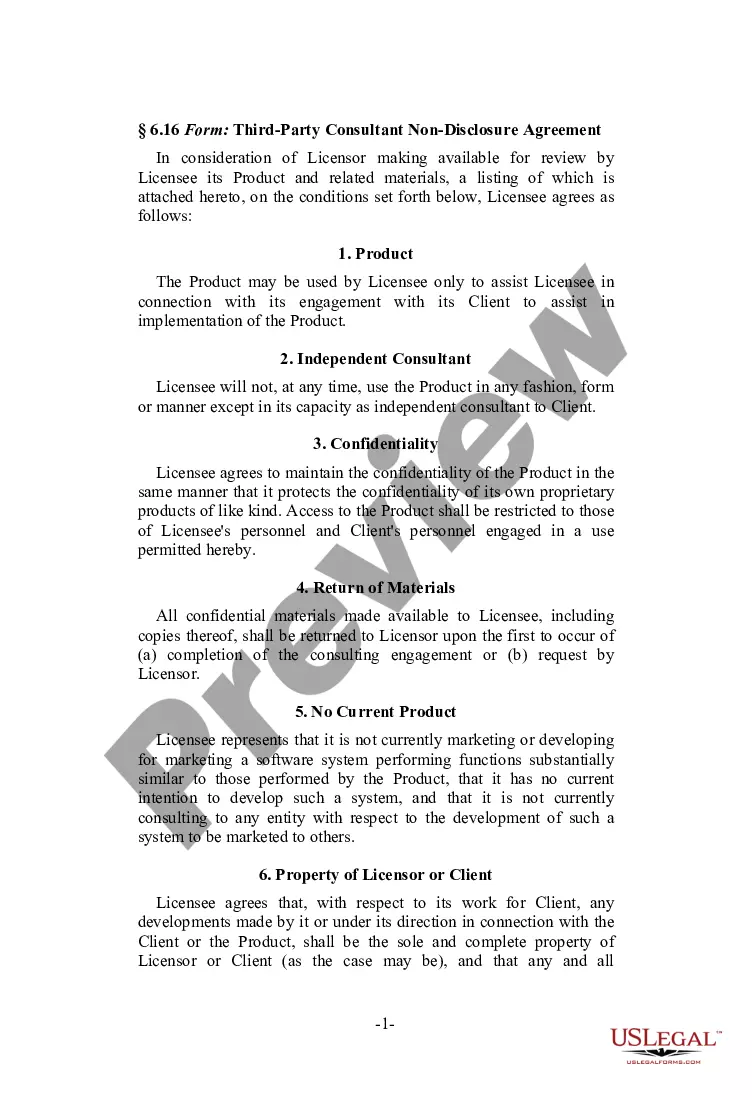
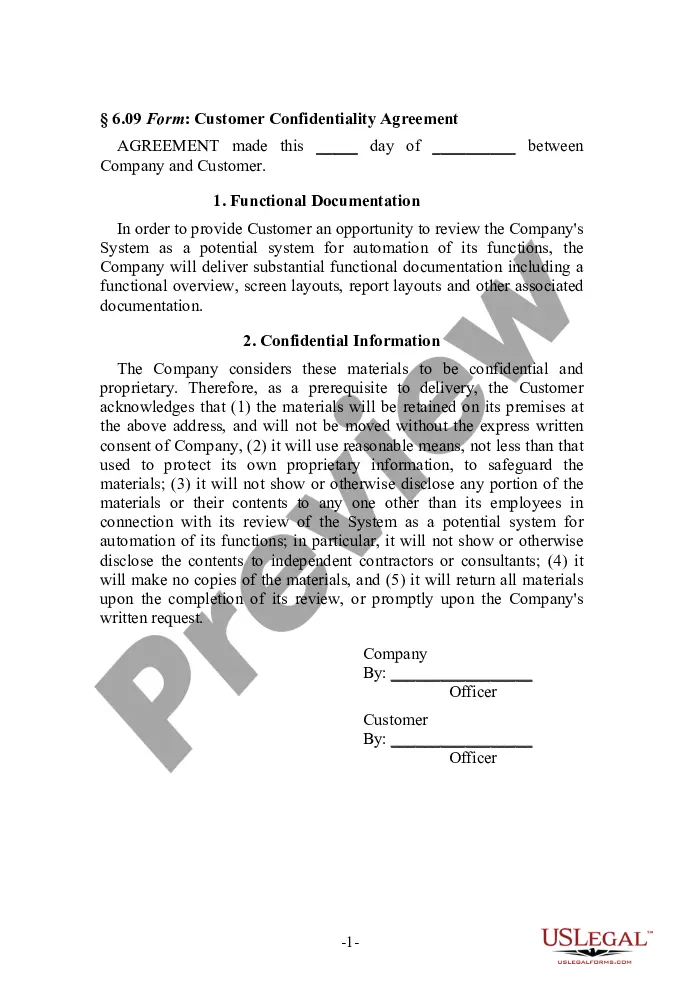
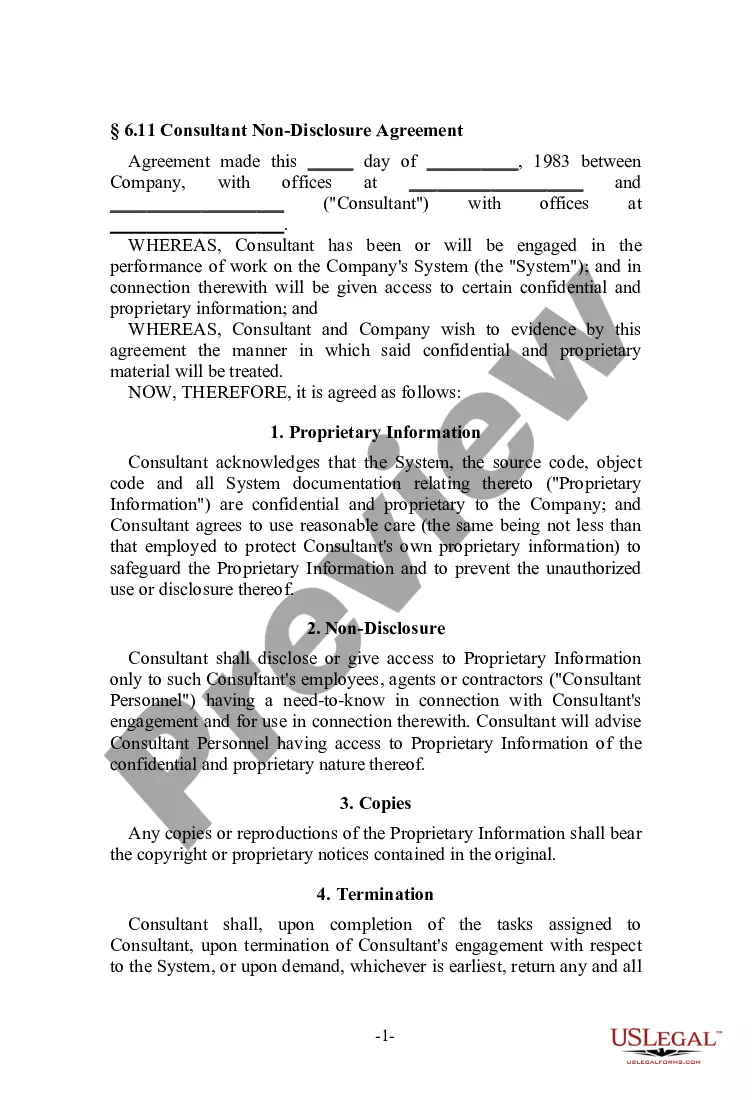
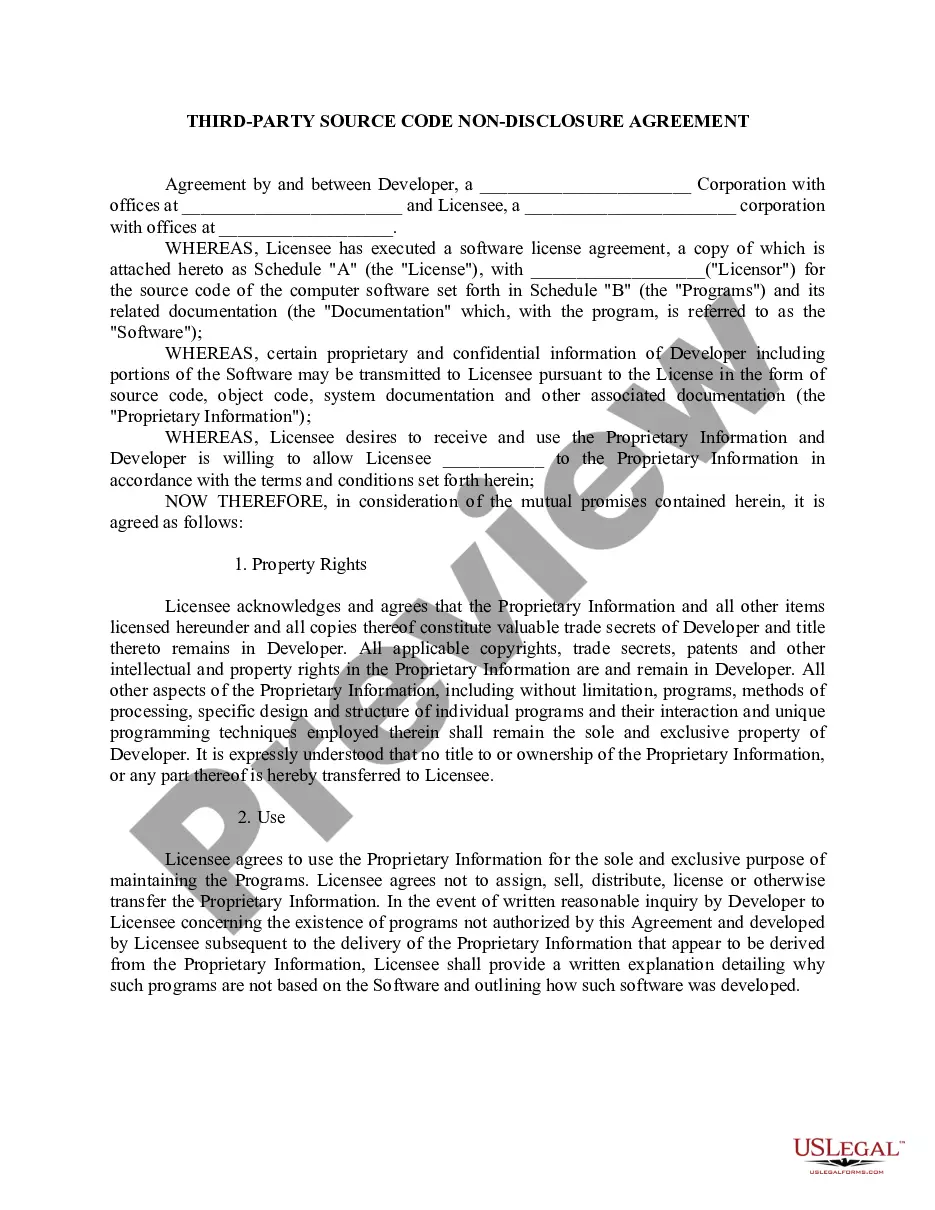
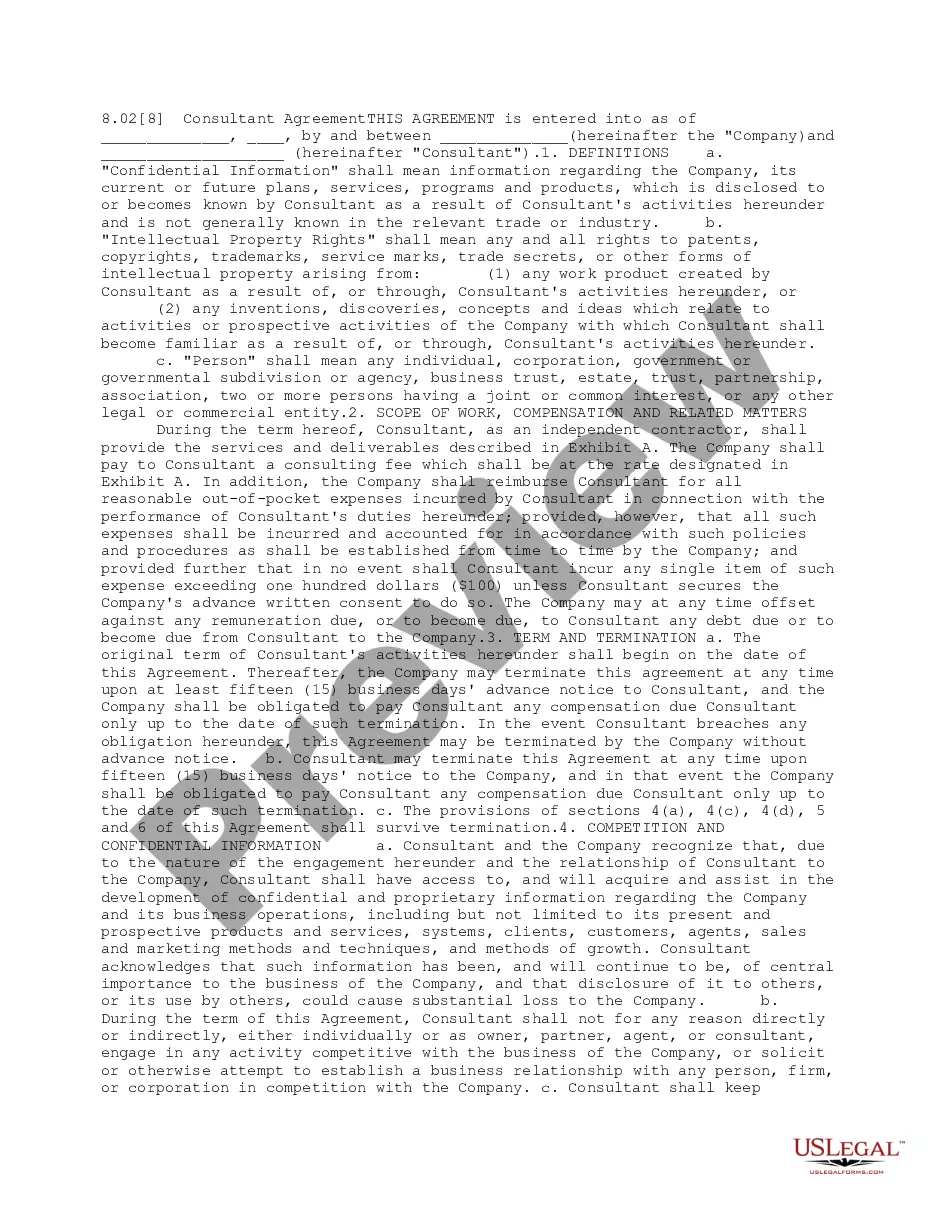
The Third-Party Consultant Nondisclosure Agreement is a legal document designed to protect confidential information shared between a licensor and a third-party consultant. This agreement is particularly relevant in the computer, internet, and software industries. It outlines the responsibilities of the consultant in maintaining confidentiality and restricts the use of proprietary information, distinguishing it from other nondisclosure agreements by its specificity to consulting relationships and product-related confidentiality.
Key parts of this document
- Product Definition: Clarifies what constitutes the "Product" and the permitted use by the Licensee.
- Consultantâs Obligations: Outlines that the Licensee must maintain the confidentiality of the Product.
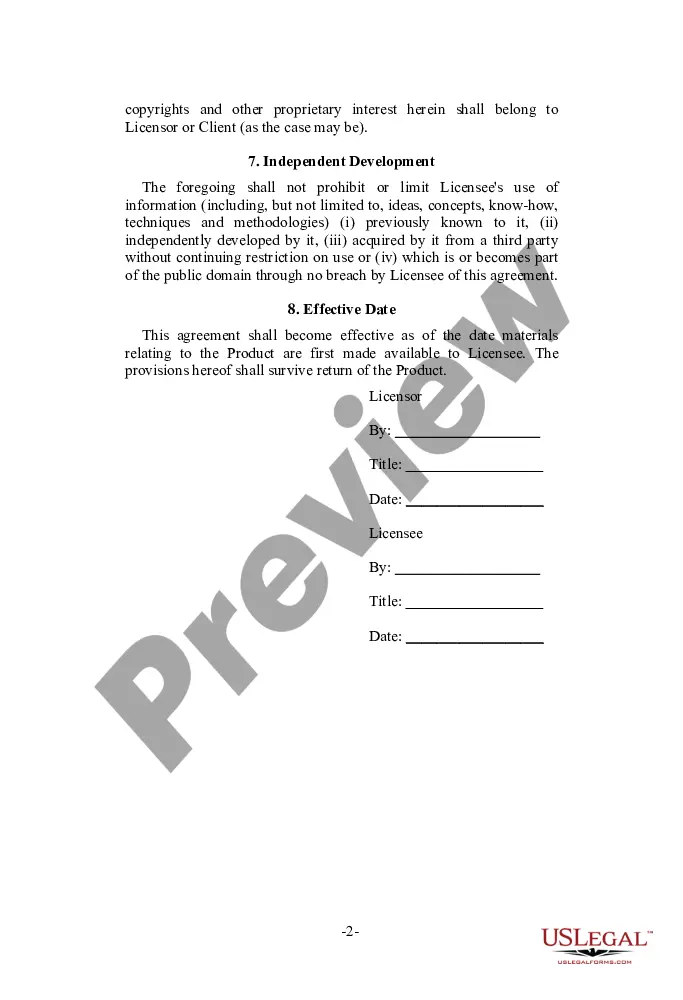
- Return of Materials: Specifies the requirement to return confidential materials upon completion of the engagement or at Licensor's request.
- Ownership Rights: Addresses the ownership of developments and information created during the engagement.
- Effective Date: Indicates when the agreement becomes valid.
Situations where this form applies
This form should be used when a consultant is engaged by a client to assist with the implementation of a product that requires the sharing of confidential information. It provides legal protection for sensitive data and ensures that proprietary technologies and methodologies are not disclosed or misused during or after the consulting period.
Who can use this document
- Consultants in the technology and software industries who handle proprietary information.
- Businesses looking to engage third-party consultants with access to confidential materials.
- Licensors who wish to protect their intellectual property while collaborating with consultants.
- Clients who require confidentiality assurances before sharing sensitive information with a consultant.
Instructions for completing this form
- Identify the parties involved: Clearly state the names of the Licensor and Licensee in the agreement.
- Define the Product: Describe the confidential materials and products covered by the agreement.
- Specify the conditions: Outline the obligations regarding confidentiality and the return of materials.
- Sign and date the agreement: Ensure both parties sign and date the document to validate the agreement.
Notarization guidance
This form does not typically require notarization unless specified by local law, ensuring it remains legally valid without the additional step of notarization.
Get your form ready online
Our built-in tools help you complete, sign, share, and store your documents in one place.
Make edits, fill in missing information, and update formatting in US Legal Forms—just like you would in MS Word.
Download a copy, print it, send it by email, or mail it via USPS—whatever works best for your next step.
Sign and collect signatures with our SignNow integration. Send to multiple recipients, set reminders, and more. Go Premium to unlock E-Sign.
If this form requires notarization, complete it online through a secure video call—no need to meet a notary in person or wait for an appointment.
We protect your documents and personal data by following strict security and privacy standards.

Make edits, fill in missing information, and update formatting in US Legal Forms—just like you would in MS Word.

Download a copy, print it, send it by email, or mail it via USPS—whatever works best for your next step.

Sign and collect signatures with our SignNow integration. Send to multiple recipients, set reminders, and more. Go Premium to unlock E-Sign.

If this form requires notarization, complete it online through a secure video call—no need to meet a notary in person or wait for an appointment.

We protect your documents and personal data by following strict security and privacy standards.
Common mistakes
- Failing to clearly define the Product and what is considered confidential.
- Not specifying the return of materials after the consulting engagement.
- Allowing unauthorized personnel access to confidential information.
- Neglecting to sign the agreement, making it unenforceable.
Why use this form online
- Convenience: Easily downloadable and editable to fit specific needs.
- Accessibility: Available 24/7 to help you get started right away.
- Security: Assured reliability when sharing and storing sensitive information online.
Looking for another form?







Form popularity
FAQ
The party to be charged must have signed the contract. Since the NDAs benefit you, so long as the other party has signed, that ishould be sufficient.
Identify each party in the first section of the form. The NDA form will start by declaring it to be an agreement and identifying who the agreement is between. Whoever is disclosing the information to be protected is the "disclosing party"; write his or her name on this space.
An employer will often require an employee to sign an NDA because it allows their company to operate at a higher level, with less risk.Understand, your employer is not asking you to sign an NDA out of mistrust, they are asking you to sign one because it is essential to conducting business smoothly and efficiently.
Set the date of the agreement. Describe the two parties, sometimes called the Disclosing Party and the Receiving Party.7feff Include names and identification, so there can be no misunderstanding about who signed the agreement.
Identification of the parties. Definition of what is deemed to be confidential. The scope of the confidentiality obligation by the receiving party. The exclusions from confidential treatment. The term of the agreement.
A third-party beneficiary may legally enforce that contract, but only after his or her rights have already been vested (either by the contracting parties' assent or by justifiable reliance on the promise).
An individual enters into a contract with an insurance company that requires the payment of death benefits to a third party. That third party does not sign the contract and may not even be aware of its existence, yet is entitled to benefit from it.
An example of a third party would be the escrow company in a real estate transaction; the escrow party acts as a neutral agent by collecting the documents and money that the buyer and seller exchange when completing the transaction. A collection agency may be another example of a third party.
A third party is someone who is not one of the main people involved in a business agreement or legal case, but who is involved in it in a minor role. You can instruct your bank to allow a third party to remove money from your account.