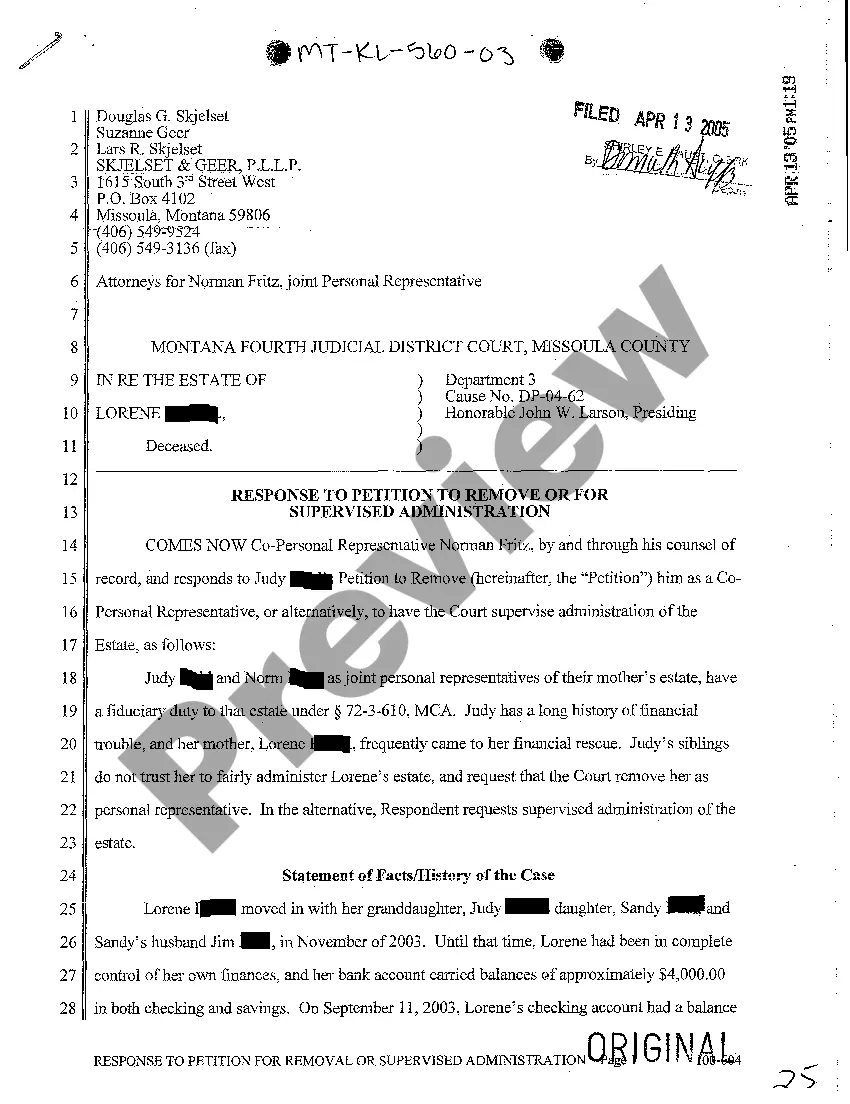
Complaint regarding Breach of Contract to Divide Estate Proceeds, Implied Contract, Good Faith and Fair Dealing, Promissory Estoppel, Emotional Distress
Overview of this form
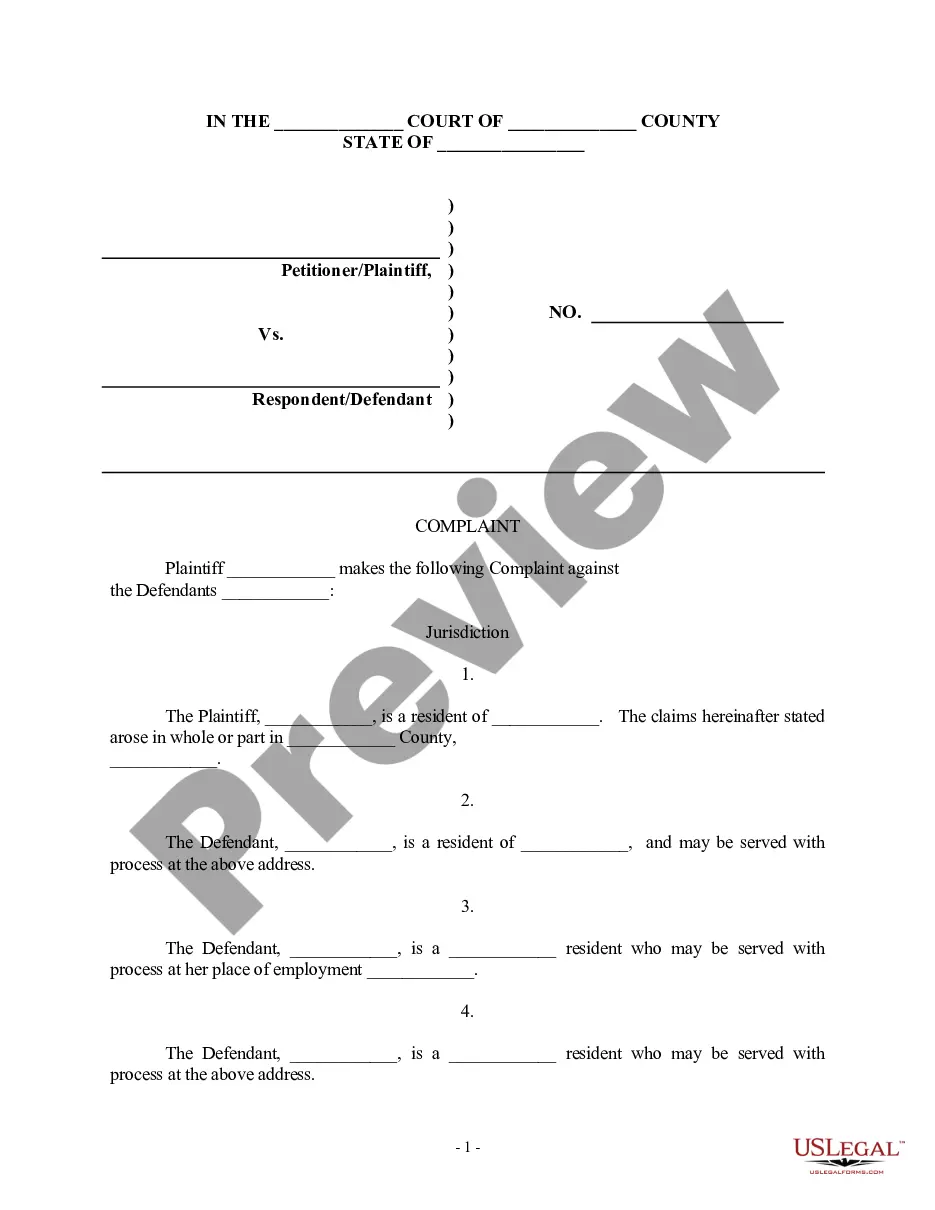
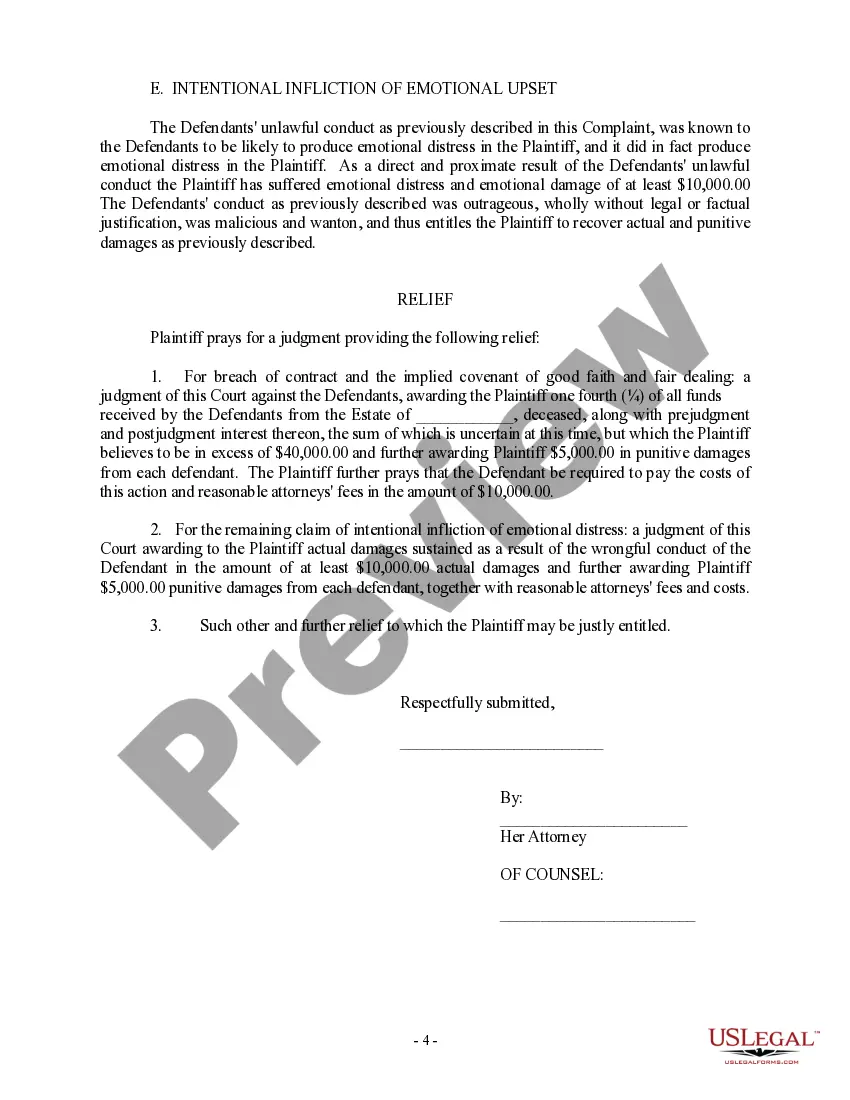
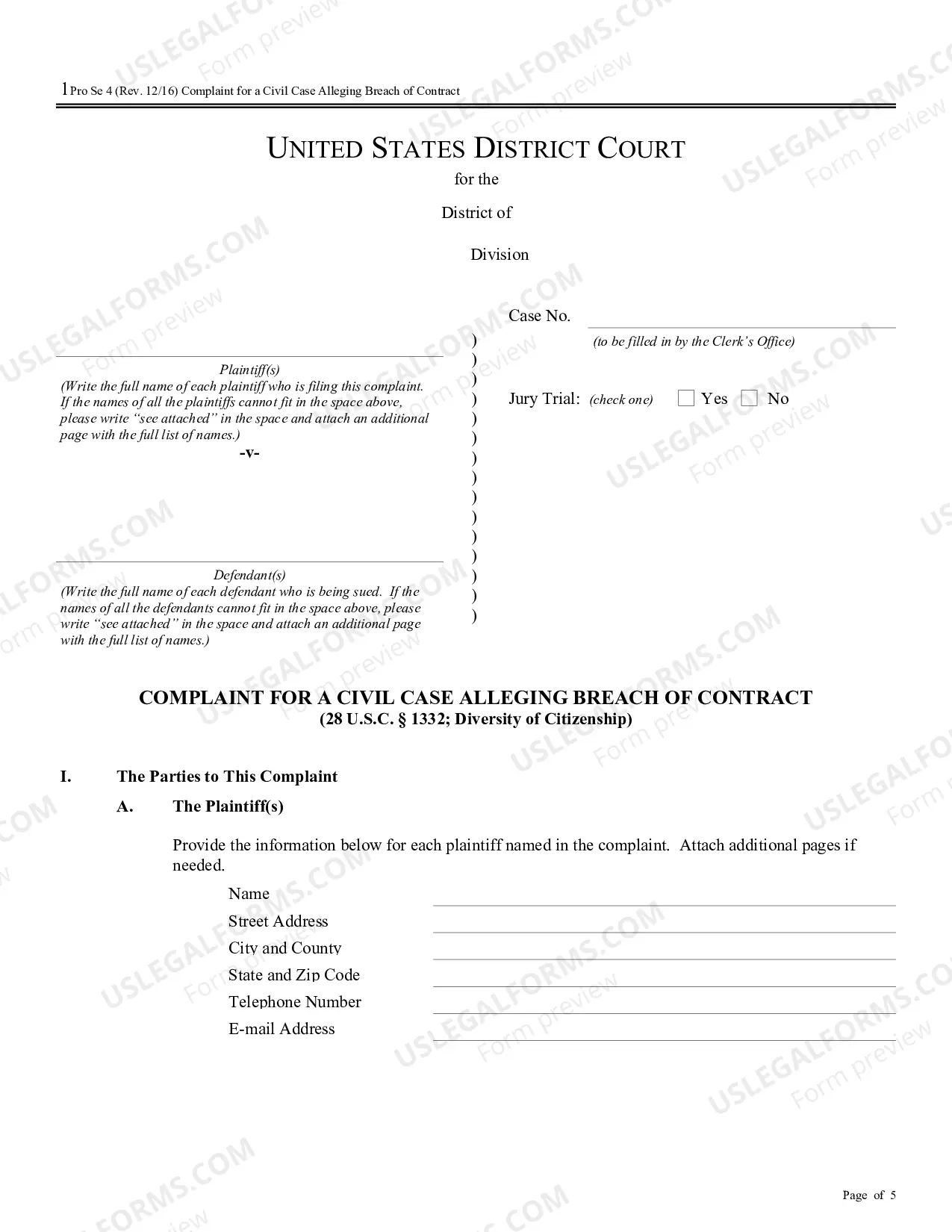
This form is a legal complaint regarding breach of contract related to the division of estate proceeds. It addresses multiple claims, including implied contracts, good faith, fair dealing, promissory estoppel, and emotional distress. This complaint is essential for individuals seeking judicial relief when they believe their rights under a contract have been violated, ensuring a structured approach to seek damages from the responsible party.
Key components of this form
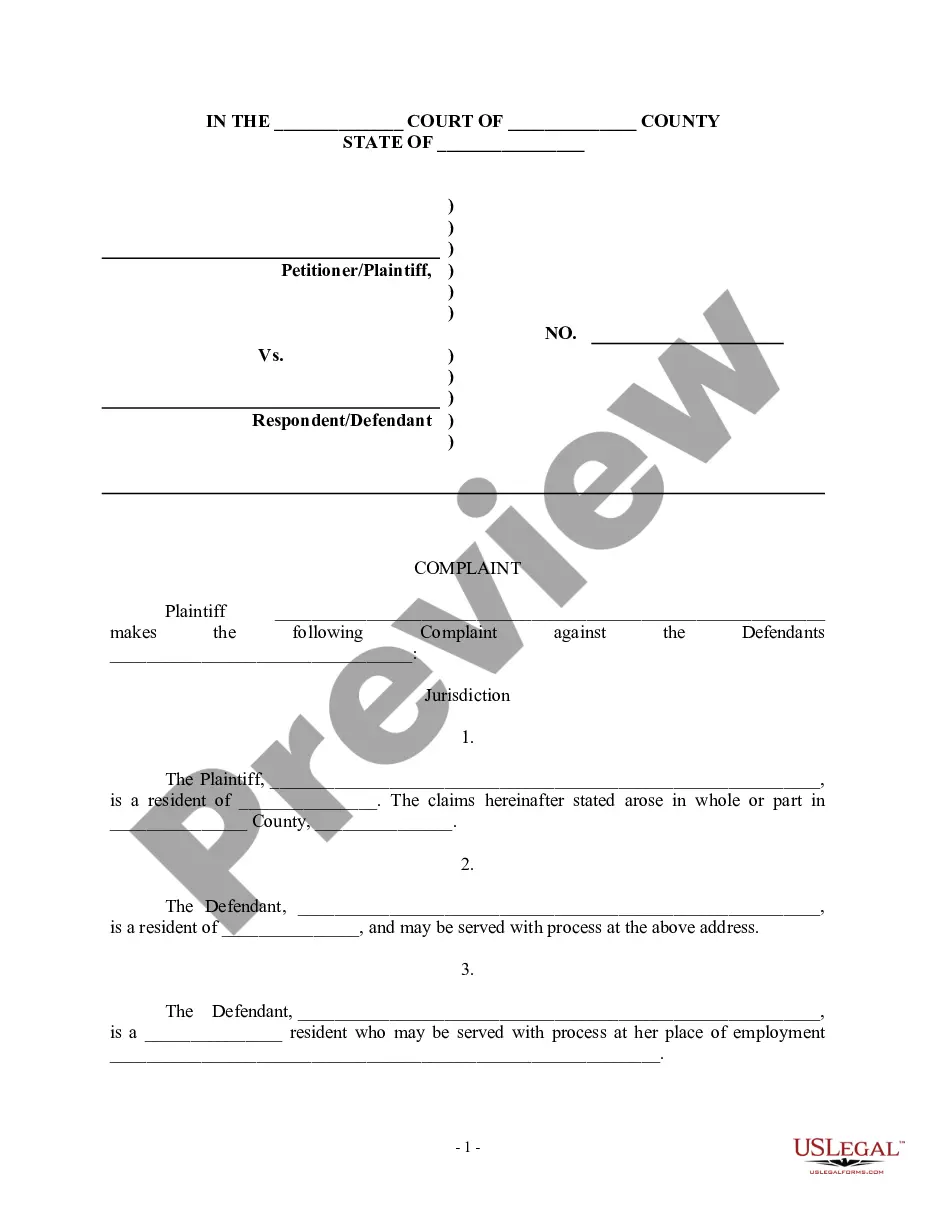
- Section identifying the parties involved in the complaint.
- Jurisdiction statements outlining where the claims arose.
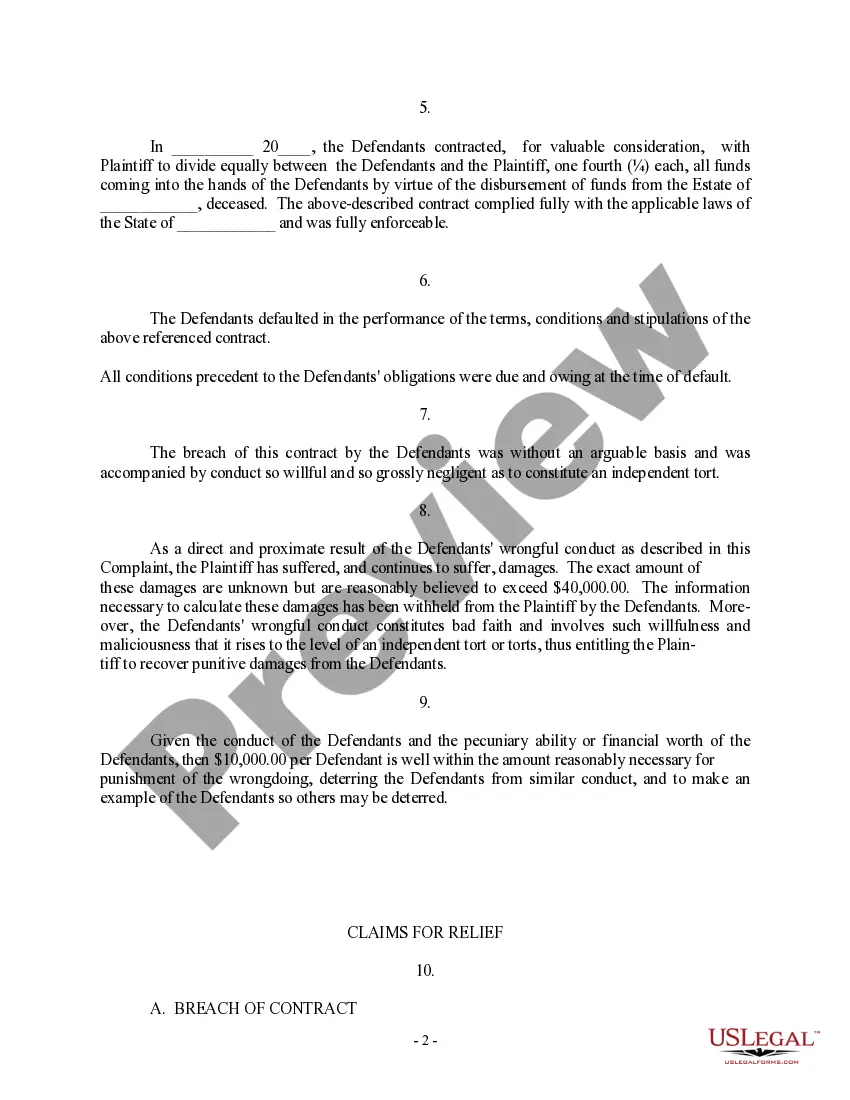
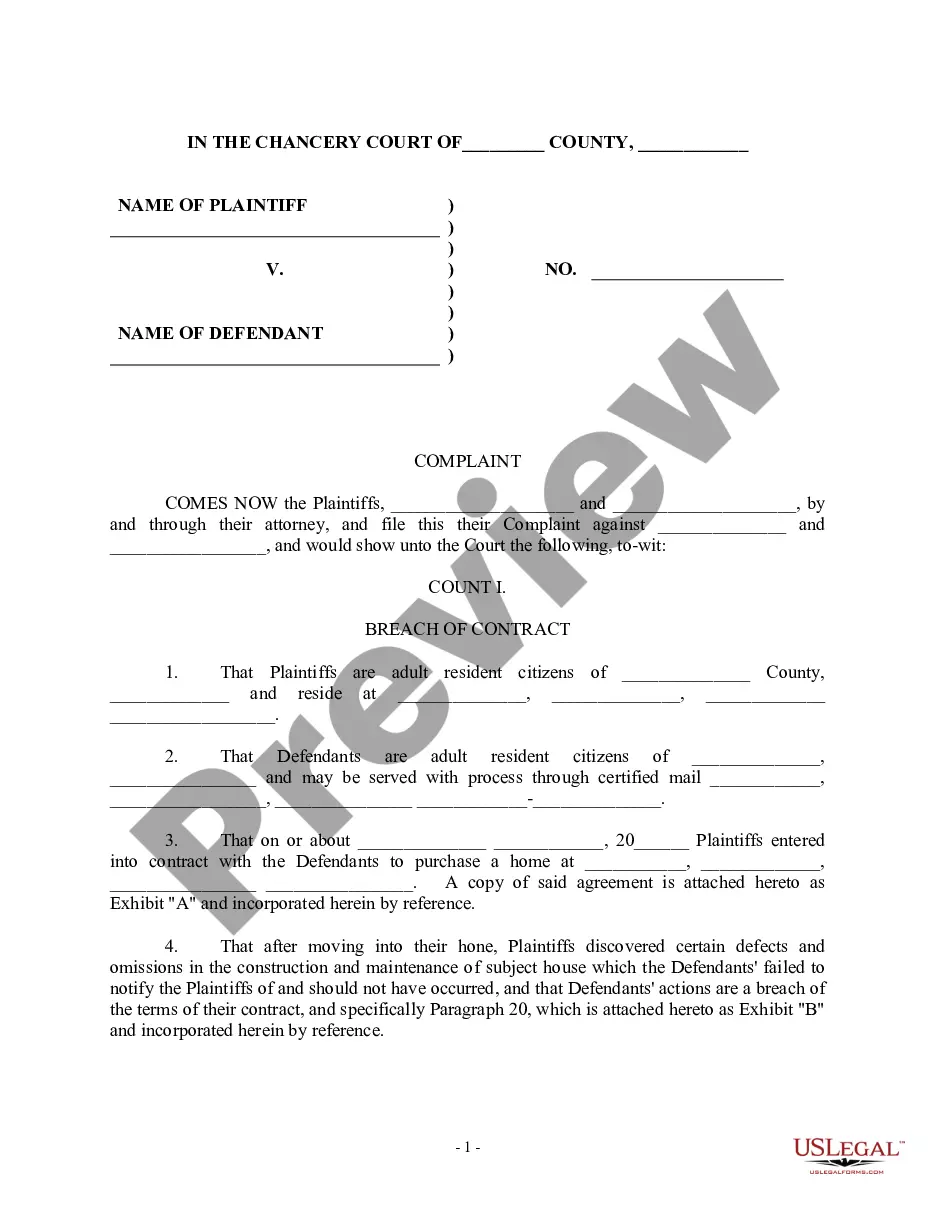
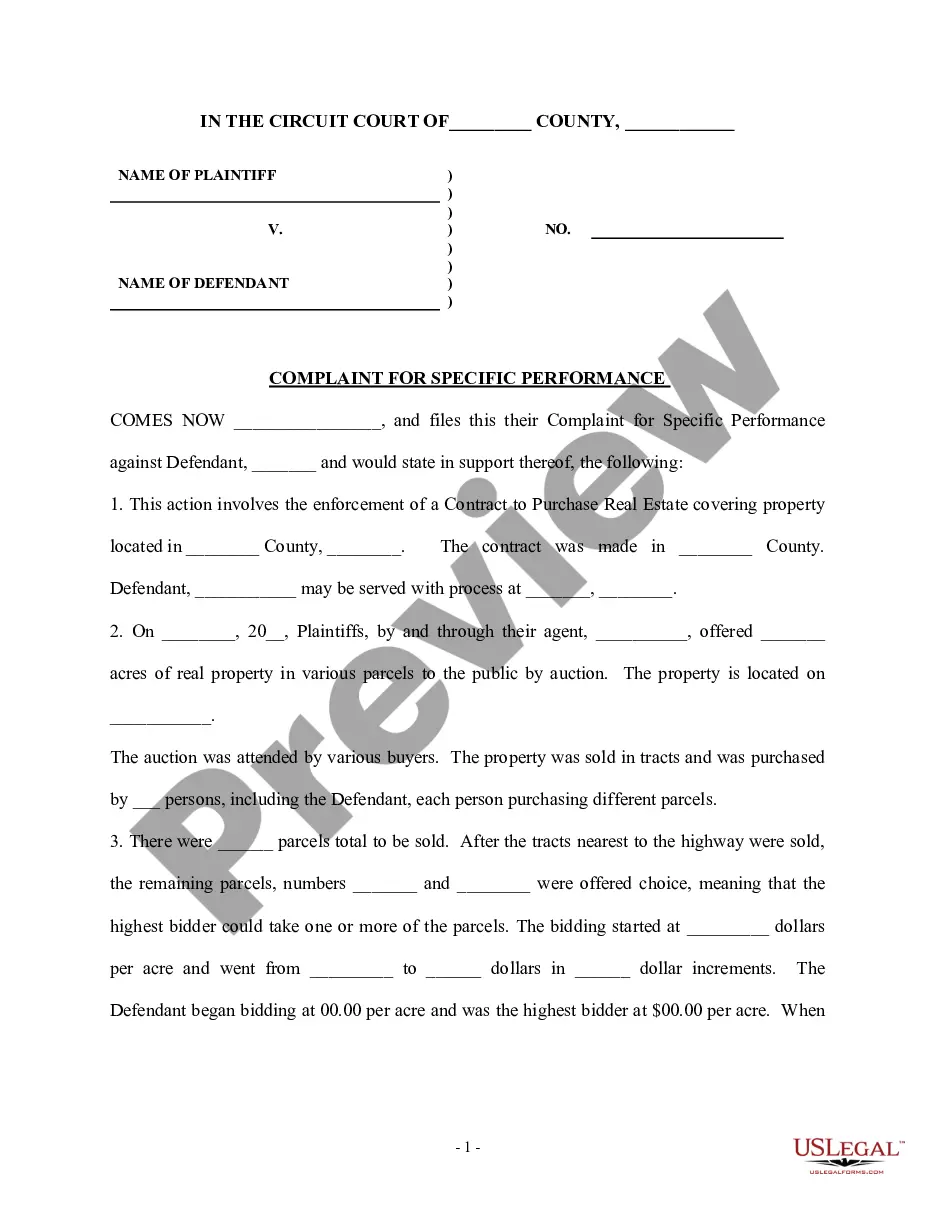
- Specific facts establishing the breach of contract and related claims.
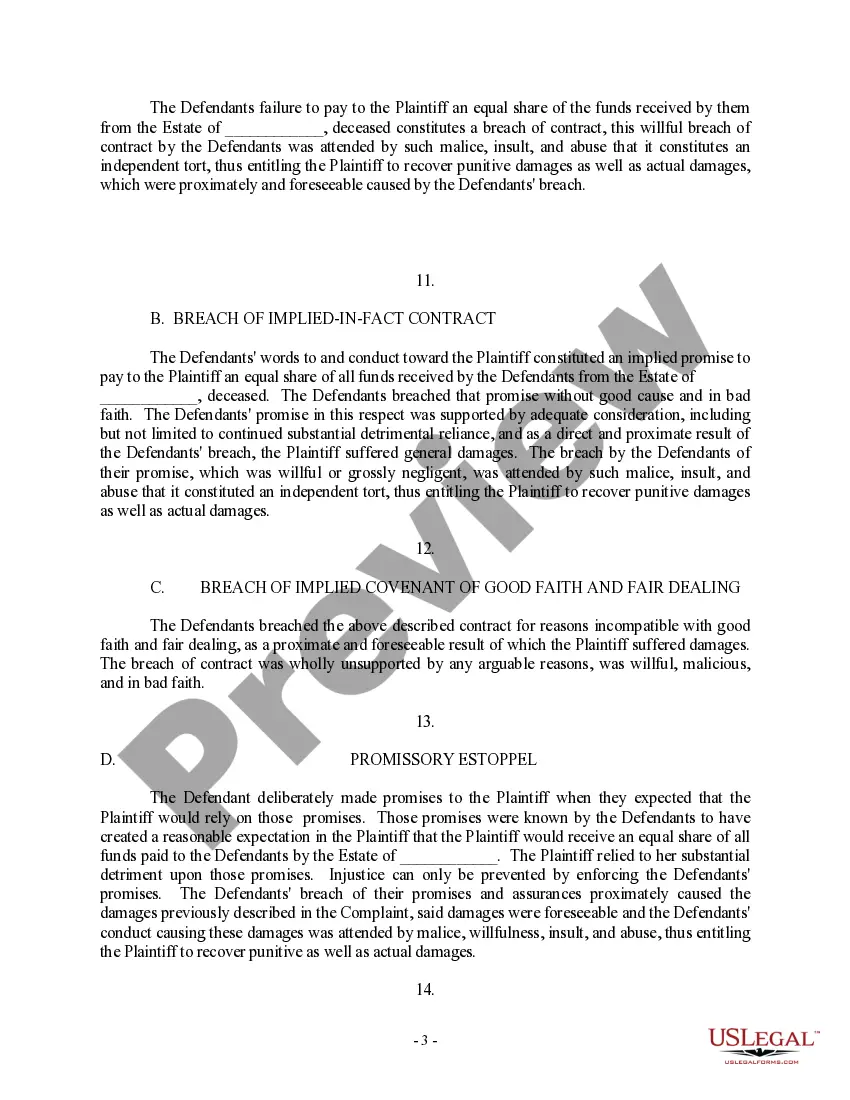
- Claims for relief detailing the damages sought, including punitive damages.
- Signature section for the plaintiff and their attorney.

Situations where this form applies
This form should be used when a plaintiff believes that there has been a breach of contract related to the division of estate proceeds. Real-world scenarios include disputes among heirs over inherited funds or when one party fails to honor their commitment to share estate disbursements properly. It is particularly useful in cases involving implied contracts or where emotional distress has been caused by the breach.
Who should use this form
- Individuals who are beneficiaries involved in a dispute over estate proceeds.
- Claimants seeking legal recourse for breaches of implied contracts.
- Anyone experiencing emotional distress due to another party's misconduct related to contract obligations.
Completing this form step by step
- Identify and clearly state the names and addresses of all parties involved.
- Outline the relevant facts regarding the contract, including dates and specific terms.
- Specify the nature of the breach and any resulting damages claimed.
- Complete the claims for relief, detailing each cause of action and the type of damages sought.
- Sign and date the form in the appropriate sections and ensure that your attorney does the same.
Does this form need to be notarized?
This form does not typically require notarization to be legally valid. However, some jurisdictions or document types may still require it. US Legal Forms provides secure online notarization powered by Notarize, available 24/7 for added convenience.
Get your form ready online
Our built-in tools help you complete, sign, share, and store your documents in one place.
Make edits, fill in missing information, and update formatting in US Legal Forms—just like you would in MS Word.
Download a copy, print it, send it by email, or mail it via USPS—whatever works best for your next step.
Sign and collect signatures with our SignNow integration. Send to multiple recipients, set reminders, and more. Go Premium to unlock E-Sign.
If this form requires notarization, complete it online through a secure video call—no need to meet a notary in person or wait for an appointment.
We protect your documents and personal data by following strict security and privacy standards.

Make edits, fill in missing information, and update formatting in US Legal Forms—just like you would in MS Word.

Download a copy, print it, send it by email, or mail it via USPS—whatever works best for your next step.

Sign and collect signatures with our SignNow integration. Send to multiple recipients, set reminders, and more. Go Premium to unlock E-Sign.

If this form requires notarization, complete it online through a secure video call—no need to meet a notary in person or wait for an appointment.

We protect your documents and personal data by following strict security and privacy standards.
Mistakes to watch out for
- Not providing complete and accurate information about all parties involved.
- Failing to include all relevant facts that support the claims made.
- Not clearly defining the damages being sought.
- Missing signatures or not having an attorney review the complaint.
Why complete this form online
- Convenient access to professionally drafted templates suitable for various jurisdictions.
- Edit and customize the form as needed to fit individual circumstances.
- Guided completion helps minimize errors and omissions.
- Quick download and printing options promote efficient filing.
Looking for another form?





Form popularity
FAQ
A breach of contract is when one party breaks the terms of an agreement between two or more parties. This includes when an obligation that is stated in the contract is not completed on timeyou are late with a rent payment, or when it is not fulfilled at alla tenant vacates their apartment owing six-months' back rent.
The four elements to every successful tort case are: duty, breach of duty, causation and injury. For a tort claim to be well-founded, there must have been a breach of duty made by the defendant against the plaintiff, which resulted in an injury.
Negligence claims must prove four things in court: duty, breach, causation, and damages/harm.
The four elements that a plaintiff must prove to win a negligence suit are 1) Duty, 2) Breach, 3) Cause, and 4) Harm.
A criminal complaint is a self-contained charge that sets forth the sufficient facts that, with reasonable inferences, allow a person to reasonably conclude that a crime was probably committed and that the suspect, defendant, is likely culpable.
Be brief. Answer the allegations in the complaint with one or two sentences. Again remember that the statements you make in your answer can be used as admissions against you. Your response to the allegations in the complaint may admit part of the statement in the specific paragraph and deny part.
Be brief. Answer the allegations in the complaint with one or two sentences. Again remember that the statements you make in your answer can be used as admissions against you. Your response to the allegations in the complaint may admit part of the statement in the specific paragraph and deny part.
Did the individual at fault owe a duty to the injured party? Was there a breach of said duty? Was the breach also the cause of the legal injury? What was the proximate cause? (could the harm caused be anticipated) What was the extent of the damage caused?
In Civil Law, a complaint is the very first formal action taken to officially begin a lawsuit. This written document contains the allegations against the defense, the specific laws violated, the facts that led to the dispute, and any demands made by the plaintiff to restore justice.