Approval of Standby Equity Agreement with copy of agreement
What this document covers
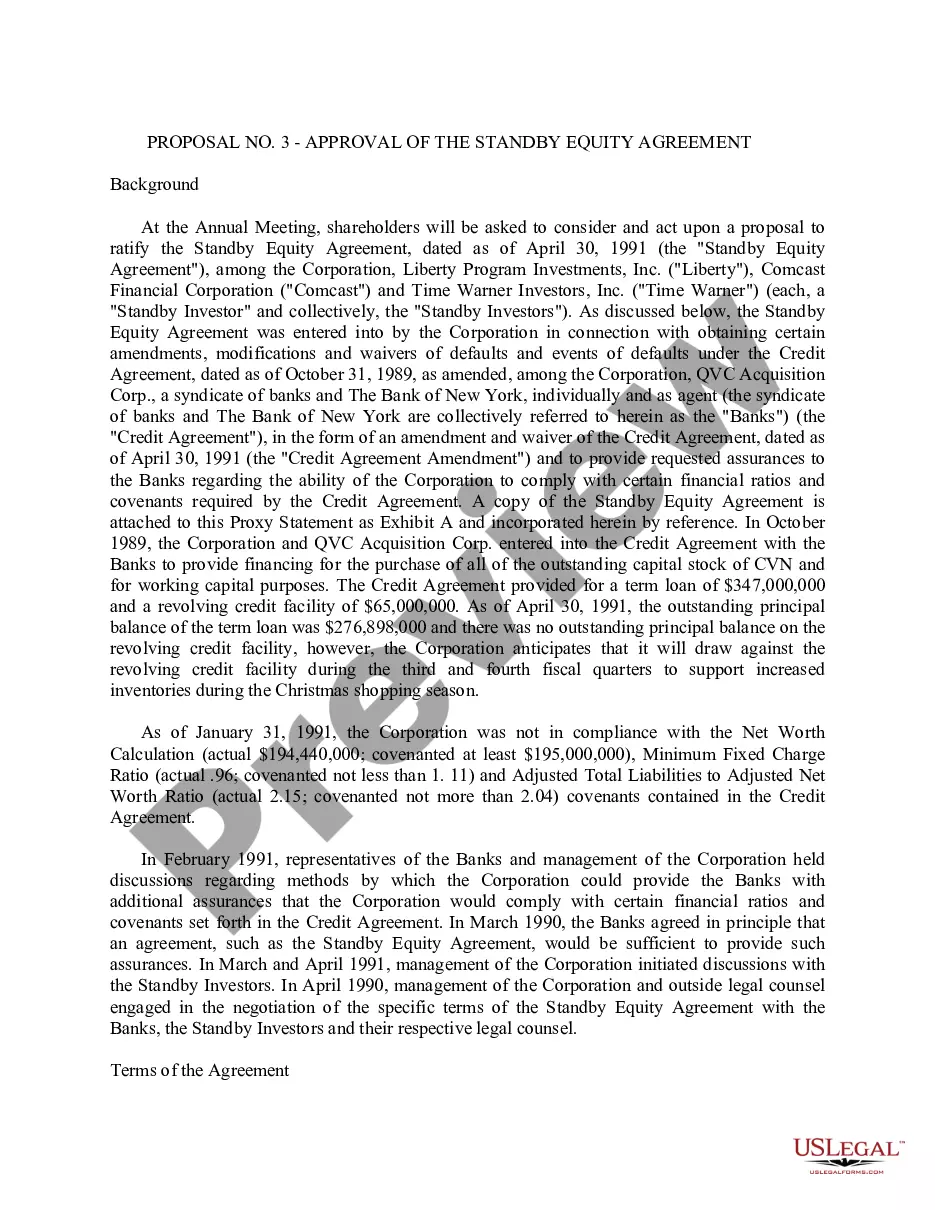
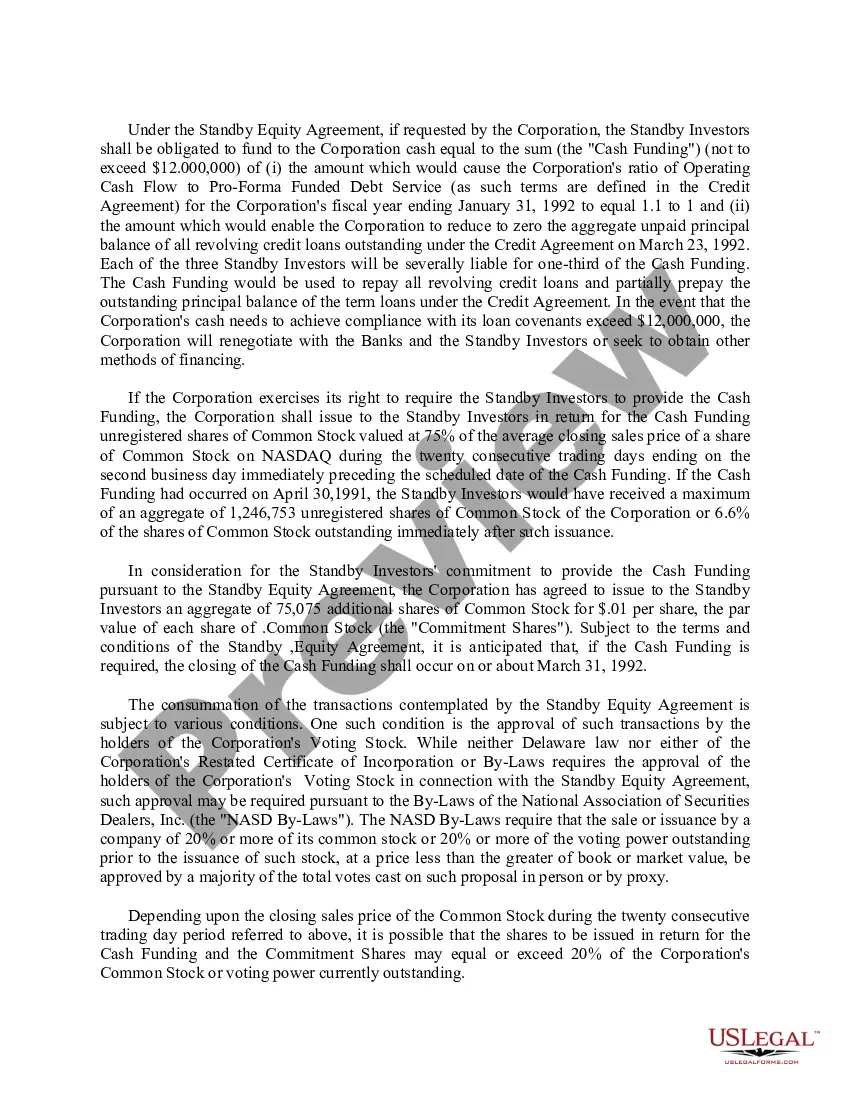
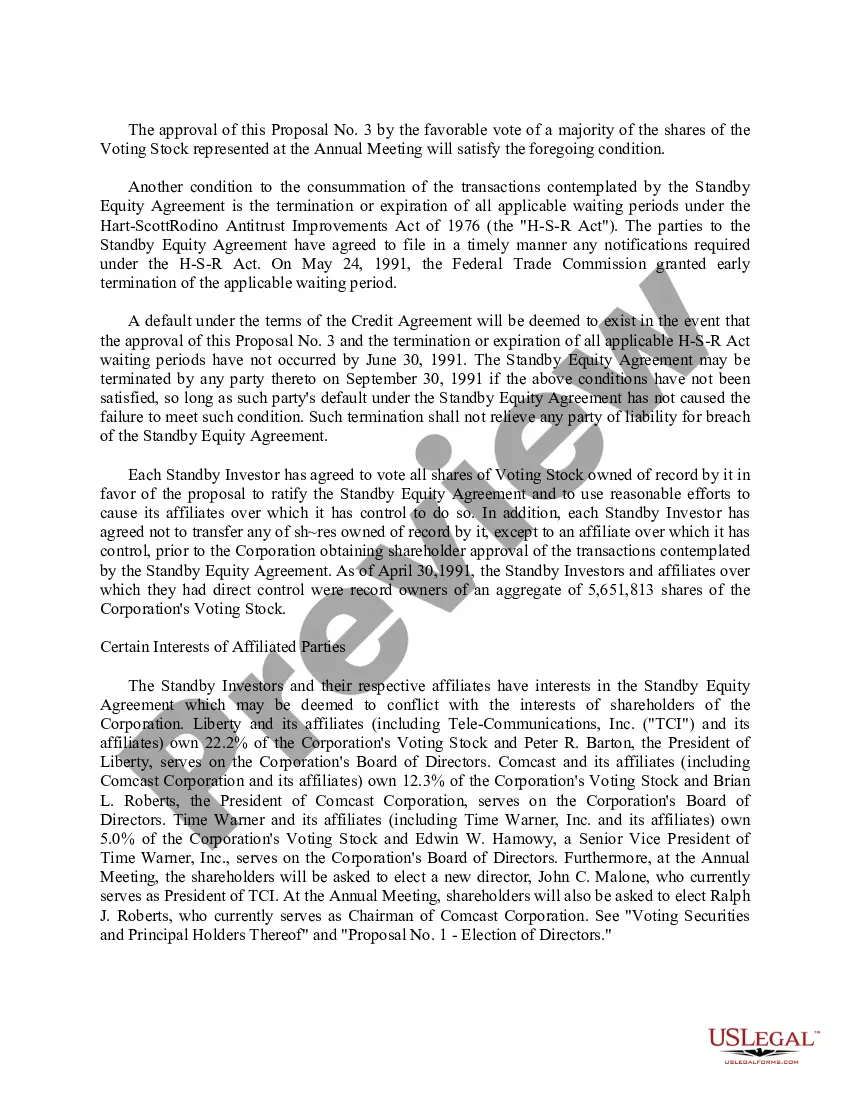
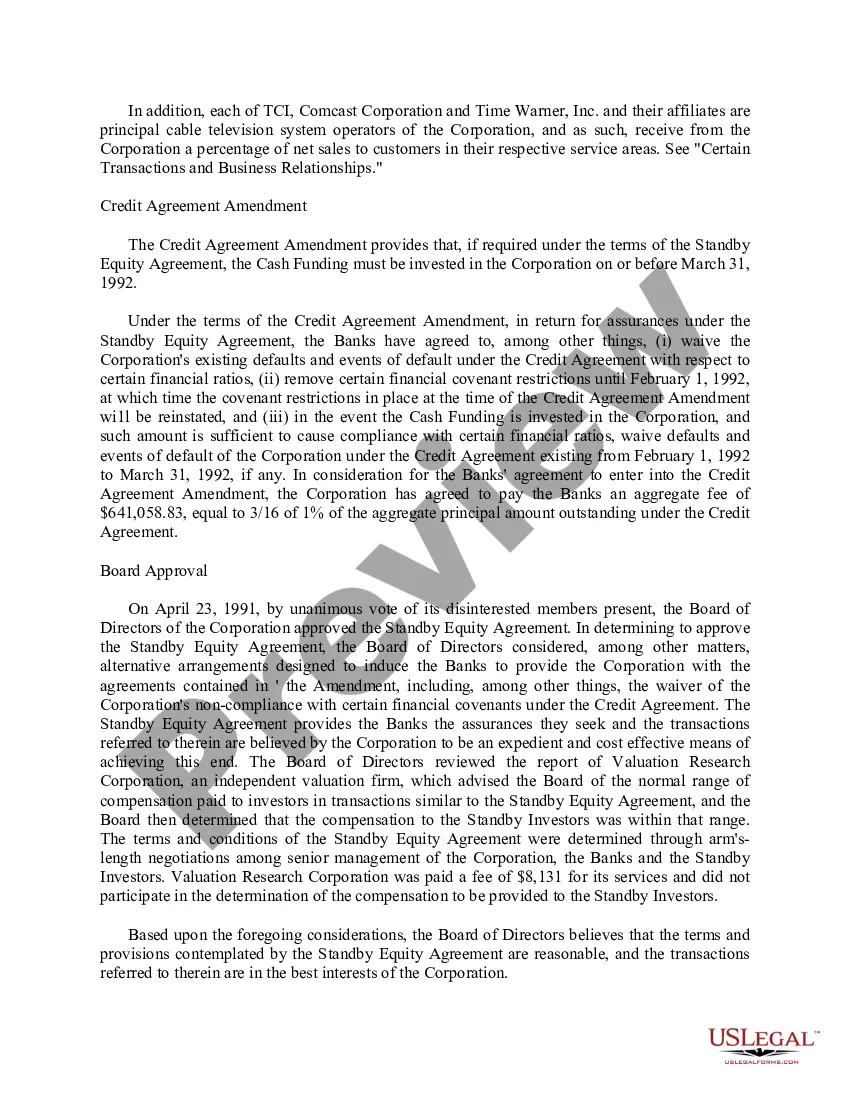
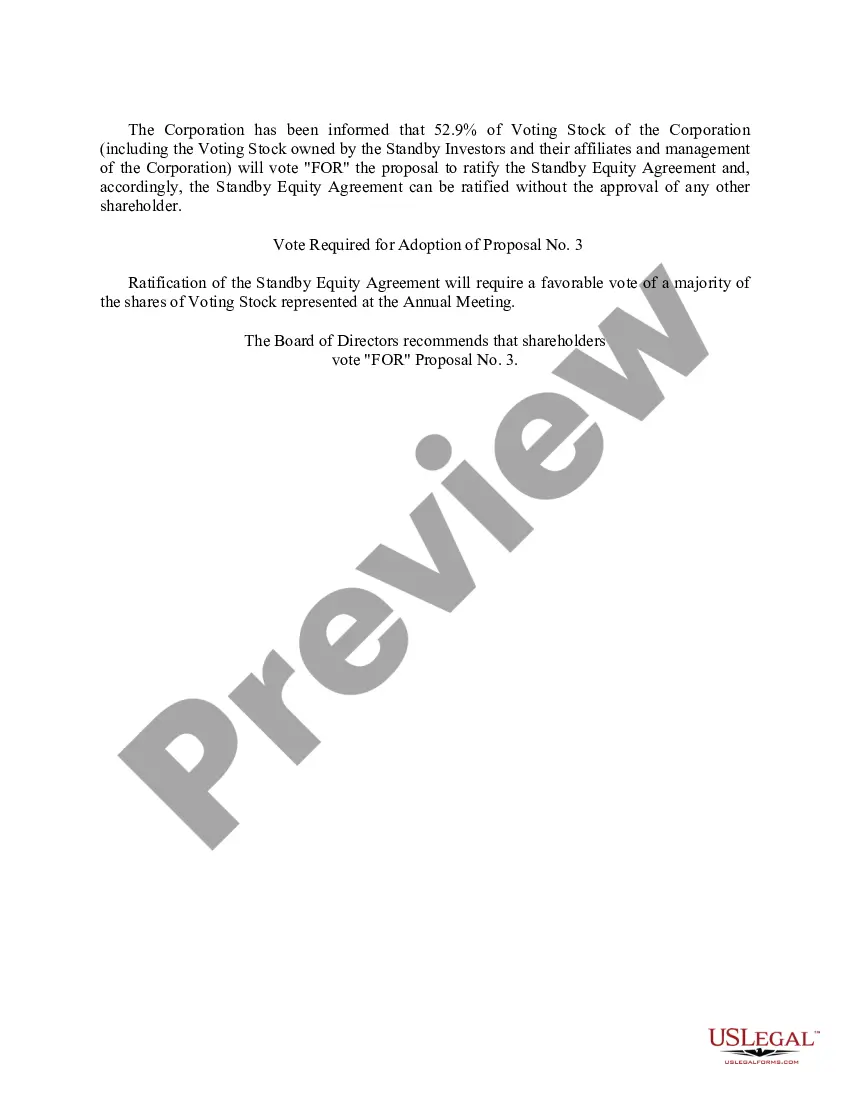
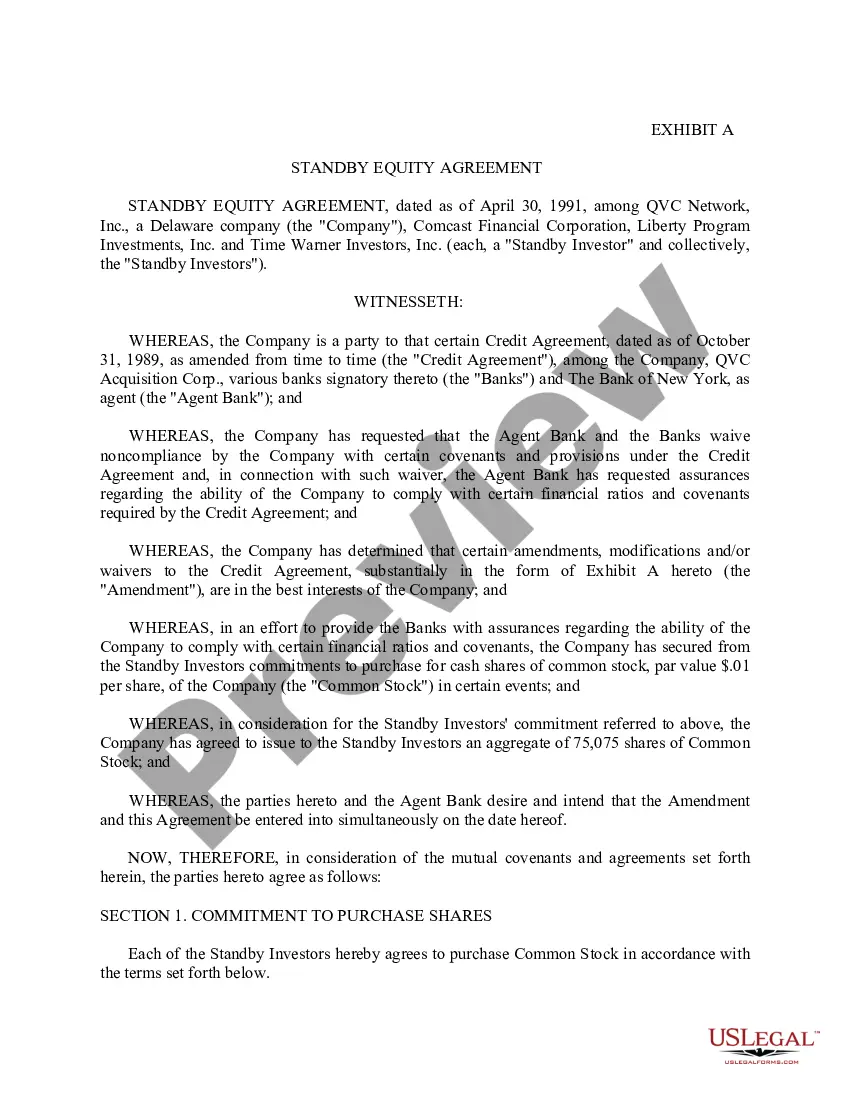
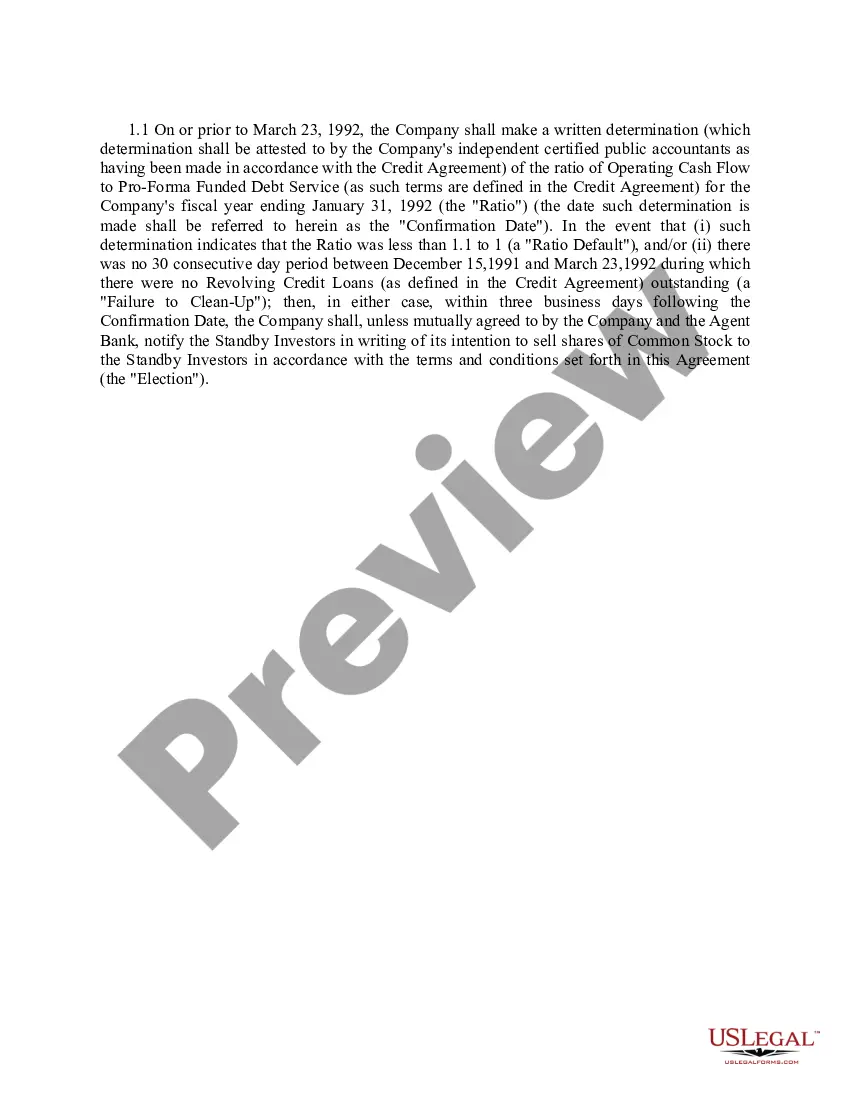
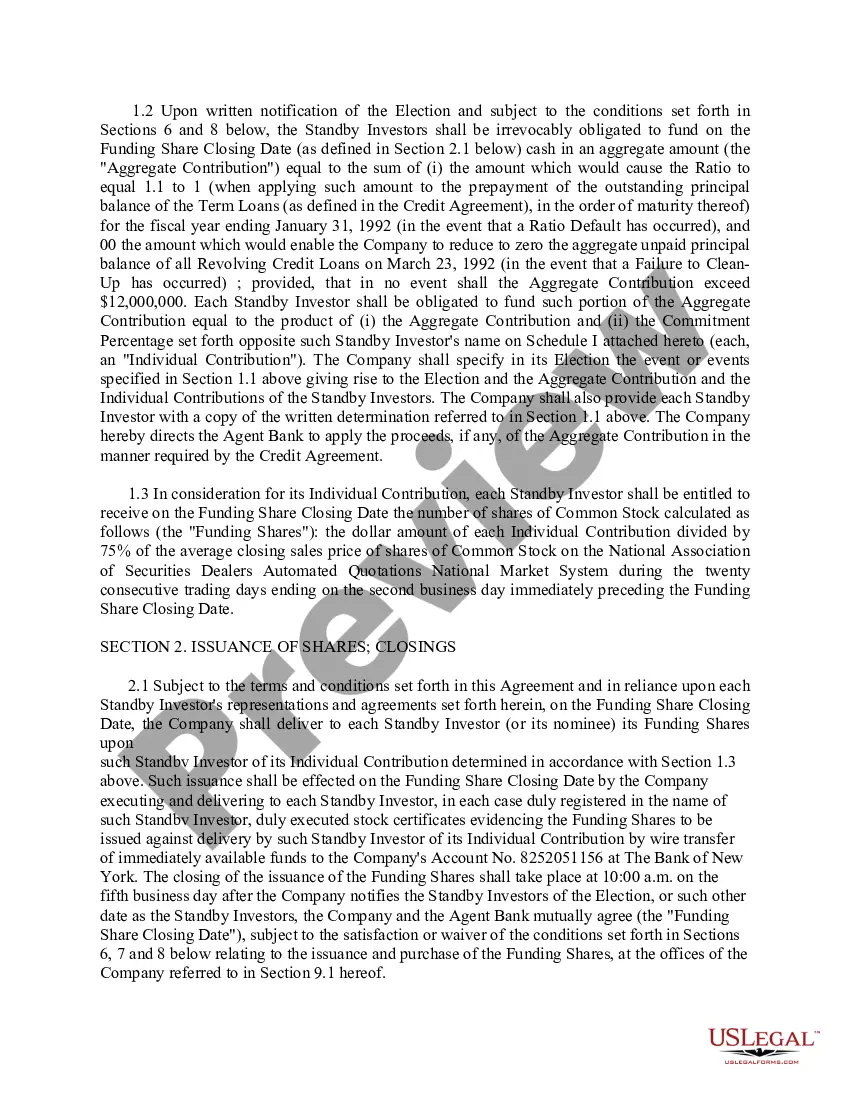
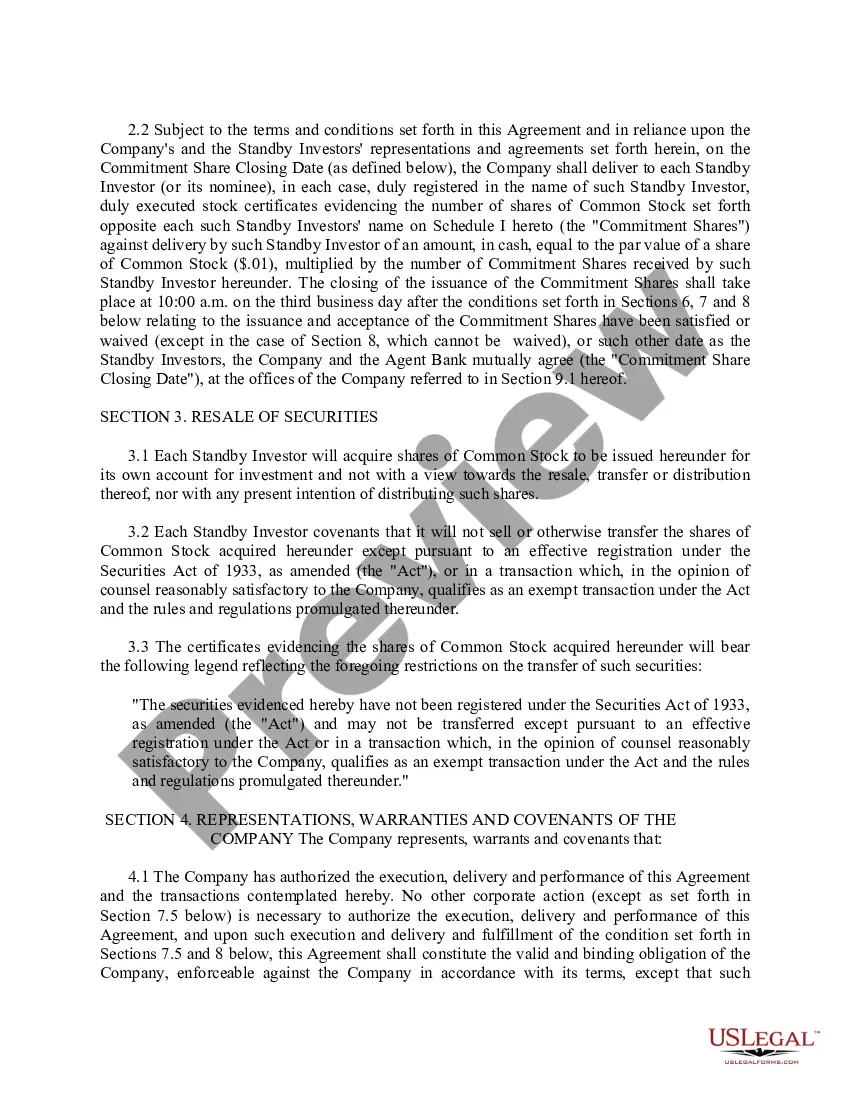
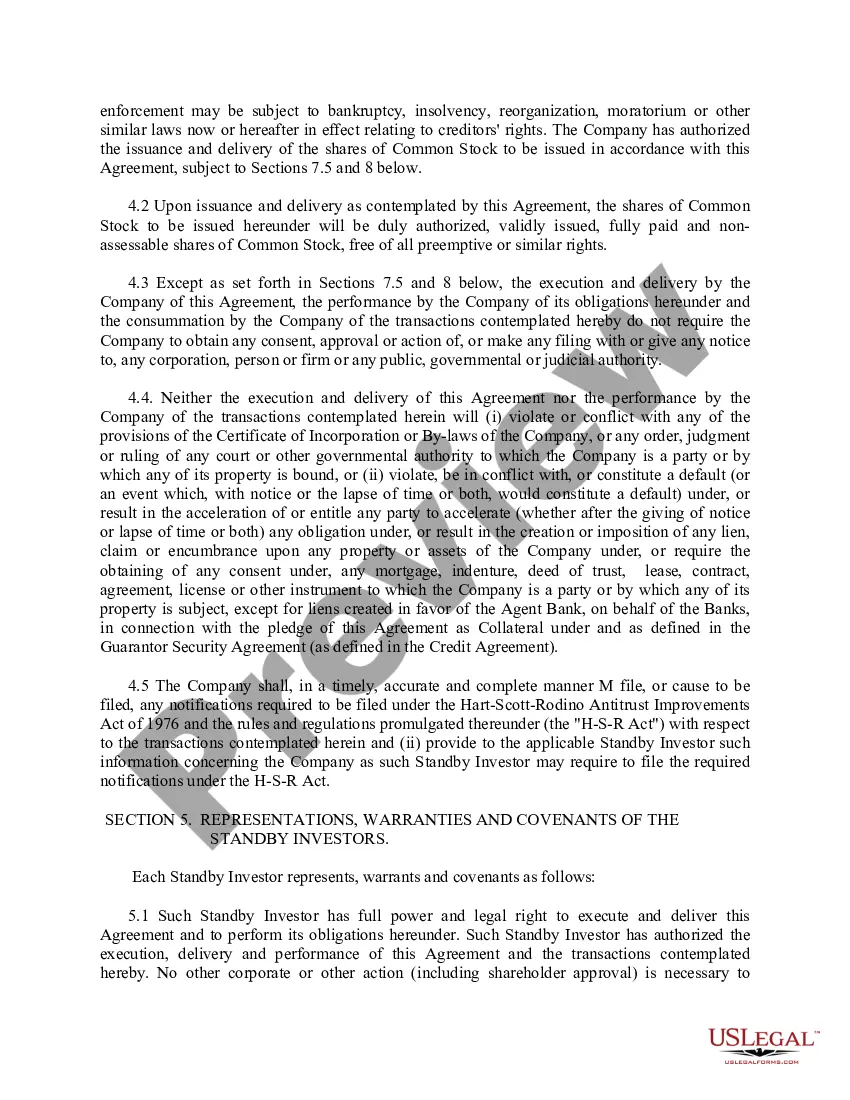
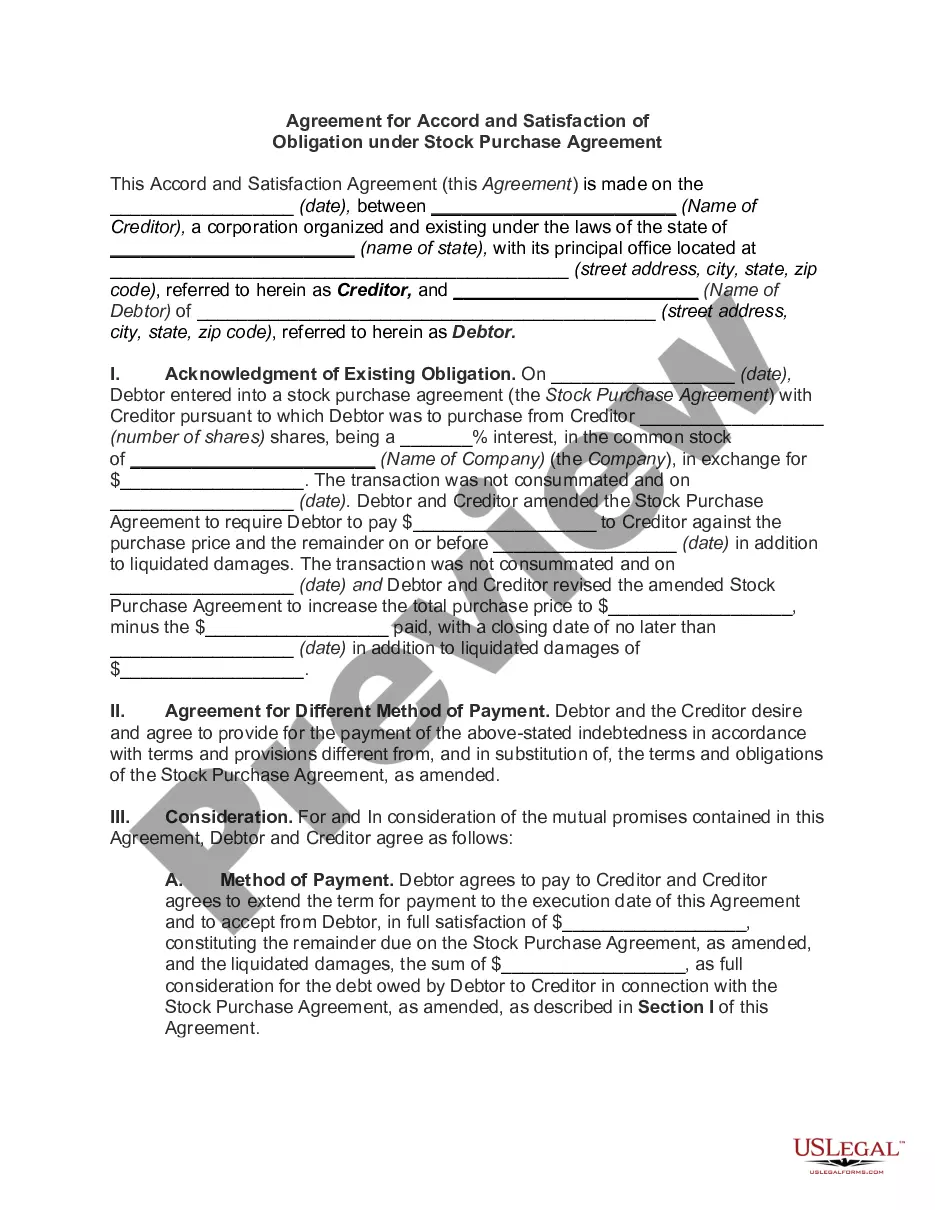
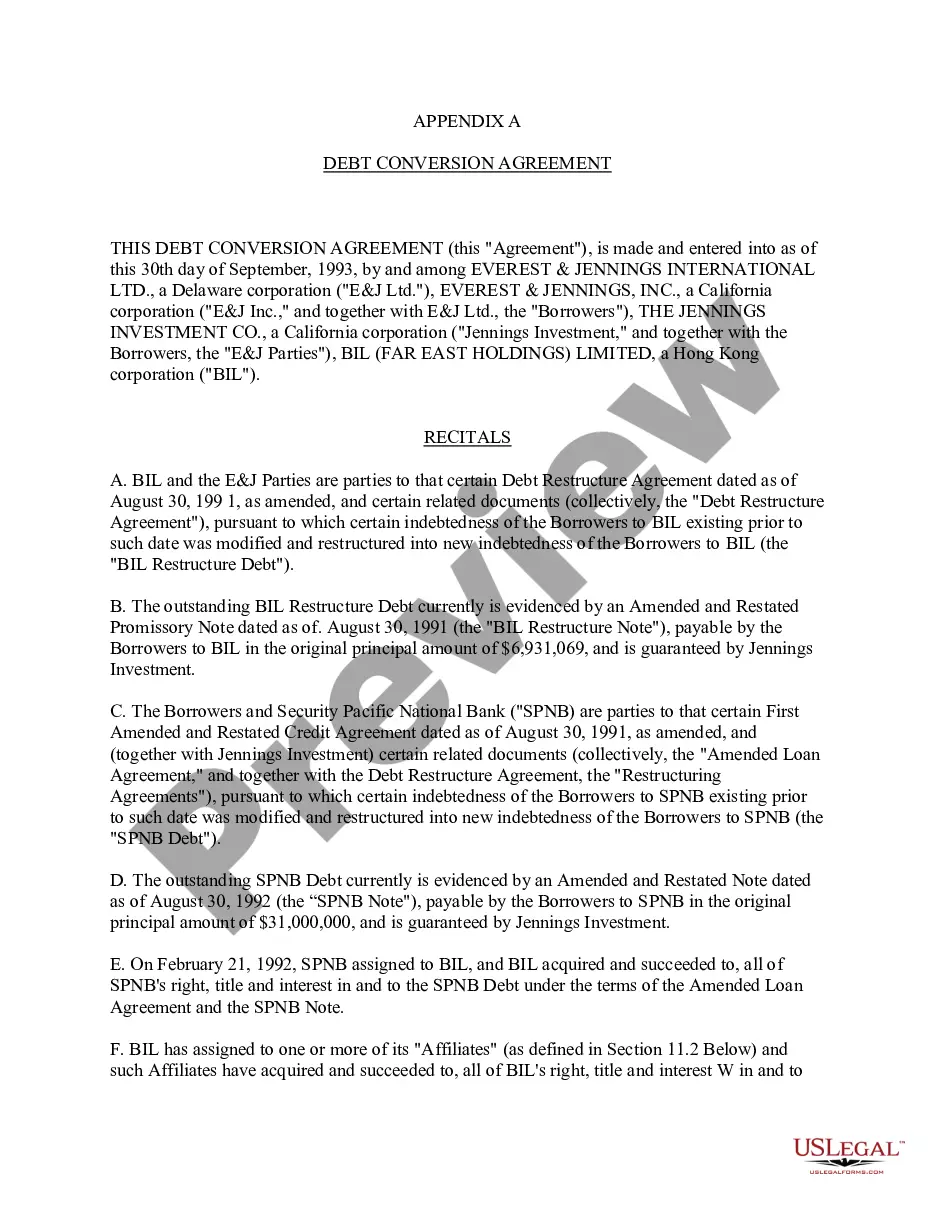
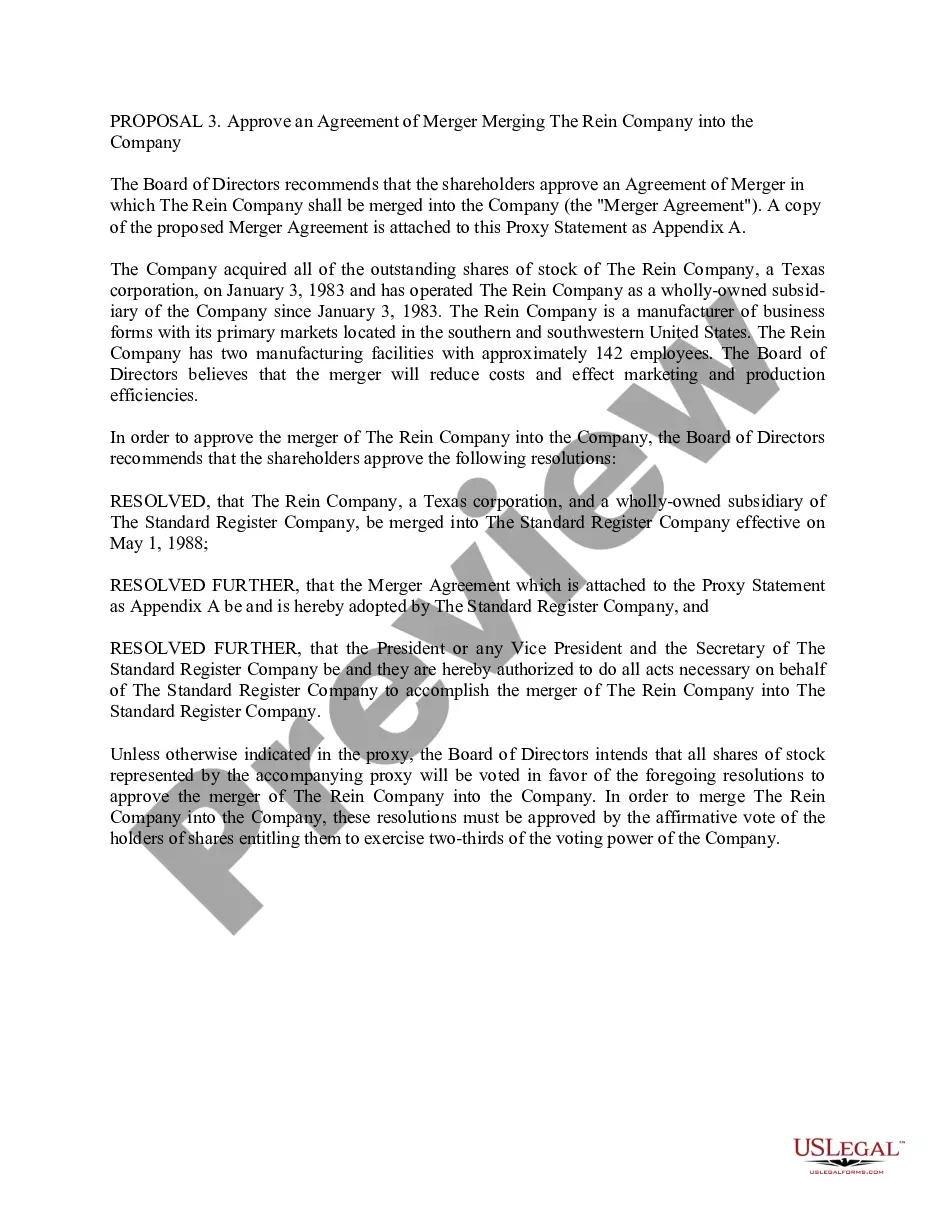
The Approval of Standby Equity Agreement is a legal document used primarily in corporate finance situations. It outlines the terms under which certain investors agree to provide cash funding to a corporation in exchange for shares of common stock. This agreement is essential for companies that need to assure their lenders of their ability to meet financial covenants. Unlike other financial documents, this form includes detailed provisions about the commitment of standby investors and is specifically tailored for corporate situations requiring shareholder approval.
Form components explained
- Background information detailing the parties involved in the agreement.
- Terms of the agreement concerning cash funding and obligations of standby investors.
- Provisions for shareholder voting and approval requirements.
- Conditions for closing transactions and issuing shares.
- Representations and warranties by both the corporation and the standby investors.

Situations where this form applies
This form should be used when a corporation enters into a standby equity agreement with investors to secure their financial commitments while needing to satisfy bank covenants. It is necessary during instances of financial restructuring, securing additional financing, or if the corporation anticipates a need for increased liquidity to meet operational demands.
Who should use this form
- Corporate executives and board members involved in finance and compliance.
- Shareholders voting on significant financial agreements.
- Legal representatives and advisors to corporations seeking financing.
- Investors interested in the terms of their commitments to a corporation.
How to complete this form
- Identify the corporation and investors involved in the agreement.
- Specify the terms of cash funding and the obligations of each standby investor.
- Detail the voting procedure and requirements for shareholder approval.
- Include any conditions that need to be satisfied before the agreement becomes effective.
- Ensure all parties sign the agreement where indicated, and record the completion of the necessary filings.
Does this form need to be notarized?
This form usually doesn’t need to be notarized. However, local laws or specific transactions may require it. Our online notarization service, powered by Notarize, lets you complete it remotely through a secure video session, available 24/7.
Get your form ready online
Our built-in tools help you complete, sign, share, and store your documents in one place.
Make edits, fill in missing information, and update formatting in US Legal Forms—just like you would in MS Word.
Download a copy, print it, send it by email, or mail it via USPS—whatever works best for your next step.
Sign and collect signatures with our SignNow integration. Send to multiple recipients, set reminders, and more. Go Premium to unlock E-Sign.
If this form requires notarization, complete it online through a secure video call—no need to meet a notary in person or wait for an appointment.
We protect your documents and personal data by following strict security and privacy standards.

Make edits, fill in missing information, and update formatting in US Legal Forms—just like you would in MS Word.

Download a copy, print it, send it by email, or mail it via USPS—whatever works best for your next step.

Sign and collect signatures with our SignNow integration. Send to multiple recipients, set reminders, and more. Go Premium to unlock E-Sign.

If this form requires notarization, complete it online through a secure video call—no need to meet a notary in person or wait for an appointment.

We protect your documents and personal data by following strict security and privacy standards.
Mistakes to watch out for
- Failing to include all necessary parties in the agreement.
- Not detailing the conditions for the cash funding properly.
- Omitting key dates for shareholder approval or funding deadlines.
- Ignoring specific state laws that might apply despite the multi-state format.
Benefits of using this form online
- Instant access to legally compliant templates adapted for various corporate needs.
- Convenient download options that allow for customization to fit specific agreements.
- Reduces the complexity of legal drafting by providing attorney-reviewed language.
Looking for another form?


Form popularity
FAQ
Equity share capital represents the money contributed by owners and investors towards the capital of the company.For example, as of 30th September 2014, share capital of Berger Paints only consists of equity shares (i.e. no preference shares).
In short, having equity in a company means that you have a stake in the business you're helping to build and grow. You're also incentivized to grow the company's value in the same way founders and investors are.
In essence, equity is an ownership share in a company in the form of stock options.As for public companies, equity is typically the ability for employees to purchase stocks at a discount. Employees at the executive level may have more of a stake in the company than lower-level employees.
Equity Examples Common Stock. Preferred Stock. Additional Paid-in Capital. Treasury Stock.
Authorized Share Capital. It is the maximum amount of capital which a company can issue. Issued Share Capital. It is that part of authorized capital which the company offers to the investors. Subscribed Share Capital. Paid Up Capital. Rights Shares. Bonus Shares. Sweat Equity Share. Par or Face Value.
There are two ways to make money from owning shares of stock: dividends and capital appreciation. Dividends are cash distributions of company profits.
Before accepting an equity-based pay arrangement, you should determine if the equity is vested, or granted all up front. Vested equity is paid out in increments over time. If you are to receive a 2% equity stake vested over the course of four years, you might receive 0.5% per year along with your regular pay.
Equity shares are the shares joint stock companies issue to the public as the main source of long-term financing.Equity share value is stated in terms of the face value of each share, which is also called issue price, par value, book value, or market value.
In short, having equity in a company means that you have a stake in the business you're helping to build and grow. You're also incentivized to grow the company's value in the same way founders and investors are.