Proposal to amend certificate to reduce par value, increase authorized common stock and reverse stock split with Exhibit
Understanding this form
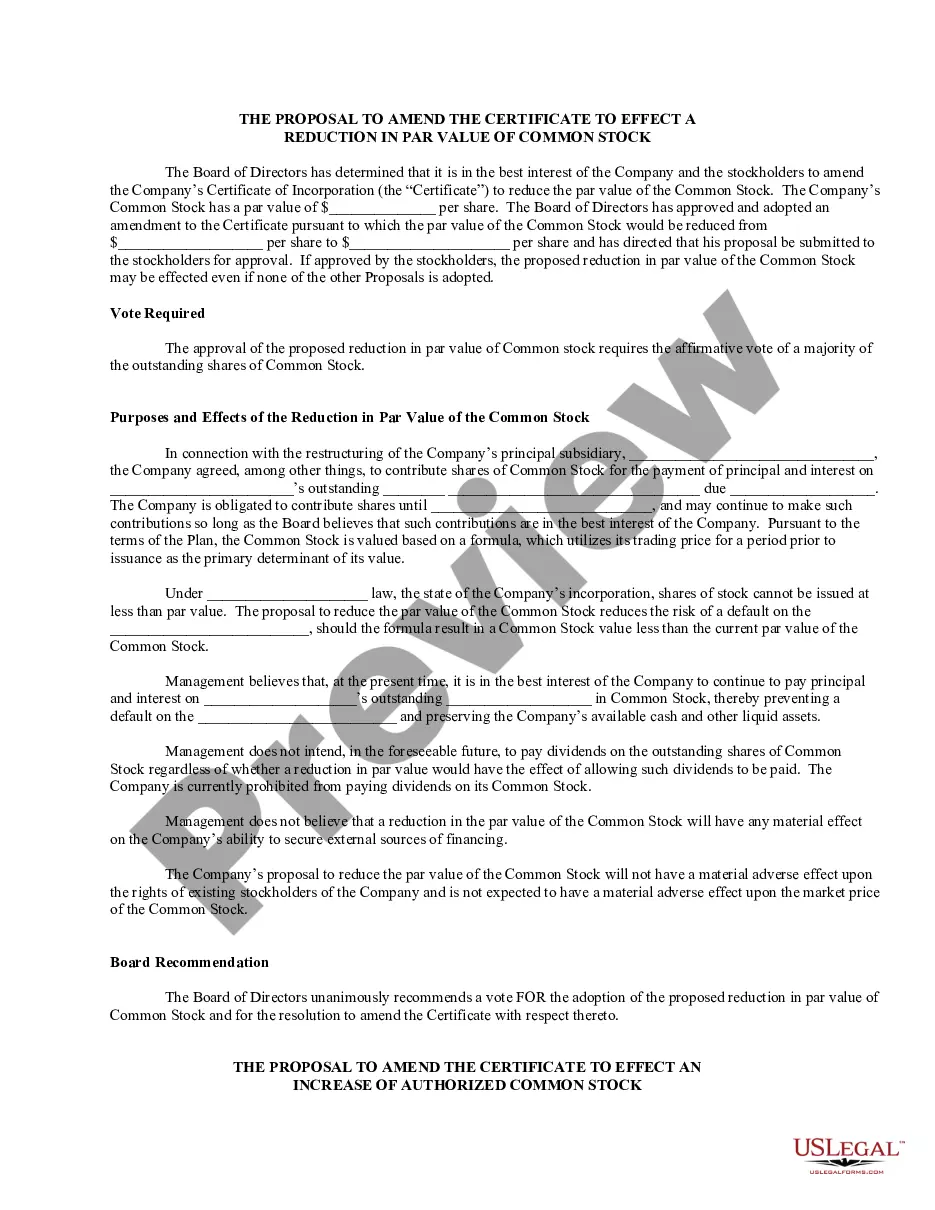
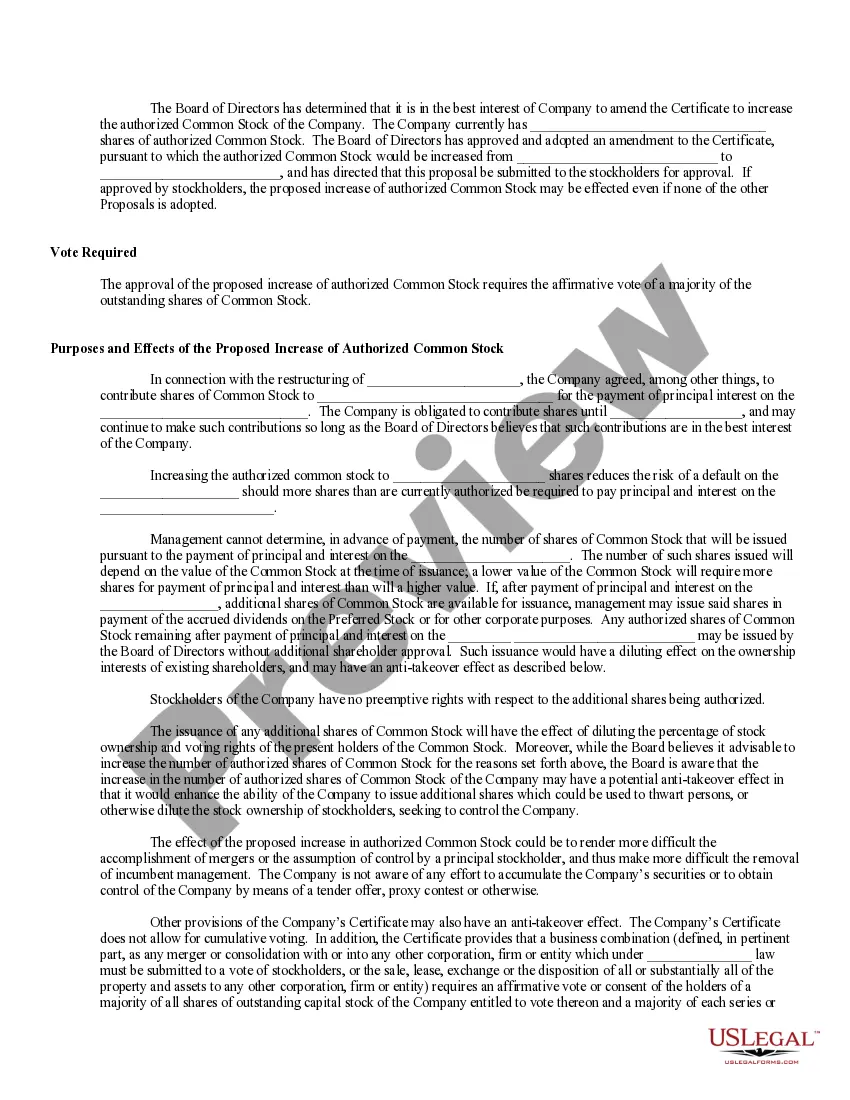
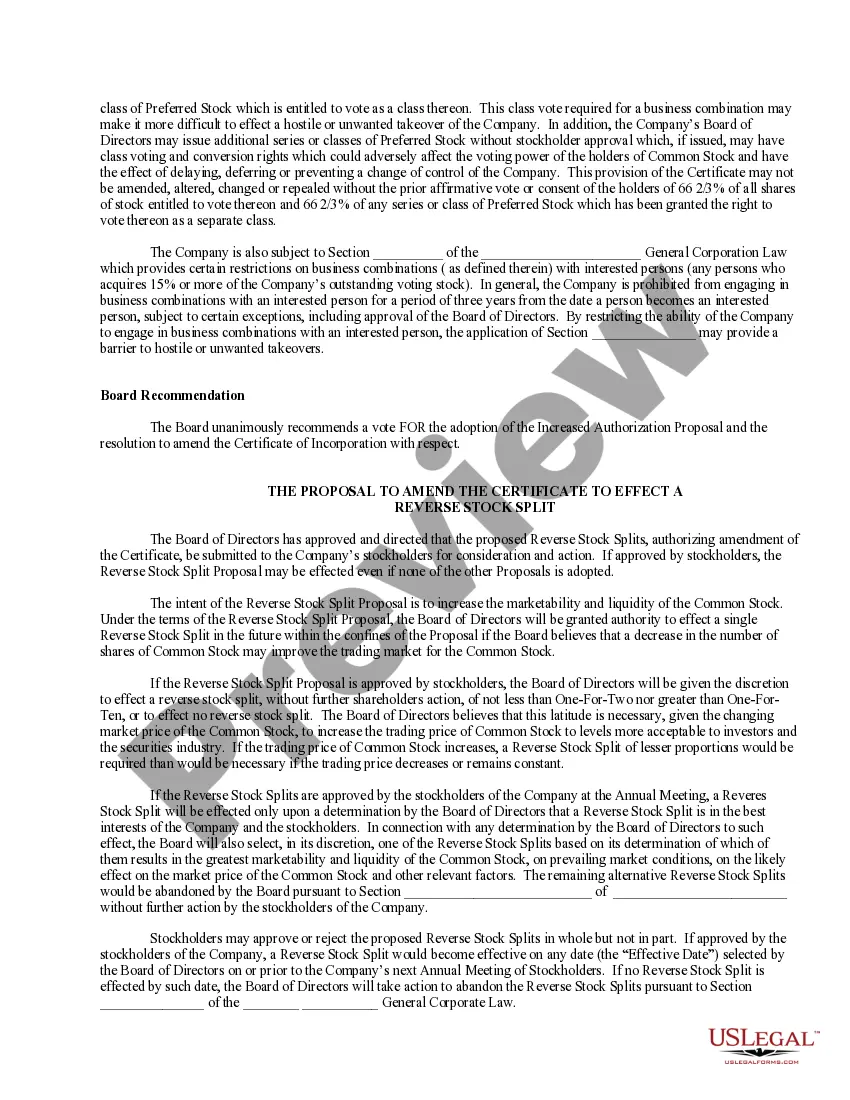
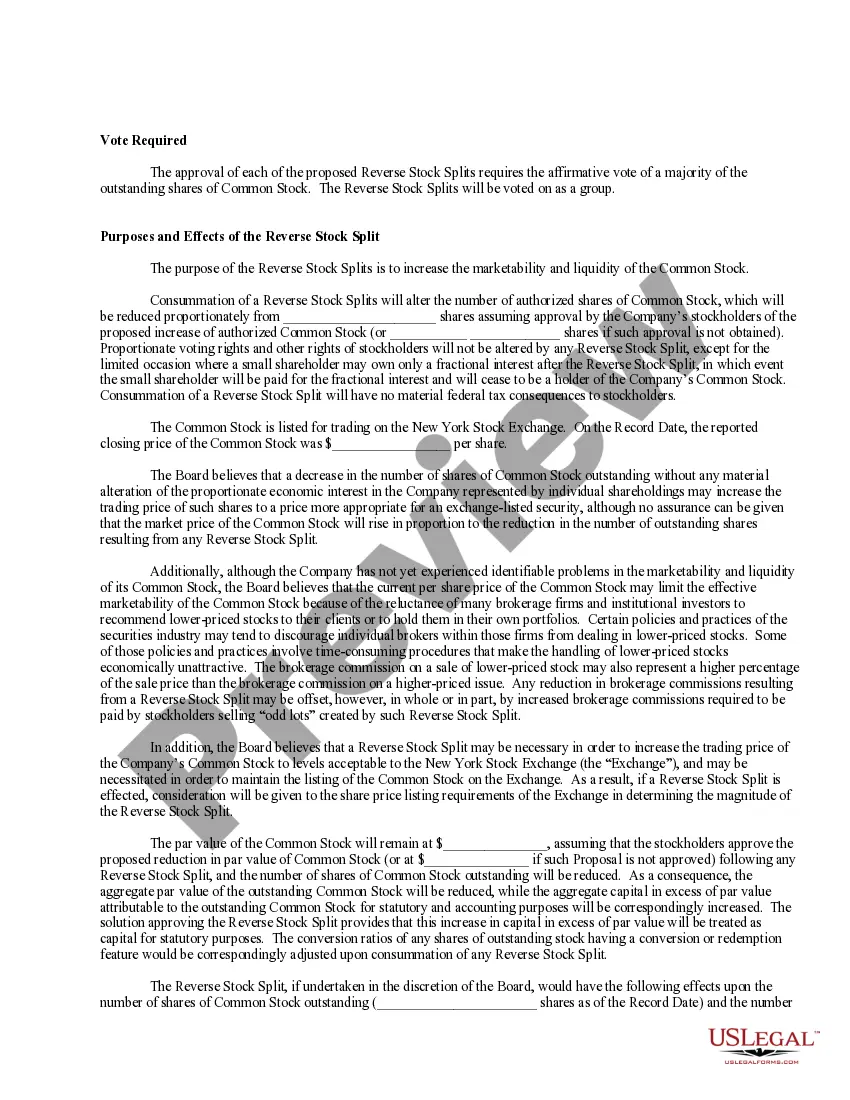
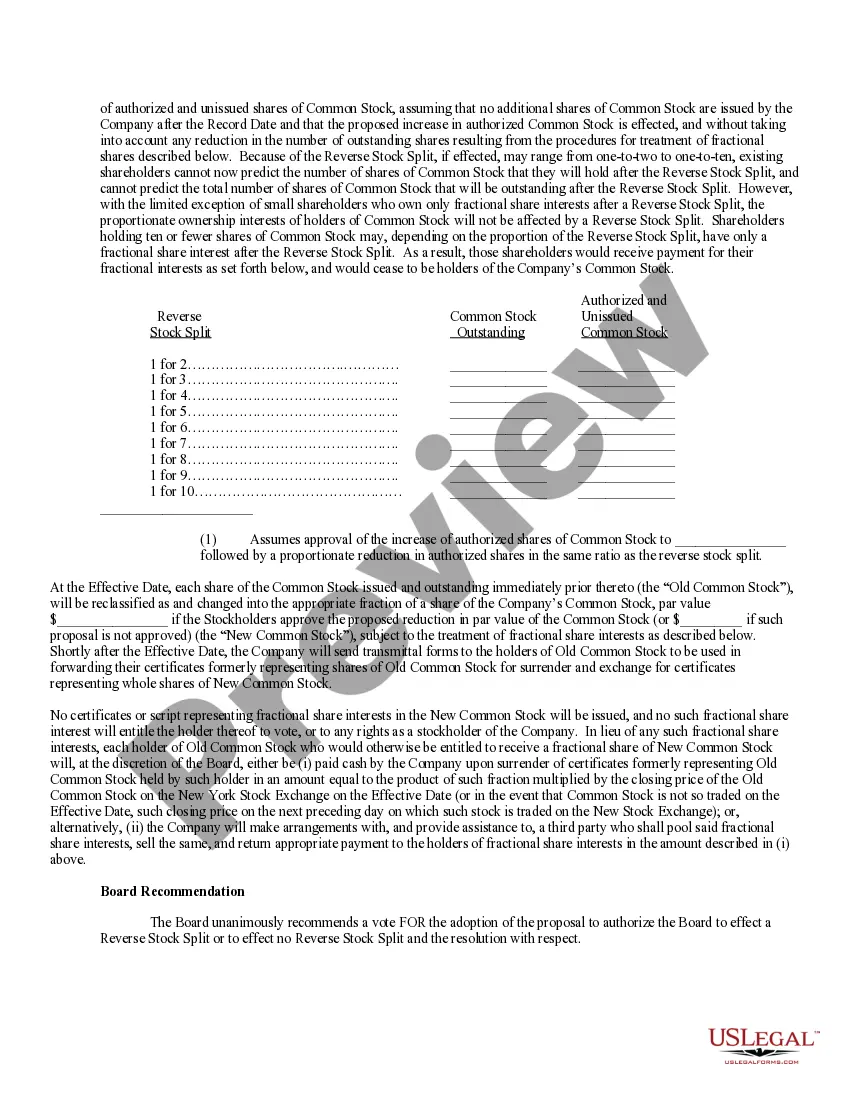
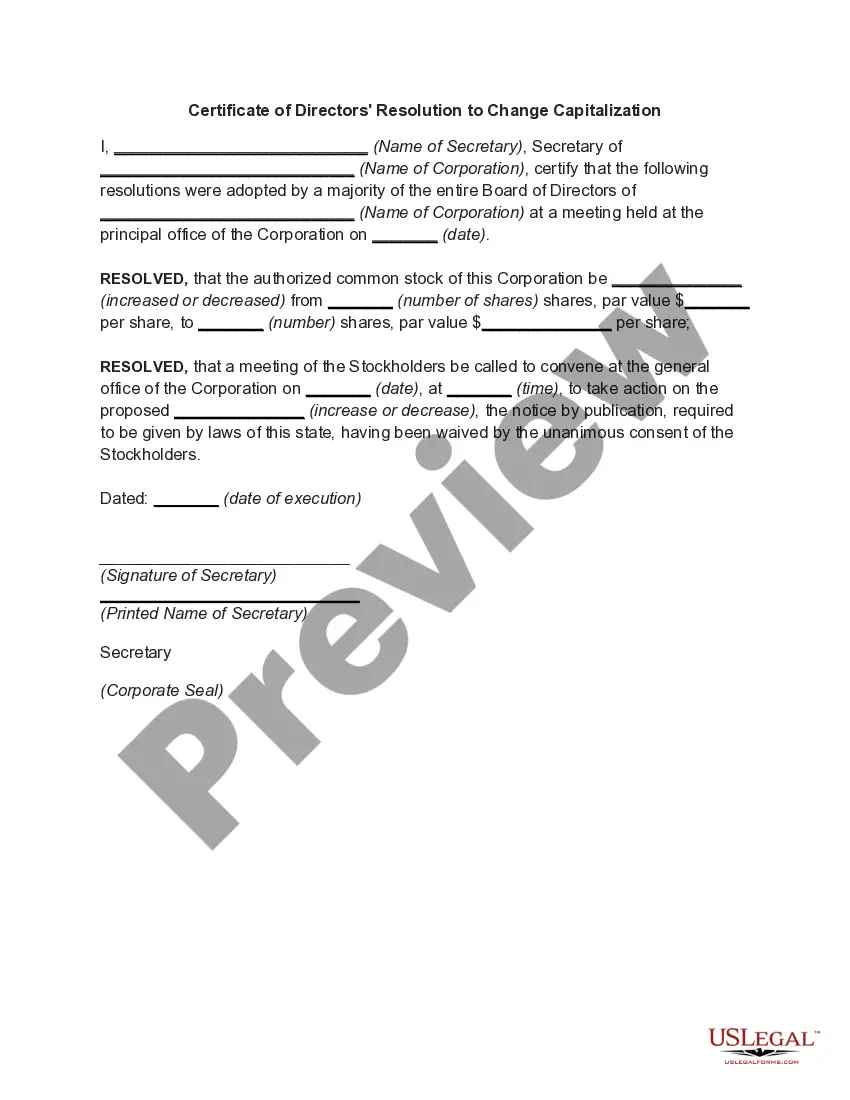
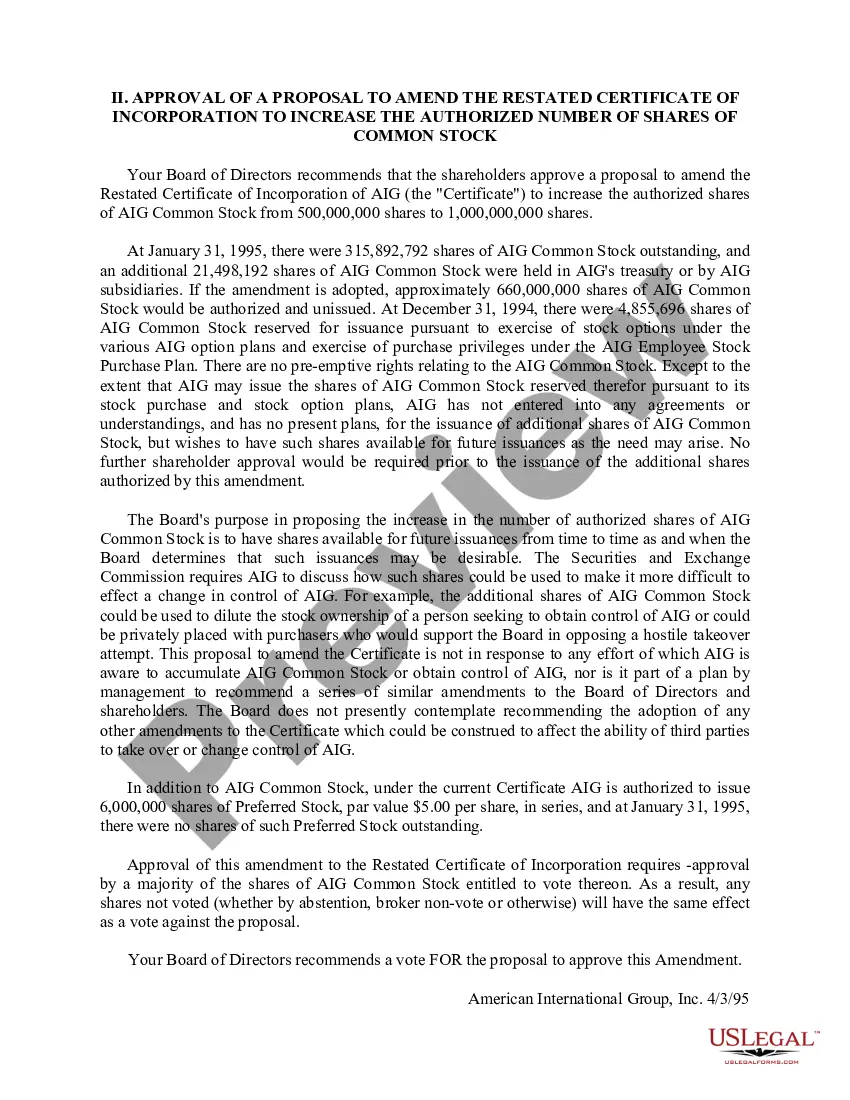
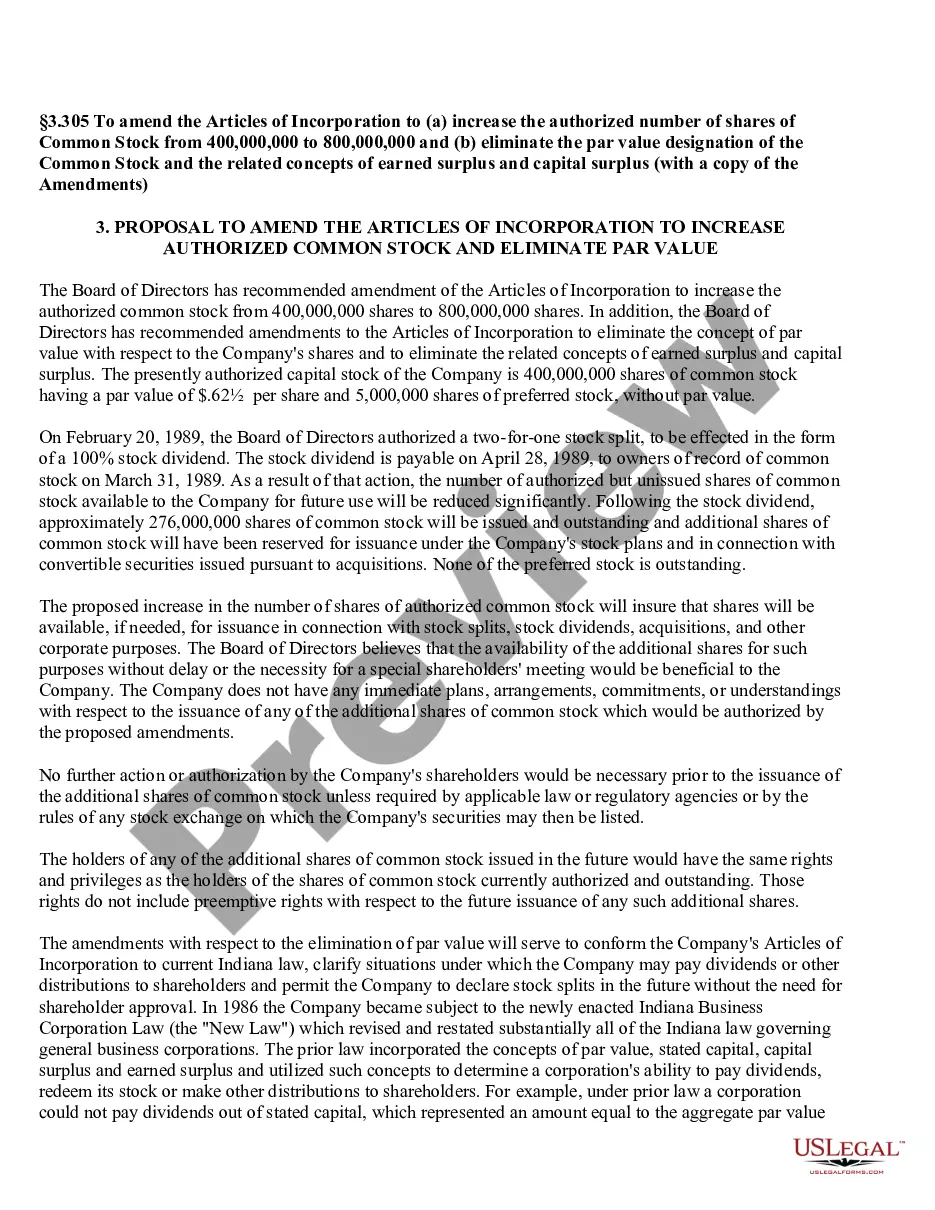
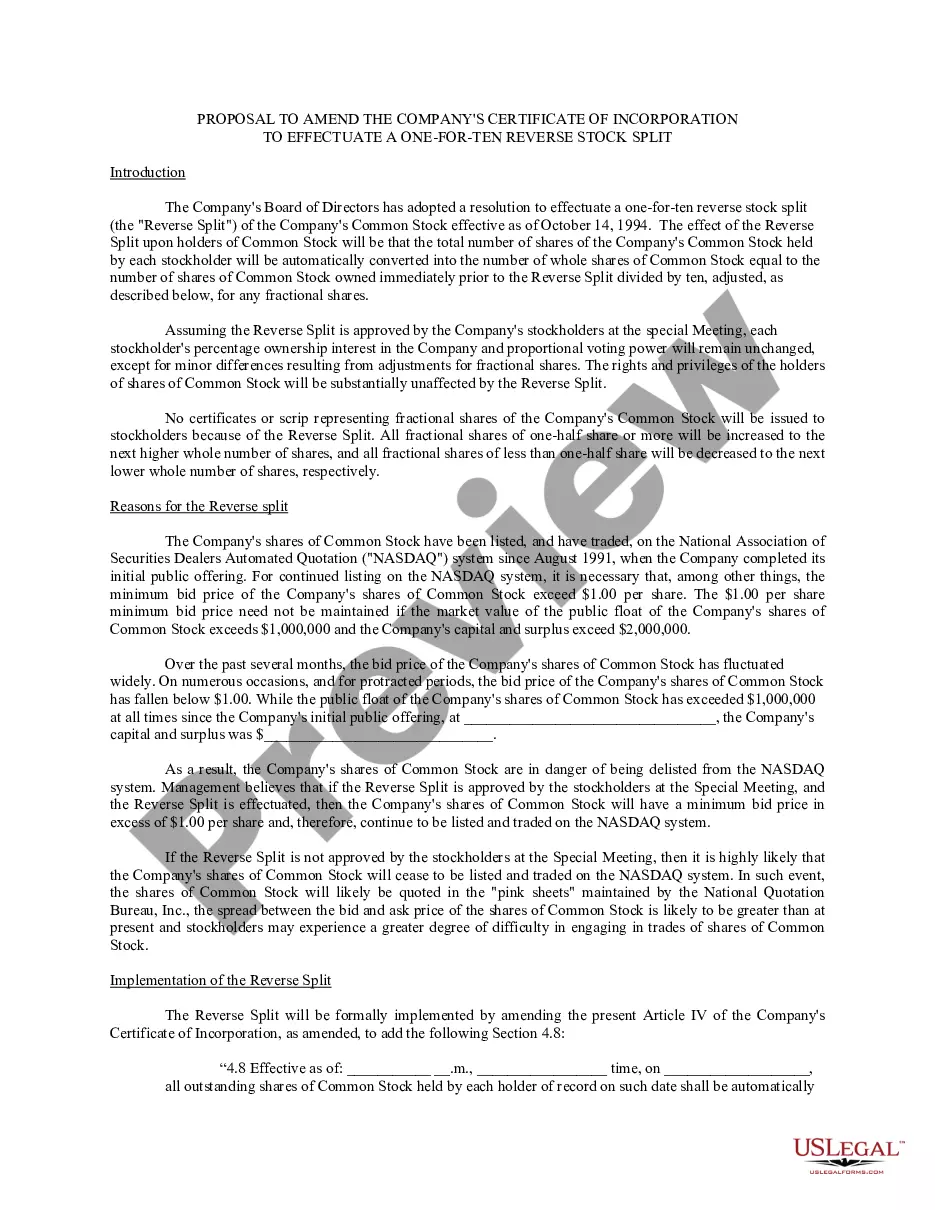
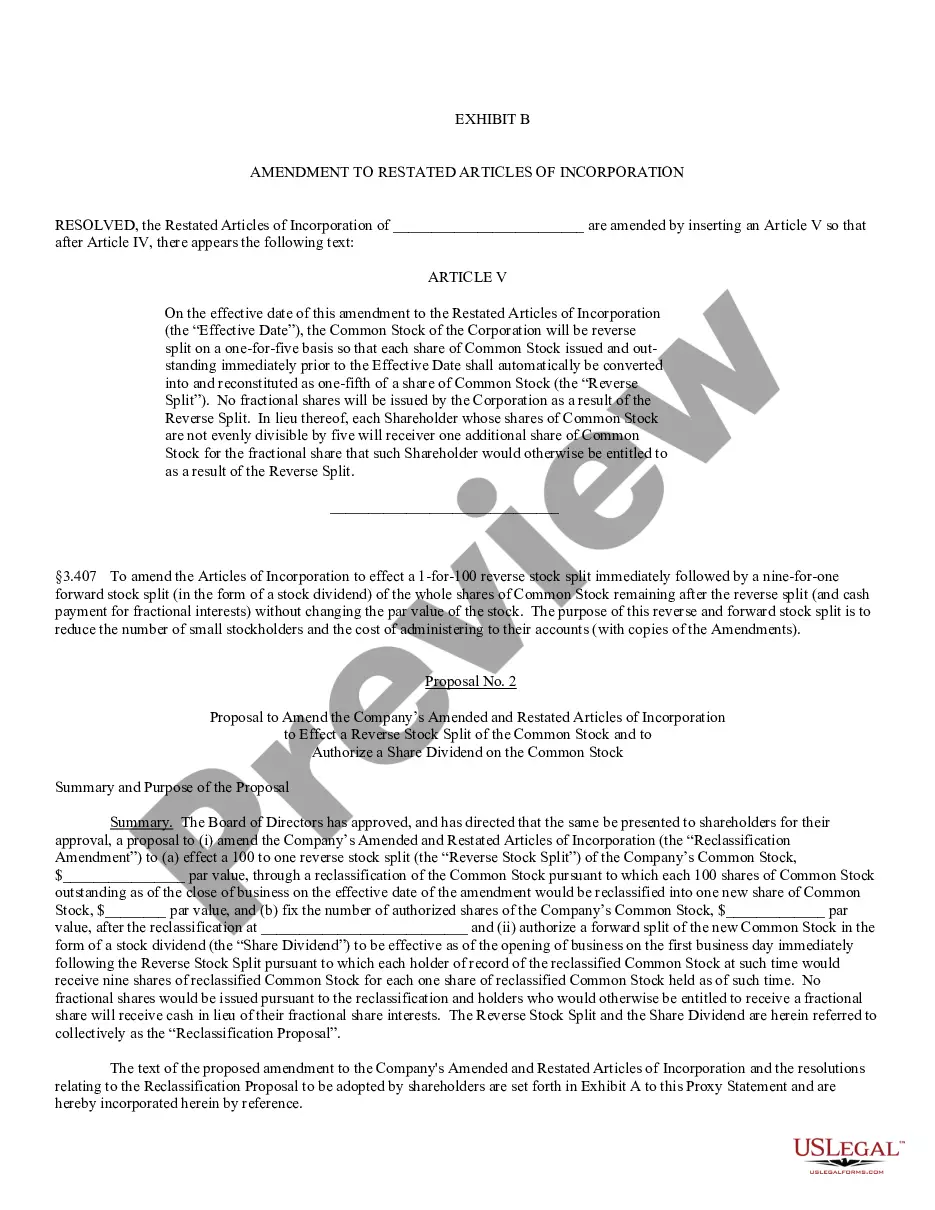
The Proposal to amend certificate to reduce par value, increase authorized common stock and reverse stock split with Exhibit is a legal document used by corporations to propose significant changes to their stock structure. This form serves to officially propose amendments to a company's Certificate of Incorporation, including reducing the par value of common stock, increasing the number of authorized shares, and executing a reverse stock split. It is distinct from other corporate documents as it specifically addresses these complex modifications aimed at enhancing corporate finance and stockholder value.
Key components of this form
- Reduction in par value of common stock.
- Proposal to increase authorized common stock.
- Authorization for reverse stock split.
- Voting requirements for stockholder approval.
- Management recommendations and justifications.
Common use cases
This form should be used when a corporation's Board of Directors decides to modify the company's structure for the benefit of its stockholders. This may occur in situations such as financial restructuring, preparing for market conditions that may affect stock price, reducing the risk of default on obligations, or managing the companyâs marketability and liquidity of its common stock.
Who can use this document
- Corporate executives and Board of Directors.
- Company secretaries involved in corporate governance.
- Company shareholders seeking to understand corporate changes.
- Legal advisors assisting with corporate compliance and restructuring.
How to complete this form
- Identify the company involved, including its current par value and the proposed new par value of its common stock.
- Specify the number of authorized shares before and after the proposed increase in authorized common stock.
- Detail the justifications for these changes, including potential financial impacts.
- Document the voting results required for stockholder approval.
- Gather necessary signatures from Board members endorsing the proposal.
Does this document require notarization?
This form does not typically require notarization unless specified by local law.
Get your form ready online
Our built-in tools help you complete, sign, share, and store your documents in one place.
Make edits, fill in missing information, and update formatting in US Legal Forms—just like you would in MS Word.
Download a copy, print it, send it by email, or mail it via USPS—whatever works best for your next step.
Sign and collect signatures with our SignNow integration. Send to multiple recipients, set reminders, and more. Go Premium to unlock E-Sign.
If this form requires notarization, complete it online through a secure video call—no need to meet a notary in person or wait for an appointment.
We protect your documents and personal data by following strict security and privacy standards.

Make edits, fill in missing information, and update formatting in US Legal Forms—just like you would in MS Word.

Download a copy, print it, send it by email, or mail it via USPS—whatever works best for your next step.

Sign and collect signatures with our SignNow integration. Send to multiple recipients, set reminders, and more. Go Premium to unlock E-Sign.

If this form requires notarization, complete it online through a secure video call—no need to meet a notary in person or wait for an appointment.

We protect your documents and personal data by following strict security and privacy standards.
Avoid these common issues
- Failing to include all necessary details about current and proposed share structures.
- Not obtaining the required majority vote from stockholders.
- Overlooking state-specific corporate laws that may affect the amendments.
Advantages of online completion
- Convenience of downloading and customizing according to specific needs.
- Reliability of templates drafted by licensed attorneys.
- Time-saving as users can complete the form at their own pace.
Legal use & context
- This form can enhance marketability and liquidity of the companyâs shares.
- Reducing par value and increasing authorized shares can help avoid default risks.
- Compliance with corporate governance laws is necessary for enforceability.
Key takeaways
- This proposal encompasses three significant changes to a corporationâs stock structure: reducing par value, increasing authorized shares, and executing a reverse stock split.
- Approval from stockholders is crucial for the proposal to take effect.
- Understanding state-specific laws is essential for compliant implementation of these changes.
Looking for another form?





Form popularity
FAQ
For a brief period, the financial giant saw its stock trade below $1 per share, and even after many of its peers had fully recovered from the crisis, Citigroup did a 1-for-10 reverse split in 2011 to get its stock price back into double digits.
Visit any financial website that provides a stock splits calendar, such as Yahoo Finance, Nasdaq or MSN Money. Click the text box at the top of the page that allows you to search within the website.
The first stock on this list is Broadcom (AVGO) which is arguably the top dividend stock in the last decade.Despite the massive gain, the company also has an attractive dividend yield of 3.6%. Further, Broadcom's dividend per share has risen from $0.07 in December 2010 to $3.25 per share in June 2020.
Broadcom (AVGO) has 0 splits in our Broadcom stock split history database. Looking at the Broadcom stock split history from start to finish, an original position size of 1000 shares would have turned into 1000 today.
The most recent bank to split its stock was Toronto-Dominion Bank (TSX:TD)(NYSE:TD) in 2014. It currently trades at about $71, lowest among the big banks. This stock likely won't be splitting anytime soon.
Adobe Systems went public on Aug.I say "around" because information on the Abobe website only gives the $0.17 split-adjusted price for its IPO, which is a fraction of what the stock was actually trading at the time. The stock has split at a 2-for-1 ratio six times.
NEW YORK, Oct 29 (Reuters) - Power company Dominion Resources D.N said on Monday it raised its dividend 11 percent and will split its stock. The board increased the quarterly dividend on pre-split shares to 79 cents per share from 71 cents.Separately, the board approved a two-for-one stock split.
But that's usually not the case with reverse stock splits. In factwith a few rare exceptionsreverse stock splits are bad news for investors.The number one reason for a reverse stock split is because the stock exchangeslike the NYSE or Nasdaqset minimum price requirements for shares that trade on their exchanges.