Montana Quitclaim Deed - Husband and Wife to a Trust

Overview of this form
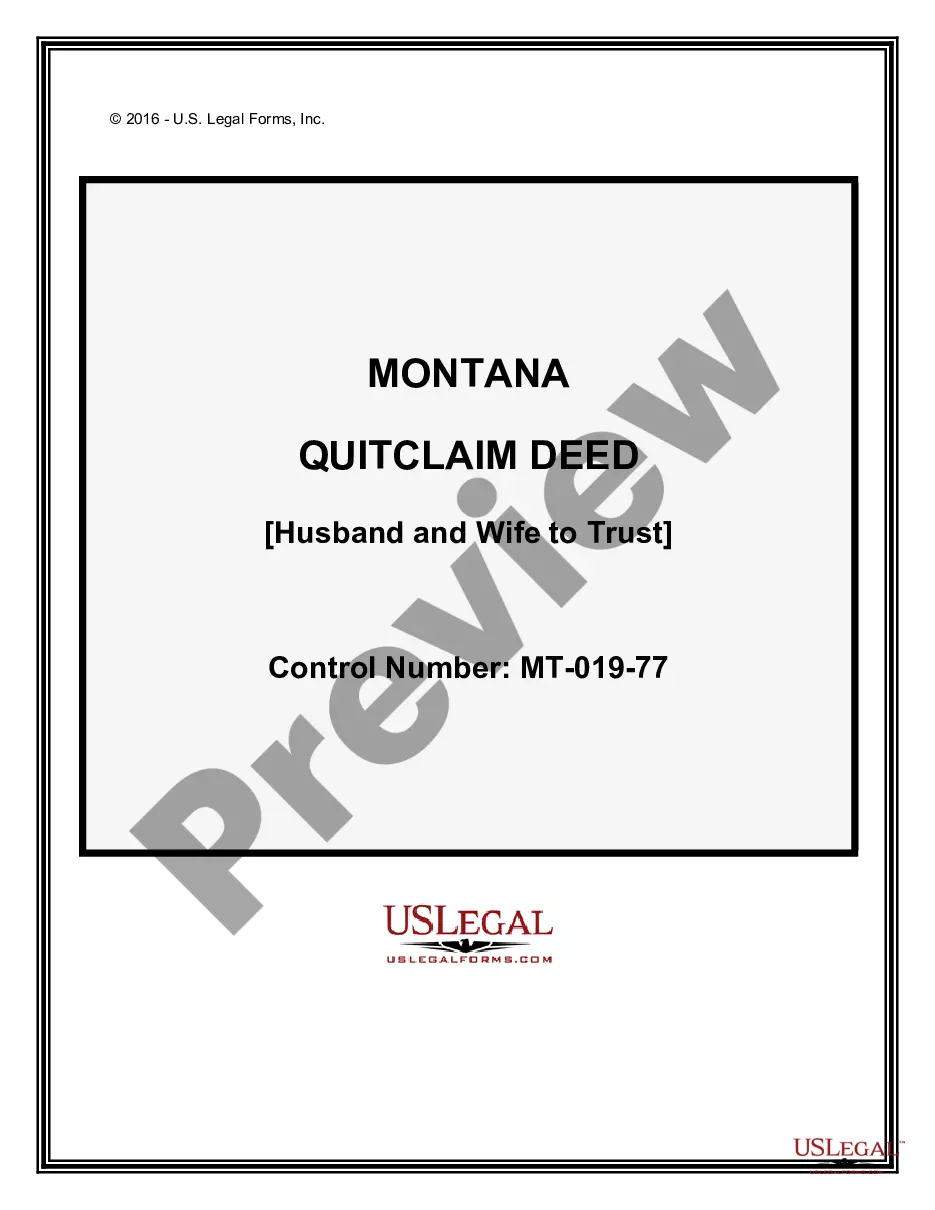
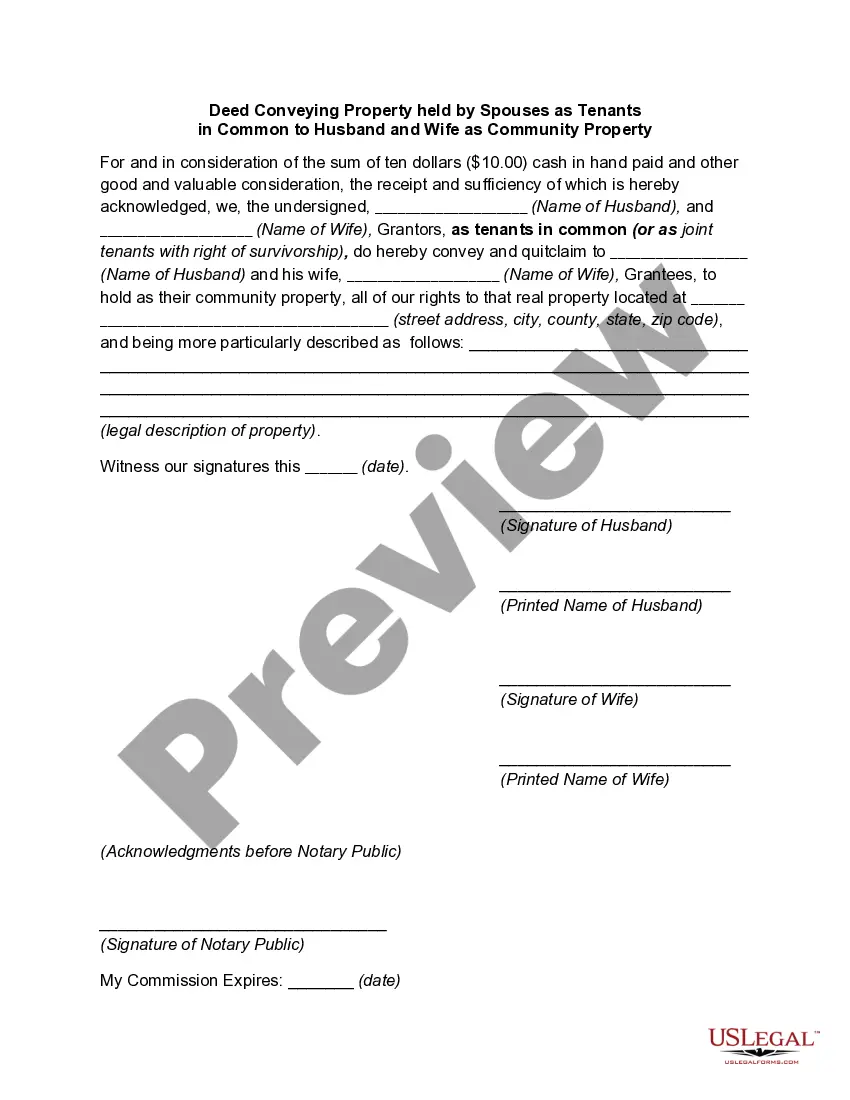
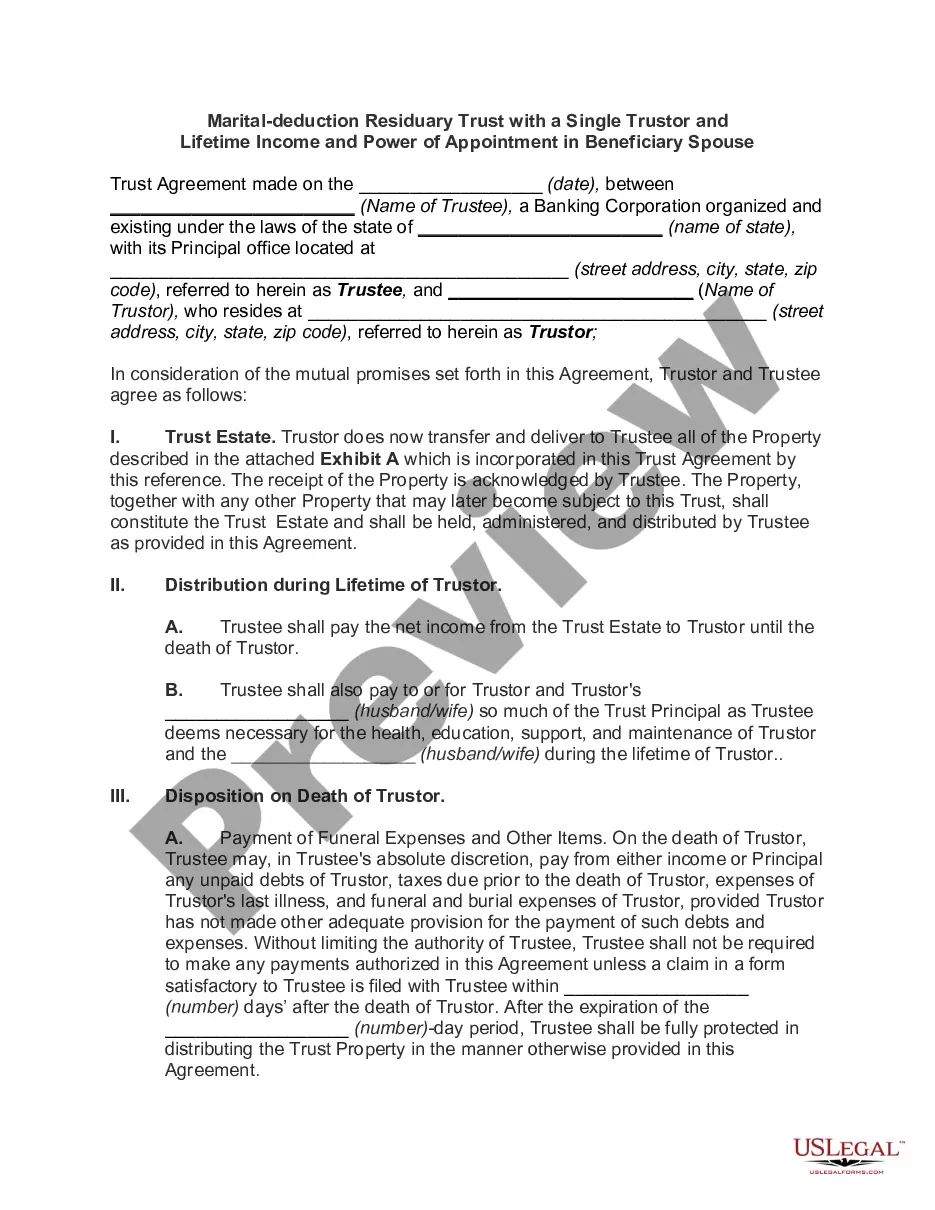
A Quitclaim Deed - Husband and Wife to a Trust is a legal document used to transfer property ownership from a husband and wife to a trust. Unlike other types of deeds, a quitclaim deed does not guarantee that the grantors (husband and wife) hold clear title to the property; it simply relinquishes their claim to the property. This form is particularly useful for couples wanting to place real estate into a trust for estate planning or asset protection purposes.
Form components explained
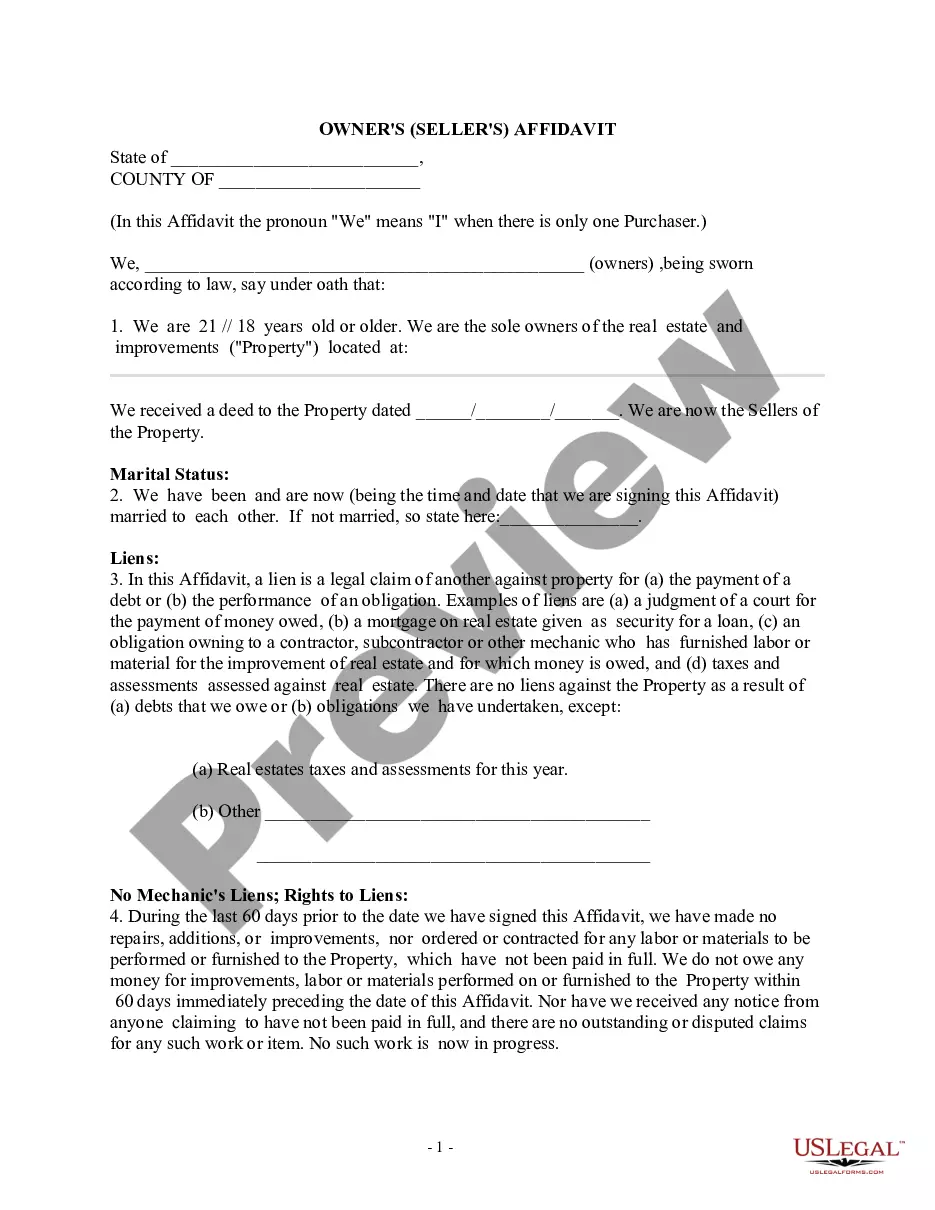
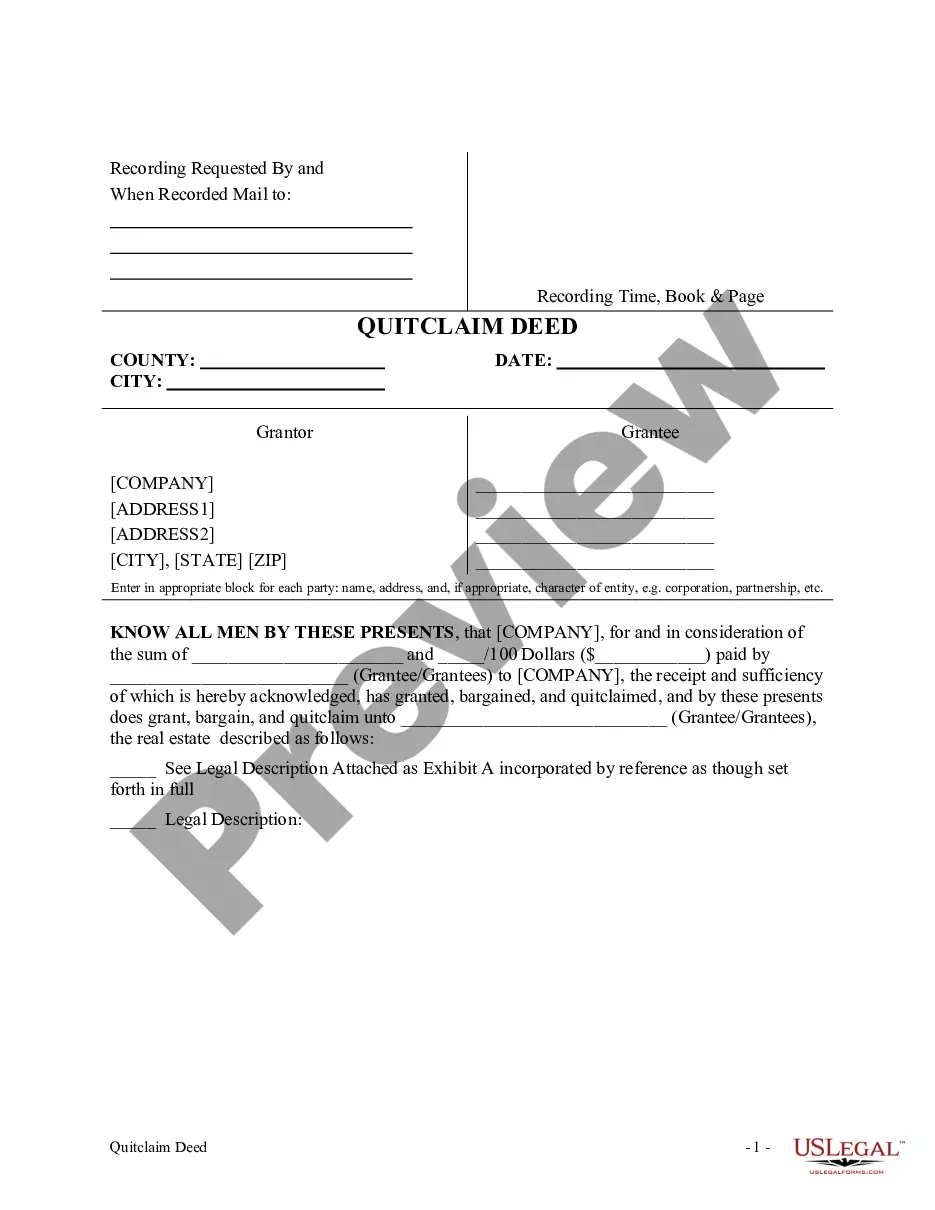
- Grantors: Names and addresses of the husband and wife transferring the property.
- Grantee: Name of the trust receiving the property.
- Legal description: Detailed description of the property being transferred.
- Witness signatures: Space for witnesses as required by state law.
- Notary acknowledgment: Section for a notary public to verify identities.


When this form is needed
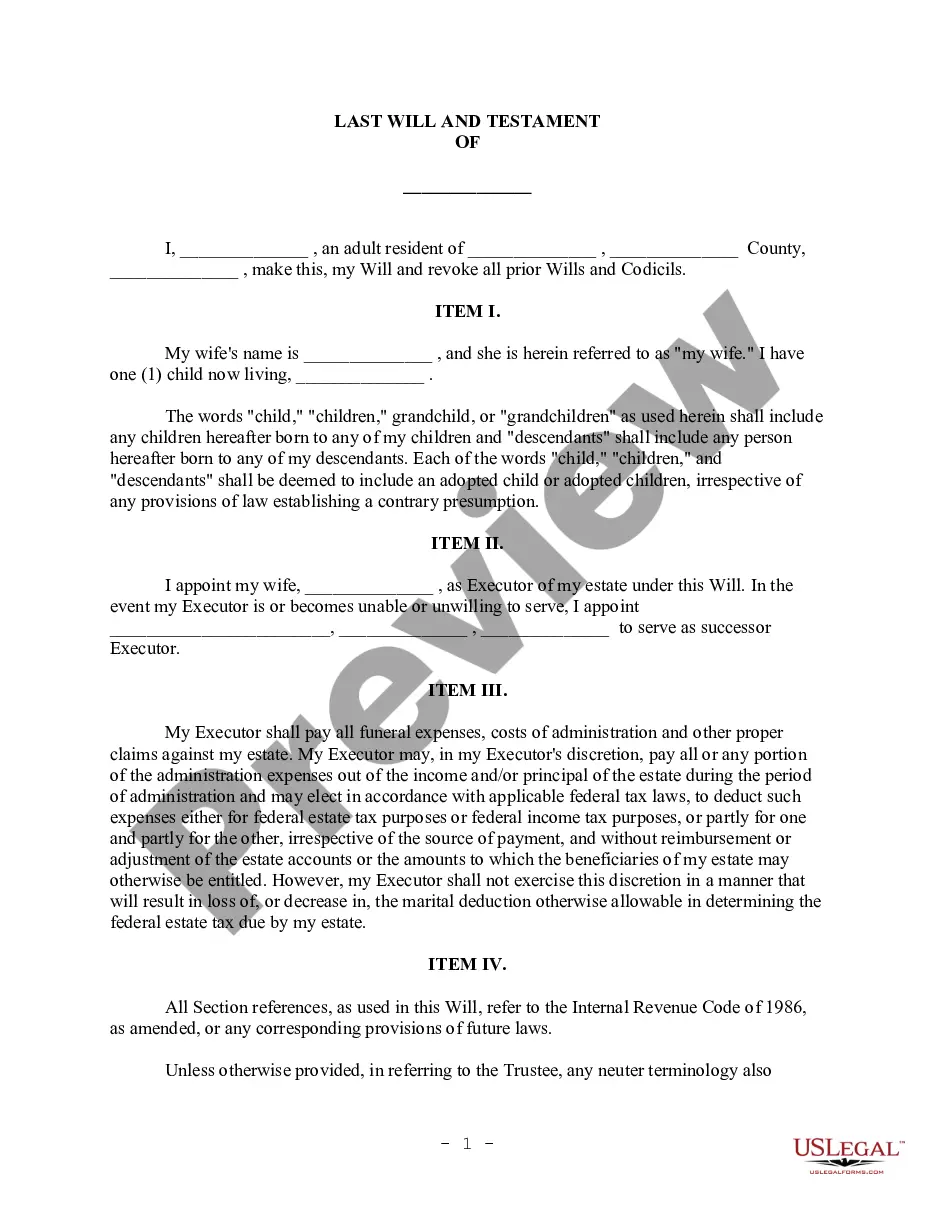
This form should be used when a married couple wishes to transfer ownership of real estate to a trust. Common scenarios include estate planning, ensuring assets are managed according to the couple's wishes after death, or protecting the property from potential creditors. It is also useful if the couple wants to simplify their estate and reduce probate complexities.
Who can use this document
- Married couples who own property together.
- Couples looking to establish a trust for estate planning purposes.
- Individuals seeking to transfer property to a trust for asset protection.
- Homeowners wanting to simplify property management for future beneficiaries.
Steps to complete this form
- Identify the grantors (husband and wife) by entering their full names and addresses.
- Specify the grantee by entering the full name of the trust.
- Include a complete legal description of the property being transferred.
- Ensure any necessary witness signatures are obtained, where required.
- Have the deed notarized to validate the document.
Notarization guidance
Yes, this form must be notarized to be legally valid. Notarization helps to verify the identities of the grantors and adds an extra layer of legal authenticity. US Legal Forms offers integrated online notarization services, allowing you to complete this process securely via video call without the need for travel.
Get your form ready online
Our built-in tools help you complete, sign, share, and store your documents in one place.
Make edits, fill in missing information, and update formatting in US Legal Forms—just like you would in MS Word.
Download a copy, print it, send it by email, or mail it via USPS—whatever works best for your next step.
Sign and collect signatures with our SignNow integration. Send to multiple recipients, set reminders, and more. Go Premium to unlock E-Sign.
If this form requires notarization, complete it online through a secure video call—no need to meet a notary in person or wait for an appointment.
We protect your documents and personal data by following strict security and privacy standards.
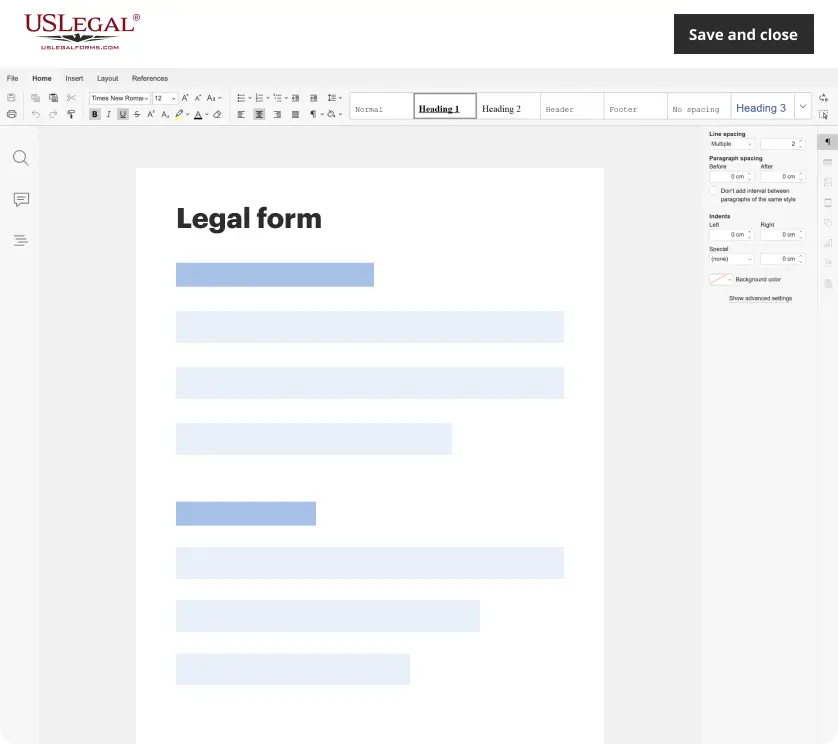
Make edits, fill in missing information, and update formatting in US Legal Forms—just like you would in MS Word.
Download a copy, print it, send it by email, or mail it via USPS—whatever works best for your next step.
Sign and collect signatures with our SignNow integration. Send to multiple recipients, set reminders, and more. Go Premium to unlock E-Sign.
If this form requires notarization, complete it online through a secure video call—no need to meet a notary in person or wait for an appointment.
We protect your documents and personal data by following strict security and privacy standards.
Common mistakes to avoid
- Not including a complete legal description of the property.
- Failing to obtain the required signatures from witnesses.
- Not having the deed notarized if required by state law.
- Incorrectly identifying the trust as the grantee.
- Leaving out the date of the property transfer.
Benefits of using this form online
- Convenient access to customizable legal forms at any time.
- Ability to fill out the form digitally, reducing the risk of handwriting errors.
- Instant downloads ensure immediate use when needed.
- Access to state-specific templates that comply with local laws.
Looking for another form?
Form popularity
FAQ
The drawback, quite simply, is that quitclaim deeds offer the grantee/recipient no protection or guarantees whatsoever about the property or their ownership of it. Maybe the grantor did not own the property at all, or maybe they only had partial ownership.
It's usually a very straightforward transaction, but it's possible for a quitclaim deed to be challenged. If a quitclaim deed is challenged in court, the issue becomes whether the property was legally transferred and if the grantor had the legal right to transfer the property.
Yes, a quit claim deed supercedes the trust. The only thing that can be done is to file a suit in court challenging the deed as the product of fraud and undue influence. A court action like that will cost thousands of dollars, but might be worth it if the house was owned free and clear.
In the context of a California mortgage transaction, a trust deed also transfer ownership. Only this time, the title is being placed in the hands of a third-party trustee, who holds the property on behalf of the lender and the homeowner-borrower until the mortgage is paid.
It is also crucial that a spouse know about the loan, even if he or she is not on the mortgage. In general, the spouse must sign a deed of trust, the Truth in Lending and Right to Cancel documents. By signing these documents, they are simply acknowledging the existence of the mortgage.
In order to transfer ownership of the marital home pursuant to a divorce, one spouse is going to need to sign a quitclaim deed, interspousal transfer deed, or a grant deed, in order to convey the title to the property.
If the quitclaim deed requires the signature of all co-owners, the deed is invalid unless all co-owners have signed it and the deed is then delivered to the grantee.If one individual owns real estate and desires to add a co-owner such as a spouse, a quitclaim deed might be used.
No. And unless the deed identifies the trust as an owner, then father is the owner of an interest. It is a common mistake to set up a trust and then fail to deed property into the trust. However, you cannot force him to make the changes you are...