Reclassification of Class B common stock into Class A common stock
Overview of this form
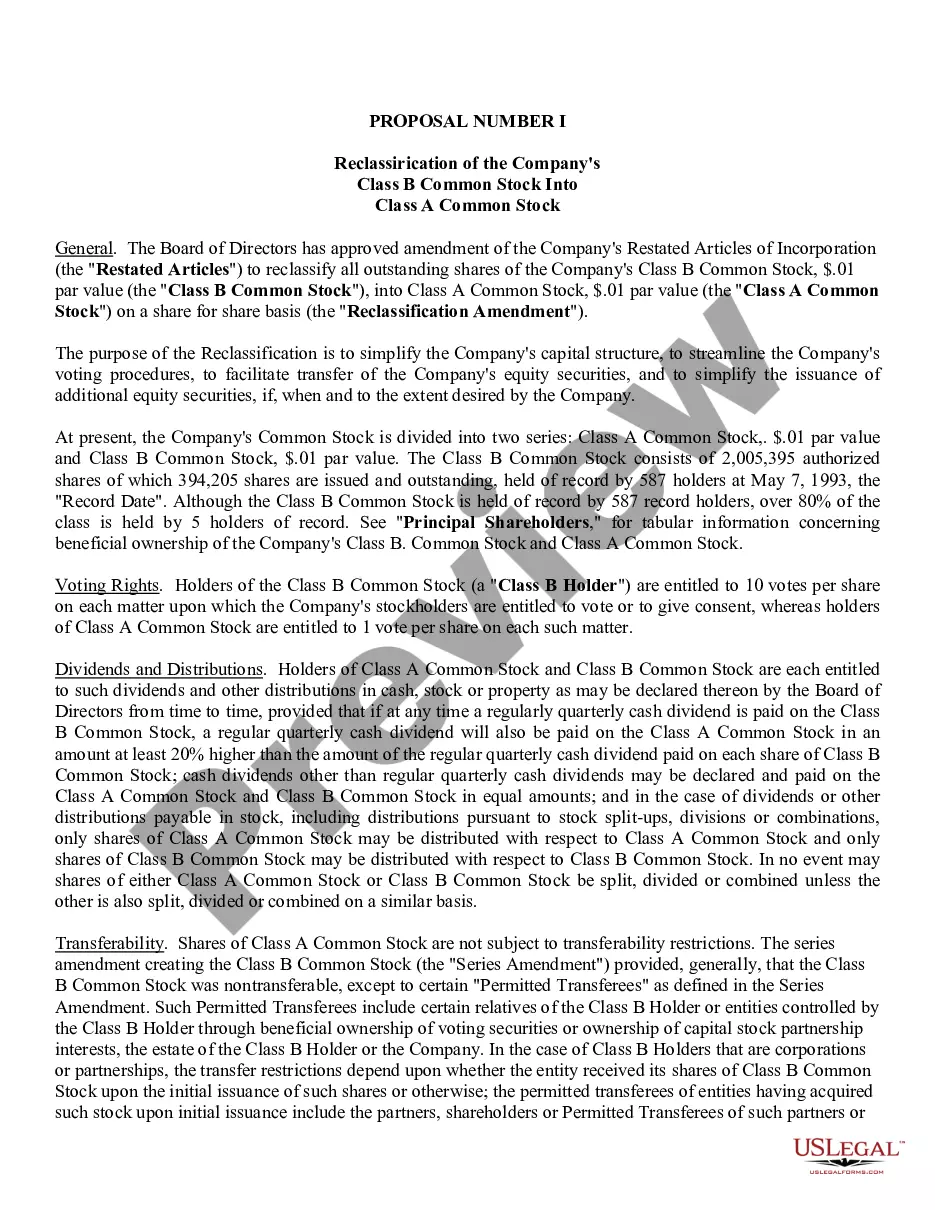
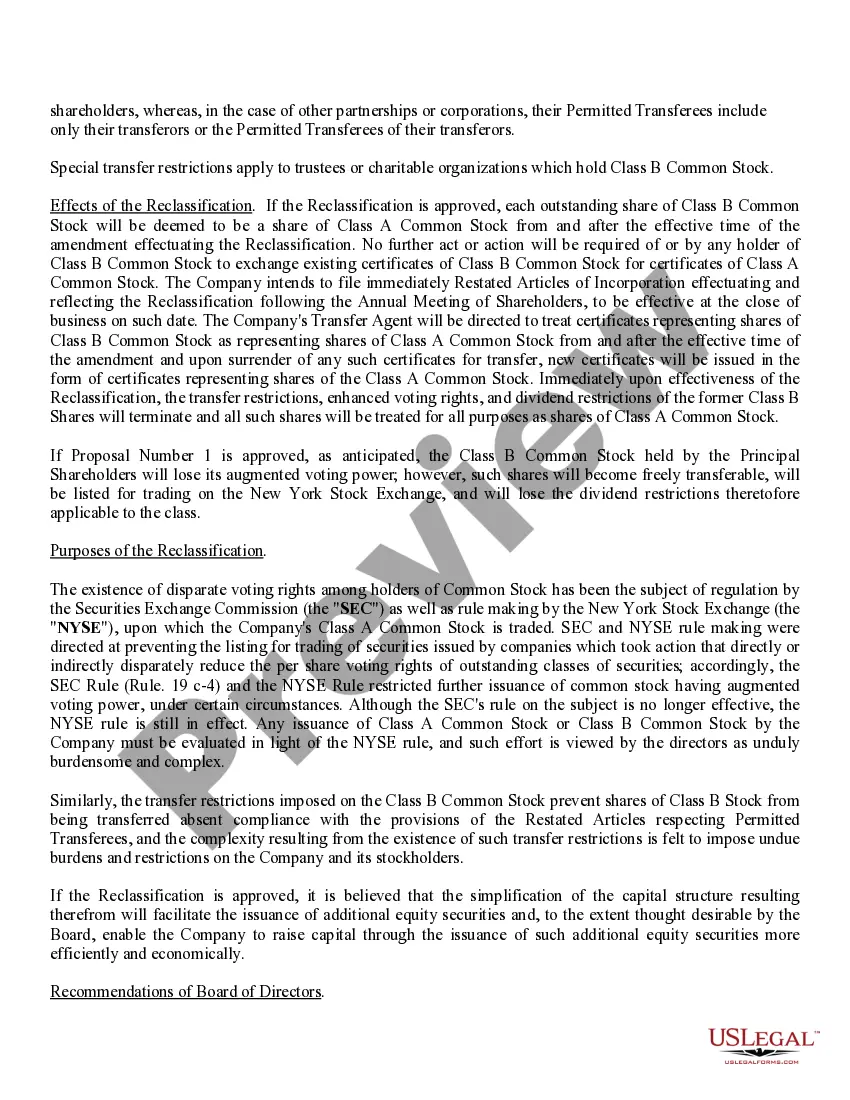
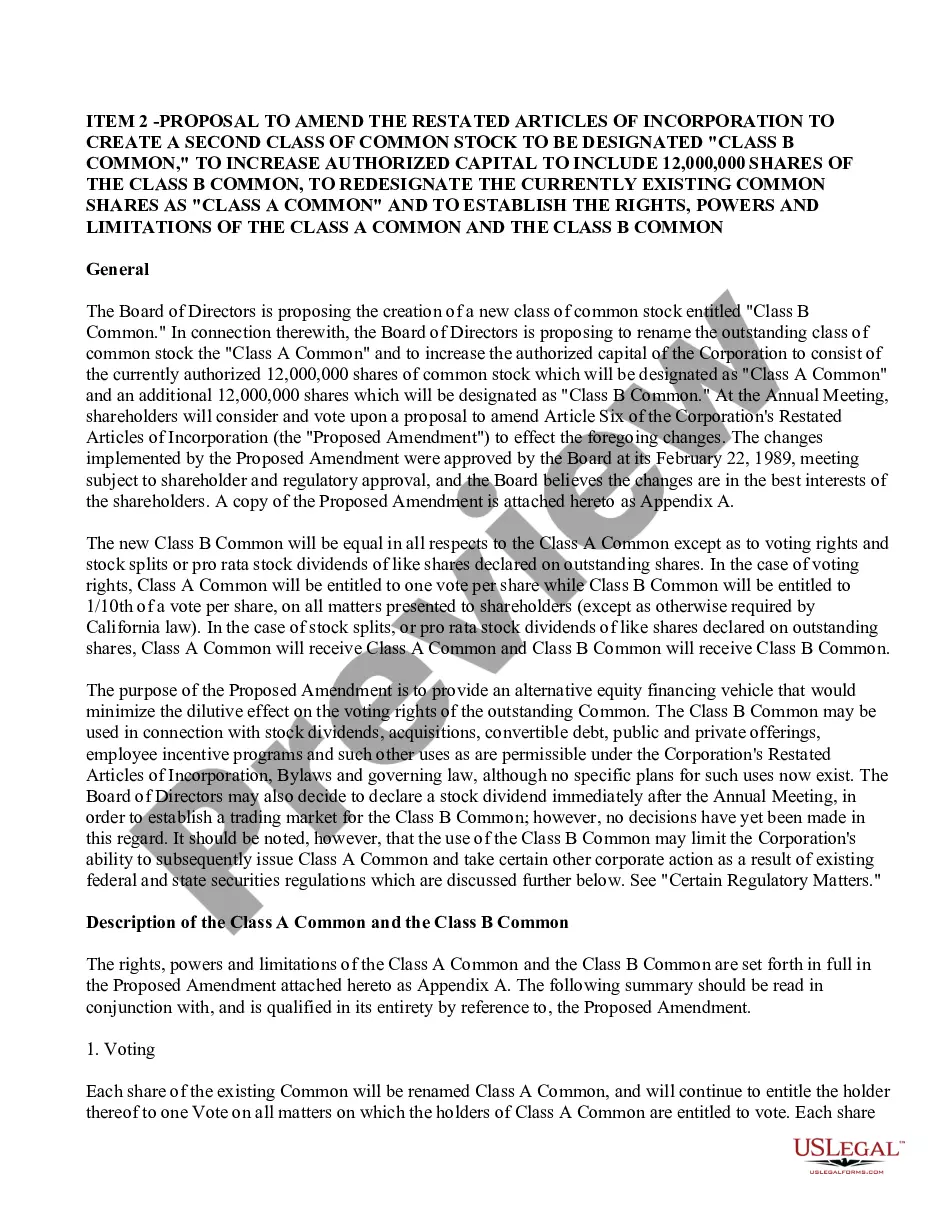
The Reclassification of Class B Common Stock Into Class A Common Stock form is a legal document used in corporate settings to convert all Class B common stock shares into Class A common stock shares on a one-to-one basis. This form simplifies a company's capital structure, enhances equity transferability, and clarifies voting rights, making it a vital tool for corporations seeking to streamline their governance and comply with regulations.
Main sections of this form
- General Information: Overview of the reclassification process and intent.
- Voting Rights: Details on the voting power associated with Class A and Class B shares.
- Dividends and Distributions: Explanation of dividend allocation between Class A and B common stocks.
- Transferability: Information on the transfer restrictions for Class B shares versus the freedom of Class A shares.
- Effects of Reclassification: Consequences of the change for stockholders, including termination of prior rights.
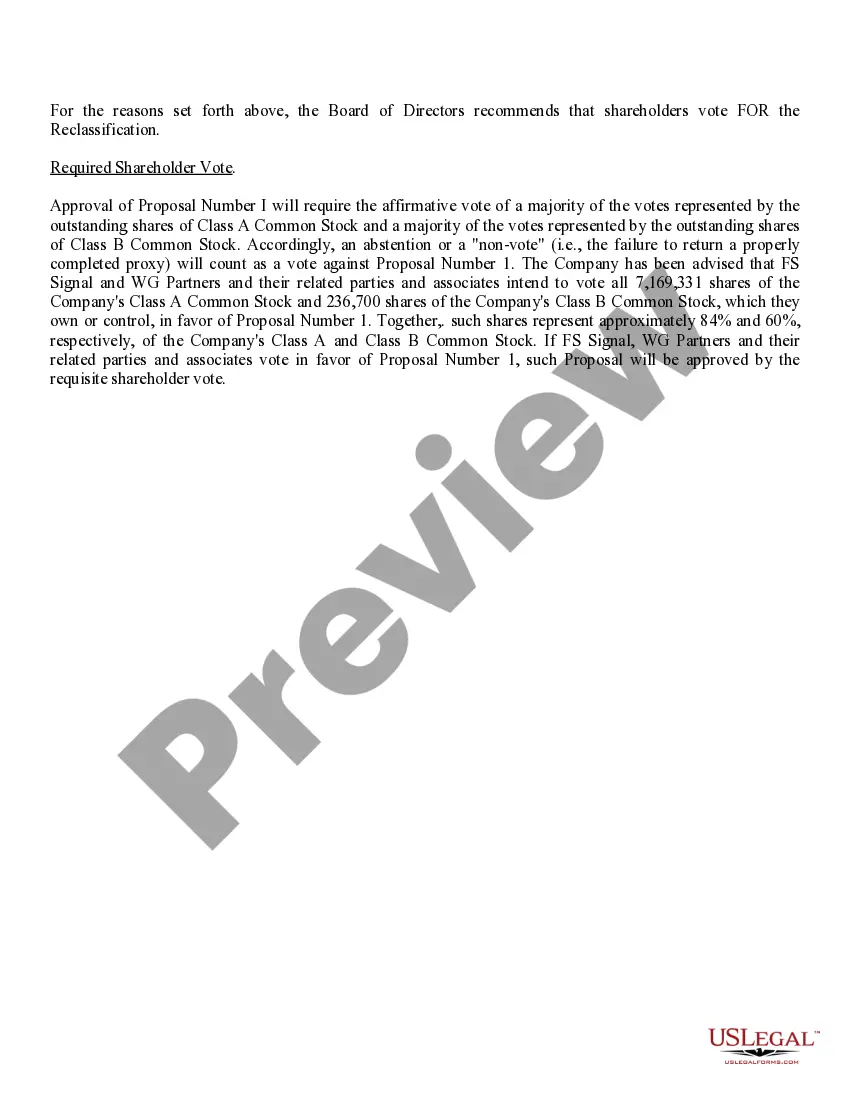
- Shareholder Vote Requirements: Information on the needed majority approval for the reclassification.

When this form is needed
This form should be used when a company's Board of Directors decides to reclassify its Class B common stock into Class A common stock. It is relevant in situations where the company aims to simplify its capital structure, enhance the marketability of its shares, or align voting rights for fairness among shareholders. This document is essential when preparing for an upcoming shareholder meeting to vote on the proposed changes.
Who this form is for
- Corporations intending to streamline their class of common stock.
- Companies seeking to simplify voting rights for shareholders.
- Entities looking to facilitate the transfer and issuance of equity securities.
How to prepare this document
- Prepare the document by entering the company name and relevant details.
- Specify the total number of shares being reclassified from Class B to Class A.
- Outline the intended effects of the reclassification on shareholder rights and stock value.
- Include provisions on voting rights and dividend distributions for each class of stock.
- Obtain the necessary approvals from shareholders as outlined in the document.
Does this document require notarization?
Notarization is not commonly needed for this form. However, certain documents or local rules may make it necessary. Our notarization service, powered by Notarize, allows you to finalize it securely online anytime, day or night.
Get your form ready online
Our built-in tools help you complete, sign, share, and store your documents in one place.
Make edits, fill in missing information, and update formatting in US Legal Forms—just like you would in MS Word.
Download a copy, print it, send it by email, or mail it via USPS—whatever works best for your next step.
Sign and collect signatures with our SignNow integration. Send to multiple recipients, set reminders, and more. Go Premium to unlock E-Sign.
If this form requires notarization, complete it online through a secure video call—no need to meet a notary in person or wait for an appointment.
We protect your documents and personal data by following strict security and privacy standards.

Make edits, fill in missing information, and update formatting in US Legal Forms—just like you would in MS Word.

Download a copy, print it, send it by email, or mail it via USPS—whatever works best for your next step.

Sign and collect signatures with our SignNow integration. Send to multiple recipients, set reminders, and more. Go Premium to unlock E-Sign.

If this form requires notarization, complete it online through a secure video call—no need to meet a notary in person or wait for an appointment.

We protect your documents and personal data by following strict security and privacy standards.
Common mistakes
- Failing to secure the required shareholder votes for approval.
- Not including clear definitions of voting rights and dividends in the form.
- Neglecting to check for compliance with state-specific corporate laws.
Benefits of completing this form online
- Convenient access to download and complete the form at any time.
- Editability allows for adjustments specific to your corporate structure.
- Reliable templates drafted by licensed attorneys ensure legal conformity.
Legal use & context
- This form allows a corporation to consolidate its capital structure, promoting greater investment and shareholder participation.
- Enforceable amendments must still comply with any state law requirements related to corporate governance.
- Reclassification can help alleviate regulatory burdens imposed by different voting rights attached to various classes of stock.
Looking for another form?

Form popularity
FAQ
Reclassification is most commonly known as the process of changing a share class issued by mutual funds. This can occur when certain requirements have been met, or else it may be caused by changes made by the mutual fund company.
KEY TAKEAWAYS. Class A shares charge upfront fees and have lower expense ratios, so they are better for long-term investors. Class A shares also reduce upfront fees for larger investments, so they are a better choice for wealthy investors.
Class B shares are issued by corporations as a class of common stock with fewer voting rights and lower dividend priority than Class A shares.Class B shares may also refer to mutual fund shares that carry no sales load.
Most class B shares "convert" into class A shares after a certain number years. When they convert, they begin to charge the same annual fund operating expenses as class A shares, which is lower. Some B shares convert to A shares after six years and almost all convert by the end of eight years.
Explanation of income reclassification Income reclassification refers to changes that companies make to all or part of previously reported dividend (or interest) income to some other tax classification.
Reclassification of shares (also known as redesignating or renaming shares) is the process of converting issued shares from one class into another.The process of altering the rights attaching to shares requires the company to obtain relevant class (shareholder) consent.
What is a reclassification? Simply put, a reclass of an asset is moving the asset from one category to another.When you reclass an asset in a period after the period of addition, journal entries are created to transfer the cost and accumulated depreciation to the accounts of the new asset category.
When more than one class of stock is offered, companies traditionally designate them as Class A and Class B, with Class A carrying more voting rights than Class B shares. Class A shares may offer 10 voting rights per stock held, while class B shares offer only one.
: the act or process of classifying something again or anew U.S. Fish and Wildlife Service officials said chub populations appear steady enough for a legal reclassification from endangered to threatened.