Proposal to approve annual incentive compensation plan
Understanding this form
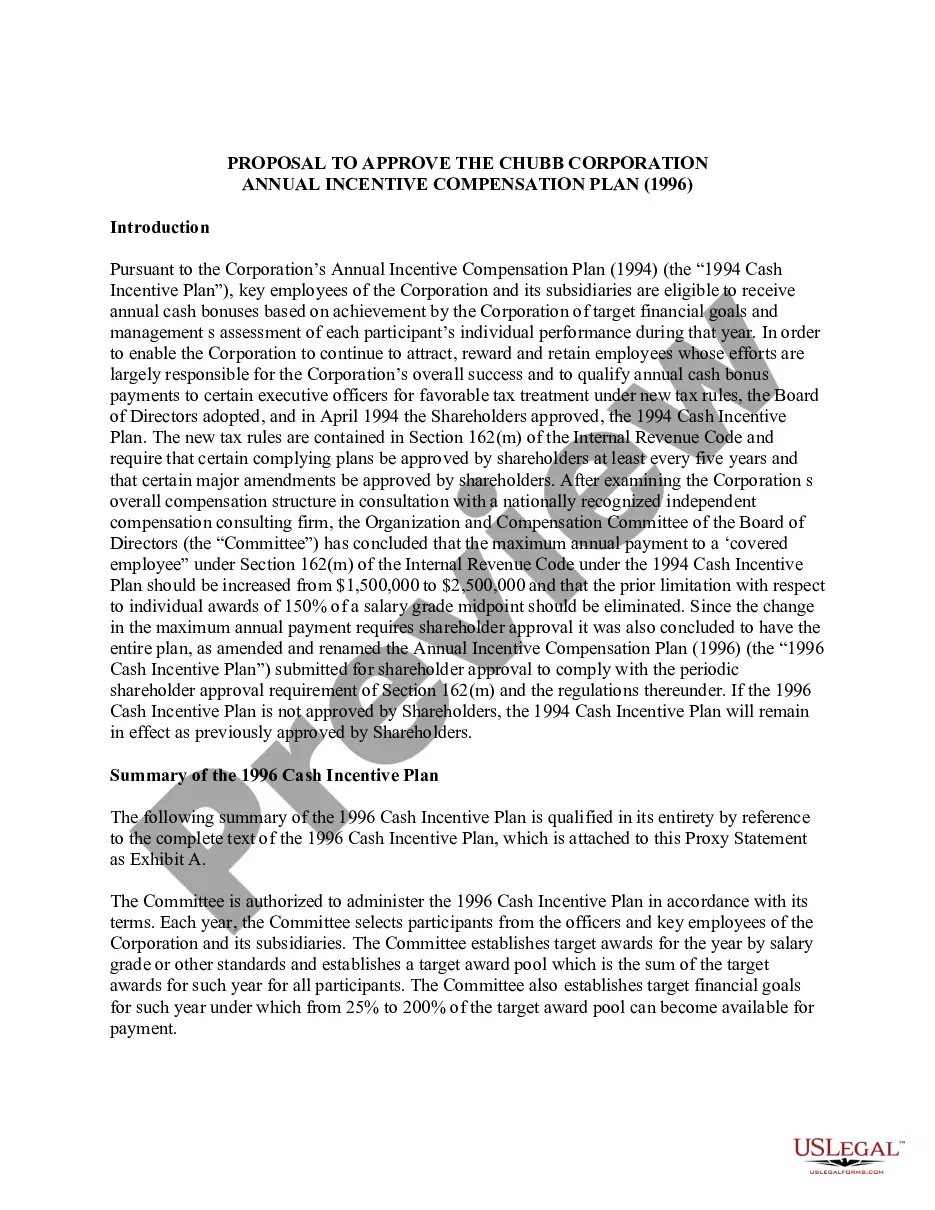
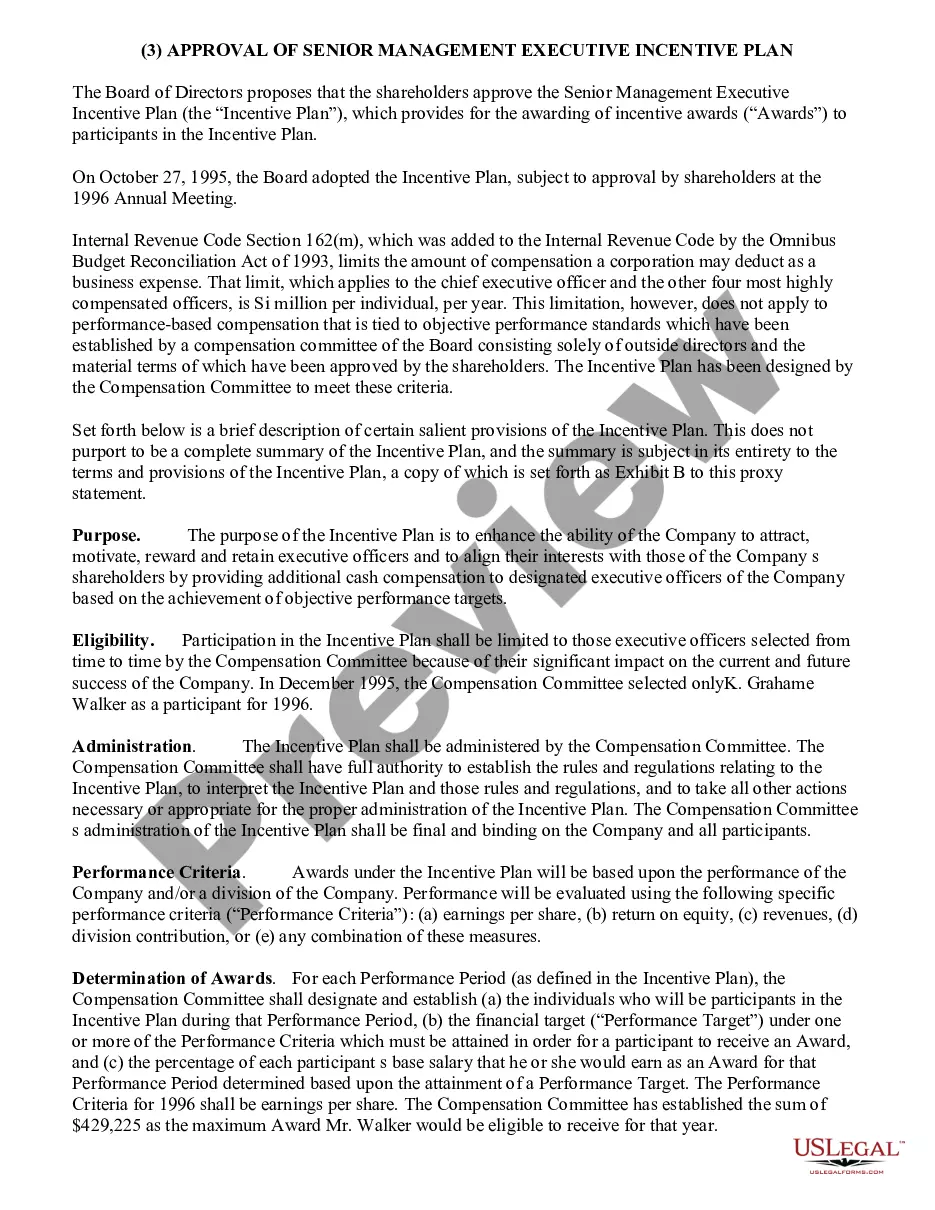
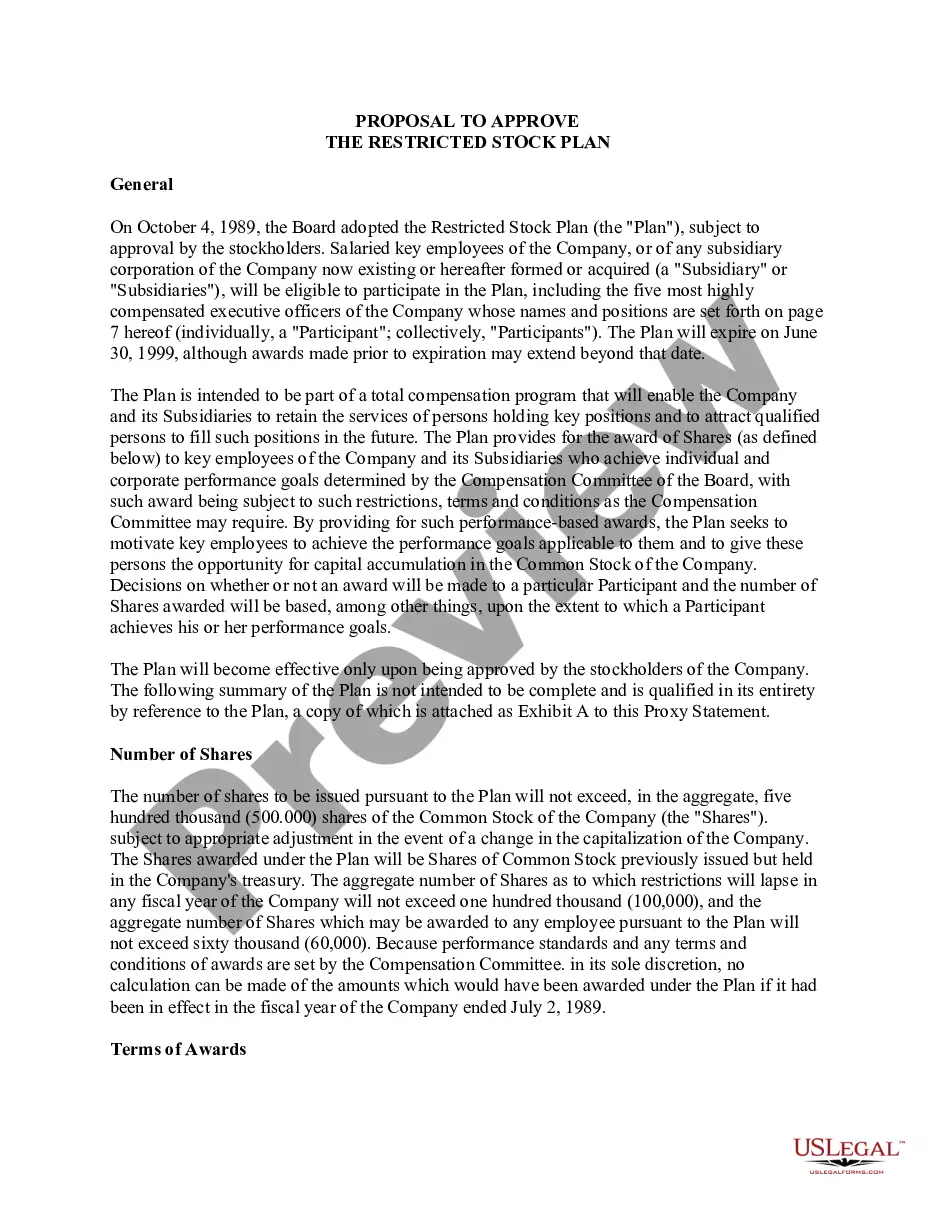
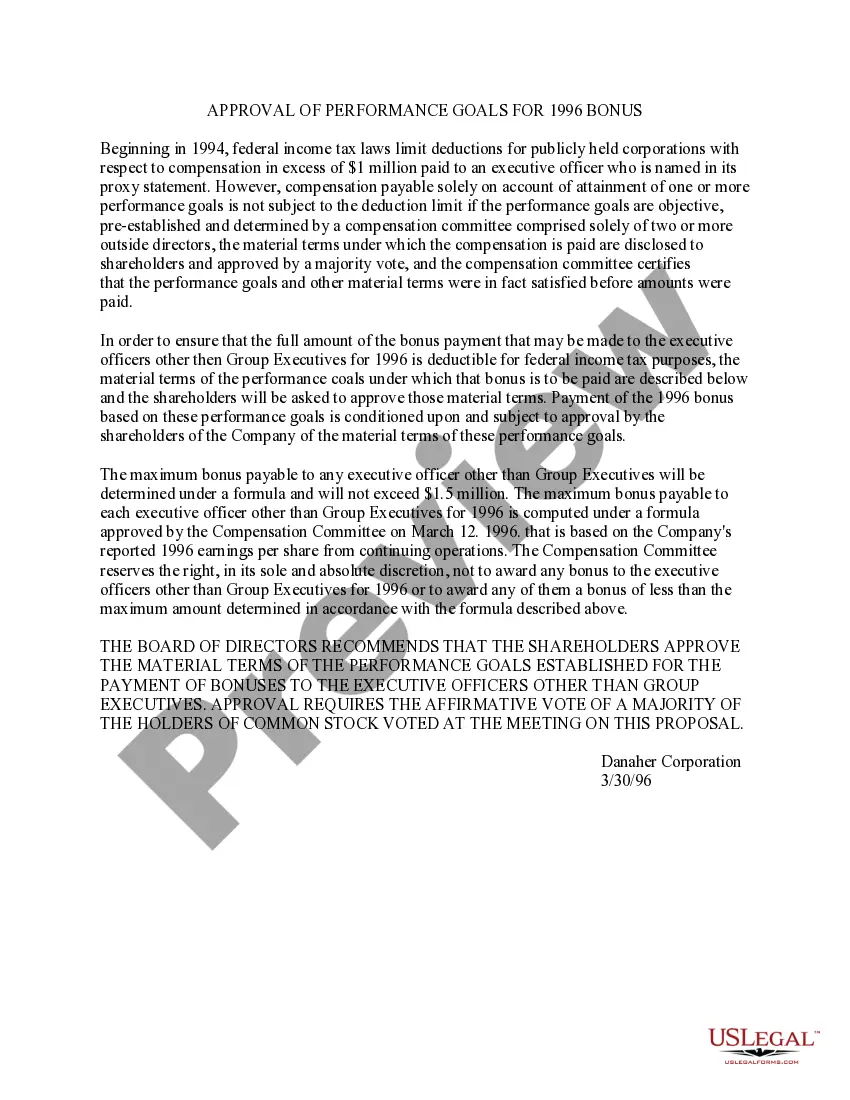
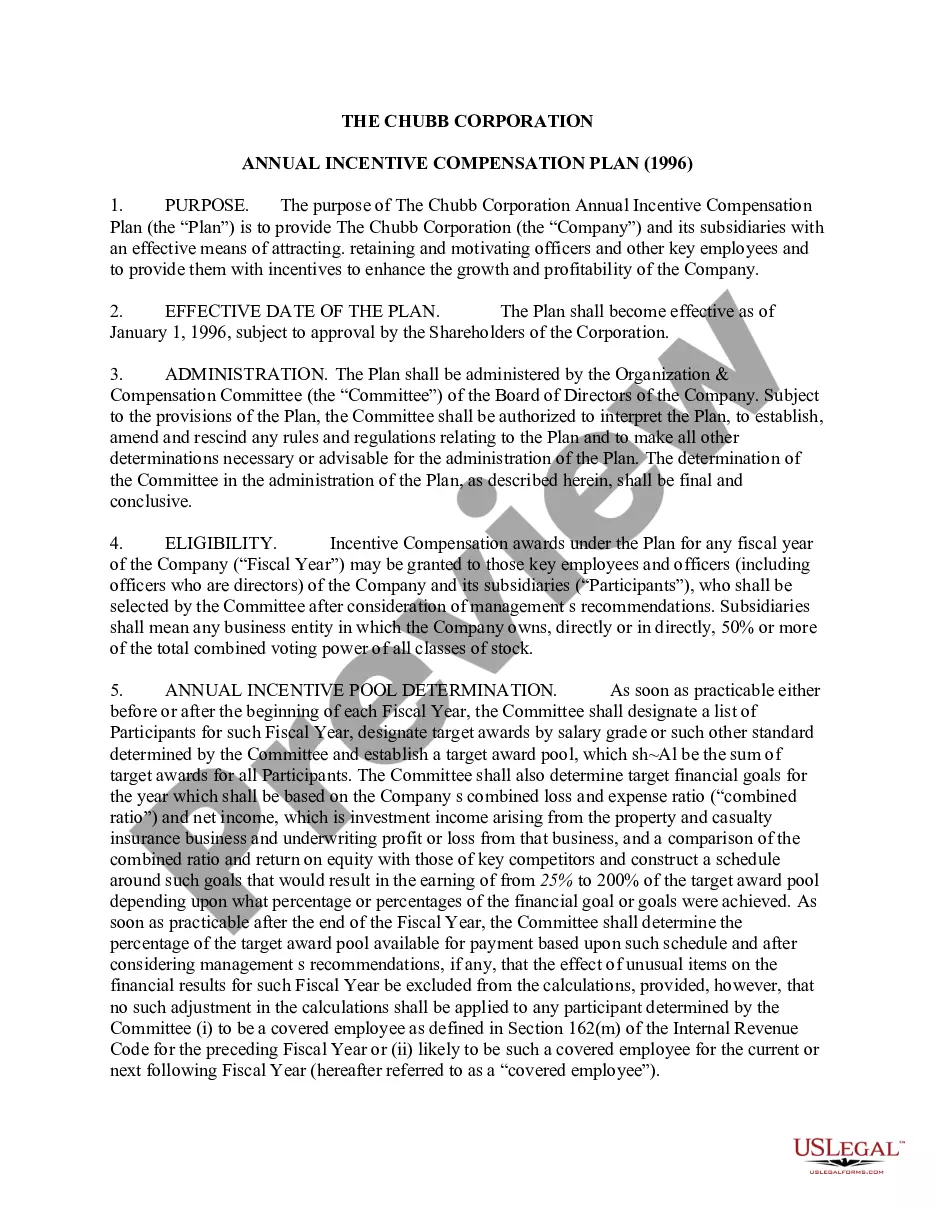
The Proposal to Approve Annual Incentive Compensation Plan is a legal document that outlines a company's proposed changes to its incentive compensation structure. This form is typically used in corporate governance to gain shareholder approval for incentive plans that reward key employees based on performance metrics. Unlike other forms, this specific proposal is tailored to comply with Section 162(m) of the Internal Revenue Code, ensuring favorable tax treatment for executives while promoting transparency and accountability within corporate management.
Key parts of this document
- Introduction: Overview of the incentive compensation plan and its purpose.
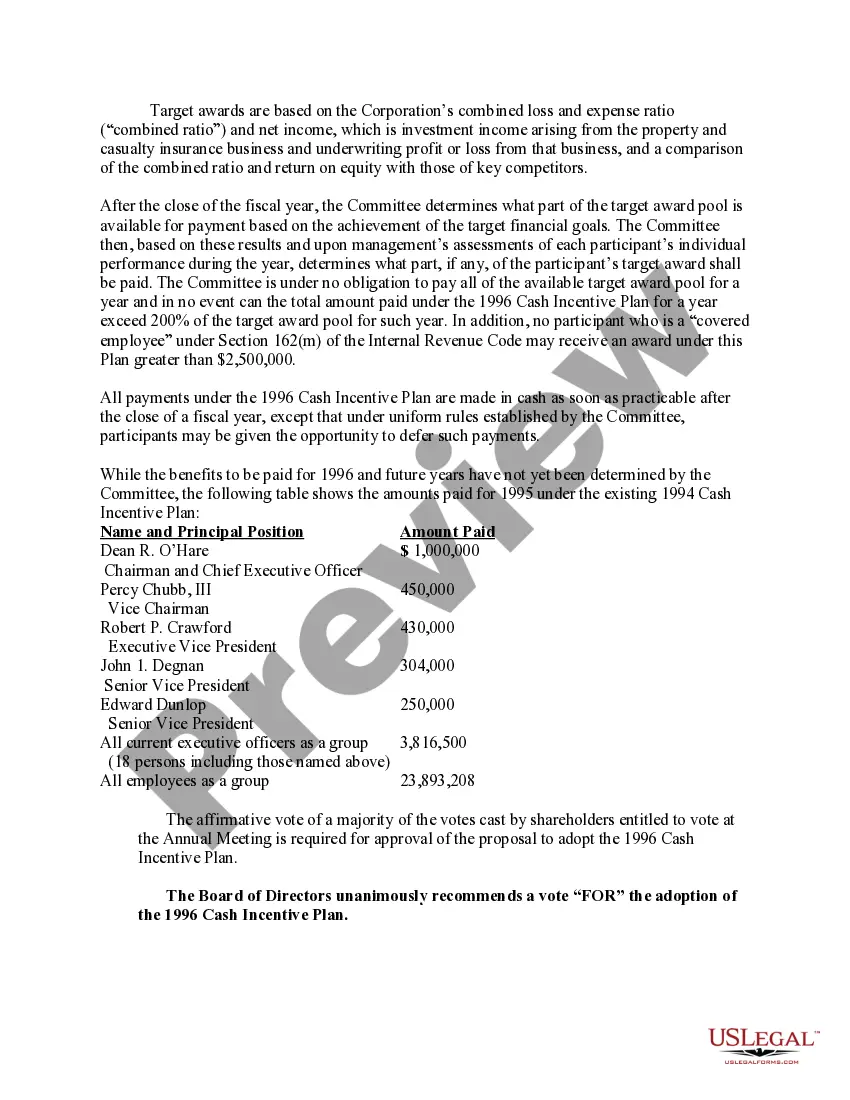
- Summary of the 1996 Cash Incentive Plan: Key features, including the administration by the Board of Directors.
- Target Awards: Criteria for determining performance-based awards for employees.
- Committee's Role: Responsibilities of the Organization and Compensation Committee in administering the plan.
- Approval Requirements: Details on the shareholder voting process for adopting the proposal.
Common use cases
This form should be used when a corporation seeks to amend its existing incentive compensation plan and require shareholder approval. It is particularly relevant during annual shareholder meetings or when significant changes to compensation structures are being proposed. Companies undergoing a thorough review of executive compensation strategies or seeking to qualify for tax advantages will find this proposal essential.
Who should use this form
This form is intended for:
- Corporate boards and directors looking to propose compensation plans.
- Human resources professionals involved in executive compensation strategy.
- Shareholders who need to understand proposed changes in incentive compensation.
- Legal professionals assisting corporations with compliance and governance matters.
How to complete this form
- Identify the corporation: Clearly state the name and details of the corporation proposing the plan.
- Outline the incentive plan: Provide a comprehensive description of the proposed incentive compensation structure.
- Detail the approval process: Include information on shareholder voting requirements and meeting details.
- Specify target awards criteria: Describe how performance metrics will be assessed for granting awards.
- Obtain necessary signatures: Ensure the document is signed by board members or authorized representatives.
Does this form need to be notarized?
This form does not typically require notarization unless specified by local law. Always verify specific legal requirements in your jurisdiction to ensure compliance.
Get your form ready online
Our built-in tools help you complete, sign, share, and store your documents in one place.
Make edits, fill in missing information, and update formatting in US Legal Forms—just like you would in MS Word.
Download a copy, print it, send it by email, or mail it via USPS—whatever works best for your next step.
Sign and collect signatures with our SignNow integration. Send to multiple recipients, set reminders, and more. Go Premium to unlock E-Sign.
If this form requires notarization, complete it online through a secure video call—no need to meet a notary in person or wait for an appointment.
We protect your documents and personal data by following strict security and privacy standards.

Make edits, fill in missing information, and update formatting in US Legal Forms—just like you would in MS Word.

Download a copy, print it, send it by email, or mail it via USPS—whatever works best for your next step.

Sign and collect signatures with our SignNow integration. Send to multiple recipients, set reminders, and more. Go Premium to unlock E-Sign.

If this form requires notarization, complete it online through a secure video call—no need to meet a notary in person or wait for an appointment.

We protect your documents and personal data by following strict security and privacy standards.
Avoid these common issues
- Not providing sufficient details about the compensation plan and its implications.
- Failing to comply with Section 162(m) requirements, which could jeopardize tax advantages.
- Neglecting to outline the specific voting procedures required for shareholder approval.
- Leaving out the participation criteria for employees in the incentive plan.
Benefits of completing this form online
- Convenience of downloading and editing the form as needed.
- Access to templates drafted by licensed attorneys, ensuring legal compliance.
- Ability to store and retrieve the document easily for future reference.
Legal use & context
- The form ensures that changes to executive compensation plans comply with IRS regulations involving shareholder approval.
- Proposals submitted using this form can lead to enhanced transparency and shareholder trust in corporate governance practices.
- Improper or incomplete proposals can lead to legal challenges or regulatory scrutiny.
Looking for another form?

Form popularity
FAQ
Rewards incentives include items such as gifts, monetary rewards, service award presents, and items such as gift certificates. An additional example is employee referral awards that some companies use to encourage employees to refer job candidates.
Types of Incentives Monetary or Financial Incentives and Non-Monetary or Non-Financial Incentives (With Advantages and Disadvantages) An 'incentive' or 'reward' can be anything that attracts an employees' attention and stimulates him to work.
Use IMA Members to Enhance or Create Your Incentive Program. The Goal: Improved Attendance. #1 Set Goals & Objectives. #2 Identify the Audience. #3 Fact Finding & Involvement. #4 Program Structure & Budget. #5 Select the Rewards. #6 Communication & Training.
Annual Incentive Compensation means any bonus awarded to a Participant and payable in cash under the Company's Executive Incentive Compensation Plan or any other annual bonus program maintained by the Company or an Affiliate.
An example of incentive is extra money offered to those employees who work extra hours on a project. Incentive is defined as something that encourages someone to do something or work harder. An example of incentive is an ice cold beer at the end of a long bike ride.
Tax Incentives. Financial Incentives. Subsidies. Tax rebates. Negative incentives.
What to consider when creating a new incentive program. Keep it simple. Align incentives with your objectives. Reward work consistently. Reward work frequently. Offer various reward options. Promote the program.
Target the Audience. Similar to a marketing plan or a training plan, your incentive plan needs to be targeted to a specific audience. Establish SMART Goals. Offer Appealing Rewards. Align with Your Culture. Incorporate Training. Communicate, Track, Report, Communicate.