Employee Stock Ownership Trust Agreement
What this document covers
The Employee Stock Ownership Trust Agreement is a legal document used to establish a trust wherein employees can acquire ownership in their employer's stock. This form is particularly important for companies looking to implement an employee stock ownership plan (ESOP) as it helps define the relationship between the employer, the trustee, and the employees or beneficiaries. Unlike other trust agreements, this specific form caters to the nuances of employee stock ownership and the associated benefits under the Internal Revenue Code and other legislation.
Form components explained
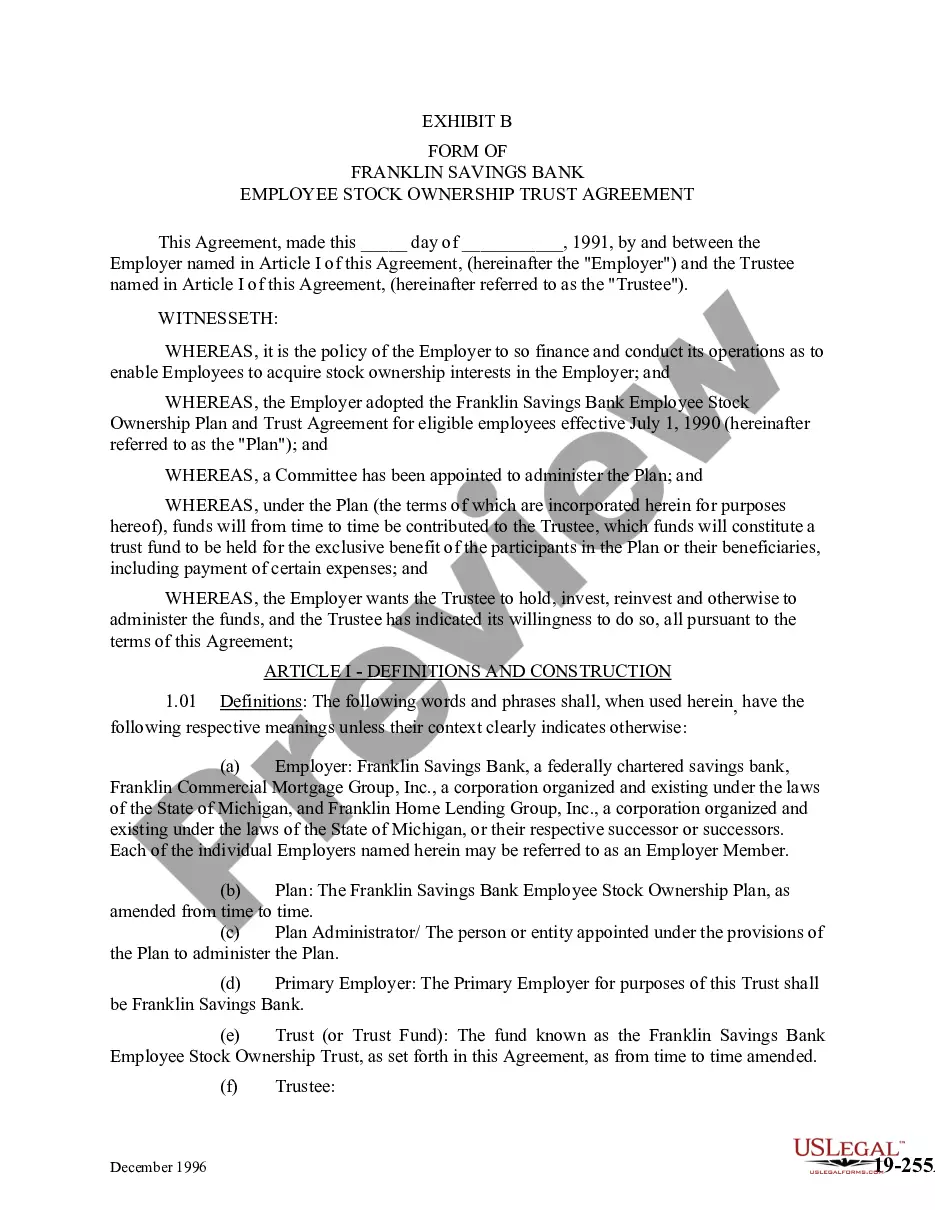
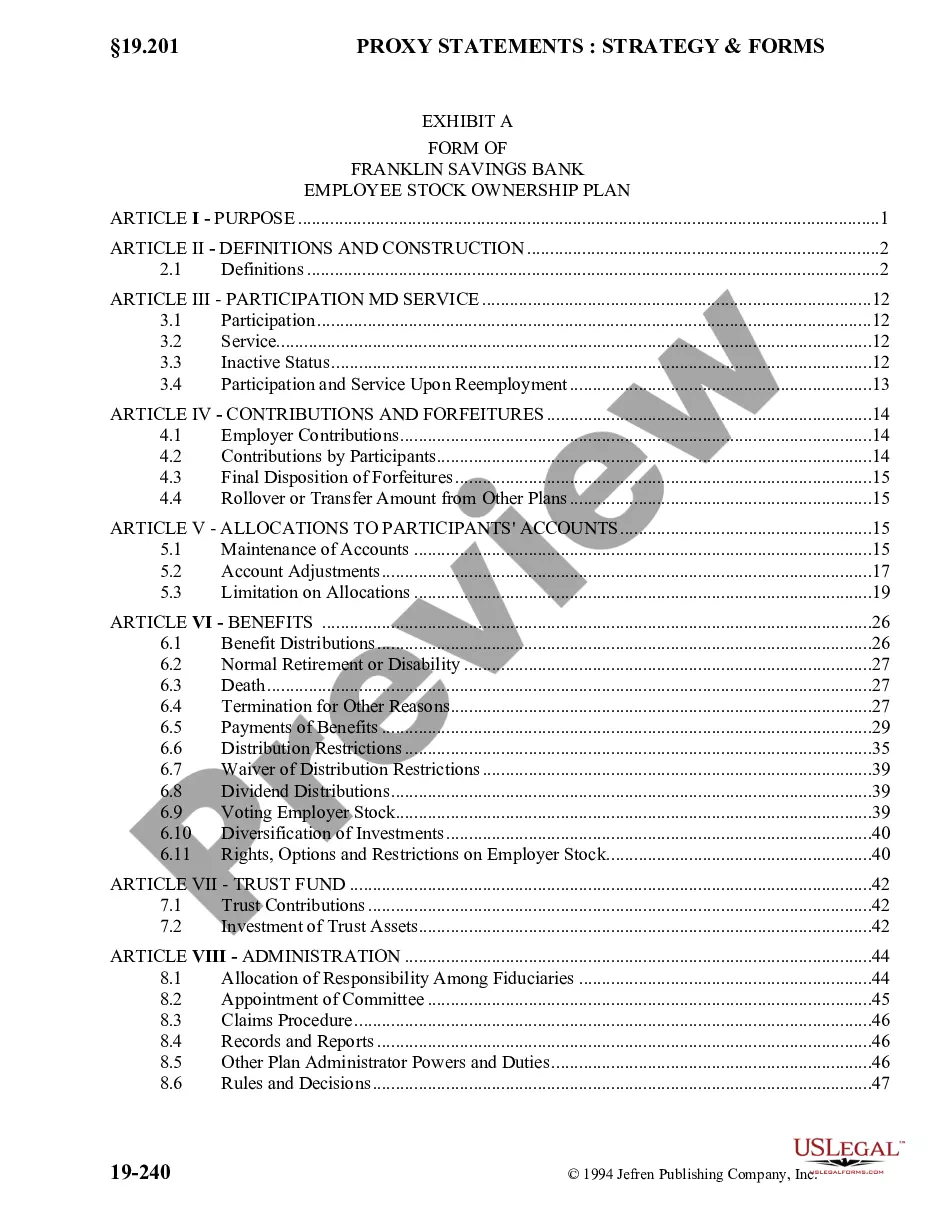
- Definitions of key terms, including Employer, Trustee, and Plan.
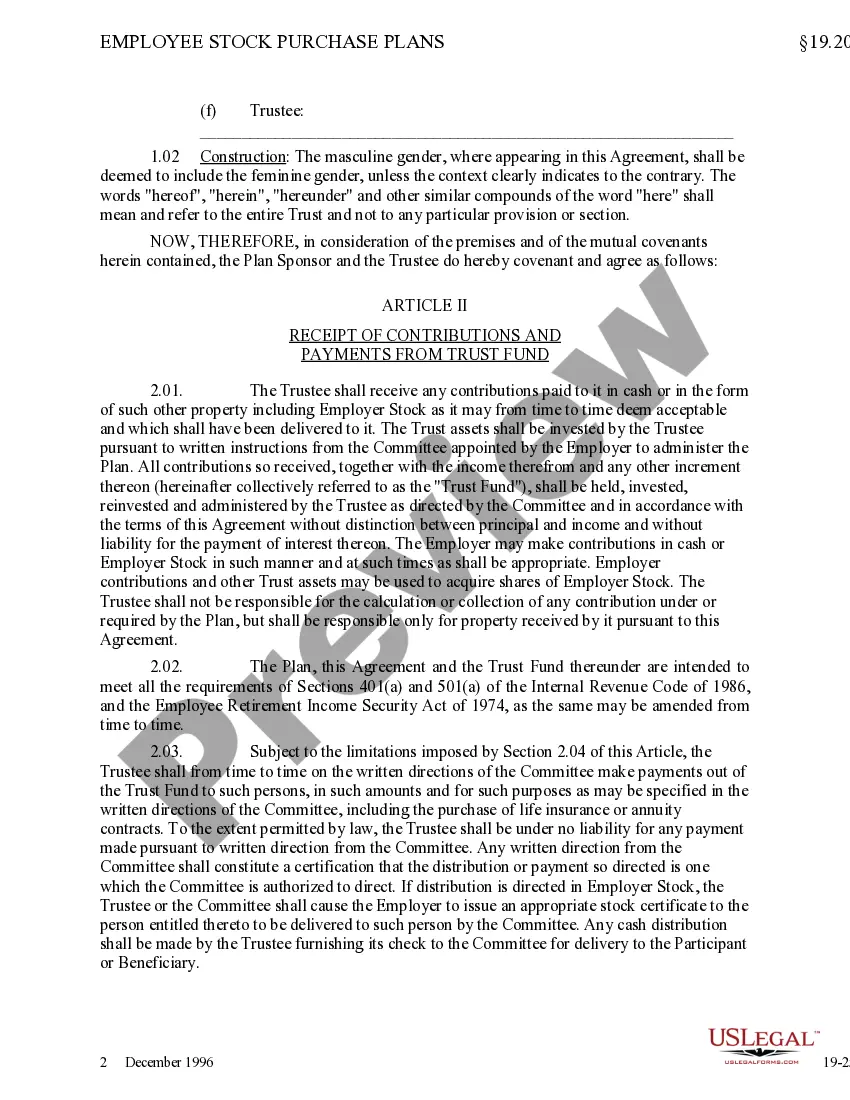
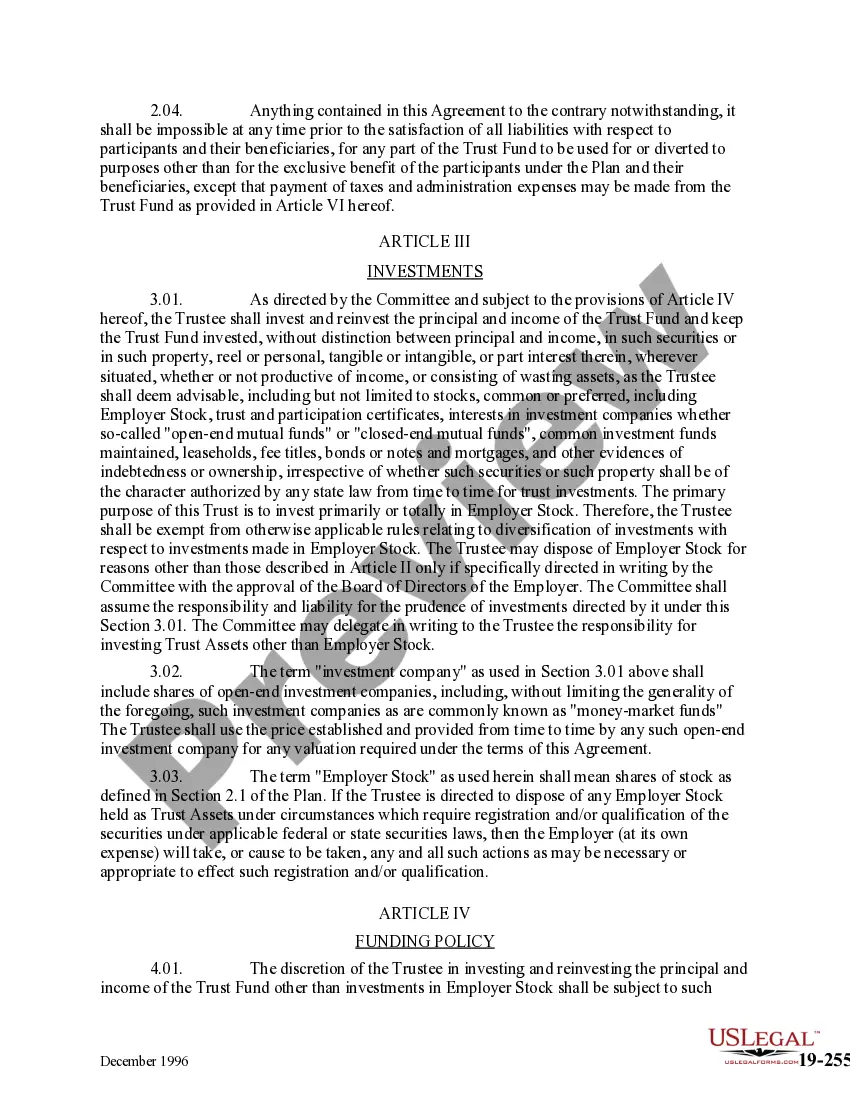
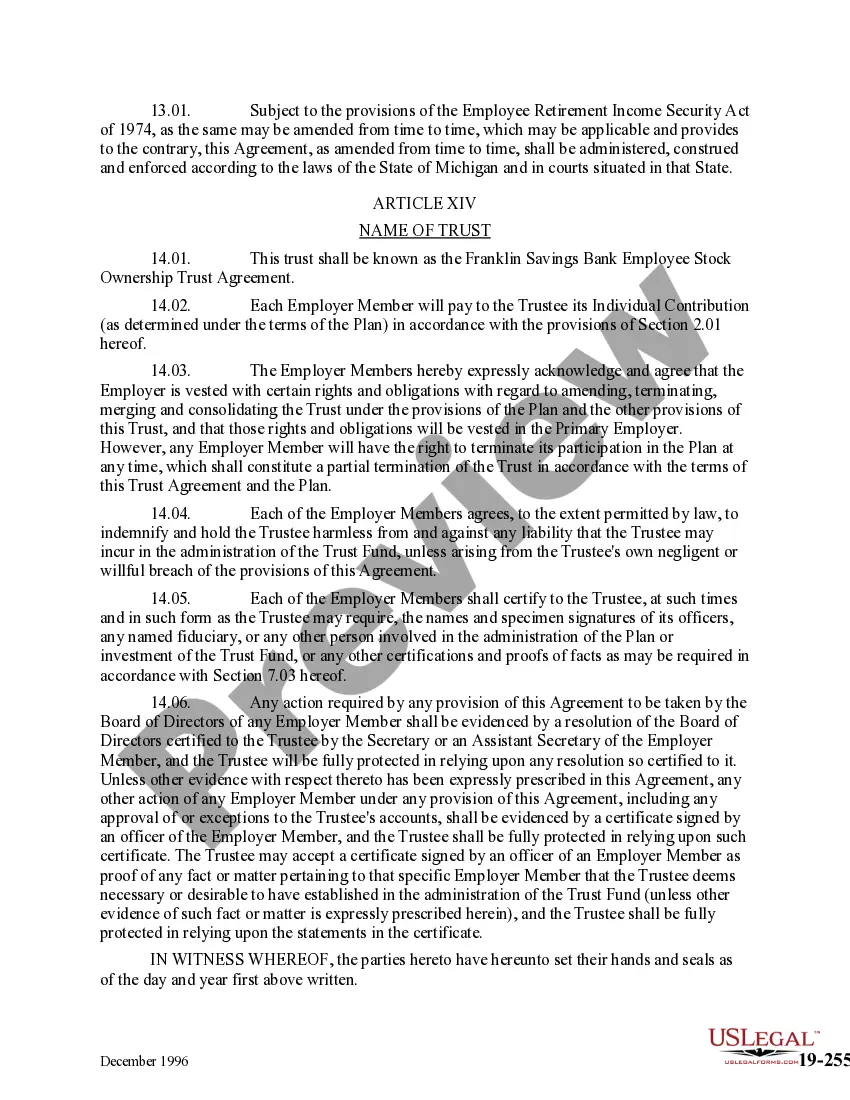
- Provisions regarding contributions to the trust fund.
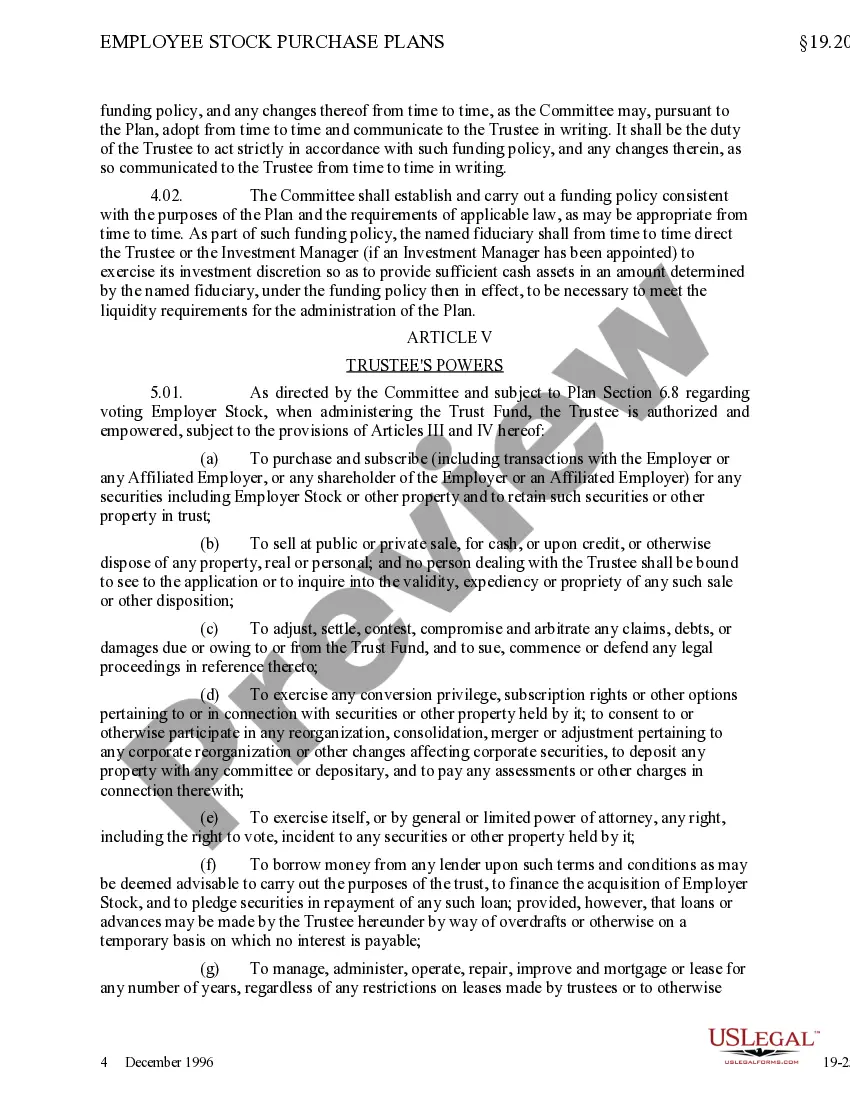
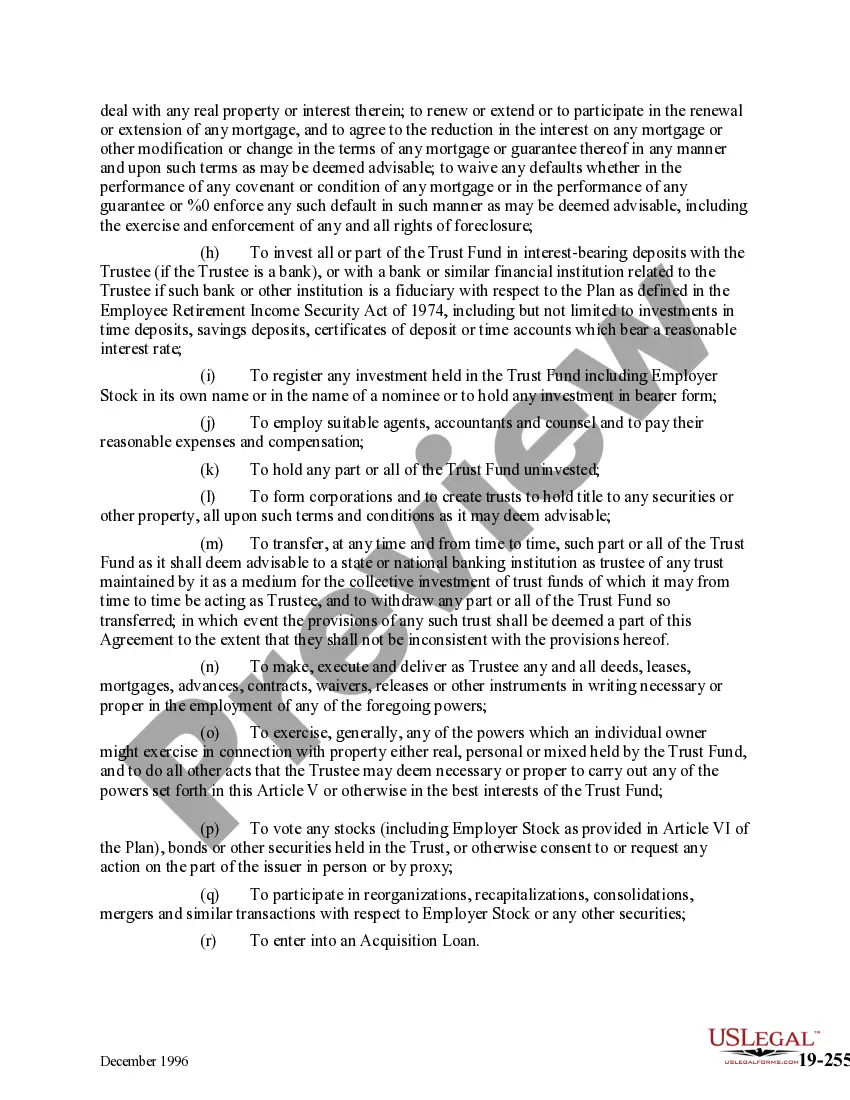
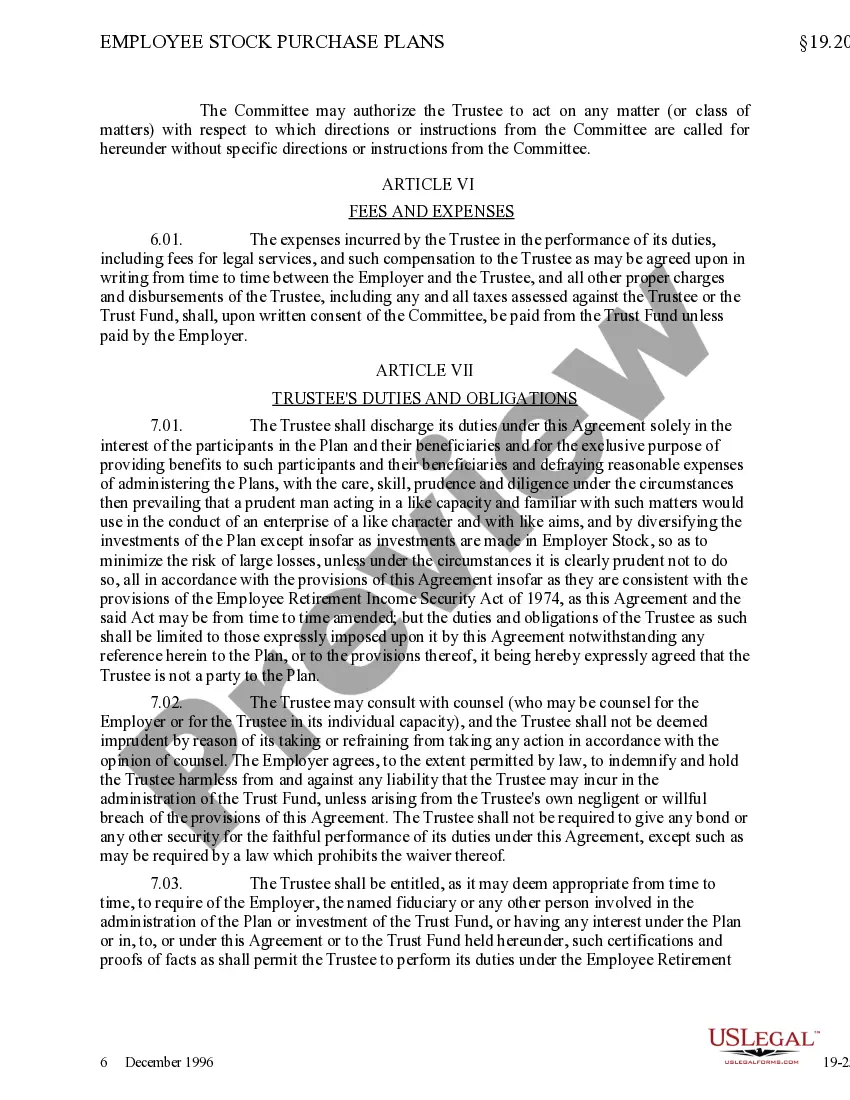
- Rules for trustee powers and duties in managing the trust fund.
- Details on the payment distribution to participants and beneficiaries.
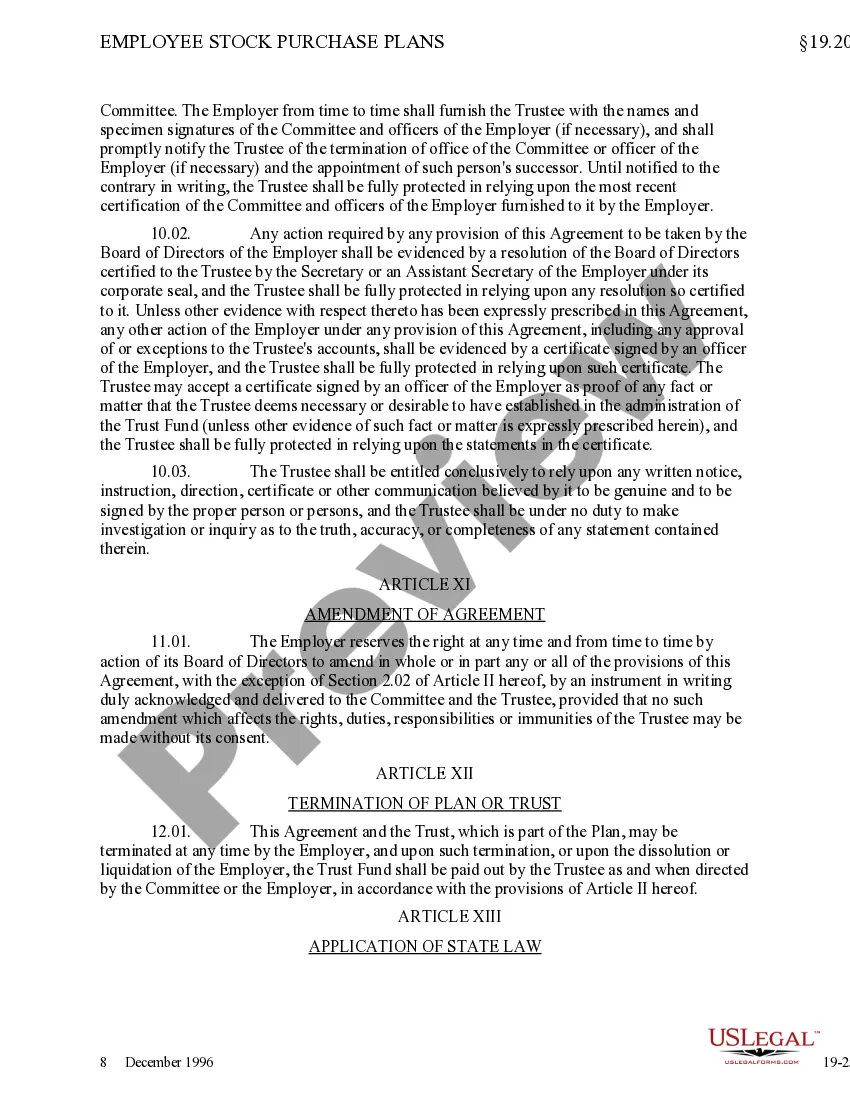
- Amendment and termination procedures for the agreement.
Situations where this form applies
This form is essential for employers who wish to set up an employee stock ownership plan, allowing employees to obtain stock ownership in the company. It is commonly used when forming a new ESOP or when amending an existing one to ensure compliance with legal standards. Businesses looking to incentivize employees through stock ownership or transition to an employee-owned model would benefit from this agreement.
Who should use this form
- Employers seeking to implement an employee stock ownership plan.
- Trustees designated to manage the trust assets under the ESOP.
- Employees who are eligible to participate in the stock ownership plan.
- Legal representatives facilitating the establishment of employee stock ownership trusts.
Completing this form step by step
- Identify the parties involved: enter the names of the Employer and Trustee.
- Define the trust structure: outline the terms under which the trust will operate and the benefits it will offer.
- Specify the contributions: indicate how funds or stock will be contributed to the trust.
- Detail the trustee's powers: lay out the specific powers and duties of the trustee in managing trust resources.
- Provide signature lines: ensure all parties sign and date the agreement to validate it.
Does this form need to be notarized?
In most cases, this form does not require notarization. However, some jurisdictions or signing circumstances might. US Legal Forms offers online notarization powered by Notarize, accessible 24/7 for a quick, remote process.
Get your form ready online
Our built-in tools help you complete, sign, share, and store your documents in one place.
Make edits, fill in missing information, and update formatting in US Legal Forms—just like you would in MS Word.
Download a copy, print it, send it by email, or mail it via USPS—whatever works best for your next step.
Sign and collect signatures with our SignNow integration. Send to multiple recipients, set reminders, and more. Go Premium to unlock E-Sign.
If this form requires notarization, complete it online through a secure video call—no need to meet a notary in person or wait for an appointment.
We protect your documents and personal data by following strict security and privacy standards.

Make edits, fill in missing information, and update formatting in US Legal Forms—just like you would in MS Word.

Download a copy, print it, send it by email, or mail it via USPS—whatever works best for your next step.

Sign and collect signatures with our SignNow integration. Send to multiple recipients, set reminders, and more. Go Premium to unlock E-Sign.

If this form requires notarization, complete it online through a secure video call—no need to meet a notary in person or wait for an appointment.

We protect your documents and personal data by following strict security and privacy standards.
Avoid these common issues
- Not clearly defining the roles of the employer and trustee, which can lead to misunderstandings.
- Failing to specify how contributions will be managed and distributed, which might cause issues in compliance.
- Skipping required signatures, resulting in an unenforceable agreement.
Why use this form online
- Convenience: Download and complete the form at your own pace without needing to meet in person.
- Editability: Easily modify the form to suit specific needs and circumstances.
- Reliability: Access professionally drafted templates that ensure legal compliance.
Main things to remember
- The Employee Stock Ownership Trust Agreement establishes a legal framework for employee stock ownership.
- It is essential for companies looking to implement or modify an ESOP.
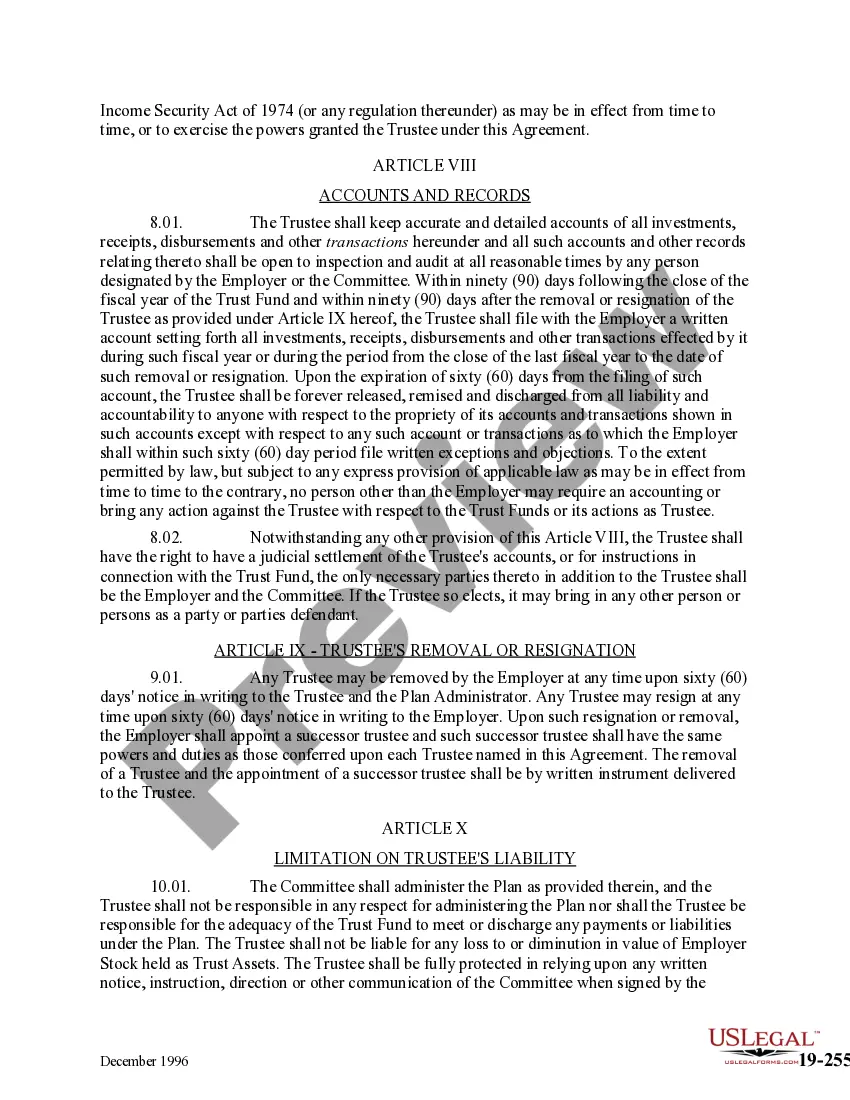
- The agreement details the roles and responsibilities of trustees and company obligations.
- Using this form online provides flexibility and ensures legal compliance.
Looking for another form?
Form popularity
FAQ
When an employee leaves your company, he is eligible to receive the vested portion of the ESOP retirement plan. The rest is forfeited to the company. A vesting schedule is created for retirement plans to prevent constant employee turnover from draining your plan assets.
When you leave, your stock options will often expire within 90 days of leaving the company. If you don't exercise your options, you could lose them.
Unless you want to pay the IRS a 10-percent penalty on your early ESOP withdrawal as well as regular income tax, you must transfer or roll over the money from your ESOP shares into another retirement account, such as a traditional IRA.
When an employee leaves your company, he is eligible to receive the vested portion of the ESOP retirement plan. The rest is forfeited to the company. A vesting schedule is created for retirement plans to prevent constant employee turnover from draining your plan assets.
Cash Withdrawal If a portion, or all, of your ESOP distribution is in cash, you have the option to take taxable withdrawals. Keep in mind the entire amount withdrawn is subject to ordinary income tax, and if you are under age 59½ there is an additional 10% early withdrawal tax penalty by the IRS.
To begin with, ESOPs offer employees stock in the company without the need to purchase the shares.On the other hand, an ESPP permits employees to use after-tax wages to purchase the stock in their company, normally at a discounted price. These programs are usually common in publicly held companies.
The Employee Ownership Trust (EOT) is an indirect form of employee ownership in which a trust holds a controlling stake in a company on behalf of all its employees and provides an incentive for owners to sell a controlling stake in their business.
The costs to establish and operate an ESOP can be significant. Whether owners leave slowly (by selling gradually and remaining involved) or quickly (by cashing out and leaving), they can be exposed to risk, since the company's future cash flow will be used to repay any bank loan to the ESOP.
Research shows ESOP companies are more productive, faster growing, more profitable and have lower turnover benefits that accrue to all stakeholders including the retirement accounts of the employee-owners. In addition, an ESOP is a great way to enhance the company's ability to recruit and retain top talent.