Employee Stock Ownership Plan of Franklin Savings Bank - Detailed
What is this form?
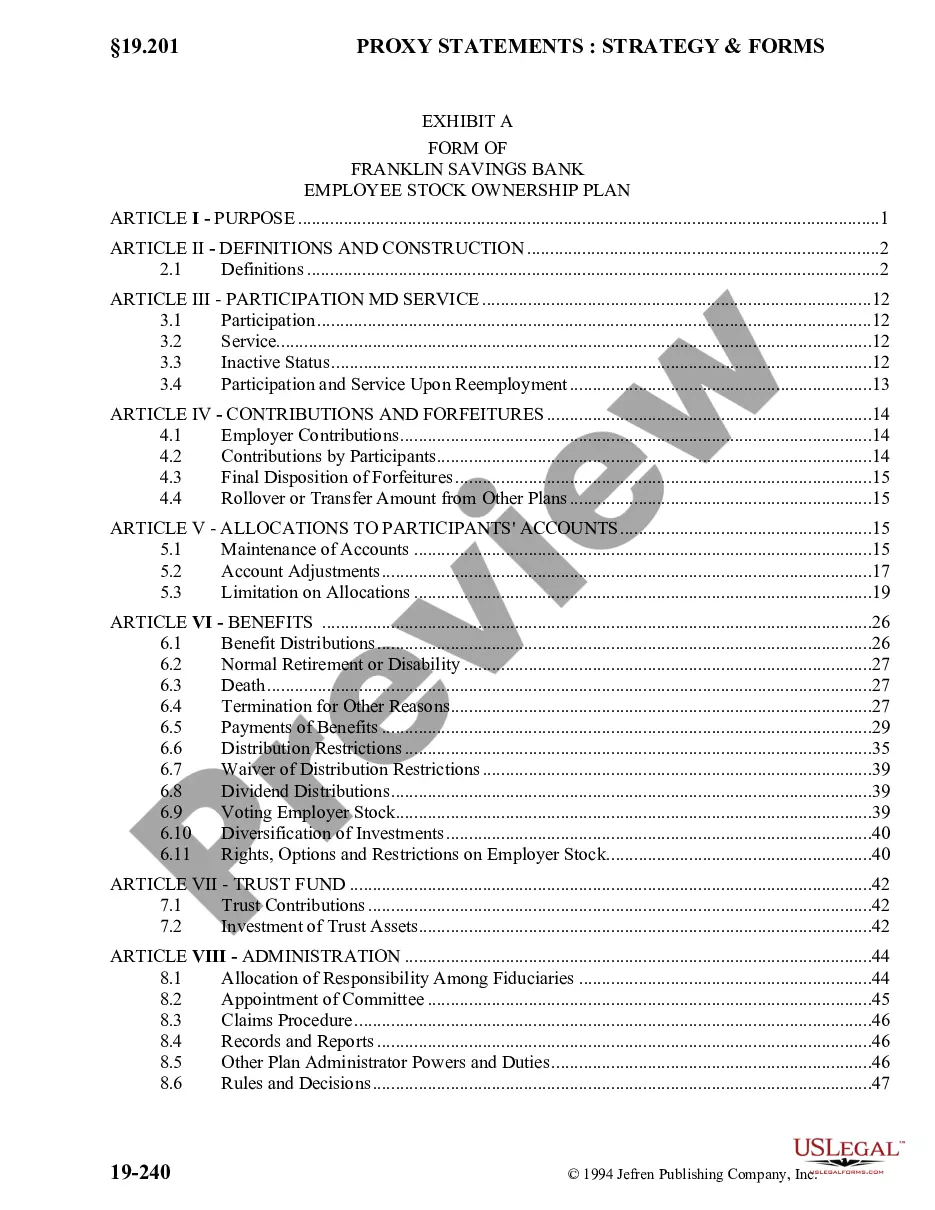
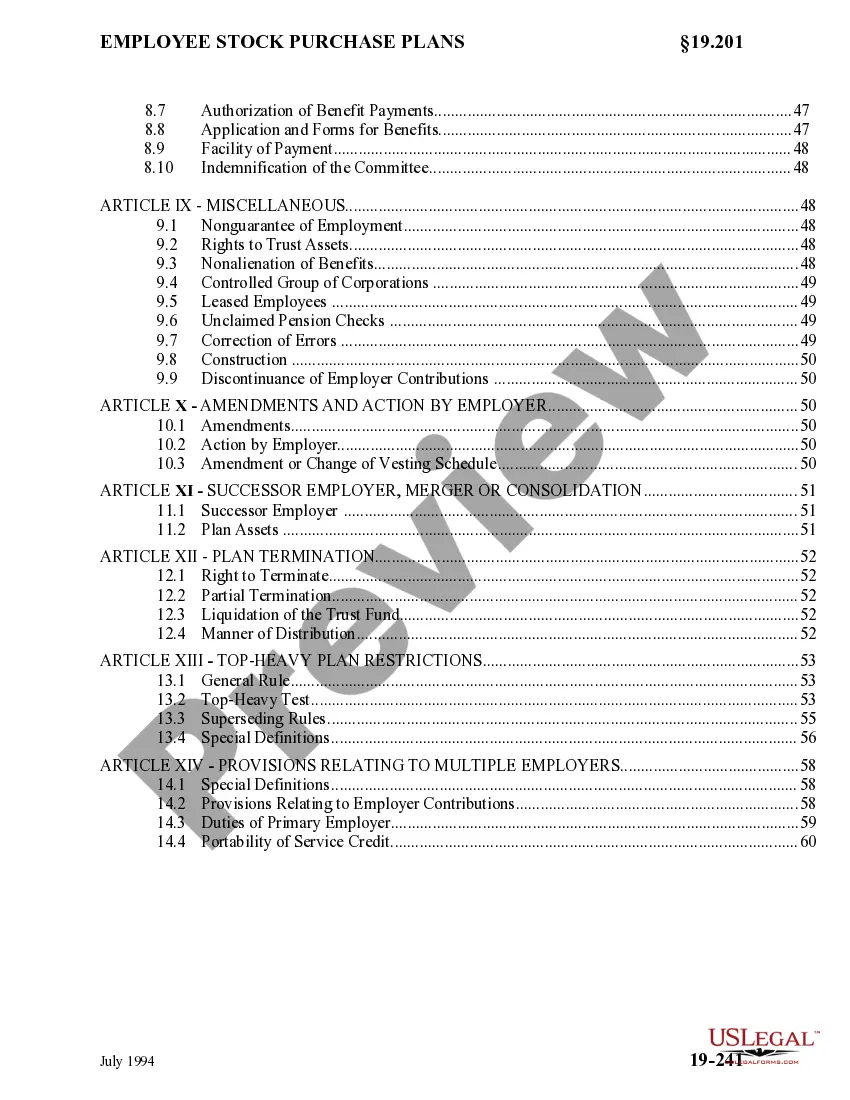
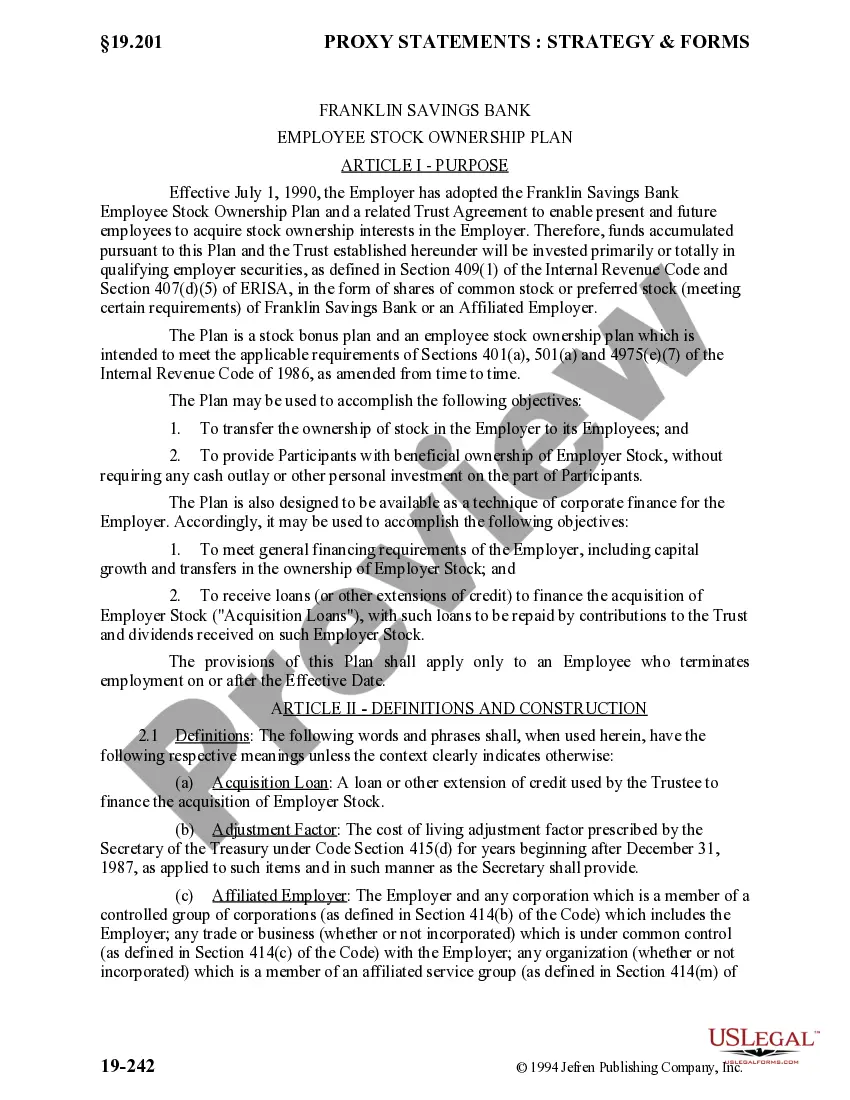
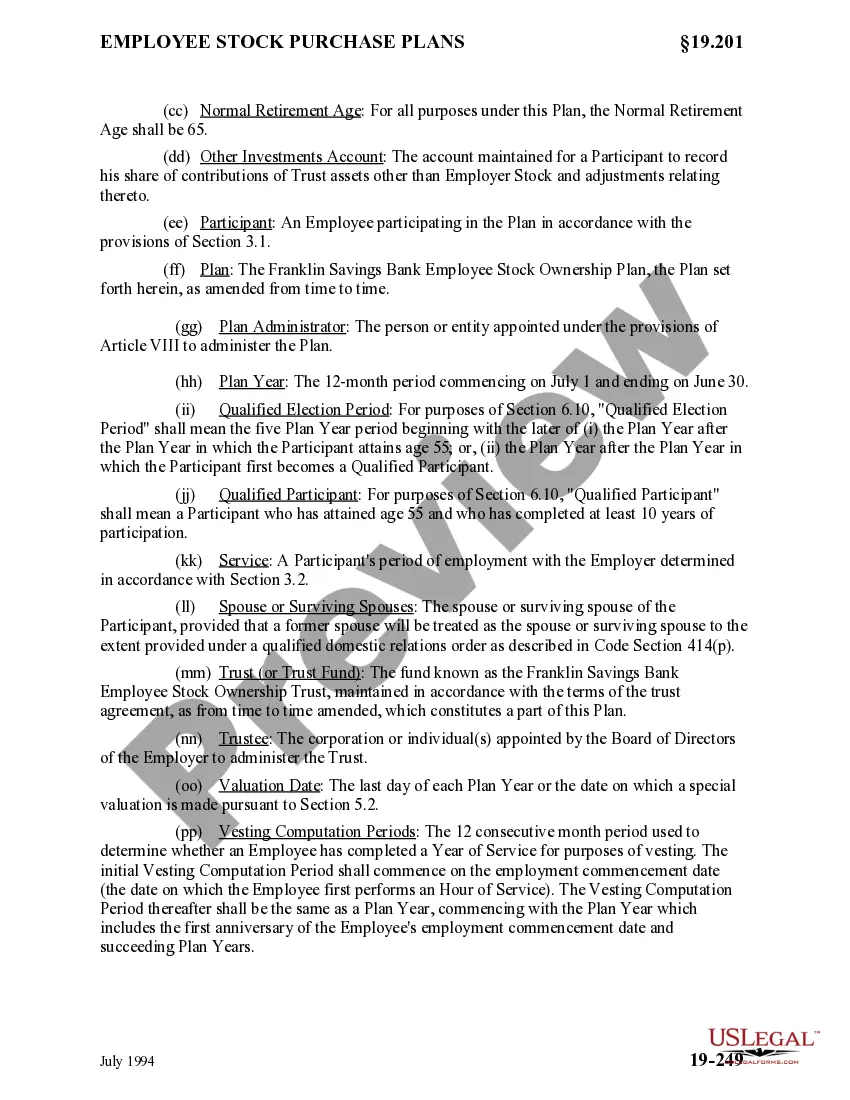
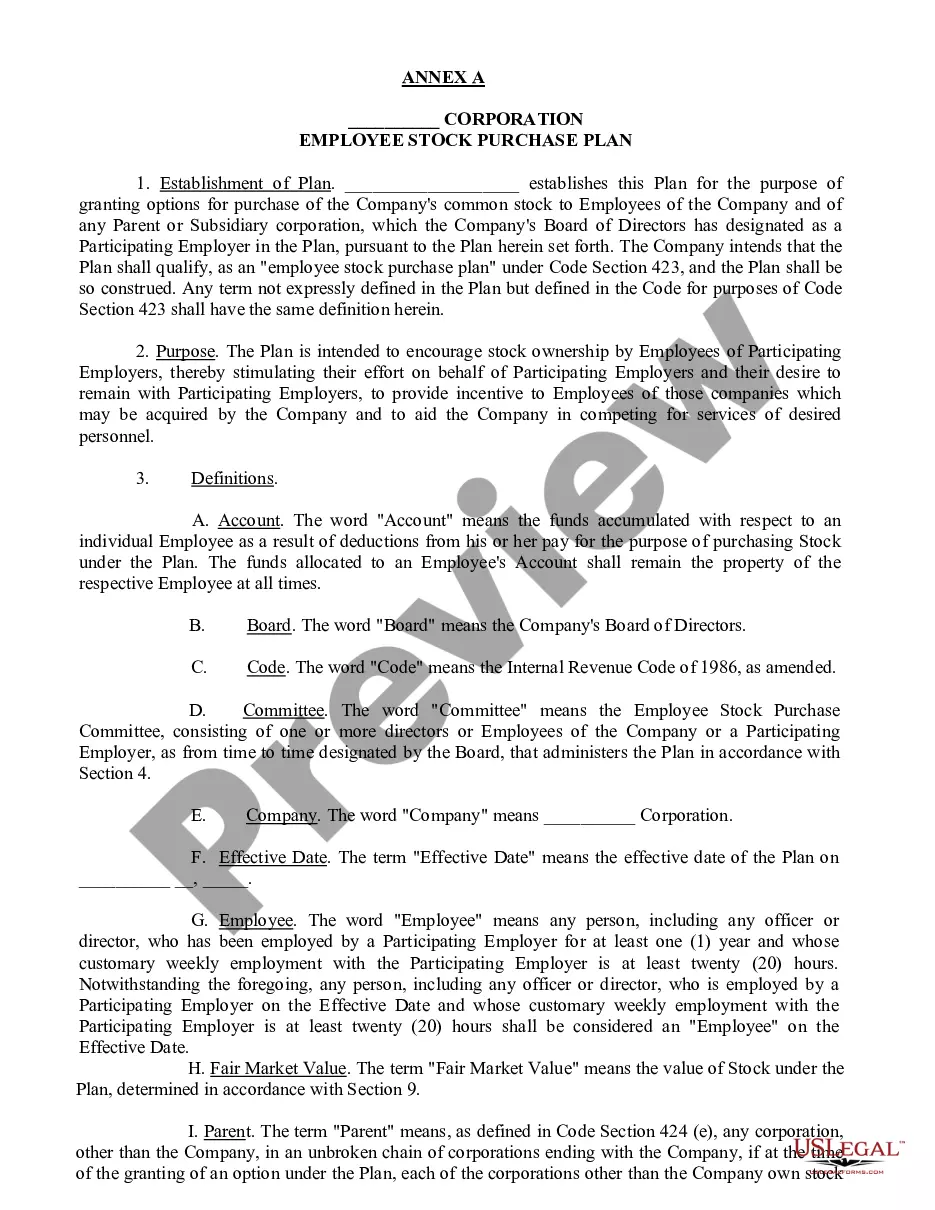
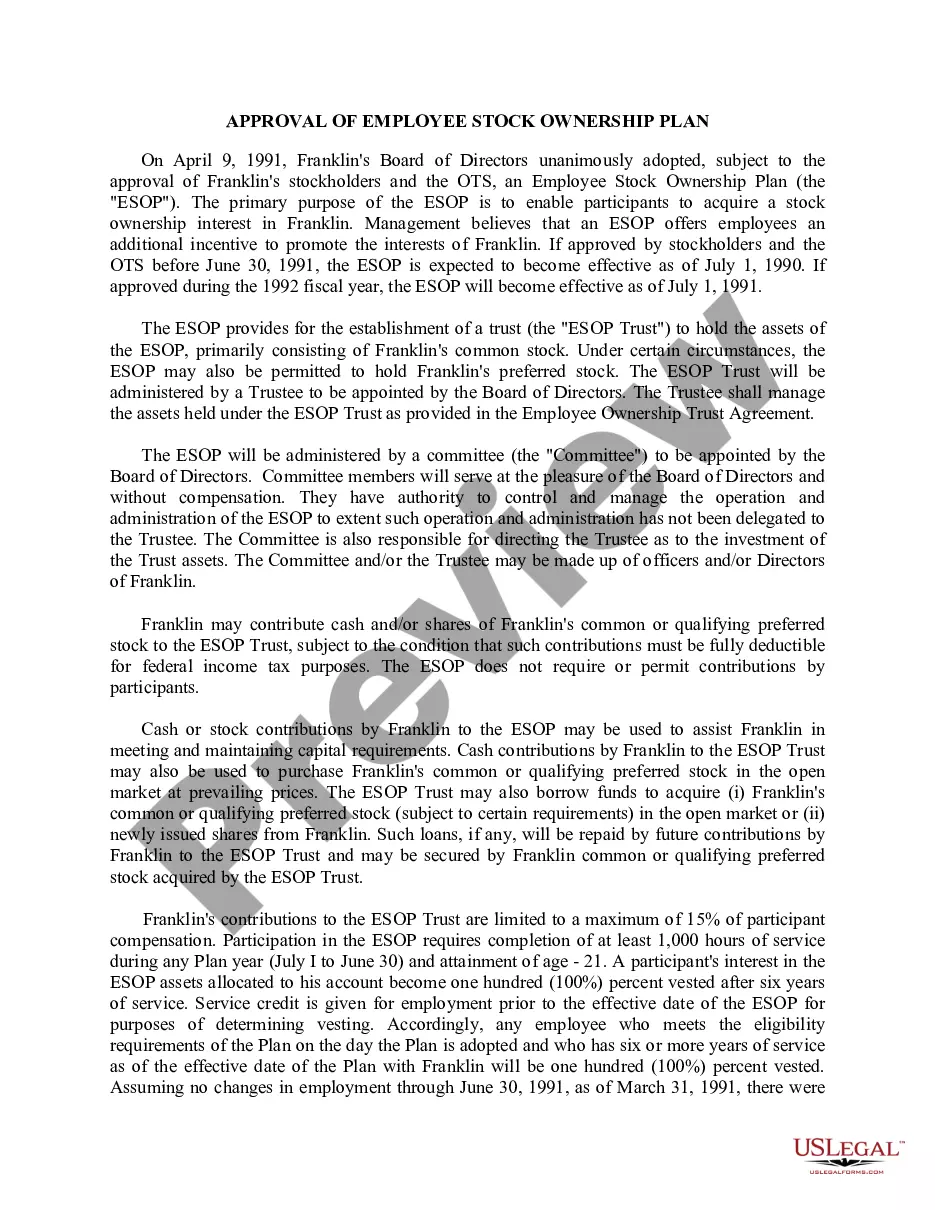
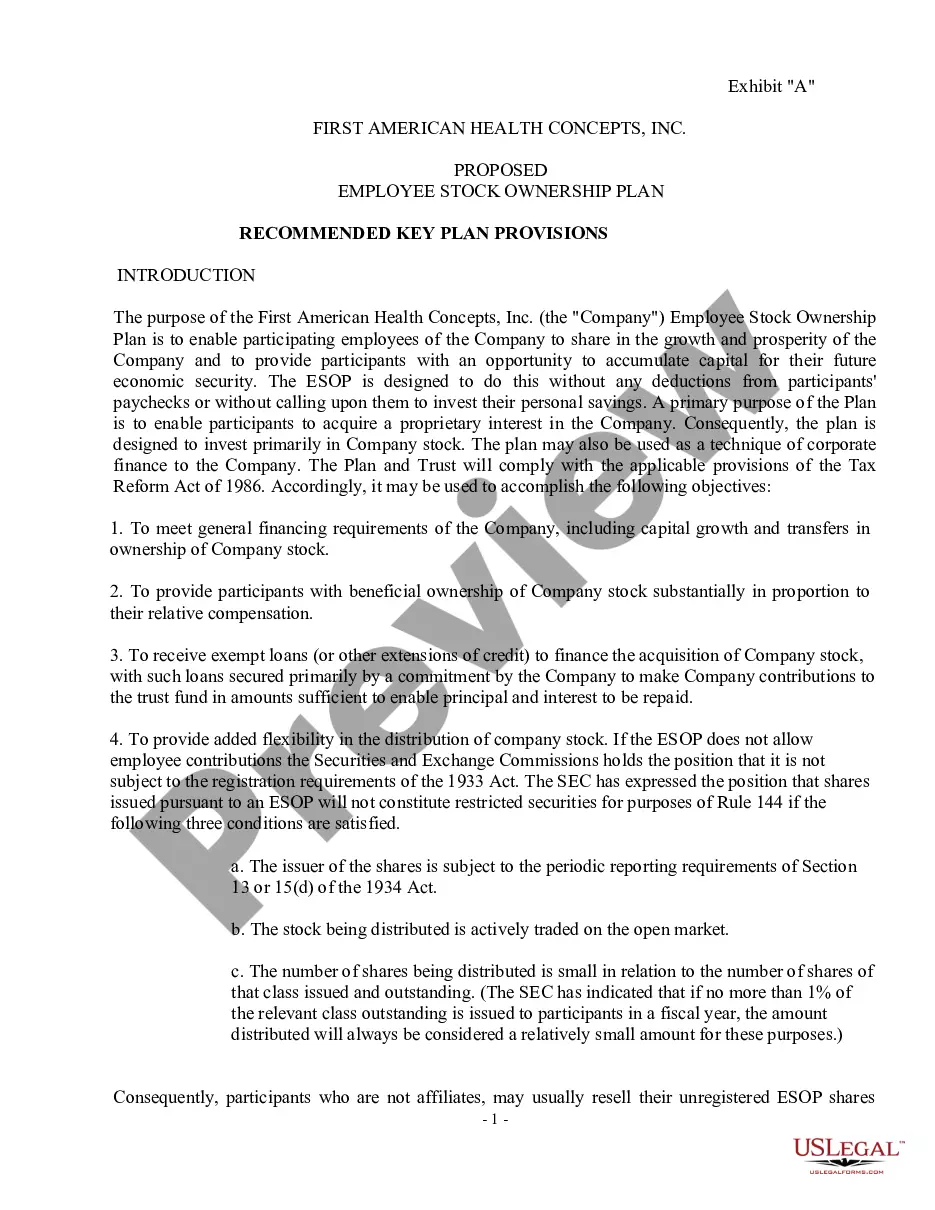
The Employee Stock Ownership Plan (ESOP) of Franklin Savings Bank is a legal form designed to enable employees to acquire stock ownership interests in the bank. This detailed plan outlines the structure for employees to benefit from ownership without requiring a cash investment upfront. Unlike other retirement plans or stock purchase agreements, this ESOP focuses specifically on employee equity and provides specific provisions that govern contributions, participation, and benefit distribution tied directly to the employer's stock.
Form components explained
- Purpose: This section outlines the aims of the ESOP, including transferring ownership of stock to employees and providing options for corporate financing.
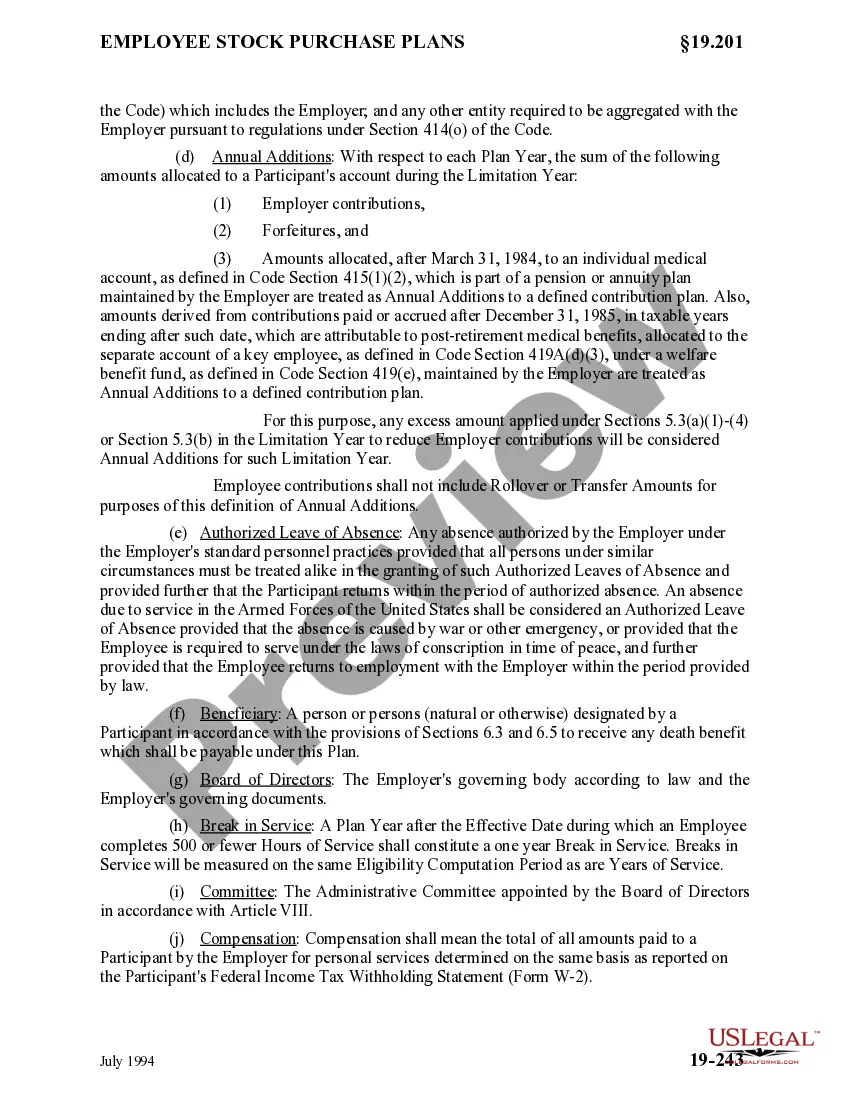
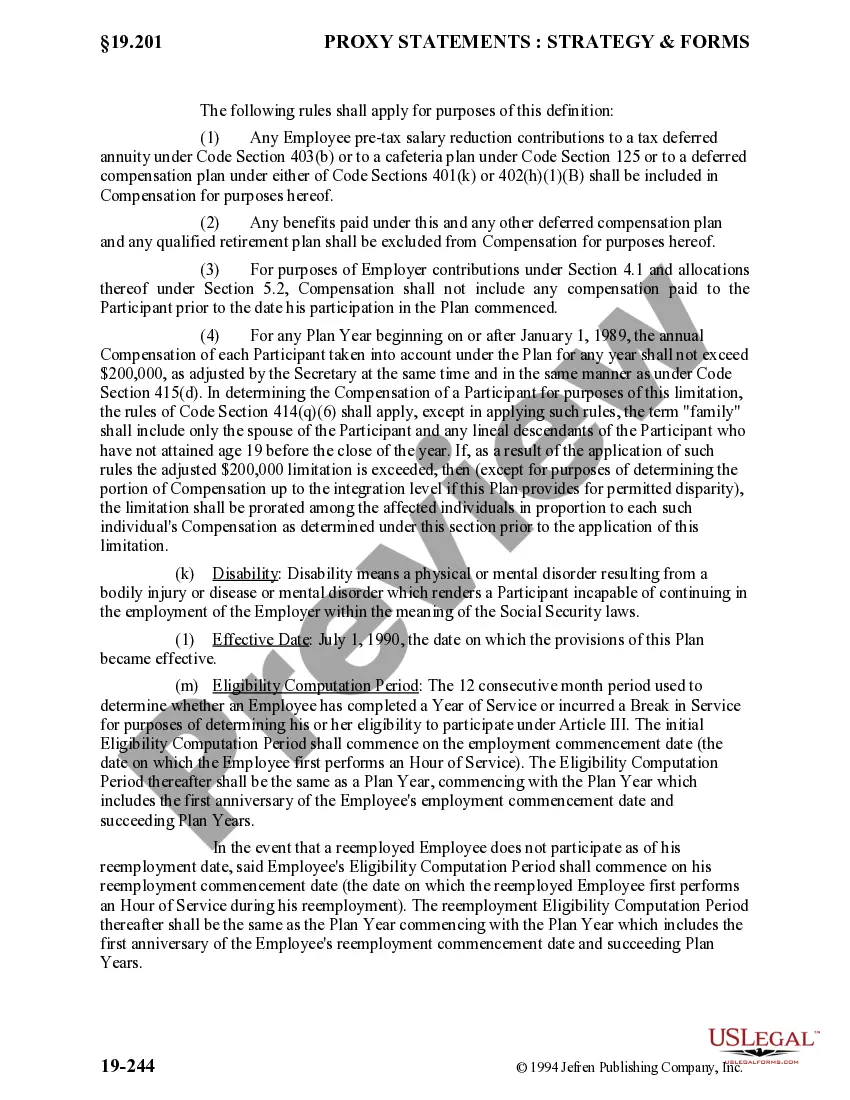
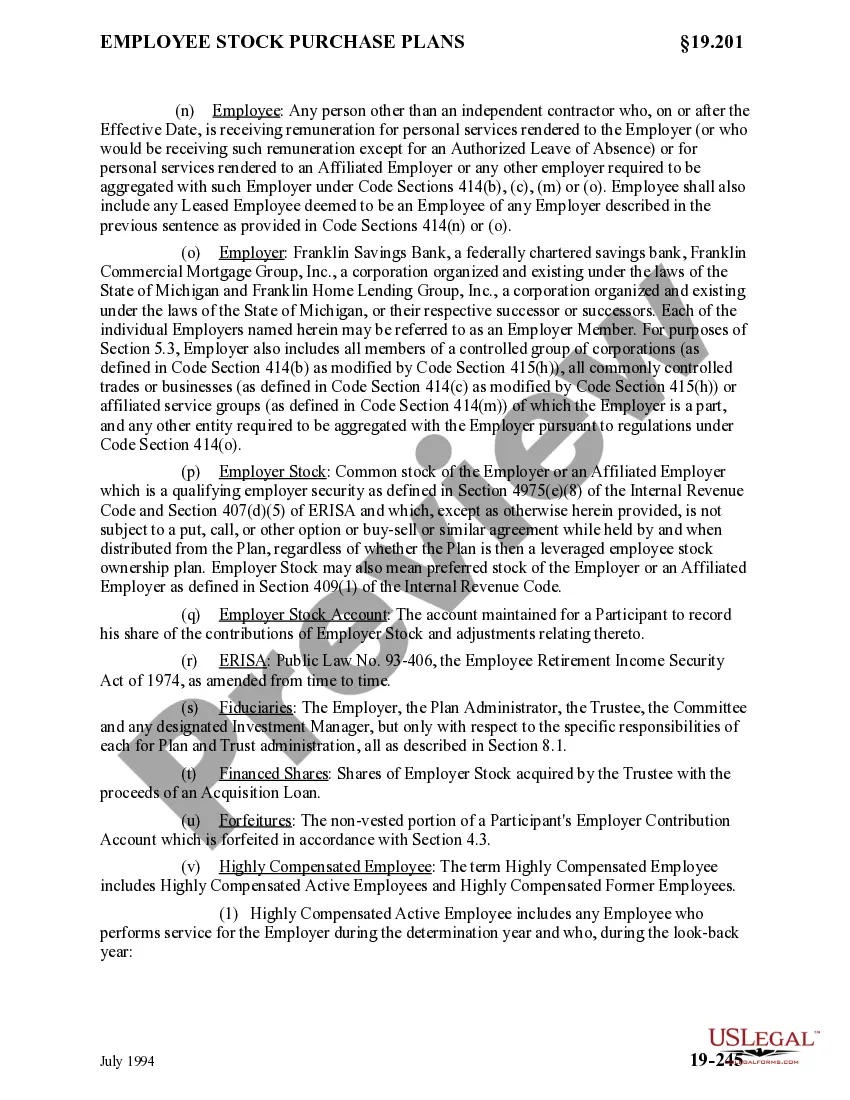
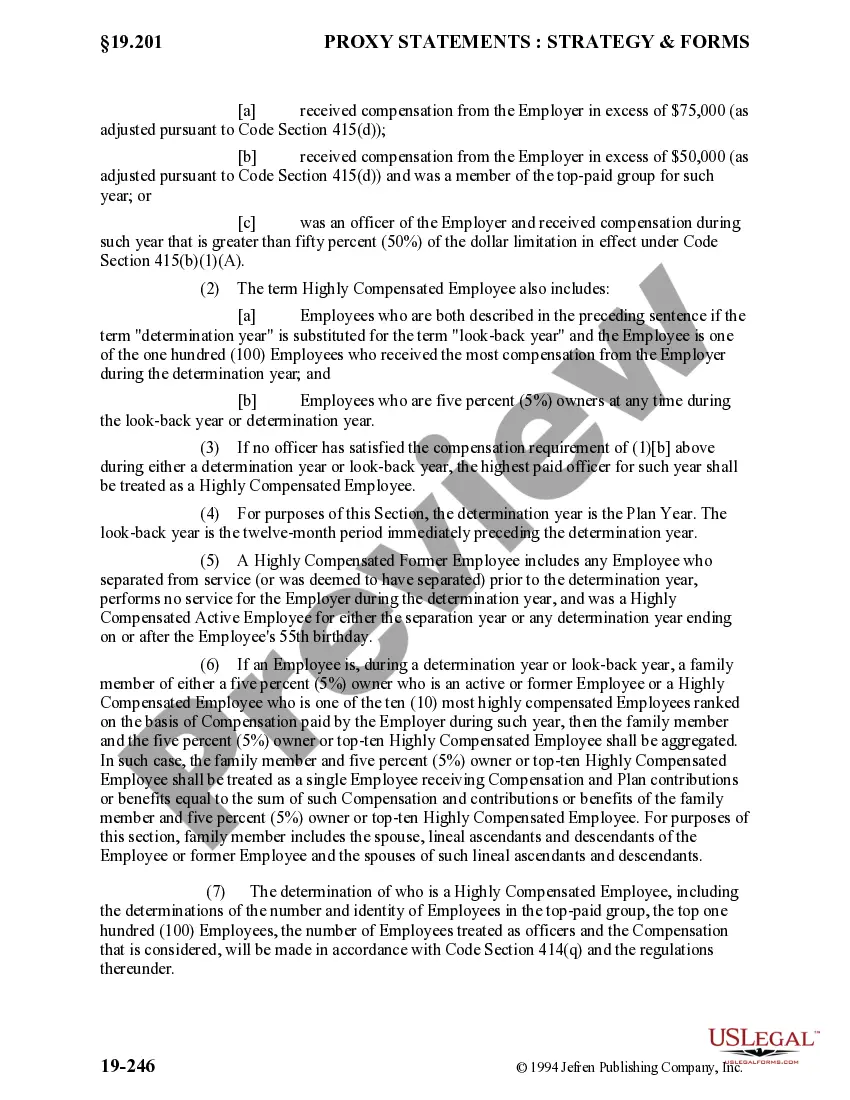
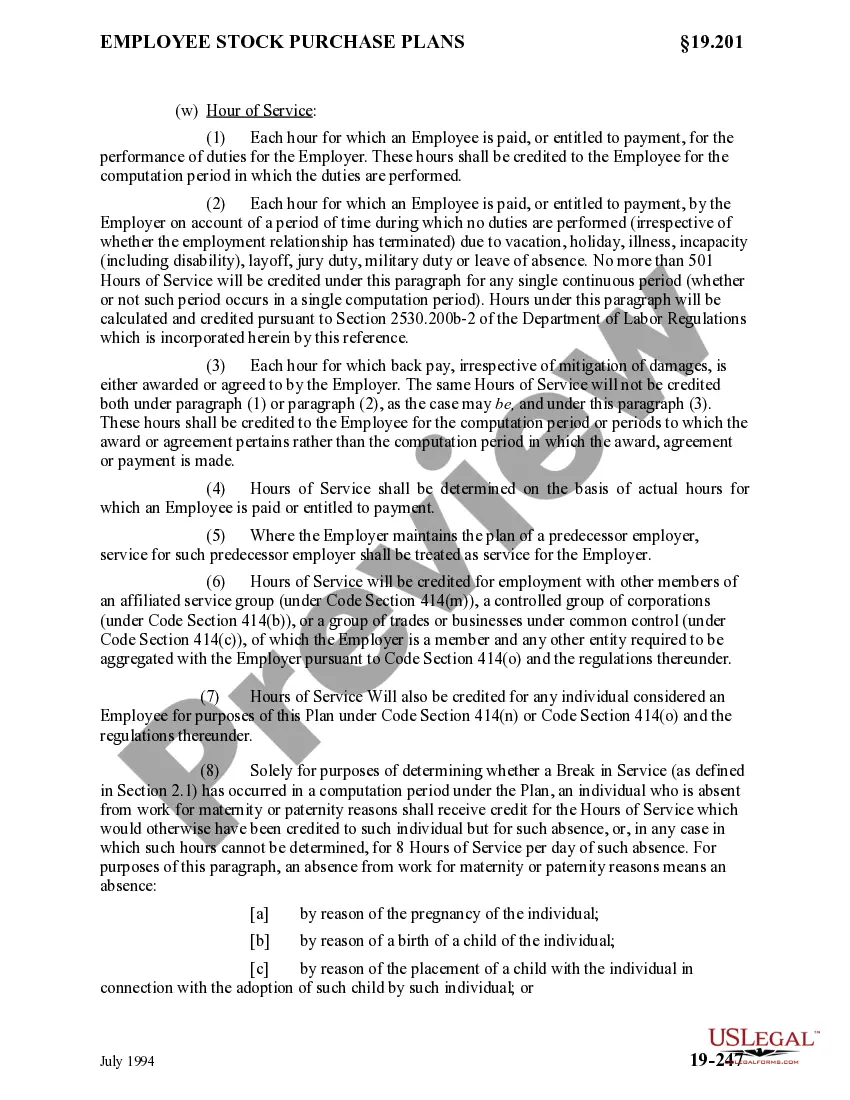
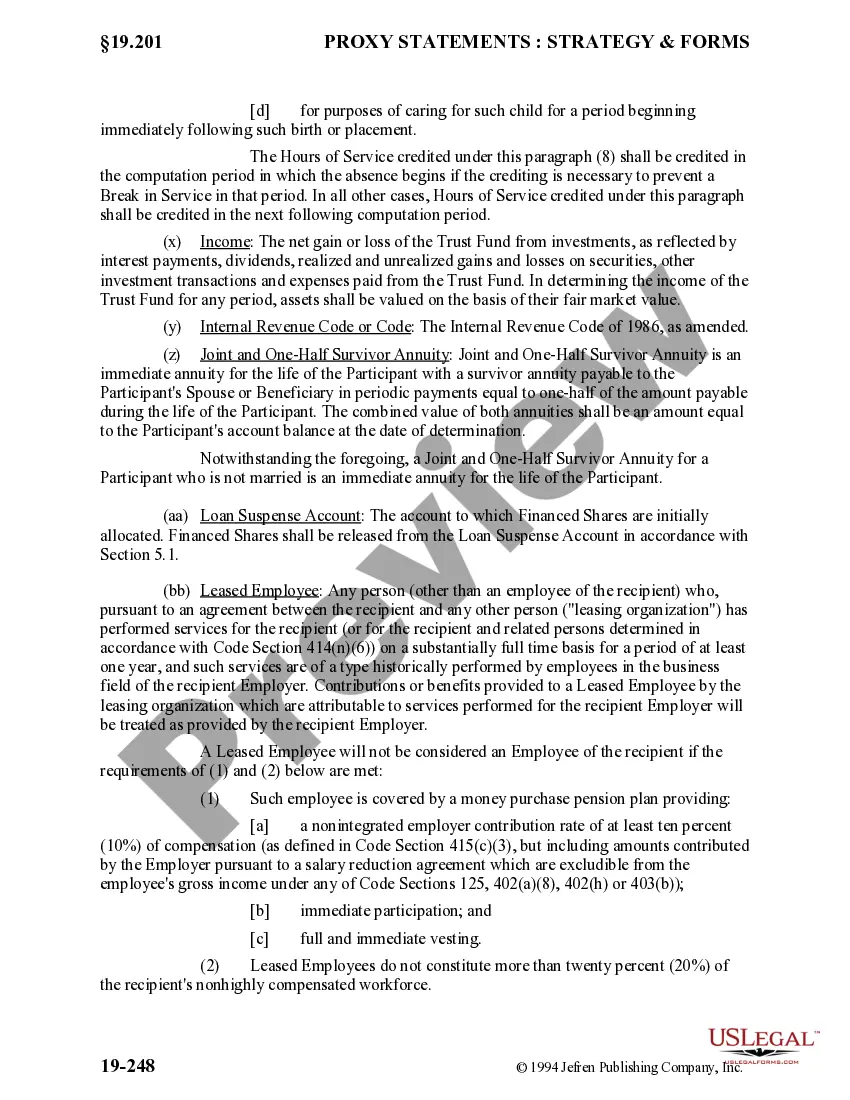
- Definitions: Clear definitions of key terms, such as 'Employer Stock', 'Participant', and 'Years of Service'.
- Participation: Eligibility criteria for employees to participate in the ESOP.
- Contributions: Information on employer contributions, participant contributions, and the handling of forfeitures.
- Benefits Distribution: Details on how and when benefits are distributed to participants upon retirement, disability, or other qualifying events.
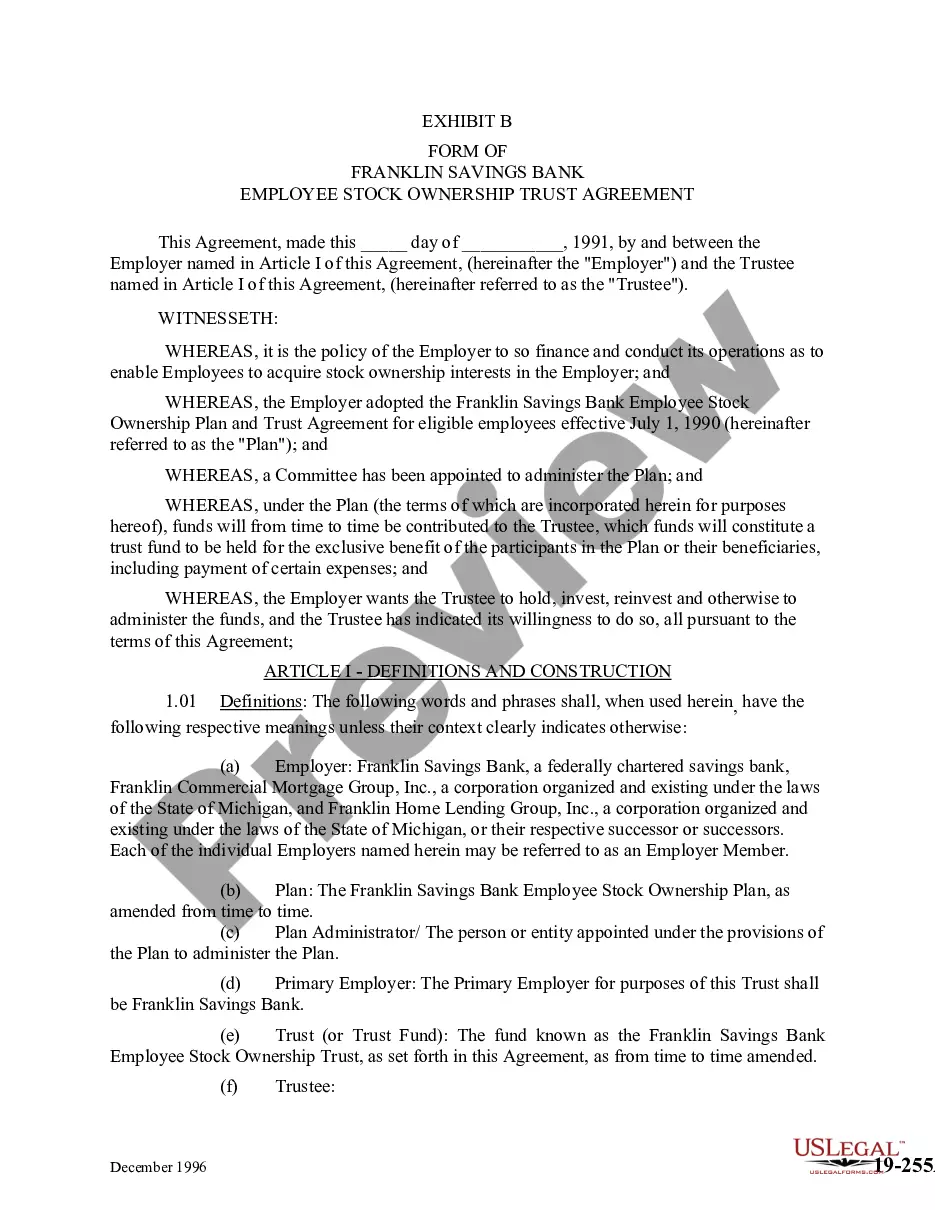
- Administration: Guidelines on how the plan is managed, including responsibilities of fiduciaries.

Situations where this form applies
This form should be used when a business seeks to establish an employee stock ownership plan that complies with IRS regulations and provides a framework for employee participation in the companyâs stock ownership. It is particularly beneficial for companies looking to leverage employee ownership for motivation and retention while adhering to regulatory requirements.
Who should use this form
Intended Audience:
- Employers looking to implement an ESOP for their employees.
- Human resources professionals in charge of employee benefits.
- Legal professionals assisting clients in establishing ESOPs.
- Employees interested in understanding their rights and benefits within an employee stock ownership plan.
How to complete this form
Steps to Complete this Form:
- Identify the parties involved: the employer and the employees eligible for participation.
- Specify the contributions: detail how the employer will contribute to the plan on behalf of the employees.
- Document eligibility criteria: outline what constitutes eligibility for employee participation.
- Include provisions for benefit distributions: state how and when benefits will be distributed to participants.
- Finalize the administrative structure: appoint fiduciaries and define their responsibilities within the plan.
Does this document require notarization?
This form does not typically require notarization unless specified by local law.
Get your form ready online
Our built-in tools help you complete, sign, share, and store your documents in one place.
Make edits, fill in missing information, and update formatting in US Legal Forms—just like you would in MS Word.
Download a copy, print it, send it by email, or mail it via USPS—whatever works best for your next step.
Sign and collect signatures with our SignNow integration. Send to multiple recipients, set reminders, and more. Go Premium to unlock E-Sign.
If this form requires notarization, complete it online through a secure video call—no need to meet a notary in person or wait for an appointment.
We protect your documents and personal data by following strict security and privacy standards.

Make edits, fill in missing information, and update formatting in US Legal Forms—just like you would in MS Word.

Download a copy, print it, send it by email, or mail it via USPS—whatever works best for your next step.

Sign and collect signatures with our SignNow integration. Send to multiple recipients, set reminders, and more. Go Premium to unlock E-Sign.

If this form requires notarization, complete it online through a secure video call—no need to meet a notary in person or wait for an appointment.

We protect your documents and personal data by following strict security and privacy standards.
Avoid these common issues
- Not clearly defining the terms of participation or eligibility.
- Failing to outline the distribution of benefits correctly, leading to confusion at retirement.
- Inadequately documenting contributions and forfeitures, which can affect compliance and fairness.
Advantages of online completion
- Easy access to a legally compliant form created by licensed attorneys.
- Convenient online completion and customizable options to meet specific needs.
- Confidence in the validity of the form, backed by legal standards and good practices.
Legal use & context:
- The plan must comply with the Employee Retirement Income Security Act (ERISA).
- Careful adherence to the terms outlined in the plan is crucial for enforceability.
- Participants' rights must be protected per IRS regulations regarding employee stock ownership plans.
Key takeaways
Key takeaways:
- The ESOP allows employees to gain stock ownership without upfront cash investments.
- Precise definitions and contributions are essential for the plan's clarity and enforceability.
- Regular updates and compliance with evolving regulations are necessary for maintaining plan validity.
Looking for another form?

Form popularity
FAQ
Research by the Department of Labor shows that ESOPs not only have higher rates of return than 401(k) plans and are also less volatile. ESOPs lay people off less often than non-ESOP companies. ESOPs cover more employees, especially younger and lower income employees, than 401(k) plans.
Are ESPPs good investments? These plans can be great investments if used correctly. Purchasing stock at a discount is certainly a valuable tool for accumulating wealth, but comes with investment risks you should consider. An ESPP plan with a 15% discount effectively yields an immediate 17.6% return on investment.
An ESOP is a kind of employee benefit plan, similar in some ways to a profit-sharing plan. In an ESOP, a company sets up a trust fund, into which it contributes new shares of its own stock or cash to buy existing shares.Shares in the trust are allocated to individual employee accounts.
Before you understand the taxation of ESOPs and RSUs, here are some key terms you must know: ESOP or Employee Stock Option Plan allows an employee to own equity shares of the employer company over a certain period of time. The terms are agreed upon between the employer and employee.
An ESOP is a kind of employee benefit plan, similar in some ways to a profit-sharing plan. In an ESOP, a company sets up a trust fund, into which it contributes new shares of its own stock or cash to buy existing shares.Shares in the trust are allocated to individual employee accounts.
ESOP companies better provide for their workers' employment and retirement security. Employee-owners were four times less likely to be laid off during the 2008 recession. The ESOP Association recently calculated that an employee at an ESOP company is 6.2 times less likely to be laid off than at a non-ESOP company.
The company can make your distribution in stock, cash, or both. Many ESOP participants leave with an account that has both stock and cash in it. The cash will be paid out in cash. The share portion may be cashed in, so you will get cash for the shares as well.
Buyback is a technique in which companies purchase their ESOPs from existing shareholders (usually at a price higher than the Fair Market Value). After exercising ESOPs, employees do not have to wait for an IPO to sell their shares.
Research by the Department of Labor shows that ESOPs not only have higher rates of return than 401(k) plans and are also less volatile. ESOPs lay people off less often than non-ESOP companies. ESOPs cover more employees, especially younger and lower income employees, than 401(k) plans.