Adoption of Restricted Stock Plan of RPM, Inc.
What is this form?
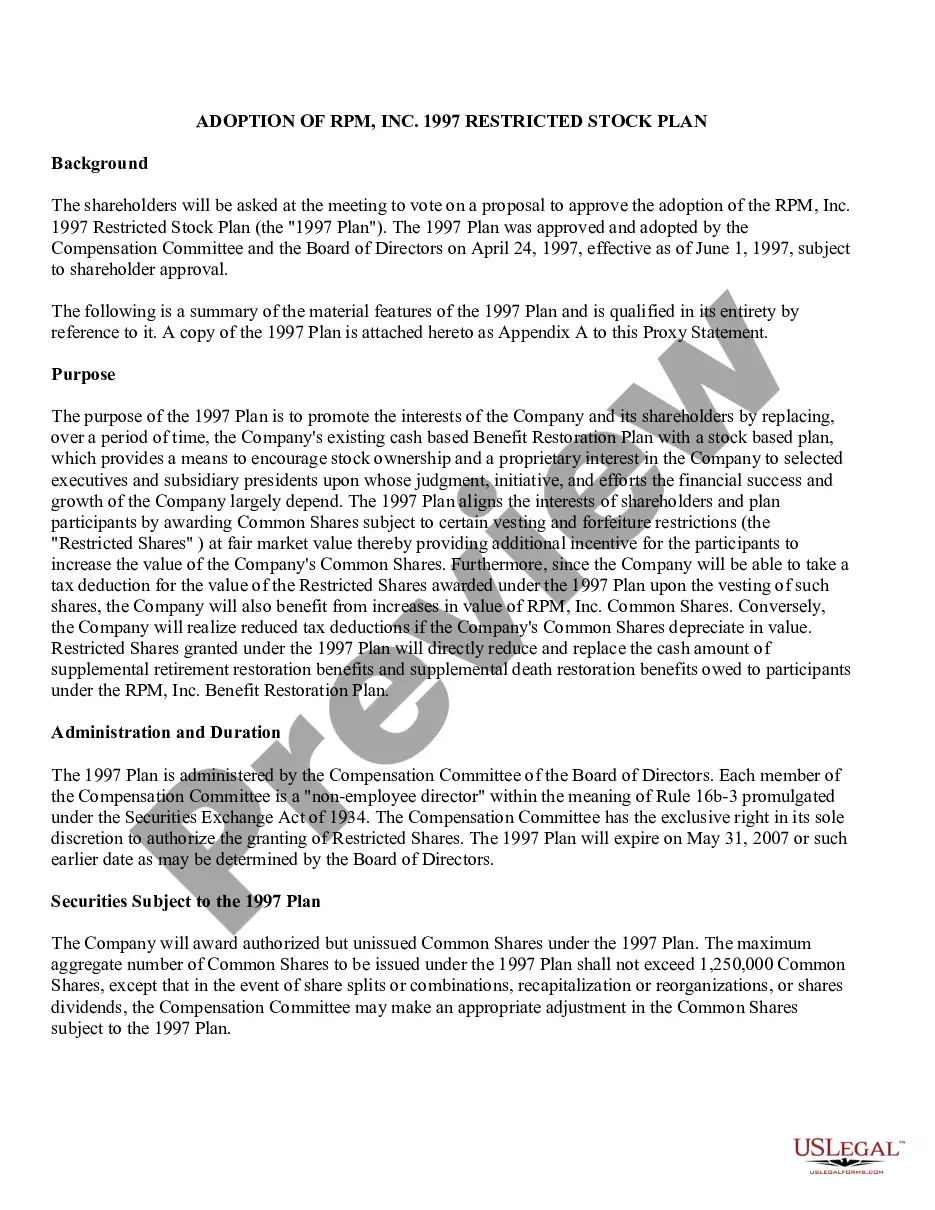
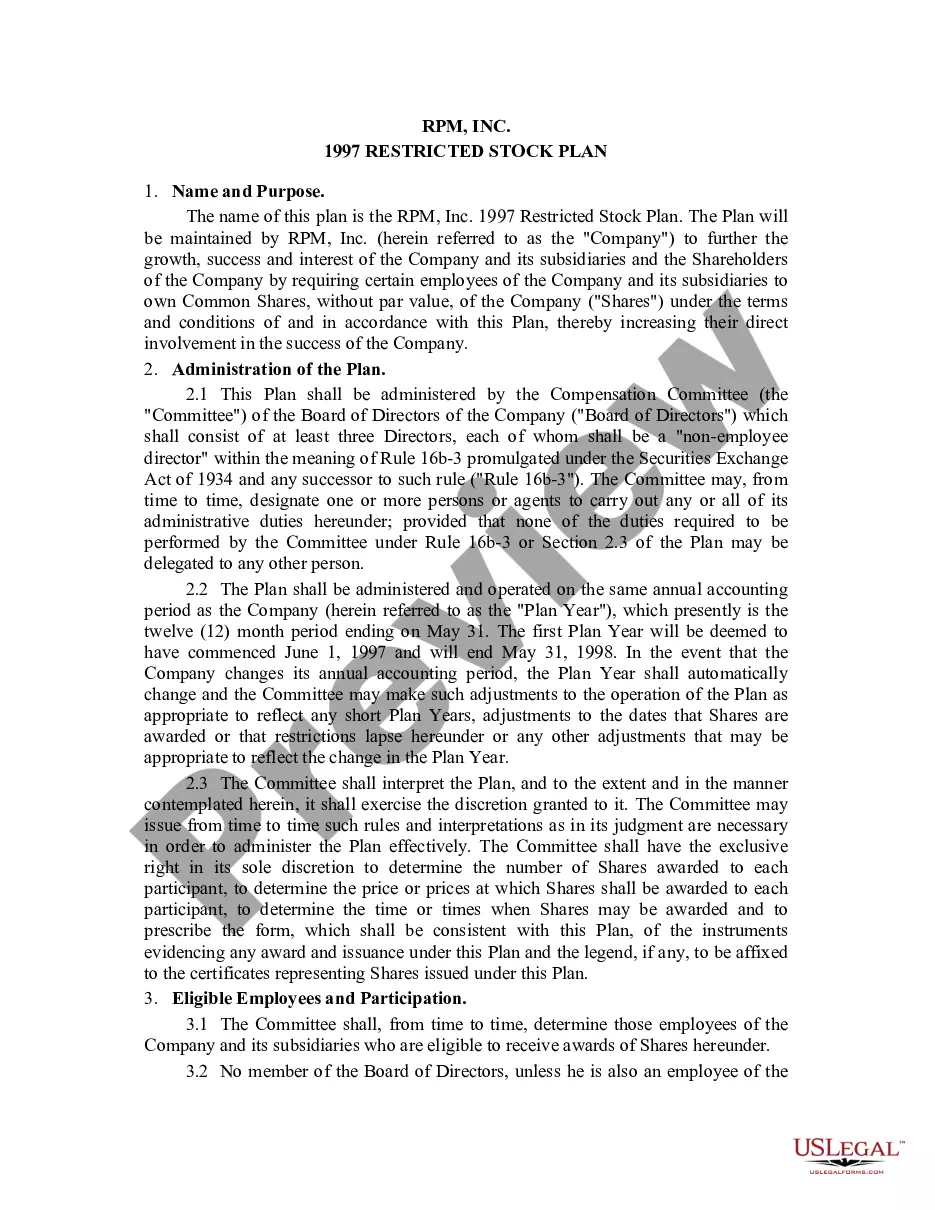
The Adoption of Restricted Stock Plan of RPM, Inc. is a legal document used to implement a corporate stock plan aimed at incentivizing employees through equity-based compensation. This plan allows company shareholders to approve the adoption of a stock-based alternative to cash-based retirement benefits. It facilitates the granting of restricted shares to employees, aligning their interests with those of the company's shareholders. This form is distinct from other stock option or compensation plans as it specifically focuses on restricted stock aimed at enhancing long-term corporate performance and shareholder value.
Form components explained
- Summary of the plan's background and adoption process.
- Purpose highlighting the alignment of employee and shareholder interests.
- Details on the administration and duration of the plan.
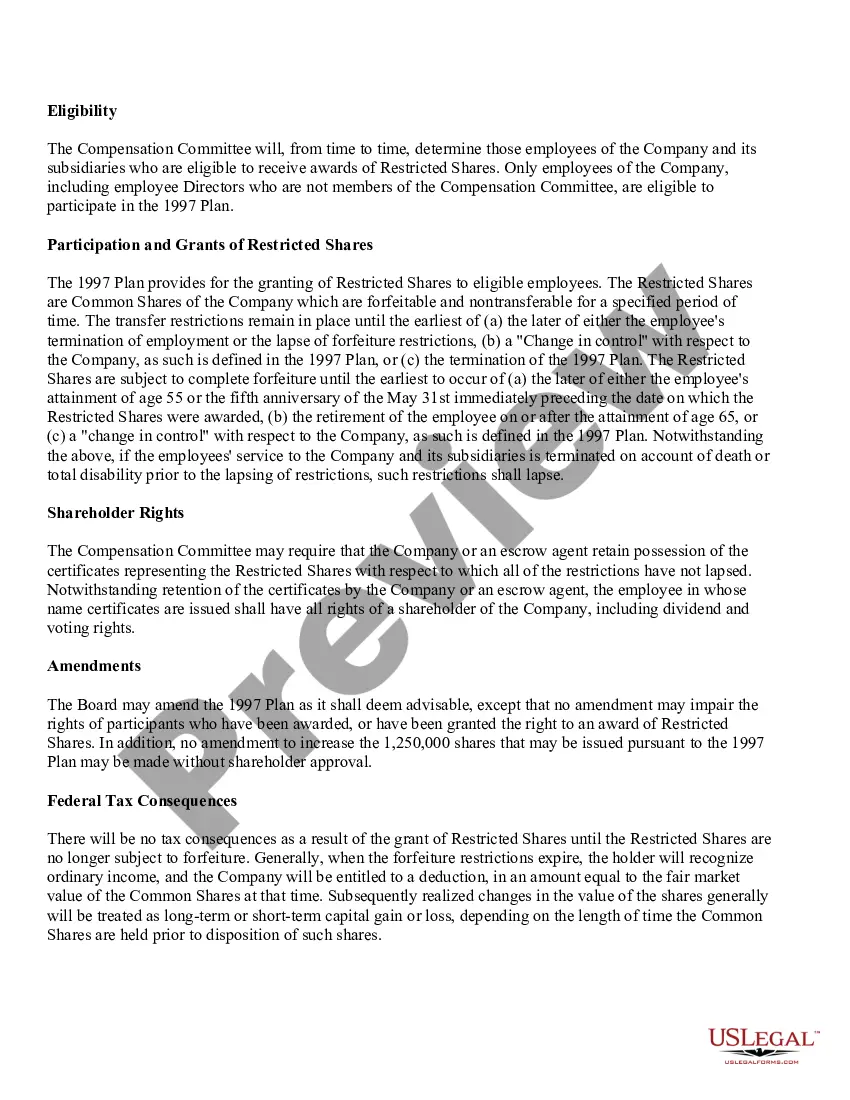
- Eligibility criteria for participants in the plan.
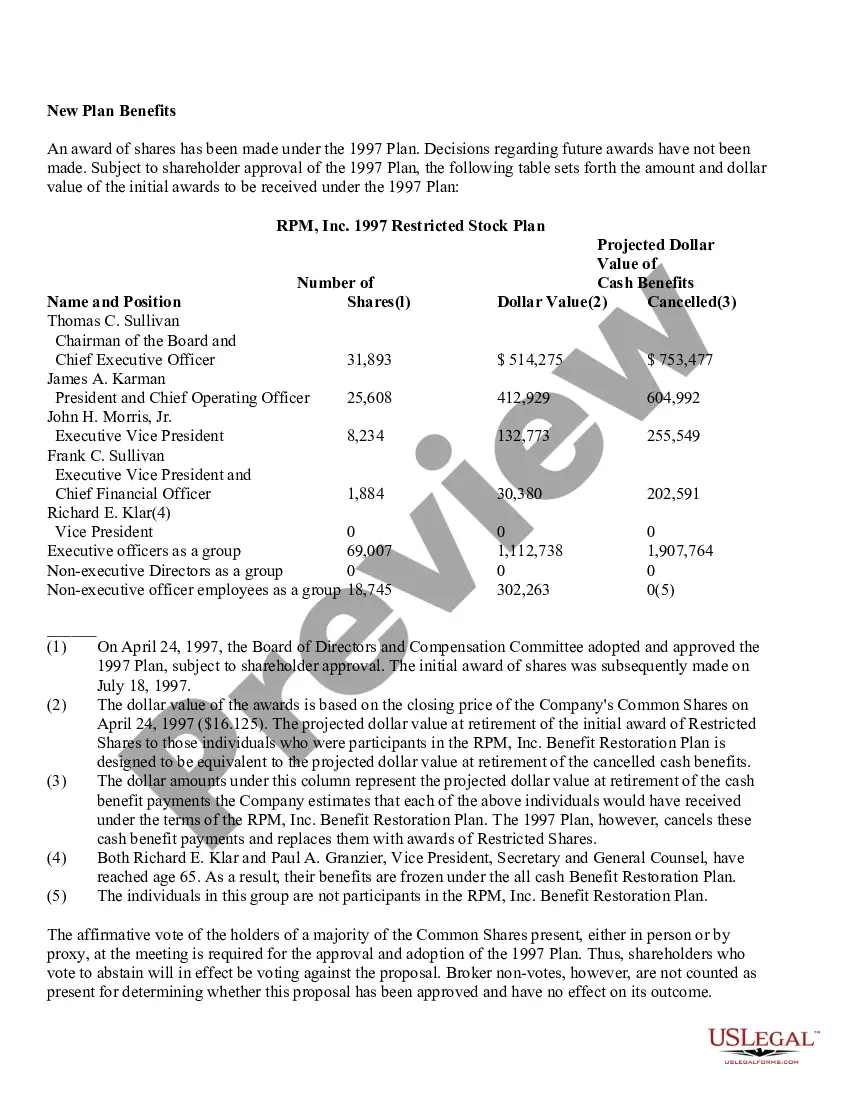
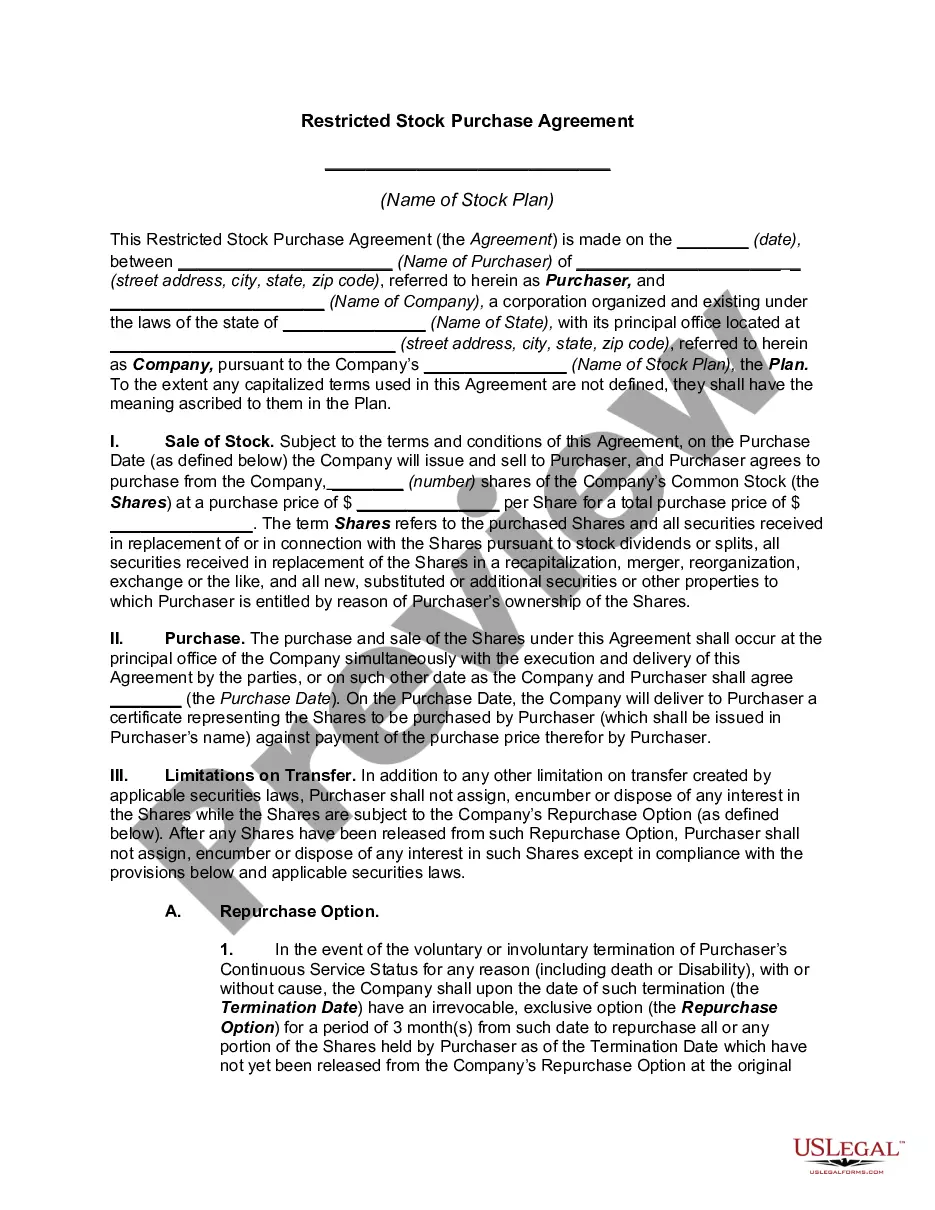
- Specifics regarding the granting of restricted shares and their vesting conditions.
- Information on potential amendments and their implications.
- Tax consequences associated with the granted restricted shares.

Situations where this form applies
This form should be used when a corporation, like RPM, Inc., wishes to adopt a restricted stock plan to replace cash benefits with equity compensation. It is particularly relevant during corporate meetings where shareholder approval is sought for the adoption of the plan. This form is necessary for companies looking to incentivize key executives and enhance long-term performance by offering stock ownership opportunities.
Who this form is for
- Corporations seeking to align executive compensation with shareholder interests.
- Shareholders participating in corporate meetings to vote on stock plan proposals.
- Compensation committees tasked with administering stock incentive plans.
- Human resources departments involved in employee benefits and compensation strategies.
How to complete this form
- Gather background information on the current cash-based Benefit Restoration Plan and the need for a restricted stock plan.
- Draft the proposal summary, including features and benefits of the Restricted Stock Plan.
- Specify eligibility criteria for employees who will receive restricted shares.
- Outline the process for granting restricted shares and the terms of vesting and forfeiture.
- Determine the maximum aggregate number of shares that will be authorized under the plan.
- Include provisions for any amendments to the plan and shareholder approval procedures.
Notarization guidance
This form does not typically require notarization to be legally valid. However, some jurisdictions or document types may still require it. US Legal Forms provides secure online notarization powered by Notarize, available 24/7 for added convenience.
Get your form ready online
Our built-in tools help you complete, sign, share, and store your documents in one place.
Make edits, fill in missing information, and update formatting in US Legal Forms—just like you would in MS Word.
Download a copy, print it, send it by email, or mail it via USPS—whatever works best for your next step.
Sign and collect signatures with our SignNow integration. Send to multiple recipients, set reminders, and more. Go Premium to unlock E-Sign.
If this form requires notarization, complete it online through a secure video call—no need to meet a notary in person or wait for an appointment.
We protect your documents and personal data by following strict security and privacy standards.

Make edits, fill in missing information, and update formatting in US Legal Forms—just like you would in MS Word.

Download a copy, print it, send it by email, or mail it via USPS—whatever works best for your next step.

Sign and collect signatures with our SignNow integration. Send to multiple recipients, set reminders, and more. Go Premium to unlock E-Sign.

If this form requires notarization, complete it online through a secure video call—no need to meet a notary in person or wait for an appointment.

We protect your documents and personal data by following strict security and privacy standards.
Mistakes to watch out for
- Failing to secure sufficient shareholder support for plan adoption.
- Omitting detailed vesting schedules or forfeiture provisions.
- Not aligning the plan with current tax implications and corporate policies.
- Neglecting to update the plan's language after significant corporate changes.
- Inadequately communicating the plan's benefits to eligible participants.
Why complete this form online
- Convenient access to the form saves time and ensures compliance with legal standards.
- Easy customization to fit the specific corporate structure and circumstances of the adopting company.
- Reliable updates reflecting the latest legal changes related to stock plans and taxation.
- Streamlined completion process reduces errors often associated with traditional paper forms.
Legal use & context
- This form is crucial for legally establishing a Restricted Stock Plan within corporate governance frameworks.
- Using the form properly aids in avoiding potential legal disputes and tax issues concerning stock awards.
- It ensures that all necessary provisions for shareholder engagement are met during the voting process.
Looking for another form?
Form popularity
FAQ
Stock options are only valuable if the market value of the stock is higher than the grant price at some point in the vesting period. Otherwise, you're paying more for the shares than you could in theory sell them for. RSUs, meanwhile, are pure gain, as you don't have to pay for them.
Restricted stock refers to unregistered shares of ownership in a corporation that are issued to corporate affiliates, such as executives and directors. Restricted stock is non-transferable and must be traded in compliance with special Securities and Exchange Commission (SEC) regulations.
RSUs are generally always worth something versus stock options, which can expire worthless if the stock price is below the strike price. Additionally, with RSUs you don't have to come up with the cash to exercise the options if your company doesn't offer some sort of cashless exercise option.
Restricted stock units are often offered as part of a compensation package to attract and retain key employees They are restricted in that certain requirements must be met before the employee can obtain full ownership rights to the value of the units.
RSUs give an employee interest in company stock but they have no tangible value until vesting is complete.Upon vesting, they are considered income, and a portion of the shares is withheld to pay income taxes. The employee receives the remaining shares and can sell them at their discretion.