Incentive Stock Option Plan of the Bankers Note, Inc.
About this form
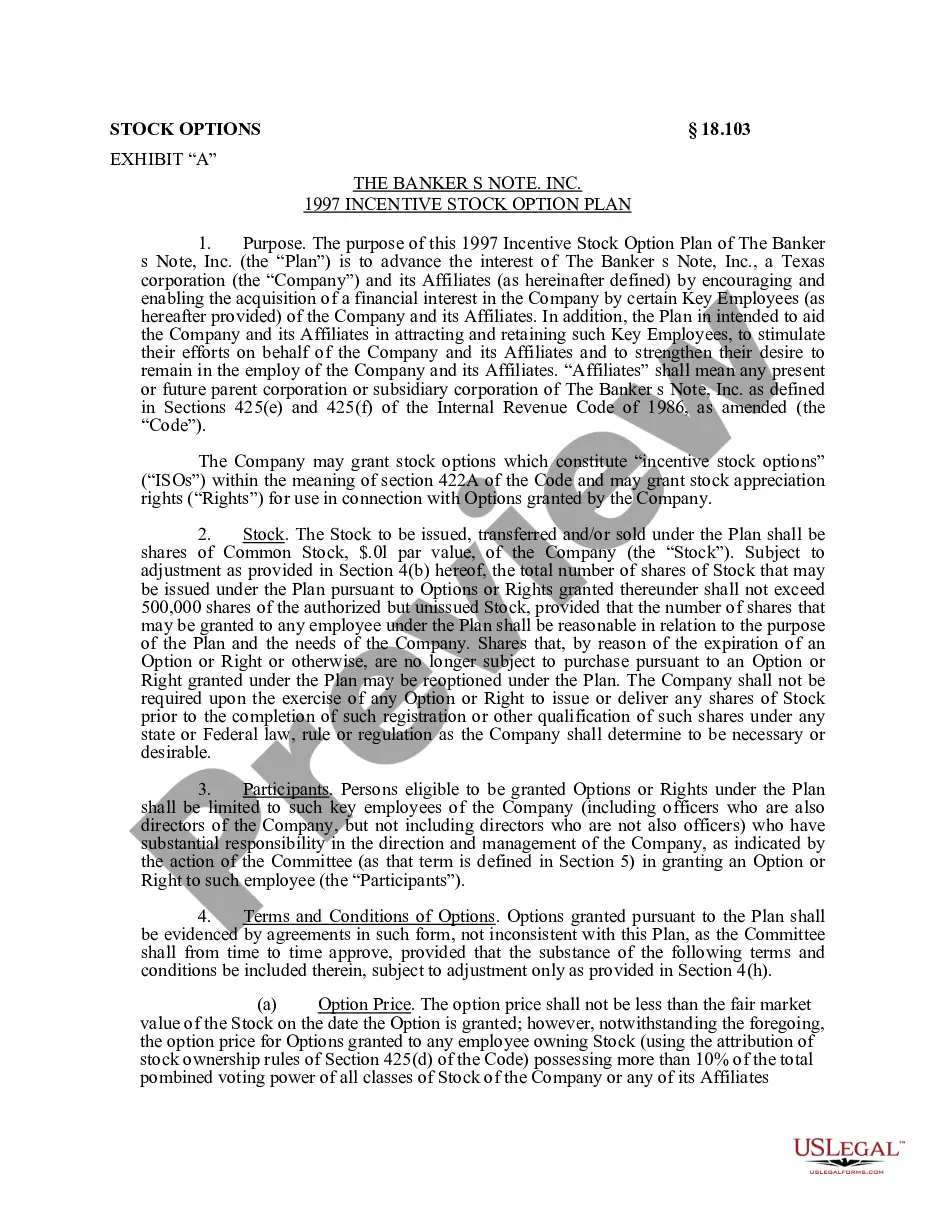
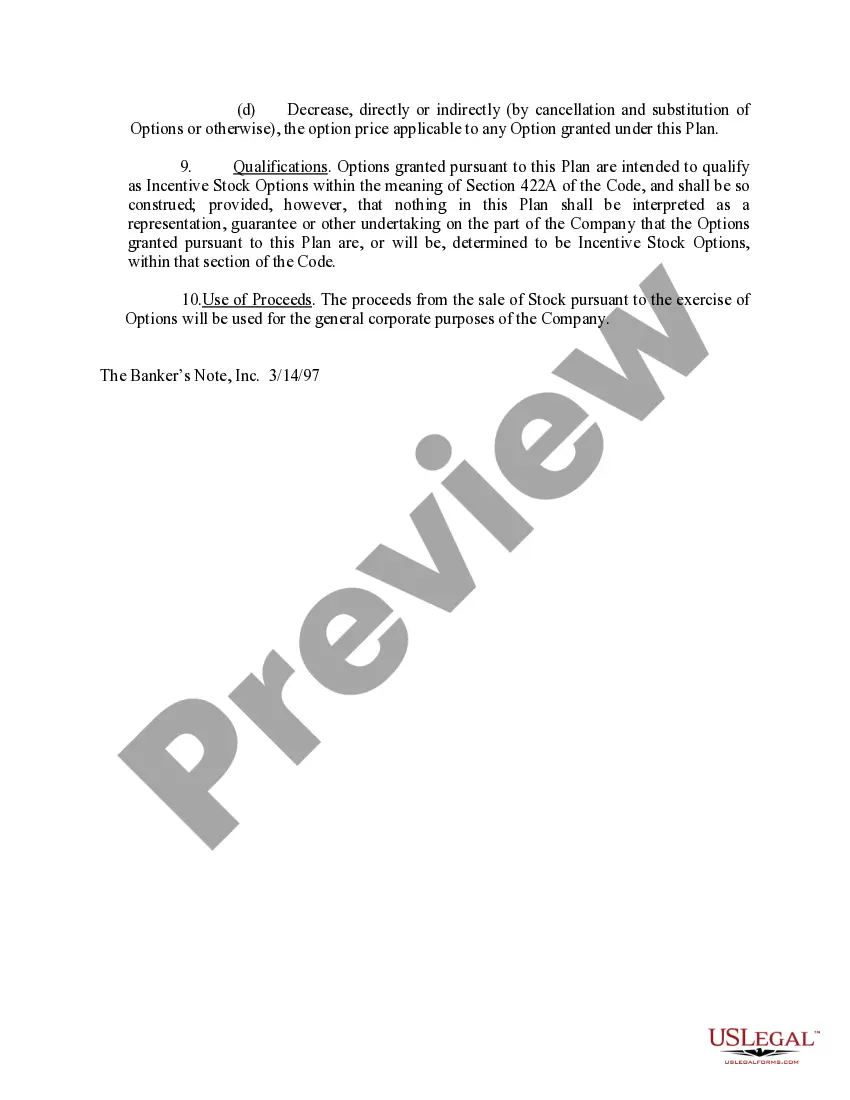
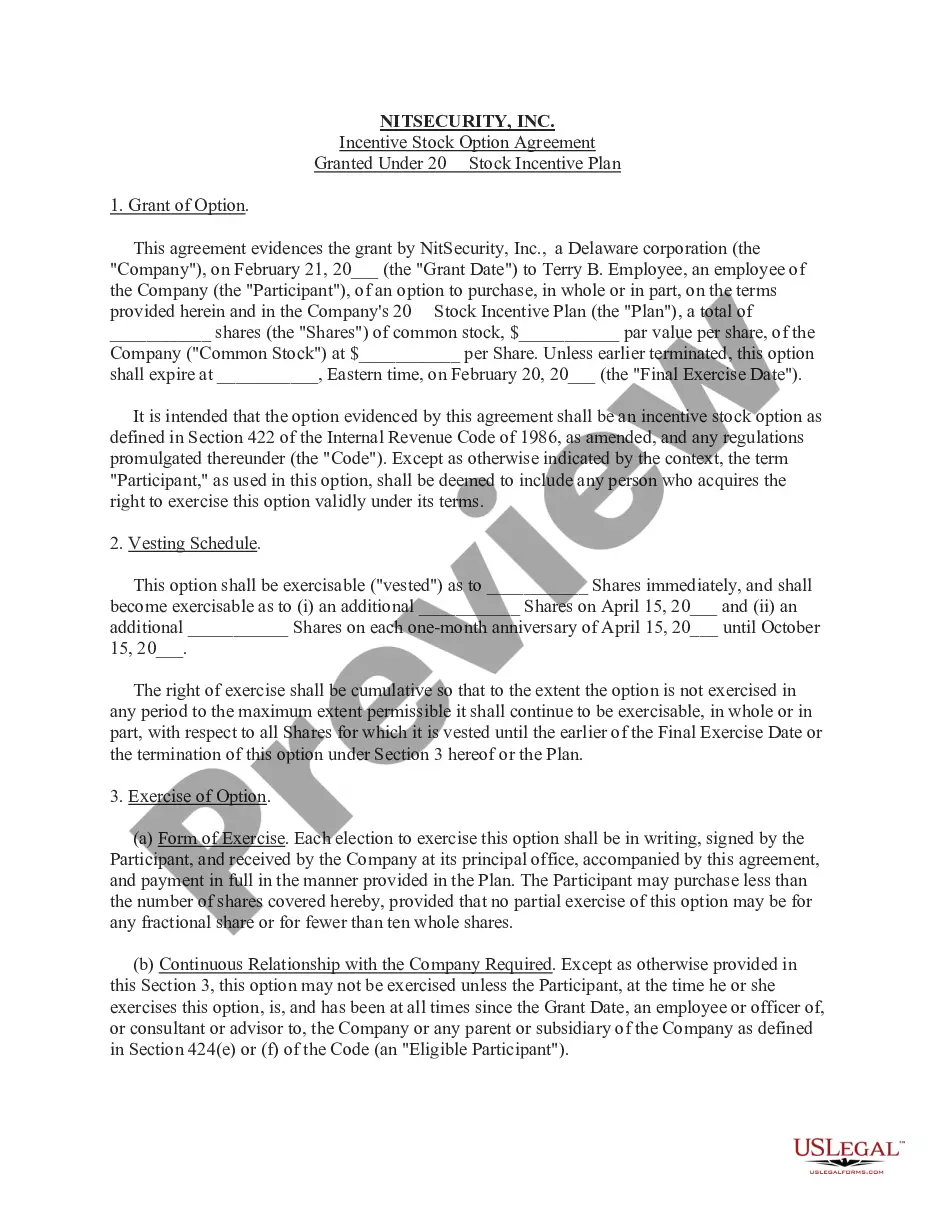
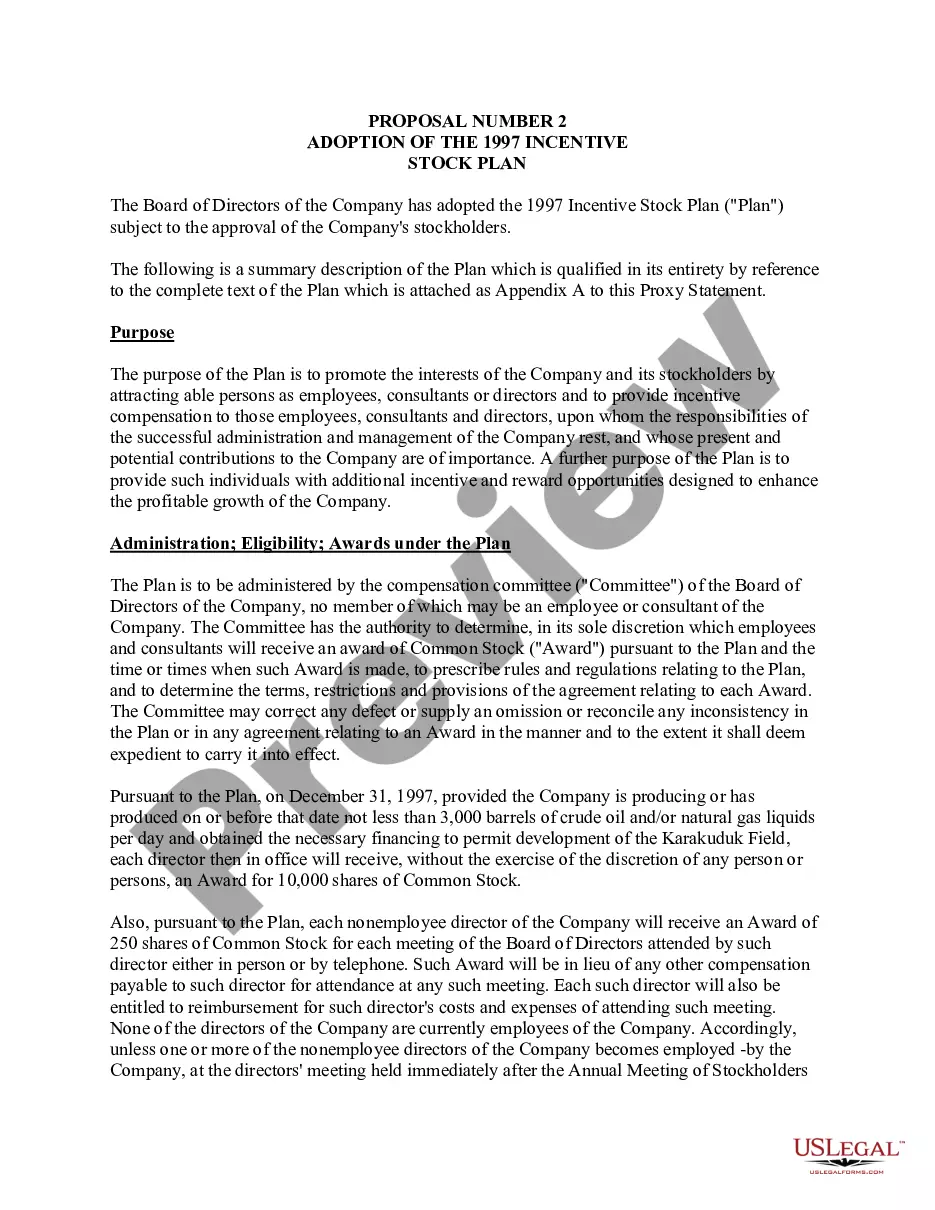
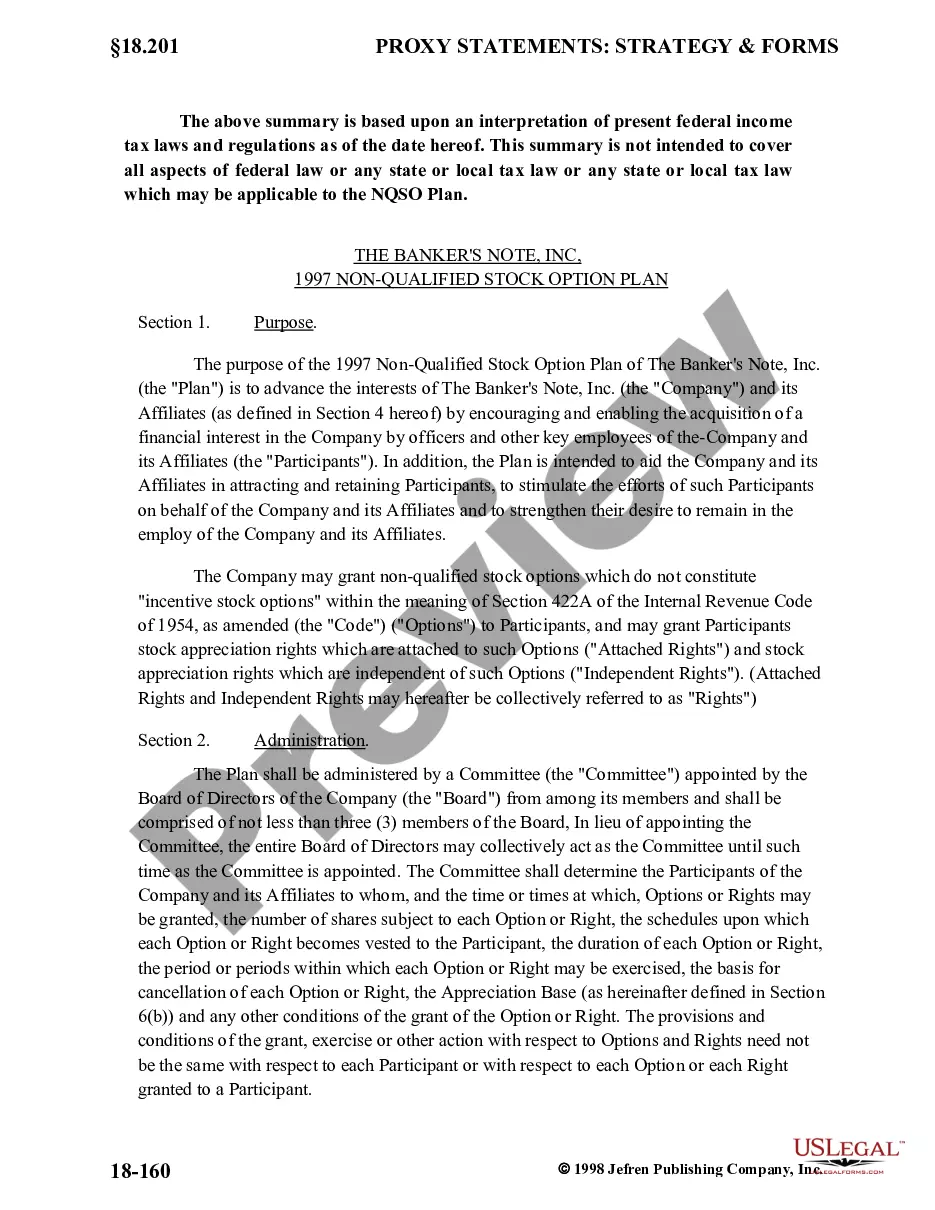
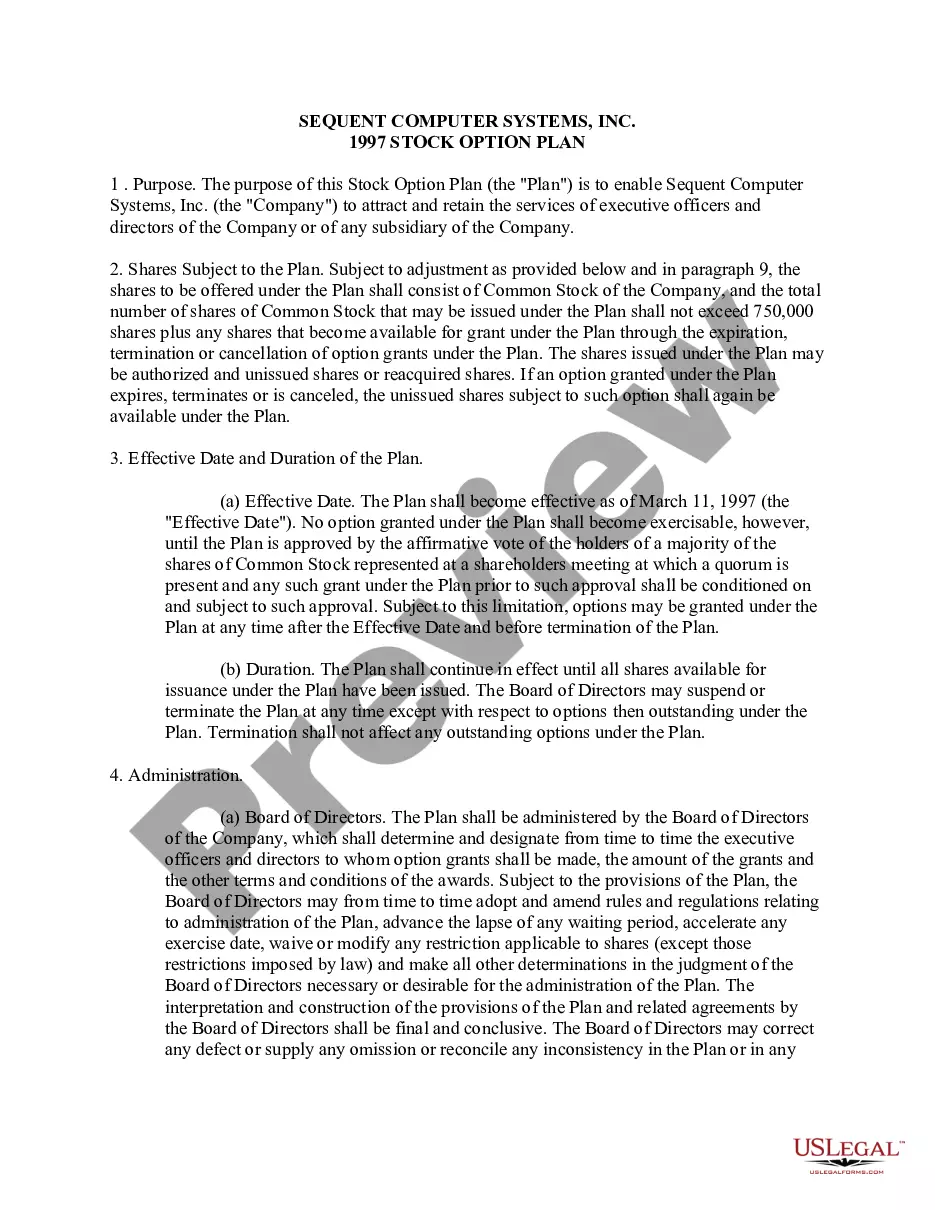
The Incentive Stock Option Plan of the Bankers Note, Inc. is a legal document designed to establish a framework for granting stock options to key employees of the company. This plan encourages employee ownership, which can help attract and retain valuable talent. Unlike other stock option agreements, this plan is tailored specifically for incentive stock options (ISOs) under the Internal Revenue Code, providing certain tax advantages for both the company and its employees.
Key parts of this document
- Purpose: Outlines the objectives of the plan and the roles of key employees.
- Stock: Specifies the type and amount of stock available under the plan.
- Participants: Details the eligibility criteria for employees to receive options.
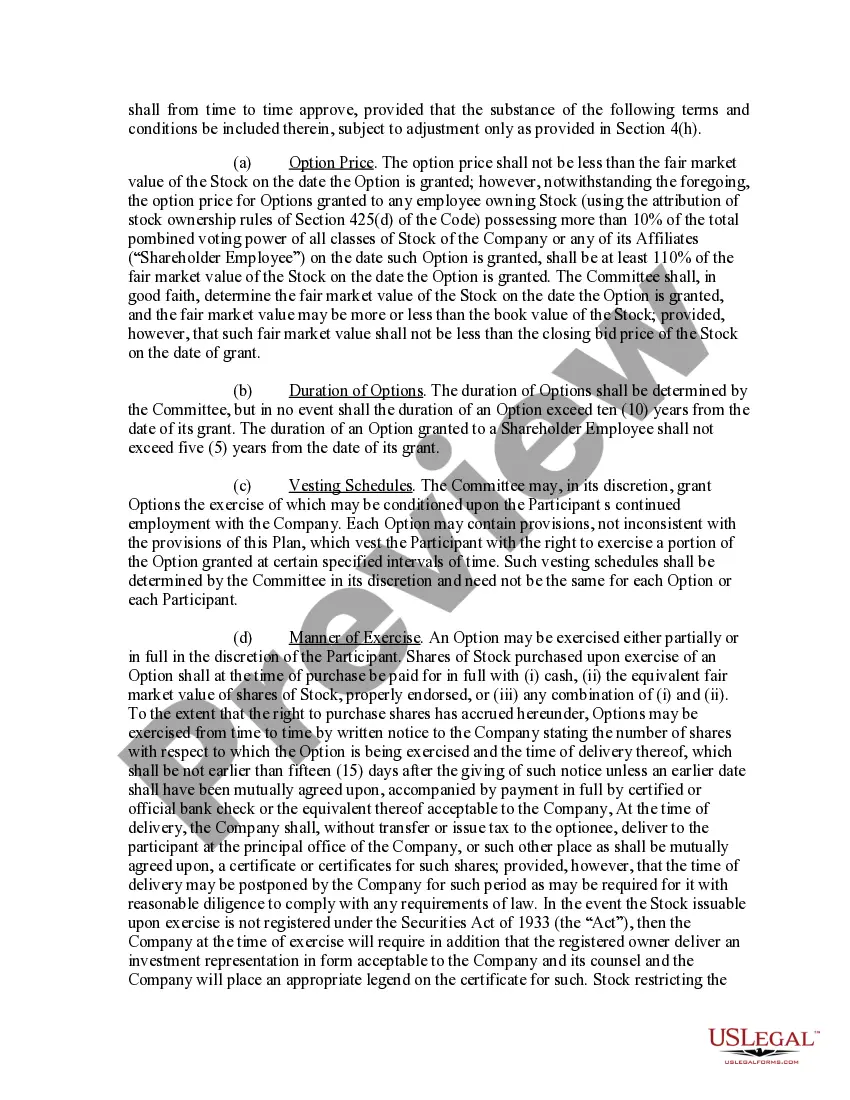
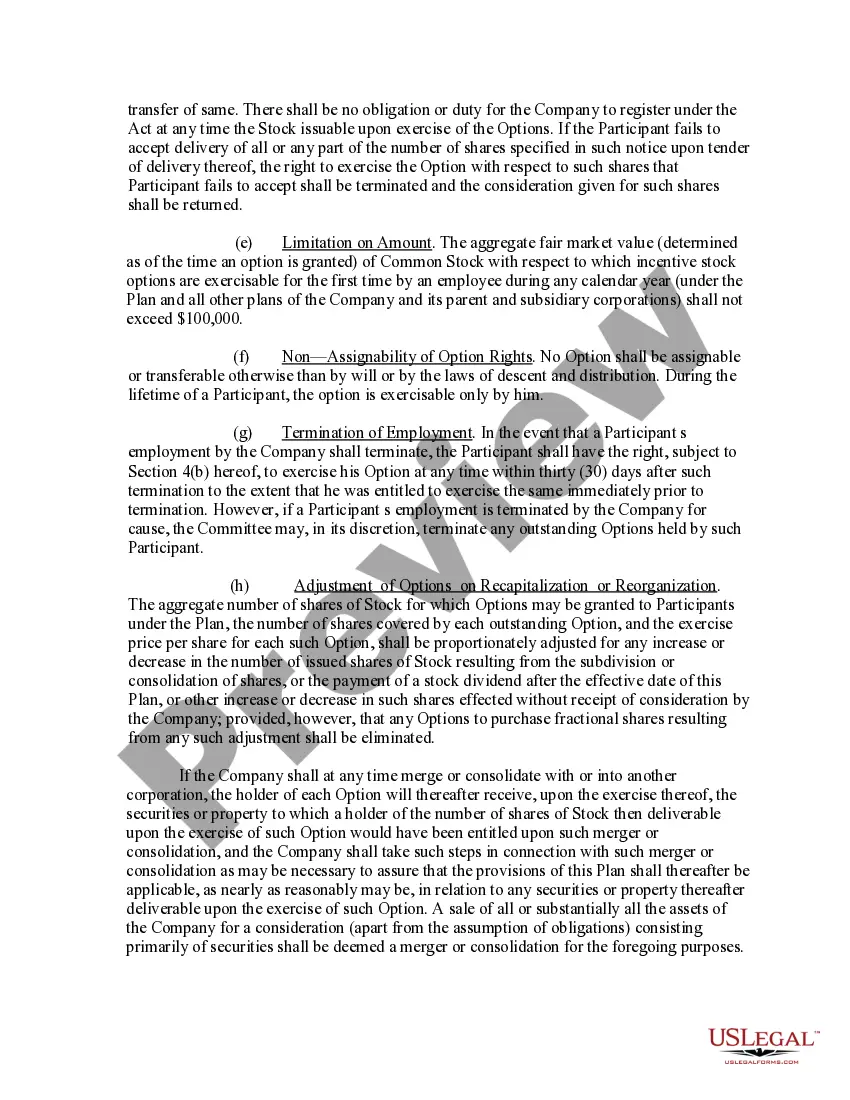
- Terms and Conditions: Covers key terms such as option price, duration, and vesting.
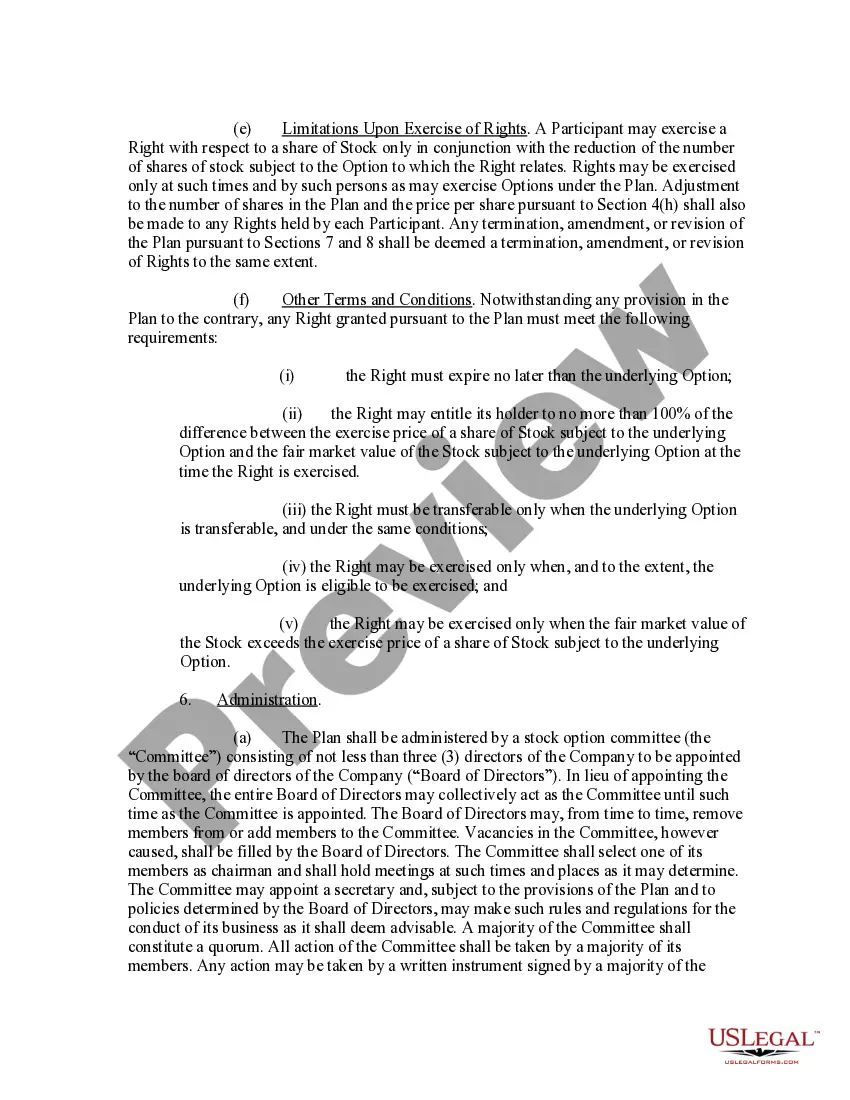
- Administration: Describes how the plan will be managed and who is responsible.
- Amendments: Provides provisions for modifying the plan as needed.



Situations where this form applies
This form should be used by companies wishing to implement an incentive stock option plan to offer stock options as part of employee compensation. This plan is beneficial when seeking to align the interests of employees with the shareholders by rewarding them with a stake in the company's success. It can also be employed during hiring phases to attract skilled professionals by enhancing their compensation packages.
Who should use this form
- Businesses looking to incentivize key employees through stock ownership.
- Corporations seeking to enhance their employee retention strategies.
- Human resource professionals tasked with structuring compensation packages.
- Executives in charge of corporate governance and compliance.
Instructions for completing this form
- Specify the purpose by clearly stating the objectives of the incentive stock option plan.
- List the types of stock the company plans to offer under this plan.
- Define eligibility criteria for participants based on their role within the company.
- Detail the terms and conditions for the exercise of options, including pricing and duration.
- Establish administrative oversight by appointing a committee to manage the option grants.
Does this document require notarization?
This form does not typically require notarization unless specified by local law. However, having a notarized document adds an extra layer of authenticity and can be advantageous in legal contexts.
Get your form ready online
Our built-in tools help you complete, sign, share, and store your documents in one place.
Make edits, fill in missing information, and update formatting in US Legal Forms—just like you would in MS Word.
Download a copy, print it, send it by email, or mail it via USPS—whatever works best for your next step.
Sign and collect signatures with our SignNow integration. Send to multiple recipients, set reminders, and more. Go Premium to unlock E-Sign.
If this form requires notarization, complete it online through a secure video call—no need to meet a notary in person or wait for an appointment.
We protect your documents and personal data by following strict security and privacy standards.

Make edits, fill in missing information, and update formatting in US Legal Forms—just like you would in MS Word.

Download a copy, print it, send it by email, or mail it via USPS—whatever works best for your next step.

Sign and collect signatures with our SignNow integration. Send to multiple recipients, set reminders, and more. Go Premium to unlock E-Sign.

If this form requires notarization, complete it online through a secure video call—no need to meet a notary in person or wait for an appointment.

We protect your documents and personal data by following strict security and privacy standards.
Mistakes to watch out for
- Failing to clearly define eligibility criteria for employees.
- Not aligning the plan objectives with overall corporate goals.
- Overlooking the implications of tax regulations affecting incentive stock options.
- Neglecting to update the plan as corporate structures or laws change.
Benefits of completing this form online
- Convenience of accessing and downloading the form anytime.
- Editability allows for customization to fit specific company needs.
- Reliability in ensuring that the form adheres to legal standards set by attorneys.
Legal use & context
- The plan is designed to comply with Section 422A of the Internal Revenue Code.
- It provides tax advantages for employees upon successful options exercise.
- Options granted under this plan are subject to specific regulatory requirements and should be administered carefully.
Key takeaways
- The Incentive Stock Option Plan is essential for businesses seeking to reward employees with stock options.
- Understanding the terms and conditions is crucial for effective administration of the plan.
- Properly defining participant eligibility and compliance with tax laws enhances the effectiveness of the plan.
Looking for another form?









Form popularity
FAQ
The stock option compensation is an expense of the business and is represented by the debit to the expense account in the income statement. The other side of the entry is to the additional paid in capital account (APIC) which is part of the total equity of the business.
What is a Stock Option? A stock option gives an investor the right, but not the obligation, to buy or sell a stock at an agreed upon price and date. There are two types of options: puts, which is a bet that a stock will fall, or calls, which is a bet that a stock will rise.
Stock Option Journal Entries Year 1 The stock option compensation is an expense of the business and is represented by the debit to the expense account in the income statement. The other side of the entry is to the additional paid in capital account (APIC) which is part of the total equity of the business.
Report this amount on Form 6251: Alternative Minimum Tax for the year you exercise the ISOs. When you sell the stock in a later year, you must report another adjustment on your Form 6251 for the year of sale.
Executive stock options incentivize CEOs to preform at the highest level. These increases in compensationdriven by improved business performancewould not represent a transfer of wealth from shareholders to executives.
Oftentimes, stock-based compensation is redeemable at the employee's or employer's option. Stock-based compensation that is redeemable at the employee's option is a considered an employer obligation, and thus a liability while awards that are redeemable at the employer's option are classified as equity.
Stock options may be considered a form of compensation which gives the employee the right to buy an amount of company stock at a set price during a certain time period. Under U.S. accounting methods, stock options are expensed according to the stock options' fair value.
An incentive stock option (ISO) is a corporate benefit that gives an employee the right to buy shares of company stock at a discounted price with the added benefit of possible tax breaks on the profit. The profit on qualified ISOs is usually taxed at the capital gains rate, not the higher rate for ordinary income.
The price at which the options may be "exercised" is usually the price of the company's stock on the date the options are granted. If the company performs well, the stock price will increase over the exercise price, giving the options value and rewarding the executive for his role in the company's success.