Agreement of Merger by VP Oil, Inc., VP Acquisition Corp., Big Piney Oil and Gas Co., Big Piney Acquisition Corp., and National Energy Group, Inc.
About this form
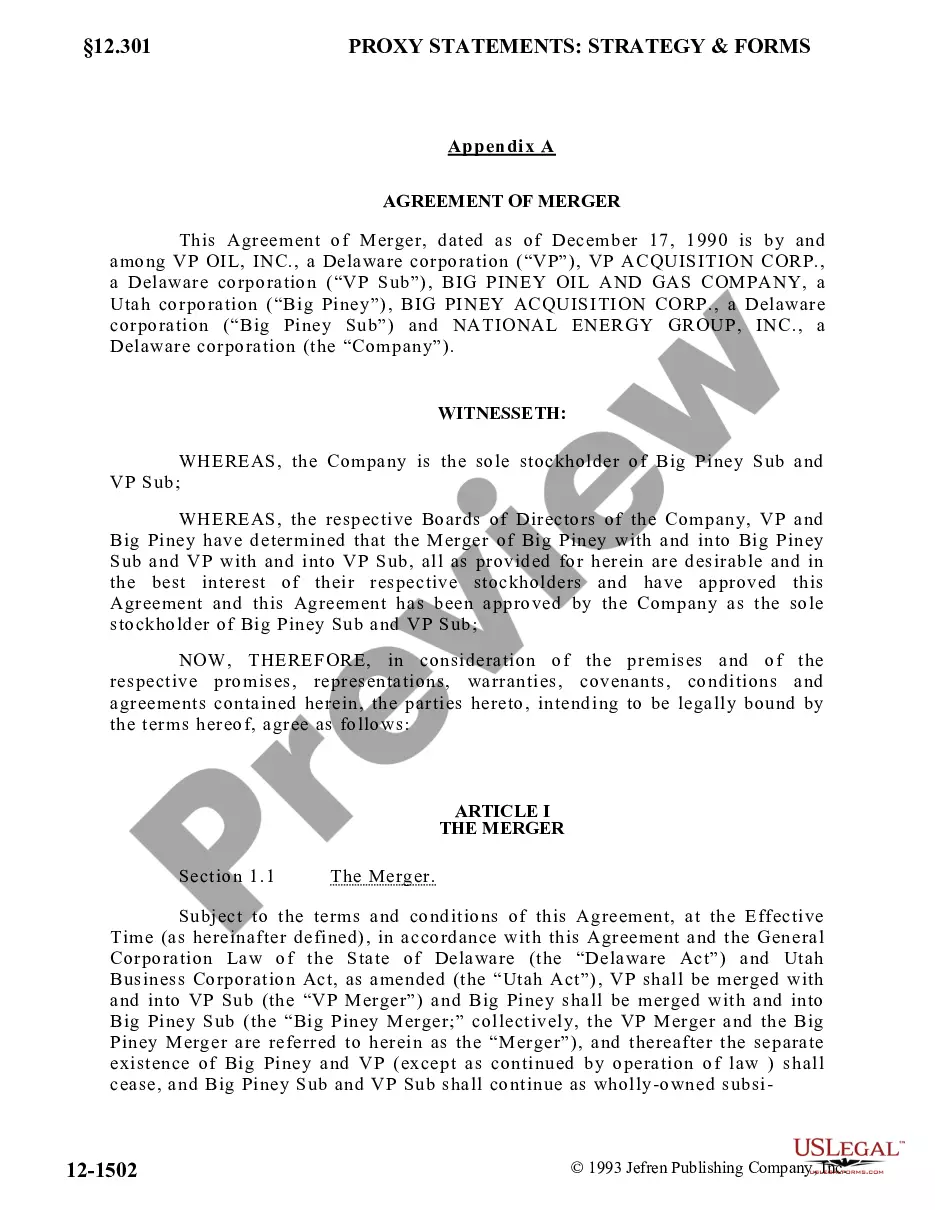
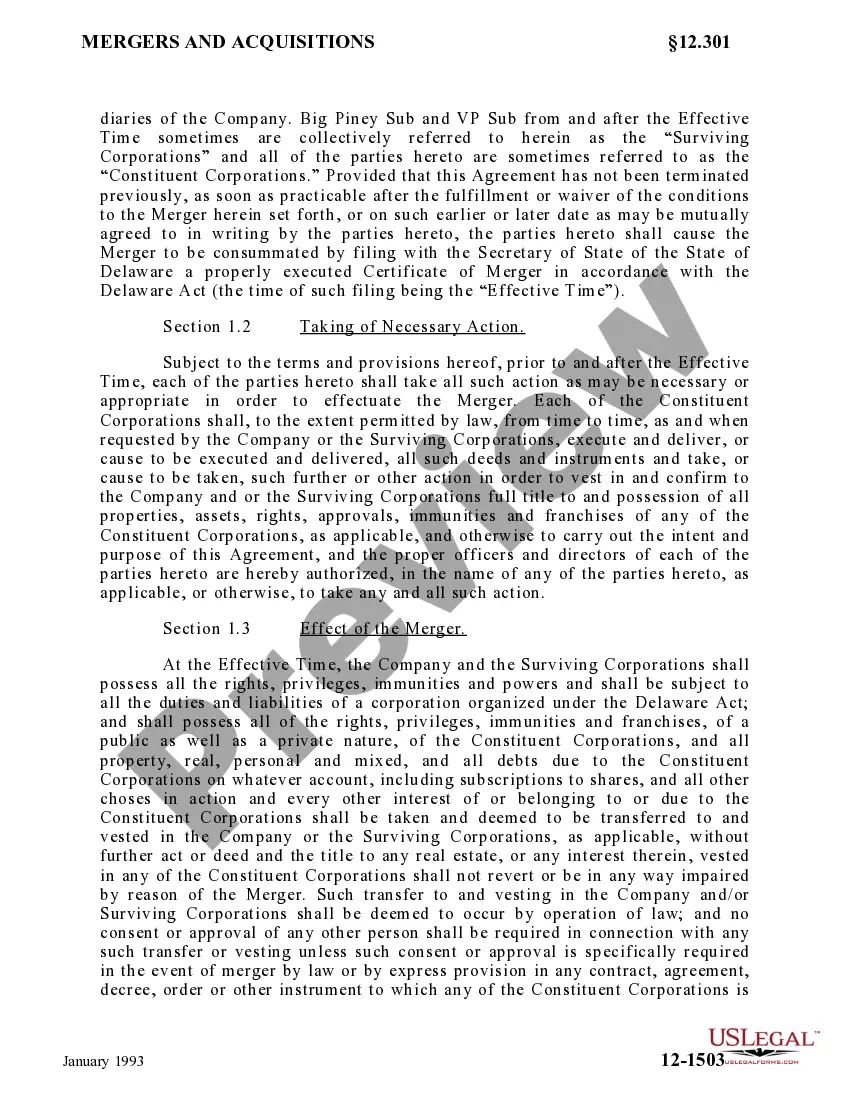
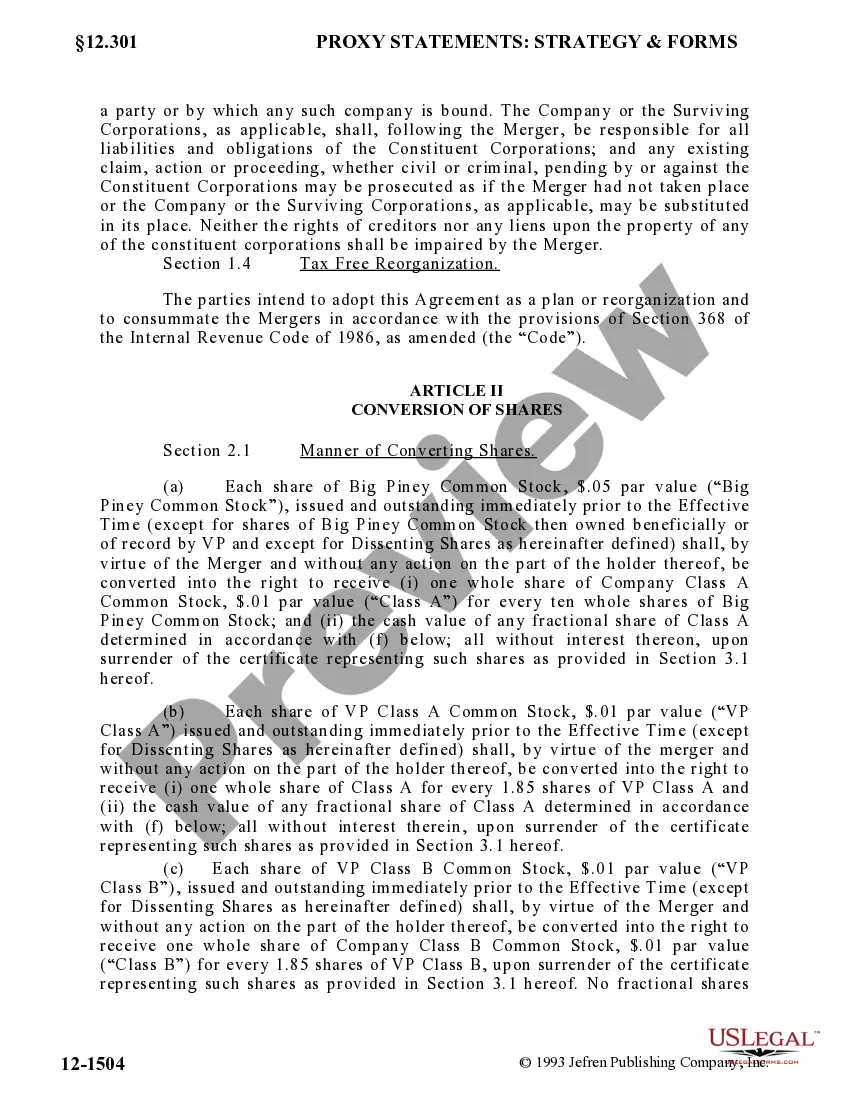
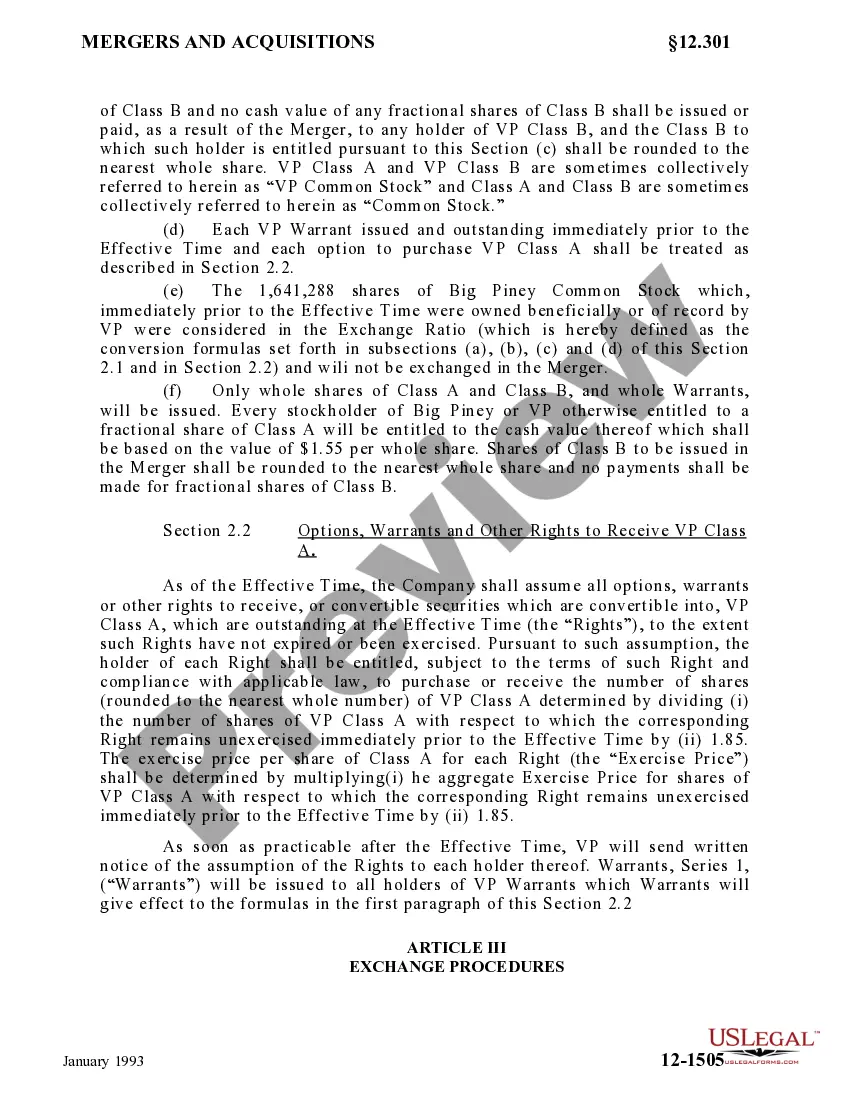
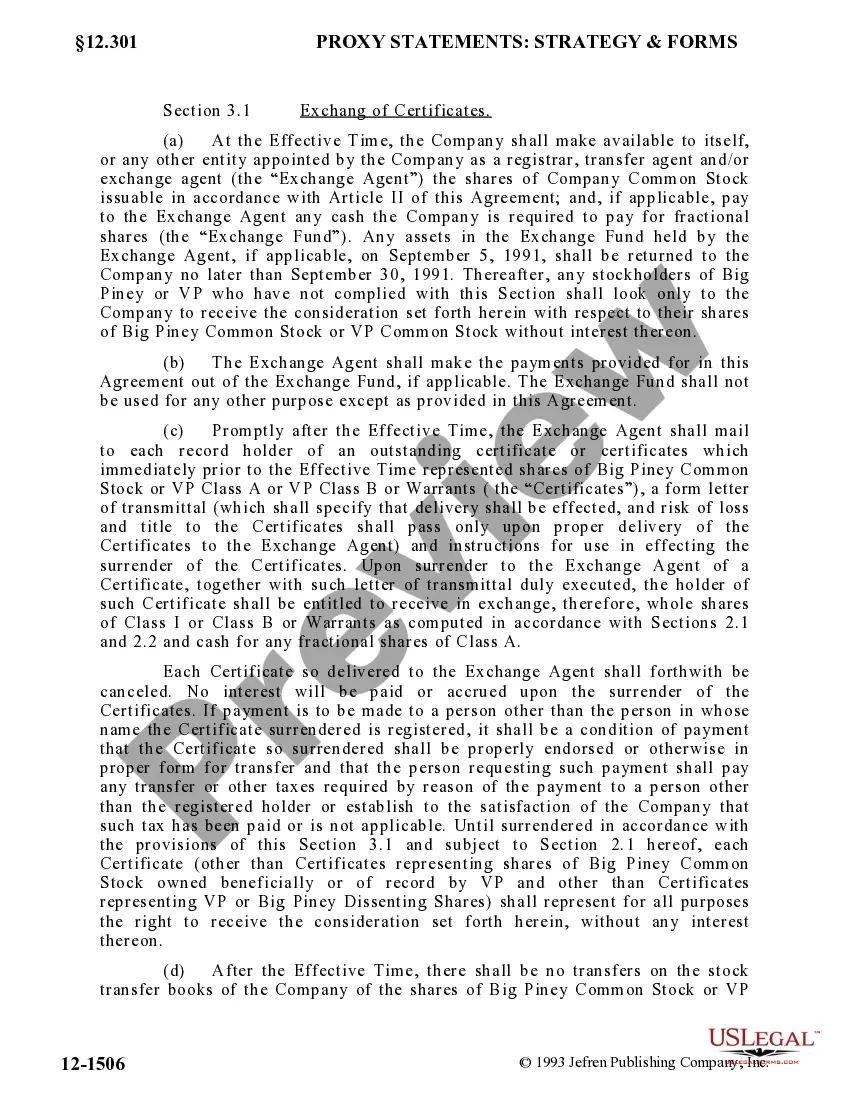
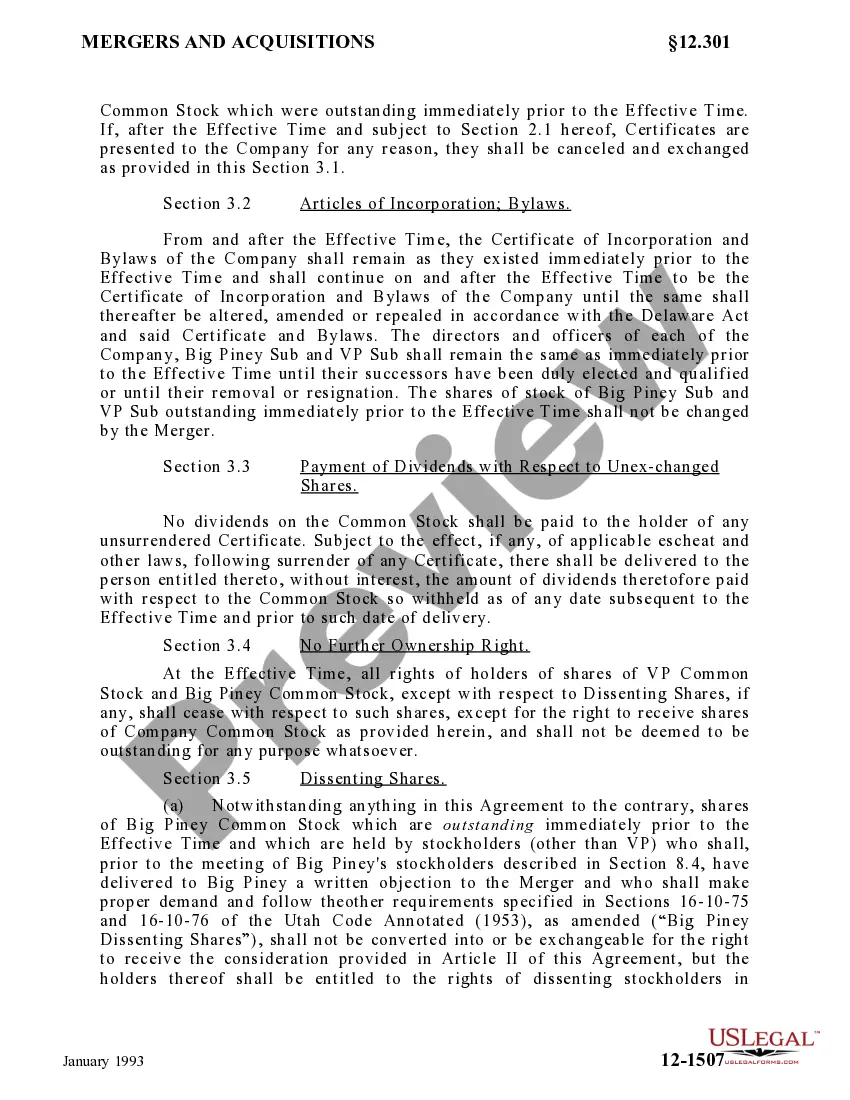
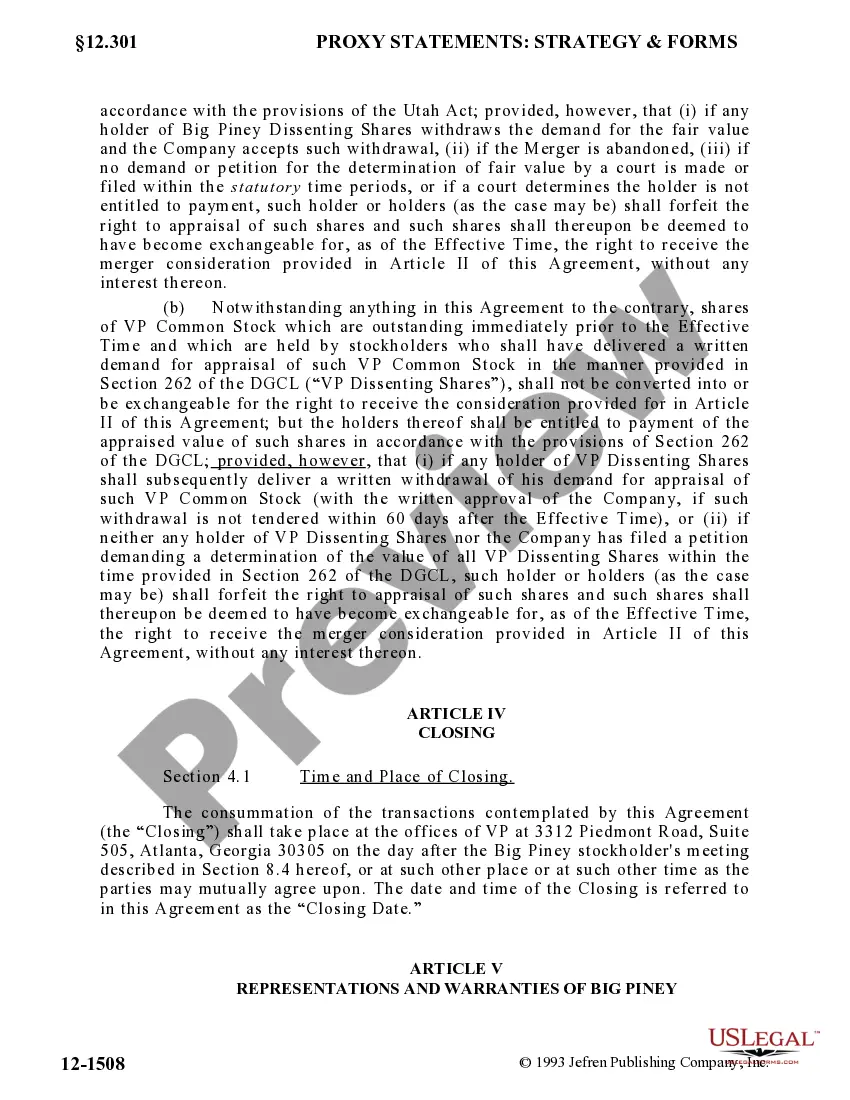
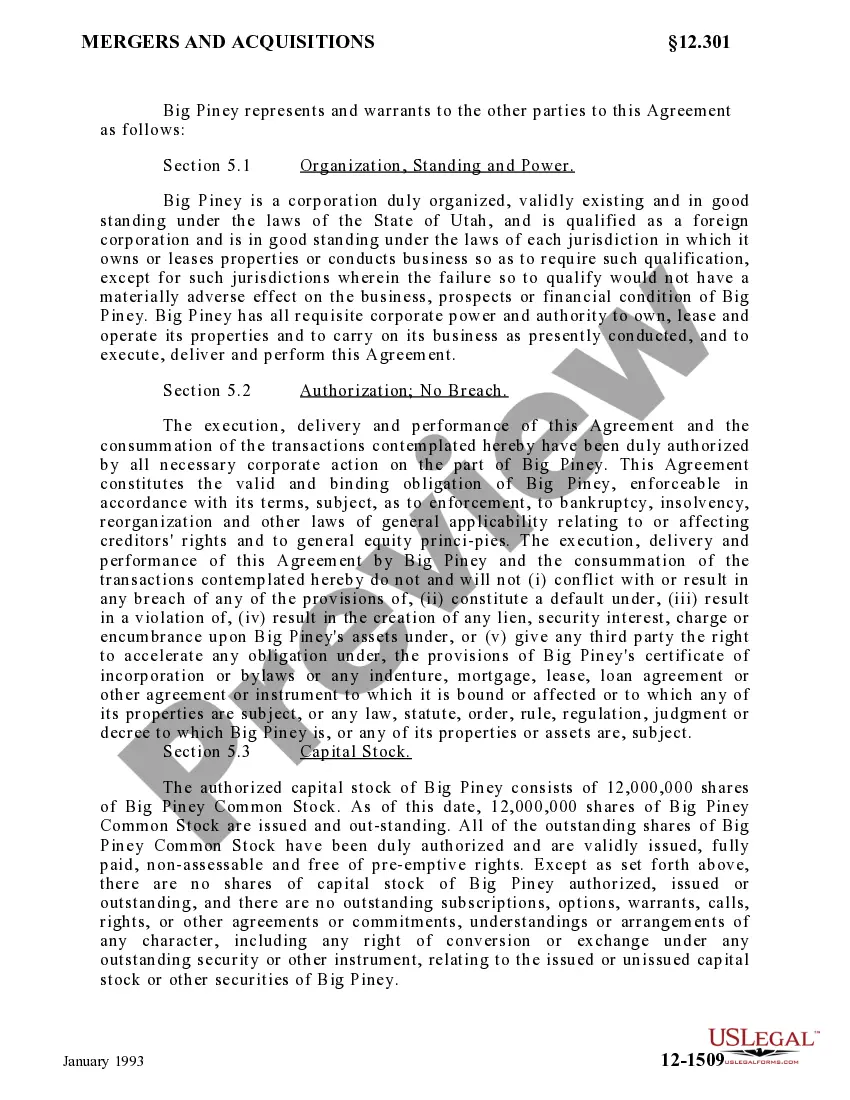
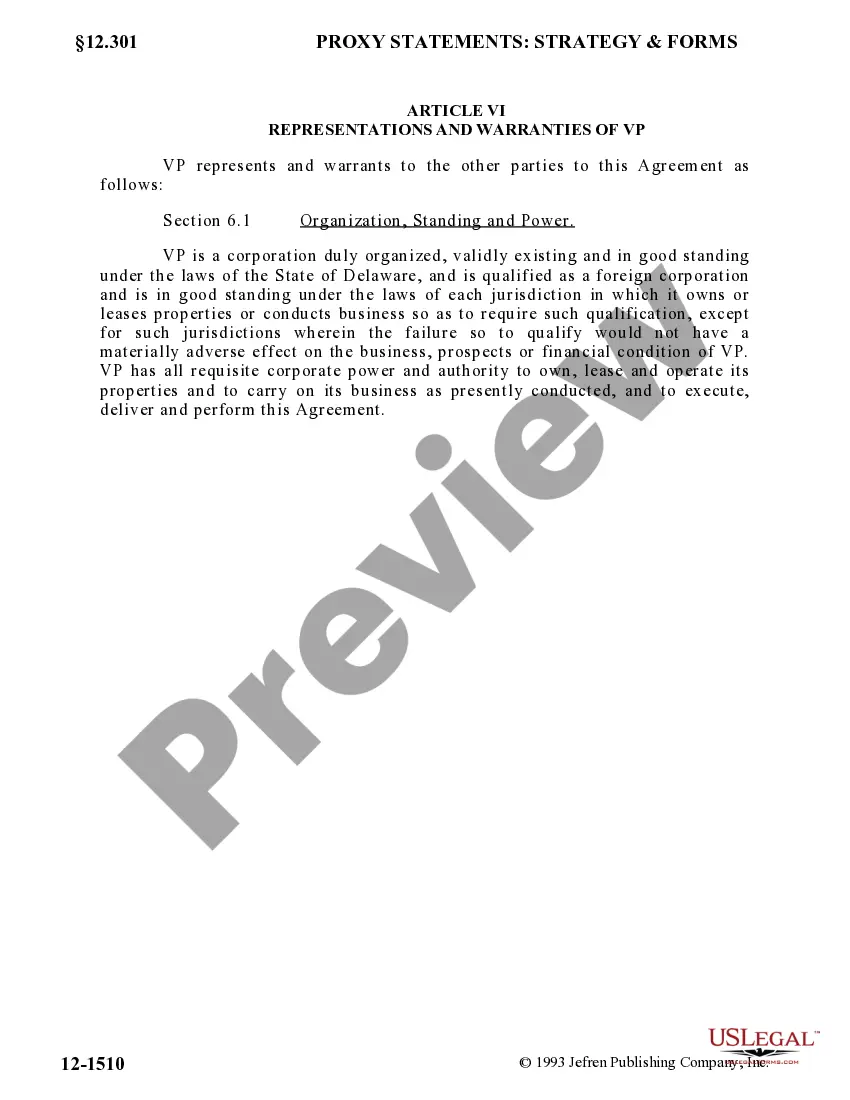
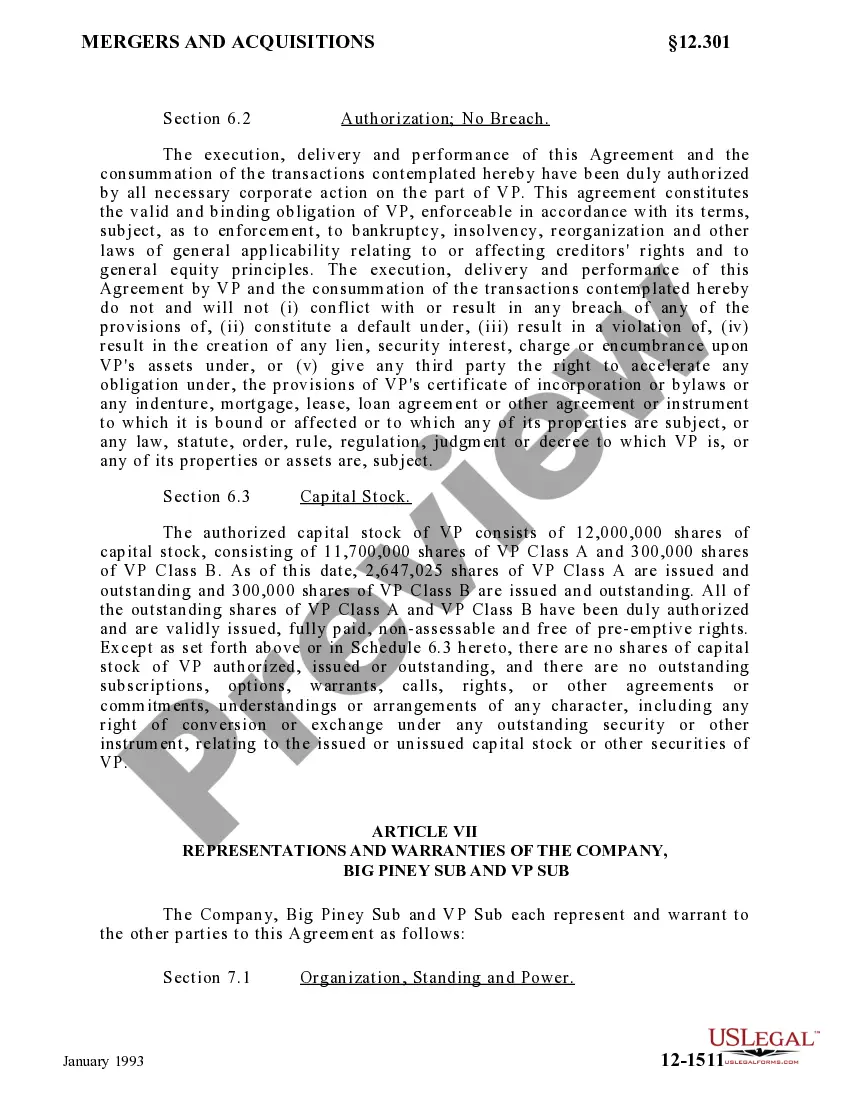
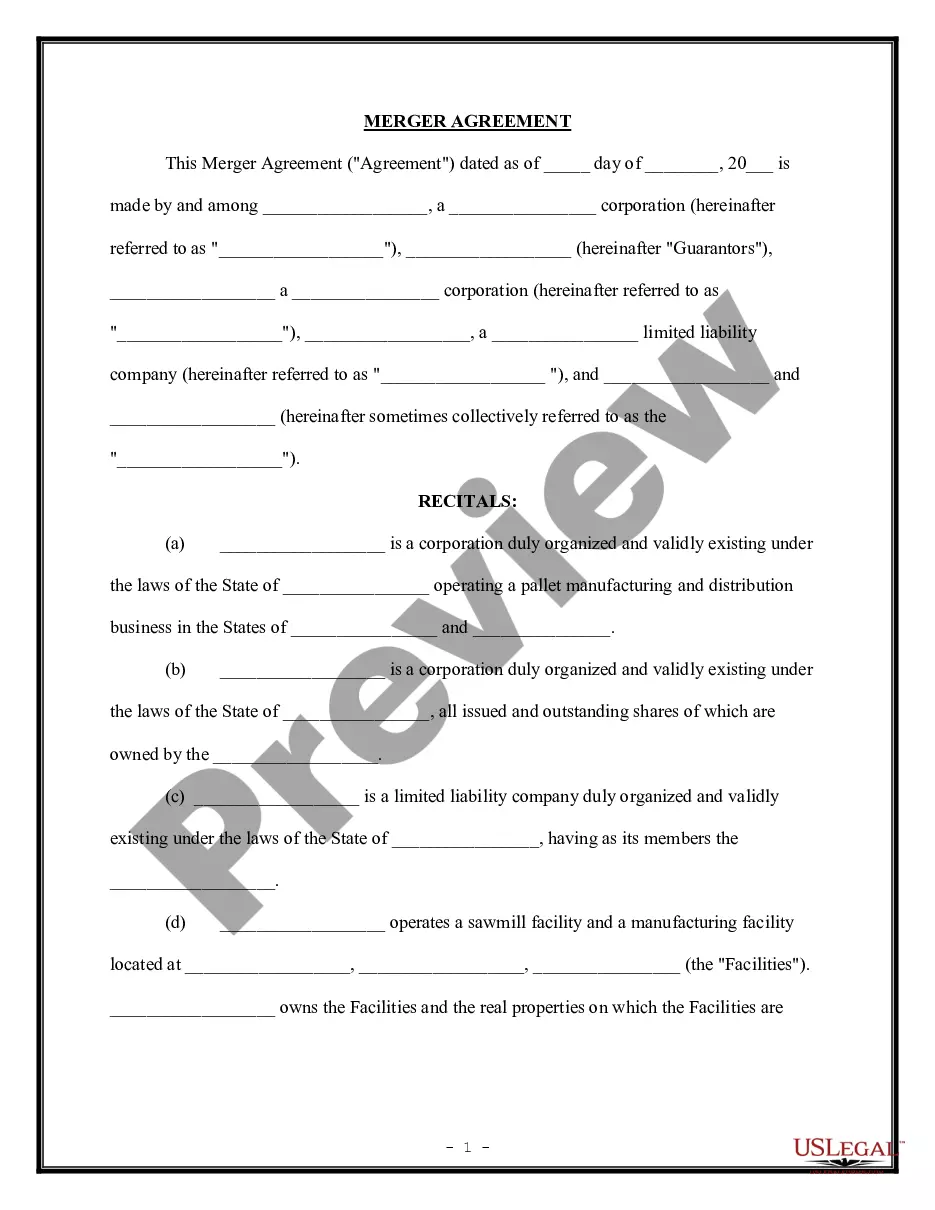
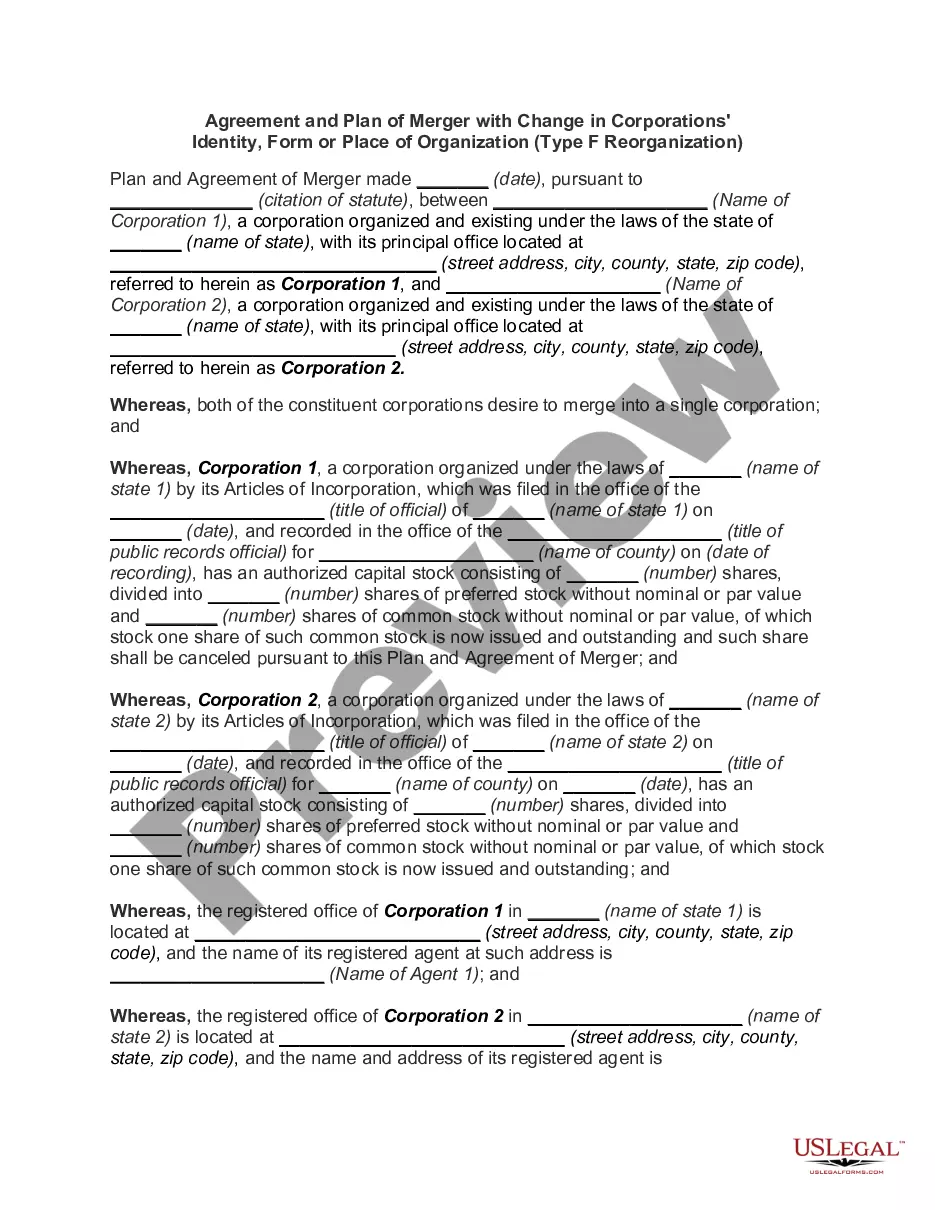
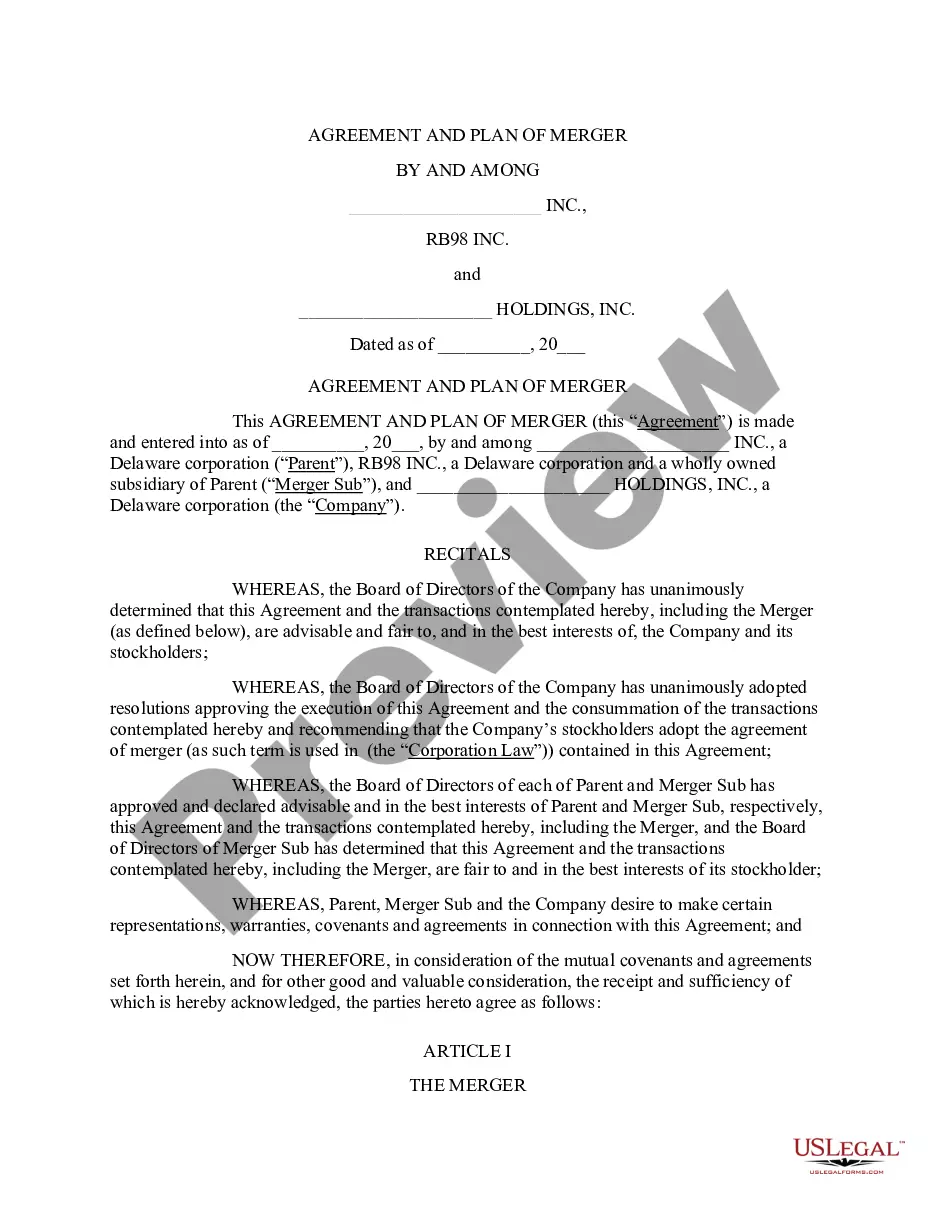
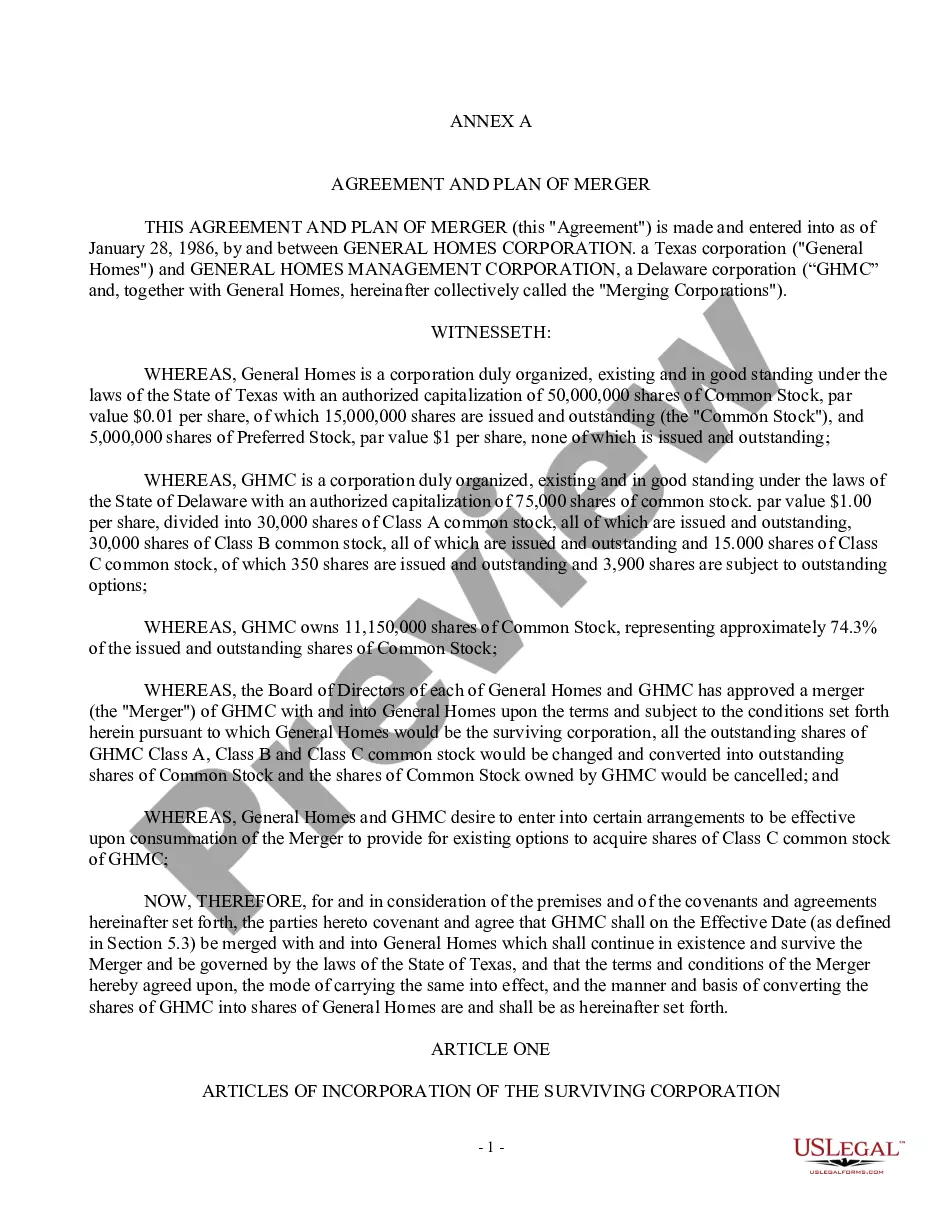
The Agreement of Merger is a legal document used for merging two corporations into wholly owned subsidiaries of a new holding company. This form is specifically tailored for situations where one corporation is merged into a subsidiary of the new entity while the other undergoes a similar process through a different subsidiary. It outlines the conversion of shares from the merging corporations into shares of the new holding company, ensuring a structured transition of ownership and rights for shareholders.
Key parts of this document
- Date of the agreement
- Names of the merging corporations and the holding company
- Details of the merger procedure and conversion ratios of shares
- Rights and obligations of the parties involved
- Conditions for the merger to take effect
- Provision for dissenting shareholders

Common use cases
This form is necessary when two corporations decide to merge under a new holding company structure. It applies to businesses looking to streamline operations, consolidate resources, or enhance their market position through combined assets. Specific scenarios may include corporate reorganizations, mergers for expansion, or strategic partnerships aimed at achieving greater financial benefits.
Intended users of this form
- Corporate executives and managers overseeing the merger process
- Legal counsel representing the corporations involved in the merger
- Shareholders of the merging corporations who seek to understand their rights during the transition
- Financial advisors assisting with the merger transaction
Steps to complete this form
- Identify the parties involved: Ensure all corporations' names are accurately listed.
- Specify the effective date of the merger and the governing state laws.
- Outline the share conversion ratios for common stock and any special classes of stock.
- Obtain necessary approvals from the Board of Directors and shareholders.
- File the Certificate of Merger with the Secretary of State of Delaware.
Does this form need to be notarized?
In most cases, this form does not require notarization. However, some jurisdictions or signing circumstances might. US Legal Forms offers online notarization powered by Notarize, accessible 24/7 for a quick, remote process.
Get your form ready online
Our built-in tools help you complete, sign, share, and store your documents in one place.
Make edits, fill in missing information, and update formatting in US Legal Forms—just like you would in MS Word.
Download a copy, print it, send it by email, or mail it via USPS—whatever works best for your next step.
Sign and collect signatures with our SignNow integration. Send to multiple recipients, set reminders, and more. Go Premium to unlock E-Sign.
If this form requires notarization, complete it online through a secure video call—no need to meet a notary in person or wait for an appointment.
We protect your documents and personal data by following strict security and privacy standards.

Make edits, fill in missing information, and update formatting in US Legal Forms—just like you would in MS Word.

Download a copy, print it, send it by email, or mail it via USPS—whatever works best for your next step.

Sign and collect signatures with our SignNow integration. Send to multiple recipients, set reminders, and more. Go Premium to unlock E-Sign.

If this form requires notarization, complete it online through a secure video call—no need to meet a notary in person or wait for an appointment.

We protect your documents and personal data by following strict security and privacy standards.
Common mistakes to avoid
- Failing to include all necessary parties in the agreement
- Not specifying the accurate share conversion ratios
- Omitting required board and shareholder approvals
- Disregarding state-specific filing requirements
Benefits of using this form online
- Convenient access to a professionally drafted legal template
- Easy editing capabilities to customize the agreement for specific needs
- Reliable source of legal forms backed by licensed attorneys
- Instant downloads allow for immediate use and filing
Looking for another form?
Form popularity
FAQ
China Petroleum & Chemical Corporation $424bn. Sinopec's revenues increased by 2.6% in 2019 over 2018. China National Petroleum Corp (CNPC) $396bn. PetroChina $360bn. Royal Dutch Shell $345bn. Saudi Arabian Oil $330bn. BP $278bn. Exxon Mobil $265bn. Total $200bn.
Contact your stockbroker to search the stock's worth via its CUSIP number if the steps given earlier yield no results. This number is printed on the back of the stock certificate. Use a fee-based service to search your stock's history if the earlier steps come up empty. Fees can range from $40 to $85 or more.
Finding Value With the P/E Ratio The most popular method used to estimate the intrinsic value of a stock is the price to earnings ratio. It's simple to use, and the data is readily available. The P/E ratio is calculated by dividing the price of the stock by the total of its 12-months trailing earnings.
Undervalued is a relative term At $60 oil, many oil stocks certainly seem undervalued relative to the free cash flow they can produce at that oil price. However, that oil price point isn't on solid ground, leaving the risk that oil stocks could go from undervalued to overvalued at their current stock prices in no time.
An old stock or bond certificate may still be valuable even if it no longer trades under the name printed on the certificate. The company may have merged with another company or simply changed its name.
Old oil company stocks might be more than historical documents. They might still be valuable if they were issued by one of the seven major oil companies, known as the Seven Sisters, that once dominated the oil market.Research the name of the oil company listed on the stock certificate.
Exxon Mobil (NYSE:XOM) Suncor Energy (NYSE:SU) Enbridge (NYSE:ENB) Schlumberger (NYSE:SLB) Cheniere (NYSE:LNG) BP (NYSE:BP) Royal Dutch Shell (NYSE:RDS-B)
Chevron Corp. (CVX) Suncor Energy (SU) Magellan Midstream Partners (MMP) Enterprise Products Partners (EPD) BP (BP) Cheniere Energy (LNG) EOG Resources (EOG)
With the oil industry's headwinds in mind, three top oil companies worthy of investors' consideration are ConocoPhillips(NYSE:COP) a global E&P company; Enbridge (NYSE:ENB), a large-scale, diversified midstream company; and Phillips 66 (NYSE:PSX), a leading refining company with midstream, chemical, and distribution