Agreement and Plan of Reorganization and Liquidation by Niagara Share Corp. and Scudder Investment Trust
What this document covers
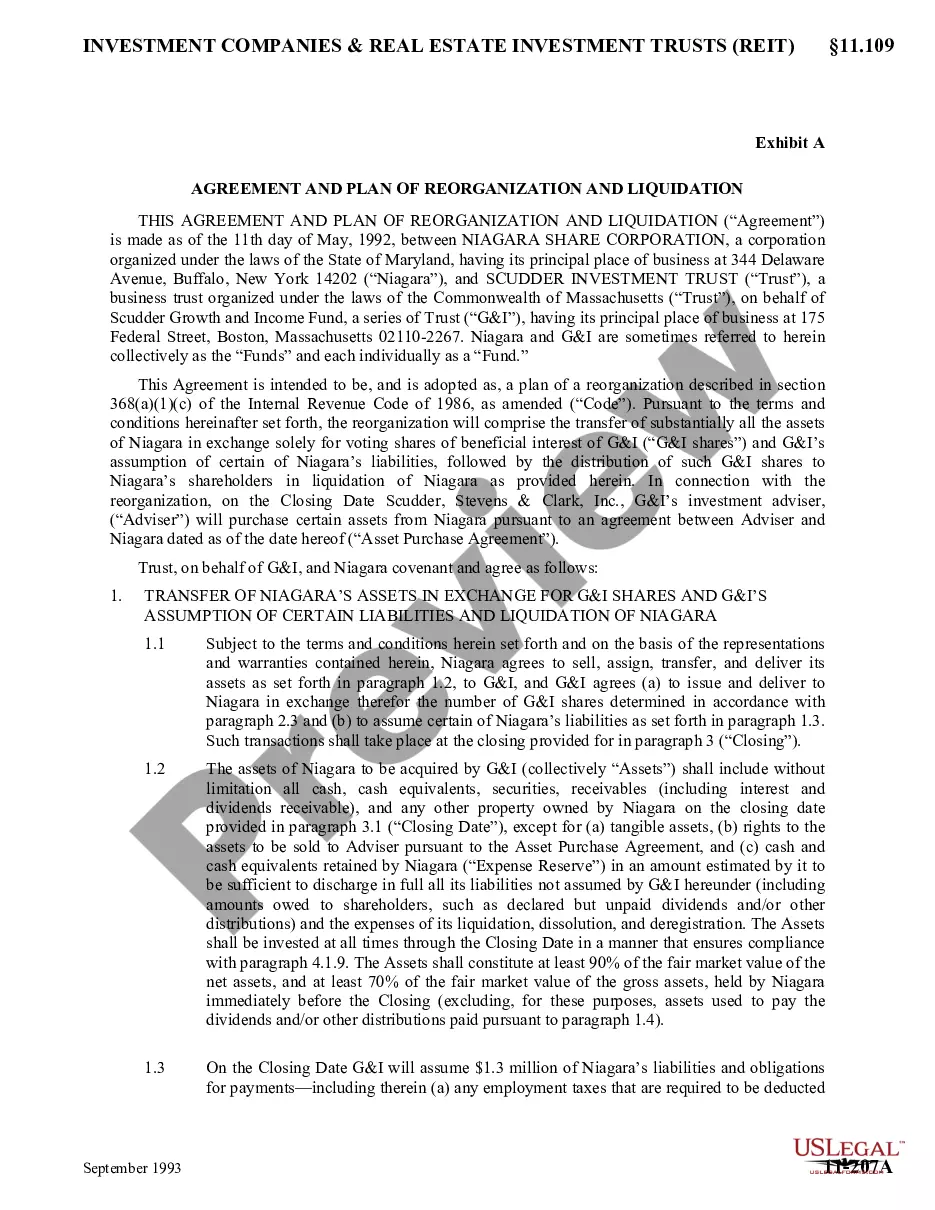
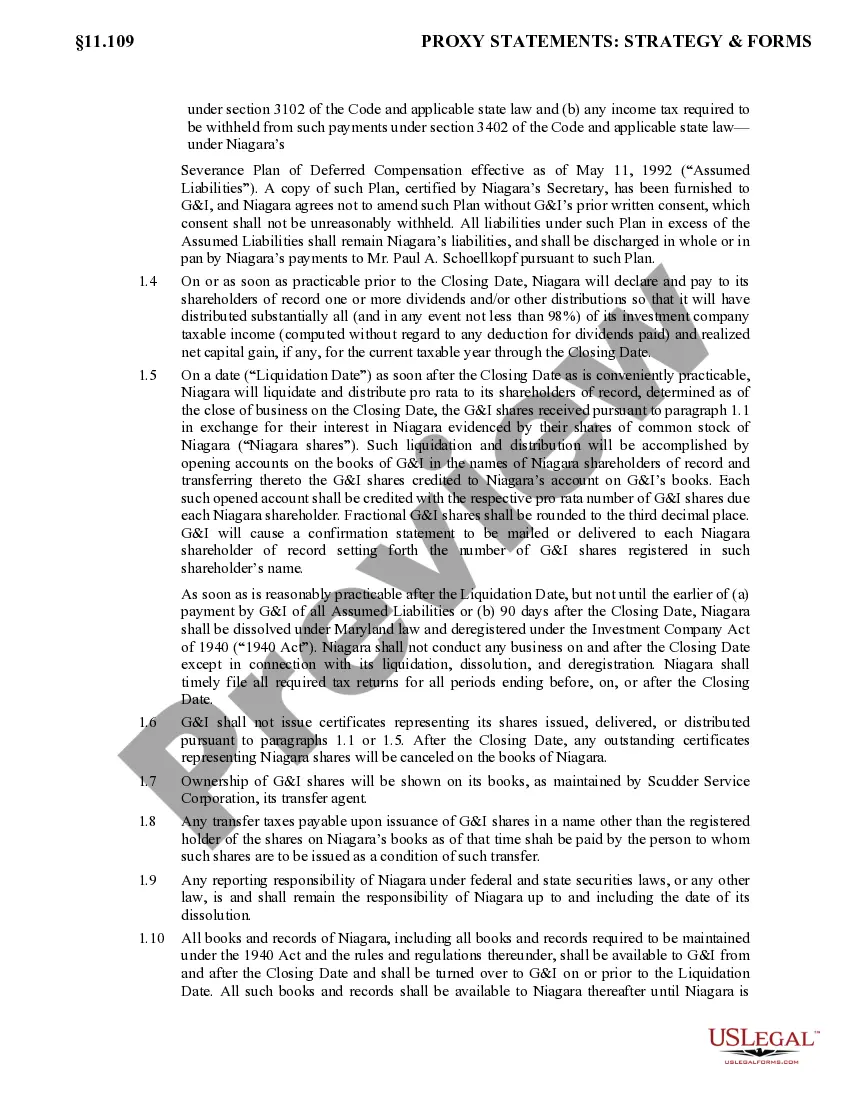
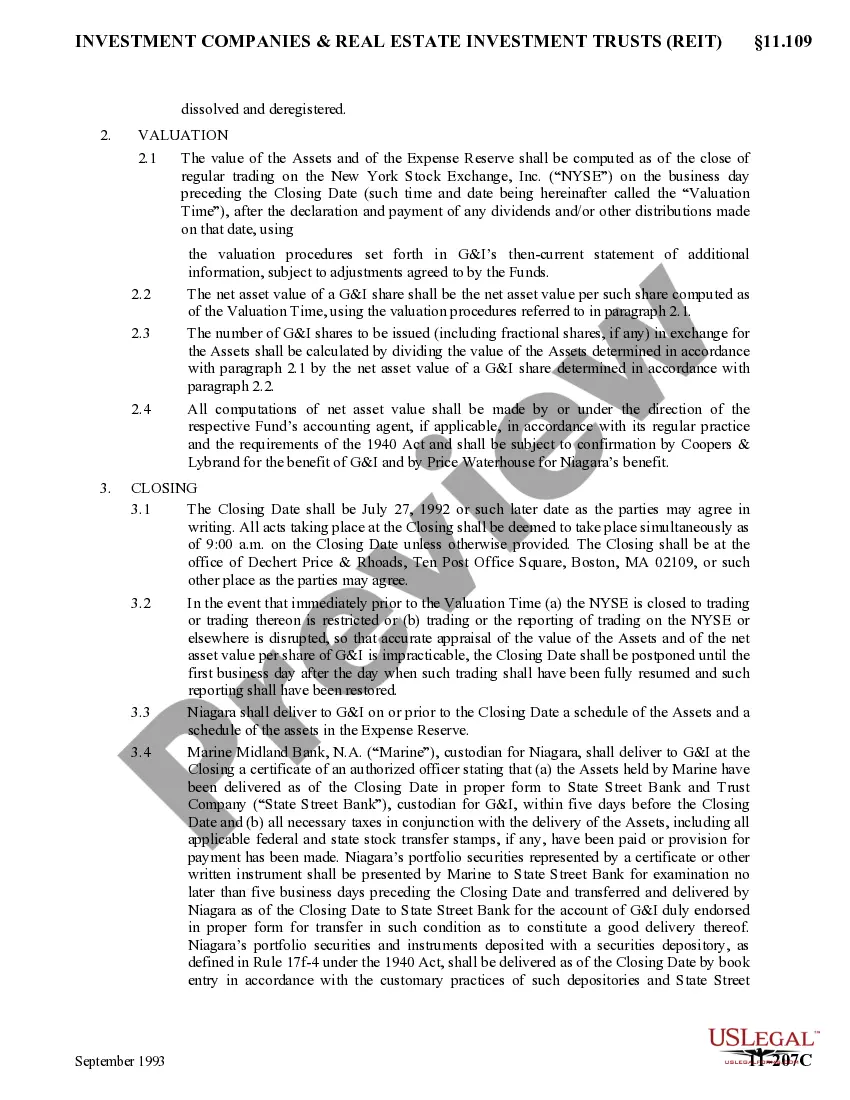
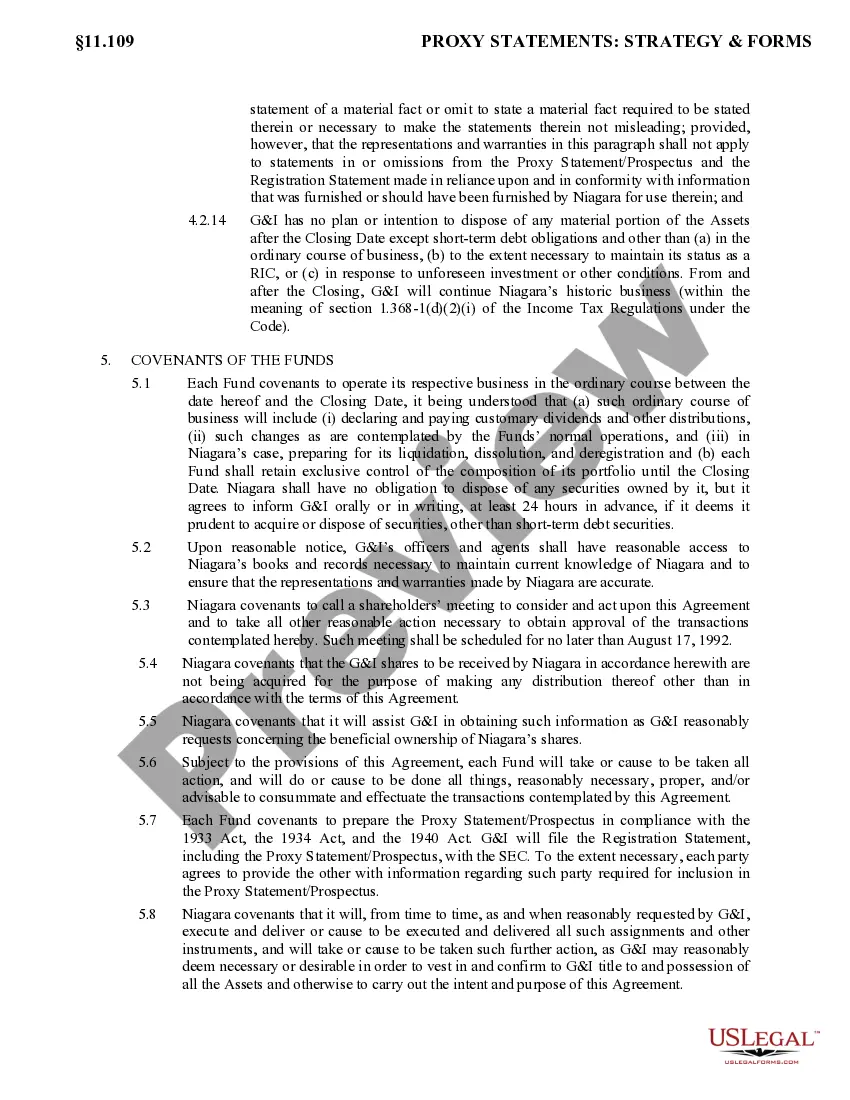
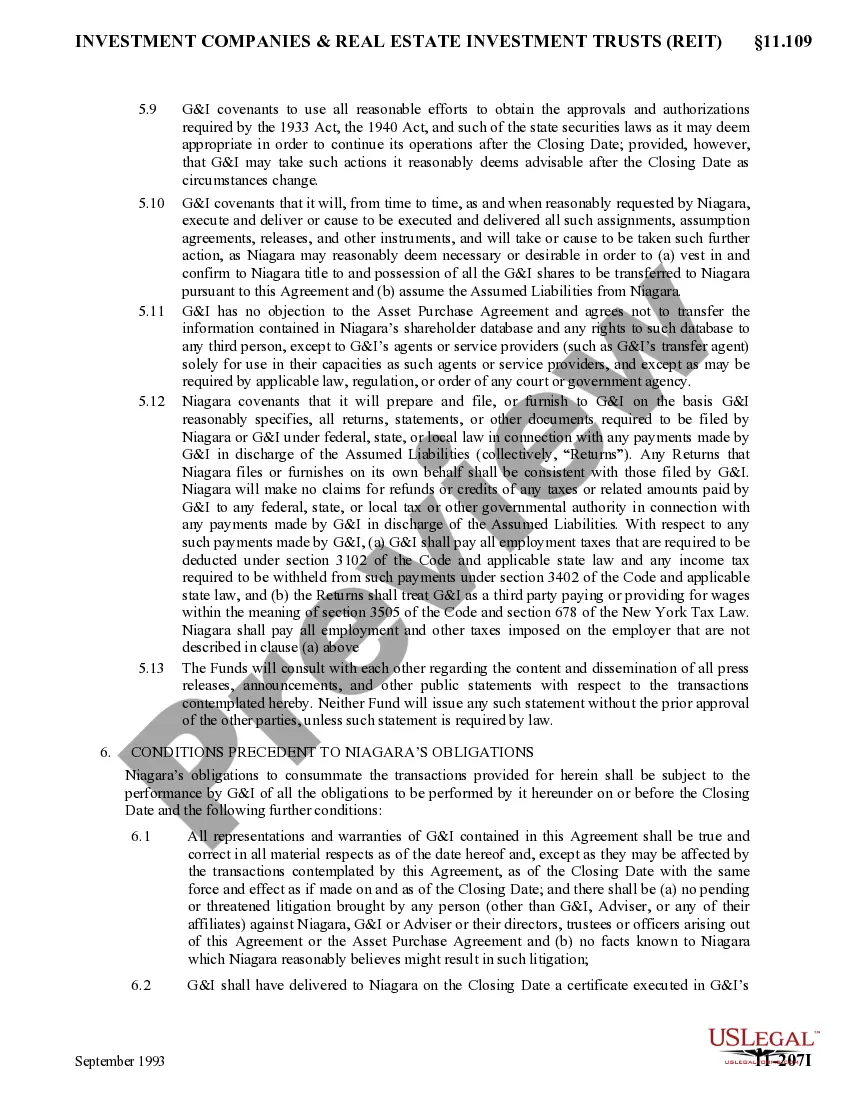
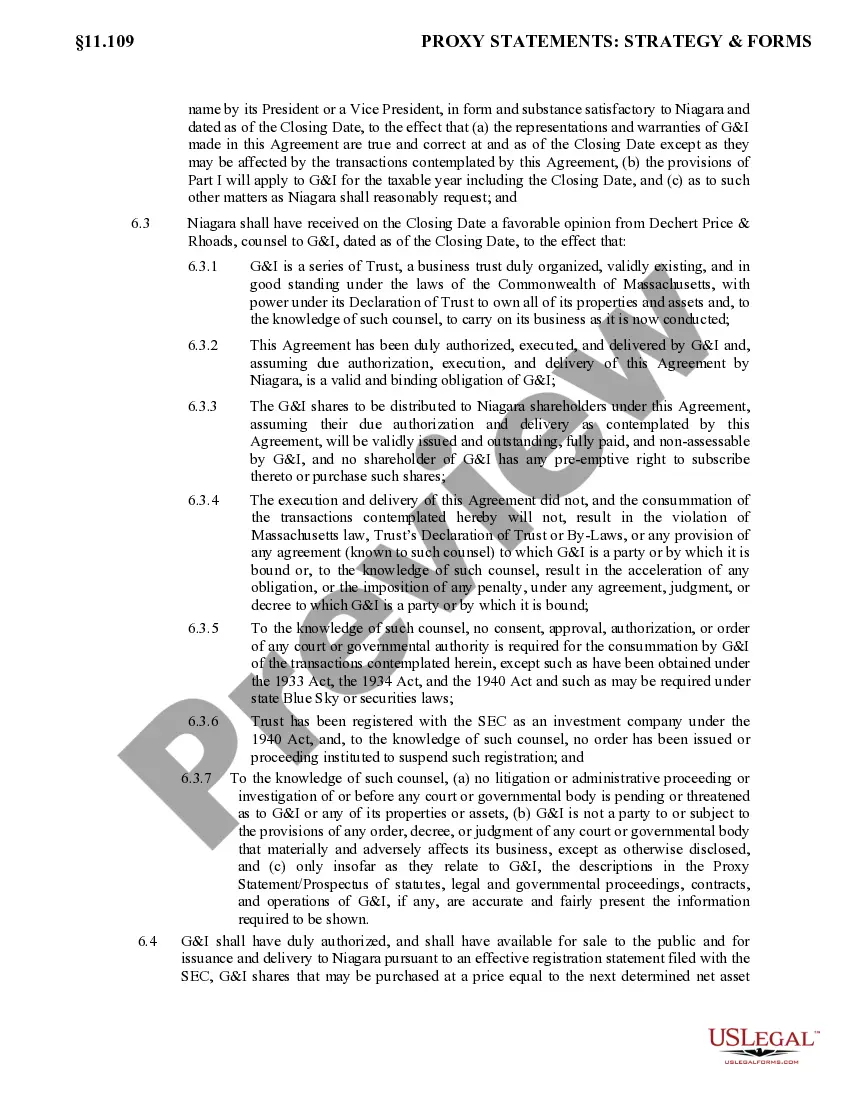
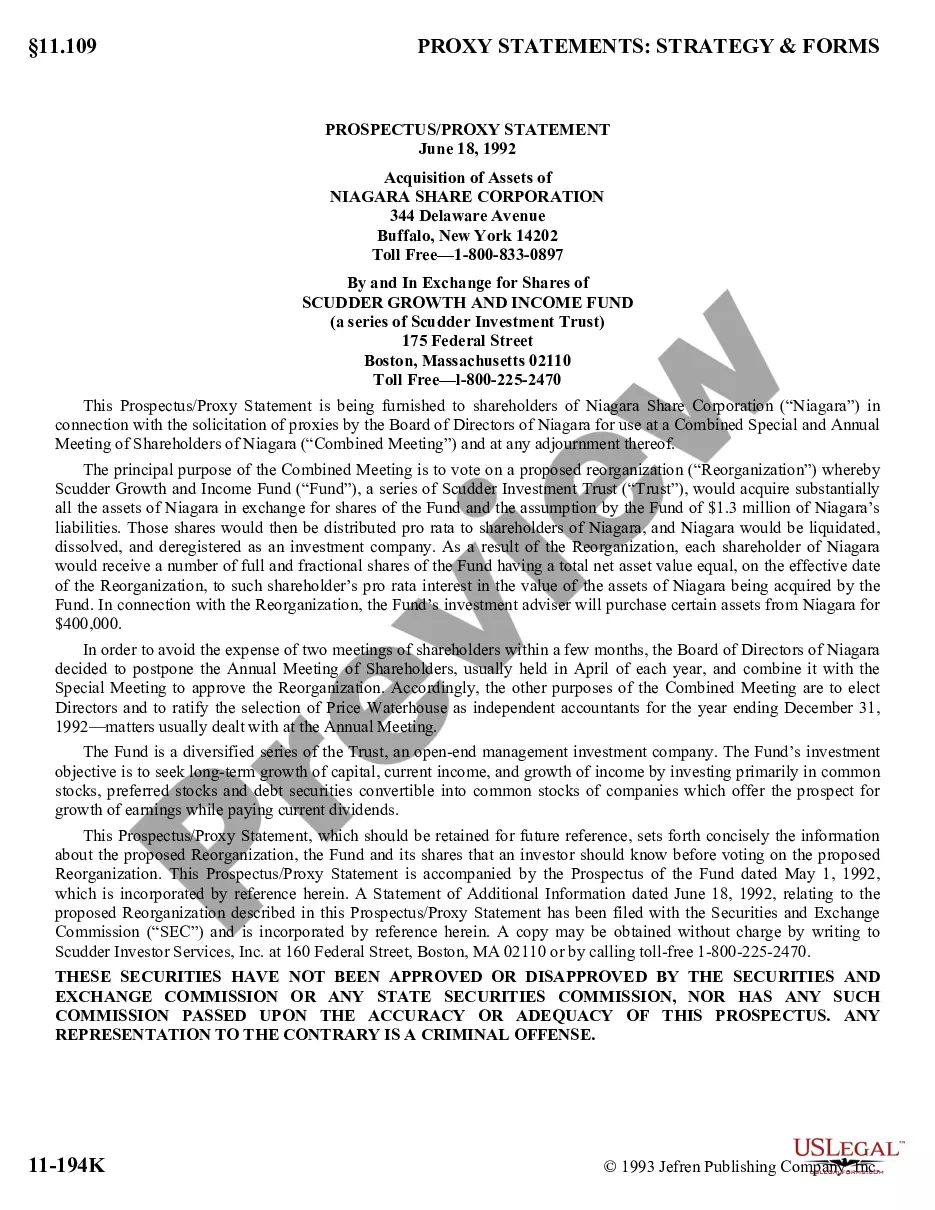
This form is an Agreement and Plan of Reorganization and Liquidation, specifically designed for corporations like Niagara Share Corp. and Scudder Investment Trust. It facilitates the transfer of corporate assets to an unrelated entity in exchange for its shares and the assumption of certain liabilities. This form is essential for managing the liquidation process effectively, ensuring legal compliance, and protecting shareholder interests during corporate restructuring and asset transfer.
Main sections of this form
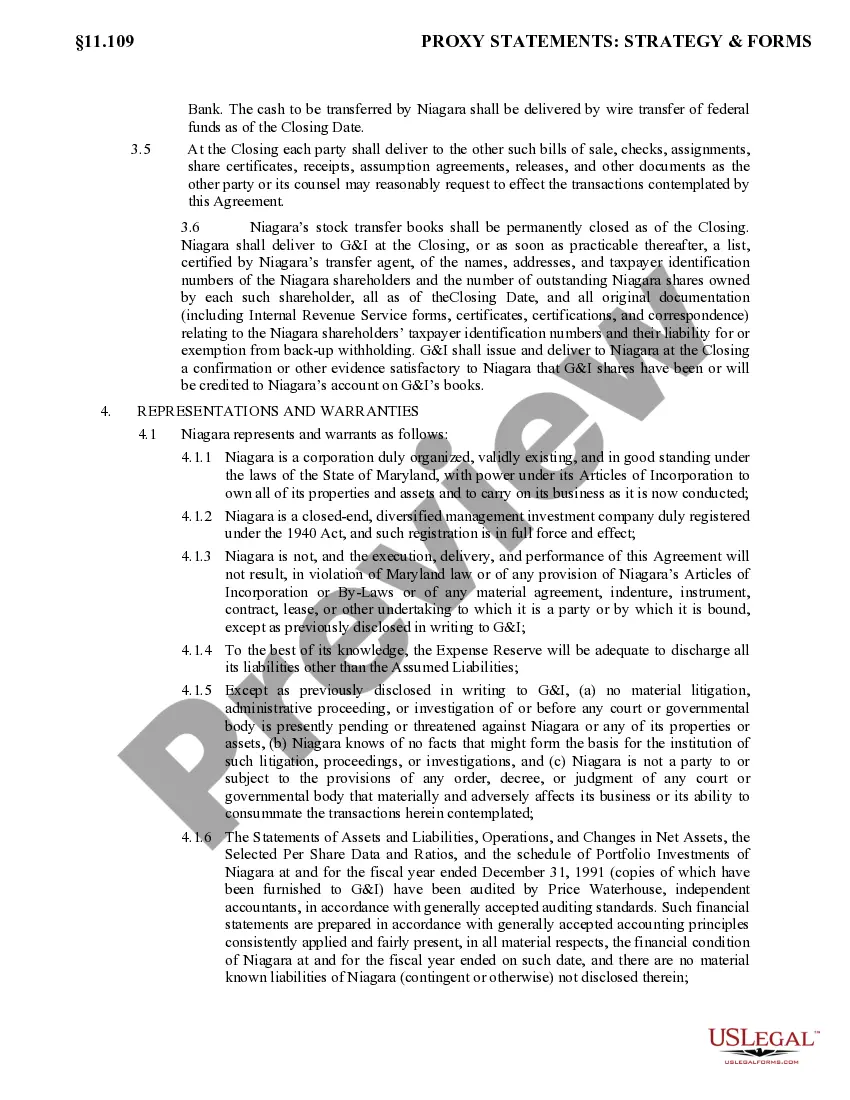
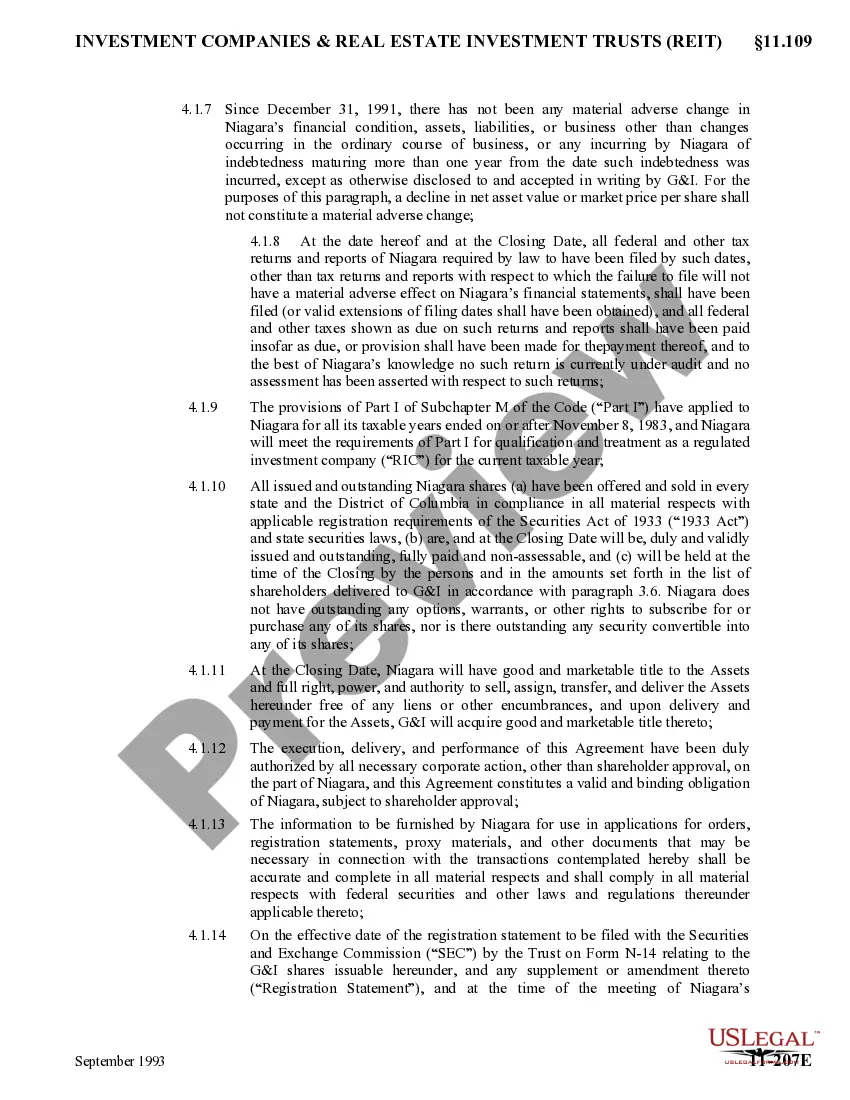
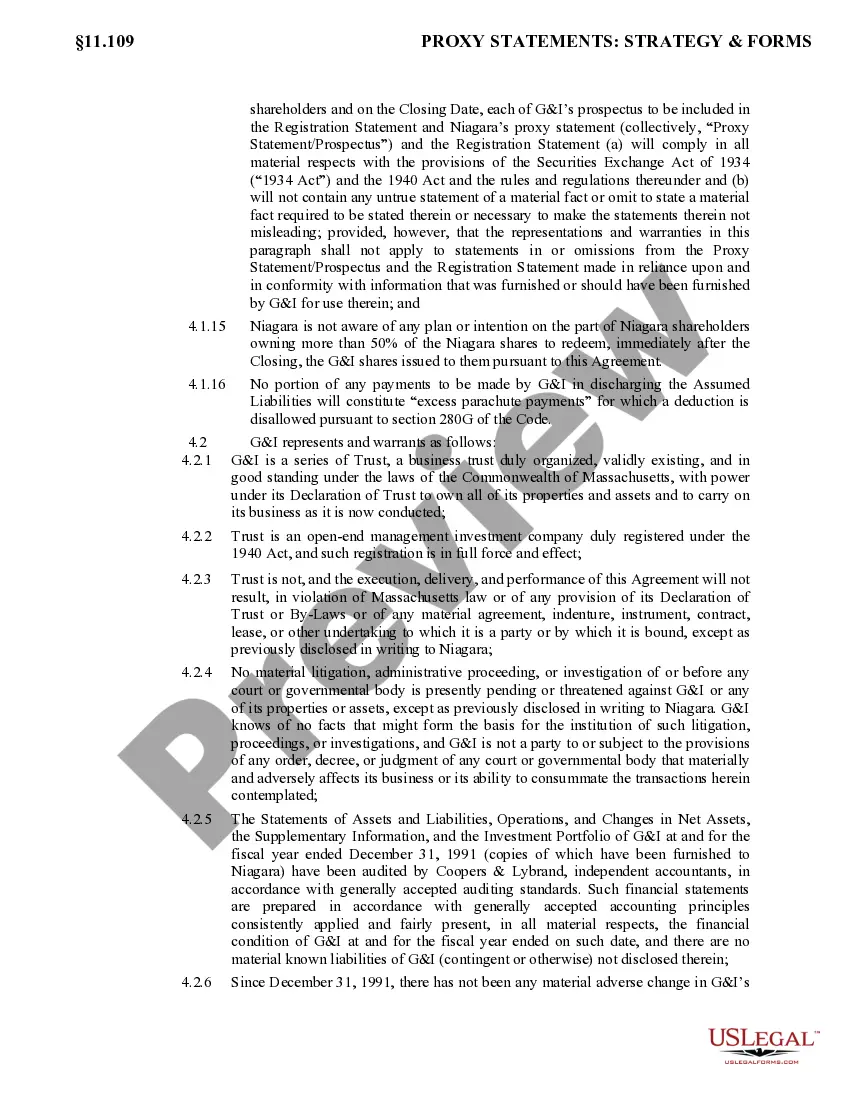
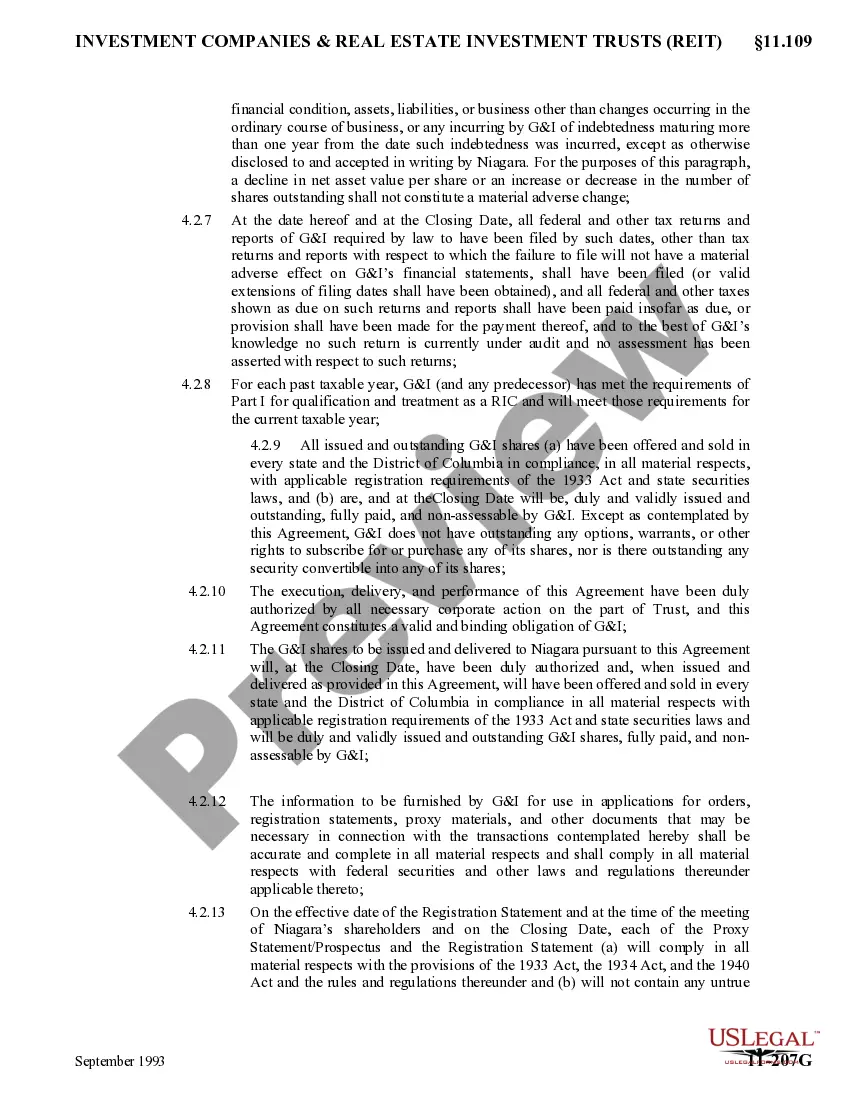
- Details of the assets being transferred between the parties.
- Assumption of specific liabilities by the acquiring party.
- Provisions regarding the distribution of shares to shareholders during liquidation.
- Conditions precedent to the obligations of both parties, ensuring compliance with relevant laws.
- Representations and warranties from both parties regarding the execution and financial standing of the entities involved.

When to use this document
This Agreement should be used during the corporate reorganization process, particularly when a corporation intends to liquidate its assets and distribute shares to its shareholders. Typical scenarios include mergers, acquisitions, or corporate restructures involving a transfer of assets and responsibilities to ensure smooth transitions and fulfill legal obligations.
Who needs this form
Eligibility:
- Corporations undergoing reorganization or liquidation.
- Legal representatives managing corporate compliance matters.
- Shareholders and stakeholders interested in understanding their rights during the liquidation process.
Steps to complete this form
Steps to complete this form:
- Identify the parties involved in the agreement, including full legal names and addresses.
- Specify the assets being transferred, including detailed descriptions and values.
- Outline the liabilities that the acquiring party will assume during the transaction.
- Include provisions for the distribution of shares to the shareholders upon completion of the transfer.
- Obtain necessary approvals, including those from shareholders or regulatory bodies as required by law.
Does this form need to be notarized?
This form does not typically require notarization unless specified by local law. However, it is advisable to check state-specific regulations to ensure valid execution.
Get your form ready online
Our built-in tools help you complete, sign, share, and store your documents in one place.
Make edits, fill in missing information, and update formatting in US Legal Forms—just like you would in MS Word.
Download a copy, print it, send it by email, or mail it via USPS—whatever works best for your next step.
Sign and collect signatures with our SignNow integration. Send to multiple recipients, set reminders, and more. Go Premium to unlock E-Sign.
If this form requires notarization, complete it online through a secure video call—no need to meet a notary in person or wait for an appointment.
We protect your documents and personal data by following strict security and privacy standards.

Make edits, fill in missing information, and update formatting in US Legal Forms—just like you would in MS Word.

Download a copy, print it, send it by email, or mail it via USPS—whatever works best for your next step.

Sign and collect signatures with our SignNow integration. Send to multiple recipients, set reminders, and more. Go Premium to unlock E-Sign.

If this form requires notarization, complete it online through a secure video call—no need to meet a notary in person or wait for an appointment.

We protect your documents and personal data by following strict security and privacy standards.
Common mistakes
- Failing to clearly outline the assets being transferred, which can lead to disputes.
- Not including all required parties in the agreement.
- Omitting specific details regarding liability assumptions, which can cause legal complications.
- Neglecting to obtain necessary shareholder approvals prior to proceeding with the transaction.
Advantages of online completion
- Convenient online access to legal forms drafted by experienced attorneys.
- Editability allows users to customize the form to fit their specific needs.
- Reliability of using attorney-reviewed templates ensures compliance with legal standards.
Summary of main points
- The Agreement facilitates asset transfer and corporate liquidation while ensuring legal compliance.
- Designed for use by corporations undergoing reorganization.
- Consult local laws for state-specific requirements and possible notarization needs.
Looking for another form?
Form popularity
FAQ
Liquidation is the process by which an entity converts its assets to cash or other assets and settles its obligations with creditors in anticipation of ceasing all operating activities.
Liquidate means to turn non-liquid assets, like stocks, bonds, real estate, etc., into cash. The term is most commonly used when a business is going bankrupt and selling all its assets or when an investor or trader sells off a specific position (or less commonly, their entire portfolio).
Verb (used with object), liq·uiA·datA·ed, liqA·uiA·datA·ing. to settle or pay (a debt): to liquidate a claim. to reduce (accounts) to order; determine the amount of (indebtedness or damages). to convert (inventory, securities, or other assets) into cash.
Liquidation often refers to the process whereby a business folds up and I sell its free or unpledged assets out. The proceeds of this sale are afterwards used to pay the business' debts.From another point of view, liquidation could mean the transfer of valuables or potential assets into monetary form. .
Plan of Liquidation means a plan (including by operation of law) that provides for, contemplates or the effectuation of which is preceded or accompanied by (whether or not substantially contemporaneously) (i) the sale, lease, conveyance or other disposition of all or substantially all of the assets of the referent
When a company goes into liquidation its assets are sold to repay creditors and the business closes down.The overall aim of an insolvent liquidation process is to provide a dividend for all classes of creditor, but it is often the case that unsecured creditors receive little, if any, return.
In that process, the corporation notifies creditors of the impending cessation of business and does all acts appropriate to liquidate its business, such as collecting and selling assets, discharging liabilities, and distributing any remaining assets to shareholders.6 The corporation may, but is rarely required to,
Talk to your lawyer & accountant. Scrutinize your assets: inventory, assess, & prepare each item for sale. Secure your merchandise. Establish the liquidation value of your assets. Make certain that a sale is worthwhile. Choose the best type of sale for your merchandise. Select the best time for your sale.