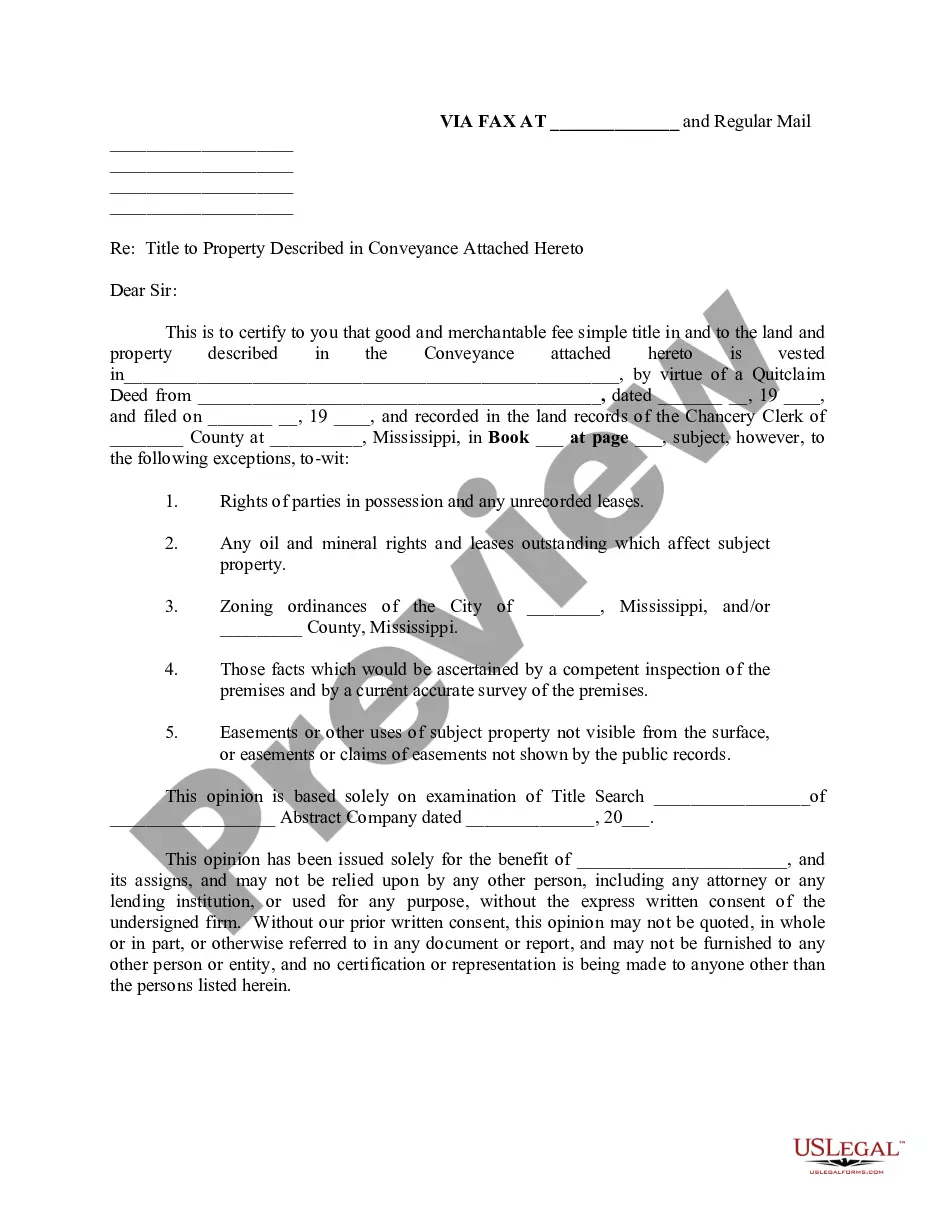
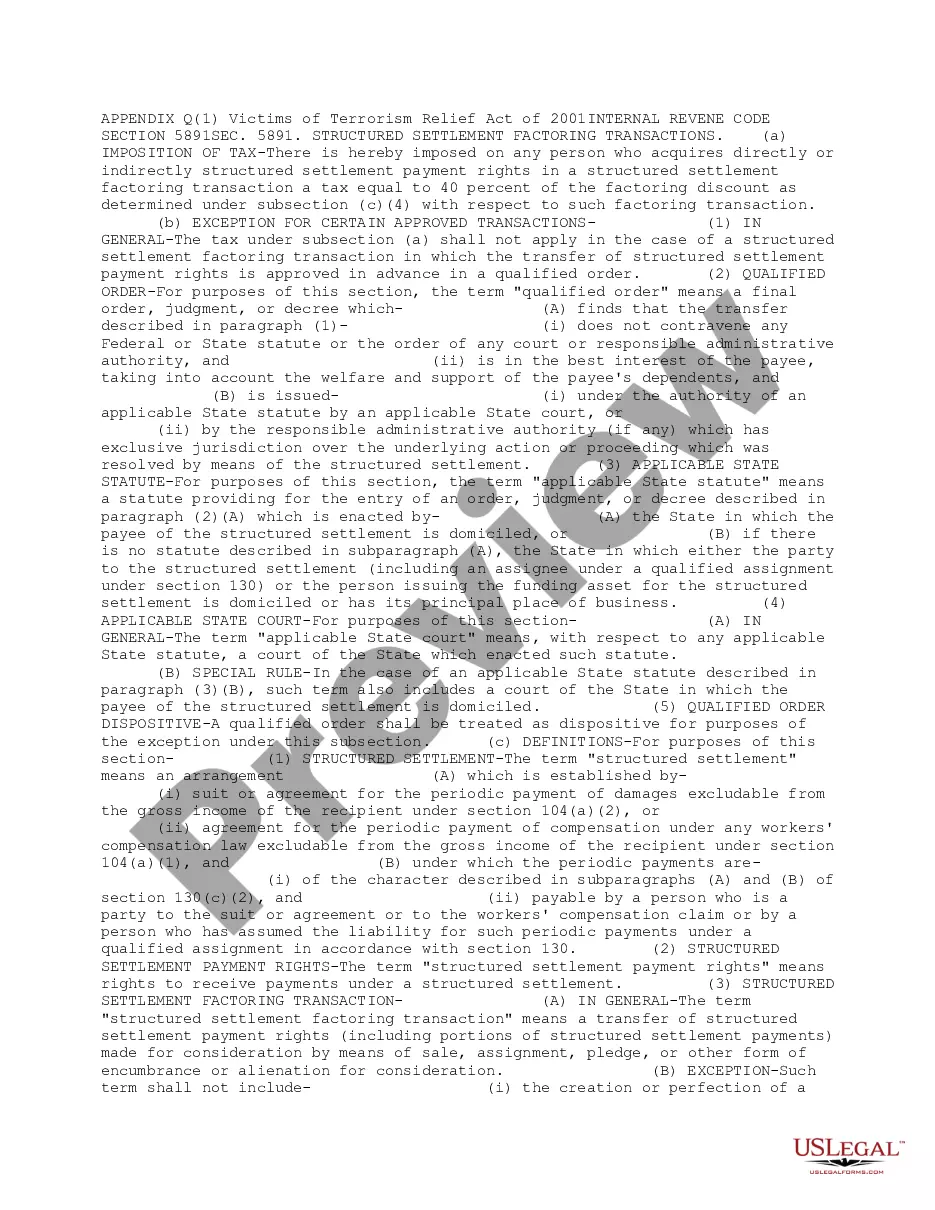
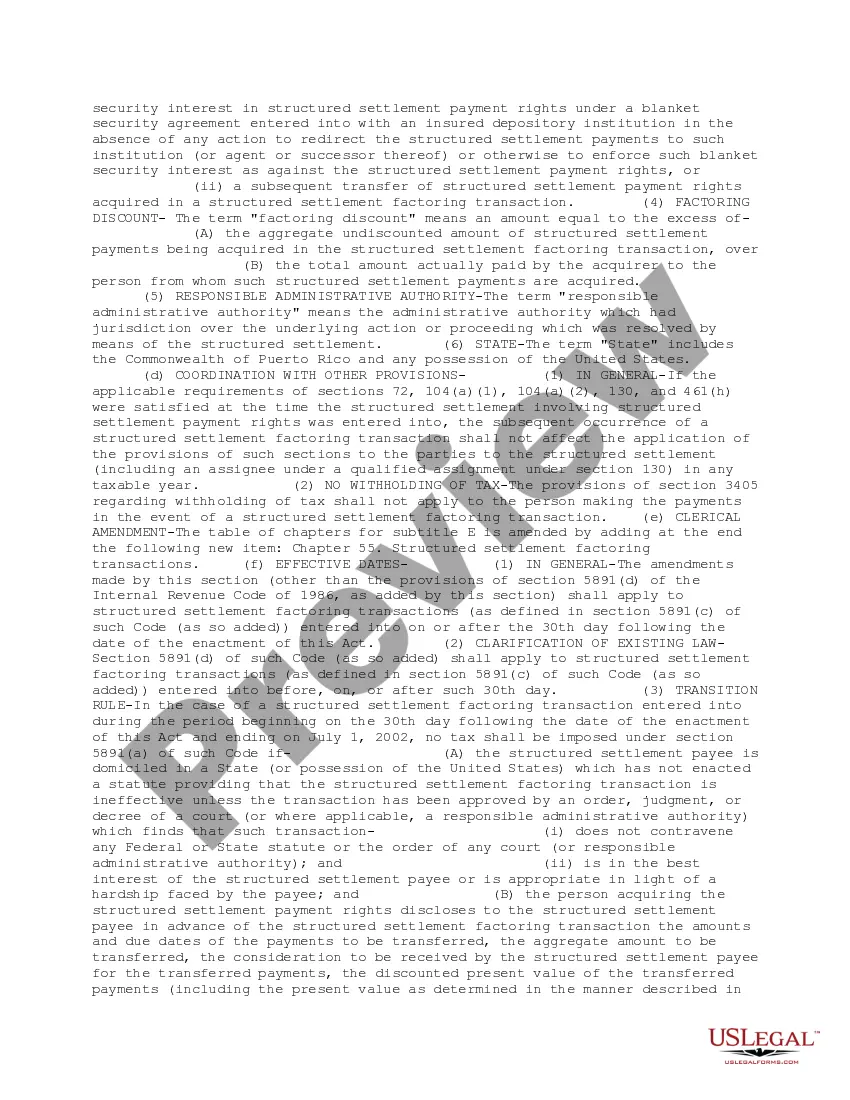
Victims of Terrorism Relief Act of 2001
Understanding this form
The Victims of Terrorism Relief Act of 2001 is a legal document that outlines guidelines and provisions for structured settlement factoring transactions. This form is essential for individuals affected by terrorism who wish to benefit from financial relief measures. Unlike standard settlement forms, it specifically addresses unique circumstances arising from terrorist acts, ensuring that victims can access their funds in a structured manner.
Key parts of this document
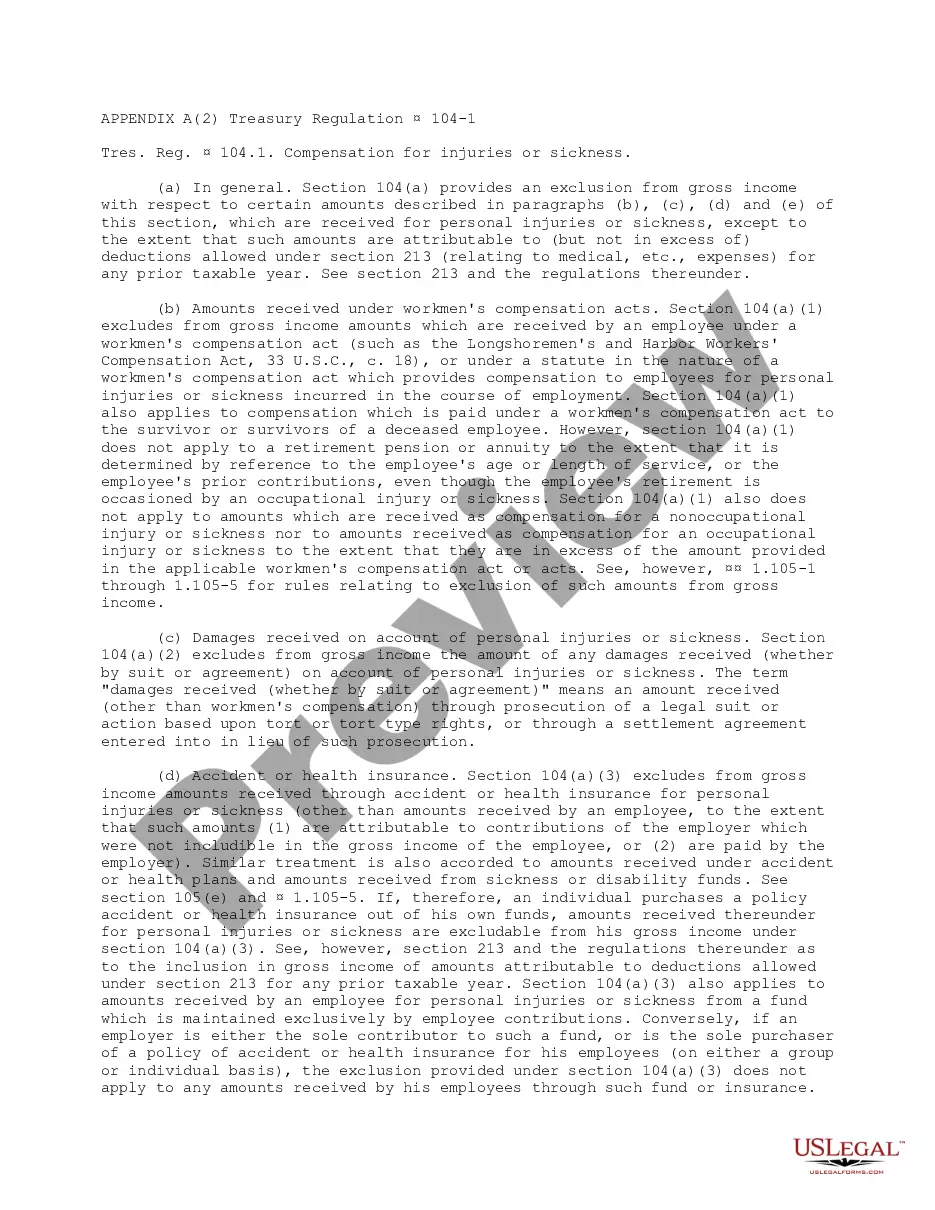
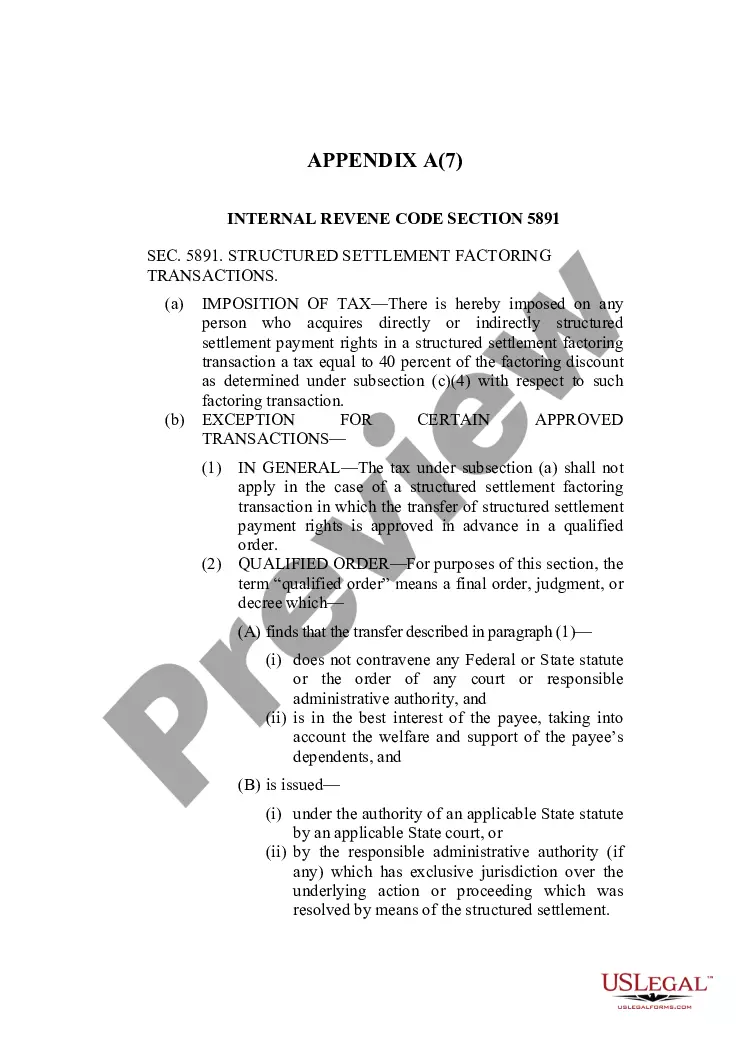
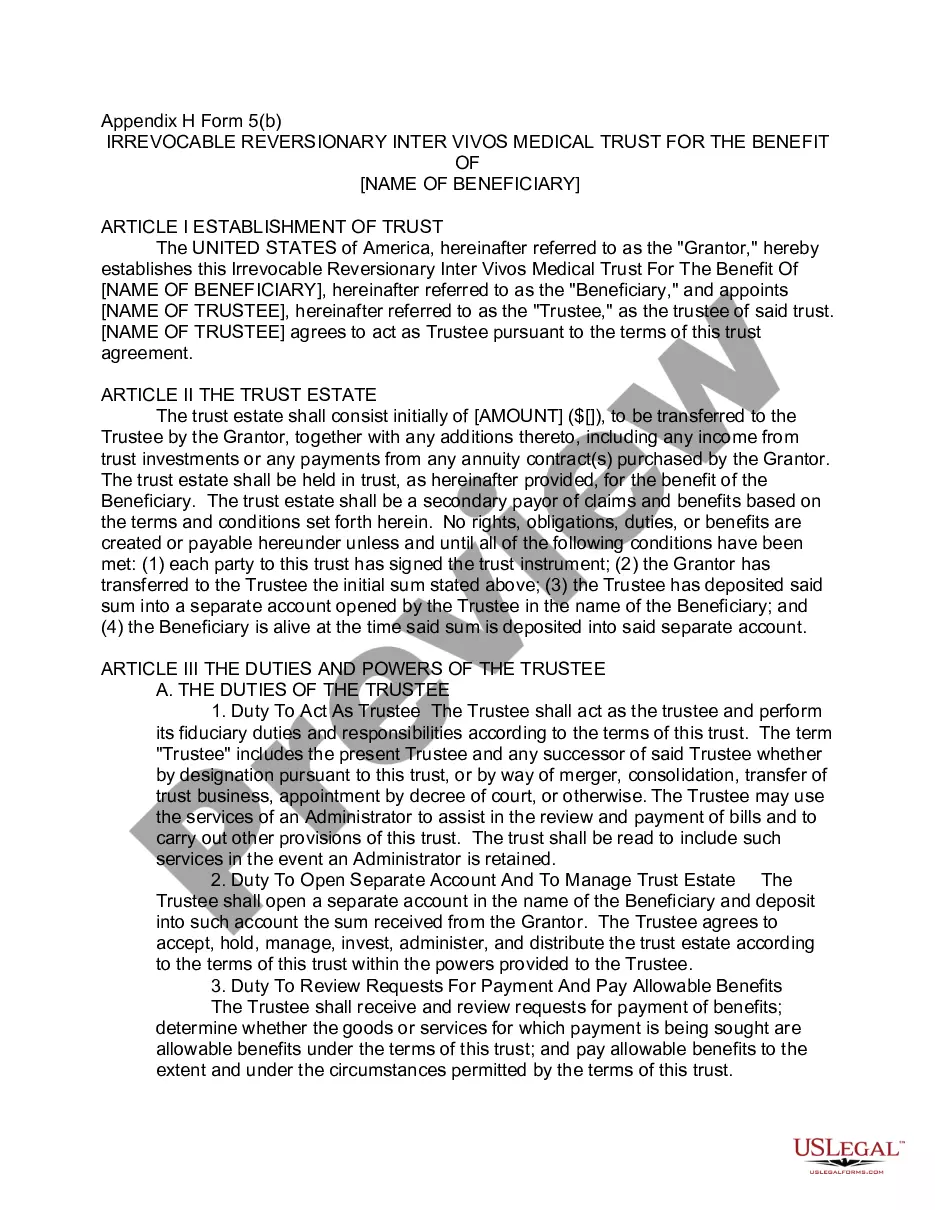
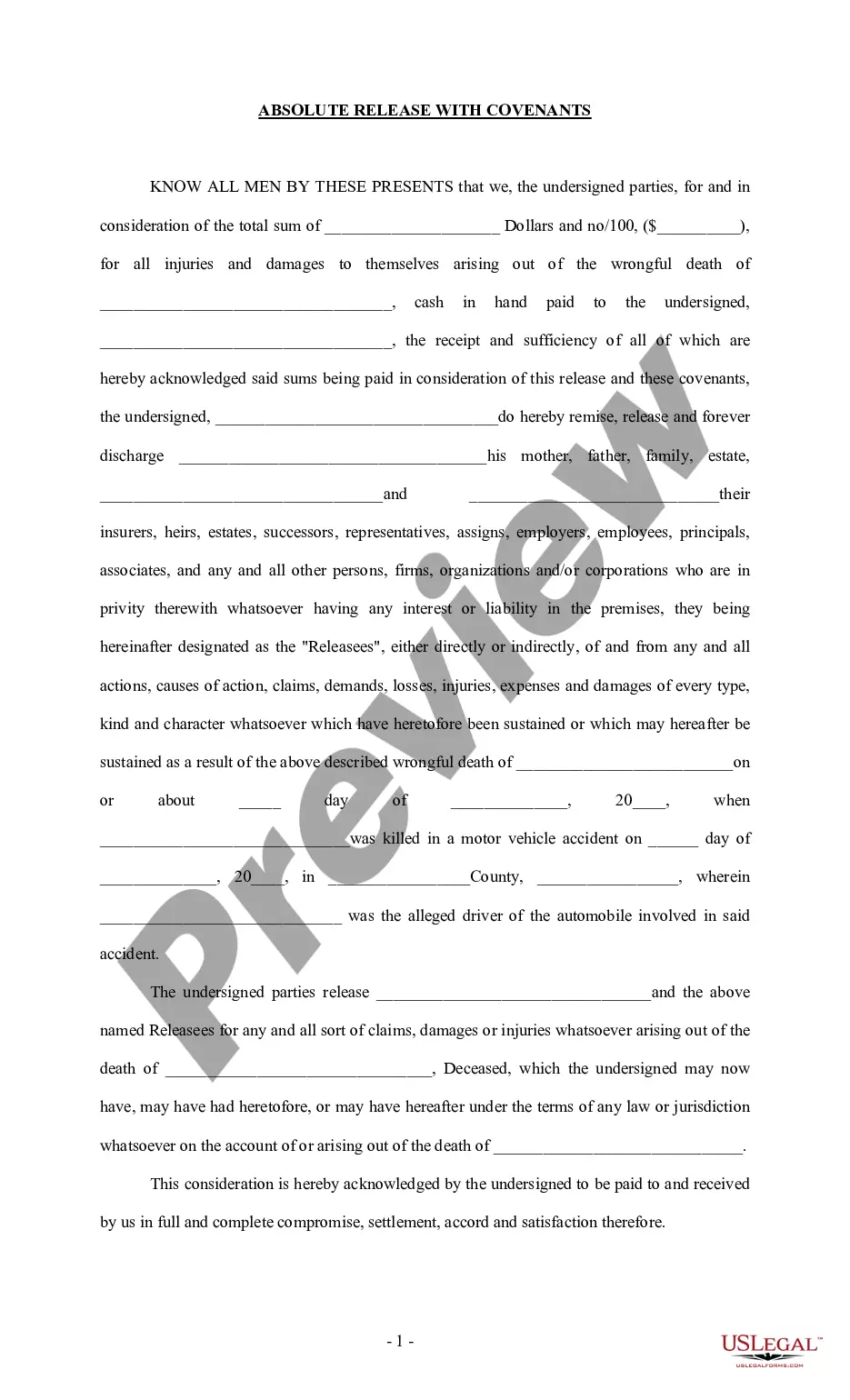
- Full text of the Victims of Terrorism Relief Act provisions.
- Guidelines on structured settlement factoring transactions.
- Clauses detailing eligibility for relief under the Act.
- Sections outlining the responsibilities of involved parties.
- Provisions for ensuring compliance with federal regulations.


When to use this document
This form should be used when individuals who have been victims of terrorism seek to obtain financial relief through structured settlements. It is relevant in scenarios where victims wish to convert their future settlement payments into a lump sum, ensuring they have immediate access to funds for recovery and support.
Intended users of this form
- Victims of terrorism seeking financial relief.
- Family members of deceased victims of terrorist acts.
- Legal representatives handling settlement payments for victims.
Instructions for completing this form
- Read the full text of the Victims of Terrorism Relief Act to understand your rights.
- Identify the parties involved in the structured settlement transaction.
- Complete the necessary sections by entering the required information accurately.
- Review the form for completeness and compliance with any specific state regulations.
- Sign and date the form where indicated.
Does this form need to be notarized?
This form does not typically require notarization unless specified by local law. However, it is advisable to confirm the legal requirements based on your jurisdiction when carrying out structured settlement factoring transactions.
Get your form ready online
Our built-in tools help you complete, sign, share, and store your documents in one place.
Make edits, fill in missing information, and update formatting in US Legal Forms—just like you would in MS Word.
Download a copy, print it, send it by email, or mail it via USPS—whatever works best for your next step.
Sign and collect signatures with our SignNow integration. Send to multiple recipients, set reminders, and more. Go Premium to unlock E-Sign.
If this form requires notarization, complete it online through a secure video call—no need to meet a notary in person or wait for an appointment.
We protect your documents and personal data by following strict security and privacy standards.

Make edits, fill in missing information, and update formatting in US Legal Forms—just like you would in MS Word.

Download a copy, print it, send it by email, or mail it via USPS—whatever works best for your next step.

Sign and collect signatures with our SignNow integration. Send to multiple recipients, set reminders, and more. Go Premium to unlock E-Sign.

If this form requires notarization, complete it online through a secure video call—no need to meet a notary in person or wait for an appointment.

We protect your documents and personal data by following strict security and privacy standards.
Common mistakes to avoid
- Failing to accurately identify all parties involved in the transaction.
- Omitting required information or leaving fields blank.
- Not checking for state-specific regulations that may apply.
Why complete this form online
- Convenience of accessing the form at any time from anywhere.
- Editable format, allowing users to fill out the form at their own pace.
- Reliability of using documents drafted by licensed attorneys.
Legal use & context
- This form complies with federal laws governing financial relief for victims of terrorism.
- Adherence to federal regulations ensures the form's enforceability.
- Users should be aware of their rights and options available under the Victims of Terrorism Relief Act.
What to keep in mind
Key points to remember:
- The Victims of Terrorism Relief Act of 2001 focuses on structured settlement transactions for terrorism victims.
- This form provides essential legal protections and guidelines.
- Ensure all parties are correctly identified, and necessary documents are attached.
- Verify compliance with any state-specific regulations.
Looking for another form?
Form popularity
FAQ
Is a 14 a good ACT score? A score of 14 is definitely low. It places you in the bottom 13th percentile nationally out of the 2 million test takers of the ACT entrance exam. The score indicates you've done a very poor job answering the questions on the English, Math, Reading and Science sections of the test.
A score of 24 means you've scored better than about 74% of students. A 28 means you've scored better than 88% of students, and a 30 means you've scored better than 93% of them! Anything 35 or above is in the 99th percentilea truly phenomenal score.
Students who earned an ACT Composite score of 12 in 7th grade scored at the national mean (an ACT Composite score of 211), on average, in grade 11 or 12. For 7th grade scores of 20 or higher, median scores for grades 11/12 are 30 or higher.
Is a 17 a good ACT score? A score of 17 is pretty low. It places you in the bottom 31st percentile nationally out of the 2 million test takers of the ACT entrance exam. The score indicates you've done a well below average job answering the questions on the English, Math, Reading and Science sections of the test.
Nationally, What's a Bad ACT Score? If you look at the ACT percentiles, any composite score below 20 (the 50th percentile) is below average. (For more on how the ACT is scored and how the composite is calculated, see our guide.) In other words, to be above average nationally, you need at least a 21 ACT composite score.
Both ACT and SAT scores are used for college admissions decisions and awarding merit-based scholarships. Most colleges do not prefer one test over the other. Neither the SAT or ACT is harder than the other. Different students tend to do better on one test over the other.
With a 12 ACT score, you're already strongly competitive for these schools. You're very likely to get admitted if you apply. If you improve your ACT score, your Safety Schools will get better and better.
Students who earned an ACT Composite score of 12 in 7th grade scored at the national mean (an ACT Composite score of 211), on average, in grade 11 or 12. For 7th grade scores of 20 or higher, median scores for grades 11/12 are 30 or higher.
Composite ACT score which is 20 or below 20 is known to be below average in terms of National average.So, nationally stating, 17 ACT scores may be considered as bad ACT scores. This indicates that you got to score more than 17 as an ACT score if you don't want it to be considered below average.
Even if you don't think you're eligible for scholarships, it doesn't hurt to check2026and double-check. With a GPA of 3.0 and a 24 ACT score (remember, the average is 21), you could still get up to $7,000 a year at Oklahoma State University. Get that score even higherabove 30and you can get up to $12,500 a year.