Checklist of Warning Signs of Sexual Harassment - Workplace
Overview of this form
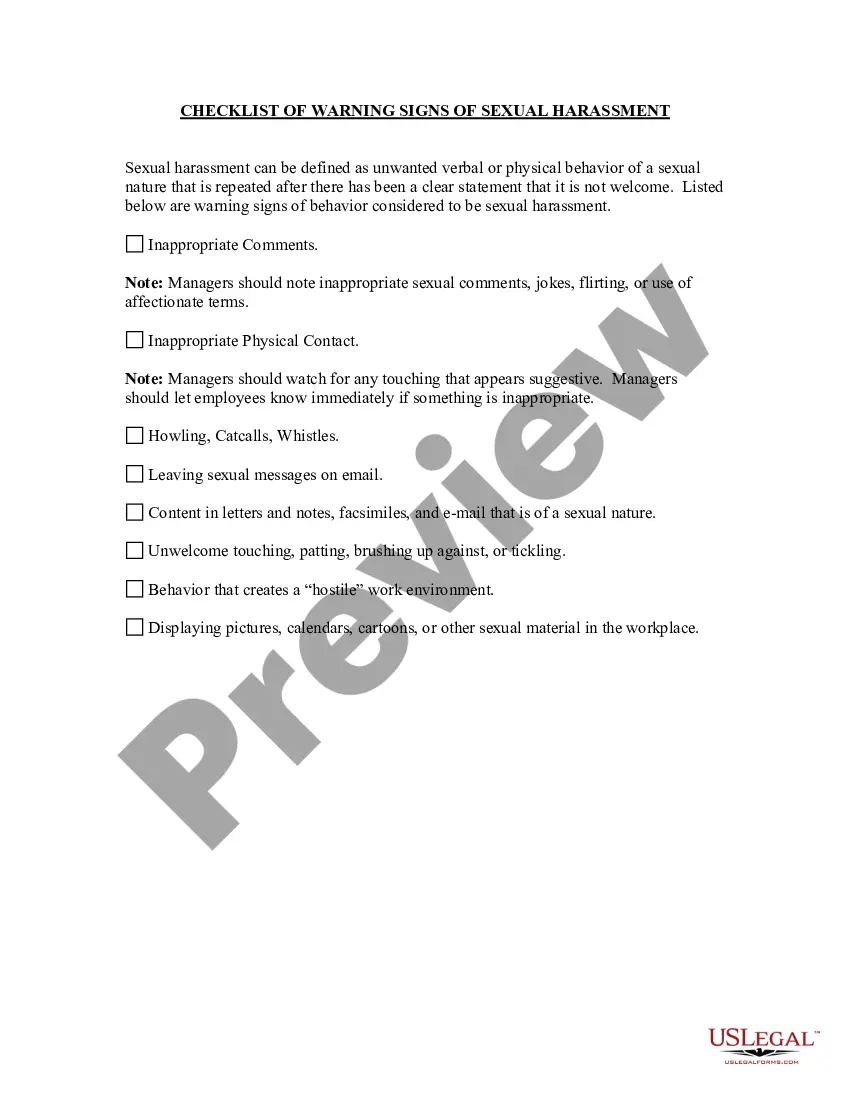
The Checklist of Warning Signs of Sexual Harassment - Workplace is a vital tool for employers to recognize and address potential sexual harassment in the workplace. This form differs from other employment templates by providing specific warning signs that indicate inappropriate behavior, ensuring that managers can take timely action to create a safer workplace environment. It serves as a proactive measure for companies of all sizes to foster respect and safety among employees.
Form components explained
- Inappropriate comments, including sexual jokes or affectionate terms.
- Signs of inappropriate physical contact, such as suggestive touching.
- Instances of howling, catcalling, or whistling at employees.
- Documentation of sexual messages sent through email or other communications.
- Unwelcome touching or behaviors that contribute to a hostile work environment.
- Display of sexual materials in the workplace.
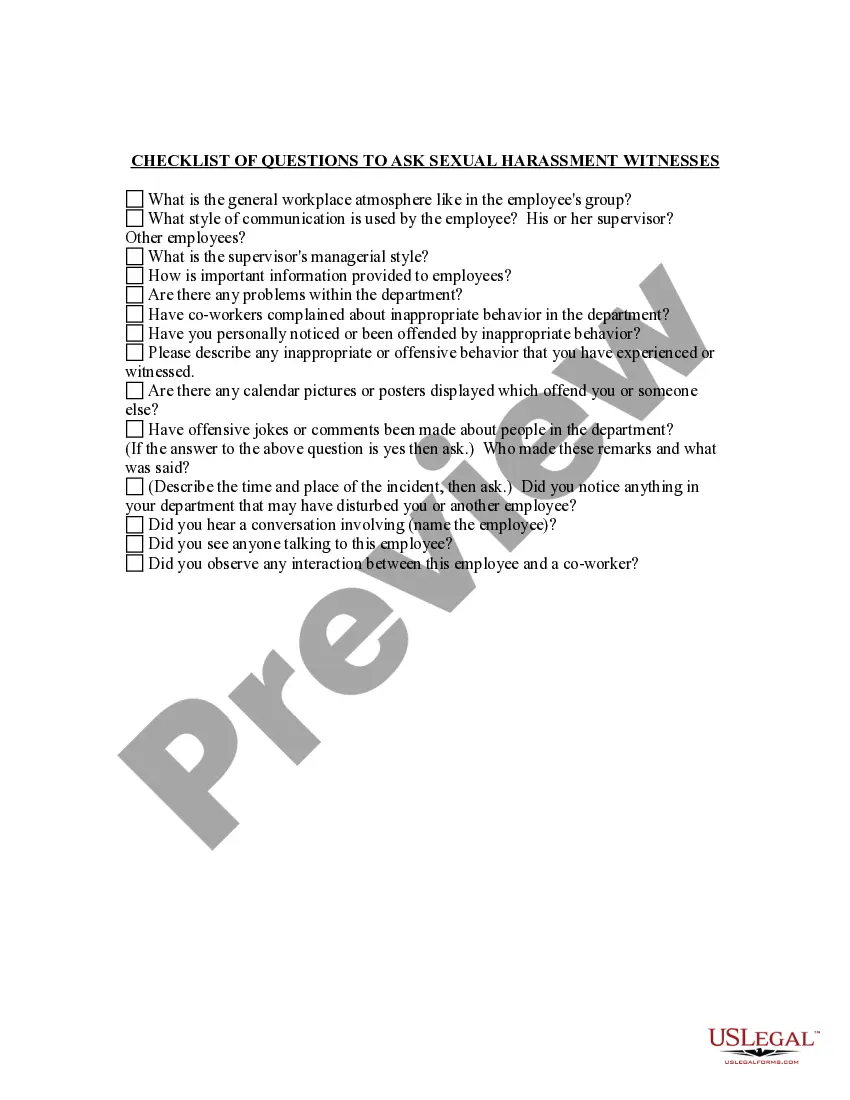
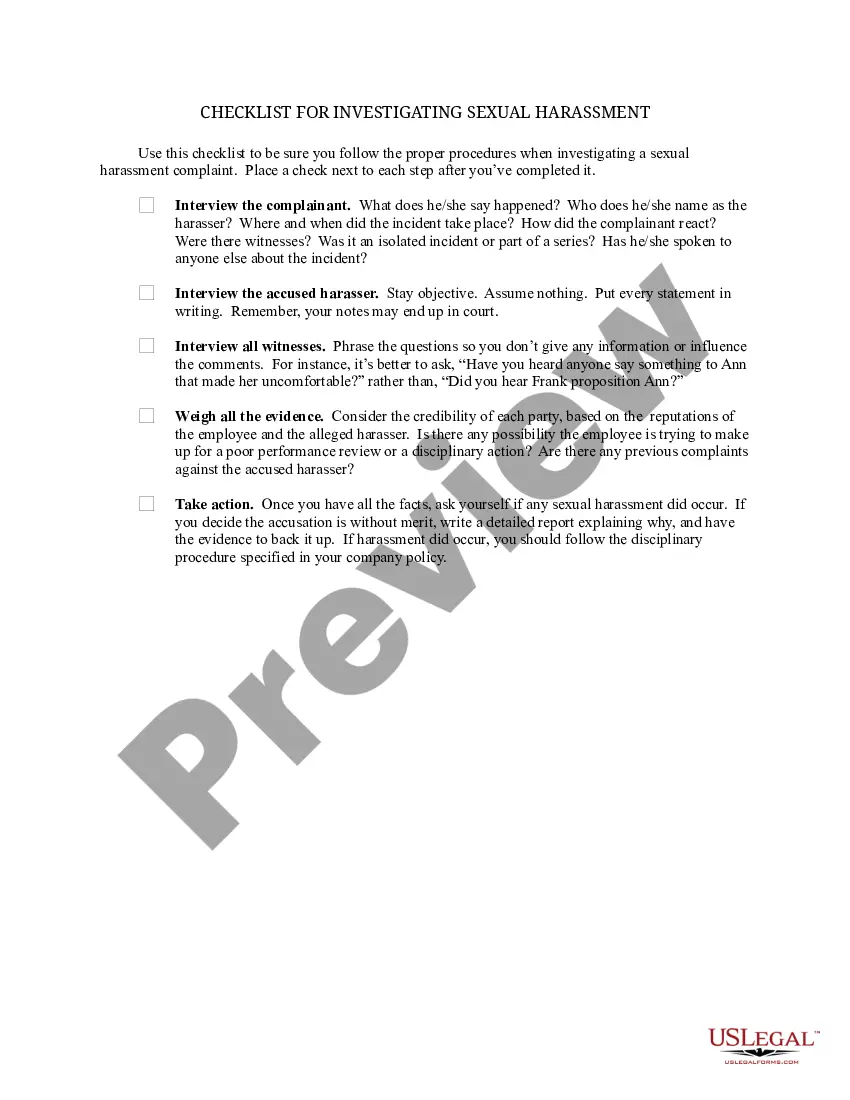
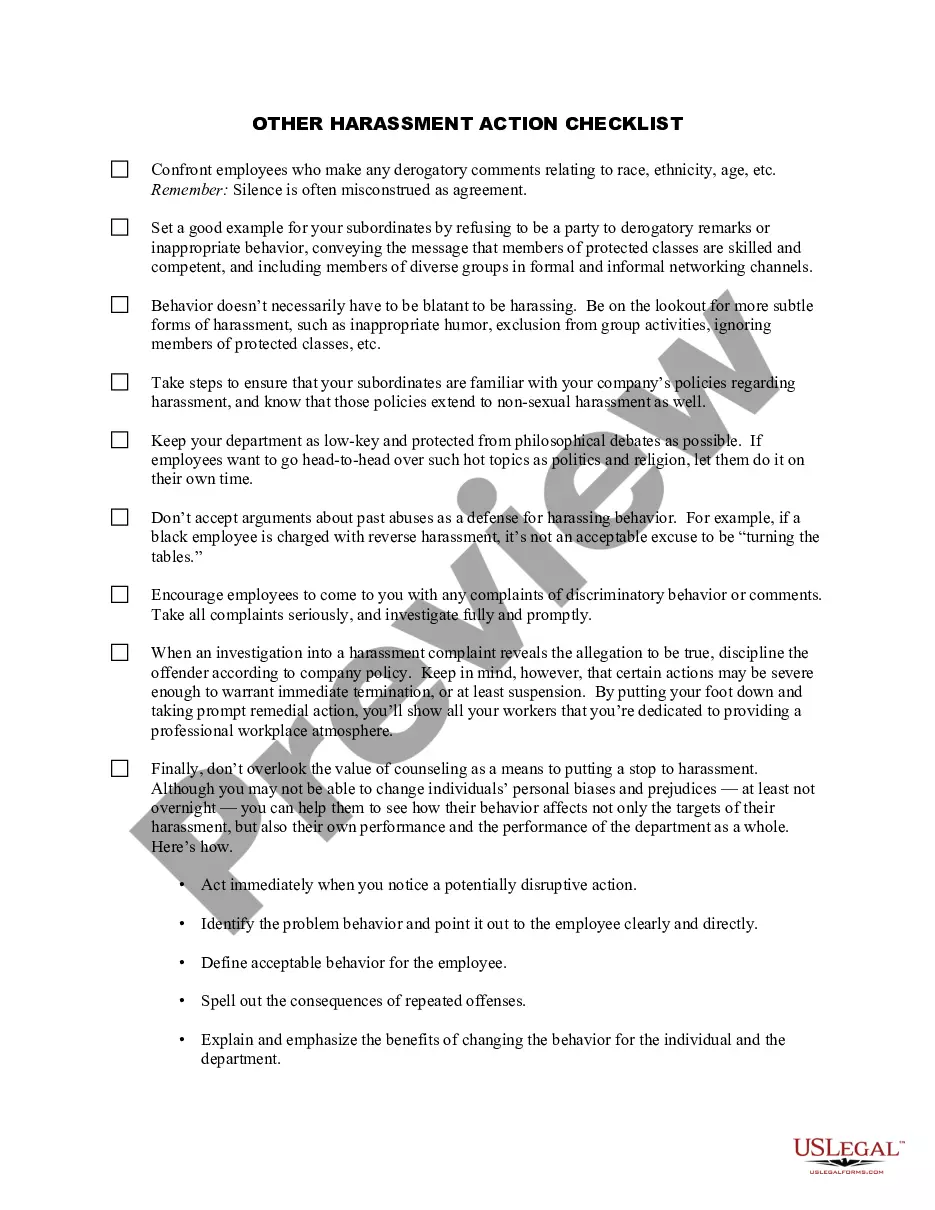
When to use this document
This form is essential when employers want to assess their workplace for behaviors that may constitute sexual harassment. It should be utilized during employee training sessions, as part of workplace inspections, or when responding to employee complaints. Managers can use this checklist to create a more respectful and inclusive environment by identifying and addressing problematic behaviors early.
Who can use this document
- Employers and managers responsible for human resources and workplace culture.
- Human resources personnel implementing policies against sexual harassment.
- Team leaders and supervisors overseeing employee interactions.
- Businesses of all sizes seeking to maintain a respectful workplace.
How to complete this form
- Review the list of warning signs and familiarize yourself with each item.
- Note instances and behaviors that align with the warning signs detailed.
- Communicate the findings with the relevant parties, such as HR or management.
- Keep a record of any reported behaviors for future reference and action.
- Revisit the checklist regularly to enhance workplace training and policies.
Notarization guidance
Notarization is generally not required for this form. However, certain states or situations might demand it. You can complete notarization online through US Legal Forms, powered by Notarize, using a verified video call available anytime.
Get your form ready online
Our built-in tools help you complete, sign, share, and store your documents in one place.
Make edits, fill in missing information, and update formatting in US Legal Forms—just like you would in MS Word.
Download a copy, print it, send it by email, or mail it via USPS—whatever works best for your next step.
Sign and collect signatures with our SignNow integration. Send to multiple recipients, set reminders, and more. Go Premium to unlock E-Sign.
If this form requires notarization, complete it online through a secure video call—no need to meet a notary in person or wait for an appointment.
We protect your documents and personal data by following strict security and privacy standards.

Make edits, fill in missing information, and update formatting in US Legal Forms—just like you would in MS Word.

Download a copy, print it, send it by email, or mail it via USPS—whatever works best for your next step.

Sign and collect signatures with our SignNow integration. Send to multiple recipients, set reminders, and more. Go Premium to unlock E-Sign.

If this form requires notarization, complete it online through a secure video call—no need to meet a notary in person or wait for an appointment.

We protect your documents and personal data by following strict security and privacy standards.
Common mistakes to avoid
- Failing to address inappropriate behaviors as soon as they are noticed.
- Overlooking the importance of documenting instances of harassment.
- Neglecting to provide training on recognizing warning signs to all staff.
- Assuming that one isolated incident does not constitute a pattern of harassment.
Why complete this form online
- Convenient access to a comprehensive checklist that can be downloaded instantly.
- Editable format allows customization to fit specific organizational needs.
- Reliable resource crafted by licensed attorneys, ensuring legal compliance.
Legal use & context
- Used as part of sexual harassment prevention training in the workplace.
- Demonstrates due diligence and proactive measures taken by employers to prevent harassment.
- Can support documentation in the event of legal disputes regarding workplace behavior.
What to keep in mind
- This form is a proactive tool for identifying potential signs of sexual harassment.
- Regular use can help foster a safer, more inclusive workplace environment.
- Documentation and communication of inappropriate behaviors are crucial for employer accountability.
Looking for another form?
Form popularity
FAQ
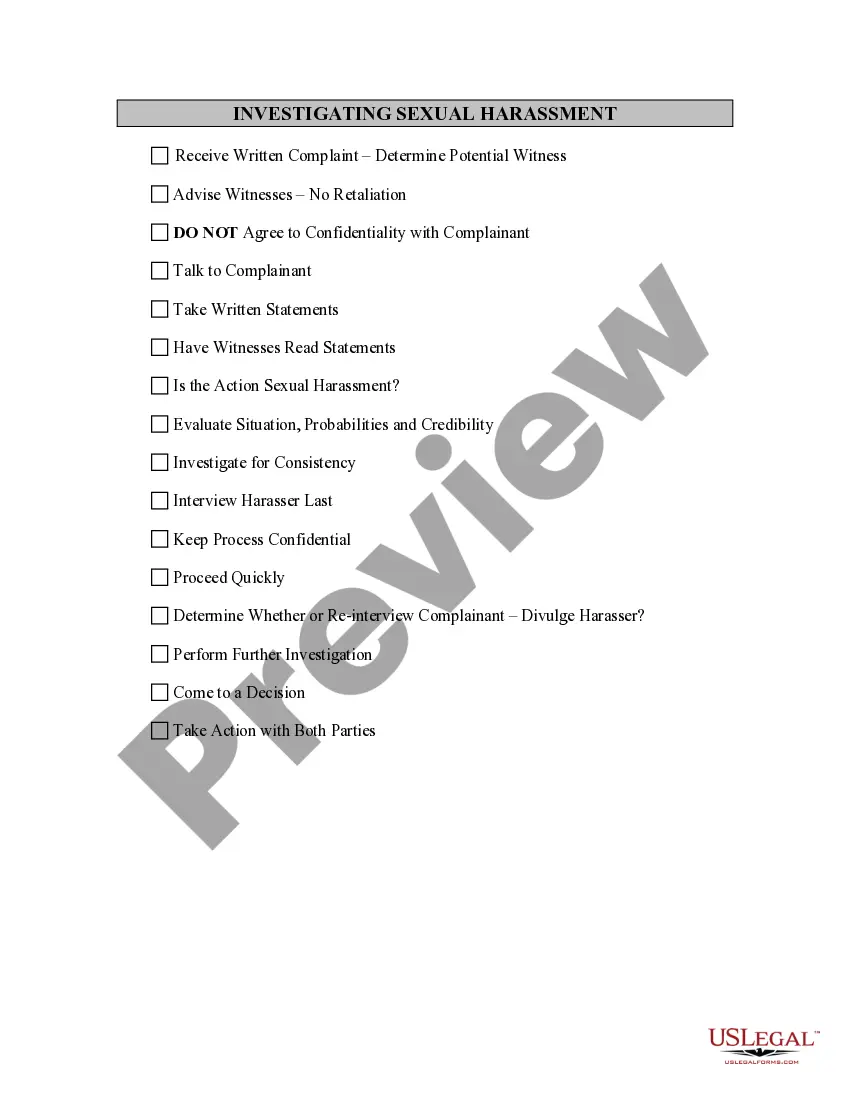
Any employee who believes he or she has been the target of sexual harassment is encouraged to inform the offending person orally or in writing that such conduct is unwelcome and offensive and must stop.
Harassment is unwelcome conduct that is based on race, color, religion, sex (including pregnancy), national origin, age (40 or older), disability or genetic information.
Harassment is offensive, belittling, threatening, or otherwise unwelcome behavior directed at someone based on protected characteristics, including: Age. Race. Color.
Take all complaints seriously. Ensure pre-investigation workplace comfort. Inform both parties of next steps. Start the investigation ASAP. Come to a conclusion. Communicate the results to both parties. Ensure post-investigation workplace comfort. Follow up.
Speak up. In many sexual harassment cases, especially those involving a hostile work environment, your co-workers may not even realize that their conduct is offensive. Complaint procedures. Filing a charge of discrimination. Litigation. Speak to an employment law attorney.
Race, Religion, Sex, and National Origin. Title VII of the Civil Rights Act of 1964 prohibits harassment on the basis of race, religion, sex, and national origin. Age. Disability. Status as a Veteran. Sexual Orientation and Marital Status. Gender Identification. Political Beliefs. Criminal History.
Quid pro quo harassment. Hostile work environment harassment.
You feel uncomfortable. You are experiencing unwanted physical contact. You are being treated differently based on your sex. Saying no has no impact. You were asked for a sexual favor. You feel bullied. You are being subjected to jokes or images of a sexual nature.
Verbal/Written. Physical. Visual.