Flexible Workplace Policy and Procedure
Understanding this form
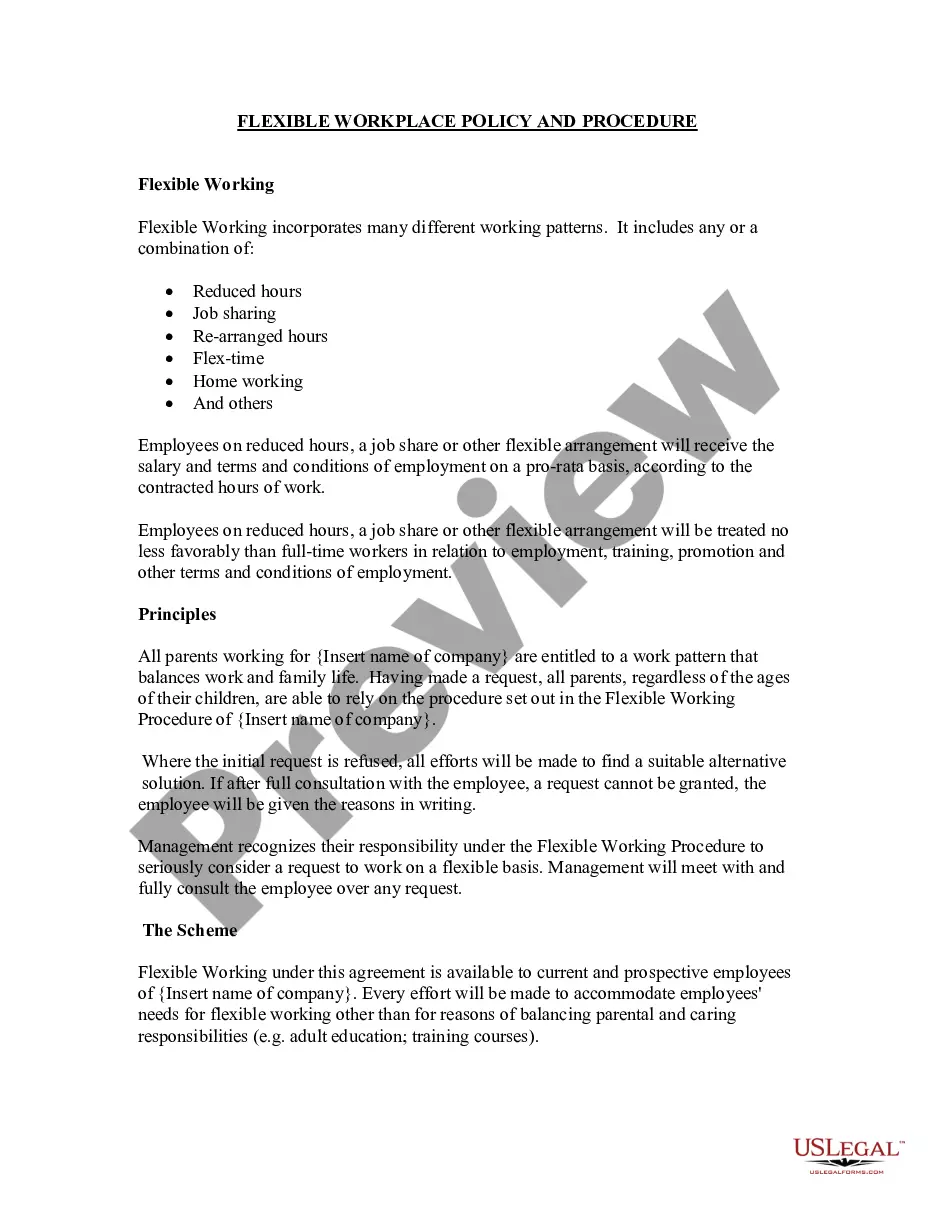
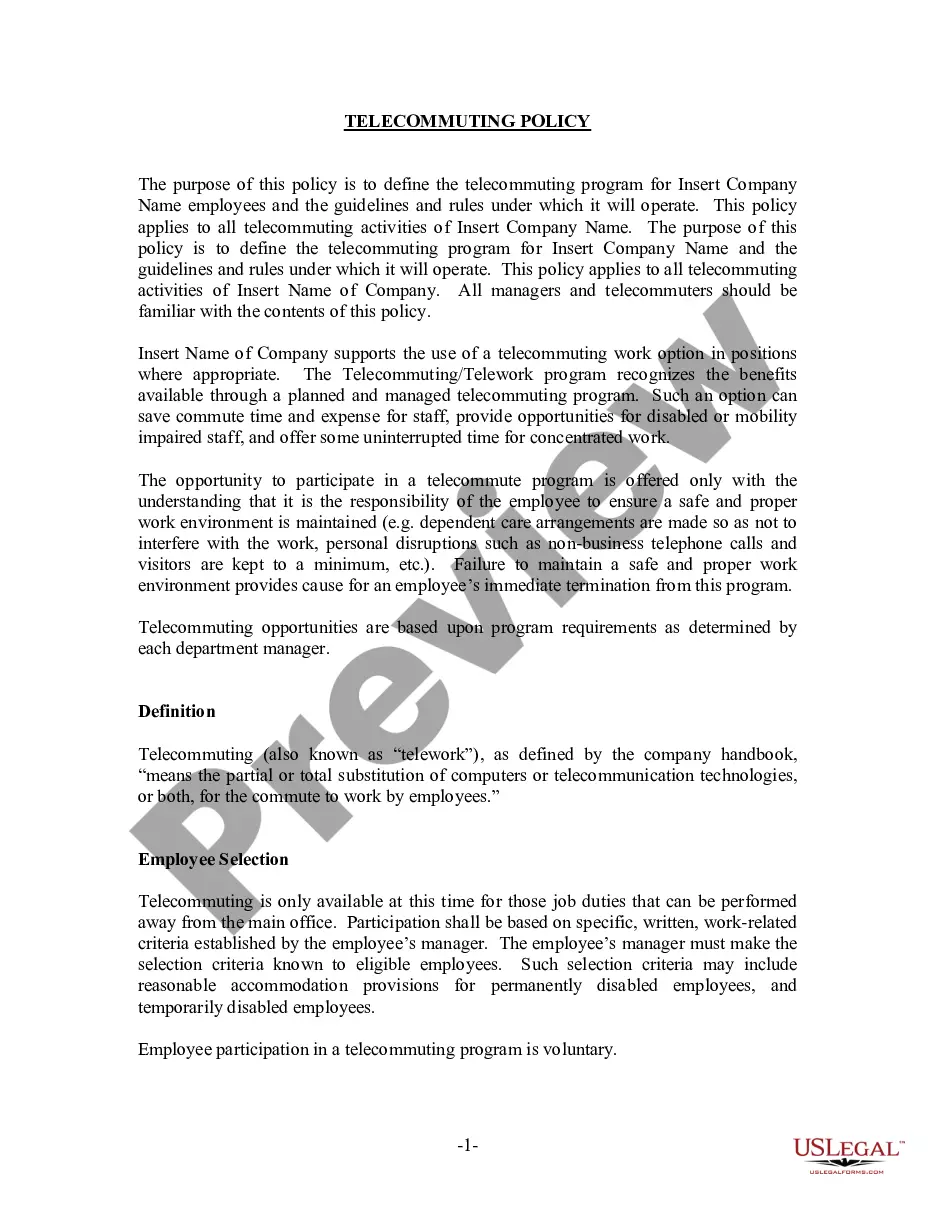
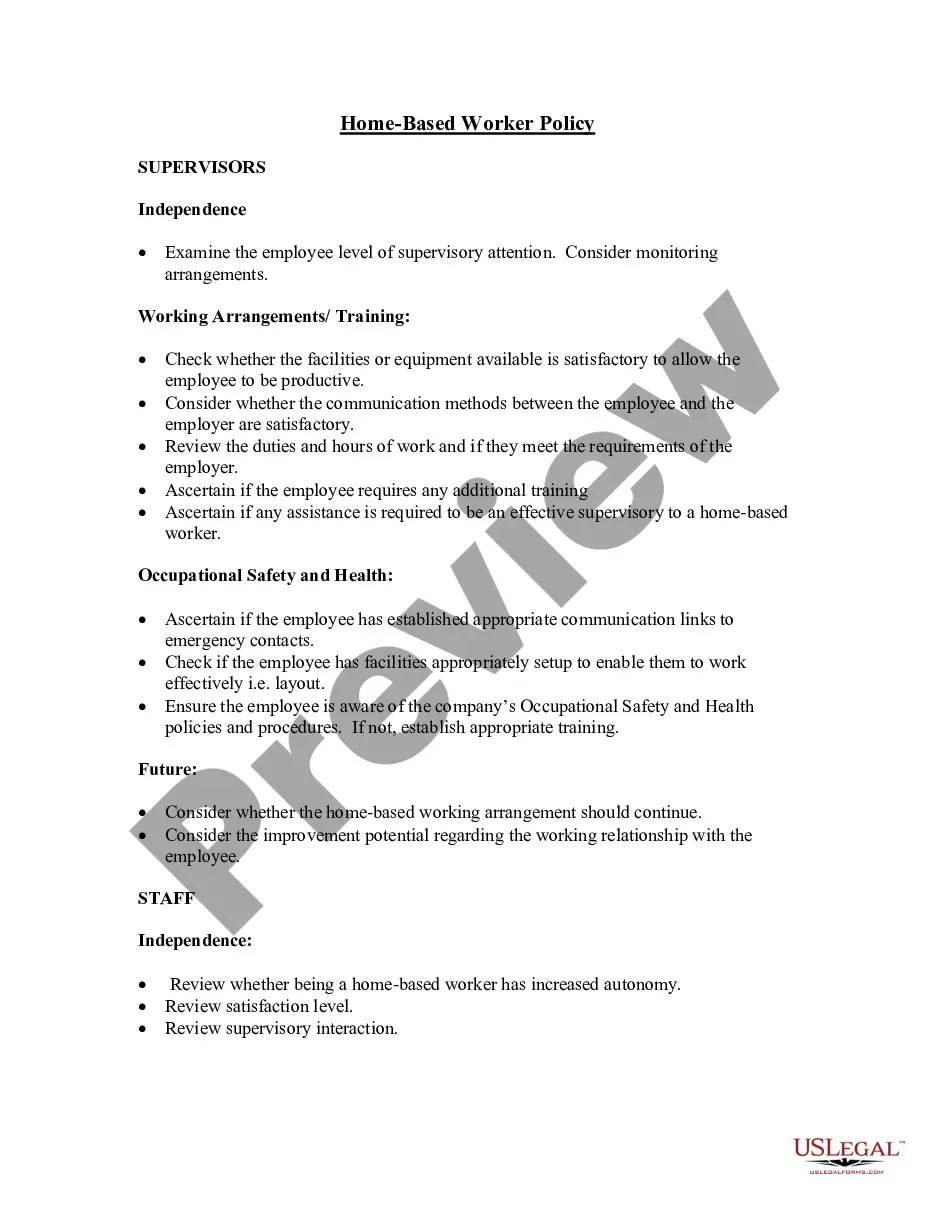
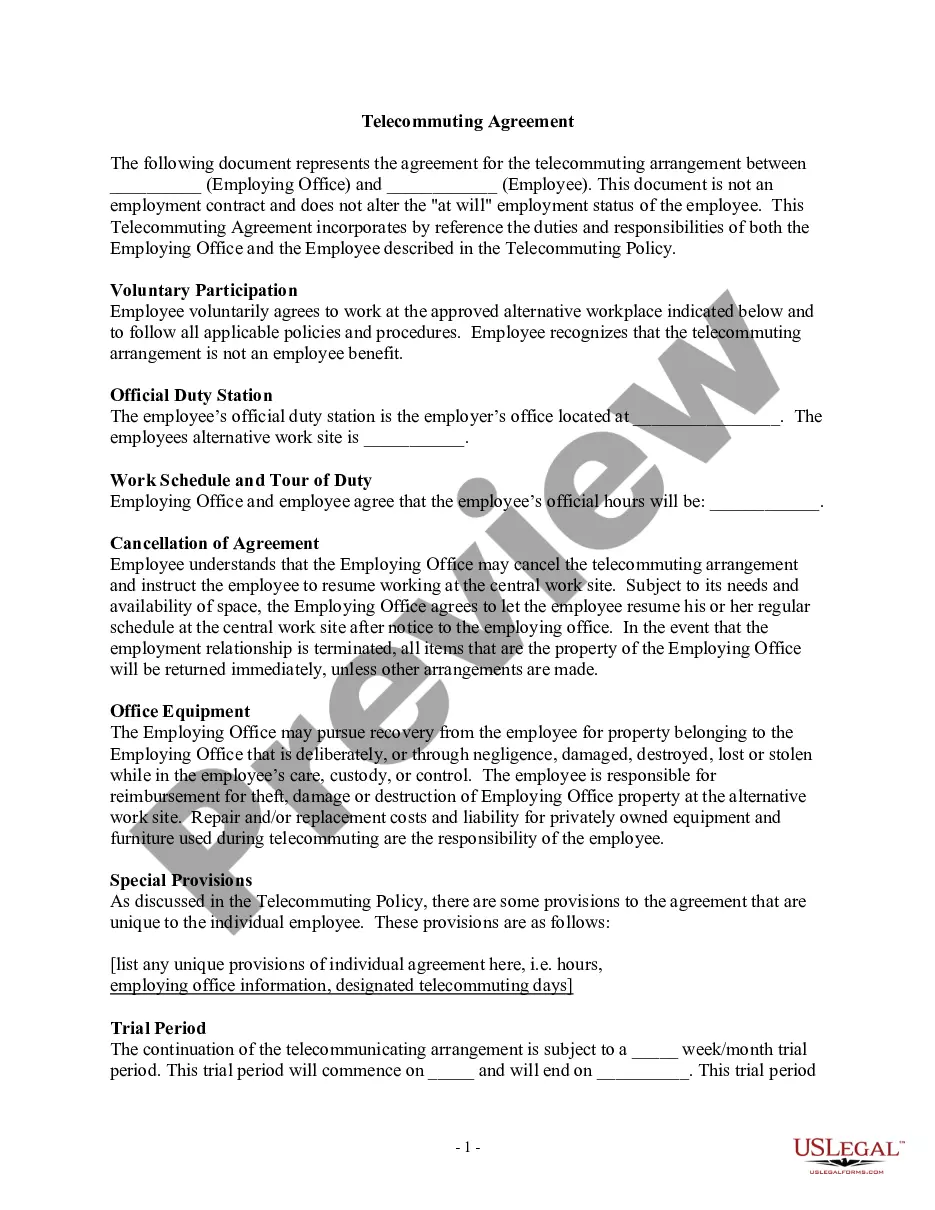
The Flexible Workplace Policy and Procedure is a legal document that outlines the framework for implementing flexible working arrangements at an organization. This form combines both the policy and procedure aspects to ensure a clear and fair approach to flexible working. It differs from other employment documents by specifically addressing various flexible working patterns and the processes for requesting such arrangements.
What’s included in this form
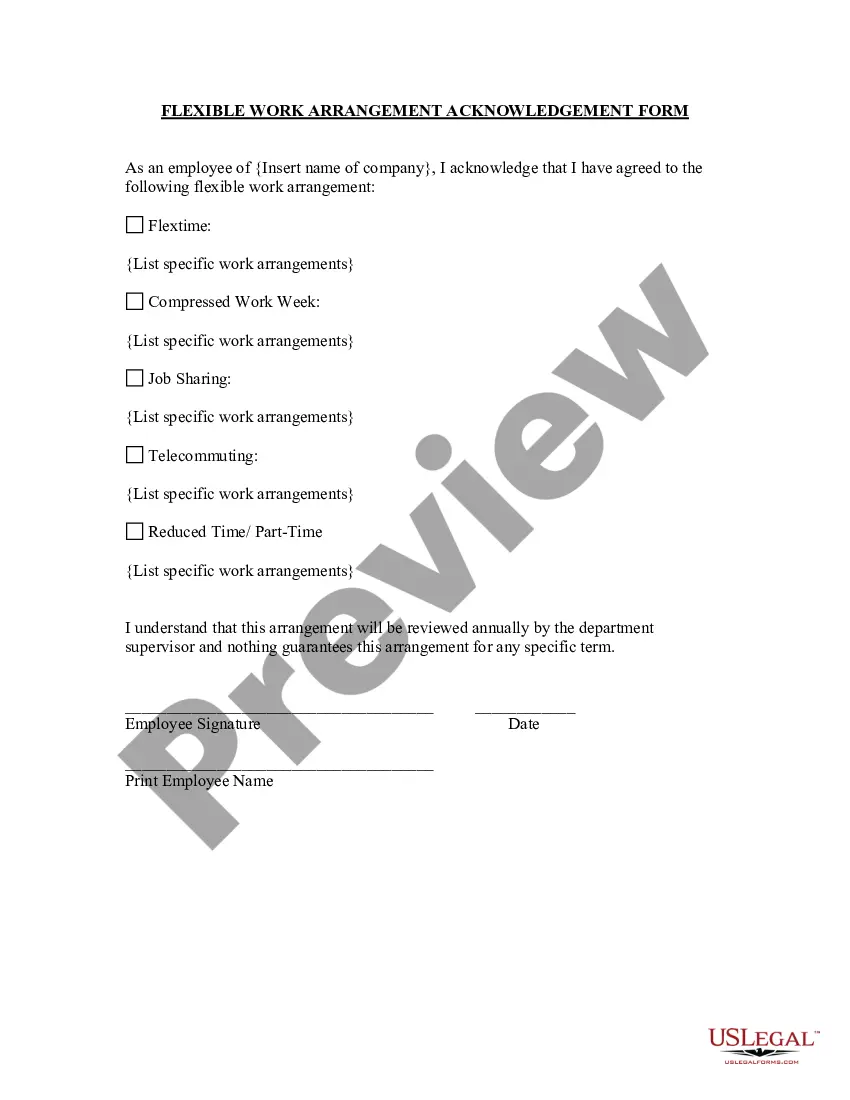
- Details on various flexible working options including reduced hours, job sharing, and remote work.
- Principles guiding the workplaceâs commitment to accommodating employees' needs for work-life balance.
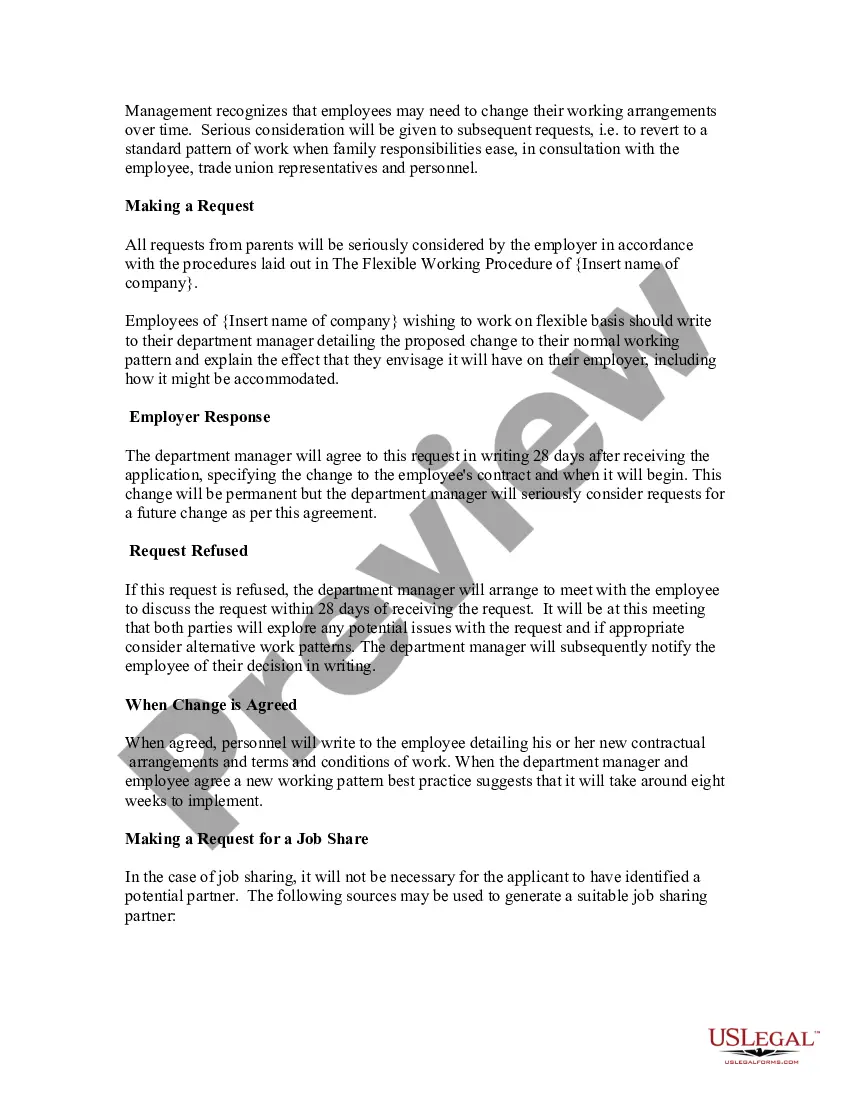
- Procedure for employees to formally request flexible working arrangements.
- Guidelines for employers in responding to requests for flexible working arrangements.
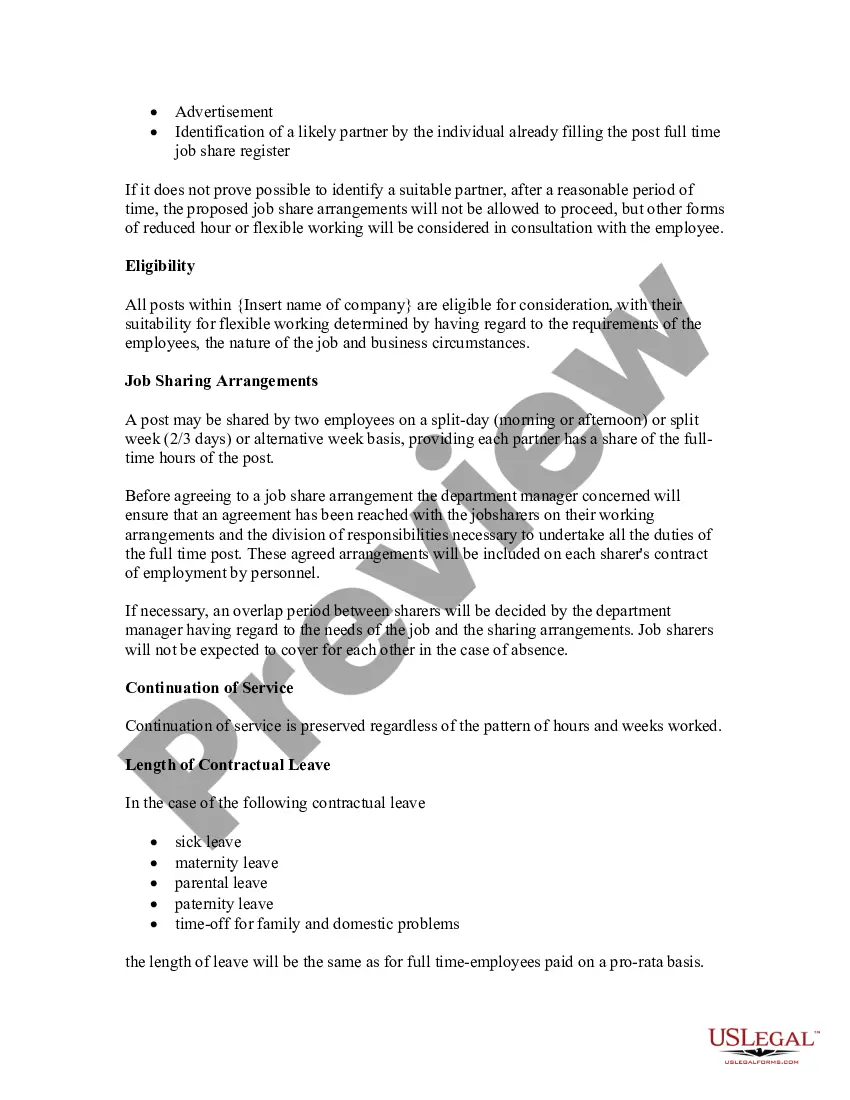
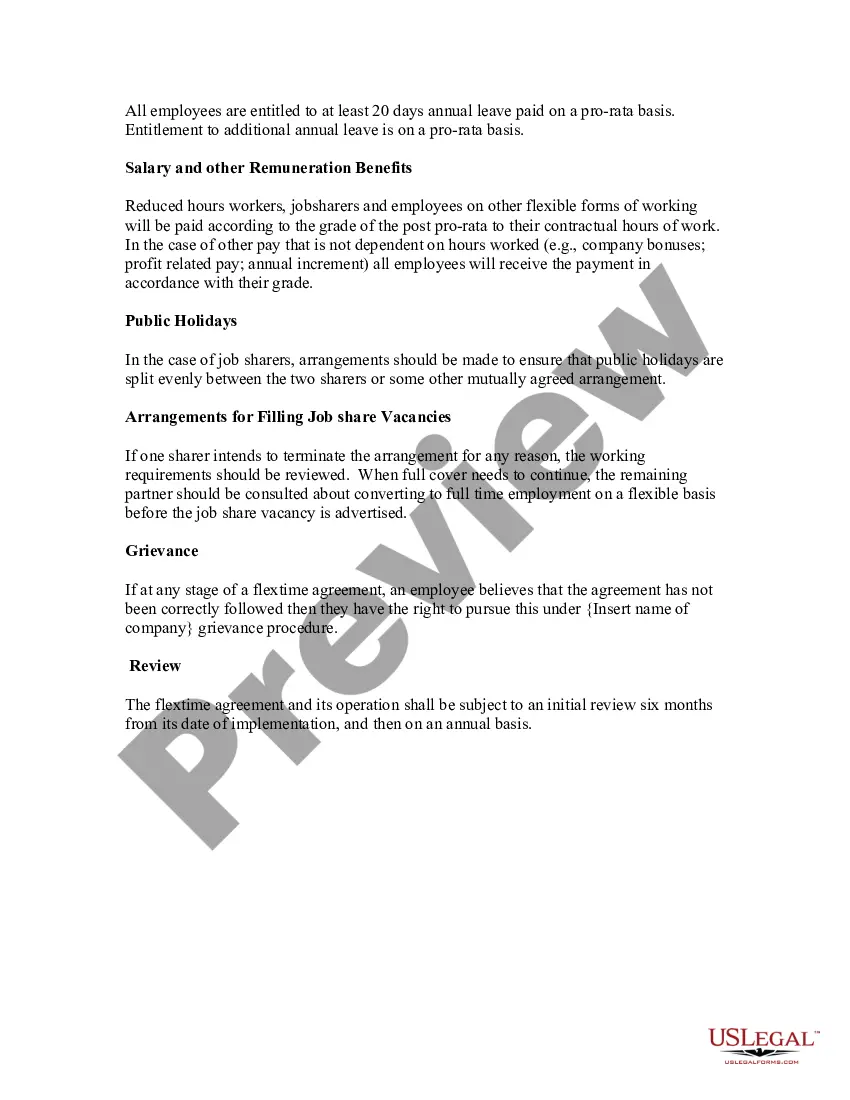
- Eligibility criteria for job sharing and other flexible work options.
Common use cases
This form should be used when an employee wishes to request a change in their working pattern to achieve a better work-life balance. Situations may include a parent needing to adjust their hours to care for children, an employee looking to work from home due to health reasons, or someone interested in job sharing with a colleague. Utilizing this form helps establish a clear and structured process for such requests.
Who can use this document
Employees of the company, particularly those who are parents or caregivers, can utilize this form to request flexible working arrangements. Additionally, prospective employees seeking flexible work options before accepting a job offer should reference this form.
- Current employees of any role within the company.
- Prospective employees considering a position that offers flexible working.
- Managers involved in assessing and responding to flexibility requests.
How to prepare this document
- Review the company's Flexible Workplace Policy and Procedure.
- Submit a written request to your department manager detailing the proposed change.
- Explain the anticipated effects of your request on your work and how it can be accommodated.
- Await a written response from your manager within 28 days, detailing the outcome of your request.
- If accepted, ensure that your contract reflects the new working arrangements.
Does this document require notarization?
Notarization is not commonly needed for this form. However, certain documents or local rules may make it necessary. Our notarization service, powered by Notarize, allows you to finalize it securely online anytime, day or night.
Get your form ready online
Our built-in tools help you complete, sign, share, and store your documents in one place.
Make edits, fill in missing information, and update formatting in US Legal Forms—just like you would in MS Word.
Download a copy, print it, send it by email, or mail it via USPS—whatever works best for your next step.
Sign and collect signatures with our SignNow integration. Send to multiple recipients, set reminders, and more. Go Premium to unlock E-Sign.
If this form requires notarization, complete it online through a secure video call—no need to meet a notary in person or wait for an appointment.
We protect your documents and personal data by following strict security and privacy standards.

Make edits, fill in missing information, and update formatting in US Legal Forms—just like you would in MS Word.

Download a copy, print it, send it by email, or mail it via USPS—whatever works best for your next step.

Sign and collect signatures with our SignNow integration. Send to multiple recipients, set reminders, and more. Go Premium to unlock E-Sign.

If this form requires notarization, complete it online through a secure video call—no need to meet a notary in person or wait for an appointment.

We protect your documents and personal data by following strict security and privacy standards.
Mistakes to watch out for
- Not providing enough detail in the request letter.
- Failing to specify how the proposed changes would benefit both the employee and the employer.
- Assuming a verbal request suffices instead of submitting a formal written request.
Benefits of completing this form online
- Convenient access to legal templates that can be tailored to your needs.
- Instant download and edit capabilities for personalized use.
- Reliable, attorney-drafted forms that ensure compliance and clarity.
Legal use & context
- The Flexible Workplace Policy and Procedure form is designed to be legally enforceable, provided it complies with both federal and state employment laws.
- Employers must regularly review such policies to ensure they are up to date with current legislation to prevent disputes.
Quick recap
- The Flexible Workplace Policy and Procedure form aims to establish a structured approach to flexible work requests.
- Employees should provide thorough details in their requests for the best chance of approval.
- This form supports various work patterns beyond traditional full-time employment to enhance work-life balance.
Looking for another form?




Form popularity
FAQ
Create a flexible working hours policy. Document flexible working terms. Guide your staff. Assess your line managers support. Communicate changes clearly. Measure employee performance. Listen to your people. Flexibility is key.
Overview. Flexible working is a way of working that suits an employee's needs, for example having flexible start and finish times, or working from home.All employees have the legal right to request flexible working - not just parents and carers. This is known as 'making a statutory application'.
Flexible working is any working pattern other than the normal working pattern - it can involve changes to the hours an employee works, the times they are required to work or their place of work. Employees may request to do some or all of their work from home.
Evaluate why your company wants a formal flexwork policy. Determine what types of flexibility can be offered by your company. Involve your managers and executives in the planning. Train your managers and staff well.
Flexibility in the workplace allows employers and employees to make arrangements about working conditions that suit them. This helps employees maintain a work / life balance and can help employers improve the productivity and efficiency of their business.
Flexible work arrangements are changes to an employee's terms and conditions of employment. This allows them to achieve better work and home life balance. The Code provides other rights and protections that help employees achieve work life balance, such as: existing and new leaves.
Flex time. Reduced hours/Part-time. Compressed work week. Telework/Working Remotely/Telecommuting. Job sharing. Banking of Hours/ Annualized hours. Gradual Retirement. Leaves and Sabbaticals.