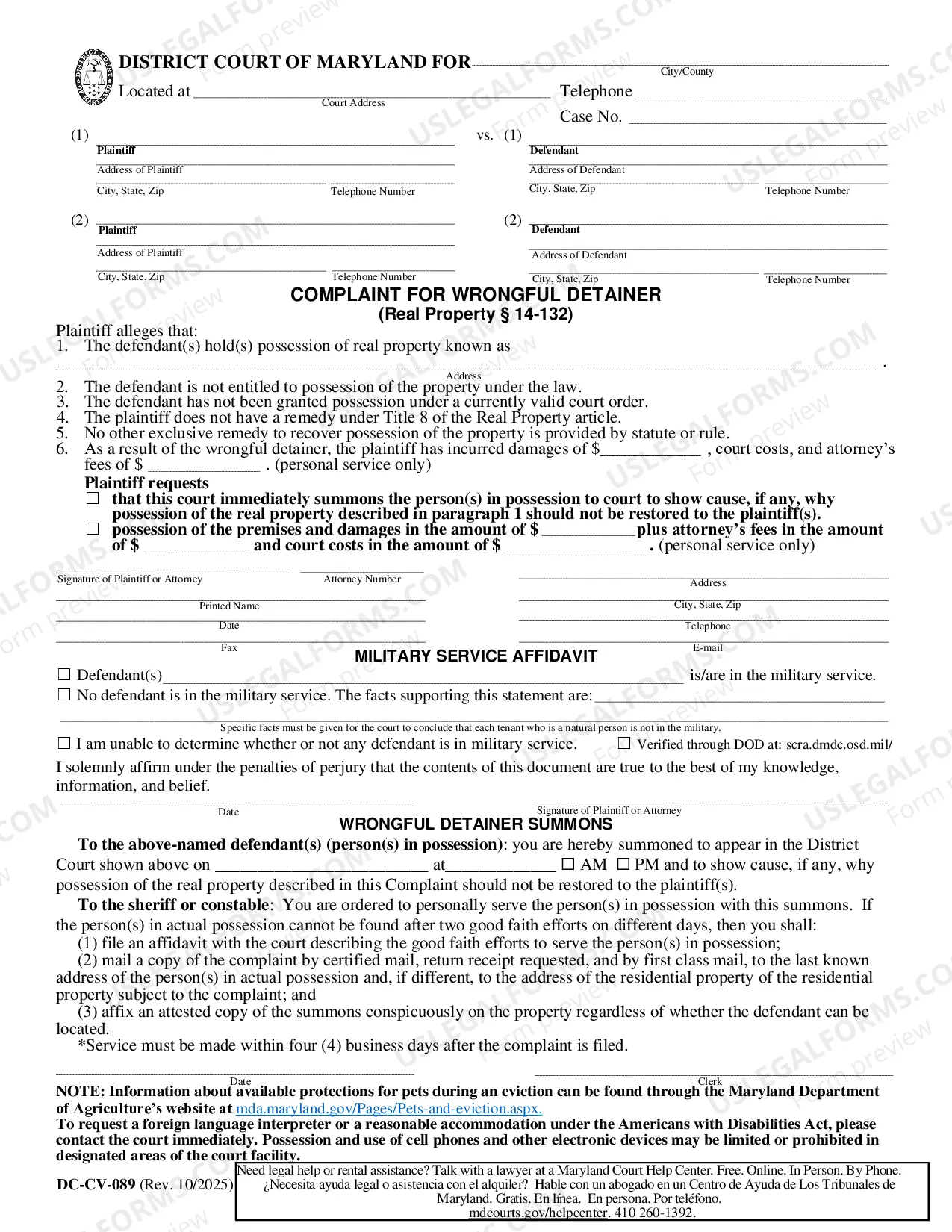
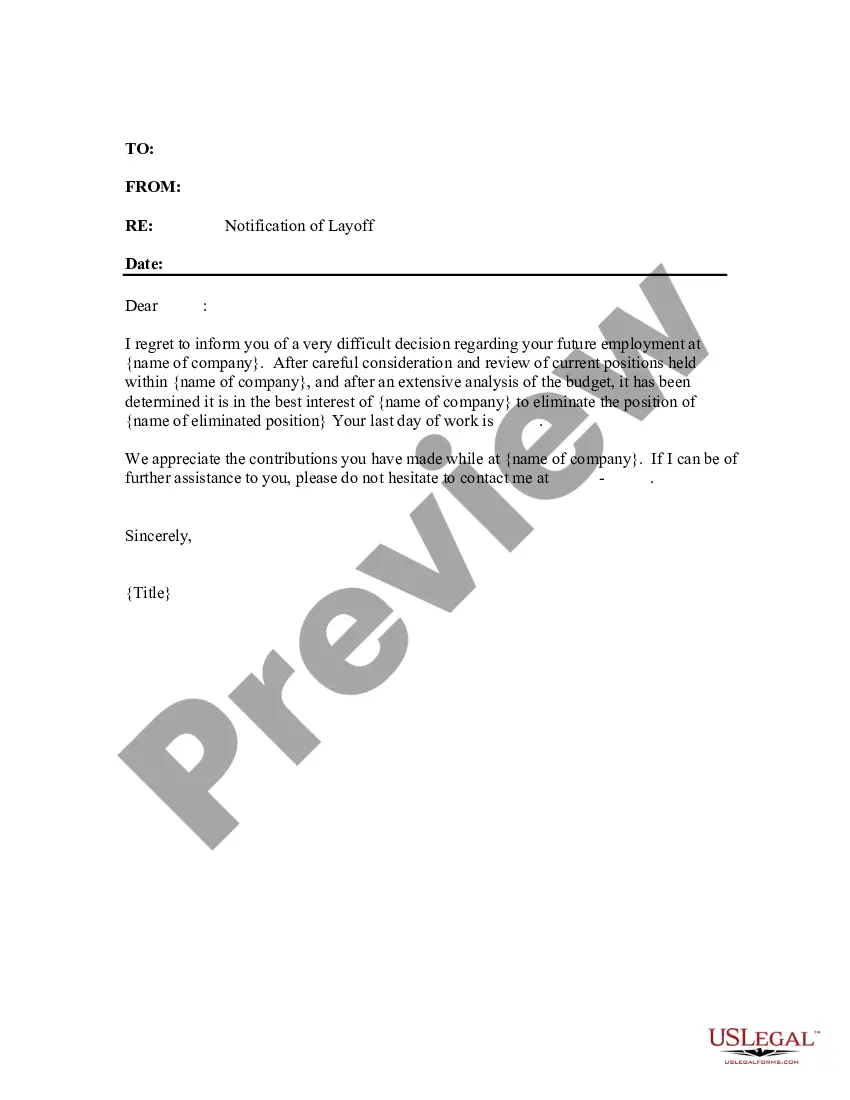
Notification of Layoff
About this form
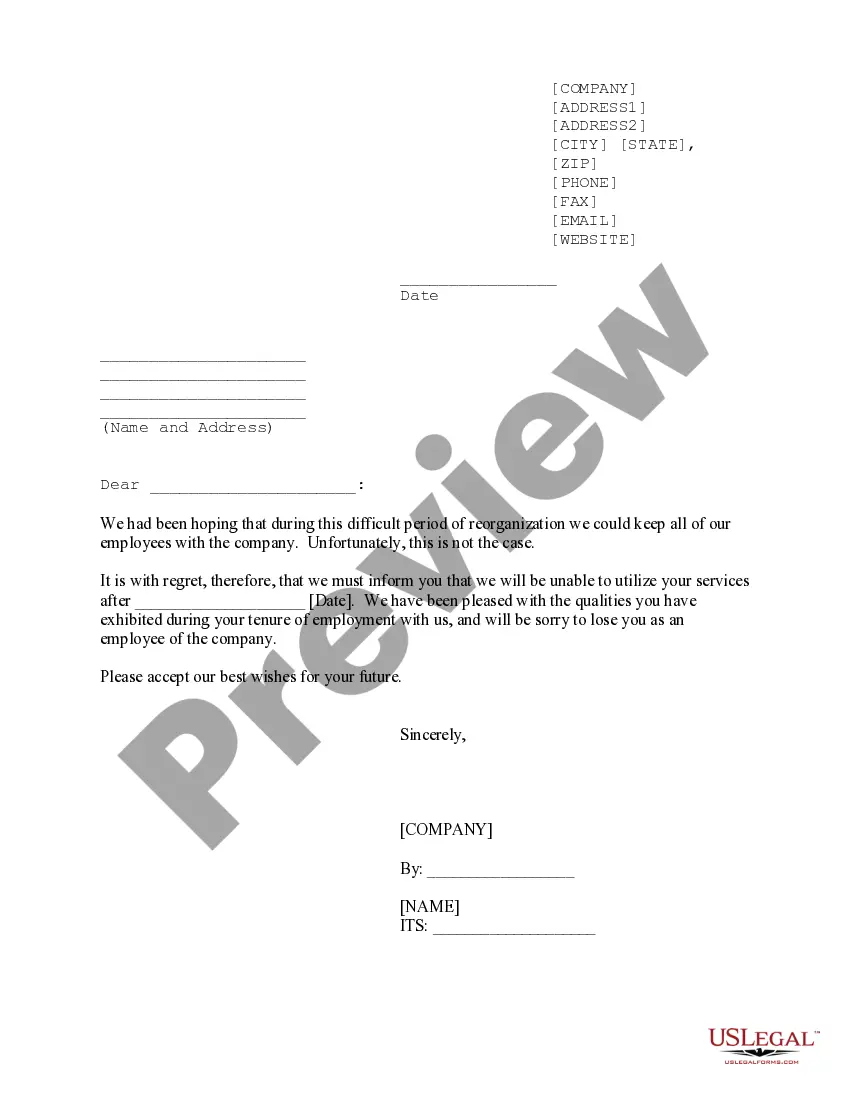
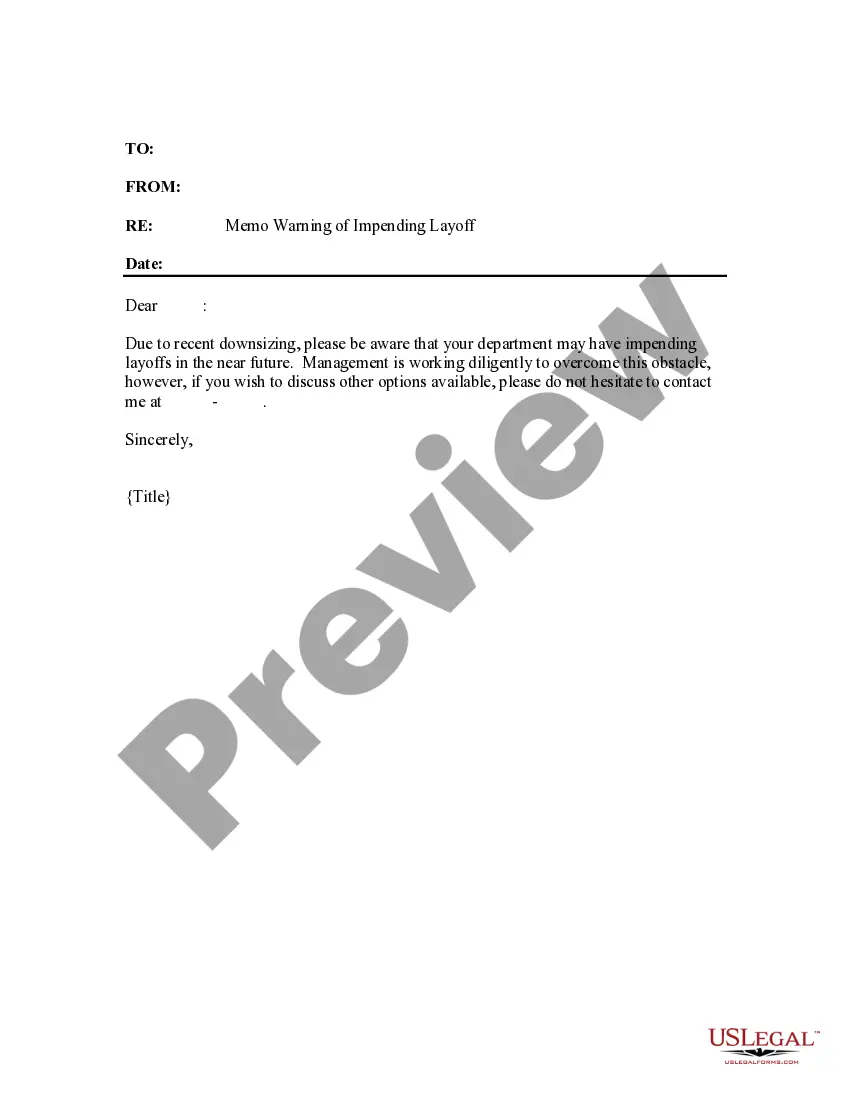
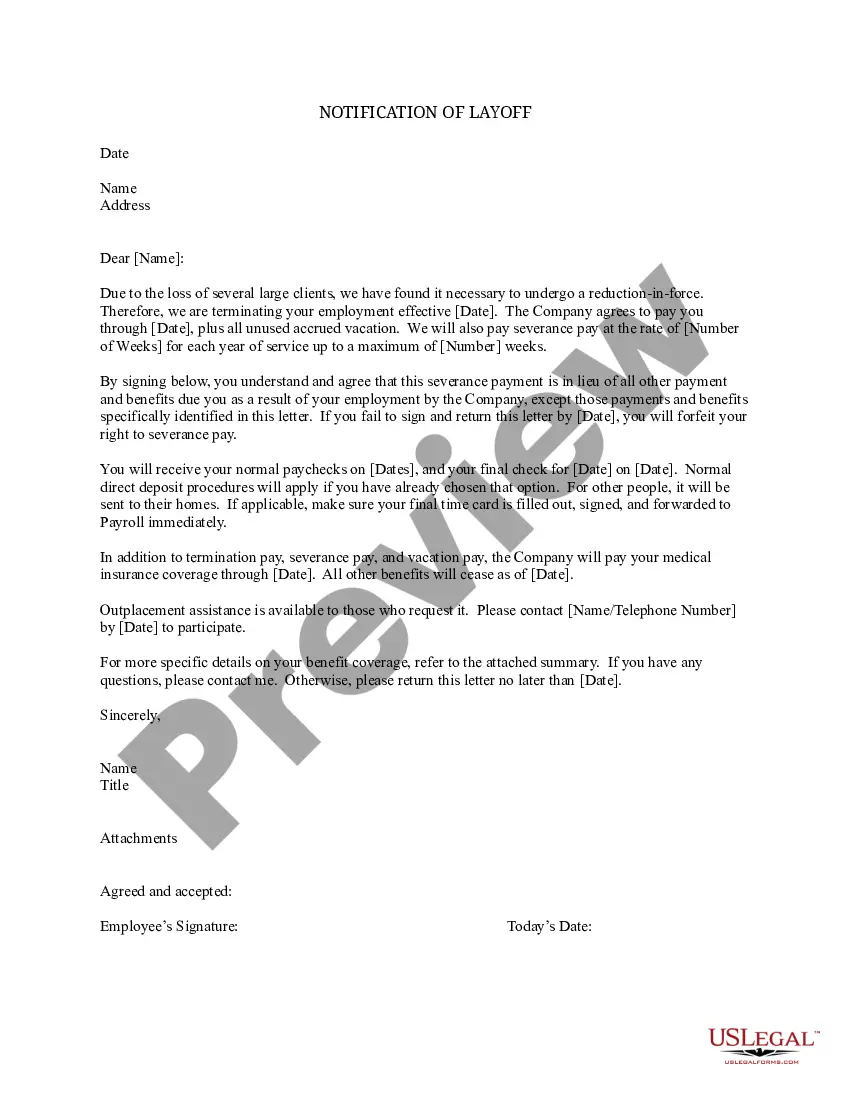
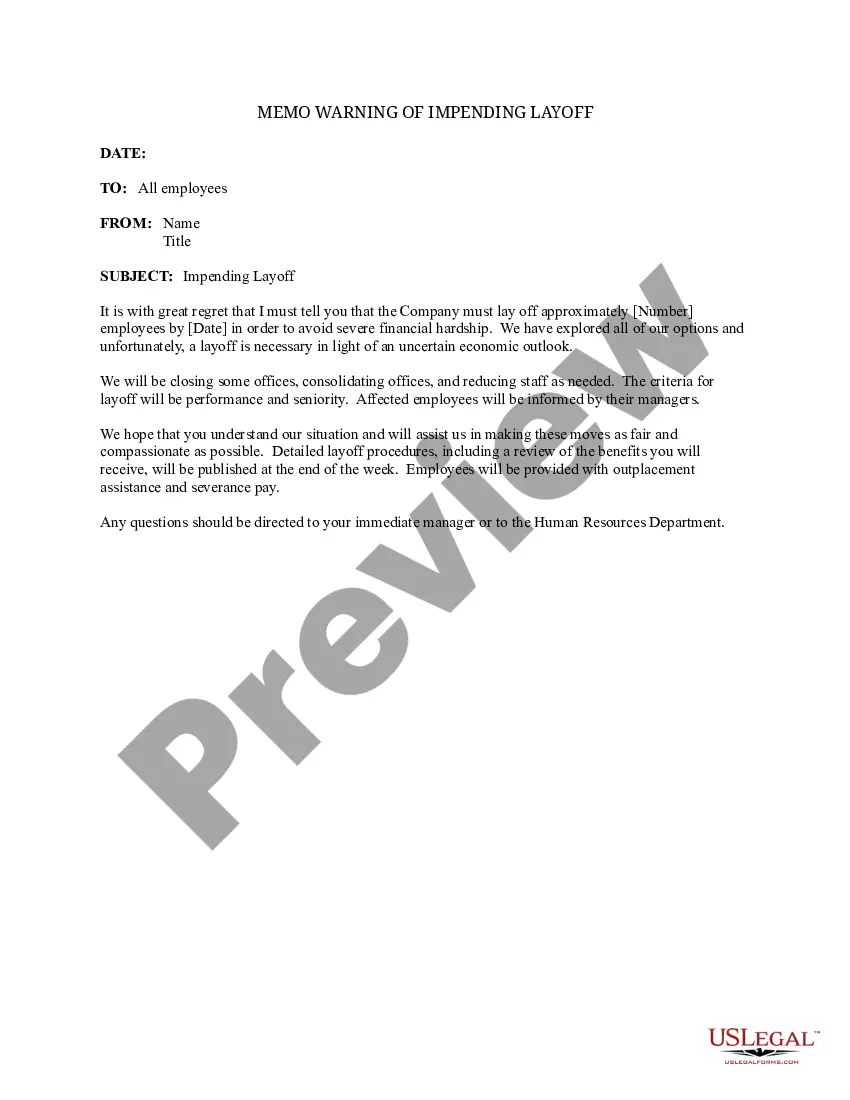
The Notification of Layoff is a formal document used by employers to inform employees about a layoff. This form serves to provide clarity regarding the employment status of affected workers and ensures compliance with labor regulations. Unlike other termination notices, this form specifically addresses temporary or permanent layoffs, outlining the reasons and expected duration when applicable.
Main sections of this form
- Employee details: Includes the name and contact information of the employee being laid off.
- Company details: Contains the employer's name and contact information.
- Date of layoff: Specifies the effective date of the layoff.
- Reason for layoff: Describes the circumstances leading to the layoff.
- Information on benefits: Outlines any available benefits, including unemployment assistance and reemployment services.
When to use this document
This form should be used when an employer needs to lay off an employee due to financial constraints, restructuring, or other business reasons. It is essential to provide employees with clear communication about their employment status, particularly in situations where layoffs may be temporary or when further details about future employment opportunities are necessary.
Who needs this form
- Employers who need to inform employees of layoffs.
- Human resources professionals responsible for managing layoffs within an organization.
- Business owners looking to comply with state and federal employment laws.
Instructions for completing this form
- Identify the employee: Enter the full name and contact details of the affected employee.
- Provide your company's information: Include the name and contact information of the employer.
- Specify the effective date: Clearly state the date when the layoff will begin.
- Detail the reason for the layoff: Give a brief explanation regarding the circumstances leading to this decision.
- Include benefits information: Mention any available benefits and assistance that the employee may access post-layoff.
Is notarization required?
This form does not typically require notarization unless specified by local law. However, it's essential to ensure all parties have signed the document for it to be valid.
Get your form ready online
Our built-in tools help you complete, sign, share, and store your documents in one place.
Make edits, fill in missing information, and update formatting in US Legal Forms—just like you would in MS Word.
Download a copy, print it, send it by email, or mail it via USPS—whatever works best for your next step.
Sign and collect signatures with our SignNow integration. Send to multiple recipients, set reminders, and more. Go Premium to unlock E-Sign.
If this form requires notarization, complete it online through a secure video call—no need to meet a notary in person or wait for an appointment.
We protect your documents and personal data by following strict security and privacy standards.

Make edits, fill in missing information, and update formatting in US Legal Forms—just like you would in MS Word.

Download a copy, print it, send it by email, or mail it via USPS—whatever works best for your next step.

Sign and collect signatures with our SignNow integration. Send to multiple recipients, set reminders, and more. Go Premium to unlock E-Sign.

If this form requires notarization, complete it online through a secure video call—no need to meet a notary in person or wait for an appointment.

We protect your documents and personal data by following strict security and privacy standards.
Typical mistakes to avoid
- Failing to provide timely notification to the employee.
- Not including complete contact information for both the employee and the employer.
- Omitting important details regarding benefits available to the laid-off employee.
Benefits of completing this form online
- Convenience: Easily download the form and fill it out from any location.
- Editability: Tailor the template to fit specific circumstances and company needs.
- Reliability: Access professionally drafted templates that ensure compliance with legal standards.
Legal use & context
- The Notification of Layoff serves as formal notice that may be required by state or federal regulations.
- Using this form helps protect the employer from potential legal disputes related to unjust termination.
Main things to remember
- The Notification of Layoff is crucial for communicating employment status changes.
- Complete all sections accurately to avoid misunderstandings.
- Review local regulations to comply with specific layoff procedures.
Looking for another form?





Form popularity
FAQ
Here is your official Notice of Layoff. Hand the written notice or letter to the employee. Allow the employee time to read it and process the information. Manager: This decision was made after a long and careful review of the options, realizing that many good people would be affected.
A worker's last day of employment is considered the date of that worker's layoff. The first and each subsequent group of affected employees is entitled to a full 60 days' notice.
The California WARN Act (short for Worker Adjustment and Retraining Notification Act) is a regulation that requires employers to provide workers and local government officials with at least sixty (60) days notice before a mass layoff, a plant closure or a major relocation.
Notice Requirements Under federal WARN Act, an employer must provide written notice 60 days prior to a plant closing or mass layoff to employees or their representative and the state dislocated worker unit (in California, the Employment Development Department, Workforce Services Division).
A layoff is considered a termination of employment when the employer has no intention of recalling the employee to work.
Comply with the WARN Act The WARN Act requires that employers with 100 or more employees notify them about mass layoffs and plant closings at least 60 calendar days in advance. The notice must be in writing. Mass layoffs are where 50 or more employees are laid off at one location. Not all employers have to follow WARN.
Employee Layoffs In a layoff situation that is not covered by the WARN Act, the employer is not required by federal law to give any notice.If the reason for the layoff is economic, employees will usually experience immediate employment termination.
The script for letting an employee go is relatively straightforward, says Molinsky. Get to the point quickly: Be direct, be honest, and no small talk. Stybel recommends beginning the conversation by saying: 'I have some bad news to deliver today' because it emotionally prepares the individual.