Standard Conditions of Acceptance of Escrow
About this form
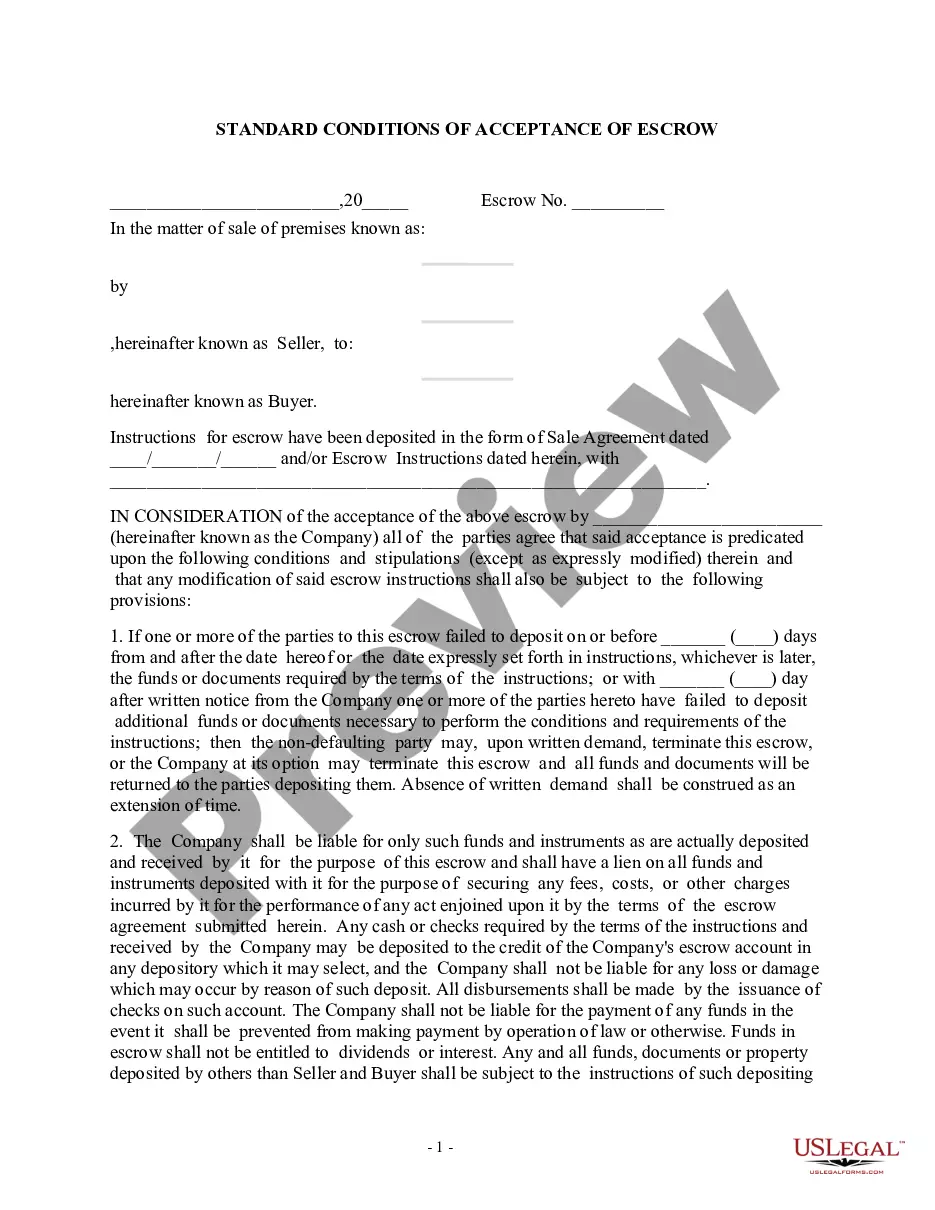
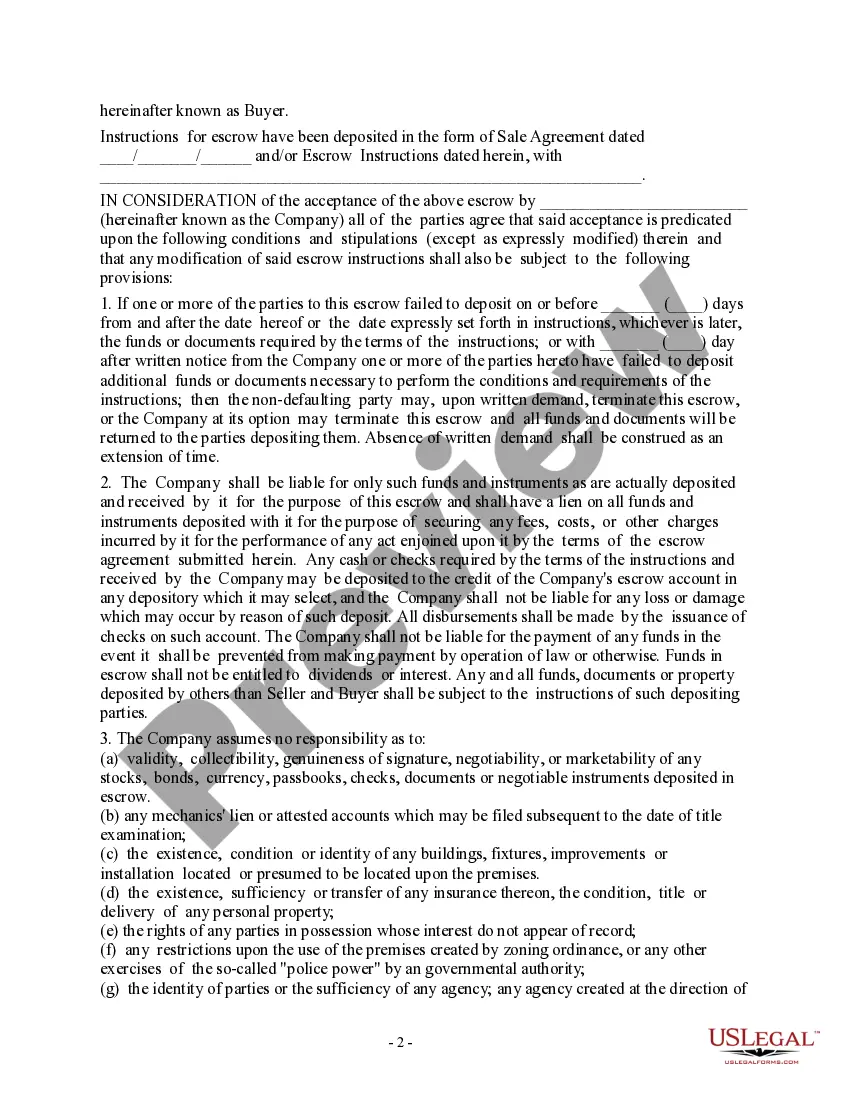
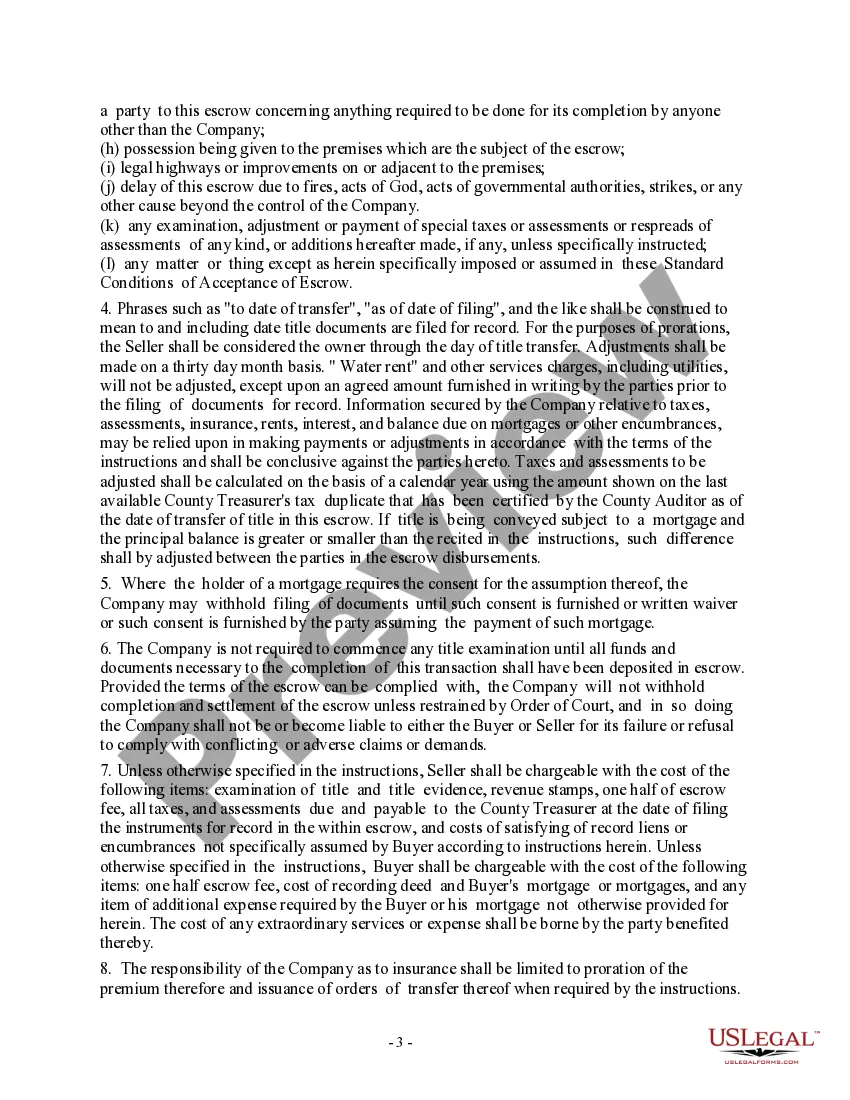
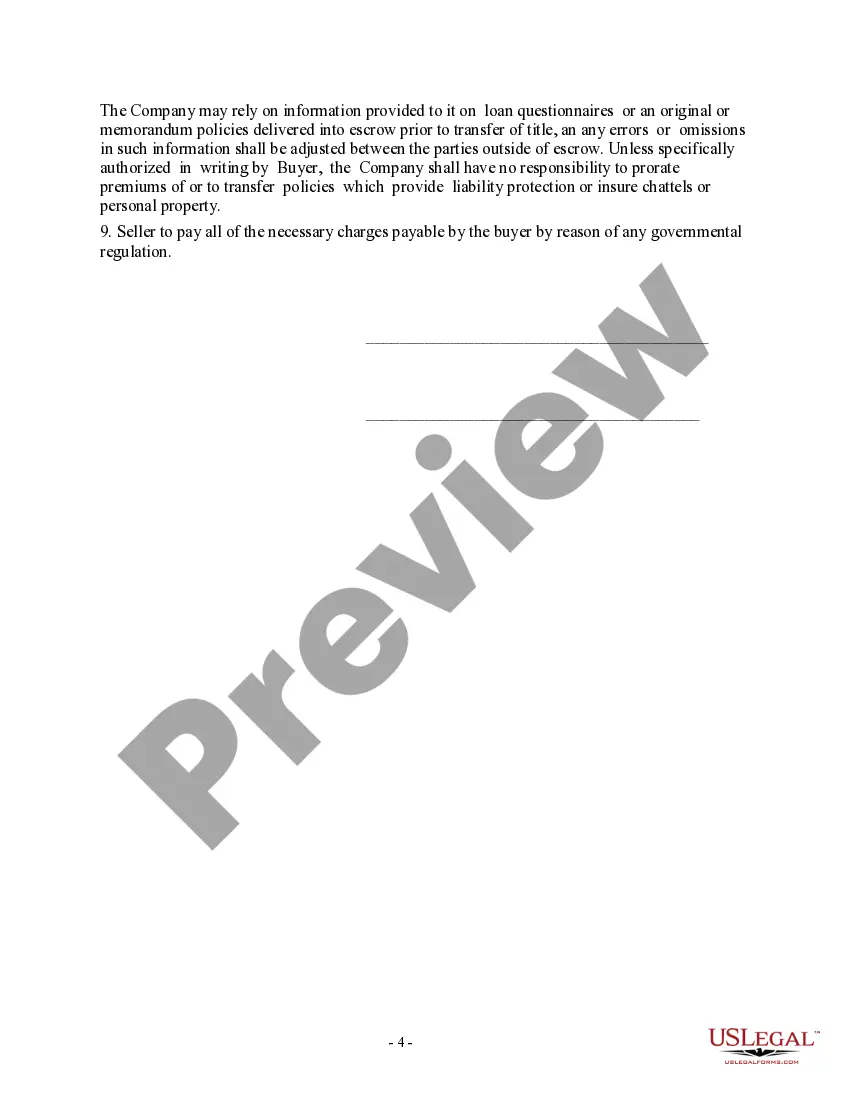
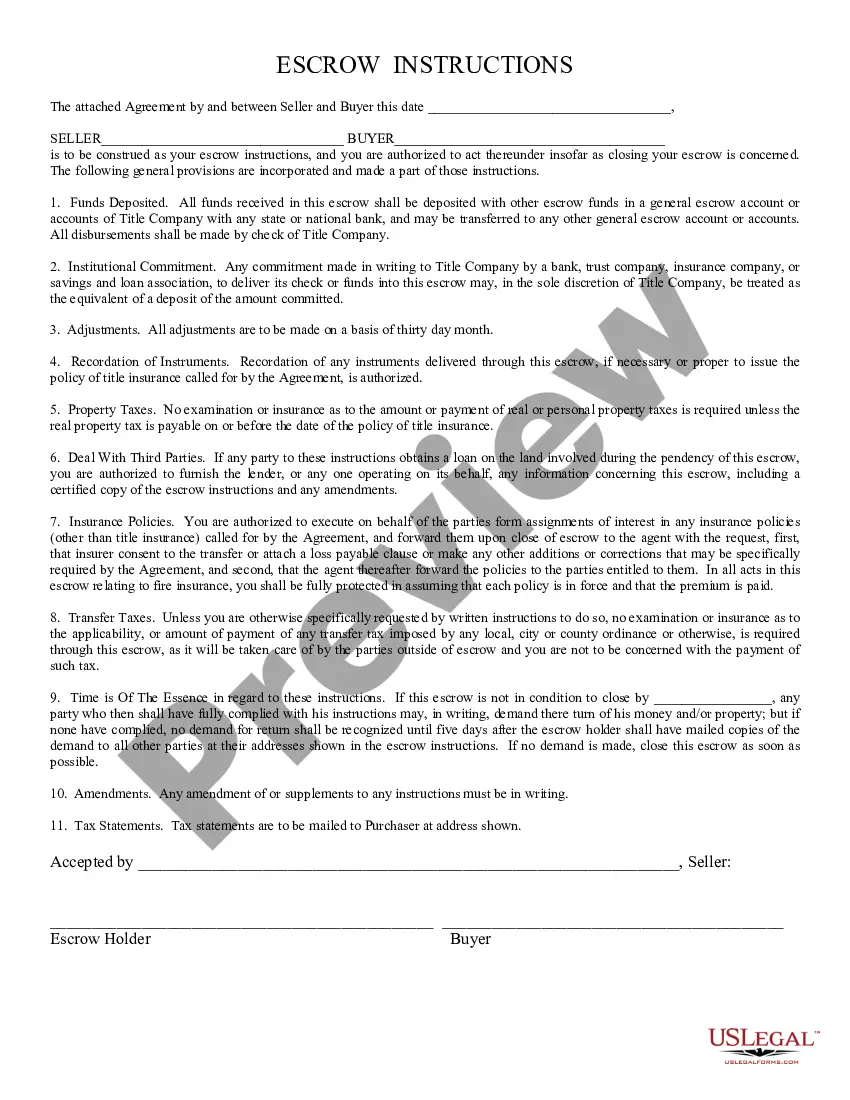
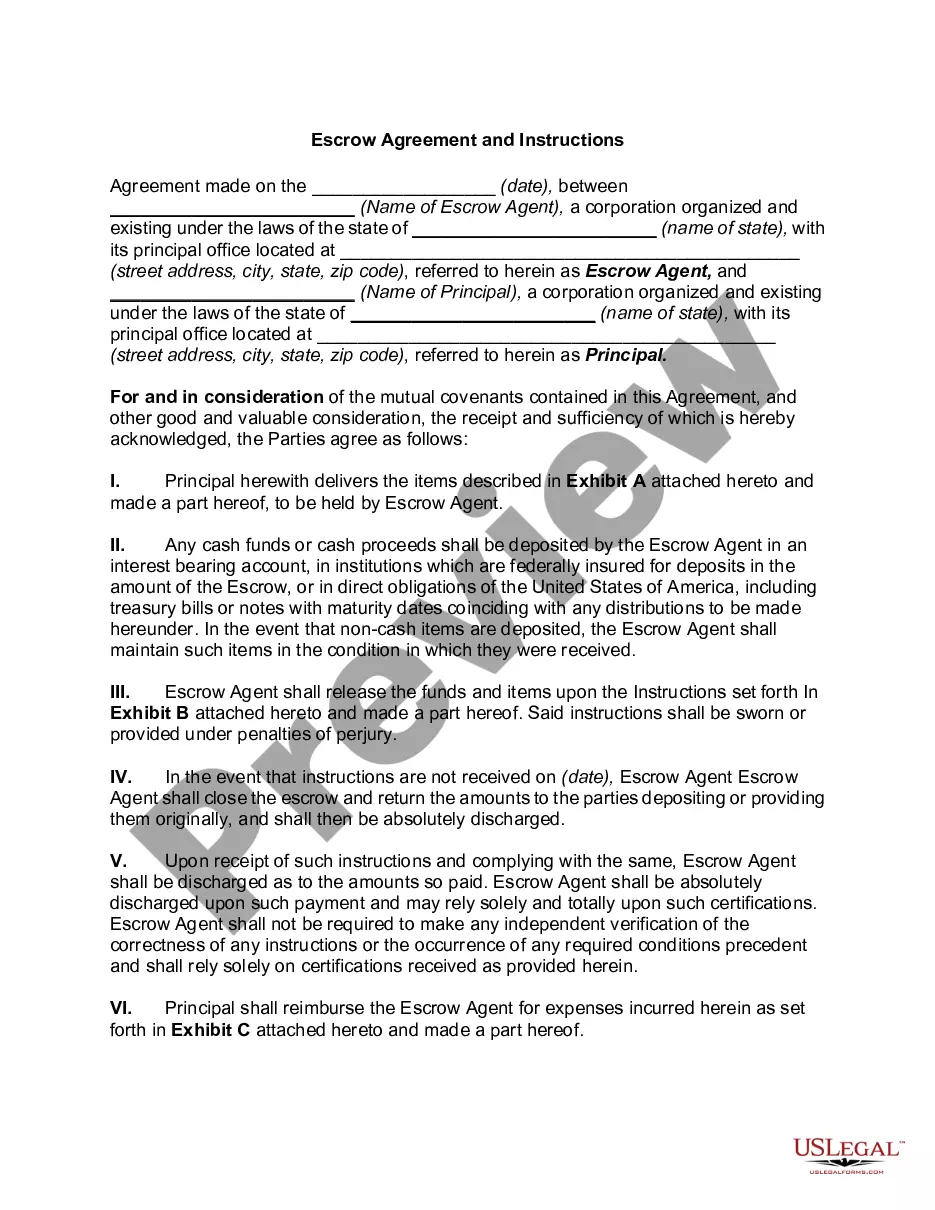
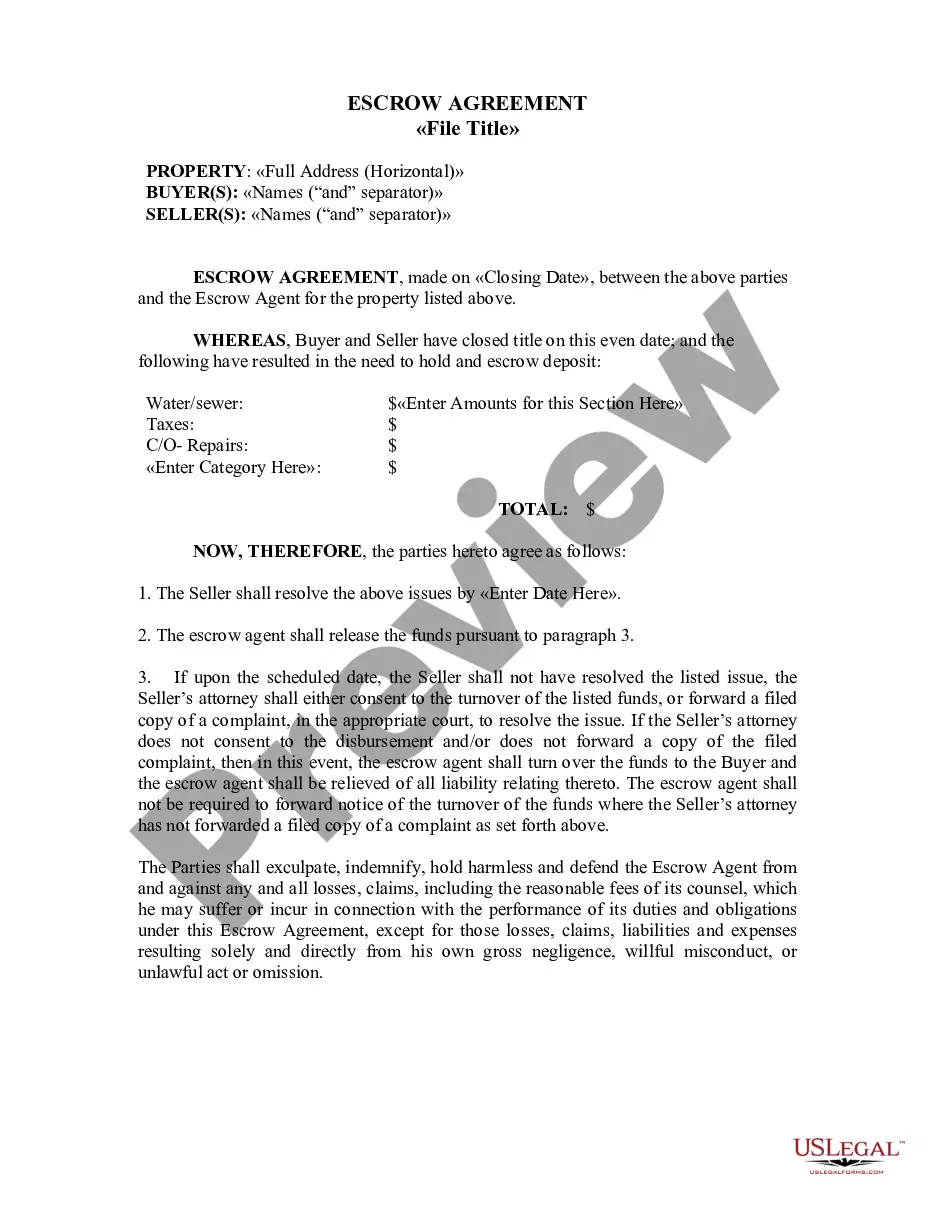
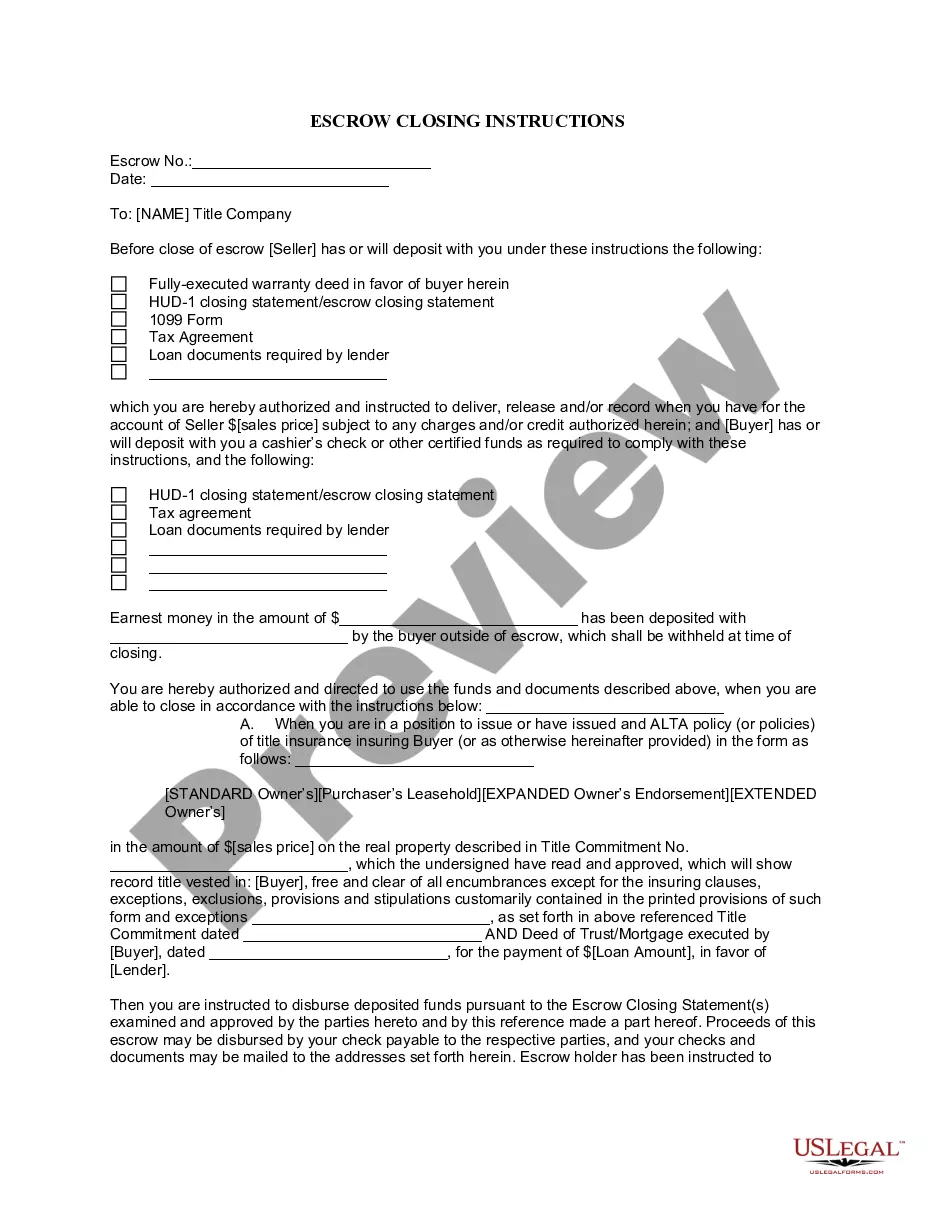
The Standard Conditions of Acceptance of Escrow is a legal document used in real estate transactions to outline the terms and conditions under which an escrow will be accepted by involved parties. This form serves to protect the interests of both the seller and buyer by detailing the obligations of each party and the responsibilities of the escrow company. Unlike general escrow agreements, this specific form includes multiple stipulations that ensure clarity and mutual understanding among all parties involved in the sale of property.
Key components of this form
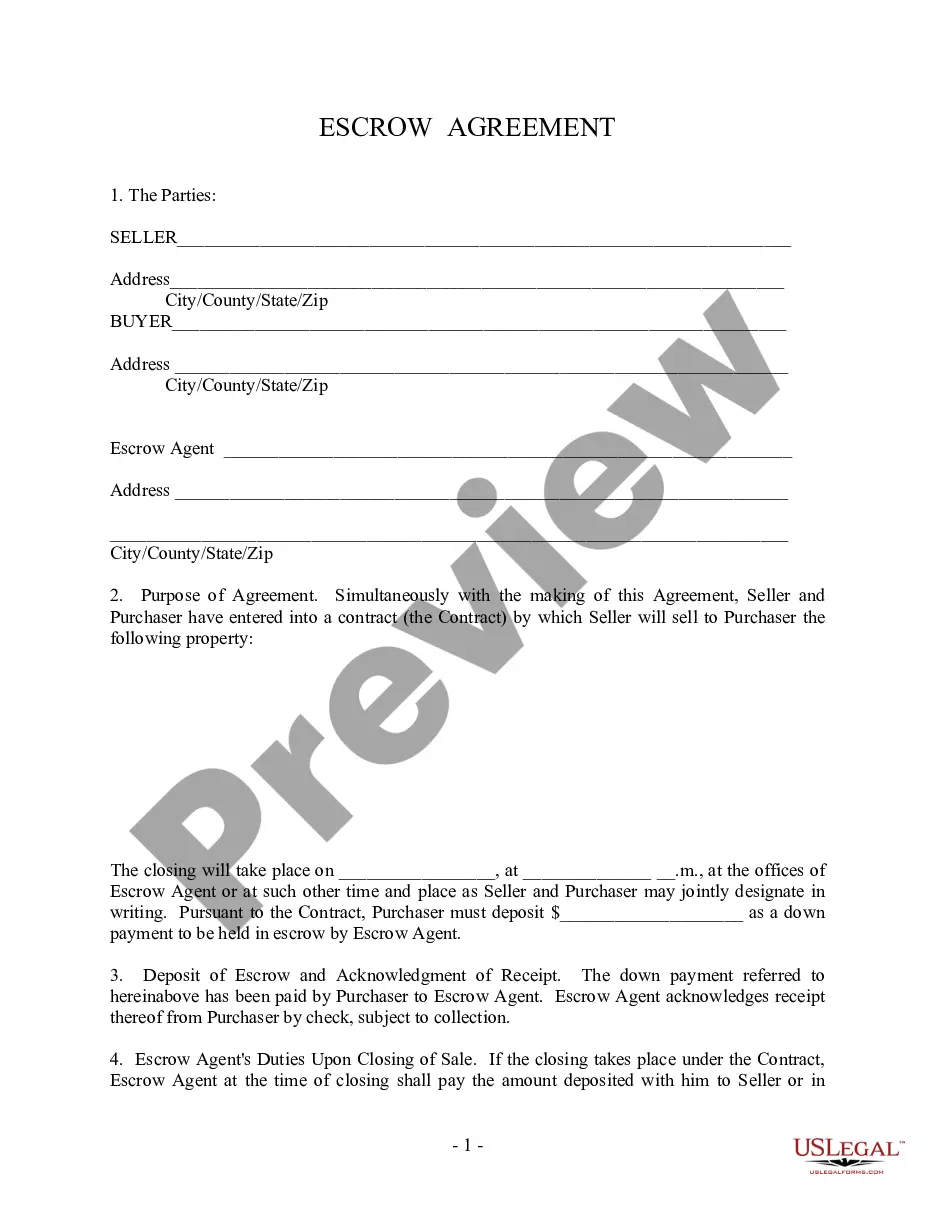
- Identification of the seller and buyer.
- Details of escrow instructions and agreement dates.
- Conditions for termination of the escrow if parties fail to meet obligations.
- Liability and responsibilities of the escrow company.
- Costs associated with title examination, recording, and escrow fees.
- Clauses concerning insurance and property condition.
When this form is needed
This form should be used when parties involved in a real estate transaction agree to place funds or documents in escrow. It clarifies expectations about the handling of funds, the obligations of each party, and what happens if conditions are not met. Specific scenarios include selling a home, transferring property titles, or any situation requiring neutral money handling while parties fulfill their respective terms of the sale agreement.
Who should use this form
- Real estate buyers and sellers involved in property transactions.
- Escrow companies or agents managing the escrow process.
- Real estate attorneys advising their clients on escrow agreements.
- Homeowners transferring property titles.
Steps to complete this form
- Identify the parties involved: Full names of the seller and buyer.
- Specify the property being sold, including its address.
- Enter the escrow number and relevant dates, including sale agreement dates.
- Include all stipulations regarding funds and document deposits.
- Detail the responsibilities of the escrow company and any associated costs.
- Ensure all parties involved sign and date the form to validate agreement.
Notarization guidance
To make this form legally binding, it must be notarized. Our online notarization service, powered by Notarize, lets you verify and sign documents remotely through an encrypted video session.
Get your form ready online
Our built-in tools help you complete, sign, share, and store your documents in one place.
Make edits, fill in missing information, and update formatting in US Legal Forms—just like you would in MS Word.
Download a copy, print it, send it by email, or mail it via USPS—whatever works best for your next step.
Sign and collect signatures with our SignNow integration. Send to multiple recipients, set reminders, and more. Go Premium to unlock E-Sign.
If this form requires notarization, complete it online through a secure video call—no need to meet a notary in person or wait for an appointment.
We protect your documents and personal data by following strict security and privacy standards.

Make edits, fill in missing information, and update formatting in US Legal Forms—just like you would in MS Word.

Download a copy, print it, send it by email, or mail it via USPS—whatever works best for your next step.

Sign and collect signatures with our SignNow integration. Send to multiple recipients, set reminders, and more. Go Premium to unlock E-Sign.

If this form requires notarization, complete it online through a secure video call—no need to meet a notary in person or wait for an appointment.

We protect your documents and personal data by following strict security and privacy standards.
Common mistakes to avoid
- Failing to include accurate property details, which can lead to confusion.
- Not specifying deadlines for deposits or actions, making enforcement difficult.
- Overlooking the liability clauses regarding the escrow company.
- Not having all parties sign, which may void the agreement.
Advantages of online completion
- Convenience of immediate downloading and filling out the form.
- Editable for personalization to meet specific transaction needs.
- Reliability from using professionally drafted templates by licensed attorneys.
Looking for another form?








Form popularity
FAQ
A Definition. Escrow is a legal arrangement in which a third party temporarily holds large sums money or property until a particular condition has been met (e.g., the fulfillment of a purchase agreement).
A thorough escrow agreement will list out the information that should be included in JWI or any instructions, such as the amount to be released, the party to whom the funds should be delivered, payment instructions and tax characterizations, or alternatively attach an instructions template to the escrow agreement.
Don't make any new major purchases that could affect your debt-to-income ratio. Don't apply, co-sign or add any new credit. Don't quit your job or change jobs. Don't change banks. Don't open new credit accounts. Don't close or consolidate credit card accounts without advice from your lender.
An escrow agent safeguards money or assets and enforces escrow agreements in financial transactions, particularly those involving real estate. An escrow agent has a fiduciary duty to both parties involved in the transaction and can only act in accordance with the terms of the agreement.
Essential elements of a valid escrow arrangement are: A contract between the grantor and the grantee agreeing to the conditions of a deposit; Delivery of the deposited item to a depositary; and. Communication of the agreed conditions to the depositary.
Escrow instructions define the events that must take place prior to an escrow closing. The escrow instructions are your written instructions to the escrow holder acknowledging the terms and conditions of the sale. An itemized statement is included with your instructions, reflecting all agreed upon debits and credits.
Instructions, the usual rule is that the most recent contract prevails. the transaction. to see each other's escrow instructions regarding the sales price, down payment, and other terms of the sale.
The two essential elements for a valid sale escrow are a binding contract/agreement between buyer and seller and the conditional delivery to a neutral third party of something of value, as defined, which typically includes written instruments of conveyance (grant deed) or encumbrance (deed of trust) and related
A contract between the grantor and the grantee agreeing to the conditions of a deposit; Delivery of the deposited item to a depositary; and. Communication of the agreed conditions to the depositary.