Use of Company Equipment
About this form
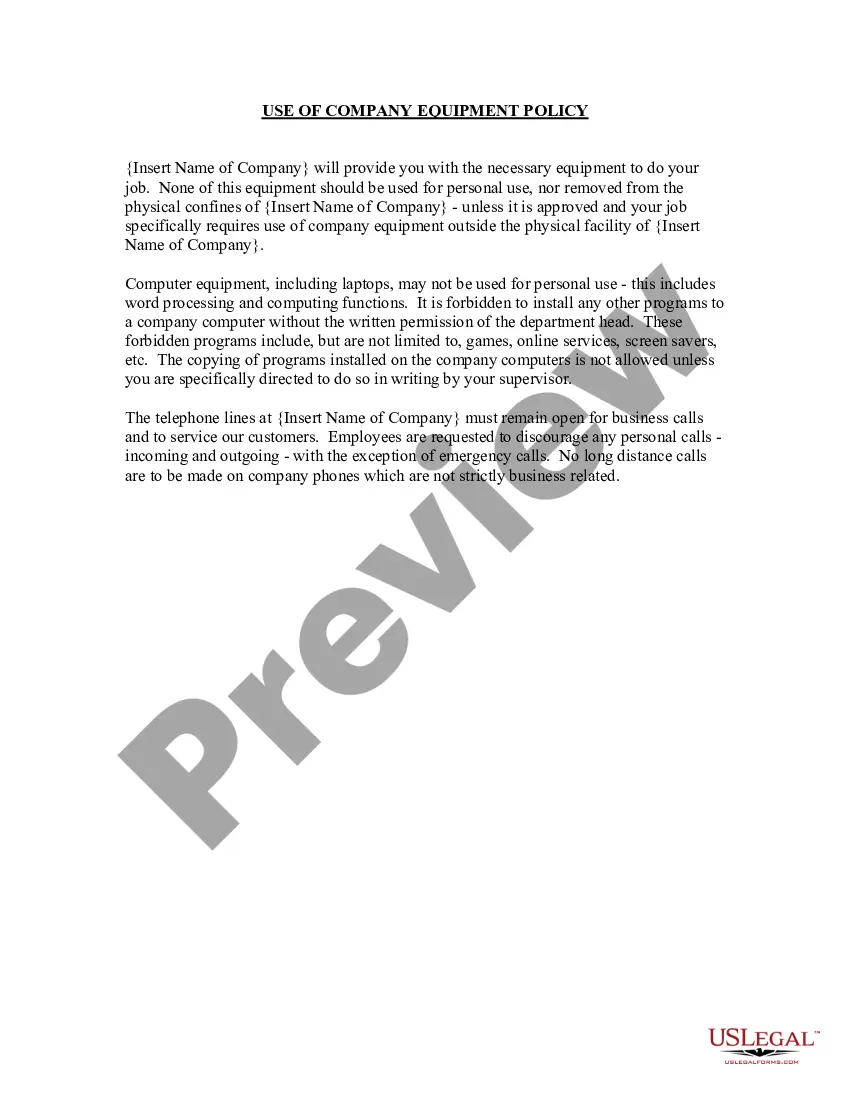
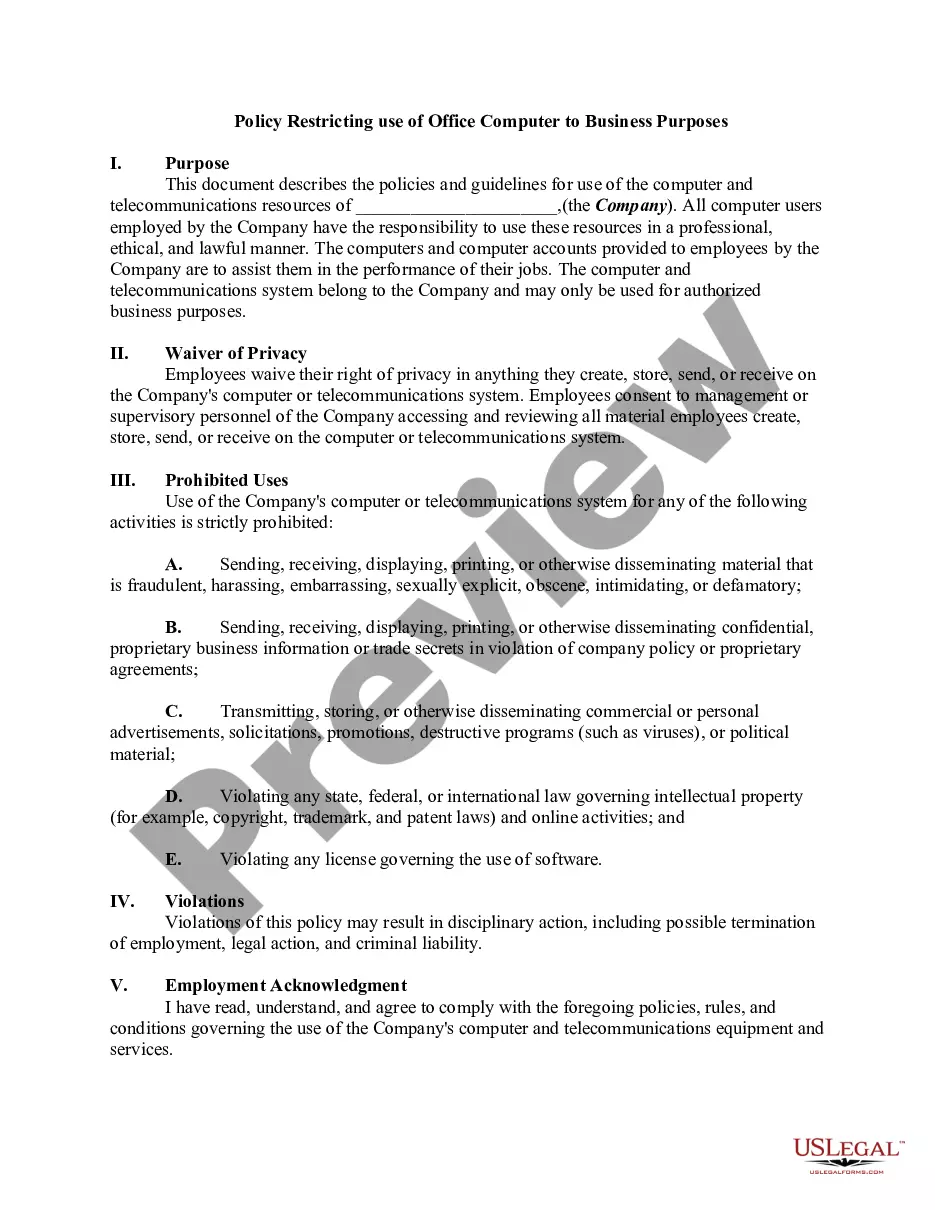
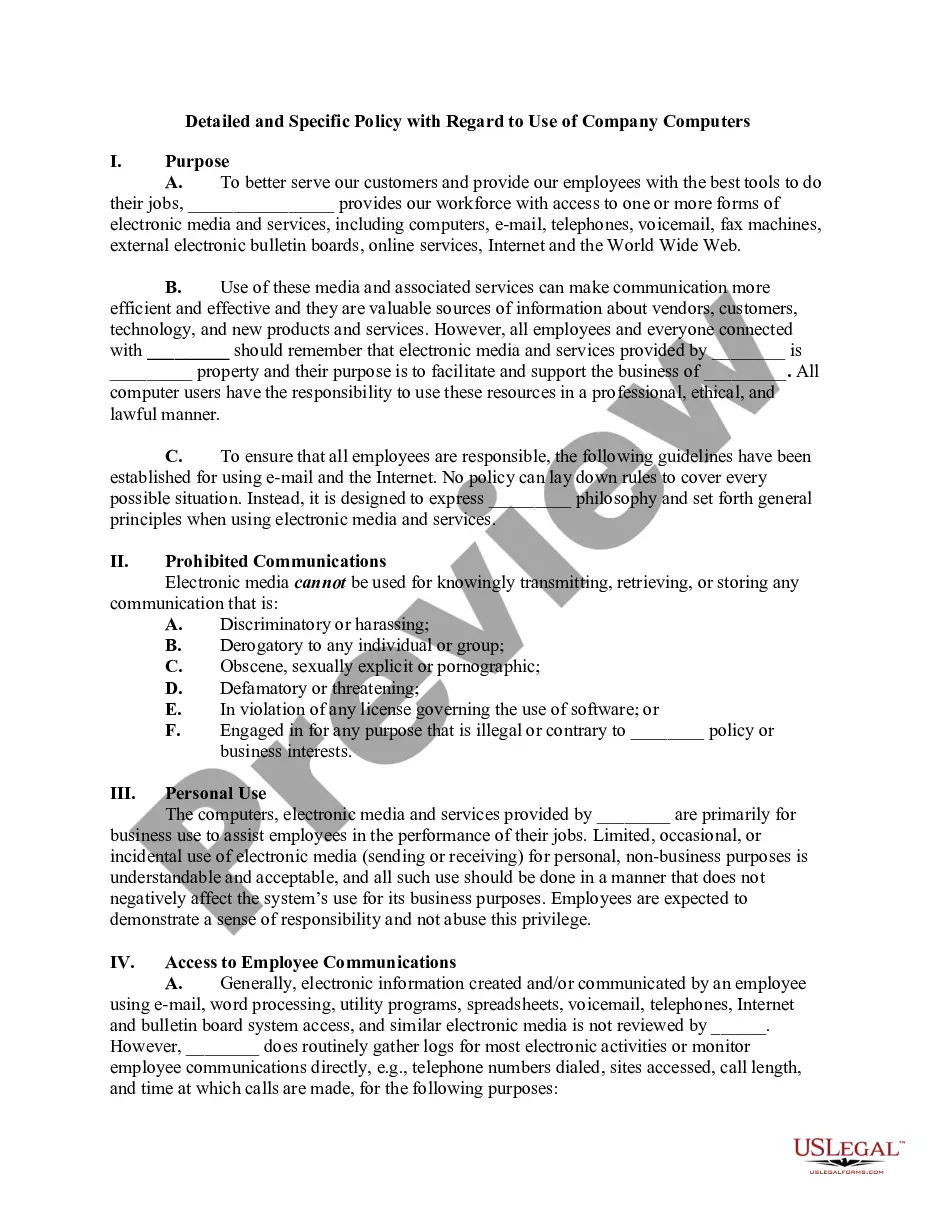
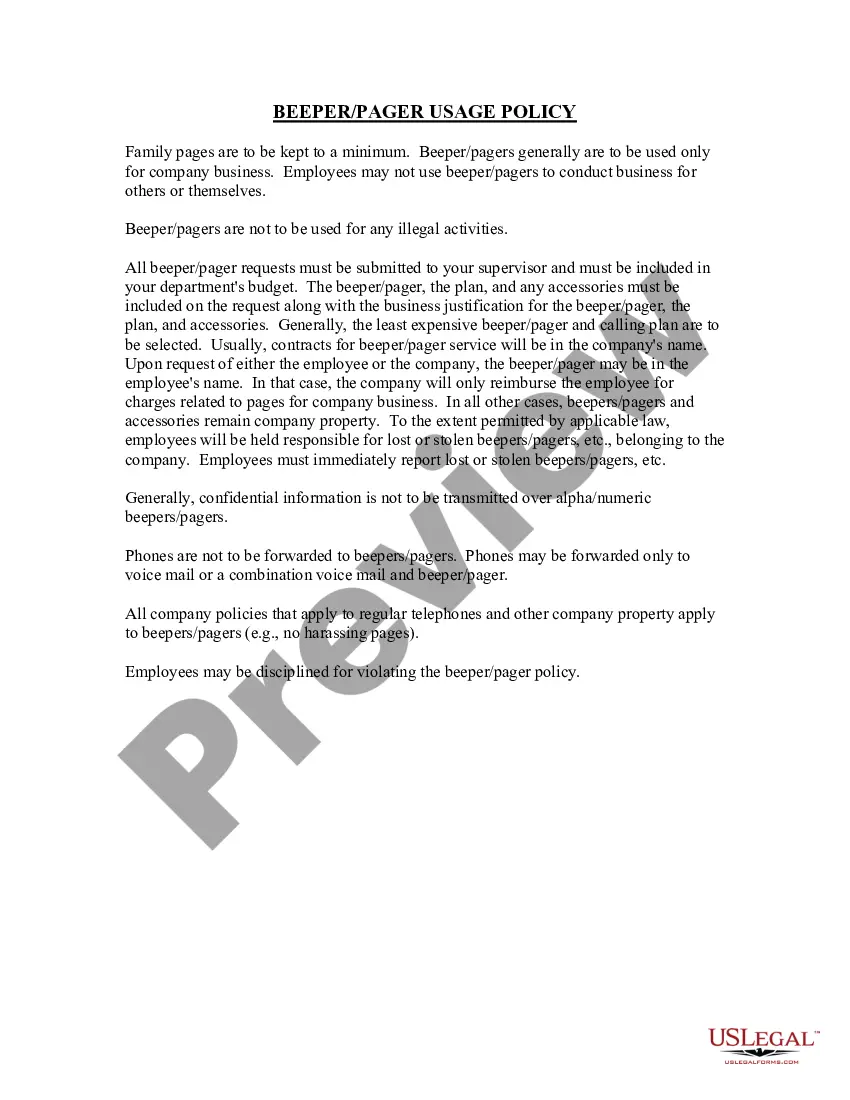
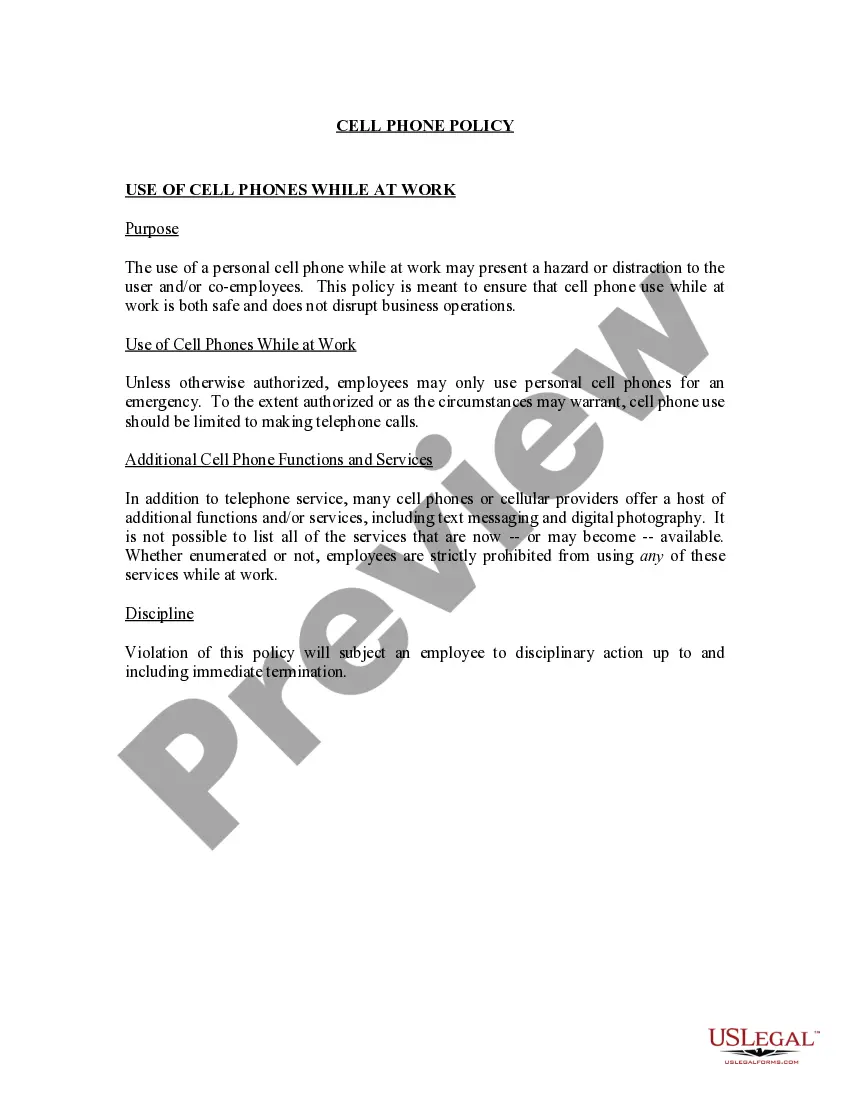
The Use of Company Equipment form is a policy document that outlines the proper usage of company assets by employees. Its primary purpose is to establish clear guidelines for the use of equipment, such as computers and telephones, ensuring they are used appropriately for work-related tasks. This form is essential for managing and protecting company resources, distinguishing it from other general use agreements by emphasizing workplace-specific rules and regulations.
Main sections of this form
- Provisions on the proper use of company equipment.
- Restrictions on personal use of company assets.
- Guidelines on software installation and usage.
- Policy on personal phone calls during work hours.
- Rules regarding long-distance calls and their business-related limitations.

When this form is needed
This form should be used when establishing or reinforcing a policy regarding the use of company equipment in the workplace. It is particularly useful when onboarding new employees, updating existing policies, or addressing concerns related to equipment misuse. Companies can refer to this policy during employee training sessions or performance reviews to highlight expectations around equipment use.
Who this form is for
- Employers looking to implement a structured policy on company equipment use.
- Human resources departments responsible for employee onboarding and compliance.
- Managers needing to communicate clear guidelines to their teams.
- Employees who need to understand their responsibilities regarding company assets.
How to complete this form
- Fill in the name of the company in the designated area.
- Review the policy with all employees to ensure comprehension.
- Ensure that employees understand the restrictions on personal equipment use.
- Distribute the form either in hard copy or digitally for acknowledgment.
- Maintain a signed copy from each employee for company records.
Does this form need to be notarized?
This form does not typically require notarization to be legally valid. However, some jurisdictions or document types may still require it. US Legal Forms provides secure online notarization powered by Notarize, available 24/7 for added convenience.
Get your form ready online
Our built-in tools help you complete, sign, share, and store your documents in one place.
Make edits, fill in missing information, and update formatting in US Legal Forms—just like you would in MS Word.
Download a copy, print it, send it by email, or mail it via USPS—whatever works best for your next step.
Sign and collect signatures with our SignNow integration. Send to multiple recipients, set reminders, and more. Go Premium to unlock E-Sign.
If this form requires notarization, complete it online through a secure video call—no need to meet a notary in person or wait for an appointment.
We protect your documents and personal data by following strict security and privacy standards.

Make edits, fill in missing information, and update formatting in US Legal Forms—just like you would in MS Word.

Download a copy, print it, send it by email, or mail it via USPS—whatever works best for your next step.

Sign and collect signatures with our SignNow integration. Send to multiple recipients, set reminders, and more. Go Premium to unlock E-Sign.

If this form requires notarization, complete it online through a secure video call—no need to meet a notary in person or wait for an appointment.

We protect your documents and personal data by following strict security and privacy standards.
Common mistakes to avoid
- Failing to distribute the form to all employees.
- Not obtaining signatures to confirm understanding and agreement.
- Omitting specific details about what constitutes personal use.
- Neglecting to update the form as new technology or equipment is acquired.
Why complete this form online
- Convenient access to the policy document for employees at any time.
- Easy updates and modifications as company needs change.
- Streamlined process for obtaining employee acknowledgments.
- Reduced paperwork and storage concerns through digital documentation.
Looking for another form?
Form popularity
FAQ
Property is any item that a person or a business has legal title over. Property can be tangible items, such as houses, cars, or appliances, or it can refer to intangible items that carry the promise of future worth, such as stock and bond certificates.
What is Real Estate? Real estate is real property that consists of land and improvements, which include buildings. Examples include property, plant, and equipment. Tangible assets are, fixtures, roads, structures, and utility systems.
The general rule is that all employers must provide their employees with their tools of work, unless the employee is working in a field where providing one's tools is common, and the employee is paid more than twice the minimum...
In general, when employers make property available to employees, it should be for work-related purposes and for the furtherance of their duties in the workplace.It is for this reason that employees who are caught in possession of company property are usually charged with unauthorised possession.
Company Property means all items and materials provided by the Company to the Executive, or to which the Executive has access, in the course of his employment, including, without limitation, all files, records, documents, drawings, specifications, memoranda, notes, reports, manuals, equipment, computer disks,
So the company property belongs to the share holders.
Property is essentially of two kinds Corporeal Property and Incorporeal Property. Corporeal Property can be further divided into Movable and Immovable Property and real and personal property. Incorporeal property is of two kinds-in re propria and rights in re aliena or encumbrances.
Company Property means all items and materials provided by the Company to the Executive, or to which the Executive has access, in the course of his employment, including, without limitation, all files, records, documents, drawings, specifications, memoranda, notes, reports, manuals, equipment, computer disks,
These days, many companies provide employees with a variety of work devices from smartphones to laptops and even tablets to complete their work with.However, cybersecurity experts say that weaving your personal and professional lives together via a work laptop is risky business for you and the company.