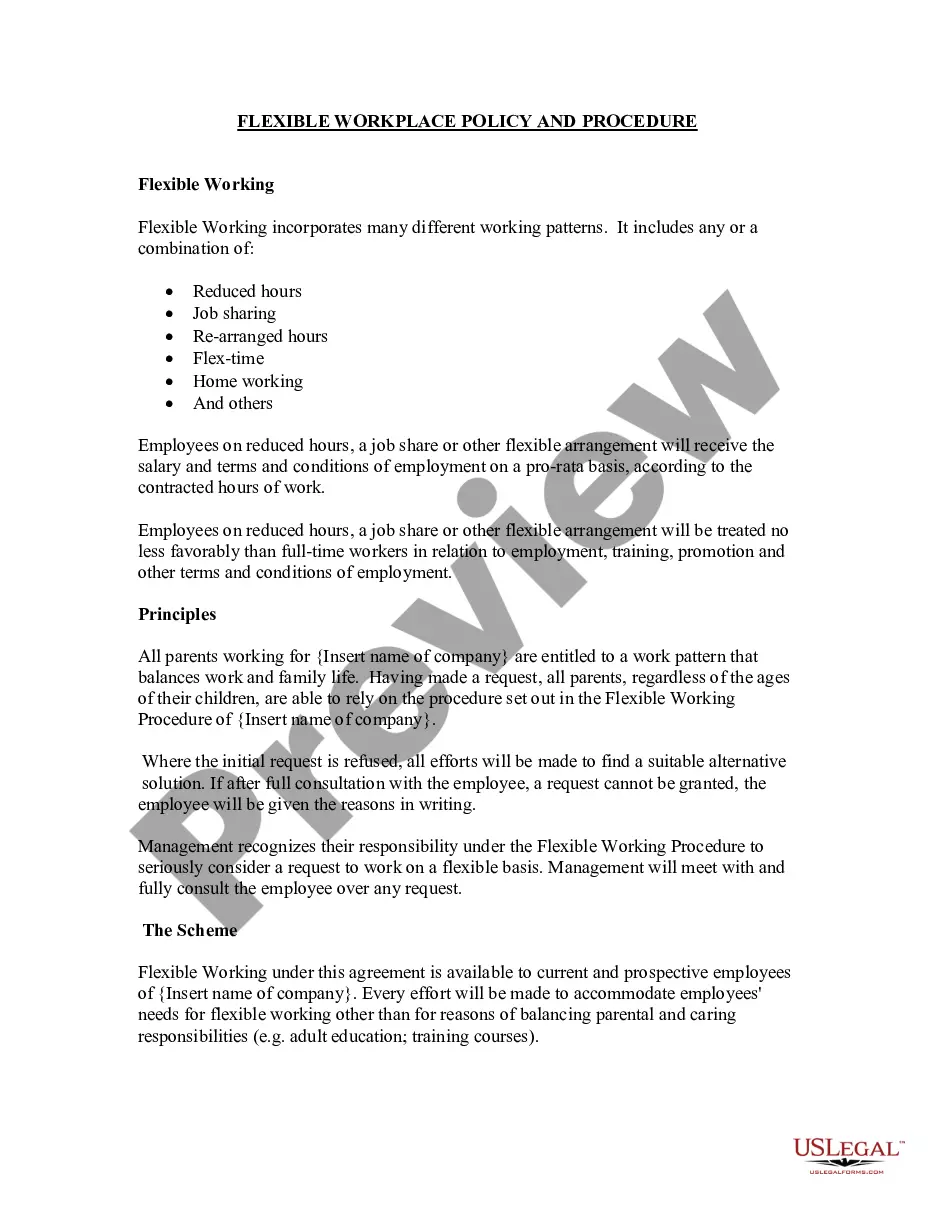
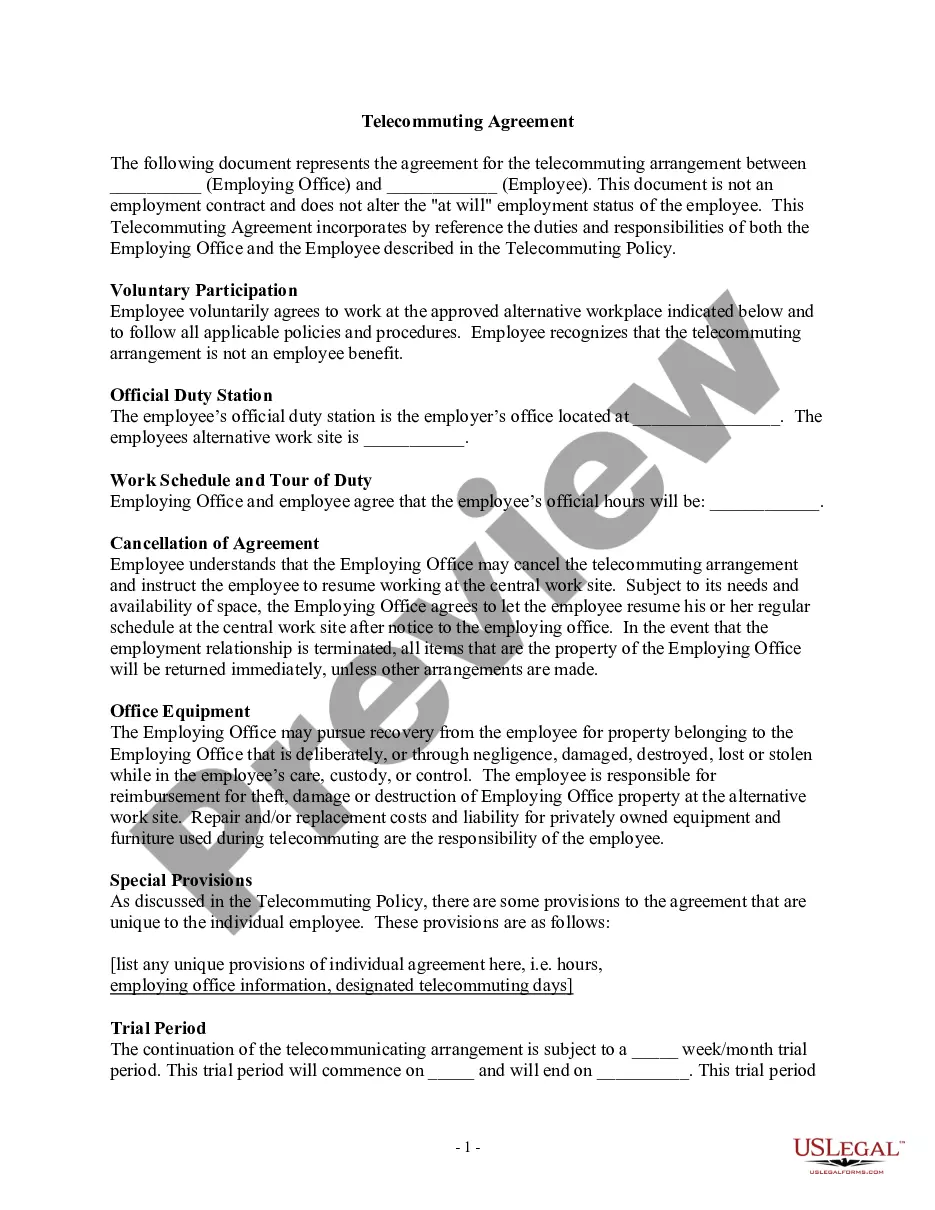
Telecommuting Policy
What is this form?
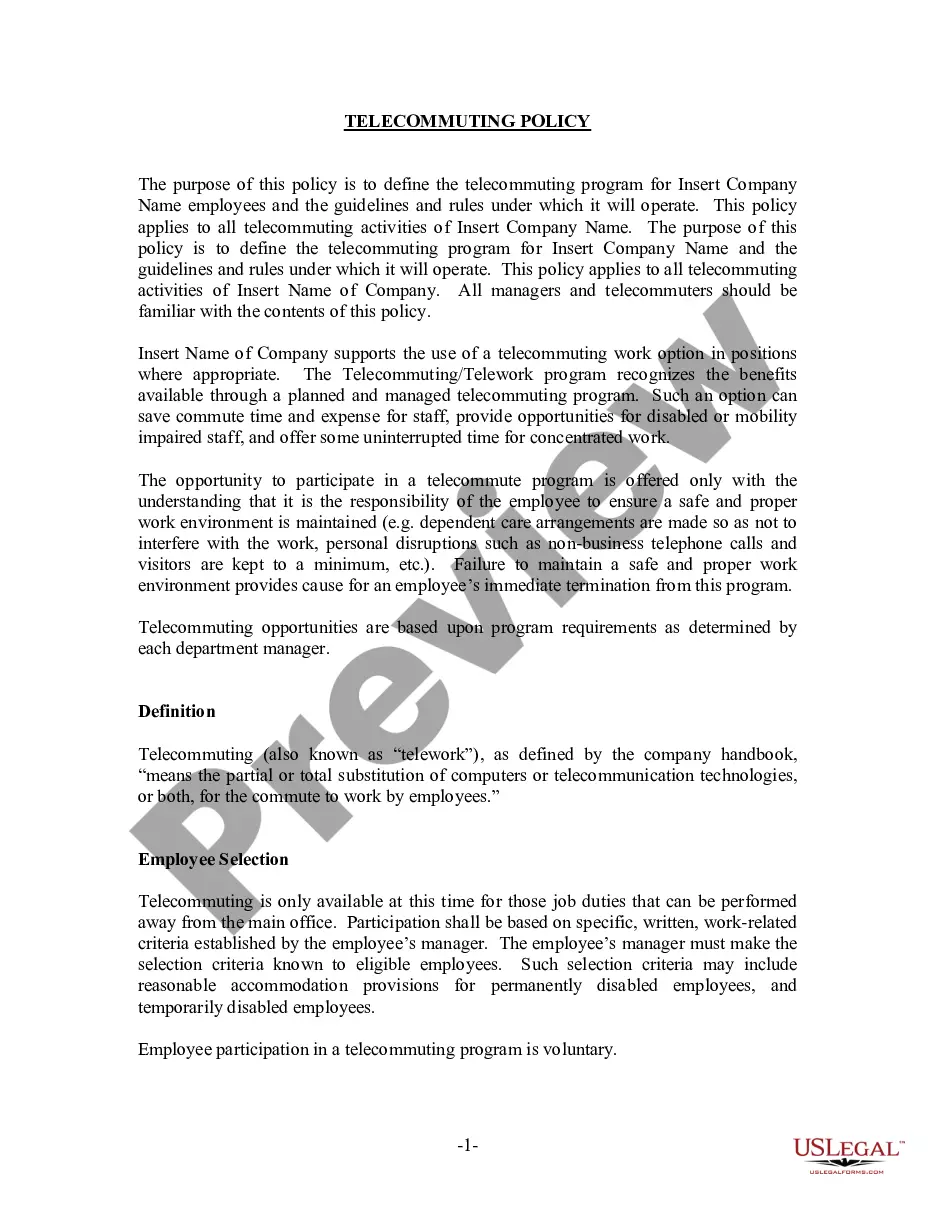
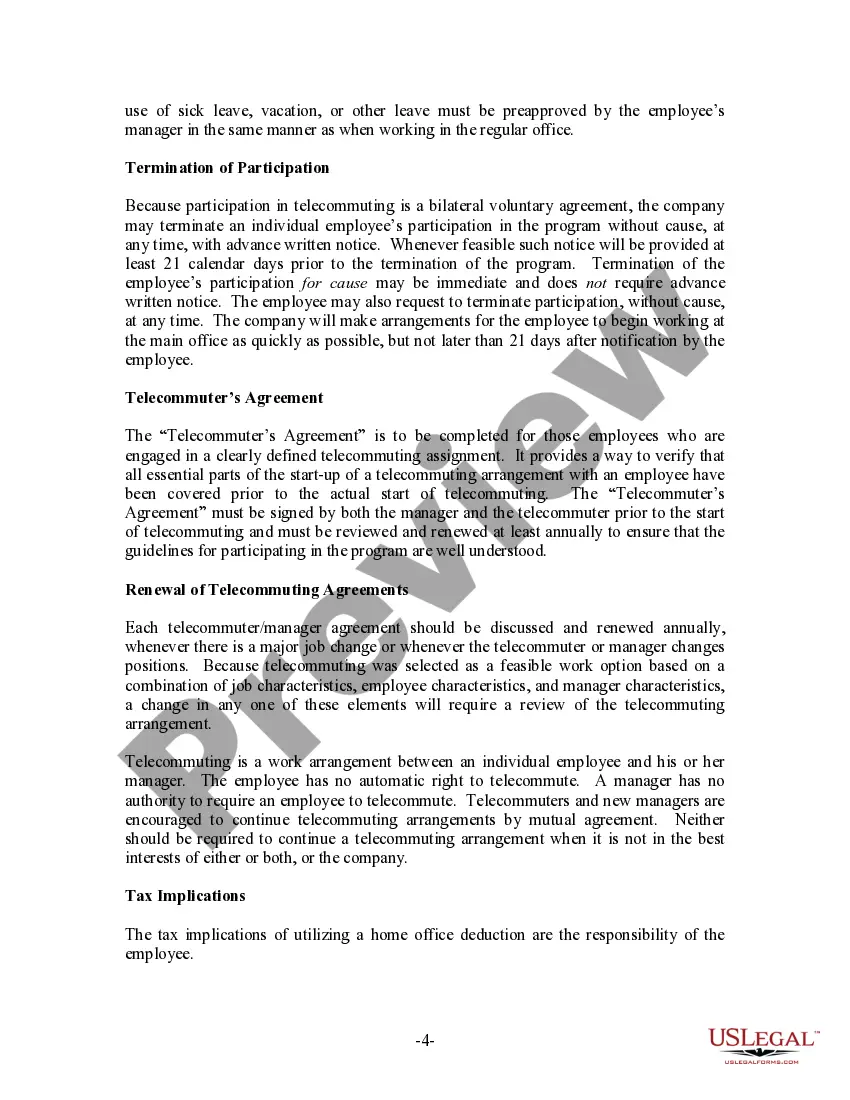
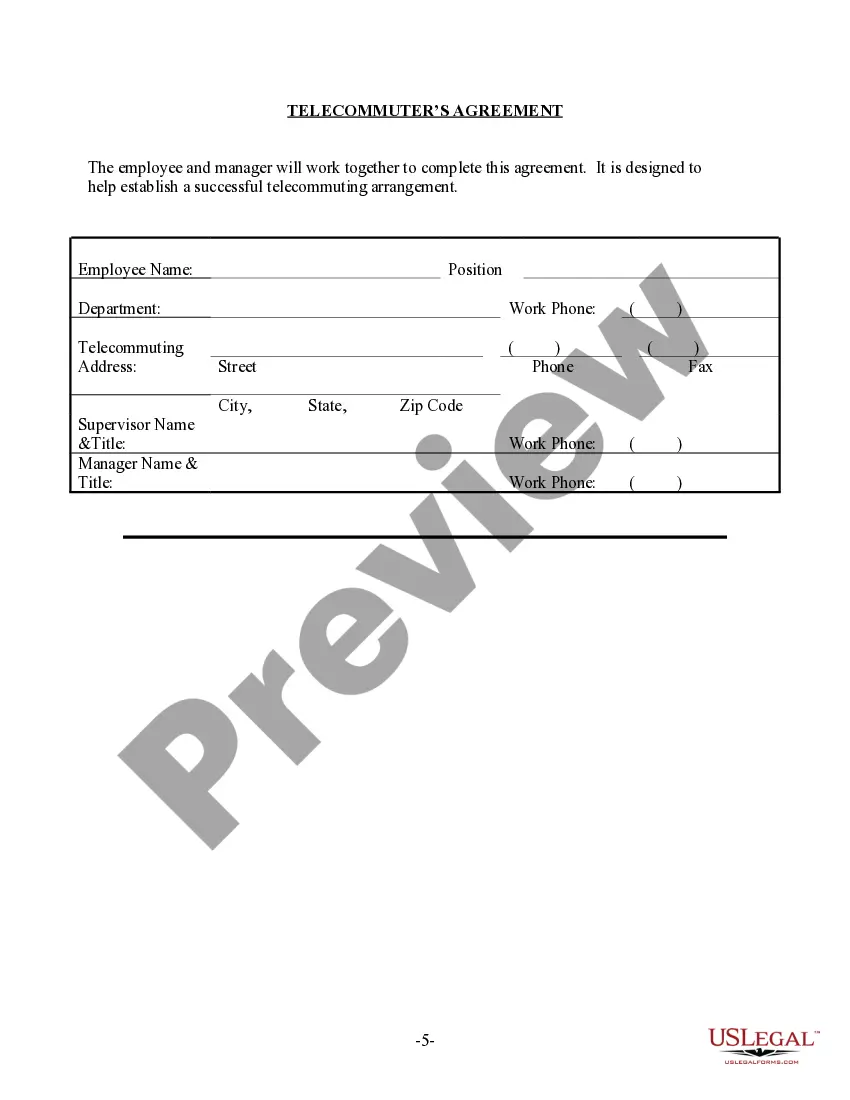
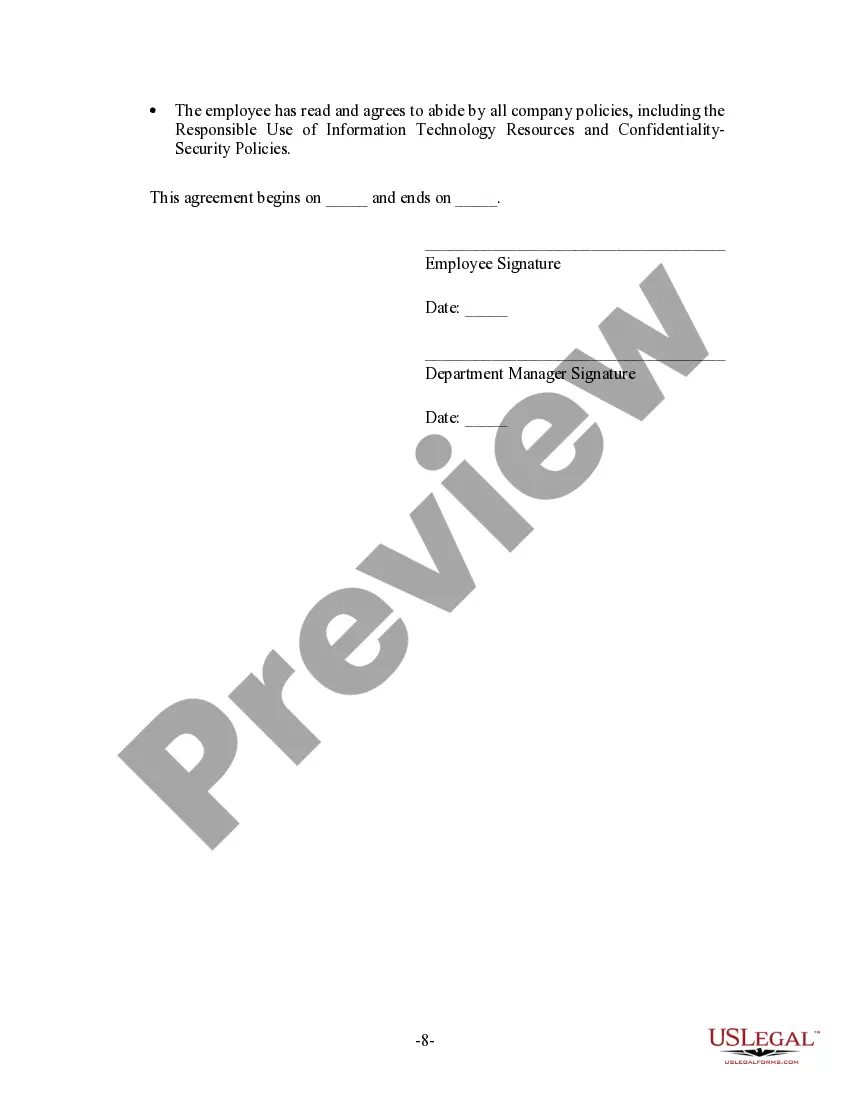
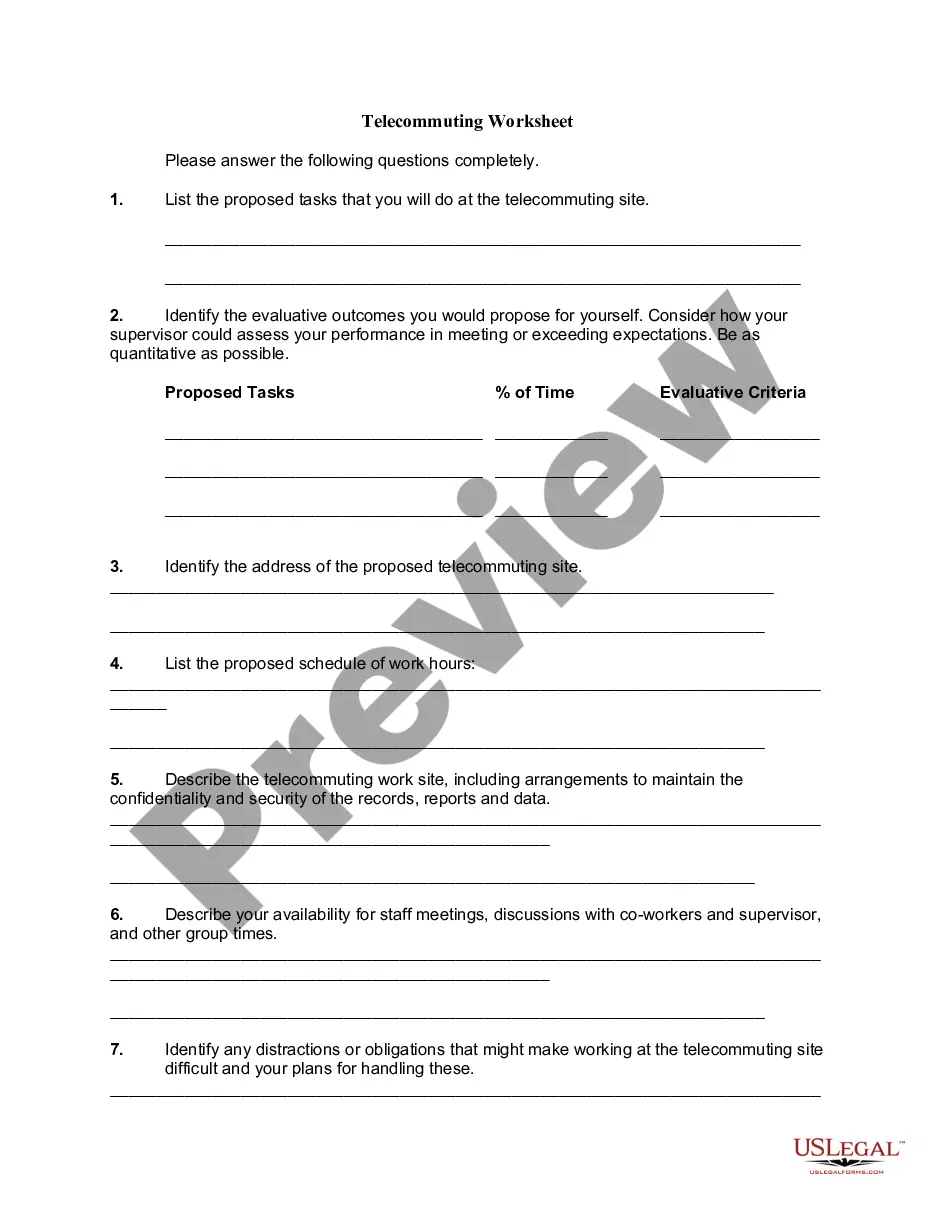
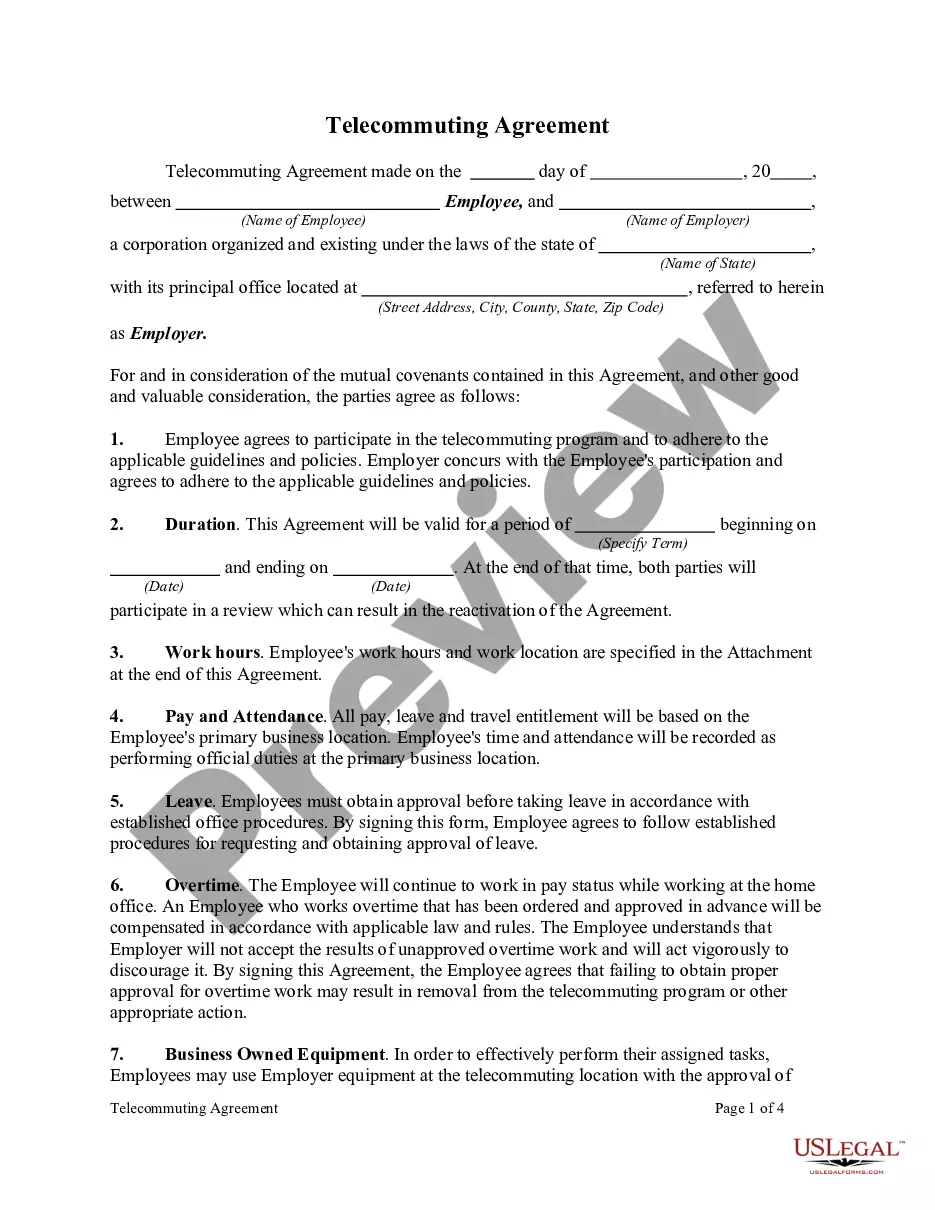
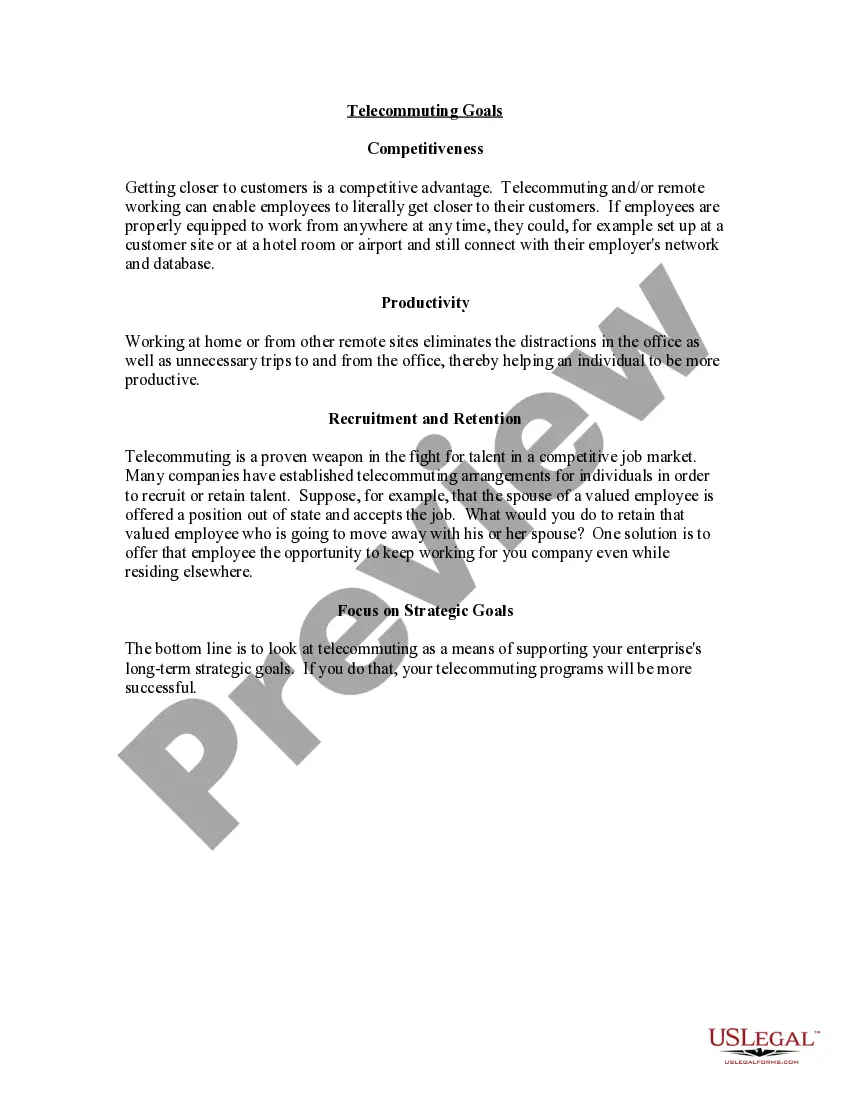
The Telecommuting Policy is a legal document that outlines the rules and guidelines for employees who are allowed to work remotely. This form differs from similar policies as it includes a Telecommuters Agreement, ensuring that both the employer and employee understand their responsibilities while telecommuting. The form helps employers manage telecommuting arrangements effectively while supporting employee flexibility and well-being.
Key parts of this document
- Definition of telecommuting and its applicability to job roles.
- Employee selection criteria for telecommuting.
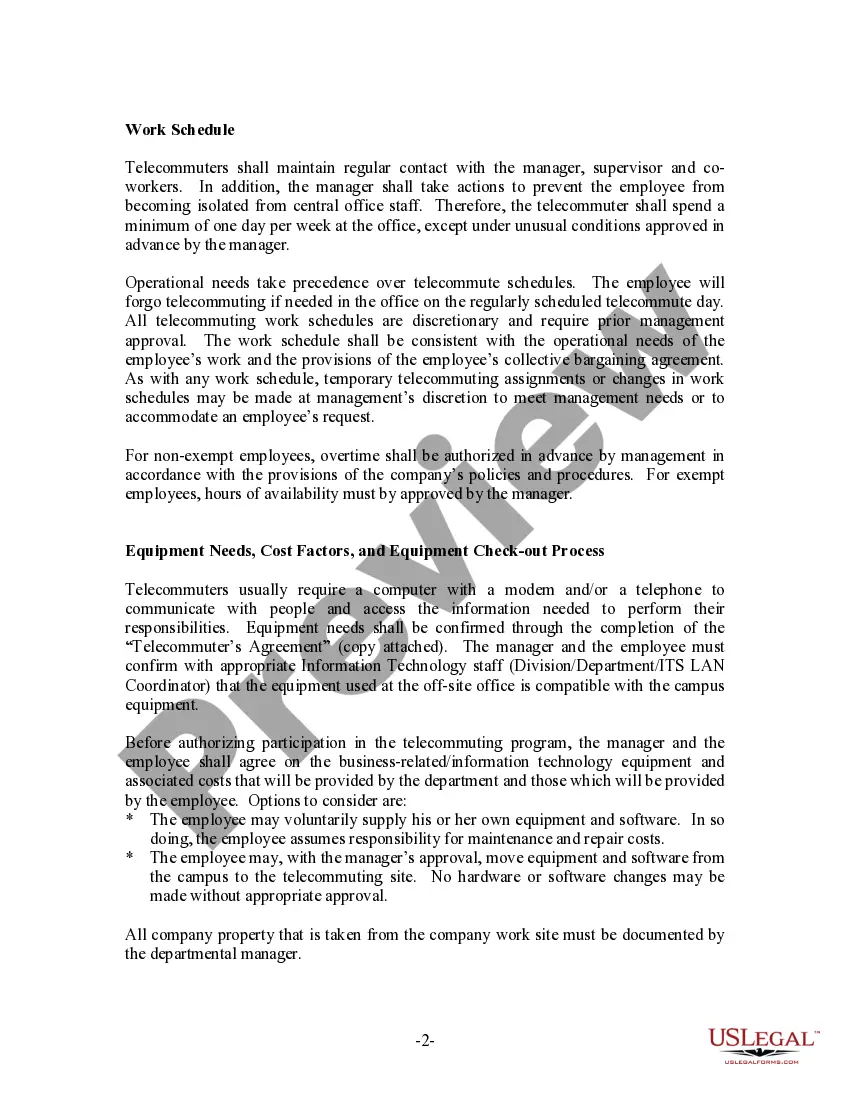
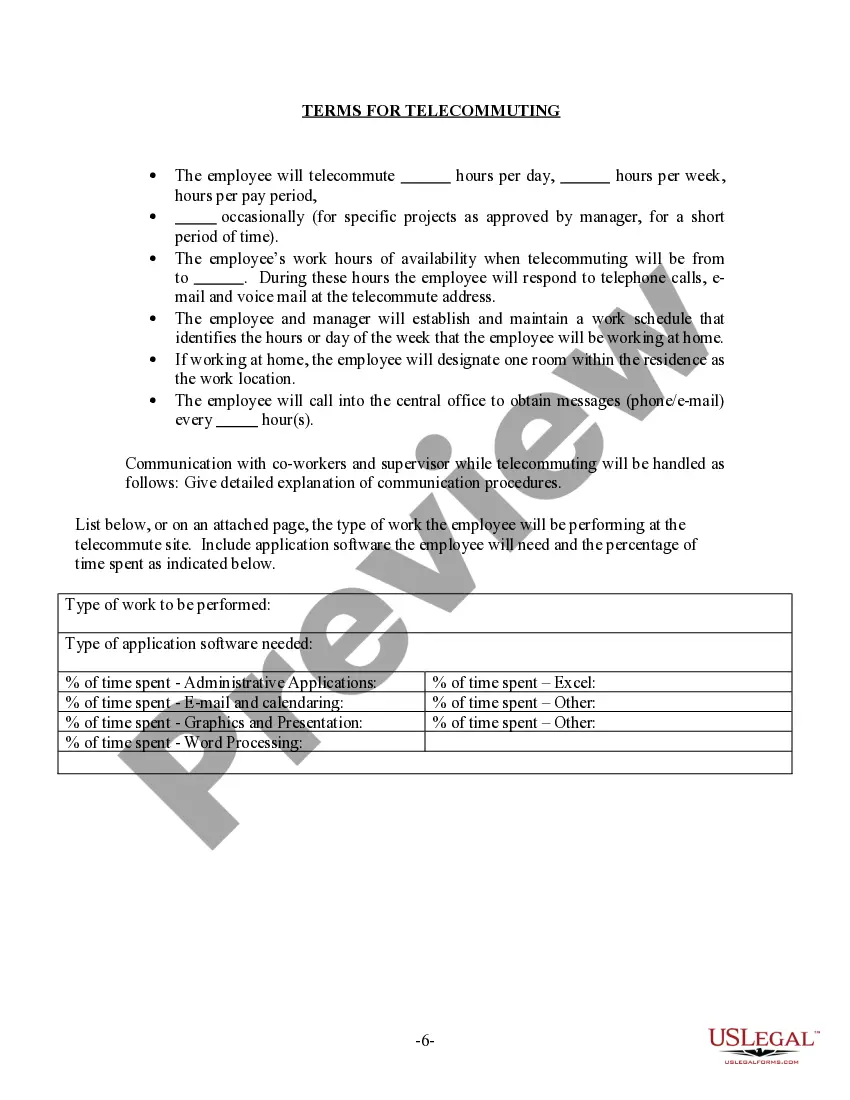
- Work schedule and communication requirements for telecommuters.
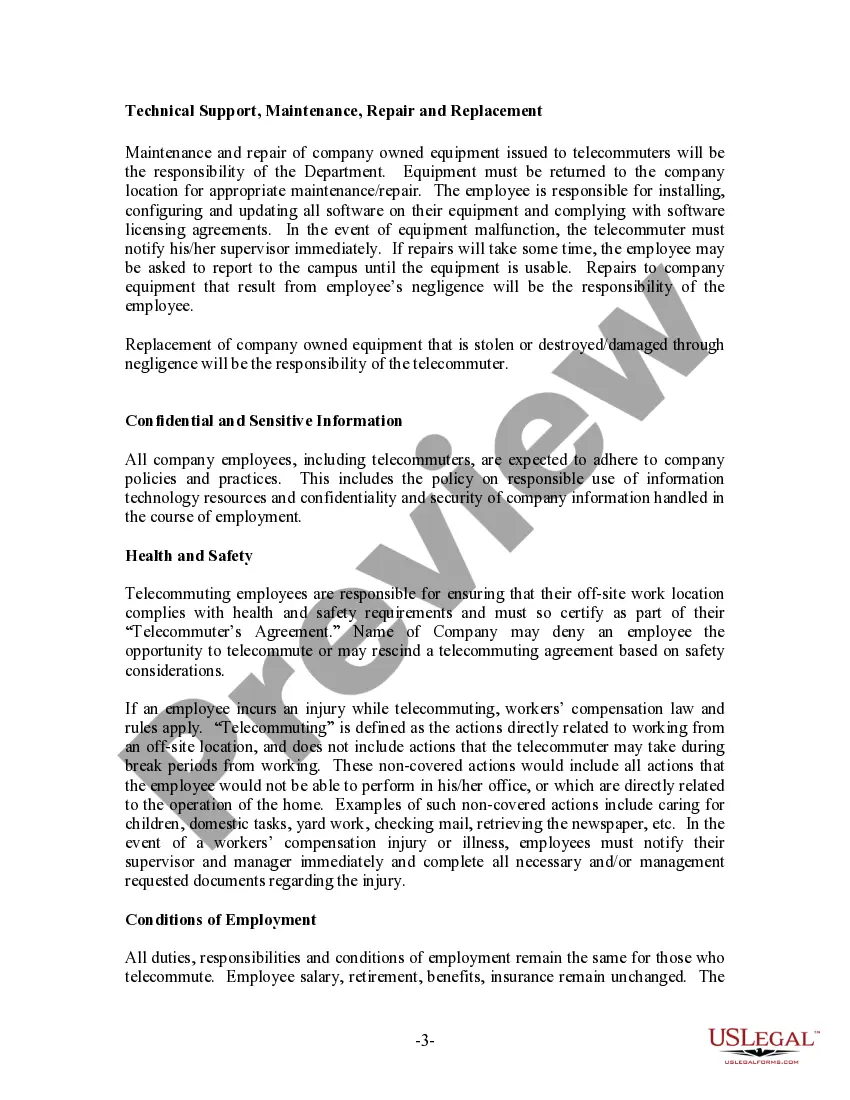
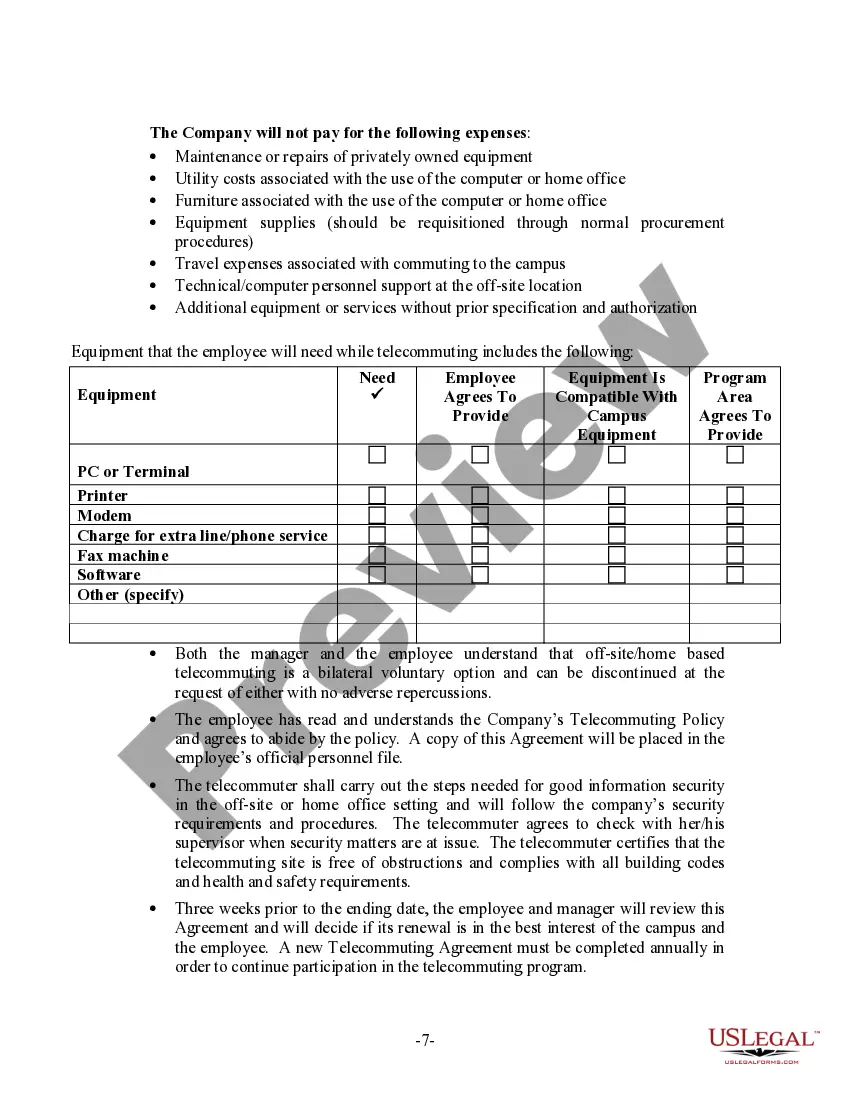
- Equipment needs and responsibilities regarding maintenance and repair.
- Health and safety compliance for off-site work locations.
- Conditions for termination or renewal of telecommuting agreements.
When to use this form
This form should be used when an employer intends to implement a telecommuting program. It is essential during the onboarding of employees who may work remotely, as it clarifies expectations regarding their roles, work schedules, and responsibilities. Additionally, it is useful for reviewing existing telecommuting arrangements to ensure compliance with company policies.
Who should use this form
- Employers implementing a telecommuting program within their organization.
- Managers responsible for overseeing telecommuting employees.
- Employees considering participation in a telecommuting arrangement.
How to prepare this document
- Identify the company name and insert it in the designated fields throughout the document.
- Outline the criteria for employee selection for telecommuting positions.
- Specify the expected work schedule and communication requirements.
- Complete the Telecommuters Agreement, ensuring all parties sign it before starting telecommuting.
- Review and renew the agreement annually or when there is a significant job change.
Does this document require notarization?
This form does not typically require notarization unless specified by local law. Ensure to check your state regulations for any specific requirements regarding telecommuting agreements.
Get your form ready online
Our built-in tools help you complete, sign, share, and store your documents in one place.
Make edits, fill in missing information, and update formatting in US Legal Forms—just like you would in MS Word.
Download a copy, print it, send it by email, or mail it via USPS—whatever works best for your next step.
Sign and collect signatures with our SignNow integration. Send to multiple recipients, set reminders, and more. Go Premium to unlock E-Sign.
If this form requires notarization, complete it online through a secure video call—no need to meet a notary in person or wait for an appointment.
We protect your documents and personal data by following strict security and privacy standards.

Make edits, fill in missing information, and update formatting in US Legal Forms—just like you would in MS Word.

Download a copy, print it, send it by email, or mail it via USPS—whatever works best for your next step.

Sign and collect signatures with our SignNow integration. Send to multiple recipients, set reminders, and more. Go Premium to unlock E-Sign.

If this form requires notarization, complete it online through a secure video call—no need to meet a notary in person or wait for an appointment.

We protect your documents and personal data by following strict security and privacy standards.
Mistakes to watch out for
- Failing to clearly define the telecommuting eligibility criteria for employees.
- Not documenting equipment needs and responsibilities adequately.
- Skipping annual review of the Telecommuters Agreement.
Advantages of online completion
- Convenient and fast access to the Telecommuting Policy and Agreement.
- Easy customization to fit specific company requirements.
- Quick updates and revisions are possible as policies change.
Legal use & context
- The Telecommuting Policy is enforceable as part of employment terms.
- It provides a structured framework for managing remote work expectations.
- Non-compliance with the policy can lead to termination of telecommuting privileges.
Quick recap
- A clear telecommuting policy supports both employer and employee needs.
- Regular communication and updates are critical in a telecommuting arrangement.
- Completing the Telecommuters Agreement is essential before beginning remote work.
Looking for another form?

Form popularity
FAQ
What is a Work From Home Policy? Simply put, a work from home policy is a set of guidelines used by a company that outlines the rules about how employees can work remotely, instead of physically coming into the office. Obviously there are some jobs that cannot be done remotely.
Define the Scope. Set Admissible Work-From-Home Days. List Acceptable Reasons to Work From Home. Designate specific Working Hours. Outline Communication, Responsiveness and Availability Expectations. Set Technology Support and Requirements.
The Bad of Telecommuting Many lack the self-discipline to clearly delineate and stick to set work hours. 40% say they work longer hours and note a significant increase in stress while experiencing a decrease in time not thinking about work.
Telecommuting is an employment arrangement in which the employee works outside of the employer's office. Often this means working from home or at a location close to home, such as a coffee shop, library, or co-working space.
Frequently Asked Questions Pandemic In practice, "telework" is a work arrangement that allows and employee to perform work, during any part of regular, paid hours, at an approved alternative worksite (e.g., home, telework center).
Remote work and telecommuting are often used interchangeably, but there can be small differences between the two. Remote work suggests that the employee is just thatremotely located.Telecommuting, also called telework, can mean that the employee might be working on-site some of the time.
Telecommuting is a voluntary agreement between the manager/supervisor and the telecommuter.Employee initiated schedule changes must be with advanced approval by the manager. 3. The duties, obligations, responsibilities and conditions of the telecommuter's employment with the EMPLOYER remain unchanged.
These policies outline who can work from home, how they should go about doing the work, what is expected of them, how their work will be measured, what support is available to them, and their legal rights as remote employees.
The official definition of "telework" can be found in the Telework Enhancement Act of 2010: "the term 'telework' or 'teleworking' refers to a work flexibility arrangement under which an employee performs the duties and responsibilities of such employee's position, and other authorized activities, from an approved