Challenge of Drug Screen
About this form
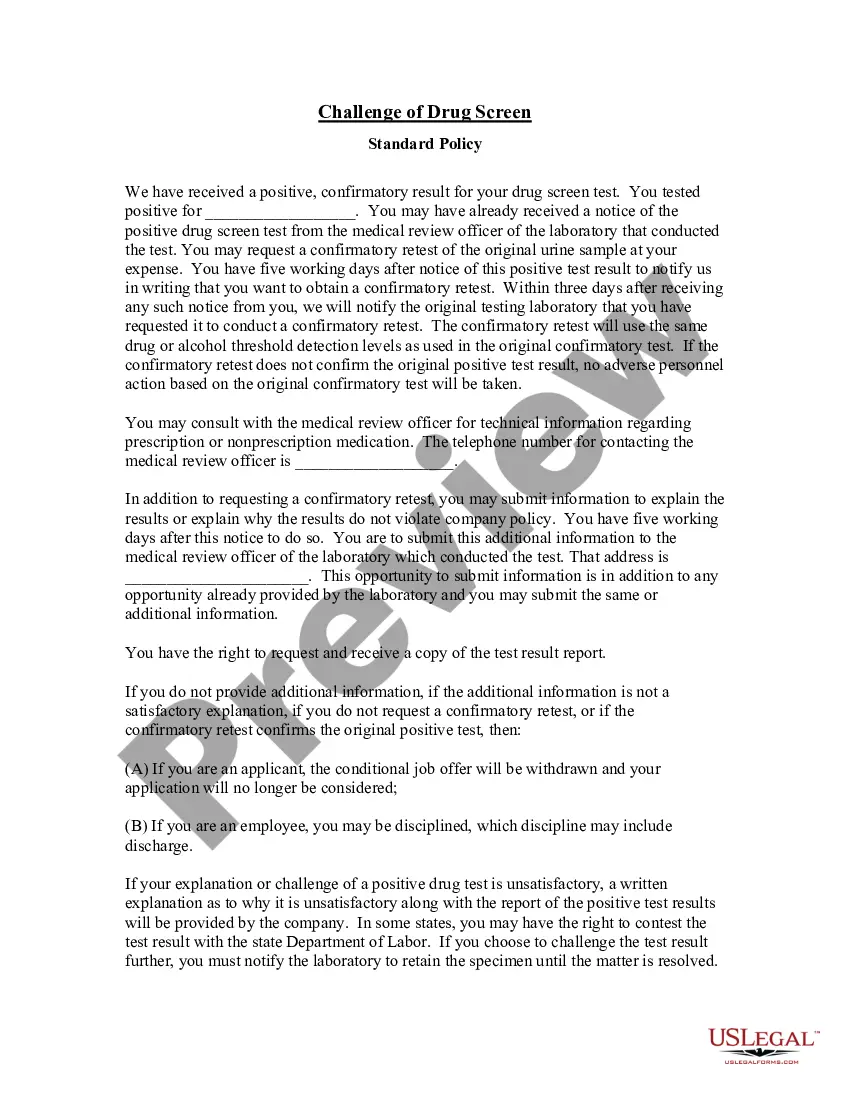
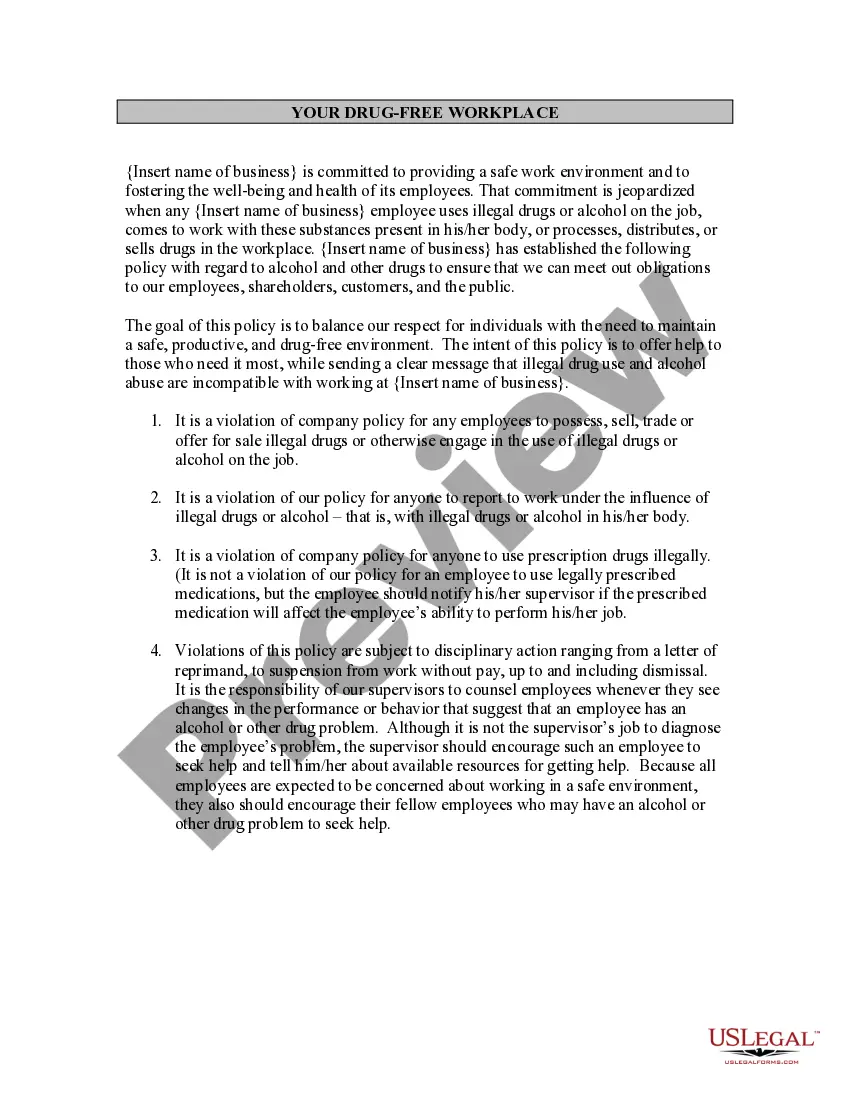
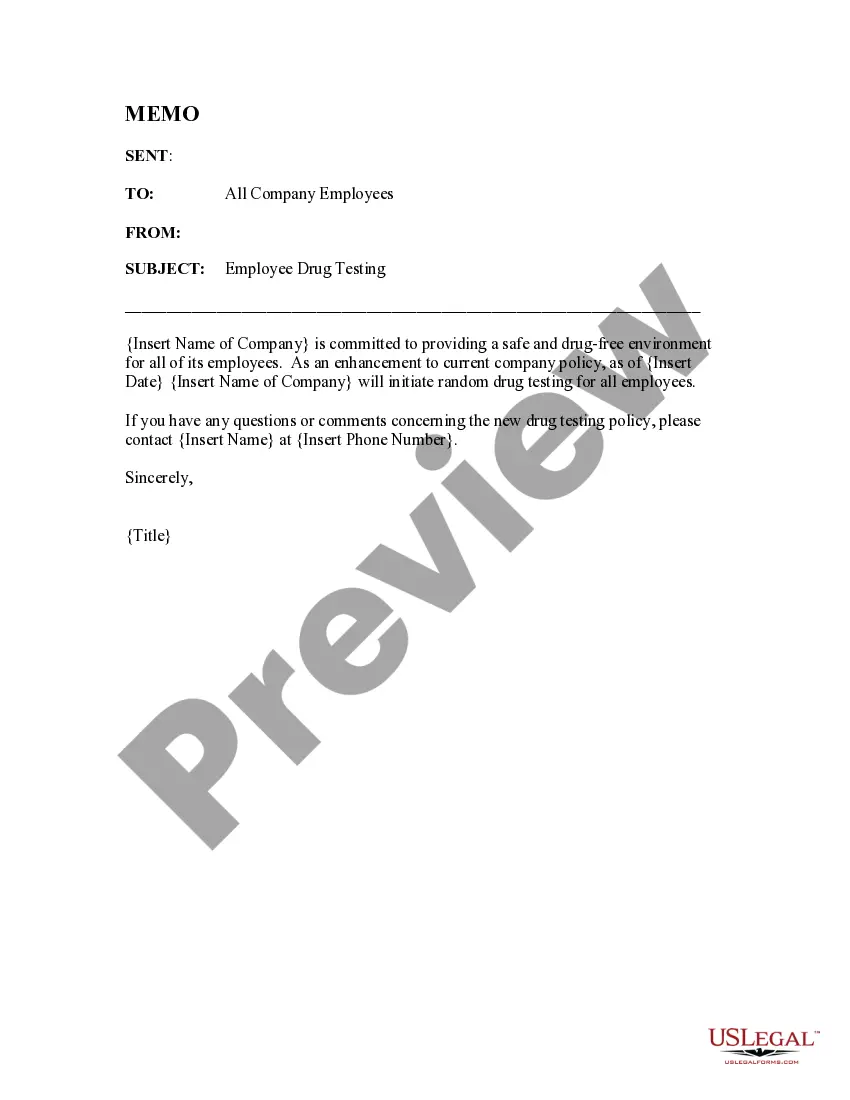
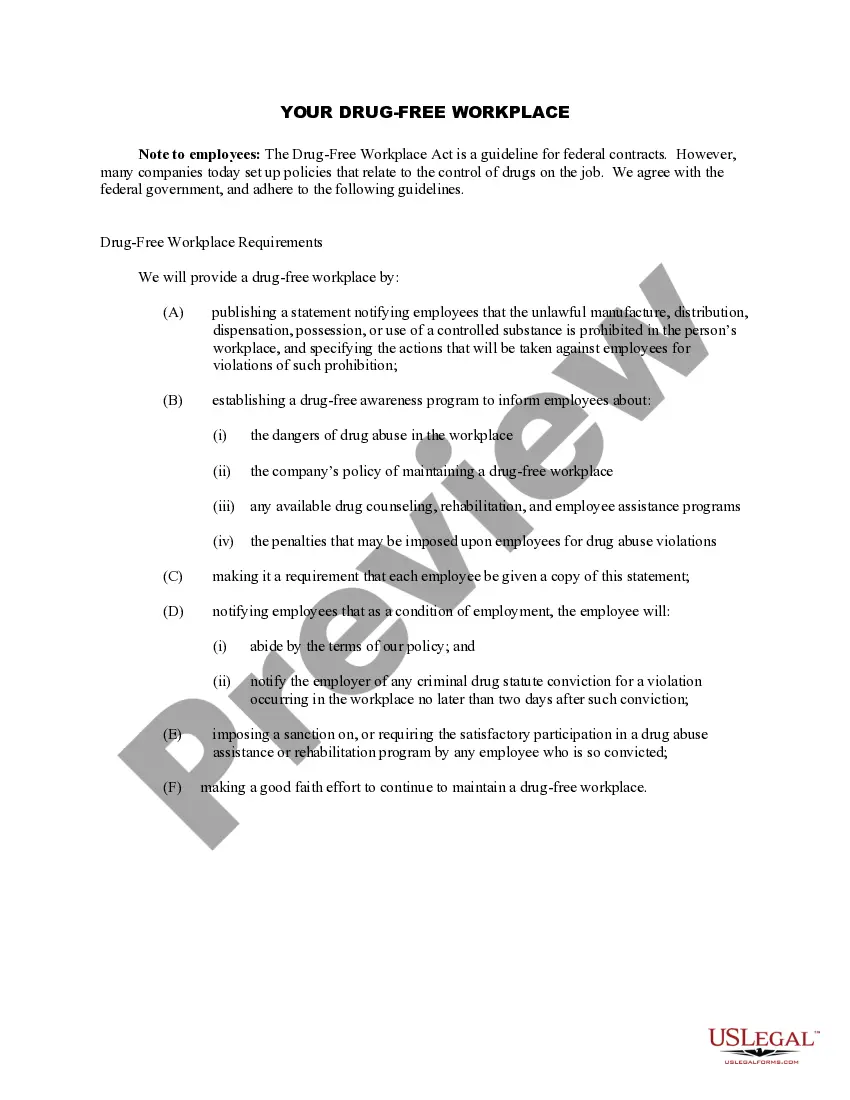
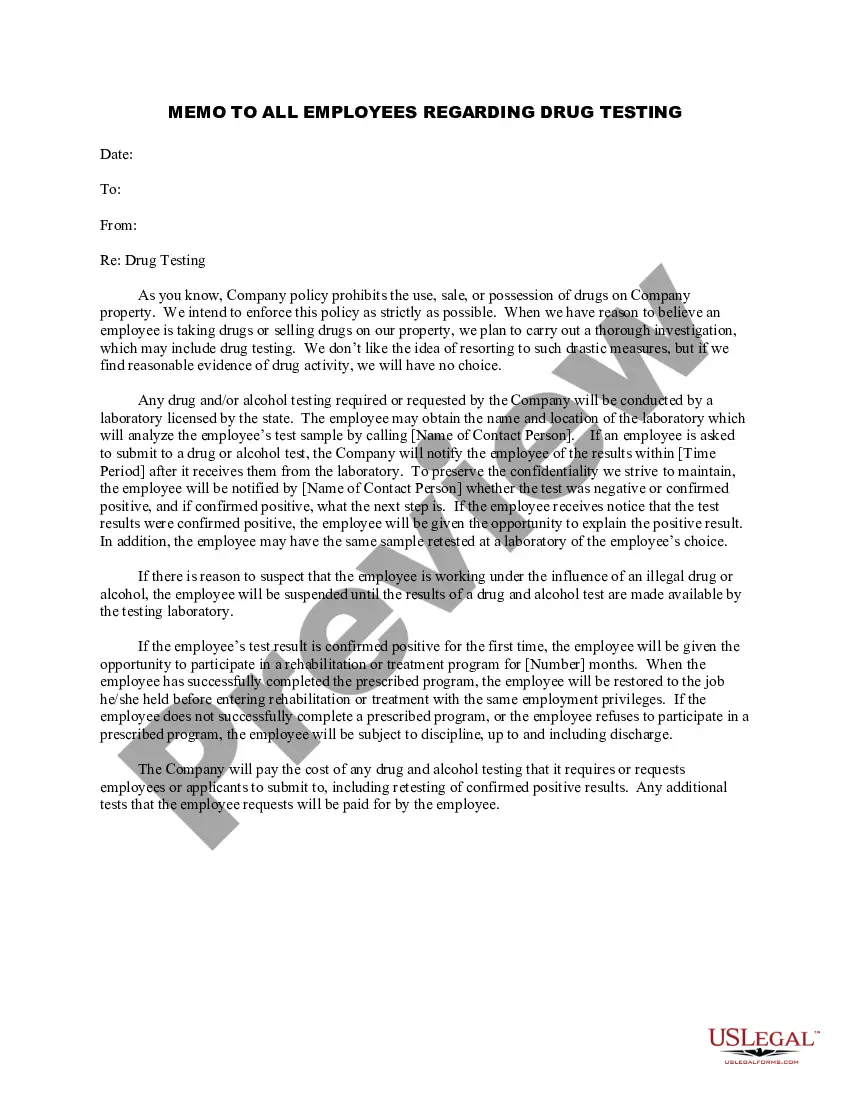
The Challenge of Drug Screen form is a legal document used by employees who have tested positive for a controlled substance. Its primary purpose is to inform employees of their options to contest the positive test results. In contrast to other employment-related forms, this document specifically addresses the procedures for requesting a confirmatory retest and submitting explanations for the test results as part of the challenge process.
What’s included in this form
- Notification of the positive drug screen result.
- Information on requesting a confirmatory retest at the employee's expense.
- Timeframes for notifying the employer about retest requests and additional information submissions.
- Contact information for the medical review officer for queries regarding medication.
- Consequences of not providing additional information or if retest confirms the original result.
When to use this form
This form should be used when an employee has received notice of a positive drug screen result. It is necessary for individuals who want to contest the test results by either requesting a retest or providing explanations for the test outcomes. The form is crucial in ensuring the employee's rights are protected during the testing dispute process.
Who needs this form
- Employees who have tested positive for drugs and wish to challenge the results.
- Job applicants who have received a conditional offer of employment and tested positive.
- Individuals involved in workplace drug screening programs.
How to complete this form
- Provide your name and contact details at the top of the form.
- Specify the substance for which you tested positive in the designated field.
- Indicate whether you wish to request a confirmatory retest by checking the appropriate box and writing a notice to your employer.
- Submit any additional information or explanations regarding the positive result in the provided section.
- Contact your medical review officer for clarification on medications and submit the form within the given timeframes.
Does this document require notarization?
In most cases, this form does not require notarization. However, some jurisdictions or signing circumstances might. US Legal Forms offers online notarization powered by Notarize, accessible 24/7 for a quick, remote process.
Get your form ready online
Our built-in tools help you complete, sign, share, and store your documents in one place.
Make edits, fill in missing information, and update formatting in US Legal Forms—just like you would in MS Word.
Download a copy, print it, send it by email, or mail it via USPS—whatever works best for your next step.
Sign and collect signatures with our SignNow integration. Send to multiple recipients, set reminders, and more. Go Premium to unlock E-Sign.
If this form requires notarization, complete it online through a secure video call—no need to meet a notary in person or wait for an appointment.
We protect your documents and personal data by following strict security and privacy standards.

Make edits, fill in missing information, and update formatting in US Legal Forms—just like you would in MS Word.

Download a copy, print it, send it by email, or mail it via USPS—whatever works best for your next step.

Sign and collect signatures with our SignNow integration. Send to multiple recipients, set reminders, and more. Go Premium to unlock E-Sign.

If this form requires notarization, complete it online through a secure video call—no need to meet a notary in person or wait for an appointment.

We protect your documents and personal data by following strict security and privacy standards.
Common mistakes
- Failing to submit the request for a confirmatory retest within the five-working day window.
- Not providing adequate explanations or documentation regarding prescription medications.
- Overlooking the need to contact the medical review officer promptly.
- Submitting additional information past the five-working day deadline.
Why complete this form online
- Quick and easy access to the form allows for prompt action after receiving test results.
- Editability ensures you can customize the form to your specific situation.
- Reliable templates drafted by licensed attorneys ensure legal compliance.
Legal use & context
- This form protects your rights following a positive drug test, ensuring fair treatment in the workplace.
- Usage of this form can help contest unfair drug testing results or address potential misunderstandings.
- States may vary in enforcement, so local regulations should be reviewed in conjunction with this form.
What to keep in mind
- Understand your rights after a positive drug test.
- Act promptly to preserve your options for contesting the results.
- Provide any relevant information to support your challenge.
Looking for another form?
Form popularity
FAQ
Acetaminophen. Alcohol. Antihistamines. Aspirin. Caffeine. Vitamin B.
In addition to deaths and accidents, absenteeism and loss of production, other problems that alcohol and drug abuse can cause on the job include: Tardiness/sleeping on the job2feff Hangover or withdrawal affecting job performance. Poor decision making.
A drug test is often more reliable and provides an accurate analysis of an individual's substance use. Major corporations typically prefer testing over screening. On the other hand, drug screening is a more cost-effective approach, as it is relatively cheaper than a drug test.
Unsuprisingly, cannabis is the most common cause of positive drug tests in the workplace. And it's positivity rate is increasing across all workforces.
Causes of potentially inappropriate negative UDT results include limited assay specificity, absence of drug in the urine, presence of drug in the urine, but below established assay cutoff, specimen manipulation and laboratory error.
Indiscriminate testing of employees for drug use is an intrusive and degrading process that undermines our most deeply held tenets of fairness and privacy in the workplace. It should not be surprising, then, that a recent study concluded that workplace drug testing lowers productivity.
The major technical problem in interpreting screening tests is that the presence of a substance in the urine indicates merely exposure to the drug, not necessarily intoxication, habituation, or addiction.
Reduced employee healthcare costs. Improvements in employee morale, productivity, and performance. Decreased absenteeism, accidents, downtime, turnover, and theft. Compliance with state or federal regulations. Being able to identify and refer employees who have drug and/or alcohol problems.
False-negatives can occur when the urine drug concentration is below the threshold level set by the laboratory performing the test. Dilute urine, the duration of time between ingestion of the drug and time of testing, and the quantity of the drug ingested may affect the occurrence of false-negatives.