Jury Instruction - Note-Taking - For Inclusion in Final Charge When Note-Taking Permitted
What this document covers
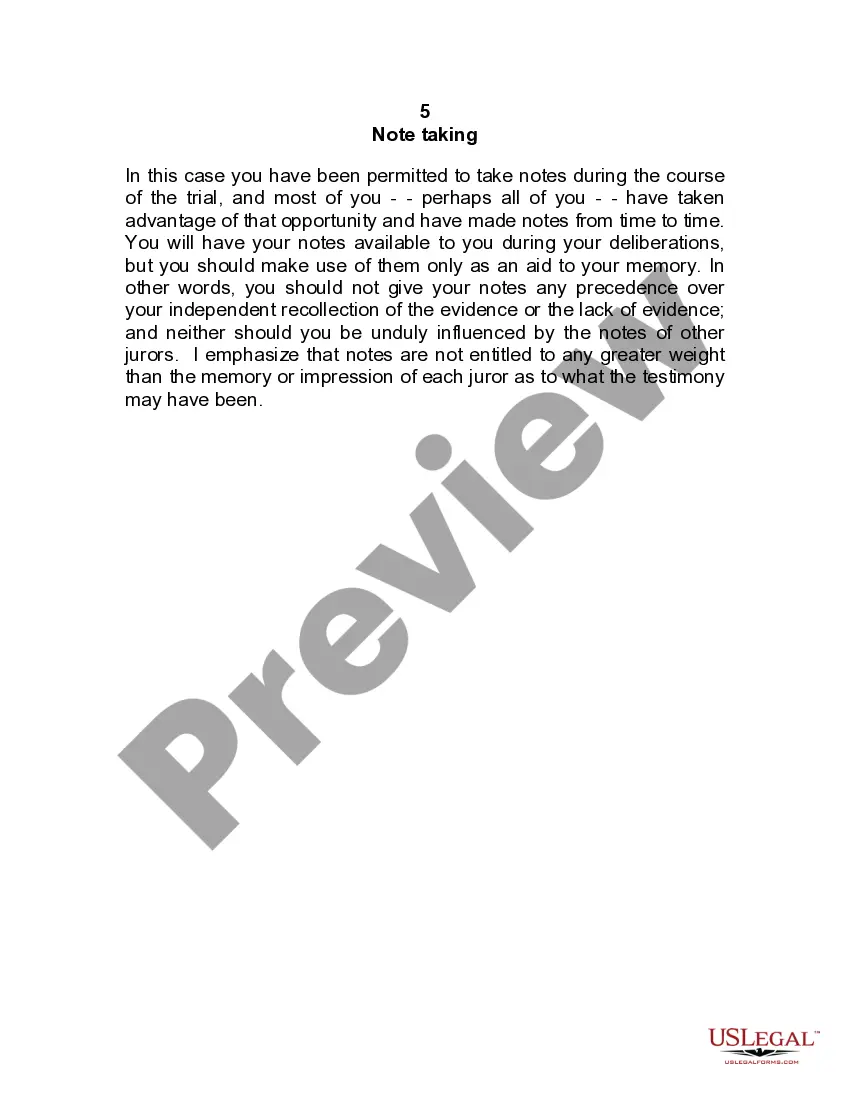
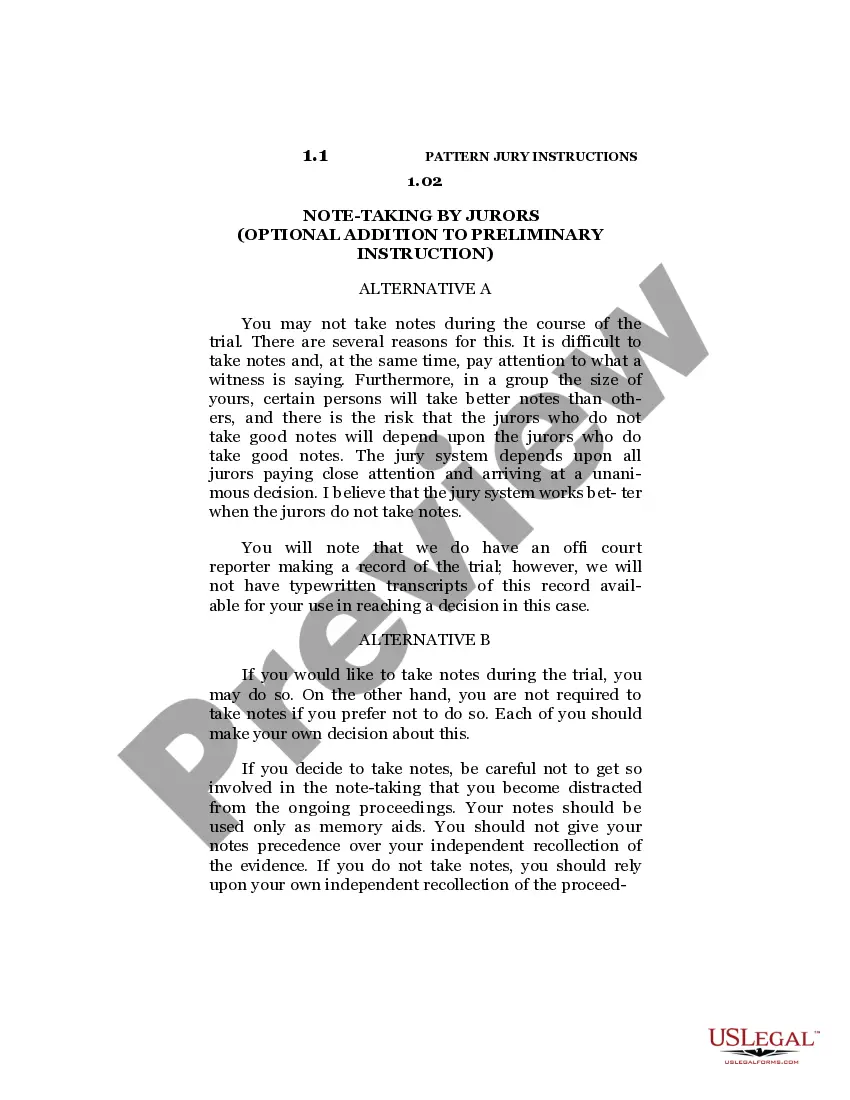
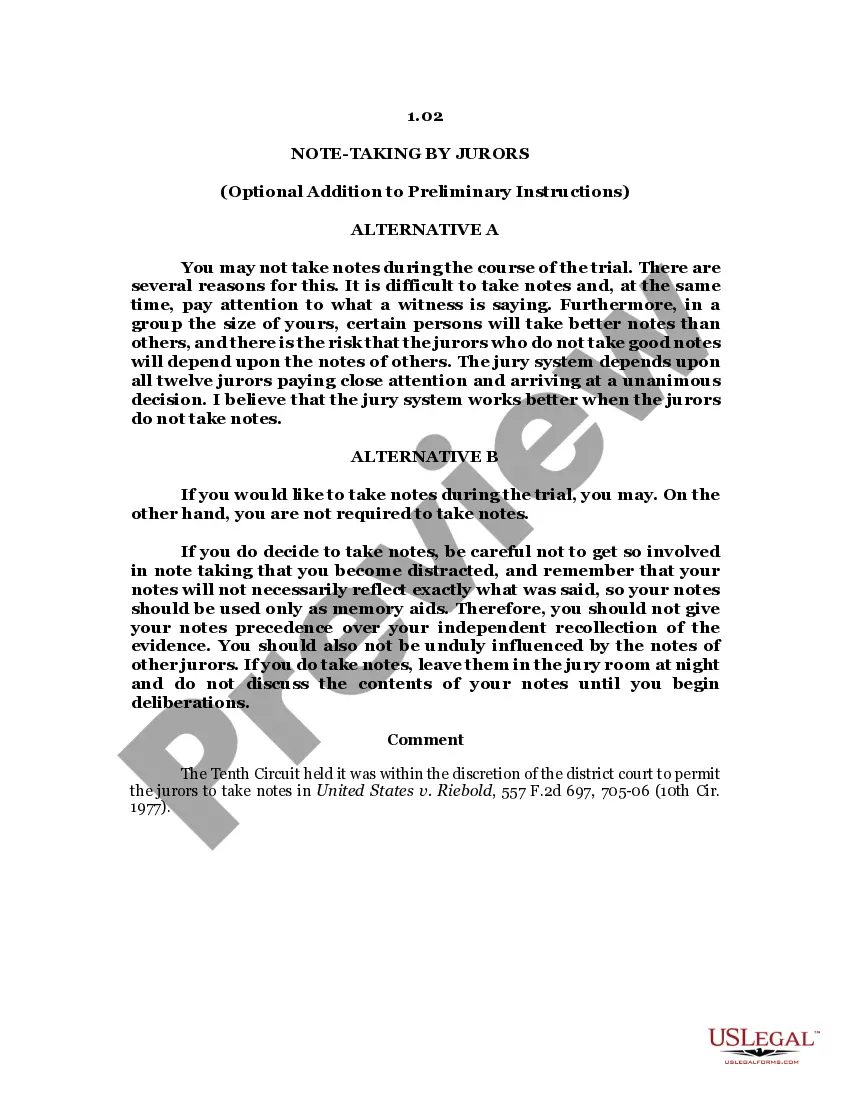
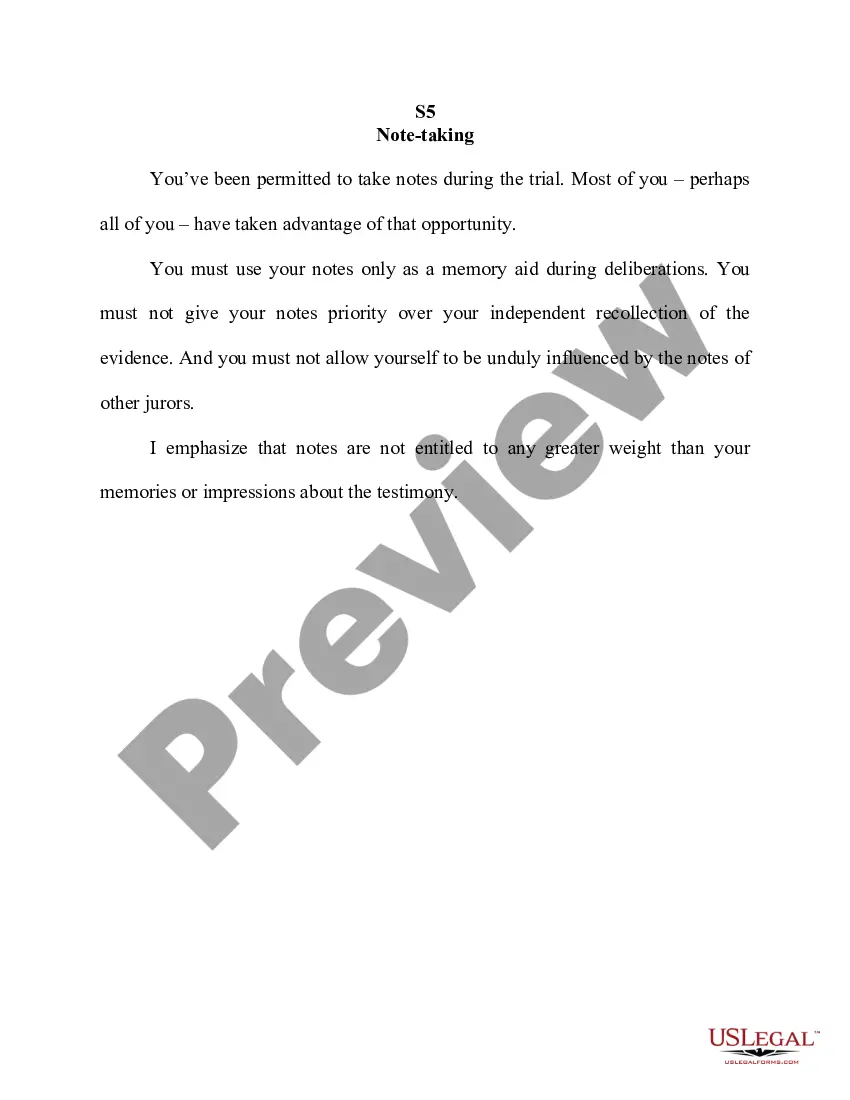
The Jury Instruction - Note-Taking form provides standardized instructions for jurors who are allowed to take notes during a trial. It emphasizes that notes should serve as an aid to memory and must not be prioritized over individual recollections of evidence. Unlike other jury instructions, this form specifically addresses the practice of note-taking and its appropriate use in the deliberation process.
Form components explained
- Instructions on the purpose and appropriate use of jurors' notes during deliberations.
- Guidance that jurors should rely on their own memory, rather than the notes of others.
- Clarification that notes are not to be given greater weight than the juror's personal impressions of the evidence.
When to use this document
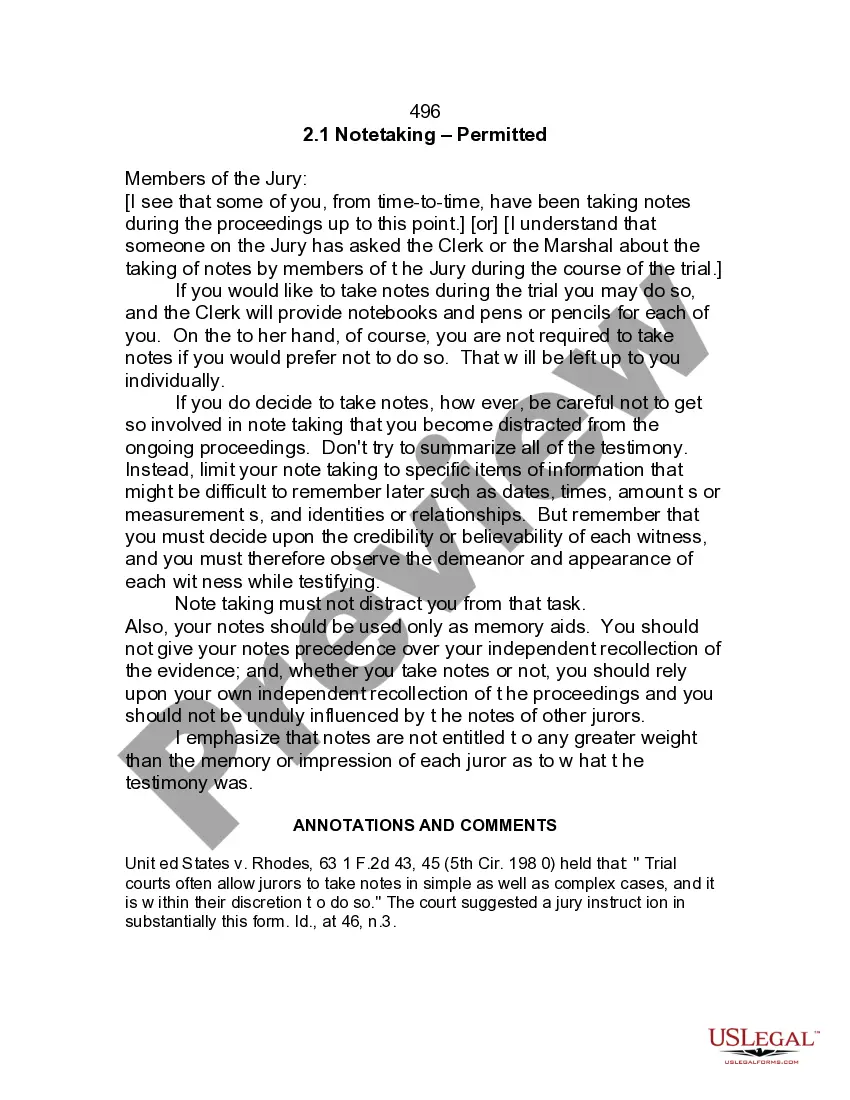
This form is used in court cases where jurors have been permitted to take notes during the trial. It should be referred to when preparing jury instructions to ensure jurors understand how to properly use their notes when making deliberations on the case at hand.
Who needs this form
- Judges looking to provide clear guidelines to jurors regarding note-taking.
- Attorneys who need to draft appropriate jury instructions for various cases.
- Legal professionals involved in jury management during trial proceedings.
Completing this form step by step
- Identify the trial case and relevant details to customize the instructions.
- Clearly outline the guidelines for jurors regarding note-taking.
- Emphasize the importance of jurors relying on their own memories.
- Specify that notes should not be given more weight than personal recollections.
- Review and adjust the form based on the specific needs of the trial.
Notarization guidance
This form does not typically require notarization to be legally valid. However, some jurisdictions or document types may still require it. US Legal Forms provides secure online notarization powered by Notarize, available 24/7 for added convenience.
Get your form ready online
Our built-in tools help you complete, sign, share, and store your documents in one place.
Make edits, fill in missing information, and update formatting in US Legal Forms—just like you would in MS Word.
Download a copy, print it, send it by email, or mail it via USPS—whatever works best for your next step.
Sign and collect signatures with our SignNow integration. Send to multiple recipients, set reminders, and more. Go Premium to unlock E-Sign.
If this form requires notarization, complete it online through a secure video call—no need to meet a notary in person or wait for an appointment.
We protect your documents and personal data by following strict security and privacy standards.

Make edits, fill in missing information, and update formatting in US Legal Forms—just like you would in MS Word.

Download a copy, print it, send it by email, or mail it via USPS—whatever works best for your next step.

Sign and collect signatures with our SignNow integration. Send to multiple recipients, set reminders, and more. Go Premium to unlock E-Sign.

If this form requires notarization, complete it online through a secure video call—no need to meet a notary in person or wait for an appointment.

We protect your documents and personal data by following strict security and privacy standards.
Mistakes to watch out for
- Neglecting to clarify the limited role of notes in deliberations.
- Failing to remind jurors to prioritize their own memory over their notes.
- Using overly complex language that may confuse jurors.
Why use this form online
- Convenient download options for quick access to necessary jury instructions.
- Editability allows for customization to fit specific case requirements.
- Reliability with templates created by licensed attorneys to ensure legal soundness.
Looking for another form?

Form popularity
FAQ
Don't show up late. On the day of your hearing, it's very important to arrive early. Don't use your phone. You will not be able to use your phone, computer or any other device in the courtroom. Don't interrupt. Don't be afraid to ask.
Most judges allow jurors to take notes during trials. At the commencement of the trial, the jury is handed small notepads and pencils for note taking. The judge also typically gives the jury some basic administrative instructions about what to do with the notebooks when they are finished each day.
2021 California Rules of Court Jurors must be permitted to take written notes in all civil and criminal trials. At the beginning of a trial, a trial judge must inform jurors that they may take written notes during the trial.
They will review the evidence and arguments made by both sides, and frame the legal principles on which the jury has to make its decision. These remarks from the judge are known as jury directions. Jury directions have become more and more frequent as the criminal process has developed over the generations.
Jury lists are compiled from voter registrations and driver license or ID renewals. From those lists, summonses are mailed. A panel of jurors is then assigned to a courtroom.
These are civil or criminal jury instructions approved by a state court, bench committee, or bar association. They are commonly used by courts in the relevant jurisdiction, as they ease the process of drafting fair jury instructions and theoretically do not have errors.
Notes for Yourself. Before the trial, write down the points you want to make when you testify. Notes for Questioning Witnesses. Notes of the Evidence as Witnesses Speak. Check the Evidence. Organize Your Notes and Paper. Take Pens and Paper. Make Your Submissions (final arguments) OTHER CIVIL CASE TIP SHEETS:
Yes, you can take notes in court without permission.
Jury Instructions. instructions that are given by the trial judge that specifically state what the defendant can be found guilty of and what the prosecution or plaintiff has to prove in order for a guilty verdict.