Jury Instruction - Lesser Included Offense
About this form
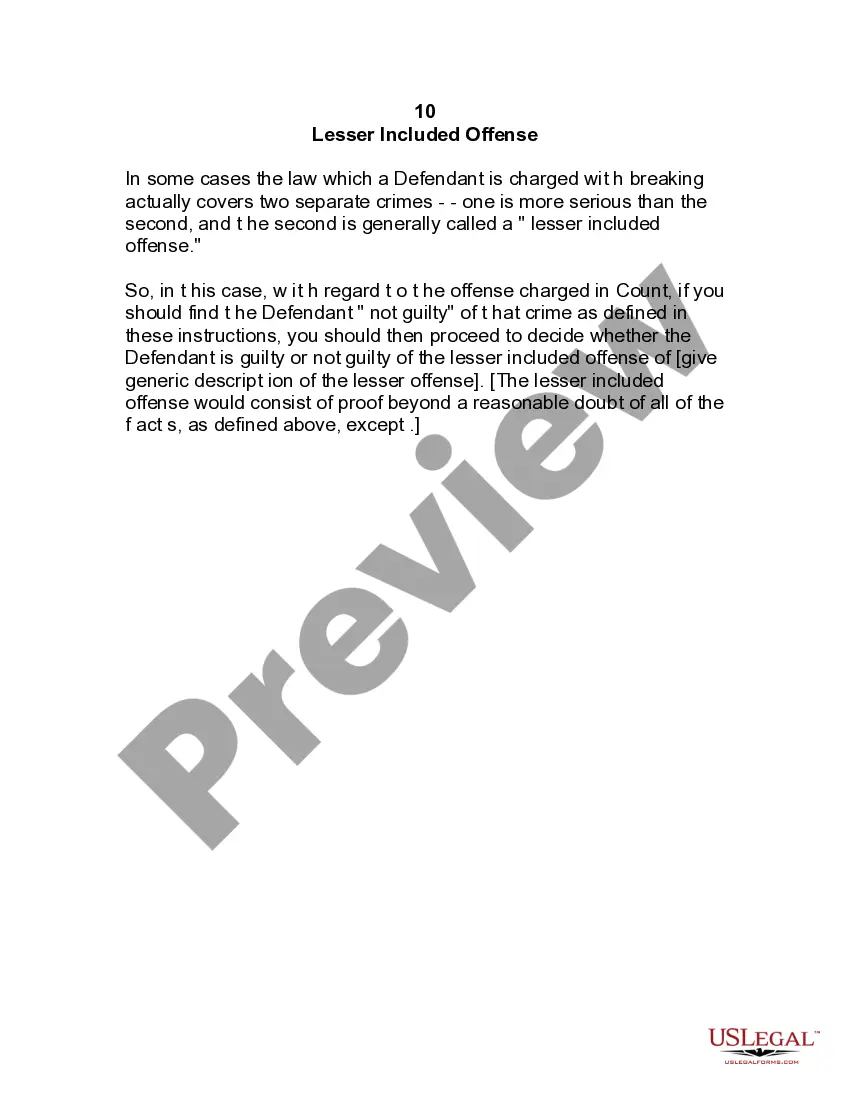
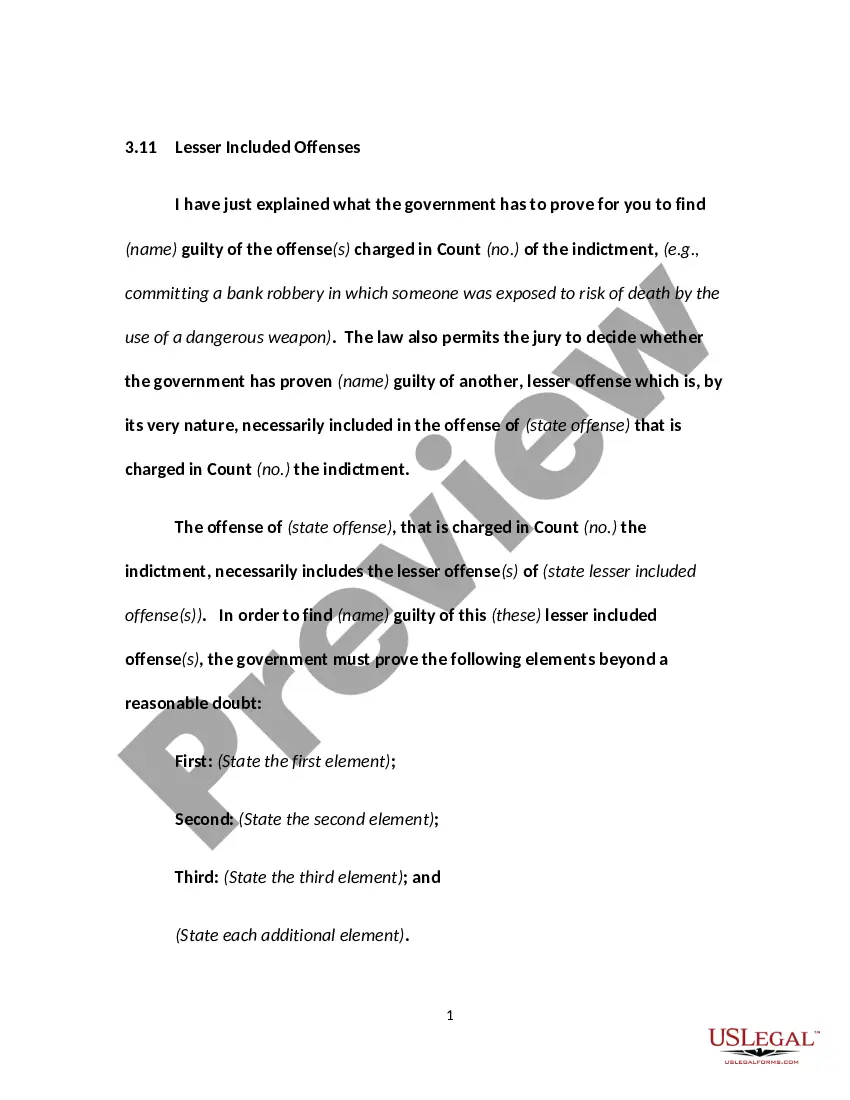
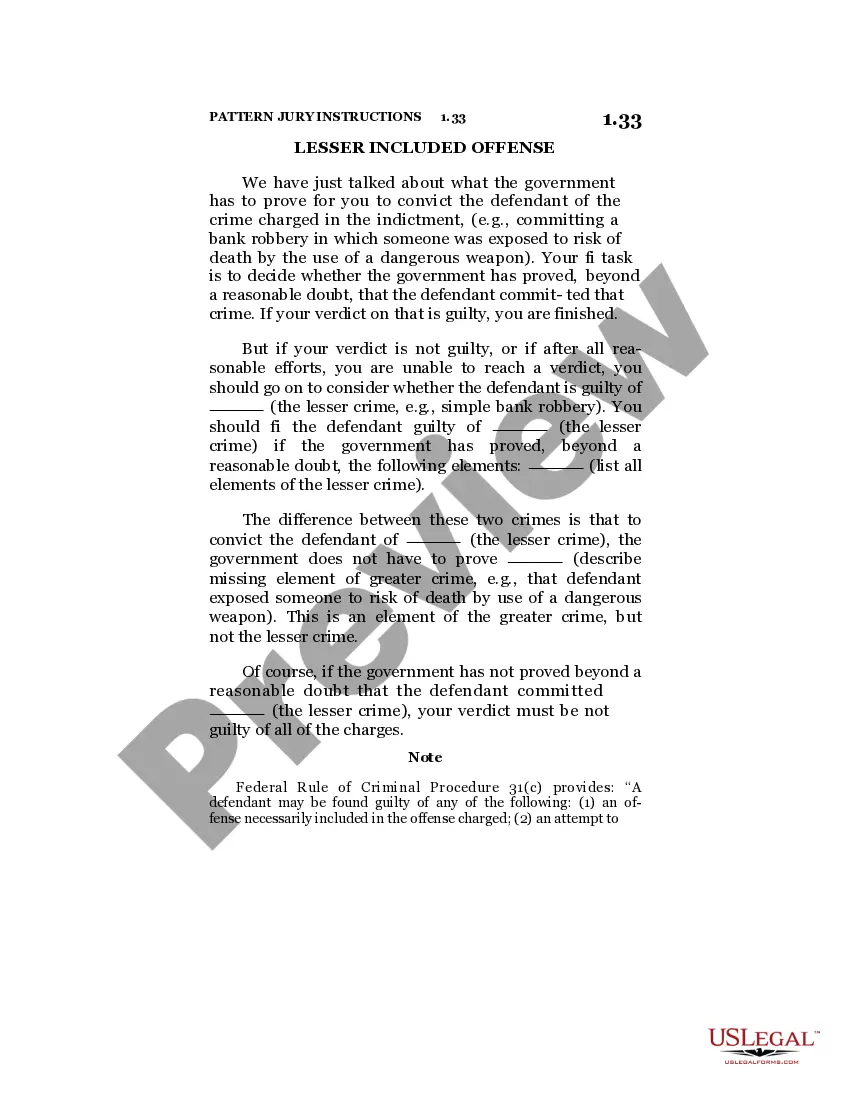
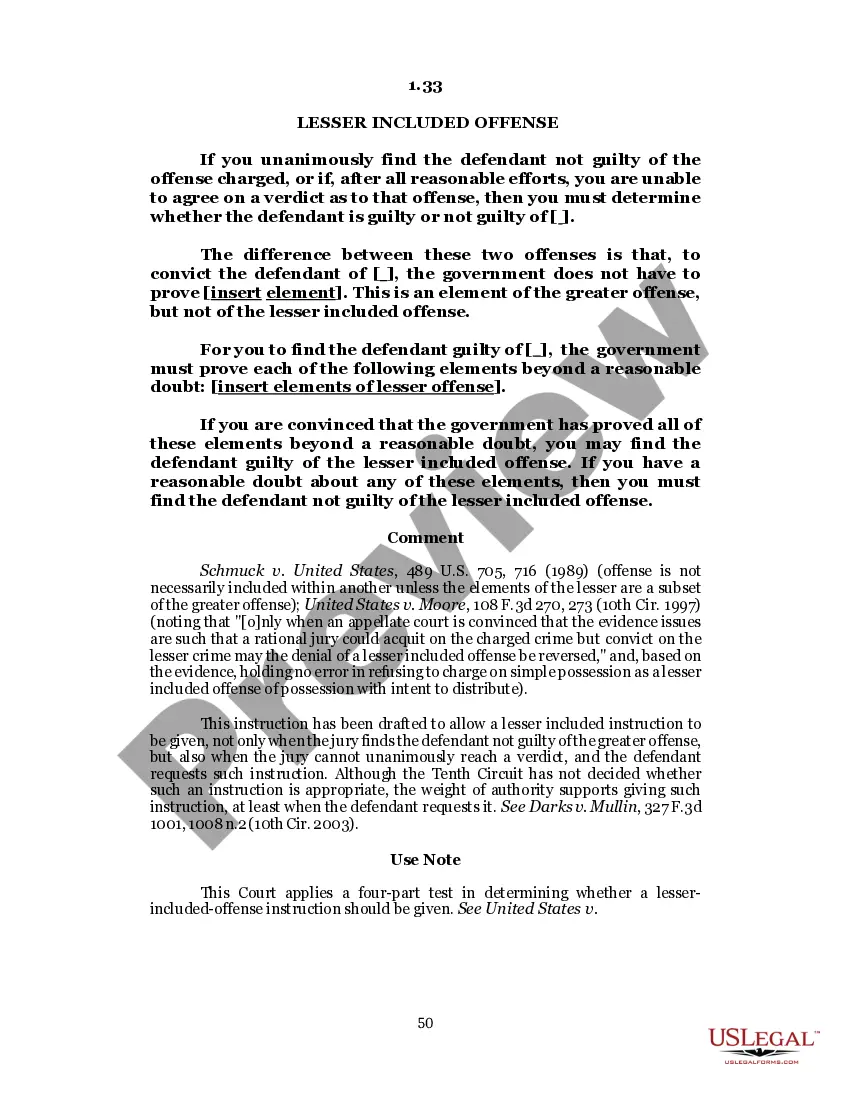
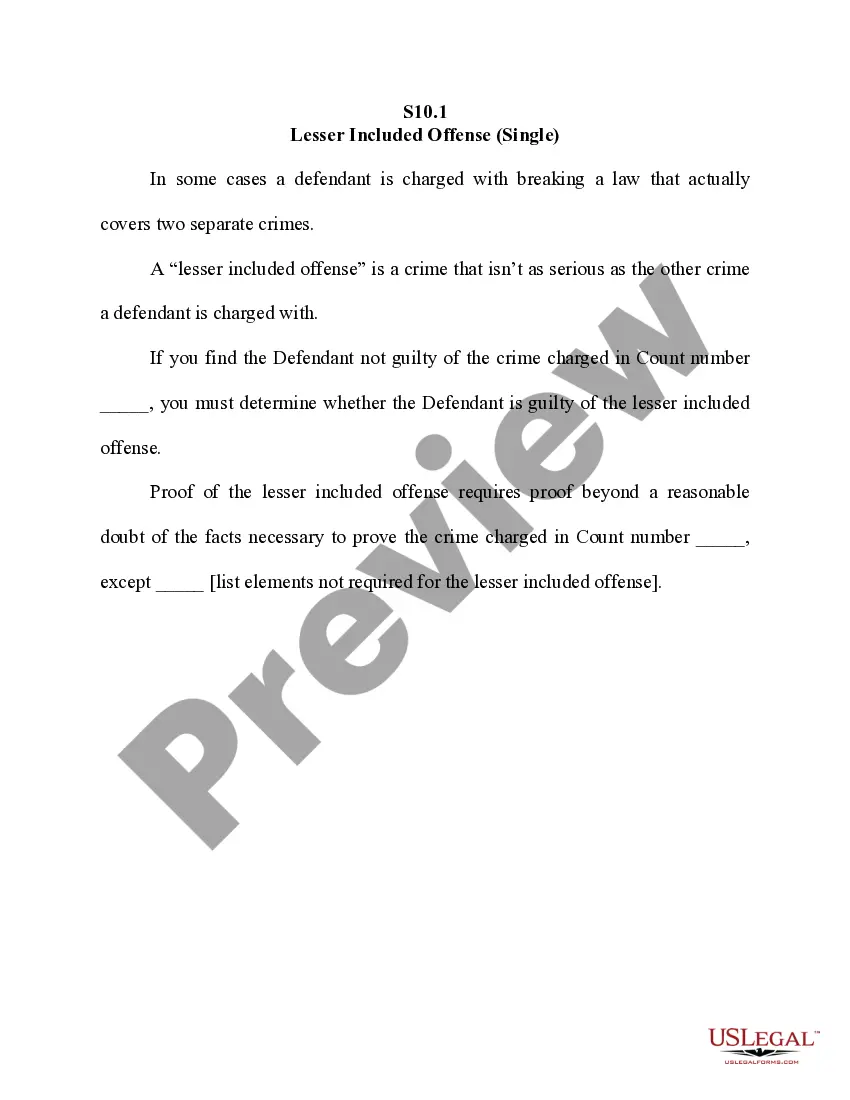
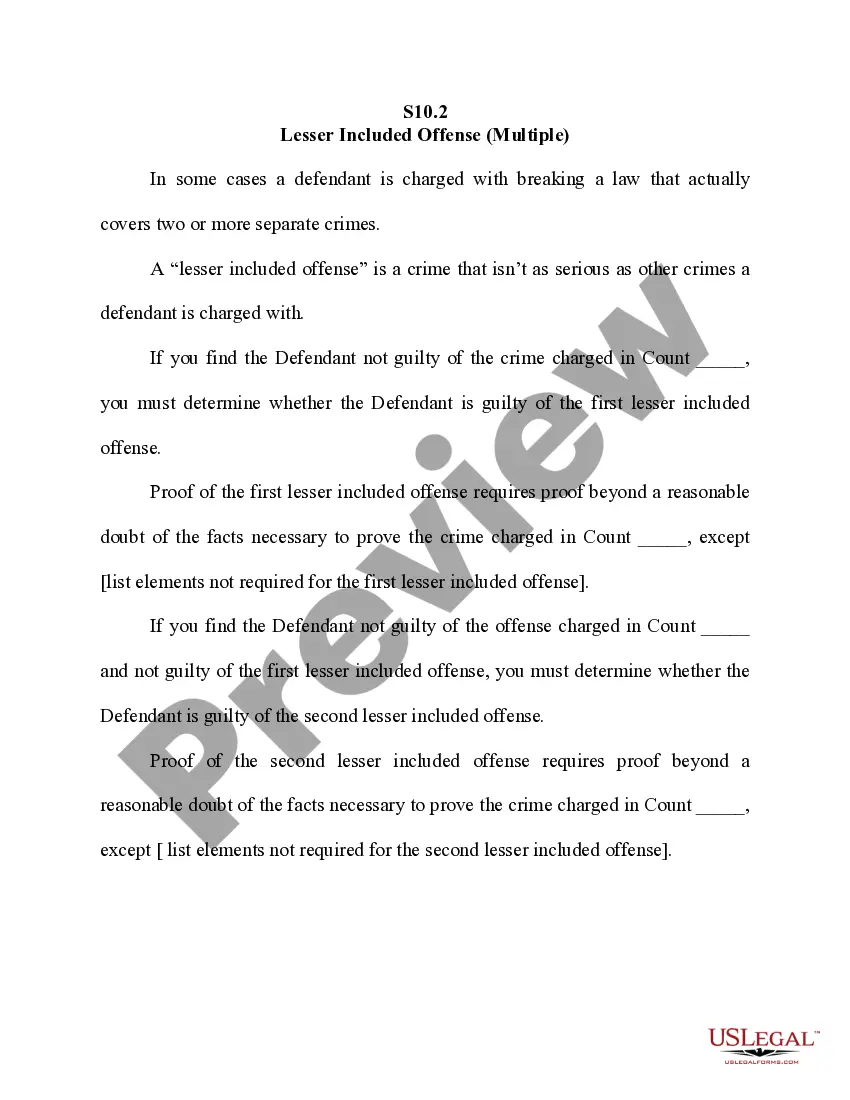
The Jury Instruction - Lesser Included Offense form provides sample jury instructions related to lesser included offenses that may be applicable in criminal cases. This form is designed to guide jurors in determining whether a defendant is guilty of a less serious crime if they find the defendant not guilty of the more serious charge. It is an essential tool for ensuring that jurors understand the legal framework surrounding lesser included offenses and differentiates itself by focusing specifically on this aspect of criminal law.
Form components explained
- Definition of lesser included offenses and their application.
- Instructions on determining the guilt of the defendant concerning the lesser included offense.
- Criteria outlining the proof required to establish guilt beyond a reasonable doubt.
- References to relevant case law, offering context and legal validation.
- Modifiable sections to tailor the instructions to specific cases.

Common use cases
This form is used in criminal trials where a defendant is charged with a more serious offense that may include lesser included offenses. It is applicable when jury instructions need to clarify that jurors can consider a conviction for a less serious crime if they find the defendant not guilty of the primary charge. Use this form to ensure proper legal procedures are followed regarding jury instructions.
Who this form is for
- Judges overseeing criminal trials that involve jury deliberations.
- Defense attorneys who need to present jury instructions related to lesser included offenses.
- Prosecutors looking to clarify potential outcomes for the jury regarding lesser included offenses.
- Legal practitioners seeking to educate juries on the definitions and implications of lesser included offenses.
Completing this form step by step
- Identify the specific charge being brought against the defendant.
- Determine the corresponding lesser included offenses applicable to that charge.
- Modify the sample instructions to fit the facts of the case.
- Provide clear definitions and standards of proof related to the lesser included offense.
- Review and finalize the instructions for presentation to the jury.
Does this document require notarization?
Notarization is not commonly needed for this form. However, certain documents or local rules may make it necessary. Our notarization service, powered by Notarize, allows you to finalize it securely online anytime, day or night.
Get your form ready online
Our built-in tools help you complete, sign, share, and store your documents in one place.
Make edits, fill in missing information, and update formatting in US Legal Forms—just like you would in MS Word.
Download a copy, print it, send it by email, or mail it via USPS—whatever works best for your next step.
Sign and collect signatures with our SignNow integration. Send to multiple recipients, set reminders, and more. Go Premium to unlock E-Sign.
If this form requires notarization, complete it online through a secure video call—no need to meet a notary in person or wait for an appointment.
We protect your documents and personal data by following strict security and privacy standards.

Make edits, fill in missing information, and update formatting in US Legal Forms—just like you would in MS Word.

Download a copy, print it, send it by email, or mail it via USPS—whatever works best for your next step.

Sign and collect signatures with our SignNow integration. Send to multiple recipients, set reminders, and more. Go Premium to unlock E-Sign.

If this form requires notarization, complete it online through a secure video call—no need to meet a notary in person or wait for an appointment.

We protect your documents and personal data by following strict security and privacy standards.
Common mistakes
- Failing to clearly differentiate between the primary charge and the lesser included offense.
- Including ambiguous language that may confuse jurors.
- Neglecting to provide necessary legal definitions or standards of proof.
Why use this form online
- Convenient access to templates designed by licensed attorneys.
- Editability allows customization to fit specific cases or jurisdictions.
- Reliable, up-to-date legal resources that aid in the accurate presentation of jury instructions.
Legal use & context
This form is recognized in legal contexts where jury instructions need to clearly outline the possibility of convicting a defendant of a lesser offense. Its use is supported by case law and it reinforces the rights of defendants to be judged on all related offenses. Proper implementation can impact trial outcomes significantly.
Looking for another form?

Form popularity
FAQ
Elements Test The court will consider only the definitions of each crime, instead of the facts in the evidence or the charging document. A crime will be a lesser included offense of another crime only if the second crime includes every element of the first crime, in addition to at least one other element.
A lesser included charge means that there is an offense similar to the one the defendant is actually charged with that has different elements of proof.Some examples of "lesser included offenses" include manslaughter instead of murder, theft instead of burglary, and indecent assault instead of rape.
The court will consider only the definitions of each crime, instead of the facts in the evidence or the charging document. A crime will be a lesser included offense of another crime only if the second crime includes every element of the first crime, in addition to at least one other element.
A lesser included charge means that there is an offense similar to the one the defendant is actually charged with that has different elements of proof.The instruction should be given if the evidence provides a rational basis for a finding of guilt on the lesser offense and an acquittal of the greater.
By Micah Schwartzbach, Attorney. "Lesser included offense" is a criminal law term for a crime that's contained within a more serious crime. Sometimes described as necessarily included offense," the term refers to a situation where it's impossible to commit a greater offense without committing a lesser one.
A less serious crime that is necessarily committed during the perpetration of a greater crime because the lesser crime contains some of the same elements of the greater crime.For example, trespassing is a lesser included offense of the crime of burglary.
Under the merger doctrine as this term is used in criminal law, lesser included offenses generally merge into the greater offense. Therefore, a person who commits a robbery cannot be convicted of both the robbery and the larceny that was part of it.