Jury Instruction - Providing Contraband To A Federal Prisoner
Overview of this form
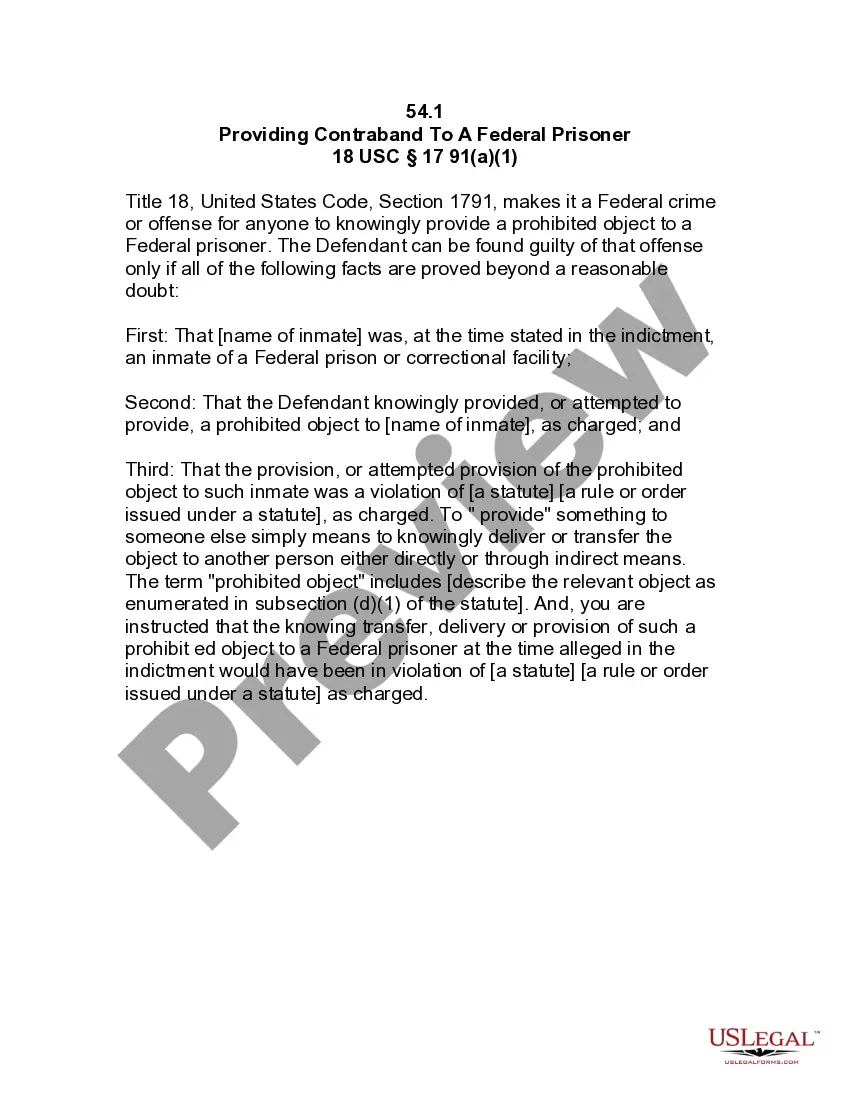
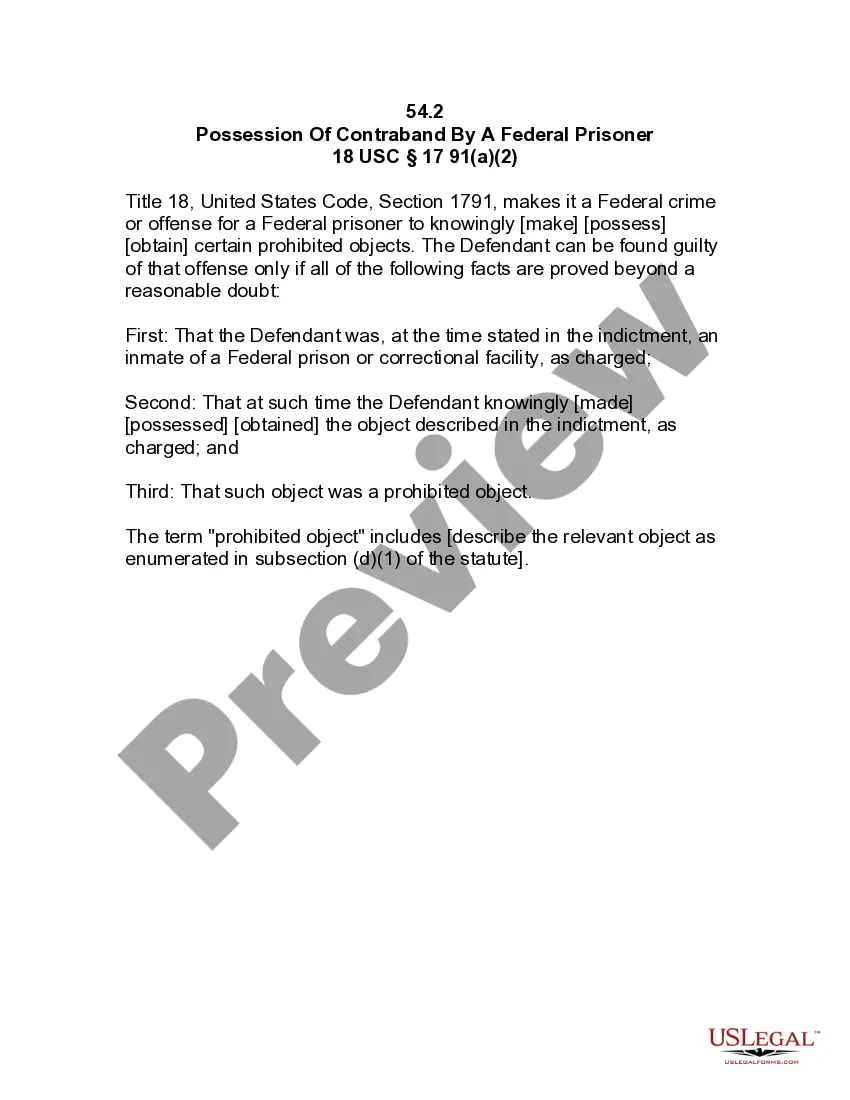
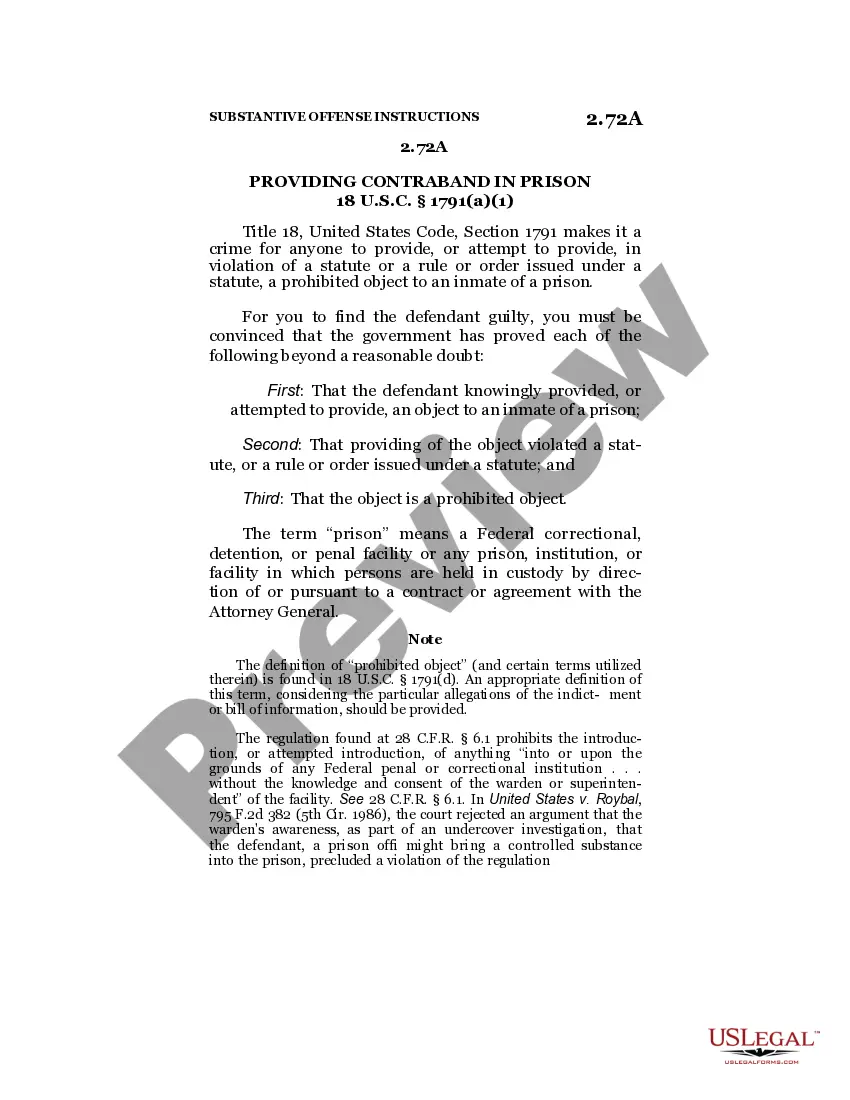
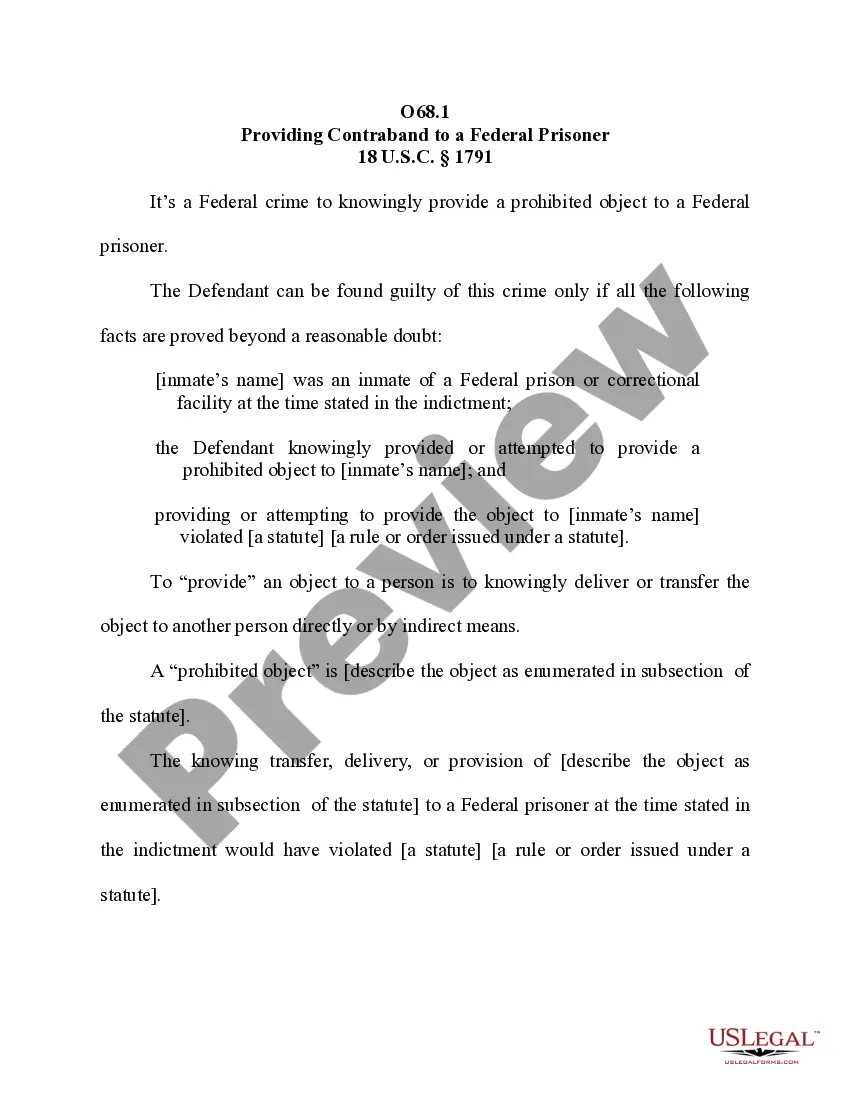
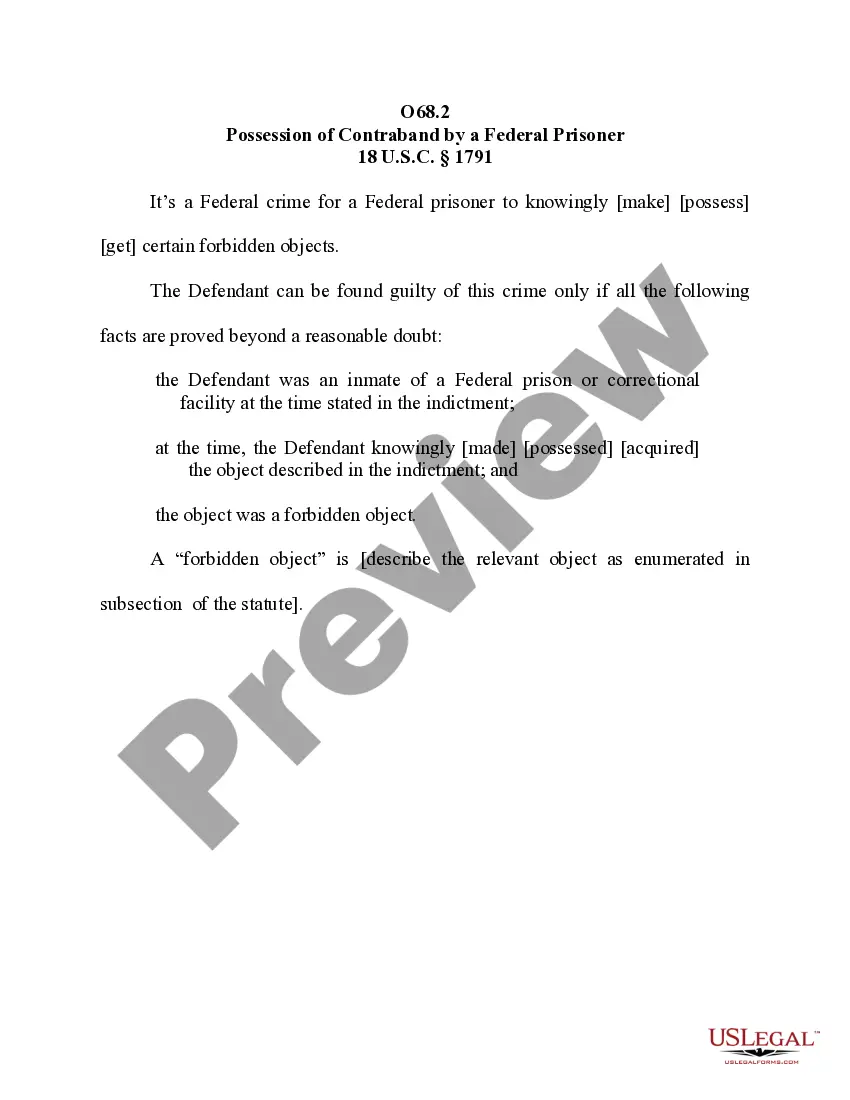
The Jury Instruction - Providing Contraband to a Federal Prisoner is a legal document that outlines the necessary instructions for juries in federal cases involving the crime of providing prohibited objects to federal prisoners. This form is essential for ensuring that jurors understand the legal standards and definitions applicable to such cases, distinguishing it from other jury instructions by its specific focus on federal laws and the nuances of this particular offense under Title 18, United States Code, Section 1791.
What’s included in this form
- Definition of key terms, such as "prohibited object" and "knowingly."
- Specific criteria that must be proven for a conviction, including the status of the inmate and the actions of the defendant.
- Standard of proof required for jurors to reach a verdict.
- Maximum penalties associated with the offense, including imprisonment and fines.
Common use cases
This form should be used during the trial of a defendant accused of providing contraband to a federal prisoner. It serves as a guide for jurors to assess the evidence against the defendant, focusing on whether the elements of the crime, as described in the form, have been met. This is critical in federal trials where understanding specific legal standards is necessary for making informed decisions.
Who this form is for
- Judges presiding over federal criminal trials involving contraband cases.
- Lawyers preparing jury instructions for defense or prosecution in such trials.
- Jurors selected for trials involving allegations of providing contraband to federal inmates.
How to complete this form
- Review the full legal text to understand the provisions of 18 USC § 1791.
- Identify and list the names of involved parties, including the defendant and the inmate.
- Clearly define the prohibited object being alleged.
- Ensure the instructions align with the specific accusations made in the indictment.
- Compile the required questions that the jury must answer to reach a verdict.
Does this document require notarization?
This form does not typically require notarization unless specified by local law. It is advisable to consult legal counsel for specific requirements related to your case.
Get your form ready online
Our built-in tools help you complete, sign, share, and store your documents in one place.
Make edits, fill in missing information, and update formatting in US Legal Forms—just like you would in MS Word.
Download a copy, print it, send it by email, or mail it via USPS—whatever works best for your next step.
Sign and collect signatures with our SignNow integration. Send to multiple recipients, set reminders, and more. Go Premium to unlock E-Sign.
If this form requires notarization, complete it online through a secure video call—no need to meet a notary in person or wait for an appointment.
We protect your documents and personal data by following strict security and privacy standards.

Make edits, fill in missing information, and update formatting in US Legal Forms—just like you would in MS Word.

Download a copy, print it, send it by email, or mail it via USPS—whatever works best for your next step.

Sign and collect signatures with our SignNow integration. Send to multiple recipients, set reminders, and more. Go Premium to unlock E-Sign.

If this form requires notarization, complete it online through a secure video call—no need to meet a notary in person or wait for an appointment.

We protect your documents and personal data by following strict security and privacy standards.
Avoid these common issues
- Failing to provide complete definitions of key terms, leading to confusion.
- Not aligning the instructions with the specific facts of the case, making them less relevant.
- Overlooking the maximum penalties, which can affect juror perceptions of the crime's seriousness.
Why use this form online
- Convenience of accessing and downloading the form anytime, anywhere.
- Editability to customize the form to fit specific cases.
- Reliability of using professionally drafted documents that adhere to legal standards.
Legal use & context
- This form is legally binding and designed for use in federal courtrooms.
- It aids juries in understanding their duties when deliberating on cases involving federal prison contraband.
- The instructions should be correctly tailored to ensure compliance with legal requirements for a fair trial.
Quick recap
- This form is crucial for guiding jurors in federal trials regarding contraband offenses.
- It includes specific legal definitions and standards necessary for jury deliberations.
- Proper completion and customization ensure the form serves its intended purpose effectively.
Looking for another form?




Form popularity
FAQ
A jury instruction is a guideline given by the judge to the jury about the law they will have to apply to the facts they have found to be true. The purpose of the instructions is to help the jury arrive at a verdict that follows the law of that jurisdiction.
Updated August 23, 2020 Penal Code 4573.5 PC is the California statute that makes it a crime for a person to bring contraband into a jail or the California state prison. Contraband includes: alcohol, and any drugs, other than controlled substances.
For the crime of Promoting Prison Contraband 1º, the People were required to prove that the defendant was (1) confined in a detention facility, and (2) knowingly and unlawfully made, obtained, or possessed any dangerous contraband. Dangerous contraband is defined by the Penal Law as contraband which is capable of
Several options exist in the prison setting for cellphone detection to combat this problem. Those include K9 detection; handheld detection devices; fixed and portable detection systems; perimeter security, including in-custody or re-entry screening; cell jamming/managed access technologies; and ferromagnetic detection.
A body cavity search, also known simply as a cavity search, is either a visual search or a manual internal inspection of body cavities for prohibited materials (contraband), such as illegal drugs, money, jewelry, or weapons.
Contraband in prisons includes alcohol, communication devices, drugs, drug paraphernalia, tattoo equipment, weapons and other items.
Contraband is commonly defined as goods prohibited by law from being imported or exported. There are many different kinds of contraband, including homemade weapons, gambling paraphernalia, excessively metered envelopes, weapons, drugs, food, and whatnot.
Federal law also has penalties for people who smuggle contraband to prisoners. U.S. Code Title 18, § 1791, makes providing contraband in prison punishable by imprisonment of up to 20 years (dependent on the type of contraband).
Contraband in correctional facilities includes illegal items, such as drugs and weapons, or items prohibited in the area being monitored, such as cell phones.