Providing Contraband in Prison
Overview of this form
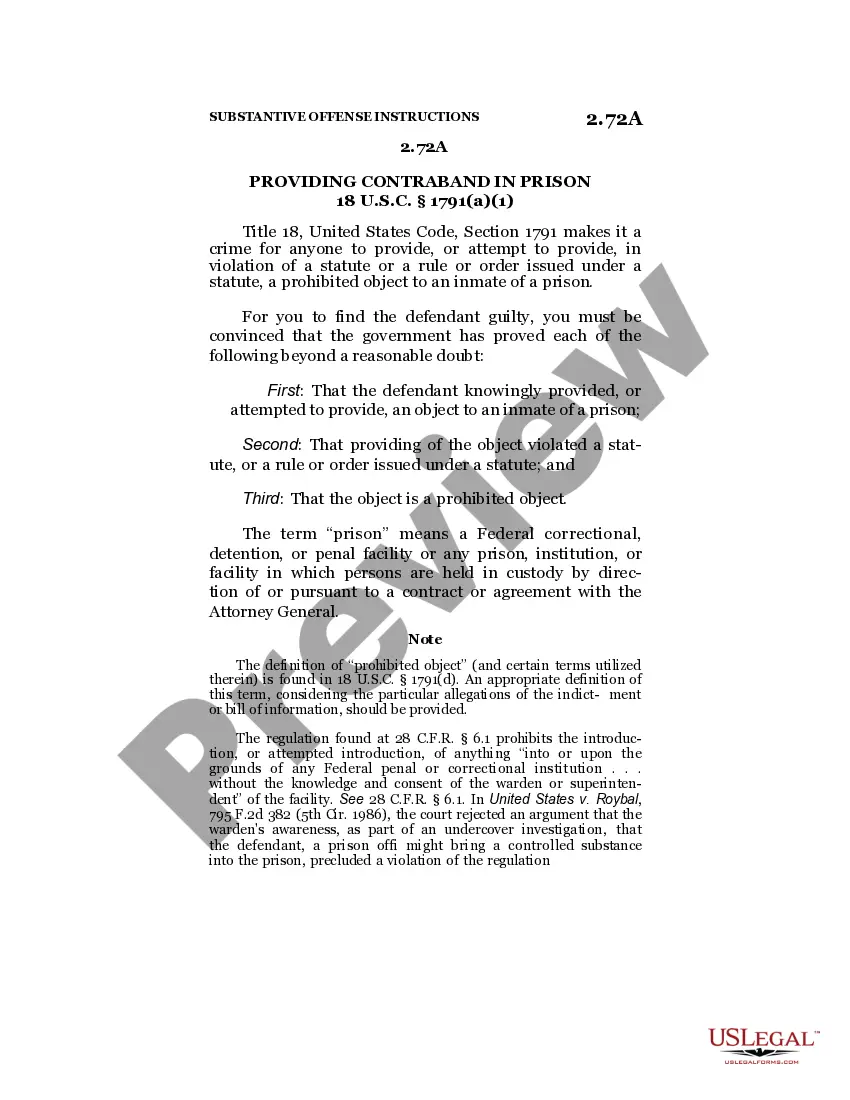
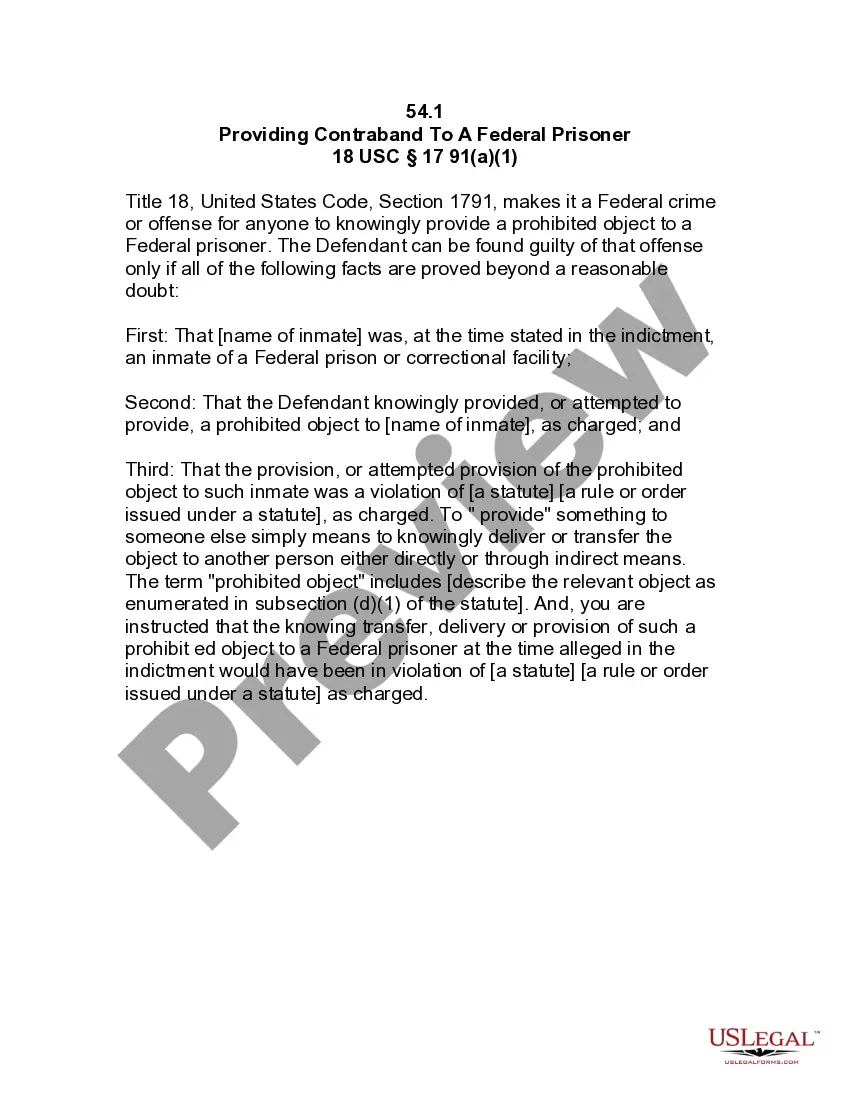
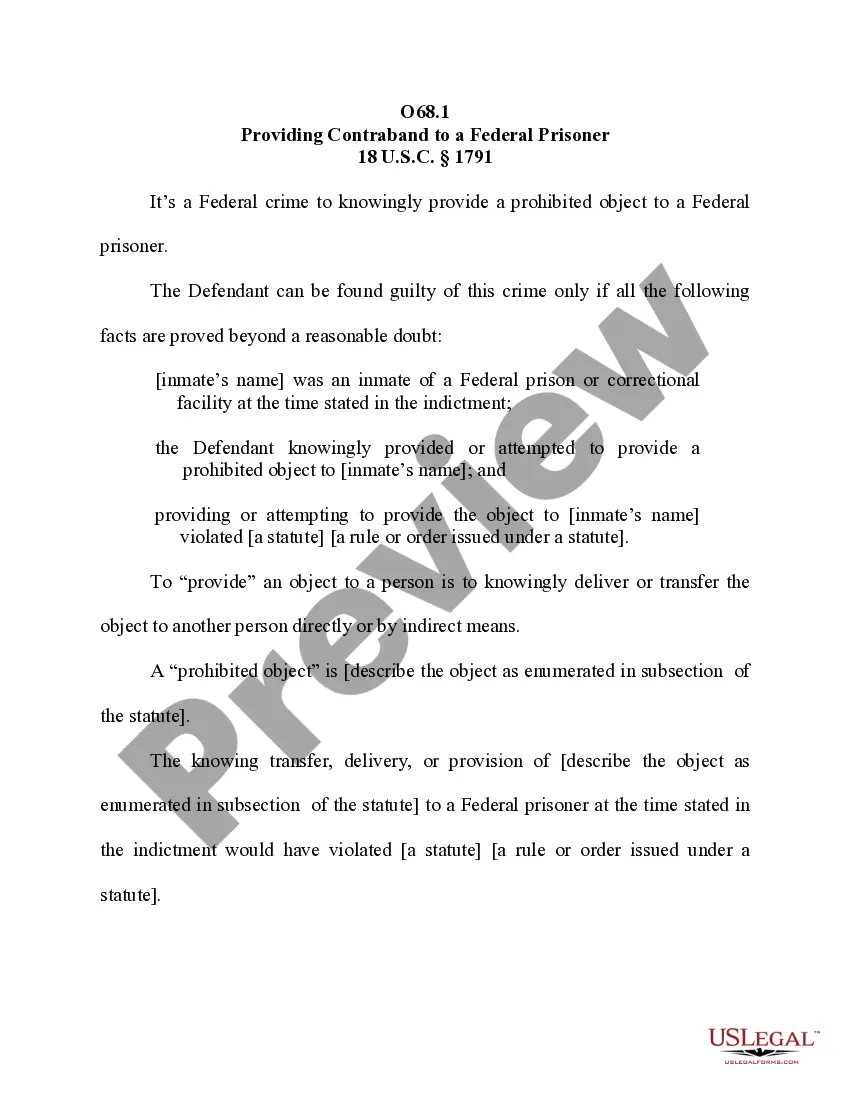
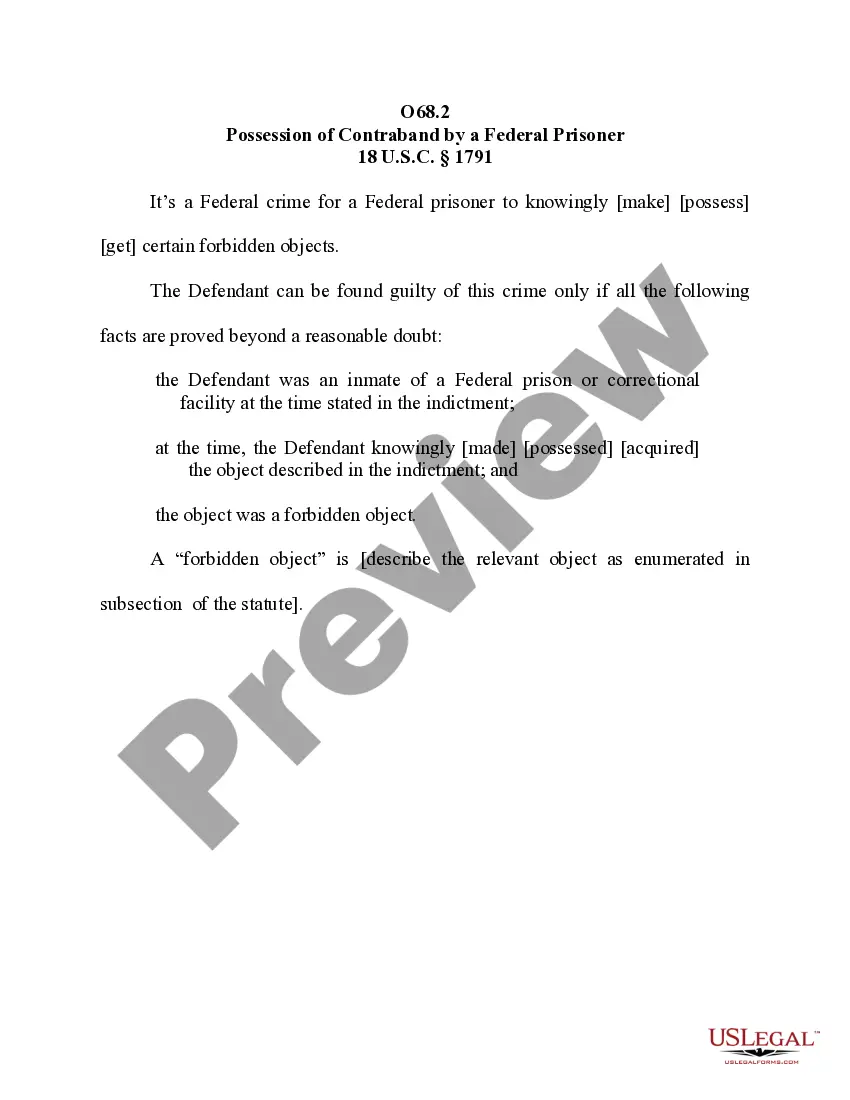
The Providing Contraband in Prison form addresses the legal implications surrounding the act of supplying prohibited items to prison inmates. This form is essential for understanding the criminal charges outlined under 18 U.S.C. 1791, which categorically prohibits anyone from providing contraband to inmates. By offering a structured approach to these regulations, this form helps clarify the legal consequences and requirements associated with this serious offense.
Main sections of this form
- Description of what constitutes contraband.
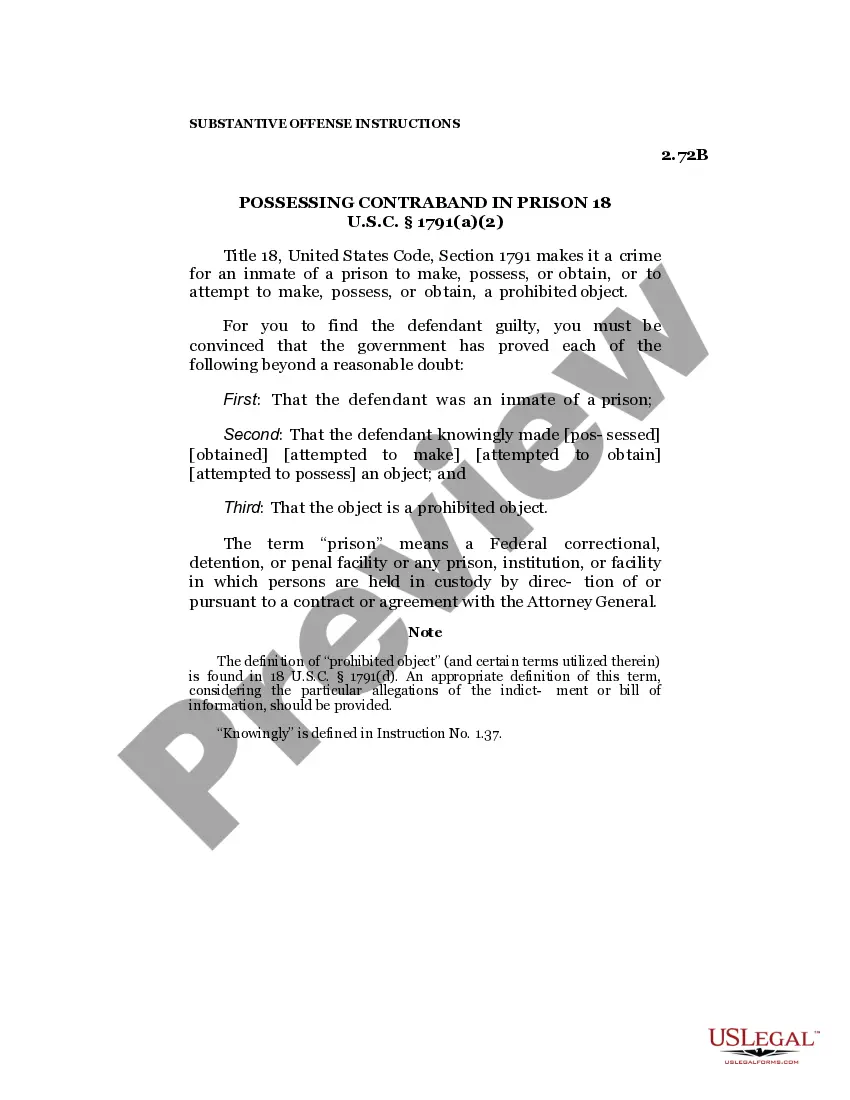
- Legal definition of a prison under federal law.
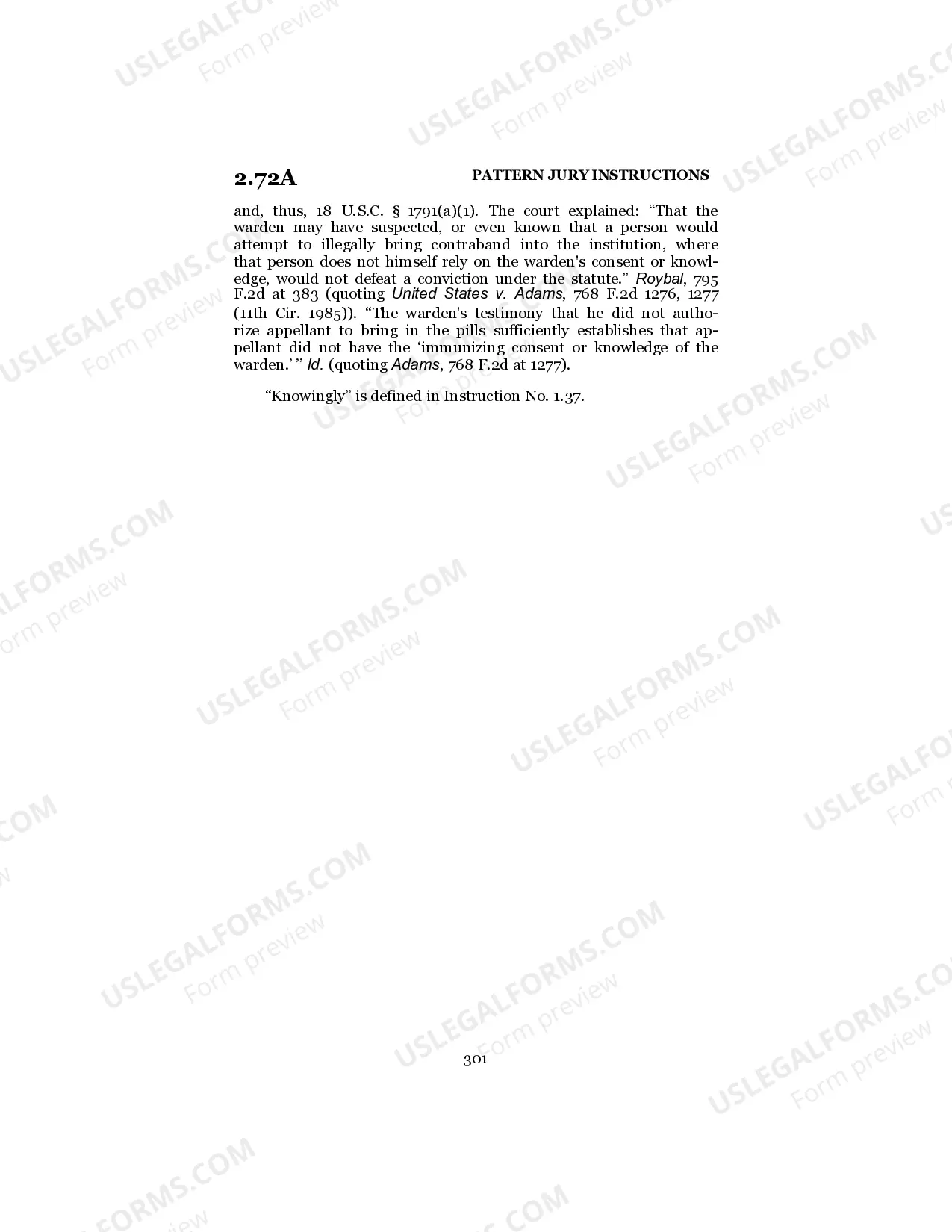
- Criteria for proving guilt, including the definition of "knowingly."
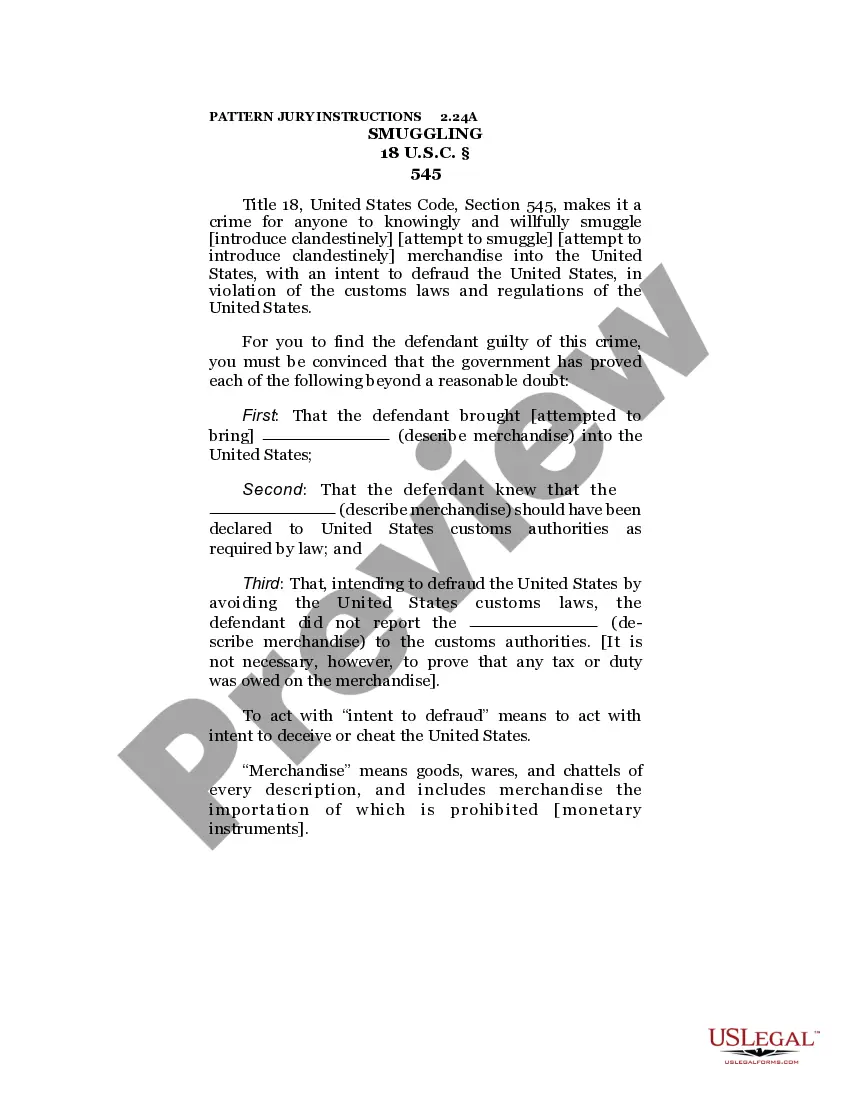
- Details on the regulations regarding the introduction of items into federal correctional facilities.
- Relevant case law that illustrates the application of the statute.
When this form is needed
This form is used in situations where an individual is accused of providing prohibited items to an inmate within a prison setting. Examples include cases where a visitor, prison staff, or a third party attempts to smuggle items such as controlled substances, weapons, or other illegal articles. Understanding the specifics of this form can help defendants prepare for legal proceedings related to these charges.
Who should use this form
- Individuals facing allegations of providing contraband to inmates.
- Legal professionals representing defendants in contraband cases.
- Family members seeking to understand legal charges against loved ones.
- Prison staff needing to navigate legal implications of contraband incidents.
Completing this form step by step
- Identify the defendant's information, including name and contact details.
- Specify the prohibited object involved in the case.
- Outline the circumstances under which the alleged provision of contraband occurred.
- Gather supporting evidence or witness statements, if applicable.
- Consult with a legal professional to ensure all necessary legal standards are met.
Notarization requirements for this form
This form does not typically require notarization to be legally valid. However, some jurisdictions or document types may still require it. US Legal Forms provides secure online notarization powered by Notarize, available 24/7 for added convenience.
Get your form ready online
Our built-in tools help you complete, sign, share, and store your documents in one place.
Make edits, fill in missing information, and update formatting in US Legal Forms—just like you would in MS Word.
Download a copy, print it, send it by email, or mail it via USPS—whatever works best for your next step.
Sign and collect signatures with our SignNow integration. Send to multiple recipients, set reminders, and more. Go Premium to unlock E-Sign.
If this form requires notarization, complete it online through a secure video call—no need to meet a notary in person or wait for an appointment.
We protect your documents and personal data by following strict security and privacy standards.

Make edits, fill in missing information, and update formatting in US Legal Forms—just like you would in MS Word.

Download a copy, print it, send it by email, or mail it via USPS—whatever works best for your next step.

Sign and collect signatures with our SignNow integration. Send to multiple recipients, set reminders, and more. Go Premium to unlock E-Sign.

If this form requires notarization, complete it online through a secure video call—no need to meet a notary in person or wait for an appointment.

We protect your documents and personal data by following strict security and privacy standards.
Common mistakes
- Failing to clearly identify the prohibited object involved in the case.
- Neglecting to provide accurate details of the circumstances surrounding the event.
- Relying on assumptions about legal consent without confirming with the appropriate authorities.
Why complete this form online
- Convenient access to legal documentation at any time.
- Editable form templates that can be customized to your specific circumstances.
- Reliable resources created by licensed attorneys to ensure legal compliance.
Looking for another form?
Form popularity
FAQ
A lawyer who brings contraband to an inmate not only commits a serious Felony Criminal offense, but also a serious ethical and moral lapse in judgment. Simply put, Introduction of Contraband is when a person knowingly brings a prohibited item into a jail or prison.
Contraband refers to items that are illegal to trade, carry, produce, or otherwise have in one's possession. Contraband may be goods that are illegal to import or export and are attempted to be smuggled into a country, or items that are banned from a facility. Contraband items are subject to seizure by officials.
Around 12-13 hours for one playthrough, but you have two different endings to discover.
How Does Contraband Enter Prisons? Contraband often enters prisons through inmates who return to the prison following medical appointments that take place outside of the prison, through exchanges with visitors, and even through the prison's officers.
The effects of contraband on prison staff and the inmate population can be devastating. Weapons are used on other inmates and prison staff. Inmates die from bad drugs and overdoses. Rival prison drug kingpins and gangs fight for position, killing each other for power and money.
Crimes Code based Contraband As such, if you are convicted or plead guilty to it, there is a maximum sentence of 10 years in jail and a maximum fine of $25,000.
Ing to correctional officers, the most common types of contraband recovered from cells are cell phones, medication, razor blades, and hoarded food, especially fruits that can be fermented to make alcohol.