Jury Instruction - Wire Fraud
Understanding this form
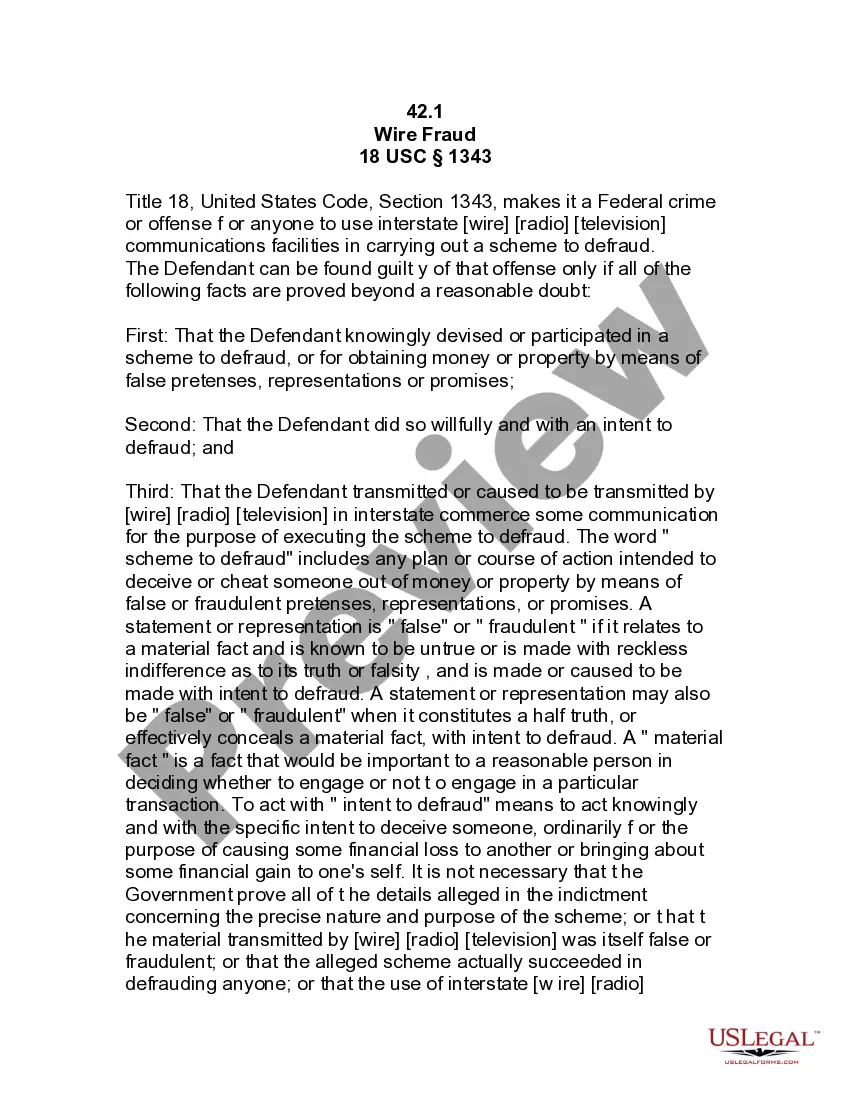
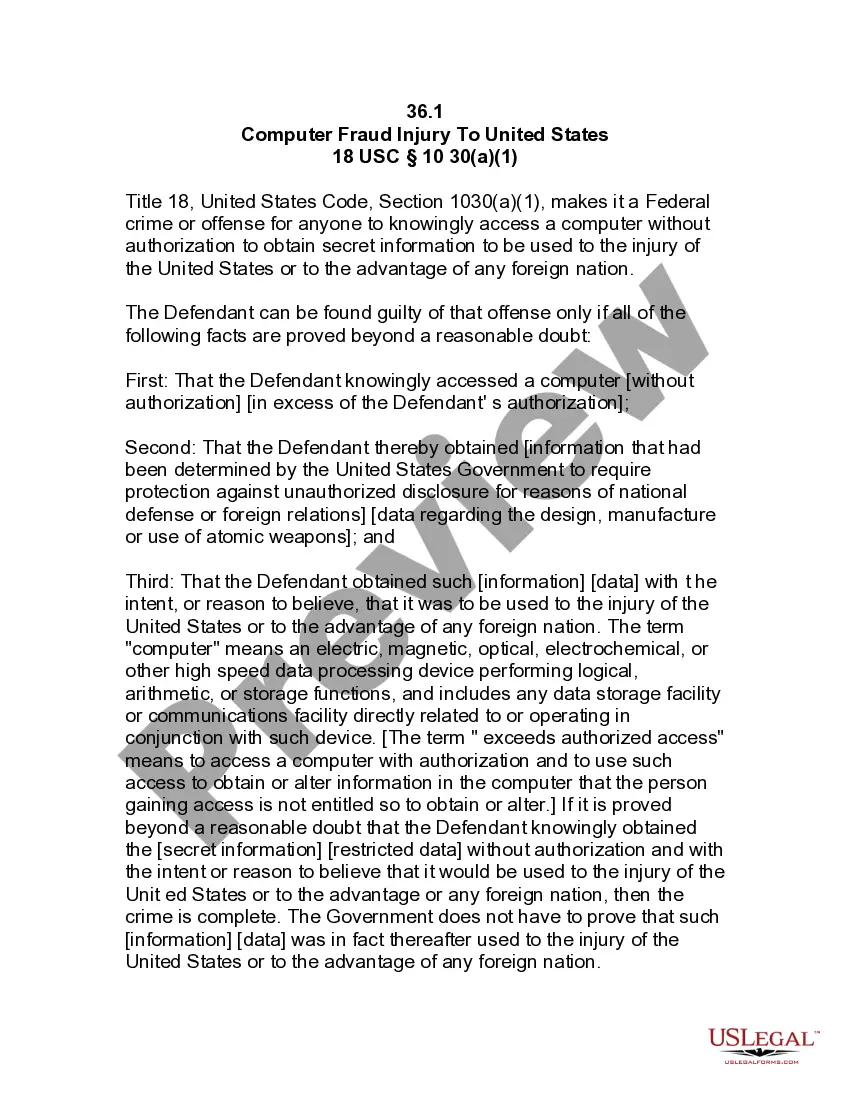
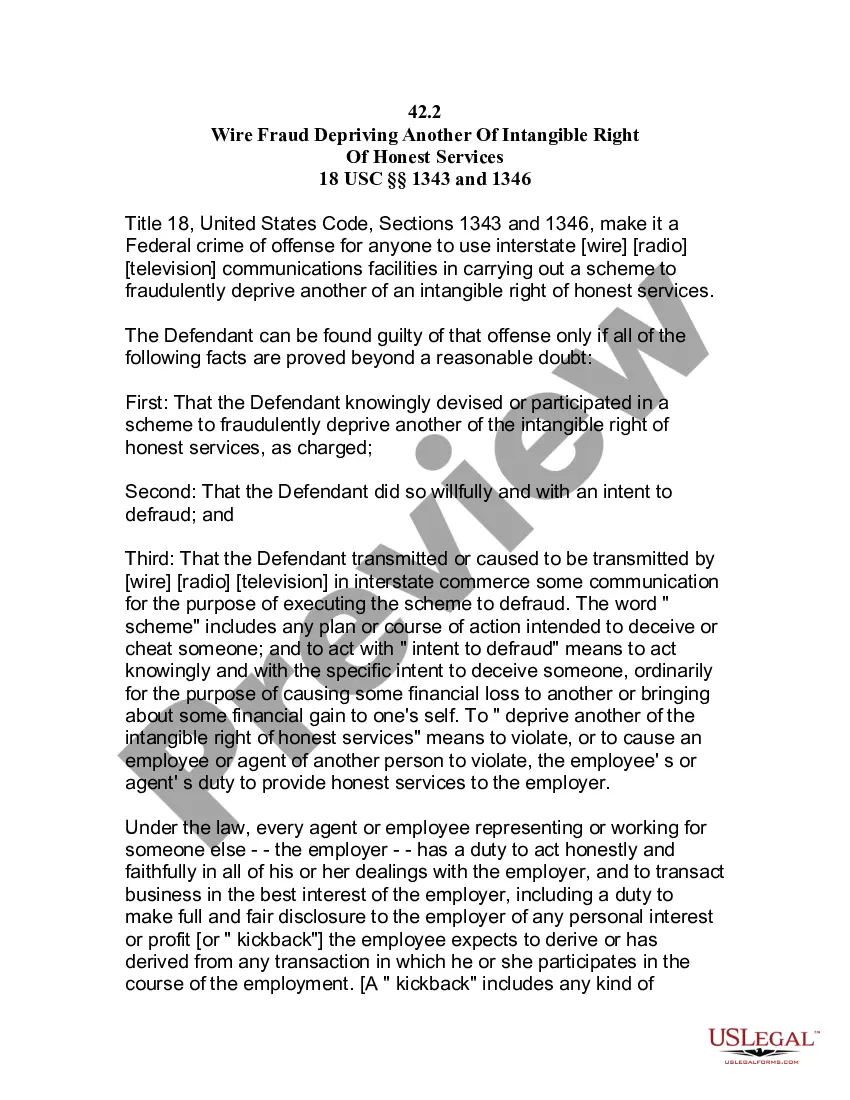
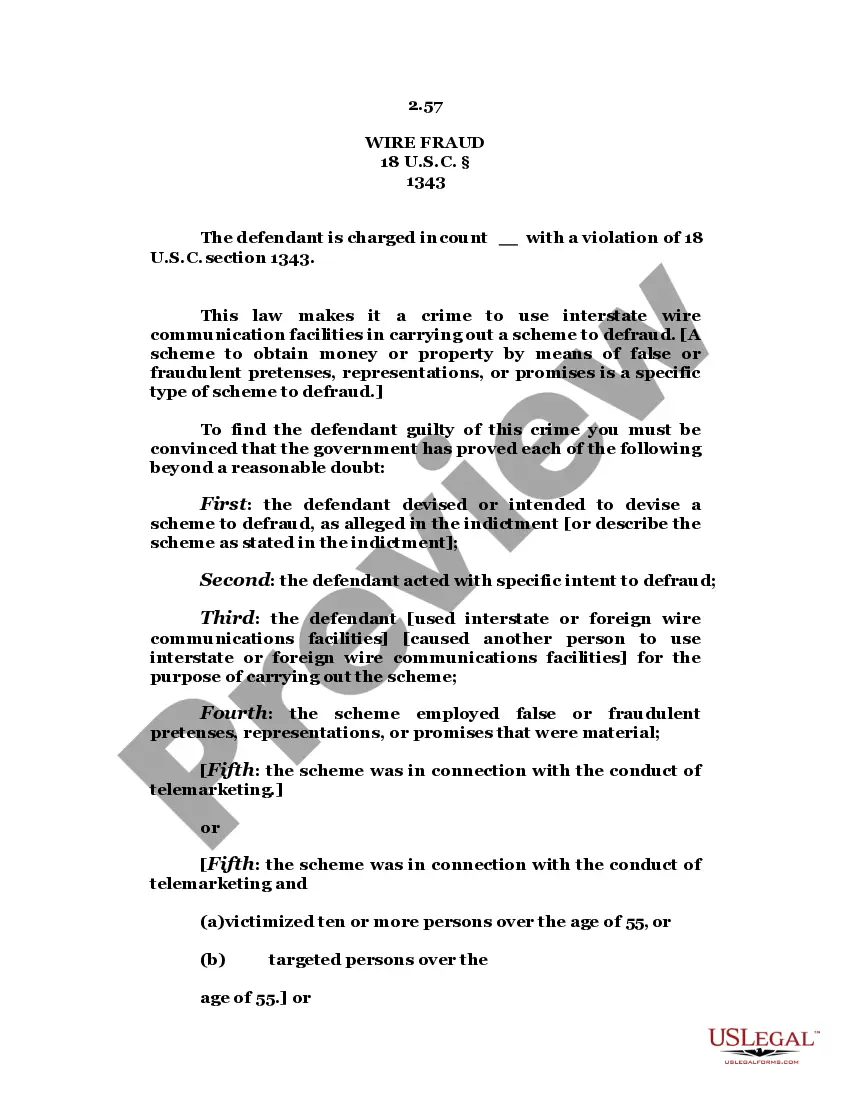
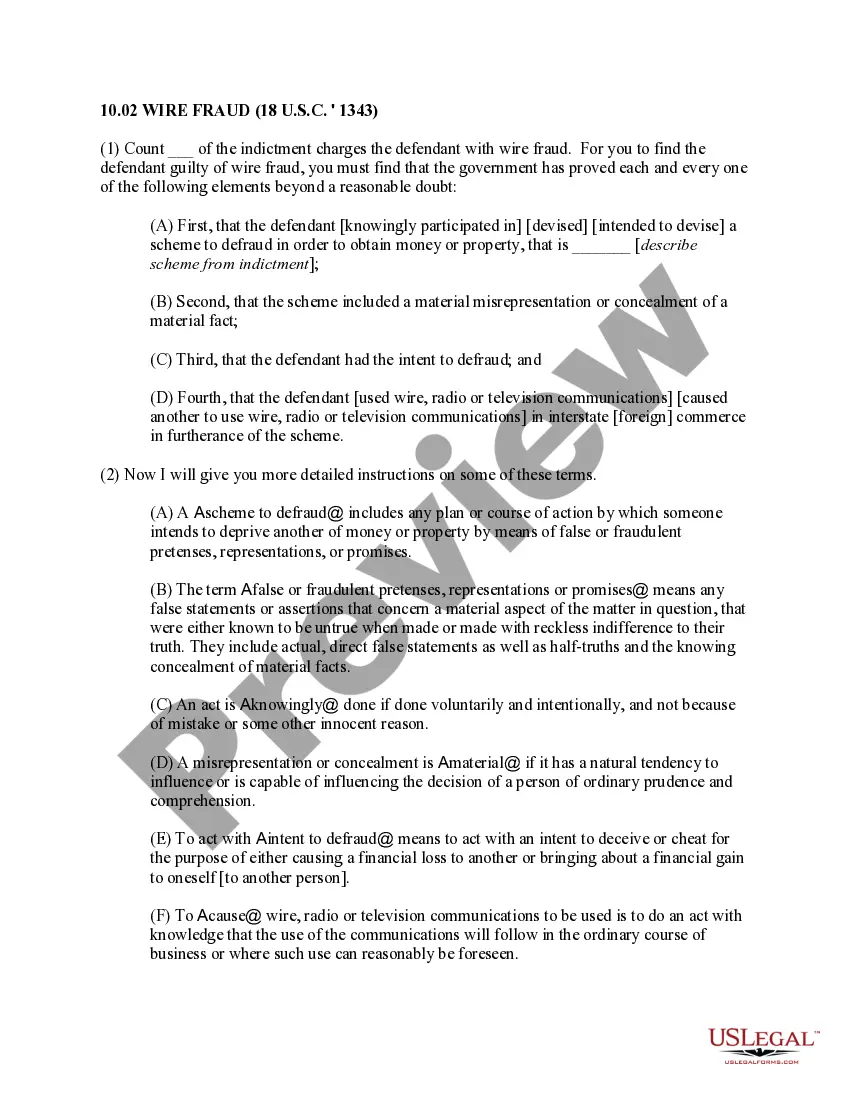
The Jury Instruction - Wire Fraud form provides sample jury instructions for use in federal cases involving allegations of wire fraud as defined under Title 18, United States Code, Section 1343. This form aids legal professionals in guiding juries on the essential elements of wire fraud, helping to clarify the legal standards necessary for a conviction. Unlike other legal forms, this document is specifically designed to address the intricacies of wire fraud schemes.
Key parts of this document
- Definition of wire fraud and the elements that must be proven for a conviction.
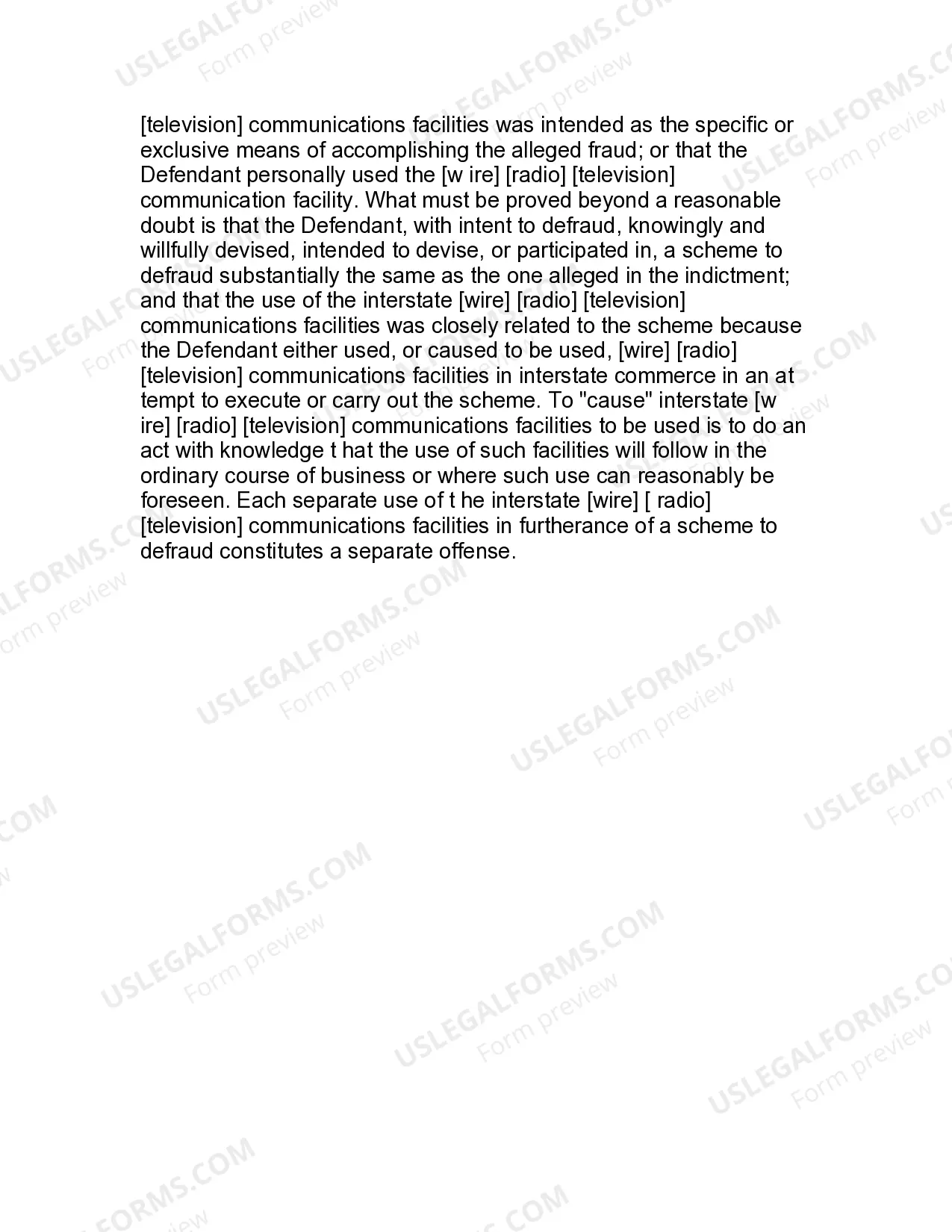
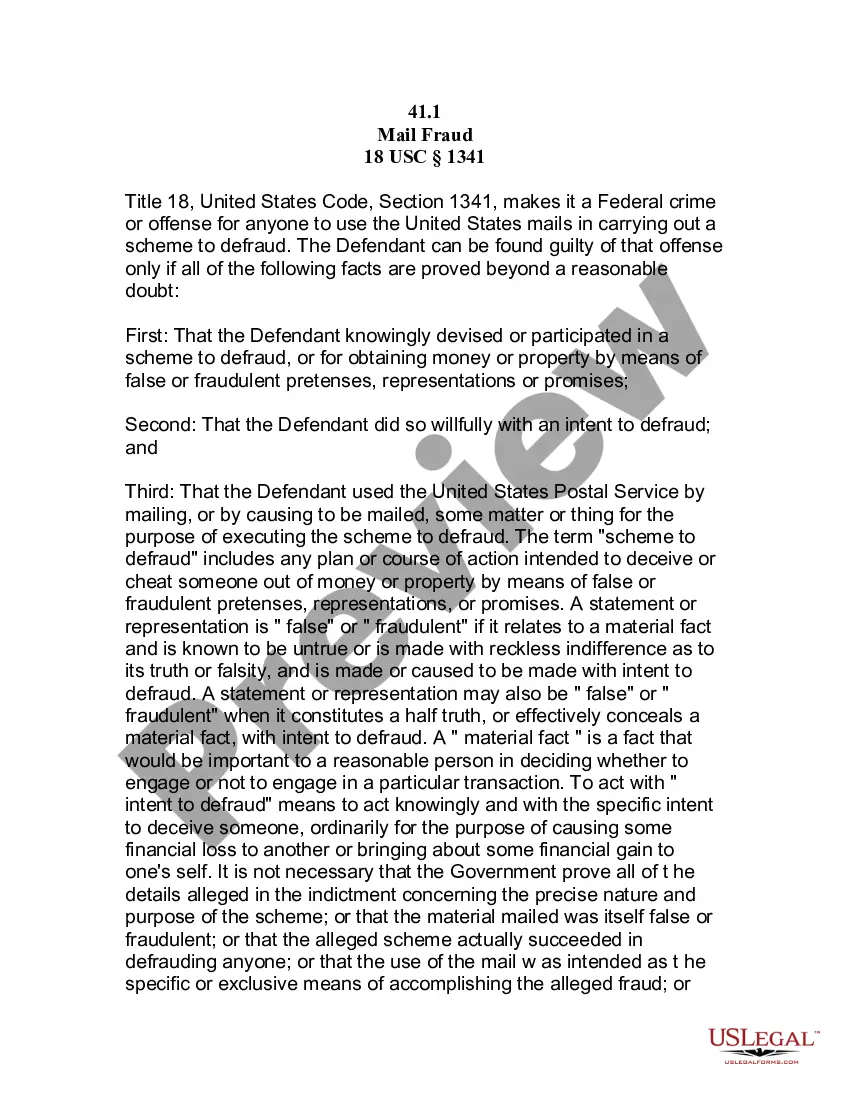
- Explanation of terms such as "scheme to defraud," "material fact," and "intent to defraud."
- Clarifications on the requirement for transmission via interstate communications.
- Details on individual offenses based on separate uses of interstate wire communications in a fraudulent scheme.
When to use this form
This form is used in legal proceedings involving accusations of wire fraud, particularly in cases where a jury will need instruction on the legal standards that define such fraud. It is suitable for federal trials dealing with cases related to fraudulent schemes conducted through interstate wire communications, including telephone, internet, and other electronic means.
Who this form is for
This form is relevant for:
- Attorneys representing defendants or plaintiffs in federal cases of wire fraud.
- Judges presiding over wire fraud trials who need a standardized instruction for juries.
- Legal researchers and law students studying federal wire fraud regulations.
How to prepare this document
- Review the elements of wire fraud that need to be proven for the case.
- Identify the specific facts relevant to your case that correspond with each element of the offense.
- Modify the sample instructions as necessary to accurately reflect the particulars of your case.
- Provide the completed instructions to the court prior to jury deliberations.
- Ensure all language is clear and comprehensible for jury understanding.
Does this form need to be notarized?
This form usually doesn’t need to be notarized. However, local laws or specific transactions may require it. Our online notarization service, powered by Notarize, lets you complete it remotely through a secure video session, available 24/7.
Get your form ready online
Our built-in tools help you complete, sign, share, and store your documents in one place.
Make edits, fill in missing information, and update formatting in US Legal Forms—just like you would in MS Word.
Download a copy, print it, send it by email, or mail it via USPS—whatever works best for your next step.
Sign and collect signatures with our SignNow integration. Send to multiple recipients, set reminders, and more. Go Premium to unlock E-Sign.
If this form requires notarization, complete it online through a secure video call—no need to meet a notary in person or wait for an appointment.
We protect your documents and personal data by following strict security and privacy standards.

Make edits, fill in missing information, and update formatting in US Legal Forms—just like you would in MS Word.

Download a copy, print it, send it by email, or mail it via USPS—whatever works best for your next step.

Sign and collect signatures with our SignNow integration. Send to multiple recipients, set reminders, and more. Go Premium to unlock E-Sign.

If this form requires notarization, complete it online through a secure video call—no need to meet a notary in person or wait for an appointment.

We protect your documents and personal data by following strict security and privacy standards.
Typical mistakes to avoid
- Failing to adapt the general instructions to fit the specific details of the case.
- Omitting key terms or elements required for proving wire fraud.
- Providing instructions that are too complex for the jury to understand.
Why use this form online
- Easy access to up-to-date legal language drafted by licensed attorneys.
- Conveniently downloadable and printable for immediate use in court.
- Editable format allows for customization to fit individual case needs.
Legal use & context
- This form provides a guideline for juries on wire fraud criteria established in federal law.
- It is essential to follow local laws and regulations when adapting the instructions for specific cases.
- Legal enforceability is contingent upon proper application and presentation during trial proceedings.
Looking for another form?
Form popularity
FAQ
Under the United States Sentencing Commission, Guidelines Manual, §2B1, a person convicted of Wire Fraud would be assigned a base offense level between 6-36, which carries a guideline range of probation up to 33 months in prison before taking into account any mitigating or aggravating circumstances.
It may feel even more terrifying if you are charged with a federal felony charge. That is exactly what happens if you are charged with wire or mail fraudboth serious felony charges that can result in hefty fines and long prison sentences.
The penalties for wire fraud include a prison sentence of up to 20 years (30 years if the case involves federal disaster relief funds or a financial institution), restitution to any victims and a fine set by the judge.
Double check the email address. Criminals are tricky and can create email addresses that look very close to the legitimate account. Beware a sense of urgency. Do not respond to email to verify. Call to confirm. Create a special template or code. If anything is different or out of the ordinary, call.
These are civil or criminal jury instructions approved by a state court, bench committee, or bar association. They are commonly used by courts in the relevant jurisdiction, as they ease the process of drafting fair jury instructions and theoretically do not have errors.
In order to make a wire fraud conviction, the prosecution must prove that the you were part of a scheme to defraud another person or party. In other words, the you planned to use a false statement, promise, or misrepresentation in order obtain money or something of value from someone else.
The crime of wire fraud occurs when someone voluntarily and intentionally uses an interstate communications device (such as a telephone) as a part of any scheme to defraud another of property, or anything else of value. Wire fraud is a federal crime with serious potential consequences.