Sample Letter to Creditor regarding Payment of Defendant's Outstanding Medical Bills
About this form
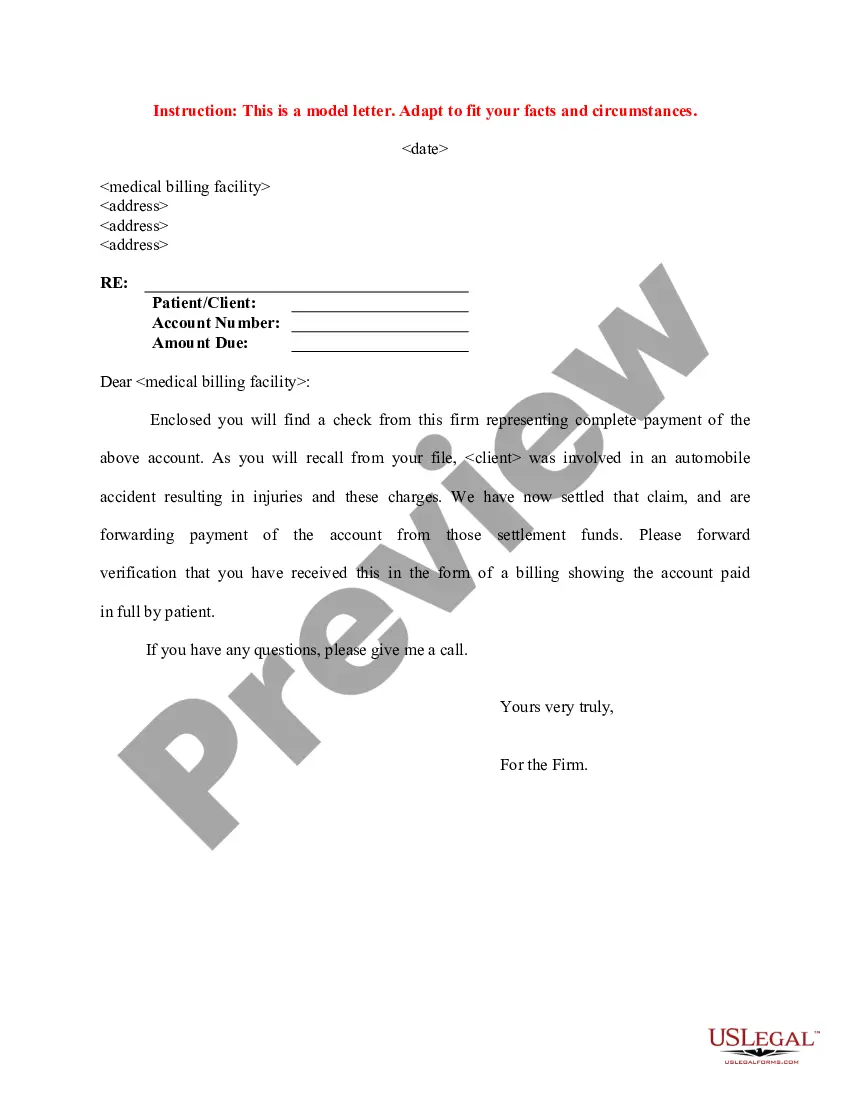
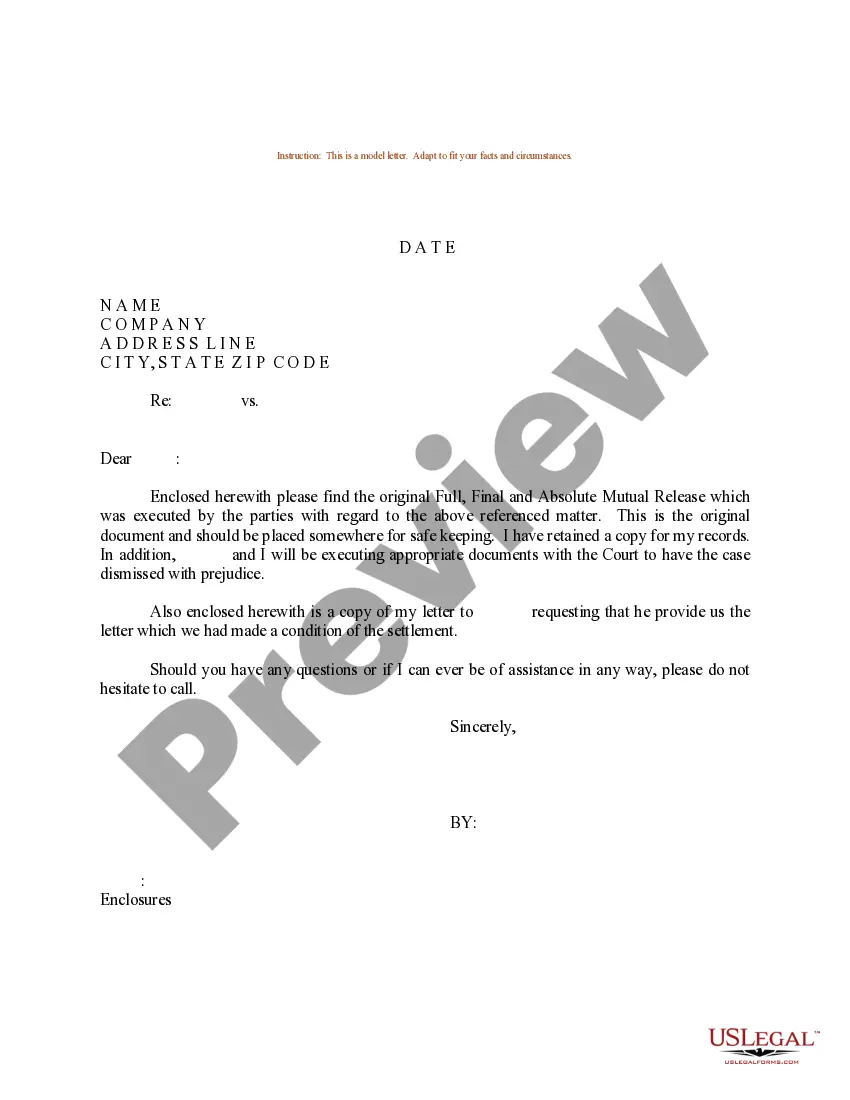
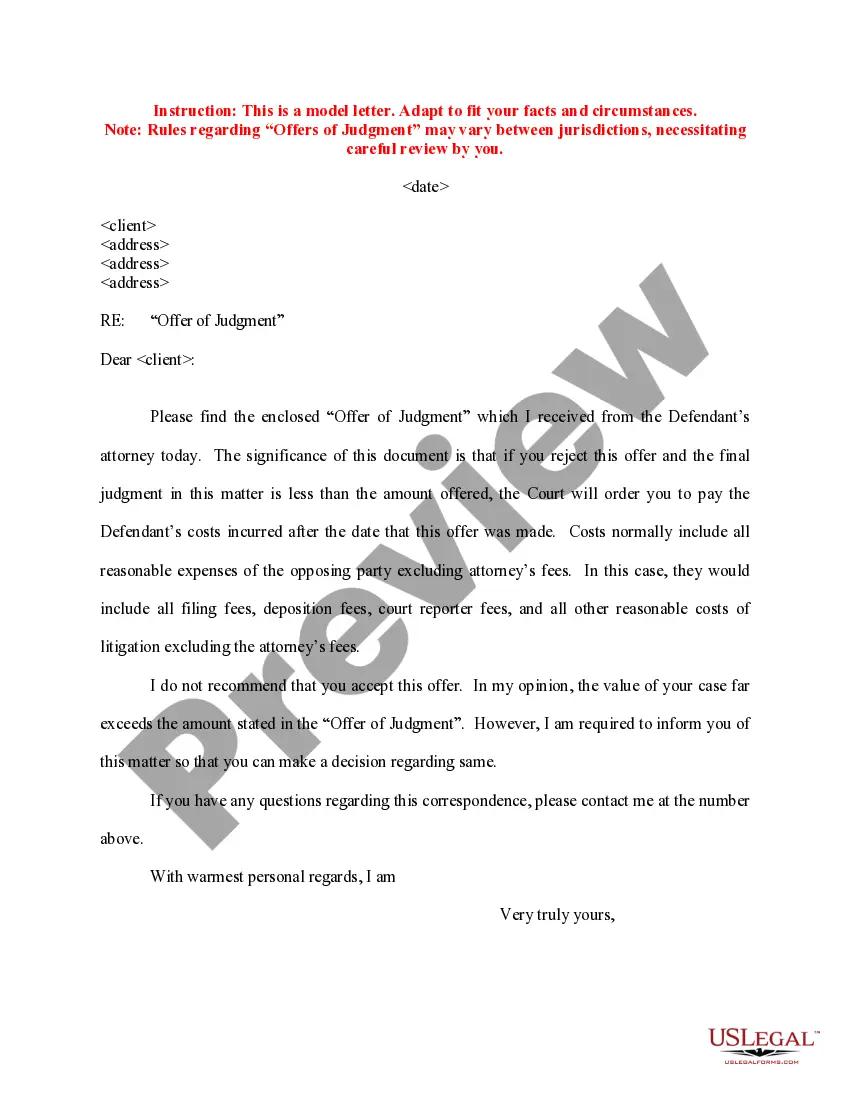
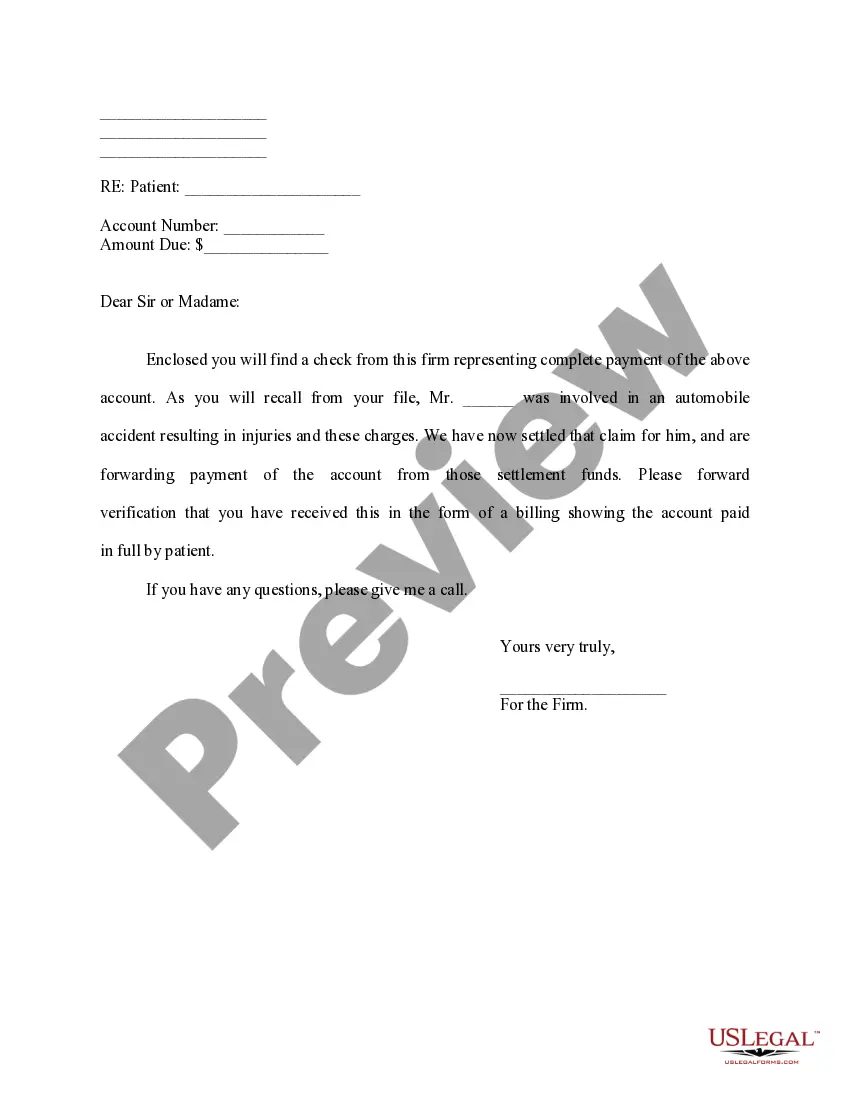
The Sample Letter to Creditor regarding Payment of Defendant's Outstanding Medical Bills is a template designed to facilitate communication between a law firm and a medical billing facility. It serves the purpose of informing the creditor about a payment made on behalf of a client who has settled a claim for medical expenses resulting from an accident. Unlike other letters that may request payment or negotiate terms, this letter specifically confirms the payment of outstanding medical bills directly linked to a personal injury claim.
Key components of this form
- Date of the letter
- Creditor's name and address
- Client's account number
- Amount due
- Details of the medical billing arrangement
- Request for verification of payment
When to use this document
This form is essential when a law firm has settled a client's personal injury claim and needs to pay the medical bills related to that claim. It is used to formally notify the medical billing facility that the payment is being made and to request confirmation of payment. You may need to use this letter if you represent a client who has incurred medical expenses due to an accident and are settling those expenses after a lawsuit or negotiation.
Who this form is for
- Legal professionals drafting communications for clients
- Law firms handling personal injury claims
- Clients who have recently settled a medical expense-related claim
- Medical offices or billing facilities expecting payment confirmation
How to complete this form
- Identify the date when the letter is written.
- Enter the medical billing facility's name and address accurately.
- Fill in the client's account number and the amount due.
- Provide details regarding the client's accident and medical bills.
- Request confirmation of payment and include contact information for any questions.
Does this document require notarization?
This form does not typically require notarization to be legally valid. However, some jurisdictions or document types may still require it. US Legal Forms provides secure online notarization powered by Notarize, available 24/7 for added convenience.
Get your form ready online
Our built-in tools help you complete, sign, share, and store your documents in one place.
Make edits, fill in missing information, and update formatting in US Legal Forms—just like you would in MS Word.
Download a copy, print it, send it by email, or mail it via USPS—whatever works best for your next step.
Sign and collect signatures with our SignNow integration. Send to multiple recipients, set reminders, and more. Go Premium to unlock E-Sign.
If this form requires notarization, complete it online through a secure video call—no need to meet a notary in person or wait for an appointment.
We protect your documents and personal data by following strict security and privacy standards.

Make edits, fill in missing information, and update formatting in US Legal Forms—just like you would in MS Word.

Download a copy, print it, send it by email, or mail it via USPS—whatever works best for your next step.

Sign and collect signatures with our SignNow integration. Send to multiple recipients, set reminders, and more. Go Premium to unlock E-Sign.

If this form requires notarization, complete it online through a secure video call—no need to meet a notary in person or wait for an appointment.

We protect your documents and personal data by following strict security and privacy standards.
Mistakes to watch out for
- Failing to include the correct medical billing facility's name or address.
- Omitting the client's account number or amount due.
- Not requesting verification of payment from the creditor.
- Using unclear or vague language about the payment.
Benefits of using this form online
- Convenience of downloading and editing the form as needed.
- Access to templates drafted by licensed attorneys for legal accuracy.
- Immediate availability of the form to expedite legal processes.
Summary of main points
- This form confirms the payment of medical bills related to a personal injury claim.
- It is essential for communication between law firms and medical billing facilities.
- The form must be completed with accurate information to avoid mistakes.
Looking for another form?
Form popularity
FAQ
Under the Fair Debt collection Practices Act (FDCPA), I have the right to request validation of the debt you say I owe you. I am requesting proof that I am indeed the party you are asking to pay this debt, and there is some contractual obligation that is binding on me to pay this debt.
The debt dispute letter should include your personal identifying information; verification of the amount of debt owed; the name of the creditor for the debt; and a request that the debt not be reported to credit reporting agencies until the matter is resolved or have it removed from the report, if it already has been
The amount of debt owed. The name of the creditor to whom the debt is owed. A statement of notice that the debt will be considered valid by the debt collector unless the consumer disputes it within 30 days of notice.
Your full name. Your current address and all addresses you have lived at over the past two years. Copy of a government-issued ID. Copy of a utility bill, bank statement, or insurance statement. A reference line that begins RE: and includes the name of the creditor and the account number for the item(s) you're disputing.
The debt dispute letter should include your personal identifying information; verification of the amount of debt owed; the name of the creditor for the debt; and a request that the debt not be reported to credit reporting agencies until the matter is resolved or have it removed from the report, if it already has been
The amount the debtor owes you. The initial due date of the payment. A new due date for the payment, whether ASAP or longer. Instructions on how to pay the debt.
Make sure you state you are exercising your rights under the Fair Debt Collection Practices Act. Include a sentence or two describing why you are judgment-proof For example: I am judgment proof because I am living only on Social Security benefits, own limited exempt property, and cannot meet current expenses.
Write and Mail a Letter State that you're requesting validation of the debt or removal of the debt from your credit report. Then mail the letter and request a return receipt so you have proof that you sent it and that the collection agency received it.
A debt validation letter can be an effective tool for dealing with debt collectors.